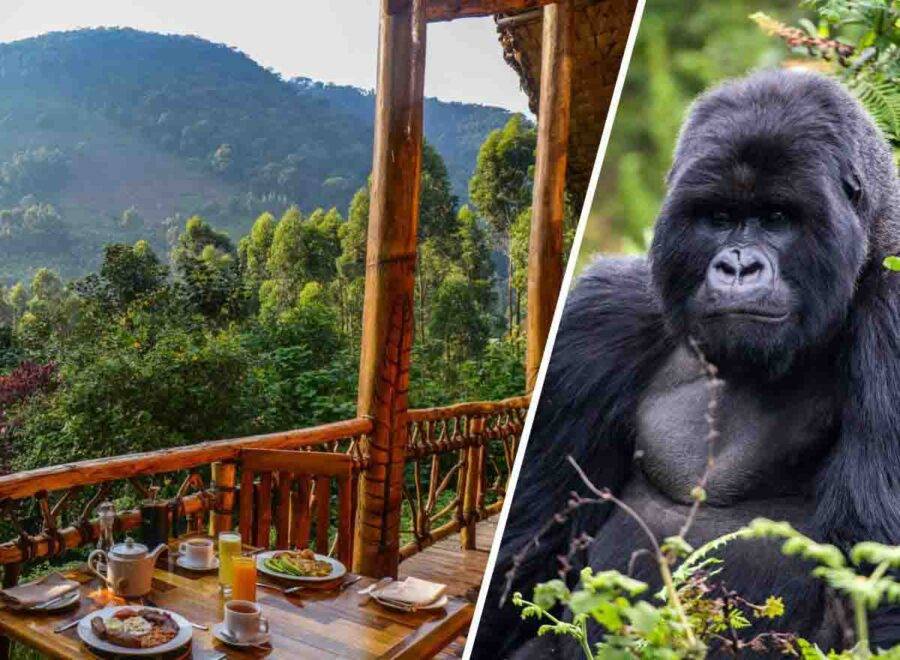
A Uganda Big Five safari, gorilla trekking for 8 days creates a seamless journey through East Africa's most diverse landscapes. This itinerary spans over 1,200 kilometers, connecting savannah plains, crater lakes, dense rainforests, and misty mountain slopes across 5 key conservation zones.
You will track rhinos on foot, search for tree-climbing lions, board river boats past hippos, and trek through ancient jungles to meet wild primates. Guided by experienced drivers in 4x4 custom Land Cruisers, you will explore Ziwa Rhino Sanctuary, Murchison Falls, Kibale Forest, Queen Elizabeth, and Bwindi Impenetrable National Park. Home to over 1,000 mountain gorillas, 1,500 chimpanzees, and 1,060 bird species, Uganda provides an incredible environment for big game tracking and primate encounters across an action-packed 8-day expedition.
Day 1: Entebbe to Ziwa Rhino Sanctuary & Murchison Falls
Your driver picks you up at 6:30 AM in Entebbe for a 170-kilometer, 3-hour drive north along the Kampala-Gulu highway to Ziwa Rhino Sanctuary in Nakasongola District. Ziwa is the only site in Uganda holding wild Southern white rhinoceroses. Spend 2 hours trekking on foot alongside trained rangers to observe a portion of the sanctuary's 33 resident rhinos grazing up close.
After a 1-hour lunch break, continue driving 150 kilometers (3 hours) through Masindi to Murchison Falls National Park, Uganda's largest conservation area covering 3,840 square kilometers. Arrive by 4:30 PM to visit the Top of the Falls, where the 50-meter-wide Victoria Nile forces its way through a narrow 7-meter rocky gorge before plunging 43 meters below. Check into your lodge inside the park by 6:30 PM for dinner and your overnight stay.
Day 2: Morning Game Drive & Victoria Nile Boat Cruise
Set out at 6:30 AM for a 4-hour morning game drive across the Buligi game tracks in northern Murchison Falls. Search for 4 of the Big Five—lions, leopards, African bush elephants, and over 10,000 Cape buffaloes—alongside Rothschild's giraffes, Jackson's hartebeests, and Oribi. Return to the lodge for a 2-hour lunch and rest.
At 2:00 PM, board a 3-hour launch cruise up the Victoria Nile toward the base of the falls. Watch 4,000 hippos and giant Nile crocodiles lining the riverbanks, alongside herds of elephants coming down to drink and bathe. Bird watchers can spot red-throated bee-eaters and the rare shoebill stork near the delta. Return to the jetty by 5:00 PM, then enjoy an evening dinner and rest under the stars at your safari lodge.
Day 3: Murchison Falls to Kibale Forest National Park
Depart Murchison Falls at 7:00 AM for a 360-kilometer, 7-hour journey south toward Fort Portal and Kibale Forest National Park. Drive along the scenic Albertine Rift Escarpment, passing rural trading centers, sugarcane plantations, and Lake Albert viewpoints. Stop in Fort Portal town for a 1-hour lunch break, surrounded by green tea estates beneath the foothills of the Rwenzori Mountains.
Continue another 30 kilometers south into Kibale Forest National Park, a 795-square-kilometer tropical rainforest known as the primate capital of the world. Kibale protects 13 distinct primate species, including 1,500 chimpanzees, red-colobus monkeys, and L'Hoest's monkeys. Check into your lodge near the park boundary by 4:00 PM, spending 2 hours relaxing or taking a quiet village walk through the local Bigodi community before dinner service at 7:00 PM.
Day 4: Chimpanzee Tracking & Bigodi Wetland Sanctuary
Report to Kanyanchu Visitors Center at 7:30 AM for a safety briefing from Uganda Wildlife Authority (UWA) rangers. Head into the forest at 8:00 AM for a 3-hour chimpanzee tracking trek. Follow ranger-guides through dense foliage to locate a habituated troop, spending 1 hour observing their social behaviors, pant-hoot calls, and feeding routines high in the canopy.
Return to your lodge for lunch and 2 hours of rest. At 2:30 PM, take a 5-minute drive to the nearby Bigodi Wetland Sanctuary, a community-run reserve managed by KAFRED. Spend 2.5 hours on a guided board-walk tour through the papyrus swamp, home to 200 bird species—including the Great Blue Turaco—and 8 primate species like the Black-and-white Colobus and Grey-cheeked Mangabey. Return to your lodge by 5:30 PM for dinner.
Day 5: Kibale Forest to Queen Elizabeth National Park
Depart Kibale at 8:00 AM for a 120-kilometer, 2.5-hour drive south to Queen Elizabeth National Park, crossing the equator line at Kikorongo. Spanning 1,978 square kilometers, this park features savannah grasslands, crater lakes, and rich wetlands. Arrive by 11:00 AM for check-in at your lodge, followed by a short rest and lunch.
At 2:00 PM, head to the Mweya Peninsula for a 2-hour boat safari along the 32-kilometer Kazinga Channel, which connects Lake George and Lake Edward. The channel features one of the highest concentrations of hippos in the world, with over 5,000 individuals alongside Nile crocodiles, water buffaloes, and hundreds of bathing elephants. Spot waterbirds like African skimmers, pink-backed pelicans, and fish eagles along the water's edge before returning to camp at 5:00 PM for dinner.
Day 6: Ishasha Tree-Climbing Lions to Bwindi Impenetrable
Check out at 6:30 AM and drive 2.5 hours (90 kilometers) south through the park toward the remote Ishasha sector. Spend 3 hours on a morning game drive searching for Ishasha's famous tree-climbing lions, which rest on the wide limbs of fig and acacia trees during hot daytime hours. Watch for topi antelopes, kob herds, and solitary buffalo bulls grazing across the open plains.
After lunch in Ishasha at 12:30 PM, continue driving 110 kilometers (3.5 hours) up into the Kigezi Highlands toward Bwindi Impenetrable National Park, a UNESCO World Heritage site covering 321 square kilometers of primeval rainforest. Arrive at your sector lodge (Buhoma, Ruhija, Rushaga, or Nkuringo) at an altitude of 2,000 meters by 4:30 PM. Enjoy cool mountain air, dinner, and rest before your gorilla trek.
Day 7: Mountain Gorilla Trekking in Bwindi Rainforest
Assemble at the UWA park headquarters at 7:30 AM for a safety briefing, ranger allocation, and grouping into teams of 8 trekkers per gorilla family. At 8:00 AM, trek into the steep, densely forested slopes of Bwindi. The trek takes between 2 to 6 hours depending on where the family moved overnight.
Upon locating your assigned gorilla family, spend 1 uninterrupted hour watching these peaceful giants interact, groom, feed on roots, and play under the watchful eye of the dominant Silverback. UWA guidelines require maintaining a 10-meter distance to protect the primates. Trek back out of the forest by 2:00 PM to receive your official trekking certificate. Spend your afternoon relaxing at the lodge or visiting the local Batwa cultural community before dinner.
Day 8: Bwindi Impenetrable to Entebbe / Kampala Return
Begin your return journey early at 6:30 AM after breakfast at the lodge. Drive 460 kilometers (8 to 9 hours) through the rolling green hills of Kabale and Mbarara. Stop at the Igongo Cultural Centre near Mbarara at 12:30 PM for a 1-hour lunch break featuring local Ankole traditional dishes and a quick tour of the cultural museum.
Continue northeast, stopping for 30 minutes at the Kayabwe Equator line marker for photos, water flow demonstrations, and souvenir shopping. Proceed through Kampala, arriving back in Entebbe by 5:30 PM. You will be dropped off at Entebbe International Airport (EBB) for your evening flight home or at your preferred hotel, concluding an extraordinary 8-day Big Five and mountain gorilla Ugandan safari.
Why is tracking Southern white rhinos on foot unique?
Tracking Southern white rhinos on foot at Ziwa Rhino Sanctuary offers an intimate wildlife encounter you rarely find elsewhere in East Africa. Located about 170 kilometers north of Kampala in Nakasongola District, Ziwa serves as the sole sanctuary dedicated to reintroducing wild rhinos to Uganda. Joining trained Uganda Wildlife Authority (UWA) rangers, you step out of your 4x4 safari vehicle and walk directly through savanna woodland to locate these massive, gentle giants.
During your 2-hour walking trek, rangers guide you within 10 to 15 meters of resident rhinos like Nandi or Obama. Walking quietly on the ground gives you a completely different perspective than looking down from a vehicle roof. You get to hear their breathing, watch them graze on short grass, and observe mothers tending to young calves.
Rangers share detailed stories about anti-poaching initiatives, individual rhino personalities, and breeding milestones that aim to populate Murchison Falls and Kidepo Valley in future decades. Pausing here during your drive north turns a long transit day into a hands-on conservation highlight before you even reach Murchison Falls National Park.
What can you expect on a Murchison Nile cruise?
A boat cruise along the Victoria Nile in Murchison Falls National Park brings you face-to-face with incredible riverbank wildlife. Setting out from Paraa jetty at 2:00 PM, the 3-hour round trip travels upstream toward the base of the world's most powerful waterfall. Moving smoothly along the water lets you photograph wildlife without engine vibrations or dusty roads.
The riverbanks host incredible animal densities, including over 4,000 Nile hippos resting in muddy pools and giant Nile crocodiles basking in the sun with open jaws. Herds of African bush elephants frequently descend to the water's edge to cool off, drink, and splash their young, giving you close views from the deck.
Bird watchers will spot colorful red-throated bee-eater colonies nesting in sandy cliffs, alongside African fish eagles, pelicans, and occasionally the elusive shoebill stork near the delta marshes. As you approach the narrow 7-meter gorge where the Nile thunderously plunges 43 meters below, the roar of churning water and cool mist creates an unforgettable highlight to end your afternoon game viewing.
Why is Kibale Forest known as Africa's primate capital?
Kibale Forest National Park earns its reputation as the primate capital of the world by protecting 13 distinct primate species within its 795 square kilometers of evergreen rainforest. Located near Fort Portal beneath the Rwenzori Mountains, Kibale boasts the highest density and diversity of primates in East Africa. Its dense forest canopy supports over 1,500 wild chimpanzees, making it the premier location for tracking habituated chimp communities.
When you trek through Kanyanchu, you do not just see chimpanzees—you frequently spot red-colobus monkeys, black-and-white colobus monkeys, L'Hoest's monkeys, and grey-cheeked mangabeys moving through the trees above. The forest ecosystem stays lush year-round, packed with wild fig trees, ancient mahogany trunks, and vibrant tropical birds like the Great Blue Turaco.
Local community projects around the park boundary, like the Bigodi Wetland Sanctuary managed by KAFRED, extend this primate haven into surrounding papyrus swamps. Exploring Kibale gives you a deep, immersive look into wild ape social structures, grooming habits, and vocal pant-hoot calls that echo through the jungle long after you leave.
How does chimpanzee tracking compare to mountain gorilla trekking?
While both chimpanzee tracking in Kibale and mountain gorilla trekking in Bwindi involve hiking through dense jungle, the two experiences feel completely distinct. Chimpanzee tracking is fast-paced, loud, and energetic. Chimps spend a lot of time high up in canopy trees, moving rapidly through branch networks while making boisterous pant-hoot calls that echo across the forest. Following a chimp troop requires quick footwork along forest trails as they search for fallen figs or hunt small prey.
Gorilla trekking in Bwindi, on the other hand, is generally more grounded, deliberate, and quiet. Mountain gorillas are much larger, heavier, and spend most of their time on the forest floor eating bamboo shoots, vines, and roots.
Once you locate a habituated gorilla family led by a massive Silverback, the group stays relatively stationary, allowing you to sit quietly nearby for one full hour. Gorillas display calm, gentle behavior, grooming cubs and resting peacefully right in front of you. Experiencing both activities over 8 days gives you a complete picture of wild ape behavior in Africa.
What makes Kazinga Channel boat safaris so special?
The Kazinga Channel boat safari in Queen Elizabeth National Park offers one of the best aquatic wildlife viewing experiences in all of East Africa. This 32-kilometer natural waterway connects Lake George and Lake Edward, drawing thousands of animals to its banks daily. Boarding a 2-hour launch cruise from the Mweya Peninsula lets you glide along calm waters while watching animals carry on their natural daily routines.
The channel holds one of the highest concentrations of hippos on Earth, with over 5,000 individuals grunting, spraying water, and resting in crowded pods along the shores. Nile crocodiles line the muddy edges, while large herds of elephants and Cape buffaloes come down to drink, bathe, and cool off during hot afternoon hours.
Birdlife along the channel is equally impressive, with hundreds of waterbird species, including pink-backed pelicans, yellow-billed storks, African skimmers, and fish eagles perched in overhanging trees. The slow pace of the boat gives you plenty of time to take clear photos without disturbing the animals.
Why do Ishasha's lions rest in large tree branches?
The tree-climbing lions of the Ishasha sector in southern Queen Elizabeth National Park exhibit a rare behavioral trait seen in very few lion populations across Africa. As morning temperatures rise across the open savanna, these big cats scale the thick, horizontal limbs of giant fig trees and acacia trees to spend their afternoons resting 3 to 6 meters above the ground.
Lions climb into trees primarily to catch cool breezes blowing off the plains and to escape persistent biting flies and insects swarming in the lower grass. Resting in high branches also gives lions an elevated viewpoint across the savanna, allowing them to spot distant herds of Uganda kob and topi antelopes moving through grazing fields.
Driving through the quiet Ishasha tracks with your guide, scanning low-hanging branches often reveals fully grown lionesses and young males draped lazily over tree limbs with legs dangling below. Seeing 200-kilogram predators lounging high up in leafy fig trees offers a truly memorable wildlife sighting before you head upward into Bwindi's mountains.
How do you prepare for gorilla trekking in Bwindi?
Preparing for mountain gorilla trekking in Bwindi Impenetrable National Park requires physical readiness and the right personal gear to ensure a comfortable hike. Bwindi's terrain is steep, humid, and covered in dense rainforest vegetation with altitudes ranging from 1,160 to 2,600 meters. Treks can last anywhere from 2 to 6 hours depending on where your assigned gorilla family moved overnight, so decent cardiovascular fitness is helpful.
Equipping yourself with sturdy, waterproof hiking boots with good ankle support is essential for navigating muddy, slippery slopes. Wear long-sleeved shirts and lightweight trousers to protect your skin from stinging nettles, insects, and sharp vines.
Packing garden gloves helps you grip branches along steep climbs, while a poncho or waterproof jacket keeps you dry during sudden rainforest downpours. Always carry at least 2 liters of drinking water, a packed lunch, and a small backpack. Hiring a local porter at the park headquarters not only carries your daypack and assists on tough climbs, but directly supports community families living around the park.
What rules protect mountain gorillas during your visit?
Strict conservation rules enforced by the Uganda Wildlife Authority (UWA) protect mountain gorillas from human interference and disease transmission during every trek. Because mountain gorillas share over 98% of their DNA with humans, they are highly susceptible to human respiratory illnesses like colds and flu. If you feel sick or show symptoms on the morning of your trek, you must declare it and stay behind to protect the wild population.
During the trek, groups are strictly capped at 8 visitors per habituated gorilla family per day to minimize stress on the animals. When you reach the gorilla family, rangers instruct everyone to maintain a distance of at least 10 meters (30 feet).
Visiting time is limited to exactly 1 hour. You must speak in low, quiet voices, keep movements slow, and refrain from eating, drinking, or smoking near the primates. Flash photography is strictly prohibited, as bright light startles the animals. Following these guidelines ensures that tourism supports gorilla conservation without compromising their health or natural wild behaviors.
What cultural encounters enrich this 8-day Ugandan trip?
Beyond incredible wildlife viewing, this 8-day Ugandan itinerary includes meaningful cultural encounters that connect you directly with local communities. Near Kibale Forest, visiting the Bigodi community allows you to walk through rural homesteads, meet local coffee farmers, learn traditional medicine from herbalists, and see how village women weave handmade basket art.
In Bwindi Impenetrable National Park, you can meet the Batwa people, the indigenous hunter-gatherers who lived inside the rainforest for thousands of years before it became a protected national park. Through guided cultural walks, Batwa elders demonstrate traditional forest survival skills, honey harvesting methods, medicinal plant uses, and perform traditional songs and dances that keep their ancient heritage alive.
Stopping at the Igongo Cultural Centre near Mbarara offers a deep dive into the history, cattle-keeping traditions, and crafts of the Ankole kingdom. These interactions break up long driving days, provide sustainable income to local families, and give you a personal human perspective on life alongside Uganda's national parks.
How do road transfers maximize viewing across Uganda?
Road transfers in a custom 4x4 safari Land Cruiser offer the best way to see Uganda's rapidly changing landscapes and rural culture up close. Covering over 1,200 kilometers from Entebbe up to Murchison Falls and down through the Albertine Rift to Bwindi provides a complete cross-section of the country.
Instead of flying over the countryside, driving lets you experience daily life across regional trading centers, roadside fruit markets, and tea plantations beneath the Rwenzori Mountains. Moving at ground level allows your guide to make spontaneous stops at viewpoints overlooking Lake Albert, cross the Equator line at Kikorongo and Kayabwe, and point out indigenous bird species along countryside roads.
Pop-up roofs on safari vehicles turn long transit stretches into continuous game drives as you pass through park borders like Ishasha and Queen Elizabeth. Driving through local villages and terraced Kigezi hillsides builds a rich, connected story of Uganda’s geography, people, and wildlife that aerial transfers simply cannot match.
Booking Uganda Big Five safari, gorilla trekking for 8 days with us Roads of Adventure safaris
Book your 8-day Big Five and gorilla trekking tour with Roads of Adventure Safaris to experience Uganda's ultimate wildlife circuit. Traveling in a comfortable private 4x4 Land Cruiser, your journey starts with tracking rhinos on foot at Ziwa before heading to Murchison Falls for game drives and a Nile River boat cruise. Next, venture south to track chimpanzees in Kibale Forest, spot hippos along Queen Elizabeth's Kazinga Channel, and search for tree-climbing lions in Ishasha. Conclude with an unforgettable hour among mountain gorillas in Bwindi Impenetrable Forest before returning to Entebbe with a stop at the Equator.
