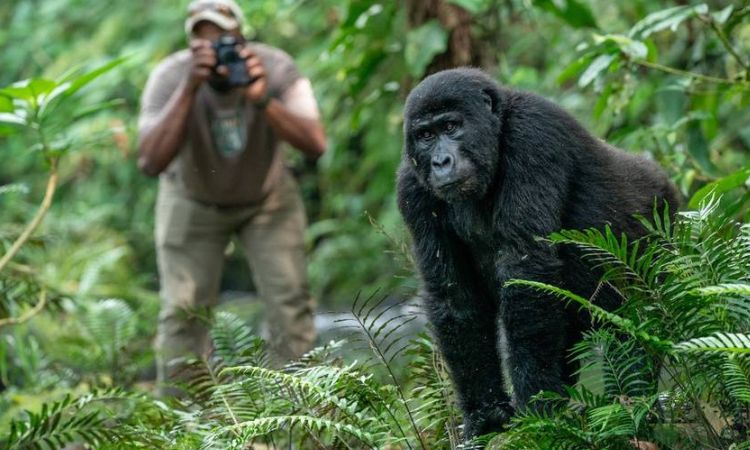
This 7-day Rwanda safari is the ultimate immersion into the heart of Africa. You’ll step off the plane into the vibrant streets of Kigali, trek through misty, emerald rainforests to look critically endangered mountain gorillas in the eyes, and encounter lively chimps before unwinding on the shores of Lake Kivu.
Day 1: Arrival & Kigali to Akagera National Park
Your adventure begins the moment you land at Kigali International Airport. You will be greeted by your personal driver-guide, ready to embark on your journey toward the sweeping savannahs of Akagera National Park. The drive takes roughly 2.5 to 3 hours, offering a stunning introduction to the "Land of a Thousand Hills" as the bustling cityscape gradually gives way to rolling, terraced farmlands and lush valleys.
Upon arriving at the park gates, you’ll immediately feel the shift in the air as the landscape opens up into golden grasslands, acacia woodlands, and shimmering lakes. You'll check into your lodge—such as the beautiful tented camps overlooking Lake Ihema—and take a moment to breathe in the wild, earthy scent of the savannah.
In the late afternoon, you’ll head out on your first introductory game drive. As the golden hour light bathes the plains, keep your cameras ready to spot grazing zebras, giraffes, and various antelope species. This first afternoon is a wonderful, relaxed way to stretch your legs after the drive, soak in the quiet vastness of the reserve, and build excitement for the dense primate jungles to come later in the week.
Day 2: Akagera Big Five Search & Lake Ihema Cruise
Dawn in Akagera brings the chorus of the wild, and you’ll be up early to catch the savannah waking up. A full morning game drive takes you deeper into the northern sectors of the park, where you’ll search for Africa’s legendary Big Five: lions, leopards, elephants, rhinos, and buffalo. The thrill of tracking a pride of lions resting in the grass or scanning the acacia branches for a lounging leopard is unmatched.
After a hearty lunch and a brief midday siesta, you will transition from land to water for a late afternoon boat cruise on Lake Ihema. Gliding across the calm, dark waters offers a completely different perspective of the park. You will slowly drift past pods of wallowing hippos, basking crocodiles, and an incredible array of water birds, including the majestic African fish eagle and vibrant kingfishers.
The boat cruise provides fantastic, up-close photographic opportunities as wildlife comes down to the water’s edge to drink as the sun begins to set. As twilight paints the sky in shades of pink and orange, you’ll return to your lodge for a warm dinner, sharing stories around the campfire about the incredible animals you’ve seen today.
Day 3: Scenic Drive to Nyungwe Forest
Your third day takes you on a spectacular scenic journey as you leave the savannah behind and travel toward the deep, primeval jungles of Nyungwe Forest National Park. This is a full day of driving, usually taking between 6 to 7 hours, but the journey itself is a major highlight. You will wind your way through the mountainous countryside, passing endless layers of tea plantations that look like vibrant green velvet quilts draped over the hills.
You’ll make several stops along the way to stretch your legs, interact with friendly locals, and take in the panoramic views of Lake Kivu glittering in the distance. The air grows cooler and crisper as you climb higher in elevation, approaching the Albertine Rift.
By late afternoon, you will enter the dense, misty canopy of Nyungwe Forest, one of the oldest rainforests in Africa. You’ll check into your lodge—often nestled right on the edge of the forest—and settle in for the night. Falling asleep to the soothing, symphonic chorus of nocturnal insects and distant hays of the rainforest sets a magical, anticipatory tone for your primate trekking adventures the following morning.
Day 4: Chimpanzee Tracking & Canopy Walk
Day four is dedicated to our closest living relatives. You’ll wake up well before dawn, grab your packed breakfast, and head to the park headquarters for a comprehensive briefing before venturing into the dense interior of Nyungwe. Tracking wild chimpanzees is an exhilarating, dynamic experience as you listen for their loud calls and pant-hoots echoing through the thick foliage.
Once you locate a habituated chimpanzee community, you will be allowed to spend a magical hour watching them interact, groom, forage, and play high up in the trees or on the forest floor. It is deeply moving to observe their highly intelligent, human-like behaviors up close.
In the afternoon, you will experience the forest from a totally different vantage point by taking the famous Nyungwe Canopy Walkway. Suspended 70 meters above the forest floor on a 160-meter-long suspension bridge, this walk offers breathtaking, bird's-eye views of the sprawling treetops, deep ravines, and surrounding mountains. You’ll spot various exotic birds and monkeys darting through the foliage. Afterward, you’ll return to your lodge, exhausted but thrilled, to enjoy a well-deserved dinner and reflect on an action-packed day of incredible primate encounters.
Day 5: Journey to Volcanoes National Park
Leaving Nyungwe behind, today involves another beautiful, sweeping road trip as you journey north toward the towering Virunga Mountains. The drive takes you past the dramatic, curving shores of Lake Kivu and through vibrant rural towns and terraced farmlands. You’ll witness the daily rhythms of Rwandan life, passing cyclists carrying massive loads of bananas, local markets bustling with activity, and school children waving happily at your passing safari vehicle.
Stopping for lunch along the way, you will eventually begin to see the dramatic silhouettes of the five massive volcanoes that make up the Virunga Massif rising into the clouds. The scenery here is nothing short of spectacular, with rich volcanic soils supporting a patchwork of dense vegetation and agriculture.
You will arrive at your lodge near the town of Musanze or Kinigi by late afternoon, right on the doorstep of Volcanoes National Park. You'll check into your room and take the evening to relax, adjusting to the slightly higher altitude. Your expert driver-guide will help prepare you for the main event of the safari, ensuring you have all the necessary gear—layers of clothing, waterproof boots, and garden gloves—ready for tomorrow's monumental gorilla trek.
Day 6: The Ultimate Mountain Gorilla Trek
Today is the day you’ve been dreaming of. You’ll wake up before dawn with a buzz of anticipation, enjoy a hearty breakfast, and head directly to the Volcanoes National Park headquarters for your gorilla trekking briefing. Here, you will be assigned to a specific, habituated gorilla family based on your trekking fitness levels, and introduced to your expert local guides and trackers.
You will then drive to the starting point of the trail, stepping out into the rich, damp, and misty air. The trek takes you through lush, emerald-green farmlands before crossing the boundary into the dense forest of the park. The hike can take anywhere from 1 to 4 hours depending on where the gorillas have decided to roam, and the terrain can be steep and muddy, but the journey itself through this enchanting, fairytale-like forest is deeply rewarding.
Suddenly, your guides will pause, signaling that you are close. You put on your masks, step quietly into the huddle, and suddenly, you are face-to-face with a mountain gorilla. Spending a full, miraculous hour observing these magnificent, gentle giants—watching a massive silverback keep watch over his family, or young babies playfully wrestling in the foliage—is a profound, life-changing experience. You'll hike back out of the forest filled with awe, and return to your lodge to celebrate the accomplishment.
For a true feel of what it is like to step into the forest and huddle with a habituated gorilla family, watch this incredible trek:
Day 7: Golden Monkey Trek or Village Tour, & Return to Kigali
On your final day, you’ll wake up to the misty morning air of Volcanoes National Park, ready for one last adventure before heading back to the capital. Depending on your energy levels and your international flight schedule, you can choose to embark on a thrilling trek to find the endangered, hyper-active golden monkeys that live in the bamboo forests, or take a deeply moving cultural tour at the Gorilla Guardians Village (Iby'iwacu), where former poachers have transformed into cultural ambassadors sharing traditional Rwandan dances, crafts, and history.
After your morning activity and a satisfying lunch, you’ll pack up and begin the comfortable 2.5-hour drive back to Kigali. If time allows before you head to the airport, your driver-guide can take you on a short tour of the city, including a visit to the Kigali Genocide Memorial to pay your respects and learn about Rwanda's incredible journey of healing and resilience.
How difficult is the mountain gorilla trek in Volcanoes National Park?
The difficulty of gorilla trekking in Volcanoes National Park varies based on where the gorilla family moves on any given morning. Some habituated groups settle in bamboo zones just a 30-minute walk from the forest edge, while others travel higher up the slopes of Mount Karisimbi or Mount Bisoke, requiring 3 to 5 hours of steep, off-trail hiking. The terrain is wet, muddy, and densely covered in vines and nettles, with elevations ranging from 2,500 to 3,000 meters above sea level.
During the morning briefing at Kinigi headquarters, park rangers assign guests to specific gorilla groups based on age, health, and fitness levels. If you prefer a less strenuous walk, you can quietly inform your guide beforehand. hiring a local porter at the trailhead for $15–$20 is highly recommended; they assist you up slippery slopes, carry your daypack, and allow you to focus on the trek while directly supporting local community livelihoods.
What should I pack for chimpanzee and gorilla trekking in Rwanda?
Packing the right gear makes a huge difference when navigating damp rainforests like Nyungwe and Volcanoes National Park. Layered, lightweight clothing made of quick-drying synthetic fabric is ideal. Wear long-sleeved shirts and durable hiking pants in neutral tones like khaki, green, or brown; avoid blue and black as they attract biting tsetse flies, and bright colors that can startle wildlife.
Tuck your trousers into thick wool socks to keep safari ants out. Sturdy, waterproof hiking boots with deep tread are essential for traction on muddy slopes. Bring a pair of durable gardening gloves to protect your hands when grabbing thorny vines or balance-stabilizing branches. A lightweight waterproof rain jacket, a wide-brimmed hat, insect repellent containing DEET, and a 20 to 30-liter waterproof daypack to hold your water, camera, and rain gear round out the necessities.
How much do gorilla permits cost in Rwanda, and how do I secure one?
A mountain gorilla permit in Volcanoes National Park costs $1,500 per person for foreign non-residents. This permit covers park entry, experienced ranger guides, advance trackers, and a strictly enforced one-hour limit with a habituated gorilla family. While the price is higher than neighboring Uganda's $800 permit, Rwanda’s fee directly funds conservation efforts, anti-poaching patrols, veterinary care via Gorilla Doctors, and local community infrastructure projects through a 10% revenue-sharing scheme.
Because permit numbers are capped at eight visitors per gorilla group per day to protect the animals from stress and disease, availability is limited. Permits should be booked 3 to 6 months in advance—especially if traveling during the dry seasons (June to September and December to February). Permits can be secured directly through the Rwanda Development Board (RDB) online portal or arranged through a licensed local tour operator.
What is the best time of year to undertake this 7-day Rwanda safari?
Rwanda can be visited year-round, but the two dry seasons—from June to September and December to February—are considered the best times for a 7-day safari. During these months, rainfall is lower, making forest trails in Nyungwe and Volcanoes National Park less slippery and easier to navigate. Game drives in Akagera are also highly rewarding during dry spells because animals cluster around permanent water sources like Lake Ihema.
The wet seasons—March to May and October to November—bring frequent afternoon downpours, turning rainforest trails muddy and challenging. However, traveling during the wet season has unique advantages: wild fruits ripen in Nyungwe, keeping chimpanzees closer to the main trails, and low-season permit discounts or lodge promotions are often available. The landscape is also exceptionally vibrant and green, making it a wonderful time for photography.
What are the key rules for interacting with mountain gorillas?
To ensure human safety and protect endangered mountain gorillas from human-borne diseases, the Rwanda Development Board enforces strict rules. Before stepping into the forest, visitors undergo a mandatory briefing at Kinigi headquarters. Once you locate the gorilla family, you are allowed a maximum of one hour in their presence.
Maintain a minimum distance of 7 to 8 meters (23–26 feet) at all times. If a curious youngster approaches you, remain calm, lower your eyes, and step back slowly as instructed by your guide. Flash photography is strictly prohibited, as bright flashes startle the apes and can trigger aggressive defensive displays. Eating, drinking, or smoking near the gorillas is banned to prevent food contamination. If you feel the urge to cough or sneeze, turn away and cover your mouth to protect the gorillas, who share over 98% of human DNA.
Can I go gorilla tracking if I am feeling sick or have a cold?
If you show signs of a contagious illness—such as a cold, flu, fever, or stomach bug—you will not be allowed to track mountain gorillas. Because humans and mountain gorillas share nearly identical genetic makeup, gorillas are highly susceptible to human respiratory infections; a simple human cold can escalate into fatal pneumonia within an unimmunized wild gorilla group.
Park rangers assess guests during the morning briefing. If you are deemed unwell, park authorities will cancel your trek to protect the primates. In most official cases, if you declare your illness voluntarily before the trek, the Rwanda Development Board offers assistance with rescheduling or refunding the permit upon medical verification. Taking preventive health steps before your trip—such as staying hydrated, taking vitamins, and practicing good hand hygiene—ensures you remain healthy for your scheduled trek.
What kind of wildlife can I expect to see in Akagera National Park?
Akagera National Park is Rwanda’s sole savannah reserve and a conservation success story. Spanning 1,122 square kilometers along the Tanzanian border, it features golden grasslands, acacia woodlands, and a network of ten lakes. The park is home to Africa’s Big Five: lions, leopards, African bush elephants, black rhinos, and cape buffalos. Lions were reintroduced in 2015, followed by eastern black rhinos in 2017, restoring Akagera's Big Five status.
During morning and late afternoon game drives, you can spot herds of zebras, giraffes, topis, impalas, waterbucks, and elands roaming the plains. A boat cruise on Lake Ihema reveals large pods of wallowing hippos, massive Nile crocodiles sunning on the banks, and diverse birdlife—including African fish eagles, kingfishers, open-billed storks, and, on rare occasions, the elusive shoebill stork.
How does chimpanzee tracking in Nyungwe Forest compare to gorilla trekking?
While both involve tracking wild primates in dense rainforests, chimpanzee tracking in Nyungwe Forest is typically more fast-paced and unpredictable than gorilla trekking in Volcanoes National Park. Chimpanzees are highly agile, vocal, and mobile animals that spend much of their time high in the forest canopy. Tracking them requires waking up well before dawn (around 4:30 AM) to reach their nesting sites before they move off to forage.
Once located, you will follow their calls and movement through the undergrowth at a rapid pace. Gorilla trekking, by contrast, involves tracking a grounded family unit that moves at a more relaxed pace. While gorilla sightings are near-certain (over 98% success rate), chimpanzee sightings in Nyungwe carry an 70–80% success rate due to the vastness of the ancient forest.
Is the Nyungwe Canopy Walkway safe for people afraid of heights?
The Nyungwe Canopy Walkway is an engineered suspension bridge suspended 70 meters (230 feet) above a lush mountain ravine, stretching 160 meters across three connected sections. It is built to international safety standards, featuring high metal mesh walkways, sturdy guide cables, and secure handrails, with mandatory guided escorts provided by park rangers.
For travelers with a mild fear of heights, the experience can feel intimidating at first due to the slight sway of the suspension bridge. However, most visitors find that walking steadily in single file while focusing on the horizon helps ease any anxiety. The bird’s-eye views of the ancient rainforest canopy, distant Virunga peaks, and darting monkeys make the walk well worth it. If you have severe vertigo, you can opt for ground-level nature walks to waterfalls instead.
What are the driving conditions and travel times like between parks?
Driving times on a 7-day Rwanda safari are comfortable because Rwanda is a compact country with well-maintained, paved primary highways connecting major regions. The drive from Kigali to Akagera National Park takes about 2.5 to 3 hours, while the transit from Akagera west to Nyungwe Forest spans 6 to 7 hours, offering a scenic cross-country journey through terraced farmland and tea estates.
Moving north from Nyungwe to Volcanoes National Park along the Lake Kivu belt takes around 5 to 6 hours, followed by a quick 2.5-hour drive back to Kigali on the final day. Safari vehicles are typically custom 4x4 Land Cruisers fitted with pop-up roofs for game viewing, air conditioning, and charging ports. Roads through mountainous regions are winding and hilly, so if you are prone to motion sickness, keeping medication handy is advised.
What is the minimum age limit for gorilla and chimpanzee trekking in Rwanda?
The strict minimum age limit for mountain gorilla trekking in Volcanoes National Park and chimpanzee tracking in Nyungwe Forest is 15 years old. This age limit is enforced by the Rwanda Development Board for safety, physical, and health reasons. Children under 15 may struggle with the demanding physical terrain and unpredictable hiking durations.
Additionally, younger children are more likely to panic, shout, or make sudden movements if a large silverback performs a dominance display, which can trigger defensive behavior from the gorillas. Children are also more susceptible to communicable childhood diseases that pose serious health risks to wild primates. For families traveling with younger children, lodges and local operators can arrange supervised cultural activities, nature walks, or pottery workshops while adults complete their treks.
What accommodation options are available along this 7-day itinerary?
Rwanda offers a range of accommodations across all three national parks, catering to budget, mid-range, and luxury travelers. In Akagera National Park, choices range from comfortable mid-range options like Akagera Game Lodge to high-end tented camps like Ruzizi Tented Lodge, situated along the shores of Lake Ihema.
At Nyungwe Forest, visitors can stay at mid-range properties like Nyungwe Top View Hill Hotel or opt for ultra-luxury experiences at One&Only Nyungwe House, set within a working tea plantation. Near Volcanoes National Park in Kinigi and Musanze, options span from cozy mid-range eco-lodges like Le Bambou Gorilla Lodge and Mountain Gorilla View Lodge to luxury properties like Bisate Lodge, Sabyinyo Silverback Lodge, and Singita Kwitonda. Most lodges offer full-board meal plans featuring fresh, locally sourced ingredients.
What is the experience like on the Lake Ihema boat cruise in Akagera?
The boat cruise on Lake Ihema is a relaxed, 1.5 to 2-hour aquatic safari along the southern boundary of Akagera National Park. Floating along calm waters in an open-air motorboat equipped with life jackets, you get an up-close look at the park’s aquatic ecosystem.
The lake holds one of East Africa’s highest concentrations of hippos; you will see pods bobbing in the water, grunting, and resting along the shoals. Large Nile crocodiles line the muddy banks, while elephants frequently come down to the water’s edge to drink and bathe during the late afternoon. For birdwatchers, the cruise is exceptional—you can spot African fish eagles perched on snag trees, malachite kingfishers darting along reeds, cormorants, herons, and egrets against the backdrop of a setting sun.
What are the main differences between golden monkey trekking and gorilla trekking?
Golden monkey trekking takes place in the lower bamboo zones of Volcanoes National Park and is generally less physically demanding than gorilla trekking. Golden monkeys (Cercopithecus kandti) are endangered, active primates known for their bright orange-gold coats and playful behavior. Unlike gorillas, who move calmly on the forest floor, golden monkeys leap through bamboo stalks and forage for shoots at a fast pace.
A golden monkey permit costs $100 per person—significantly lower than the $1,500 gorilla permit. The hike to find them usually takes 1 to 2 hours over gentler terrain. Once located, you spend one hour watching them scamper across the ground and canopy. It is a lively, fun activity that pairs well with gorilla trekking on the final day of your itinerary.
What cultural experiences can I include on Day 7 of the safari?
On Day 7, visiting the Gorilla Guardians Cultural Village (Iby’iwacu Village) in Kinigi offers a meaningful look into traditional Rwandan culture. Situated just outside Volcanoes National Park, this community-led project was created to provide alternative livelihoods for former poachers, transforming them into conservation advocates and cultural ambassadors.
During a 1 to 2-hour visit, you can watch traditional Intore dance performances featuring rhythmic drumming and grass-wig costumes, learn about traditional medicine from a local healer, try your hand at archery, and tour a recreated king's compound. The entry fees directly support community development, local schools, and clean water initiatives. If time permits upon returning to Kigali, visiting the Kigali Genocide Memorial provides important historical context on Rwanda’s journey of healing and unity.
What health precautions and vaccinations are required for traveling to Rwanda?
Travelers visiting Rwanda should consult a travel medicine clinic 4 to 6 weeks before departure. A Yellow Fever vaccination certificate is mandatory for entry if traveling from or transiting through a country with a risk of yellow fever transmission. Malaria prophylaxis (such as Atovaquone-Proguanil or Doxycycline) is recommended, particularly for Akagera National Park, which sits at a lower, warmer altitude where mosquitoes are present.
Ensure routine immunizations—including Hepatitis A, Hepatitis B, Tetanus, and Typhoid—are up to date. Drinking bottled or filtered water is advised throughout the trip; most safari vehicles and lodges supply clean drinking water daily. Bringing a basic personal medical kit with adhesive bandages, antiseptic wipes, rehydration salts, anti-diarrheal medication, and blister plasters is also recommended for trail days.
How should I handle tipping for driver-guides, park rangers, and porters?
Tipping is widely appreciated across Rwanda’s tourism sector and serves as a direct way to support local staff and their families. For your dedicated private driver-guide who accompanies you throughout the 7 days, a tip of $15 to $20 per day per group is customary.
For gorilla and chimpanzee treks, tipping the head ranger guide $10 to $15 per trek and the team of trackers $5 to $10 per trek (placed in a joint tip box or handed directly) is standard practice. If you hire a porter to assist you on the trail, paying their standard $15 to $20 fee plus an additional $5 tip is welcomed. At safari lodges and restaurants, a tip of $5 to $10 per day in the communal staff tip box covers housekeeping and dining staff.
Is Rwanda a safe destination for solo travelers and families?
Rwanda is widely recognized as one of the safest, cleanest, and most politically stable countries in Africa. Street crime in Kigali is exceptionally low, and the country enforces a strict plastic bag ban (Umuganda community clean-up days keep public spaces spotless). Foreign tourists, including solo female travelers, navigate the country with ease and warmth.
National parks are actively patrolled by professional park rangers and tourism police, ensuring a secure environment across all destinations. Rwandans are welcoming and hospitable, with English, French, and Kinyarwanda widely spoken in tourism hubs. As with any global travel, keeping personal valuables secure, using lodge safes, and following the guidance of your local driver-guide ensures a hassle-free journey.
What physical fitness preparation is recommended before the trip?
While you do not need to be an elite athlete to complete a 7-day Rwanda safari, having a moderate baseline of cardiovascular fitness will enhance your comfort during trail days. Gorilla and chimpanzee trekking involve walking over uneven, muddy, and sloped terrain at high altitudes (2,000 to 3,000 meters), where the air is noticeably thinner.
In the 4 to 6 weeks leading up to your trip, incorporate regular aerobic exercises into your routine—such as brisk walking, stair climbing, trail hiking, or cycling. Practice hiking on uneven trails wearing the actual boots you plan to wear on safari to break them in and prevent blisters. Exercising with a weighted daypack (3–5 kg) helps simulate carrying your camera equipment and water on trek day.
What internet connectivity and power plug standards should I expect in Rwanda?
Wi-Fi connectivity is widely available at Kigali International Airport, urban hotels, and most safari lodges in Akagera, Nyungwe, and Volcanoes National Park. While Wi-Fi in common lodge areas is usually reliable for checking emails or sending messages, internet speeds can drop or cut out entirely in deep forest regions or during heavy rainfall. Purchasing a local SIM card (such as MTN Rwanda) at the airport provides affordable cellular data coverage across most parts of the country.
Rwanda uses European-style two-pin round plugs (Type C) and British-style three-pin square plugs (Type G), running on a 230V supply at 50Hz. Bringing a universal adapter ensures you can charge camera batteries, phones, and power banks. Many safari vehicles are also equipped with onboard charging ports for convenience during long road transfers.
Booking a standard 7 days Rwanda gorilla trekking safari with us Roads of Adventure safaris
Choose Roads of Adventure Safaris for your upcoming 7-day Rwanda gorilla trekking safari. Planning a journey to see the mountain gorillas in Volcanoes National Park is an incredible choice, and we look forward to making it a seamless, unforgettable experience for you.
