For a successful Kenya birding safari, visit during the dry season (late June–October) or the migration peak (November–April) for maximum diversity. Key tips include hiring specialized local guides, carrying binoculars, wearing muted clothing, and targeting hotspot areas like Lake Naivasha, Lake Nakuru, and Kakamega Forest.
Best Time to Visit
The timing of your Kenya birding safari can drastically change the variety of species you encounter. Kenya is a year-round destination, but different months offer distinct advantages.
The dry season (late June to October) is widely considered the prime window for general wildlife and birding. During this period, the weather is predictable, and trails through dense forests like Kakamega or the Aberdare highlands remain accessible. Because water sources are scarce, birds tend to congregate around permanent water holes and riverbanks, making them much easier to spot.
However, if your goal is to see the greatest volume of species, the Palearctic migratory season (November to April) is unrivalled. During these months, millions of birds escape the harsh winters of Europe and North Africa, settling in Kenya’s Rift Valley lakes and coastal scrublands. You will witness an incredible influx of waders, raptors, and warblers. This period also coincides with the "short rains," which trigger the breeding season for many resident species. You’ll see birds in their vibrant breeding plumage and witness fascinating courtship displays. Just be prepared for occasional afternoon showers and slightly more humid conditions in the lowlands.
Essential Gear
Success on a Kenya birding safari depends heavily on having the right tools to bridge the distance between you and a shy forest dweller or a soaring raptor.
- Binoculars: This is your most vital piece of equipment. An $8\times42$ or $10\times42$ magnification is the industry standard. The $8\times42$ offers a wider field of view and better stability, which is helpful in dark forests, while the $10\times42$ provides extra detail for distant waterbirds on the Rift Valley lakes.
- Optics & Cameras: If you are serious about identification, a spotting scope with a sturdy tripod is invaluable for scanning Lake Nakuru’s vast mudflats. For photographers, a lens with a focal length of at least 400mm is recommended to capture the intricate feather details of Kenya's "Little Brown Jobs" (LBJs).
- Field Guides: Carry a physical or digital copy of The Birds of East Africa by Terry Stevenson and John Fanshawe. It is the definitive authority for the region.
- Documentation: A waterproof notebook or a dedicated birding app (like eBird) allows you to log your "lifers" in real-time, ensuring you don’t forget the specific features of a rare sighting.
Expert Guidance
While many people visit Kenya for the "Big Five," a dedicated Kenya birding safari requires a different set of skills. While a general safari guide is excellent at spotting a lion in the grass, a specialised birding guide is trained to identify species by their smallest "chip" notes and subtle flight patterns.
Hiring a local expert, often certified by the Kenya Professional Safari Guides Association (KPSGA), transforms your trip. These guides know the specific "secret" spots—the exact fruiting tree where a Great Blue Turaco might be feeding or the specific thicket where a rare Pel’s Fishing Owl roosts during the day.
Furthermore, birding guides understand the ethics of the craft. They use playback sparingly to avoid stressing the birds and know how to position the vehicle or group to get the best light for photography without flushing the subject. Their local knowledge also extends to cultural insights and conservation efforts, providing a holistic view of the environment you are exploring.
Top Birding Destinations
Kenya’s topography creates unique "pockets" of biodiversity, making it essential to visit a variety of habitats during your Kenya birding safari.
- Lake Naivasha: This freshwater lake is a raptor paradise. It boasts one of the world's highest concentrations of African Fish Eagles. A boat safari here allows you to get within metres of herons, kingfishers, and jacanas.
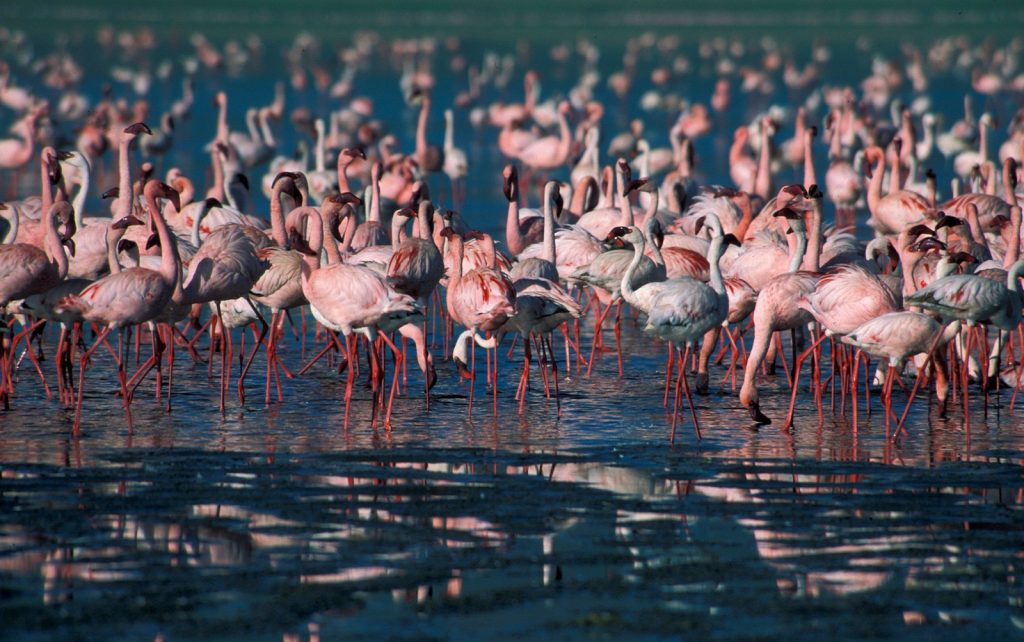
- Lakes Nakuru & Bogoria: These soda lakes are world-renowned for their "pink fringe" of Lesser and Greater Flamingos. Beyond the flamingos, the surrounding acacia woodlands are home to the Narrow-tailed Starling and various pipits.
- Kakamega Forest: As the only remaining patch of Guineo-Congolian rainforest in Kenya, this is a "must-visit." It holds species found nowhere else in the country, such as the Grey-cheeked Hornbill and the stunning Blue-headed Bee-eater.
- Aberdare National Park: For those seeking endemics, the high-altitude moorlands here are home to the Aberdare Cisticola and Jackson’s Francolin. The cool, misty environment provides a sharp contrast to the savannahs.
Clothing and Comfort
Comfort is key to maintaining the patience required for a long day in the field. For a Kenya birding safari, your wardrobe should be functional and understated.
Neutral colours like khaki, olive, and beige are essential. Bright colours, especially whites and reds, can startle birds and alert them to your presence from a distance. Additionally, blue and black clothing should be avoided in certain areas as they attract tsetse flies.
Because Kenya’s geography varies from sea level to over 2,000 metres, layering is the best strategy. Mornings in the Rift Valley or the central highlands can be surprisingly chilly, requiring a fleece or light jacket. By midday, the equatorial sun is intense, so lightweight, breathable fabrics are necessary. Don't forget a wide-brimmed hat and high-SPF sunscreen. If you are heading into the forests or wetlands, sturdy, waterproof hiking boots are a better choice than sandals to protect against damp ground and occasional stinging insects.
1. What is the best time for a Kenya birding safari?
Timing is everything when planning a Kenya birding safari. While Kenya’s equatorial climate makes it a year-round destination, the window from November to April is widely considered the "golden era" for avian enthusiasts. This period marks the arrival of millions of Palearctic migratory species fleeing the harsh winters of Europe and Asia. You will see an incredible influx of waders, raptors, and songbirds that swell the resident populations.
Furthermore, this window overlaps with the "short rains," which transform the landscape into a lush, emerald paradise. For resident birds, this is the peak breeding season. Many species shed their dull non-breeding feathers for spectacular, iridescent breeding plumage to attract mates. You’ll witness complex courtship displays and hear the full range of the dawn chorus as males defend their territories. If you visit specifically for the "Big Five" alongside birds, the dry season (June to October) offers better mammal visibility, but for sheer bird diversity and the beauty of breeding plumage, the wetter months are unbeatable.
2. Where are the top locations for a Kenya birding safari?
Kenya is topographically diverse, and a well-planned Kenya birding safari should reflect that. Lake Nakuru is world-famous for its flamingos, but it also hosts over 400 species, including the African Fish Eagle and various pelicans. For those seeking rare endemics, the Arabuko-Sokoke Forest on the coast is non-negotiable; it is the only place to find the Clarke’s Weaver and the Sokoke Scops Owl.
Lake Naivasha offers a freshwater contrast to the soda lakes, ideal for spotting kingfishers and herons from a boat. Moving to the savannahs, the Masai Mara provides an incredible array of raptors and ground-dwelling birds like the Secretary Bird. Finally, Samburu in the north offers "dry country" specialists you won't see in the south, such as the Vulturine Guineafowl and the Somali Ostrich. Visiting a mix of these locations ensures a comprehensive checklist.
3. What is the best gear to bring on a Kenya birding safari?
The quality of your optics can make or break your Kenya birding safari. Most professional birders recommend binoculars with $8\times42$ or $10\times42$ magnification. The $8\times$ is preferred for forest birding where light is low and a wider field of view helps track fast-moving warblers, while the $10\times$ is excellent for scanning open water or distant raptors.
A camera with a powerful telephoto lens (at least 400mm) is essential for capturing detail without disturbing the birds. Beyond optics, carry a definitive field guide like The Birds of East Africa by Terry Stevenson and John Fanshawe. Whether in physical or app form, having a reliable reference is crucial for identifying the "Little Brown Jobs" (LBJs) that often stump even experienced birders. A sturdy tripod or beanbag for your vehicle's window will also help stabilize long-distance shots.
4. What should I pack for a Kenya birding safari?
Packing for a Kenya birding safari requires a balance between protection and temperature regulation. Lightweight, neutral-coloured clothing is the standard. Shades of khaki, beige, and olive green help you blend into the bush, preventing you from startling skittish species. Long-sleeved shirts and trousers are vital, not just for the sun, but to protect against biting insects and thorny acacia scrub.
Don't forget a wide-brimmed hat to reduce glare and protect your neck, high-SPF sunblock, and comfortable, waterproof walking shoes for forest treks. Since you’ll be out at dawn, a light fleece or windbreaker is necessary for the chilly morning air before the equatorial sun takes over. Always pack a reusable water bottle and perhaps a small "sit-upon" mat for those long waits in a hide.
5. Are there specialists for a Kenya birding safari?
Absolutely. While a general safari guide is great at spotting a lion, a Kenya birding safari specialist has a "trained ear" that is indispensable. These experts can identify hundreds of species by a single "chip" note or a flash of wing colour. They understand the specific micro-habitats—knowing exactly which fruiting tree a Barbet prefers or which rock a Rock-Thrush frequents.
Hiring a guide certified by the Kenya Professional Safari Guides Association (KPSGA) who specializes in ornithology will exponentially increase your "lifer" count. They often use playback (responsibly) and possess deep knowledge of bird behaviour, allowing you to anticipate movements for the perfect photograph. Their passion often turns a simple drive into an educational masterclass in ecology.
6. Is a Kenya birding safari suitable for beginners?
Kenya is perhaps the most beginner-friendly birding destination on earth. The sheer abundance of large, colourful, and relatively bold birds makes a Kenya birding safari immediately rewarding. You don't need to be an expert to appreciate the iridescent feathers of a Superb Starling or the majestic flight of a Martial Eagle.
Productive areas like Lake Nakuru or the gardens of most safari lodges provide "easy wins" where birds are habituated to humans. Beginners will find that birding adds a constant layer of engagement to their trip; while others are waiting hours to find a cat, the birder is constantly occupied by the dozens of species visible right from the lodge veranda. It’s an excellent way to develop an eye for detail and an appreciation for the smaller wonders of the wild.
7. How many bird species can I expect to see on a Kenya birding safari?
With over 1,100 recorded species, Kenya is an avian powerhouse. On a standard two-week Kenya birding safari that covers a variety of habitats, a dedicated birder can easily tick off 300 to 500 species. The country's unique position on the equator means it hosts a mix of northern and southern hemisphere migrants, alongside its rich resident population.
The diversity is driven by the range of altitudes, from sea level to the 5,199-metre peak of Mount Kenya. Each zone—coastal, desert, montane forest, and open plains—hosts its own unique community. If you are a "lister," Kenya offers one of the highest "birds per square mile" ratios in Africa, ensuring your notebook stays busy from the moment you land in Nairobi.
8. What are the best times of day for a Kenya birding safari?
Success on a Kenya birding safari is largely determined by the clock. Birds are most vocal and active during the "dawn chorus"—the first few hours of light from 6:00 am to 9:00 am. This is when they are most active in feeding and territorial displays. The low-angled morning light is also superior for photography, bringing out the true colours of the plumage.
Activity usually plateaus during the heat of the day (11:00 am to 3:00 pm), as birds seek shade in deep thickets. This is your time to rest or travel. A second spike in activity occurs from 4:00 pm until dusk. For the truly dedicated, night drives offer the chance to see "creatures of the night" like the Verreaux’s Eagle-Owl or various Nightjar species, adding a mysterious dimension to your trip.
9. Can I do a Kenya birding safari during the rainy season?
Yes, and many professionals actually prefer it! The "green seasons" (April–May and October–November) are spectacular for a Kenya birding safari. While the rains can make some backcountry roads muddy, the trade-offs are significant. The landscape is incredibly photogenic, with dust-free air and vibrant green backdrops.
During the rains, food (insects and seeds) is plentiful, which triggers peak breeding. You will see birds in their finest feathers, performing elaborate songs and dances. Additionally, these periods often coincide with the arrival of migrants. While you might need a $4\times4$ vehicle and a bit of patience for the weather, the reward is fewer tourists and a much higher frequency of rare, breeding-related behaviours.
10. What is a "must-see" on a Kenya birding safari?
Every birder has their own "Holy Grail," but a Kenya birding safari offers several iconic sightings. The Sokoke Scops Owl is a world-renowned rarity found in the coastal forests. On the plains, the Secretary Bird—a raptor that hunts snakes on foot—is a majestic and prehistoric-looking sight.
The massed flamingos of the Rift Valley lakes provide one of the most famous wildlife spectacles on Earth. For forest specialists, the Great Blue Turaco with its vibrant plumage and loud calls is a top target. Finally, keep an eye out for the Lilac-breasted Roller, Kenya’s unofficial national bird, whose eleven different colours make it a photographer’s dream. Seeing a pair of these rollers in flight is a memory that sticks with every traveler.
11. Are there specific clothes to avoid on a Kenya birding safari?
Choosing the wrong clothes can actually hinder your Kenya birding safari. Avoid bright colours, particularly whites, reds, and yellows. These colours are highly visible to birds, many of whom have vision far superior to ours; a bright shirt can act as a warning signal, causing birds to flush before you can get a good look.
Crucially, avoid dark blue and black clothing. In many of Kenya's birding hotspots, these colours are known to attract tsetse flies, which have a very painful bite. You should also avoid camouflage or military-style clothing, as this can be misunderstood by local authorities and is often reserved for park rangers. Stick to "safari neutrals" to ensure you are both comfortable and inconspicuous.
12. How does a Kenya birding safari differ from a general game safari?
A Kenya birding safari is often described as a "slow-motion" safari. While a general game drive might involve racing across the plains to see a lion kill, a birding trip involves lingering at a single acacia tree or a small swamp for half an hour. The focus shifts from the "Big Five" mammals to the "Little Five Hundred" birds.
The itinerary is also different. You will spend more time in specialized habitats like forests and wetlands, which general tourists often skip. Birding requires a higher level of patience and a "stop-and-start" driving style. However, because birds are everywhere, the "lull" times on a general safari—where you’re just driving between sightings—become some of the most exciting parts of a birding trip.
13. Do I need specialized clothing for a Kenya birding safari?
While you don't need a professional uniform, "technical" clothing makes a Kenya birding safari much more enjoyable. Fabrics that are moisture-wicking and quick-drying are ideal, especially for humid coastal forests or the sweaty mid-afternoons in the Rift Valley. Shirts with "vented" backs and zip-off cargo trousers are popular because they allow you to adapt to the changing temperatures of the day.
If you plan on doing a lot of walking, high-quality socks that prevent blisters and treated "insect-shield" clothing can be a lifesaver. For the high-altitude areas like the Aberdares or Mount Kenya, a proper waterproof and windproof shell is necessary, as it can be misty and cold even when the rest of the country is baking in the sun.
14. What are the best precautions to take on a Kenya birding safari?
Safety and health are paramount for an uninterrupted Kenya birding safari. Always use a DEET-based insect repellent, especially at dawn and dusk when mosquitoes are active. Consult your doctor about malaria prophylactics well before you depart. Sun protection is equally important; the equatorial sun is deceptively strong even on cloudy days.
From a safety perspective, always stay inside your vehicle or follow your guide’s instructions in national parks. Many of the best birding spots—like dense thickets or riverbanks—are also prime territory for buffalo, hippos, or crocodiles. Carrying a basic first-aid kit and ensuring you have travel insurance that covers emergency evacuation is standard practice for any remote travel in East Africa.
15. Can I combine a Kenya birding safari with a big game safari?
One of the greatest joys of a Kenya birding safari is that it naturally integrates with big game viewing. Kenya's national parks are multi-functional ecosystems. In the Masai Mara, while you are scanning the grass for a Cisticola, you are likely to stumble upon a cheetah. At Amboseli, you can photograph waterbirds in the marshes with a backdrop of elephants and Mount Kilimanjaro.
Most travelers find that birding enriches their general safari experience. It fills the "gaps" between mammal sightings with constant movement and colour. Many lodges are designed to cater to both interests, offering game drives that satisfy the big-game hunters in the group while the birders keep their binoculars glued to the canopy. It is the perfect compromise for a diverse group of nature lovers.
Booking Kenya birding safari with us Roads of Adventure safaris
Book your ultimate Kenya birding safari with Roads of Adventure Safaris, specializing in unforgettable, customized tours through premier birding destinations. Witness diverse avian species in habitats like Lake Nakuru and the Masai Mara alongside Big Five wildlife encounters. Our expert guides ensure a safe, knowledgeable experience, offering personalized itineraries for both seasoned birders and enthusiasts. Enjoy tailored travel solutions, including comfortable, scenic, and budget-friendly options. Experience exceptional service and deep wildlife knowledge with a dedicated team. Book your adventure today to discover Kenya’s breathtaking birdlife and scenic beauty with a trusted operator.
