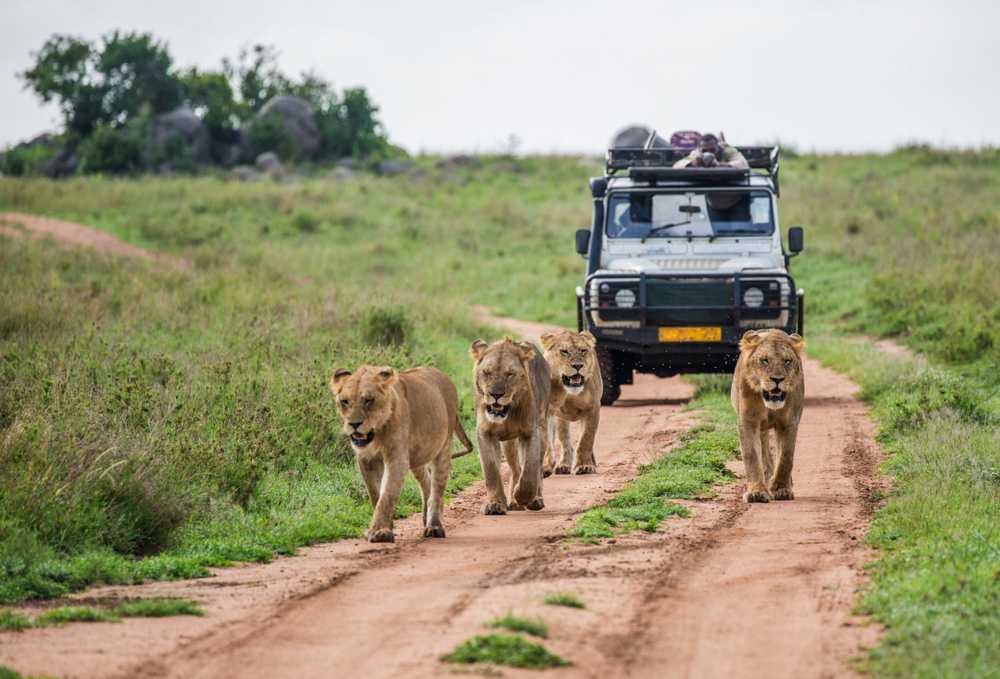
A 6-day Kenya safari this season offers premier experiences: tracking the Big Five in Maasai Mara, witnessing thousands of flamingos at Lake Nakuru, and photographing elephants against Mt. Kilimanjaro in Amboseli. Top activities include sunrise hot air ballooning, walking safaris in Hell’s Gate, visiting the Giraffe Centre, and exploring the unique rhino sanctuary at Ol Pejetaki
6-days-luxury-safari-to-kenya-best-parks
6-days-best-masai-mara-and-lake-naivasha-kenya-wildlife-safari-holiday
6-days-circuit-kenya-safari-to-masai-mara-lake-nakuru-and-amboseli-park
6-days-kenya-safari-and-gorilla-tracking-vacation-in-rwanda
6-days-kenya-wildlife-safari-and-uganda-gorilla-tracking-safari-tour
6-days-luxury-kenya-safari-round-trip-starting-from-masai-mara
6-days-5-nights-midrange-kenya-wildlife-safari-vacation
1. Tracking the Big Five in Maasai Mara
The Maasai Mara remains the crown jewel of African wildlife conservation. Spanning over 1,500 square kilometres, this vast savannah is world-renowned for its exceptional populations of lion, leopard, and cheetah. During this travel season, the plains are a theatre of survival where you can track the "Big Five": lion, leopard, elephant, Cape buffalo, and the elusive black rhino.
The experience is defined by the sheer density of animals. It is not uncommon to witness a pride of lions stalking through the golden grass or a leopard draped over the limb of an acacia tree. Beyond the predators, the Mara is home to vast herds of zebra and wildebeest, which maintain the ecosystem’s vibrant energy. Expert local guides, many of whom are Maasai, provide invaluable insight into animal behaviour and the delicate balance of the environment. Whether you are navigating the Mara River or exploring the remote corners of the reserve, the spectacle of raw nature here is life-changing.
2. Witnessing Flamingos at Lake Nakuru
Lake Nakuru National Park offers a striking contrast to the open plains of the Mara. This alkaline lake, nestled in the Great Rift Valley, is famous for attracting thousands of lesser and greater flamingos. From a distance, the shoreline often appears as a shimmering fringe of bright pink—a breathtaking sight for photographers and birdwatchers alike.
While the birdlife is a primary draw, Nakuru is also a premier sanctuary for rhinos. It is one of the best places in East Africa to see both the southern white rhino and the endangered black rhino in a single afternoon. The park’s compact size makes it incredibly rewarding for game viewing, as the diverse habitats—ranging from woodland to rocky escarpments—are easily accessible. You may also spot the rare Rothschild’s giraffe or a tree-climbing lion, a unique local phenomenon. The viewpoints at Baboon Cliff and Out of Africa Lookout provide a panoramic perspective of the lake’s soda-encrusted shores against the backdrop of the Rift Valley.
3. Photographing Elephants in Amboseli
Amboseli National Park is synonymous with two things: enormous "tuskers" and the majestic silhouette of Mount Kilimanjaro. Although the mountain is located across the border in Tanzania, Amboseli offers the most iconic views of its snow-capped peak. There is perhaps no more classic African image than a herd of elephants wandering across the dusty plains with the world’s highest free-standing mountain looming behind them.
The park’s ecosystem is centred around underground springs from Kilimanjaro’s meltwater, creating lush emerald-green swamps in an otherwise arid landscape. These wetlands attract massive concentrations of elephants, which can be seen wallowing in the mud or grazing on succulent grasses. Because the vegetation is relatively sparse, wildlife spotting is exceptionally easy. Beyond the giants, you can expect to see hippos, pelicans, and various raptors. Spending time at Observation Hill allows you to look down upon the entire park, watching the movement of herds as they trek toward the water at sunset.
4. Sunrise Hot Air Ballooning
For a truly perspective-shifting experience, a sunrise hot air balloon safari over the Maasai Mara is essential. The journey begins in the pre-dawn chill as the massive balloon is inflated by bursts of flame. As you lift off, the silence of the morning is broken only by the occasional roar of the burner, allowing you to drift ghost-like over the landscape.
From above, the patterns of the wild become clear: the winding tracks of hippos heading back to the river, the geometric formations of grazing zebras, and the long shadows of giraffes. The aerial view reveals the true scale of the Mara’s beauty. Upon landing on the plains, the experience concludes with a traditional "Champagne Bush Breakfast"—a luxurious spread served under the shade of a lone tree. It is a moment of profound tranquility and celebration, marking the start of a new day in the heart of the wilderness.
5. Walking Safaris in Hell’s Gate
Hell’s Gate National Park offers a rare opportunity to step out of the safari vehicle and engage with the landscape on foot or by bicycle. Named for its intense geothermal activity and towering obsidian cliffs, the park provides a dramatic setting for a more active adventure. Because there are no large predators like lions or leopards, it is perfectly safe to hike or cycle alongside herds of zebra, gazelle, and eland.
A highlight of any visit is exploring the deep, winding gorges where water-streaked walls create a narrow, labyrinthine path. You can also climb the "Fischer’s Tower" or visit the geothermal power station to see how the earth’s natural energy is harnessed. The sense of freedom at Hell’s Gate is unparalleled; feeling the crunch of the earth beneath your boots and hearing the wind whistle through the basalt cliffs provides a sensory connection to the Rift Valley that a traditional game drive simply cannot match.
6. The Giraffe Centre & Ol Pejeta Sanctuary
Rounding out the 6-day itinerary are two of Kenya’s most vital conservation hubs. The Giraffe Centre in Nairobi allows for intimate encounters with the endangered Rothschild’s giraffe. From a raised wooden platform, you can hand-feed these gentle giants, gaining a close-up appreciation for their long, prehensile tongues and soulful eyes. It is an educational and heartwarming start or end to any Kenyan journey.
Moving north to the Laikipia Plateau, the Ol Pejeta Conservancy stands as a beacon of modern conservation. It is the largest black rhino sanctuary in East Africa and home to the world’s last two northern white rhinos. Beyond rhino protection, Ol Pejeta hosts the Sweetwaters Chimpanzee Sanctuary, providing a home for rescued primates. A visit here is deeply moving; it offers a chance to see "Baraka," the blind black rhino, and to learn about the high-tech anti-poaching efforts that keep these species safe. It is a powerful reminder of the importance of sustainable tourism in preserving Africa’s natural heritage.
What are the top wildlife highlights I can see on a 6-day Kenya safari?
A six-day Kenyan safari in 2026 offers a condensed but breathtaking masterclass in biodiversity. The primary highlight for most is the Maasai Mara National Reserve, where the density of large predators is arguably the highest in the world. Here, you are likely to encounter the "Big Three" cats: lions in formidable prides, elusive leopards draped over acacia branches, and cheetahs scanning the horizon from termite mounds. The sheer volume of plains game—thousands of zebras, wildebeest, and gazelles—creates a constant sense of movement and drama.
In Amboseli National Park, the highlight shifts to the "Land of Giants." This park is world-renowned for its free-ranging African elephants, including some of the last remaining "Great Tuskers." Watching these matriarchal families traverse the dusty plains with the snow-capped peaks of Mount Kilimanjaro in the background is a quintessential African image. Meanwhile, the Rift Valley lakes, specifically Lake Nakuru, offer a starkly different ecosystem. Here, the highlights are the rhinoceroses—both black and white—which are heavily protected and frequently seen grazing near the water’s edge.
For those venturing to Ol Pejeta Conservancy, the highlights take on a more poignant tone. You can visit the world’s last two northern white rhinos, a powerful encounter that underscores the importance of modern conservation. Additionally, the park hosts a chimpanzee sanctuary, providing a rare chance to see primates in a rescued habitat. Beyond these famous species, a 6-day trip allows you to appreciate the "Special Five" in the drier northern regions or the vibrant birdlife that thrives in the marshes. From the golden savannahs to the emerald swamps, the wildlife highlights of Kenya are as diverse as the landscapes they inhabit.
How does the Maasai Mara migration experience differ between August and October?
In August, the Great Migration is at its most visceral and chaotic. This is the peak of the "Crossing Season," where over 1.5 million wildebeest and zebras are concentrated in the northern sectors of the Maasai Mara. The primary draw during this month is the legendary river crossings at the Mara River. These events are high-stakes dramas where herds plunge into crocodile-infested waters in a desperate bid for fresh grazing. The atmosphere is electric but can be crowded; because this is the height of the international travel season, you will likely share crossing points with many other vehicles. The grass is usually taller, providing excellent cover for predators, though it can make spotting smaller animals slightly more challenging.
By October, the experience transitions into a "slow dispersal." Most of the herds have successfully crossed into the Mara and are now grazing across the vast plains as they prepare for their return journey south towards the Serengeti. While the spectacular river crossings are less frequent, the animals are more spread out, which often results in a more tranquil and "exclusive" safari feel with fewer tourist vehicles. The vegetation is much thinner and shorter after months of grazing and dry weather, which is a significant advantage for photography. Predators, especially cheetahs and lions, are far easier to spot against the parched, golden landscape. October offers a more contemplative version of the migration, focusing on the predator-prey relationship on the open plains rather than the frantic river hurdles of August. It is an ideal time for those who prefer a quieter, more expansive wilderness experience.
Which national parks are considered best for spotting the Big Five in Kenya?
Kenya offers several premier locations for spotting the "Big Five" (lion, leopard, elephant, buffalo, and rhino), but three destinations stand out for their consistency and accessibility. The Maasai Mara is the undisputed heavy hitter. It is arguably the best place in Africa to see four of the five; lions and buffalo are everywhere, elephants are common, and the Mara’s riverine forests provide the perfect habitat for leopards. However, the rhino remains the "wildcard" here, usually requiring a trip into the more remote Mara Triangle to spot.
For a guaranteed "full house," Lake Nakuru National Park is an essential addition. While it lacks the vastness of the Mara, it is one of the most successful rhino sanctuaries in East Africa. It is one of the few places where you can reliably see both the southern white rhino and the endangered black rhino in a single afternoon. The park also supports a healthy population of leopards and buffalo, and while lions are present, they are famous for their unusual habit of climbing trees to escape the heat or insects.
Ol Pejeta Conservancy on the Laikipia Plateau is another top-tier contender. It is the largest black rhino sanctuary in East Africa and boasts a very high predator density. Because it is a private conservancy rather than a national park, the guides have more flexibility in tracking, which often leads to superior sightings of the Big Five. For those focusing on elephants, Amboseli is the gold standard, though it lacks the rhino. Therefore, a 6-day itinerary that combines the Maasai Mara with either Lake Nakuru or Ol Pejeta is the most effective way to ensure you tick all five off your list.
What is the most scenic spot to enjoy a hot air balloon flight over the Mara?
The most scenic spot for a hot air balloon flight is the Mara Triangle, located in the western sector of the Maasai Mara National Reserve. This area is bordered by the dramatic Oloololo Escarpment to the west and the winding Mara River to the east. As your balloon lifts off in the pre-dawn twilight, you are treated to a spectacular panoramic view of the sun cresting over the horizon, painting the savannah in shades of deep gold and purple. The elevation allows you to appreciate the intricate geography of the region, from the dense gallery forests hugging the riverbanks to the vast, uninterrupted plains that stretch toward the Serengeti in Tanzania.
Floating silently over the Mara Triangle offers a perspective that a vehicle simply cannot provide. You can look directly down into the hippopotamus pools in the river and watch the "hippo highways"—well-worn trails in the grass—that the animals use to return to the water at dawn. The aerial vantage point is also perfect for spotting the long shadows cast by giraffes as they move between acacia trees and the geometric patterns of zebra herds. The flight concludes with a traditional "Champagne Bush Breakfast" served on the open plains. There is no more iconic or scenic way to experience the scale and beauty of the Kenyan wilderness than from the basket of a balloon in this specific corner of the Mara, where the landscape feels truly ancient and untouched.
Is visiting a Maasai village during my 6-day safari a worthwhile cultural experience?
Visiting a Maasai village, or manyatta, is a worthwhile experience provided it is approached with the right mindset and a focus on ethical tourism. The Maasai are one of the few tribes in Africa that have successfully maintained their traditional pastoralist lifestyle despite the encroachments of modern life. A visit offers a rare opportunity to learn about their unique social structures, their deep spiritual connection to their livestock, and their traditional medicinal practices. You will typically be welcomed with a vibrant song and the "Adumu" (the jumping dance), and you’ll have the chance to see inside their homes, which are expertly constructed from mud, sticks, and cow dung.
To ensure the experience is meaningful rather than merely performative, it is best to visit villages that have a direct partnership with your lodge or are part of a community-led conservancy. These visits often include a more in-depth look at local schools or water projects funded by tourism. While some may find the "market" aspect of the visit—where beadwork and crafts are sold—a bit commercial, it is important to remember that this is a vital source of income for the women of the community. For a 6-day traveller, this cultural immersion provides essential context to the landscape. It reminds us that the "wild" areas we admire are actually ancestral lands managed by people who have coexisted with lions and elephants for centuries. It adds a human dimension to the safari that makes the journey feel complete.
What are the best options for luxury lodges inside Amboseli National Park?
For the 2026 travel season, luxury in Amboseli is defined by properties that provide an immersive "Kilimanjaro view" without sacrificing modern comforts. Ol Tukai Lodge remains a premier choice due to its strategic location in the heart of the park. The lodge is set amidst a grove of acacia trees and looks out over the marshes where elephants spend their days wallowing. Its architecture is classic, and the rooms are designed so that guests can watch wildlife directly from their private verandas.
Another exceptional option is the Amboseli Serena Safari Lodge. Influenced by traditional Maasai architecture, the lodge features hand-painted murals and a design that blends seamlessly into the surrounding landscape. It is particularly well-known for its beautiful gardens and its commitment to eco-friendly practices, including a significant tree-planting initiative. For those seeking a more "tented" but ultra-luxurious experience, Tortilis Camp is located in a private concession on the park’s border. While technically just outside the official gate, it offers exclusive access to its own conservancy area, providing a more private safari feel. The "tents" are magnificent structures with permanent wooden floors and elegant en-suite bathrooms. Staying here allows for guided bush walks and sundowners in locations that are off-limits to the general public. These lodges represent the pinnacle of Kenyan hospitality, combining fine dining and infinity pools with the raw, dusty beauty of the African bush.
Can I experience a thrilling night game drive to see nocturnal predators?
Night game drives are a thrilling way to witness the "other half" of the African wilderness, but it is important to note that they are not permitted within Kenya’s official National Parks, such as the Maasai Mara Reserve or Amboseli. To experience the magic of the bush after dark, you must stay in one of the private conservancies (such as Mara North, Olare Motorogi, or Ol Pejeta). In these areas, the rules are more flexible, allowing specially equipped vehicles to head out after sunset with powerful, filtered spotlights.
During a night drive, the atmosphere changes completely. The familiar daytime sights are replaced by the glint of eyes in the darkness. This is the best time to see nocturnal specialists like the serval cat, the caracal, the honey badger, and the aardvark. It is also when the "Big Cats" are most active. You might witness a pride of lions beginning their nightly hunt or a leopard stealthily moving through the shadows. The soundscape also intensifies; the hoot of an owl or the distant, haunting laugh of a hyena becomes much more prominent. A night drive offers a visceral sense of the "circle of life" that you simply cannot get during the day. It is a highly recommended addition to any 6-day itinerary, provided you choose your accommodation carefully to ensure you are in an area where these nocturnal explorations are allowed.
Which season offers the best photography opportunities for predator activity in Kenya?
The best season for predator photography in Kenya is the short dry season, which runs from January to March. While many photographers flock to the Great Migration in August, the high grass during that time can often obscure the action, leaving you with "ears and tails" rather than clear shots. In the early months of the year, the landscape is much drier and the grass is significantly shorter. This "clean" background is a photographer's dream, allowing for unobstructed views of a cheetah at full sprint or a lioness stalking through the thinning scrub.
Furthermore, this period coincides with the "calving season" for many of the plains herbivores. The abundance of vulnerable young zebras and wildebeest triggers an incredible surge in predator activity. You are much more likely to witness—and capture—a hunt during these months. The light in January and February is also typically crisp and golden, avoiding the heavy dust haze that can occur in the later, more intense dry season of September. Another advantage is that there are generally fewer tourist vehicles than during the migration peak, allowing you more time and space to position your vehicle for the perfect angle. For those serious about wildlife photography, the combination of short grass, newborn prey, and active predators makes the first quarter of the year the ultimate window for a Kenyan safari.
Is Lake Nakuru the best destination in Kenya for rhino and flamingo spotting?
In 2026, Lake Nakuru remains the gold standard for rhino spotting in Kenya. As a fenced and highly protected national park, it acts as a sanctuary where both black and white rhinoceroses thrive. Because the park is relatively small compared to the Maasai Mara, the density of rhinos is high, and sightings are almost guaranteed during a single game drive. It is perhaps the only place in the world where you can photograph these prehistoric giants against a backdrop of yellow-fever acacia trees and alkaline water.
However, when it comes to flamingos, the situation is more fluid. Due to rising water levels in the Great Rift Valley lakes over the last few years, the alkalinity of Lake Nakuru has fluctuated. This has occasionally caused the famous "pink carpet" of millions of lesser flamingos to migrate to other nearby lakes like Lake Bogoria or Lake Elementaita. While you will almost always see thousands of flamingos at Nakuru, the truly massive, horizon-to-horizon concentrations are now more common at Bogoria. Therefore, if your primary goal is the flamingo spectacle, it is wise to check the latest "water level" reports before you travel. That said, Nakuru is still an essential destination because of its diverse wildlife, including tree-climbing lions and the rare Rothschild’s giraffe, making it a highly rewarding stop regardless of the exact bird count.
How can I include a walking safari in my Kenyan itinerary for an immersive experience?
To include a walking safari in your 6-day itinerary, you should look toward Hell’s Gate National Park or the private conservancies bordering the larger reserves. Hell’s Gate is unique because it contains no large predators like lions or leopards, making it safe to explore on foot or by bicycle. Walking through the towering obsidian cliffs and winding gorges allows you to stand just a few metres away from zebras, giraffes, and warthogs. It is a fantastic way to stretch your legs and experience the Rift Valley’s geothermal activity up close.
For a more traditional "bush walk" in big-game territory, staying in a private conservancy such as Mara North or Selenkay is essential. Here, you will be accompanied by an armed ranger and a Maasai tracker. These walks are not about "hunting" for the Big Five on foot; rather, they focus on the "Little Five" and the intricate details of the ecosystem. Your guide will show you how to identify animal tracks, explain the traditional medicinal uses of various plants, and teach you about the subtle sounds of the bush. It is a profound sensory shift; without the engine of a Land Cruiser, you become much more aware of the wind, the scents of the wild, and the sheer scale of the landscape. It turns the safari from a viewing exercise into a truly immersive, educational adventure.
What is the ideal itinerary for combining Amboseli's elephants with Maasai Mara’s plains?
The ideal 6-day itinerary for combining these two iconic destinations is a "Fly-In" circuit, which minimises travel time and maximises your time in the bush.
- Days 1-2: Amboseli National Park. Start your journey with a flight from Nairobi’s Wilson Airport directly to the Amboseli airstrip. Spend two days exploring the park’s marshes and seasonal lakes. The focus here is on the massive elephant herds and capturing that legendary photo of them with Mount Kilimanjaro in the background. The morning light on the mountain is best, so early starts are vital.
- Day 3: The Transition. Take a scheduled "bush flight" from Amboseli to the Maasai Mara. This flight takes about 45 minutes and offers spectacular views of the Great Rift Valley. It saves you nearly 8 hours of driving on bumpy roads. You’ll arrive in the Mara in time for an afternoon game drive.
- Days 4-6: Maasai Mara. Spend your final three days immersed in the Mara’s predator-rich savannahs. This allows enough time to explore different sectors, such as the Mara River or the private conservancies, ensuring you see the big cats and the migration herds.
This "Fly-In" approach is the most efficient way to see both parks in 6 days. Ending in the Mara ensures your safari concludes with the highest possible animal density, leaving you with an unforgettable finale to your Kenyan adventure.
Are there opportunities for horse riding among giraffes and zebras in Kenya?
Yes, Kenya offers some of the most spectacular horse-riding safaris in the world, though they are generally divided into two categories: "beginner-friendly" sanctuary rides and "expert-only" bush treks. For a gentle experience, several lodges around Lake Naivasha and Mount Kenya offer short rides through private sanctuaries. Because the wildlife in these areas—such as giraffes, zebras, and waterbucks—is habituated to the horses, they do not see the riders as a threat. This allows you to ride remarkably close to the animals, often coming within a few metres of a giraffe as it browses on an acacia tree.
For experienced riders seeking a “rawer” experience, locations like the Chyulu Hills or the Laikipia Plateau offer multi-day riding safaris. These are truly immersive; you spend several hours in the saddle each day, navigating the landscape just as the early explorers did. You might canter alongside a herd of zebras across the plains or watch elephants from a safe distance. Because these areas contain predators, these rides are led by highly experienced guides and are strictly for those who are confident in all paces. Whether it is a one-hour trot in Naivasha or a week-long expedition in Laikipia, riding through the Kenyan bush provides a silent, rhythmic connection to nature that is impossible to replicate from the seat of a 4x4 vehicle.
How do I choose between flying and driving to the Maasai Mara?
The choice between flying and driving to the Maasai Mara involves a trade-off between cost, comfort, and the "full experience." Driving is significantly more affordable and is the best choice for those on a budget or those who want to see more of the "real" Kenya. The 5-to-6-hour journey from Nairobi takes you down the spectacular Great Rift Valley escarpment, through small bustling towns like Narok, and into the rural heartland. However, the last 70km are notoriously bumpy—a phenomenon known as the "African massage." It can be physically draining, especially at the start of a holiday.
Flying is the "luxury" option. A 45-minute flight from Wilson Airport lands you directly at an airstrip inside the reserve, where your lodge’s vehicle will be waiting. It is fast, comfortable, and offers incredible aerial views of the landscape. For a 6-day itinerary, time is your most valuable asset. Flying saves you nearly two full days of travel (when you consider the return journey), giving you four extra game drives that you would otherwise spend in a van. Many travellers find a "middle ground" by driving to the Mara to see the Rift Valley and then flying back to Nairobi on their final day. This provides the best of both worlds: the scenic road trip experience without the exhaustion of a long return journey before your international flight home.
What are the best beach extensions near Mombasa to combine with a safari?
After the dust and excitement of a safari, a beach extension is the perfect way to unwind. Diani Beach, located south of Mombasa, is consistently voted the best beach in Africa. It features miles of powdery white sand, turquoise waters, and a wide range of accommodation from boutique villas to large all-inclusive resorts. It is also a hub for water sports like kitesurfing and skydiving.
For those seeking a quieter, more "eco-conscious" vibe, Watamu (north of Mombasa) is an excellent choice. It is famous for its Marine National Park, which offers world-class snorkelling and diving. The town has a charming, laid-back feel with some of the best Italian-influenced seafood on the coast. Alternatively, the Lamu Archipelago offers a deep dive into Swahili culture. This UNESCO World Heritage site is a place where time seems to have stood still; there are no cars on the island, and transport is by dhow or donkey. It is the ultimate destination for "slow travel" and relaxation. In 2026, the Madaraka Express train makes it incredibly easy to connect from a safari in Amboseli or Tsavo to the Mombasa coast in just a few hours, making the "Bush and Beach" combination a seamless and highly recommended way to finish your Kenyan adventure.
What should I pack to ensure I am comfortable during my Kenya wildlife adventure?
To ensure maximum comfort on a 6-day safari, you must pack with "versatility" in mind. The Kenyan climate varies significantly between the chilly early mornings and the heat of the midday sun.
- Clothing Layers: Pack lightweight, breathable fabrics in neutral tones like khaki, beige, or olive green. Bright white will show the red dust immediately, and dark blue or black can attract tsetse flies. Essential items include a warm fleece or "puffer" jacket for pre-dawn game drives and a wide-brimmed hat with a chin strap to prevent it from blowing off in the open vehicle.
- Footwear: You do not need heavy hiking boots unless you are planning a walking safari. A comfortable pair of trainers or sturdy sandals is usually sufficient for vehicle-based game drives.
- Sun and Bug Protection: High-factor (SPF 50+) sunscreen is vital, even on cloudy days. Bring a reliable insect repellent containing DEET for the evenings.
- Electronics: A high-quality pair of binoculars (8x42 is the standard) will transform your viewing experience. Don't forget a universal power adapter and a robust power bank, as some bush camps have limited hours for electricity.
- Health and Hygiene: Pack a small personal first-aid kit containing antihistamines, rehydration salts, and basic painkillers. Wet wipes and hand sanitiser are also indispensable for cleaning up after a dusty day on the plains. Lastly, remember to bring a reusable water bottle; most luxury lodges now provide filtered water to reduce plastic waste.
Booking Kenya safari with us Roads of Adventure safaris
Book your unforgettable Kenya safari with Roads of Adventure Safaris for expert-guided adventures. We specialize in customized itineraries, ranging from luxury lodges to budget camping, covering iconic destinations like the Masai Mara, Amboseli, and Lake Nakuru. Experience the Big Five, witness the Great Migration, and enjoy authentic cultural visits with our professional, passionate team. Whether it's a family holiday, honeymoon, or thrilling game drive, our tailored packages ensure a seamless journey. Explore Kenya’s rich wildlife and breathtaking landscapes with us—visit our site to book your dream African safari today.
