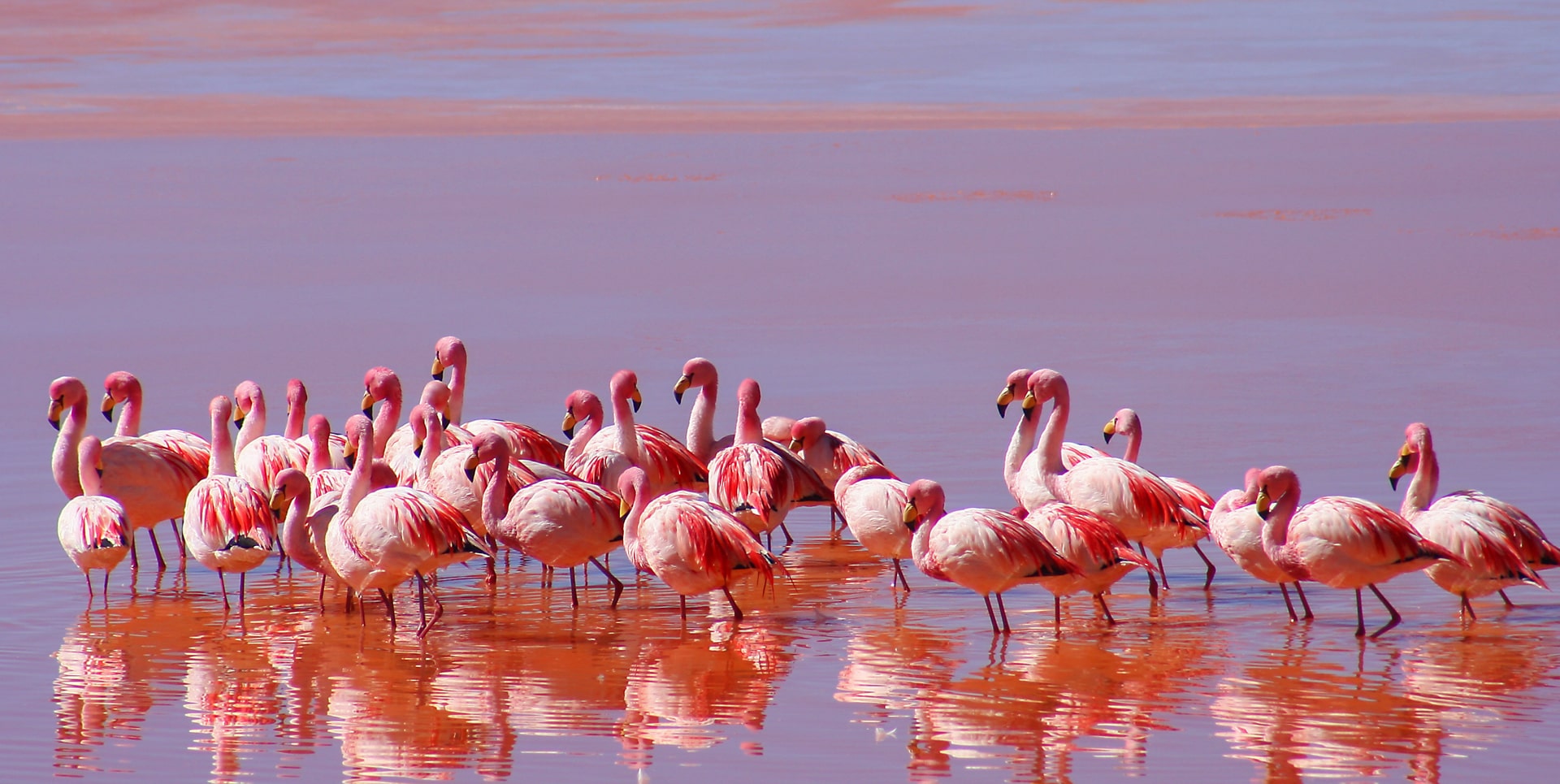
If you want to step beyond the classic savannah drive on your Tanzania wildlife safari, Lake Natron delivers a raw, otherworldly contrast. Nestled at the base of the Great Rift Valley escarpment, this harsh, soda-rich lake features dramatic red waters, eerie volcanic mudflats, and towering peaks that feel almost entirely untouched by time. Rather than sitting in a vehicle all day, you get to explore on foot—walking through steep gorge streams, climbing jagged volcanic slopes, and watching thousands of bright pink lesser flamingos gather in the shallow waters. From ancient volcanic history to vibrant local culture, it offers a stark, striking break from the usual safari routine.
Here is a fully humanized, well-structured version of the content with all meta-notes (like word count checks) and technical clutter removed, formatted cleanly using natural prose.
Flamingo Viewing & Photography
Lake Natron is the single most vital breeding site on Earth for East Africa's lesser flamingos, regularly hosting up to 75% of the global population during nesting seasons. The lake’s harsh, highly alkaline water creates a caustic environment that deters most land mammals. Because predators like jackals and hyenas cannot cross the caustic mudflats without injuring themselves, flamingos can safely build raised mud nests out in the shallows with near-total protection.
The iconic pink feathers of the lesser flamingo come directly from their diet of Arthrospira fusiformis, a microscopic blue-green alga that thrives in extreme soda lake conditions. When conditions align—typically during the dry months from July through October—millions of these birds gather to filter-feed in the shallows, turning vast stretches of the lake vibrant shades of pink and crimson.
Photographing the flock takes careful preparation and appropriate gear. The mud along the shoreline is soft and deep, so most viewing happens from designated firm ground or elevated viewpoints along the western bank. A telephoto lens of at least 400mm is essential for capturing tight portraits or flight shots without disturbing the colonies. Early morning light provides ideal conditions, as calm waters mirror the pink flocks against the dark, dramatic slopes of the Rift Valley escarpment. Adding a day or two here creates a striking visual contrast to the open plains of a standard Tanzania wildlife safari.
Hike to Ngare Sero Waterfalls
Trekking through Ngare Sero Gorge offers a welcome physical change of pace from long hours seated in a safari vehicle. Located along the western edge of Lake Natron, the river flows year-round out of the Rift Valley wall, carving a narrow, steep-sided canyon through dark volcanic basalt.
This is an active water trek rather than a dry walking trail. You will spend much of the walk wading directly through the Ngare Sero River, with water depths ranging from ankle-deep to waist-deep depending on recent mountain rainfall. The round-trip trek takes roughly two to three hours and calls for sturdy outdoor sandals or old sneakers with good traction. Standard leather hiking boots are best left behind, as they fill with water and become heavy.
As you trek deeper into the canyon, the towering rock walls narrow overhead, blocking out the fierce desert heat and keeping the gorge air surprisingly cool. The path leads first to a lower waterfall with a large, shaded plunge pool suitable for swimming. Continuing further up the riverbed brings you to the upper falls, where freshwater cascades down lush, fern-covered moss walls. Local Maasai guides accompany all hikers to help navigate river crossings and ensure safe footings over slippery river rocks.
Climb Ol Doinyo Lengai
Rising abruptly to 2,960 meters above the arid valley floor, Ol Doinyo Lengai is the only active volcano on Earth that erupts natrocarbonatite lava. Unlike typical silicate lava, which burns at temperatures above 1,000°C and glows fiery red, natrocarbonatite lava erupts at a much cooler 500°C to 600°C. It appears dark brown or black during the day and cools into a light white ash within hours of exposure to moisture, giving the summit crater a pale, moon-like appearance.
Climbing "The Mountain of God"—as it is known in the Maasai language—is an intensely demanding physical challenge. The trail ascends over 1,600 vertical meters in just 5 kilometers, resulting in a relentless, steep gradient with almost no flat sections for rest. Climbs usually start around midnight so hikers can avoid the oppressive daytime heat and reach the crater rim in time for sunrise.
The trek takes roughly five to seven hours up and three to five hours down over loose volcanic ash, steep gullies, and slippery scree ridges where hands-and-knees scrambling is often necessary. Reaching the active crater rim at dawn rewards hikers with views directly into the steam-venting fissure, down to the pale surface of Lake Natron, and across the Great Rift Valley toward Mount Meru and Kilimanjaro on clear mornings.
Explore Ancient Hominid Footprints
On a flat, muddy plain near the village of Engare Sero lies one of the most extensive and well-preserved collections of ancient human footprints in Africa. Located along the southwestern shores of Lake Natron, this archaeological site contains more than 400 individual fossilized prints made by early Homo sapiens.
Scientific testing places the age of these impressions between 6,000 and 19,000 years old, dating back to the Late Pleistocene and early Holocene eras. The trackways were formed when a group of early humans walked across a wet layer of volcanic ash and mud spewed from nearby Ol Doinyo Lengai. Shortly after they passed, a second layer of ash washed over the tracks, sealing the impressions before wind or rain could wear them away.
Analyzing the size, stride length, and depth of the prints reveals clear details about early human activity. One major trackway shows a group dominated by women and children traveling together, likely gathering food or water, while another set records individuals moving at a fast pace. Local community guides lead visitors through the site, explaining the geological history while allowing you to walk alongside footprints that still clearly display individual toe, arch, and heel shapes.
Maasai Cultural Visits
The region surrounding Lake Natron remains home to pastoralist Maasai communities who continue to herd cattle, goats, and sheep across the dry Rift Valley floor. Due to the area's remote location, local villages have maintained traditional customs and homestead structures that feel far less commercialized than those near major tourist transit towns.
Visiting a traditional boma (homestead) offers a realistic look at how semi-nomadic pastoralists adapt to an environment shaped by high temperatures and seasonal droughts. A typical boma consists of a circular outer fence built from thorny acacia branches designed to keep predators away from livestock at night. Inside, small mud-plastered huts with thatched roofs surround a central cattle enclosure.
Cultural visits are managed through local community guides to ensure entry fees directly support village families. During a visit, hosts explain how they manage communal grazing lands, source drinking water from mountain springs, and use native plants for medicine. Rather than staged performances, these visits focus on genuine conversation and practical demonstrations of daily routines like fire-starting with hardwood sticks, beadwork crafting, and livestock management.
Relax at the Natural Hot Springs
Along the southern and western edges of Lake Natron, underground geothermal activity pushes warm, mineral-rich water up to the surface, creating natural hot springs where freshwater seeps meet the alkaline lakebed. These thermal outlets offer a quiet, relaxing environment to unwind after a morning hike or a dusty drive.
Water temperatures at the spring outlets range from lukewarm to hot, cooling gradually as the streams flow over flat stone terraces toward the main lake body. Where fresh thermal water mixes with the edge of the lake, salinity levels drop, creating small green wetlands and grassy marshes in an otherwise dry, salt-crusted landscape.
These fresh vegetation zones naturally draw local wildlife. It is common to soak your feet in the shallow, warm pools while watching small herds of zebras, giraffes, gazelles, and ostriches grazing along the marshy fringes. Birdlife around the springs is equally rich, featuring herons, storks, and flamingos wading through the brackish shallows. Visiting in the late afternoon—when the harsh sun drops behind the Rift Valley escarpment—provides comfortable temperatures, soft evening light, and a peaceful finish to an active day.
Here are 10 practical questions travelers frequently ask about visiting Lake Natron, answered with realistic, straightforward advice.
Is Lake Natron safe to visit given its toxic and caustic reputation?
Yes, it is completely safe for visitors as long as you exercise basic common sense. The lake's high alkalinity (with a pH that can reach over 10) and scorching water temperatures in certain zones make it dangerous to swim in the open water. However, you will not be swimming in the main alkaline body of the lake. Guided activities—like viewing flamingos along the shore, walking to the freshwater hot springs, or hiking through the freshwater Ngare Sero Gorge—take place in safe, designated areas. As long as you stay on established trails, listen to your local Maasai guide, and avoid stepping into deep shoreline mud, you will enjoy a perfectly safe experience in this unique environment.
What kind of footwear should I bring for the Ngare Sero Waterfall hike?
Leave your heavy leather hiking boots at the lodge for this specific hike. The Ngare Sero trail is an active water hike where you spend most of your time wading directly through the river bed, with water levels ranging from ankle to waist deep. Heavy boots will fill with water, become extremely heavy, and take days to dry out. Instead, bring sturdy closed-toe water shoes or outdoor sport sandals with firm rubber traction and adjustable straps. Old sneakers you don't mind getting completely soaked also work well. Pair them with quick-drying synthetic shorts rather than heavy cotton or denim trousers.
How difficult is climbing Ol Doinyo Lengai compared to Mount Kilimanjaro?
While Mount Kilimanjaro is a multi-day endurance test against altitude, Ol Doinyo Lengai is an intensely steep, technical sprint. It is often considered physically harder on the legs per kilometer. You gain over 1,600 vertical meters in just 5 kilometers over relentless volcanic ash, steep gullies, and loose scree. There are no flat sections to catch your breath, and hands-and-knees scrambling is required near the top. Because the climb starts at midnight to avoid the daytime heat, you are doing this demanding scramble in the dark with a headlamp. It demands solid physical fitness, strong knees, and zero fear of steep drop-offs.
When is the best time of year to see the flamingos at Lake Natron?
The absolute best window for flamingo viewing is during the dry season, which runs from July through October. During these drier months, water levels in the lake recede, concentrating the blue-green algae that the flamingos feed on and exposing the shallow mudflats they need to build their raised nests. Millions of lesser flamingos gather during this time, turning entire sections of the shoreline vibrant shades of pink. Visiting during the heavy rainy season (March to May) makes access roads muddy and scatters the birds across larger areas, making them much harder to spot.
How do I fit Lake Natron into a standard Northern Tanzania safari route?
Lake Natron sits slightly off the main paved tourist circuit, making it a great middle bridge between the national parks. The most seamless route is to drive north from Tarangire or Lake Manyara through the village of Mto wa Mbu, taking the dirt road past the Rift Valley escarpment into Natron (roughly a 3 to 4-hour drive). After spending two nights exploring the lake, you can continue west through the Klein's Gate entrance directly into the Northern or Central Serengeti. This saves you from back-tracking to Arusha and adds a rugged, off-the-beaten-path feel to your safari trip.
What should I expect during a Maasai cultural visit at Lake Natron?
Cultural visits around Lake Natron feel far more authentic and unscripted than those near heavily visited towns like Karatu. Because the area is remote, local Maasai communities still live very traditional pastoralist lives centered around herding cattle and goats. Guided by a local community member, you walk into an active boma (homestead) to see how mud-and-stick houses are constructed and learn about daily life in a dry climate. You can ask questions about traditional medicines, age-grade systems, and grazing management. The focus is on genuine conversation, respectful cultural exchange, and supporting the village directly through community entry fees.
Are the ancient hominid footprints authentic and worth seeing?
Yes, they are genuine, fossilized footprints of early Homo sapiens dating back between 6,000 and 19,000 years. Preserved in hardened volcanic ash from Ol Doinyo Lengai, this site features over 400 individual tracks, making it one of the most significant footprint collections in Africa. It is well worth a visit if you enjoy archaeology or human history. Standing right next to rock impressions that clearly show individual toes, heel strikes, and stride patterns of prehistoric groups gives you a surreal, direct link to early human life. Local guides explain the science and geological history behind the preservation.
What are the accommodation options like around Lake Natron?
Accommodation around Lake Natron consists mainly of eco-lodges, comfortable tented safari camps, and basic budget campsites. Because the area is remote and off the main power grid, do not expect high-end luxury resorts. Most tented camps rely on solar power, generator hours, and local water management systems. However, they provide clean, private canvas tents with real beds, en-suite shade bathrooms, flush toilets, and hot bucket showers. Staying in a tented camp allows you to sleep under the stars, listen to night calls, and enjoy panoramic views of the lake and volcano right from your tent deck.
Why is Ol Doinyo Lengai’s lava so unique compared to other volcanoes?
Ol Doinyo Lengai is the only active volcano on Earth that erupts natrocarbonatite lava instead of standard silicate lava. This unique chemical composition means the lava erupts at a much lower temperature—around 500°C to 600°C compared to over 1,000°C for Hawaiian volcanoes. Because of this lower temperature and high sodium content, the lava is unusually runny, appearing dark brown or black like cold molasses in daylight rather than bright orange or red. Once it cools and comes into contact with moisture or rain, it rapidly turns into a soft, chalky white ash, leaving the summit crater looking like a snow-dusted lunar landscape.
Is Lake Natron a good destination for families traveling with children?
Lake Natron is fantastic for active teenagers, but it can be challenging for families with very young children. The extreme heat, dusty dirt roads, and intense sun demand flexibility. While kids will love splashing in the Ngare Sero Gorge streams and seeing the massive flamingo flocks, activities like the overnight climb up Ol Doinyo Lengai are far too dangerous for children. If traveling with kids, stick to gentle walks near the natural hot springs, short gorge walks, and cultural village visits, and ensure your camp or lodge has shaded areas to rest during the hot midday hours.
Booking Tanzania safari to lake Natron with us Roads of Adventure safaris
To book your customized Tanzania safari to Lake Natron with Roads of Adventure Safaris, you can initiate your planning through their official platform, Roads of Adventure Safaris. While the company is deeply rooted in Uganda ground operations, their specialized Northern Tanzania teams handle bespoke multi-day itineraries that link East Africa's most breathtaking landscapes
