Botswana offers some of the most pristine and exclusive safari experiences in Africa. The top must-visit destinations include the lush Okavango Delta, elephant-rich Chobe National Park, the predator-heavy Savuti region, and the surreal salt flats of the Makgadikgadi Pans.
3-days-chobe-national-park-botswana-safari-tour-package-from-victoria-falls-town
6-day-best-victoria-falls-tour-chobe-and-hwange-zambia-wildlife-safari-holiday
8-days-best-zimbabwe-botswana-safari-all-inclusive-tour-package-from-victoria-falls
9-days-okavango-delta-moremi-game-reserve-chobe-river-front-and-victoria-falls-tour-package
11-days-un-comparable-best-botswana-safari-itinerary-and-optional-victoria-falls-tour
1. Okavango Delta
Imagine a river that flows not to the ocean, but into the heart of a desert. That is the magic of the Okavango Delta, the undisputed "Jewel of the Kalahari" and a cornerstone of any luxury Botswana safari. This UNESCO World Heritage Site is a labyrinth of crystalline channels, lagoons, and hidden islands that shift and breathe with the seasonal floods.
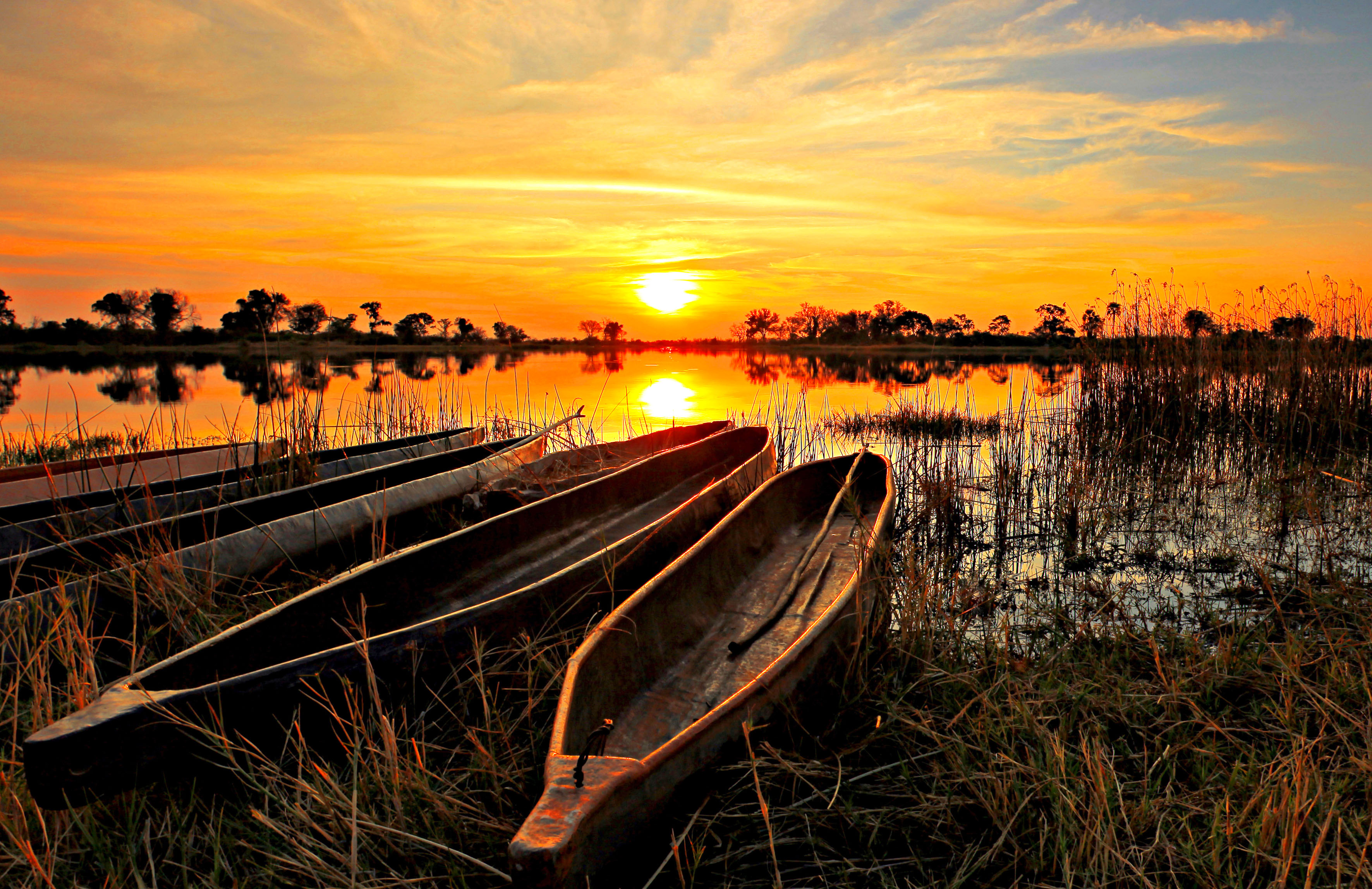
The ultimate way to experience the delta is at a whisper-quiet pace. Gliding through the papyrus-lined waterways in a mokoro—a traditional dugout canoe poled by a local guide—offers a completely immersive perspective. You will hear the gentle splash of water, the chime of reed frogs, and the distant call of an African fish eagle. The reeds part to reveal incredible birdlife, pygmy geese, and if you are lucky, the rare, swamp-dwelling sitatunga antelope.
Away from the water, the private concessions within the delta offer exclusive night drives and walking safaris. Here, the landscape changes to palm-fringed islands where elephants graze, leopards drape themselves over tree branches, and prides of lions track buffalo across the floodplains. It is an intimate, raw, and deeply peaceful wilderness encounter.
2. Chobe National Park
If your dream Botswana safari involves elephants—hundreds of them—Chobe National Park is your paradise. Located in the far north, Chobe is legendary for supporting Africa's largest continuous elephant population. The park’s lifeblood is the Chobe River, a dramatic contrast of deep blue water cutting through golden, dusty floodplains.
While standard 4x4 game drives here are exceptional, the absolute highlight of Chobe is a late-afternoon river boat cruise. As the sun dips low, painting the sky in shades of amber and violet, herds of elephants march down to the water's edge to drink, play, and swim. Watching a massive bull elephant submerge entirely, using its trunk as a snorkel, is a sight you will never forget.
The riverbanks are alive with activity. Hippos grunt and jostle for space in the shallows, enormous Nile crocodiles bask with jaws agape on the mudbanks, and waterbirds like skimers and storks dart through the air. Chobe offers a high-energy, high-density wildlife spectacle that feels like a scene straight out of a nature documentary.
3. Moremi Game Reserve
Earning a reputation as one of the most beautiful wildlife sanctuaries in Africa, the Moremi Game Reserve covers the eastern section of the Okavango Delta. What makes Moremi a vital stop on a Botswana safari is its astounding ecological diversity. Within a single day, you can drive through dense mopane forests, cross acacia woodlands, and look out over sweeping lily-covered lagoons.
This variety of habitats creates a haven for an incredible density of wildlife. Moremi is one of the best places in the country to tick off the full "Big Five"—lion, leopard, elephant, buffalo, and the elusive rhino. The predator action here is intense, fueled by massive herds of plains game like impala, tsessebe, and zebra.
Furthermore, Moremi is a crucial stronghold for the endangered African wild dog. Watching a pack of these painted wolves interact, play, and coordinate a hunt across the open grasslands is a rare and thrilling privilege. It is a destination that delivers classic, high-octane African game viewing at its absolute best.
4. Savuti (Chobe National Park)
Tucked into the remote western reaches of Chobe National Park lies Savuti, a place of myth, mystery, and raw power. The defining feature of this dramatic, semi-arid landscape is the unpredictable Savuti Channel, a waterway that inexplicably dries up for decades at a time and then suddenly flows again, completely transforming the ecosystem overnight.
This harsh, mercurial environment has bred an equally tough and famous wildlife population. Savuti is legendary for its massive, super-sized lion prides and fiercely competitive spotted hyena clans. When the channel is dry, the open marshlands become a stage for intense survival battles, with cheetahs utilizing the wide-open spaces to sprint down prey, and leopards hunting amidst the rocky volcanic outcrops of the Savuti Marsh.
A Botswana safari in Savuti is not about gentle water views; it is about the visceral realities of the African bush. The atmosphere is thick with tension, the landscapes are vast and haunted by dead trees, and the predator-prey interactions are some of the most intense you will find anywhere on the continent.
5. Makgadikgadi Pans & Kubu Island
For a complete change of pace and scenery, the Makgadikgadi Basin offers a surreal, ethereal experience that feels like stepping onto another planet. These massive salt pans, the remnants of an ancient super-lake, stretch out as a blinding white expanse of nothingness, where the horizon blurs into the sky.
The experience here depends entirely on the season. During the dry winter months, the pans are a stark, silent desert. You can zoom across the crust on quad bikes and spend the night sleeping under a dazzling, unobstructed canopy of stars, feeling completely isolated from the modern world. It is also here that you can visit Kubu Island, a mystical crescent of dry rock adorned with ancient, ghost-like baobab trees that rise defiantly out of the salt.
When the rains arrive, the pans undergo a miraculous transformation. The dry crust fills with water, attracting Africa’s second-largest zebra and wildebeest migration. Thousands of animals pour into the area, followed closely by predators, turning a barren desert into a vibrant, chaotic oasis. It adds a profound layer of depth to any Botswana safari.
6. Central Kalahari Game Reserve
The Central Kalahari Game Reserve (CKGR) is one of the largest, most remote, and least-visited protected areas in the world. This is the Africa of old—an immense, untamed wilderness of rolling golden dunes, sparse shrubs, and ancient, dry river valleys. A Botswana safari here is a true expedition into isolation.
The wildlife of the Kalahari has adapted uniquely to this harsh environment. The star attraction is the magnificent black-maned Kalahari lion, a nomadic predator known for its impressive size and resilience. You will also spot specialized desert species like the striking gemsbok, springbok, brown hyena, and playful meerkats foraging in the red earth.
Perhaps the most profound element of a visit to the CKGR is the opportunity to walk with the San Bushmen. As the indigenous inhabitants of the desert, their knowledge of the land is unparalleled. Learning how they find water in hidden tubers, track animals through faint disruptions in the sand, and use desert plants for medicine offers a humbling look at human survival and harmony with nature.
7. Linyanti Wetlands
Hidden away in Botswana's far northern reaches, the Linyanti Wetlands are a private, exclusive paradise fed by the Kwando River. Characterized by deep papyrus marshes, open lagoons, and thick riverine woodlands, Linyanti shares a similar ecosystem to the Okavango Delta but boasts a wilder, more secluded atmosphere.
Because the area consists largely of private concessions, a Botswana safari here feels entirely personal. You won't be sharing wildlife sightings with crowds of other vehicles. During the dry winter months, Linyanti becomes a crucial lifeline for wildlife. Massive, dust-kicking herds of elephants and buffalo migrate to the riverbanks, creating a spectacular concentration of animals.
With so much prey around, predators thrive. Linyanti is famous for its wild dog packs, prides of lions that have learned to hunt in the shallow waters, and leopards that rule the riparian forests. Whether you are exploring the waterways by boat or tracking lions on a night drive, Linyanti offers a pristine, high-end wilderness experience that represents the pinnacle of African safari travel.
What is a traditional mokoro canoe safari?
Gliding silently through waterways in dugouts.
A mokoro safari is the quintessential way to experience the tranquil aquatic wilderness of the Okavango Delta. These narrow, traditional dugout canoes are skillfully poled by a local guide standing at the stern, mimicking the traditional fishing methods used for generations. Because there is no noisy engine, a mokoro excursion allows you to blend seamlessly into the environment. You will float just inches above the water line, weaving through channels lined with tall papyrus and blooming water lilies. Along the way, you can listen to the delicate chorus of reed frogs, watch colorful malachite kingfishers dart across the water, and observe larger wildlife from a safe, peaceful perspective. It transforms a standard game-watching trip into a deeply meditative journey through nature.
Which rare predators roam the lush Delta?
Elusive leopards, lions, and African wild dogs.
The rich land-and-water matrices of the Okavango Delta create an ideal hunting ground for some of Africa’s most formidable and endangered carnivores. Prides of lions here have uniquely adapted to the wet terrain, often wading or swimming through shallow channels to pursue heavy prey like cape buffalo. Leopards thrive in the dense, riverine forests, utilizing the thick foliage of mangosteen and jackalberry trees to ambush unsuspecting impalas. Furthermore, the delta's private concessions offer crucial sanctuary to packs of African wild dogs, which require vast, uninterrupted territories to successfully run down their prey. Seeing these painted wolves interact, play, and coordinate complex hunts across the floodplains is one of the most thrilling spectacles you can witness on an authentic wilderness adventure.
Where can you stay in luxury treehouses?
For travelers seeking an elevated perspective, several ultra-luxury safari lodges in the delta feature spectacular, architectural treehouse suites built high into the canopy. Properties like Jao Camp and &Beyond Sandibe Okavango Safari Lodge seamlessly blend world-class design with the natural environment. These elevated timber structures are nestled among ancient African ebony and sycamore fig trees, offering expansive views over the surrounding floodplains. From your private plunge pool or outdoor deck, you can watch elephants graze directly beneath your villa or spot giraffes browsing on nearby treetops. It provides an intimate, immersive way to stay in the heart of the bush without sacrificing high-end comforts like fine dining, plush linens, and attentive, personalized service.
Why do seasonal floods transform the wetlands?
Angolan rains travel south, filling arid floodplains.
The miraculous transformation of the delta is driven by an incredible natural phenomenon. Every year, heavy summer rains fall in the distant highlands of Angola, thousands of miles away. This water slowly trickles down the Okavango River, eventually spreading out over the flat, sandy basin of the Kalahari Desert during the dry winter months. As the floodwaters creep into the channels, they turn cracked, arid soils into vibrant, emerald-green wetlands. This influx of fresh water completely rewires the ecosystem, prompting a spectacular explosion of life. Water lilies bloom, fish species spawn in the shallow floodplains, and thousands of migratory birds arrive, drawing in vast herds of thirsty elephants and buffalo that travel miles to reach this seasonal oasis.
How large are the massive elephant herds?
Chobe National Park is home to the largest continuous concentration of African elephants on earth, with the total population estimated to exceed 120,000 individuals. During the parched winter months from May to October, the interior waterholes dry up completely, forcing these massive pachyderms to migrate toward the permanent waters of the Chobe River. It is not uncommon to witness hundreds of elephants lining the riverbanks simultaneously. You can watch multi-generational family herds—composed of matriarchs, playful calves, and towering bulls—interacting along the floodplains. The scale of this gathering is truly staggering, making it one of the premier destinations on earth for anyone wanting to study complex elephant behavior up close in their natural habitat.
Which animals gather at the famous riverfront?
The Chobe Riverfront acts as a vital oasis, drawing an astonishing variety of wildlife to its fertile shores. While elephants dominate the landscape, they share the river with massive pods of hippos that spend their days wallowing and grunting in the deep channels. Giant Nile crocodiles bask openly on the muddy banks, soaking up the afternoon sun next to preening waterbirds like African skimmers and fish eagles. On the grassy floodplains, huge herds of cape buffalo graze alongside zebras, impalas, and puku antelopes. This dense concentration of herbivores naturally attracts apex predators, meaning you might spot a pride of lions or a solitary leopard watching the shoreline from the safety of the thick riverine bush.
What makes a Chobe sunset boat cruise special?
A river cruise offers a completely different dynamic compared to a standard game drive. Navigating the water in a specially designed flat-bottomed boat allows you to approach wildlife without the noise and vibrations of a 4x4 vehicle. The true magic happens late in the afternoon when herds of elephants walk down to the water to drink, bathe, and cross over to the river islands. Watching these gentle giants submerge entirely, using their trunks like snorkels, is an unforgettable sight. As the sun dips below the horizon, it paints the sky in vivid shades of amber, crimson, and violet, silhouetted by wallowing hippos and waterbirds. It provides a peaceful, front-row seat to one of Africa's most iconic wildlife displays.
Where are the best luxury safari lodges located?
The most exclusive luxury lodges are strategically positioned right on the elevated ridges overlooking the Chobe River or tucked away in private concessions bordering the park. Properties like Chobe Game Lodge (the only permanent luxury lodge located inside the park itself) and Sanctuary Chobe Chilwero offer guests sweeping views of the floodplains and islands below. These high-end properties feature private plunge pools, gourmet outdoor dining decks, and indulgent spas where you can unwind after a long day in the bush. Staying along the riverfront means you are always just minutes away from prime game viewing, often allowing you to spot wildlife right from your private veranda.
Why is Moremi famous for wild dogs?
Moremi Game Reserve is widely regarded as one of the best places in Africa to spot the highly endangered African wild dog, also known as the painted wolf. Because the reserve protects a rich patchwork of land and water, it provides a safe, food-rich environment where these highly social carnivores can thrive. The open grasslands and woodland margins offer the perfect terrain for their high-speed, coordinated hunting style. Moremi’s strict conservation policies and large protected area allow alpha pairs to den safely and raise their pups with minimal human interference. Watching a pack gather at dawn, chirping and playing before embarking on a highly strategic hunt, is a rare privilege for any wildlife enthusiast.
What habitats exist in this protected reserve?
What sets Moremi apart from other wilderness areas is its incredible ecological diversity, packed into a relatively compact geographical footprint. As you explore the reserve, you will drive through dense stands of cathedral mopane forests, where leopards love to rest on low-lying branches. This woodland gradually gives way to expansive, open acacia savannahs and floodplains that host large herds of plains game. Finally, the dry land transitions into permanent water channels, papyrus swamps, and lily-covered lagoons. This striking mix of dry and wet ecosystems means you can experience a classic savannah game drive and a peaceful water safari all within the very same day.
Which antelopes thrive in the floodplain ecosystems? .
The unique wetland geography of Moremi supports several highly specialized antelope species that have adapted perfectly to life in the water. The most famous is the red lechwe, which features elongated hooves and water-repellent hair, allowing it to sprint effortlessly through knee-deep swamps to escape predators. If you explore the deeper papyrus reeds by boat, you might catch a rare glimpse of the elusive sitatunga, a shy, swamp-dwelling antelope with splayed hooves designed to prevent it from sinking into the mud. Elegant waterbucks, easily identified by the white ring on their rumps, also frequent the marshy fringes, feeding on the sweet, abundant grasses that grow along the water’s edge.
How do seasonal game drives track predators?
Expert guides follow fresh tracks across floodplains.
During the dry winter months, the retreating waters open up an intricate network of driving tracks, allowing professional guides to track large predators with remarkable precision. Armed with years of bush knowledge, these trackers carefully read the environment, looking for fresh paw prints in the soft Kalahari sand, listening for the panicked alarm calls of baboons, or watching the movement of nervous impalas. Because the wildlife is forced to concentrate around remaining waterholes and river channels, tracking big cats becomes highly effective. Your guide can trace a leopard's dragging track or follow a pride of lions as they navigate the drying floodplains in search of buffalo.
What wildlife survives in the Kalahari Desert?
Despite its incredibly harsh, arid environment, the Central Kalahari Game Reserve is home to a fascinating array of desert-adapted wildlife. The undisputed king of this region is the legendary black-maned Kalahari lion, a nomadic predator that is larger and more resilient than its wetland cousins. You will also encounter striking gemsbok (oryx) and springbok, which can survive for weeks without drinking standing water, obtaining moisture instead from tsamma melons and deep roots. Elusive brown hyenas forage across the open valleys under the cover of darkness, while highly social families of meerkats spend their days scanning the clear desert skies for raptors, showcasing nature's incredible adaptability.
Where can you meet the meerkats of Makgadikgadi?
The most famous encounters with wild, habituated meerkats take place around the edges of the Makgadikgadi Pans, specifically near legendary camps like Jack’s Camp, San Camp, and Camp Kalahari. Over many years, researchers and guides have spent time building trust with these highly sensitive mongooses without altering their wild behavior. As a result, the meerkats view humans merely as tall, harmless structures. If you sit quietly on the ground at sunrise, these curious creatures will often climb onto your shoulders or even your head, using you as an elevated lookout post to scan the horizon for jackals and eagles while the rest of the family digs for scorpions.
Why are the salt pans visually so striking?
The Makgadikgadi Pans are the dry remnants of an ancient, prehistoric super-lake that evaporated thousands of years ago, leaving behind one of the largest salt flats in the world. The landscape is visually arresting because of its sheer, minimalist emptiness. During the dry season, the pans stretch out as a flat, crusty, blindingly white expanse where the earth completely blurs into the sky. With no trees, buildings, or mountains to break the view, you experience a profound sense of isolation and space. The harsh white crust provides a stunning contrast against the deep blue sky, making it a dream destination for minimalist photography and stargazing.
How do black-maned lions hunt during winter?
During the scorching winter months, the Central Kalahari becomes incredibly dry, forcing plains game like wildebeest and gemsbok to gather in the ancient, fossilized river valleys where the last remaining grasses persist. The black-maned lions utilize these dry valleys and sparse shrub cover to setup ambushes. Because water is scarce, these lions have adapted to get their hydration directly from the blood and fluids of their prey. They travel immense distances under the cover of cold winter nights, using their incredible stamina to track nomadic herds across the dunes, proving themselves to be the ultimate masters of survival in an unforgiving desert landscape.
Which endangered species lives in Khama Sanctuary?
The Khama Rhino Sanctuary, located in eastern Botswana, is a community-based wildlife project established in 1992 to save the country’s vanishing rhino populations. This community-run reserve covers thousands of hectares of Kalahari sandveld, providing an ideal, well-protected habitat for both white and black rhinoceroses. The sanctuary operates a highly successful breeding program, reintroducing these magnificent, critically endangered giants back into safer, monitored wilderness areas across Southern Africa. Backed by round-the-clock anti-poaching patrols, it offers travelers a rare, highly reliable opportunity to spot these elusive creatures up close, whether they are drinking at a central waterhole or resting quietly under the shade of an acacia tree.
Where are the ancient Tsodilo Hills rock paintings?
Tucked away in the remote northwestern corner of the country, the Tsodilo Hills rise dramatically out of the flat Kalahari plains. Recognized as a UNESCO World Heritage Site, this sacred area is often referred to as the "Louvre of the Desert." The four distinct hills—metaphorically named the Male, Female, Child, and North hills—contain over 4,500 individual rock paintings created by the San Bushmen over thousands of years. These vibrant red and white ochre drawings depict wild animals, human figures, and mysterious geometric designs. Walking through these rocky shelters with a local guide provides a deeply spiritual look into human history, shamanic rituals, and ancient connections to the land.
What makes Savuti Marsh famous for lions?
Powerful prides hunt massive elephants and buffaloes.
The Savuti Marsh, located in the western stretch of Chobe, is legendary among wildlife documentary filmmakers for its unusually fierce, hyper-aggressive predator dynamics. Because the Savuti Channel often dries up for decades at a time, the local wildlife has to endure incredibly harsh conditions. This environment has bred unusually large, powerful lion prides that have learned to adapt by hunting non-traditional prey. Savuti is one of the few places in Africa where prides coordinate to successfully bring down massive cape buffaloes and even sub-adult elephants during the height of the dry season. The fierce rivalry between these lions and the local spotted hyena clans creates a high-tension atmosphere.
Why visit the Mashatu Game Reserve for photography?
Located in the remote Tuli Block of southeastern Botswana, Mashatu Game Reserve is a dream destination for wildlife photographers. The reserve features specially designed, sunken photographic hides positioned right at the edge of popular waterholes. Sitting safely inside these underground bunkers puts your camera lens exactly at ground level, allowing you to capture dramatic, wide-angle shots of giant elephant feet, drinking leopards, and vibrant birdlife from a unique perspective. Combined with Mashatu’s striking landscapes of baobab trees, sandstone cliffs, and open savannahs, these hides provide enthusiasts with the perfect, professional-grade setting to capture intimate, award-winning images without disturbing the animals.
Booking Botswana safaris with us Roads of Adventure safaris
Booking a Botswana safari with Roads of Adventure Safaris means getting a completely tailored, stress-free trip through the Okavango Delta, Moremi, and Chobe. They offer everything from immersive group camping packages starting around $2,425 for six days, up to high-end luxury lodge circuits. A 30% deposit locks in your adventure, and they handle the heavy lifting—from 4x4 transport and internal bush flights to providing expert guides. They can even tack on a seamless trip extension to the breathtaking Victoria Falls. It is the ultimate hands-off way to experience Africa's best wildlife.
