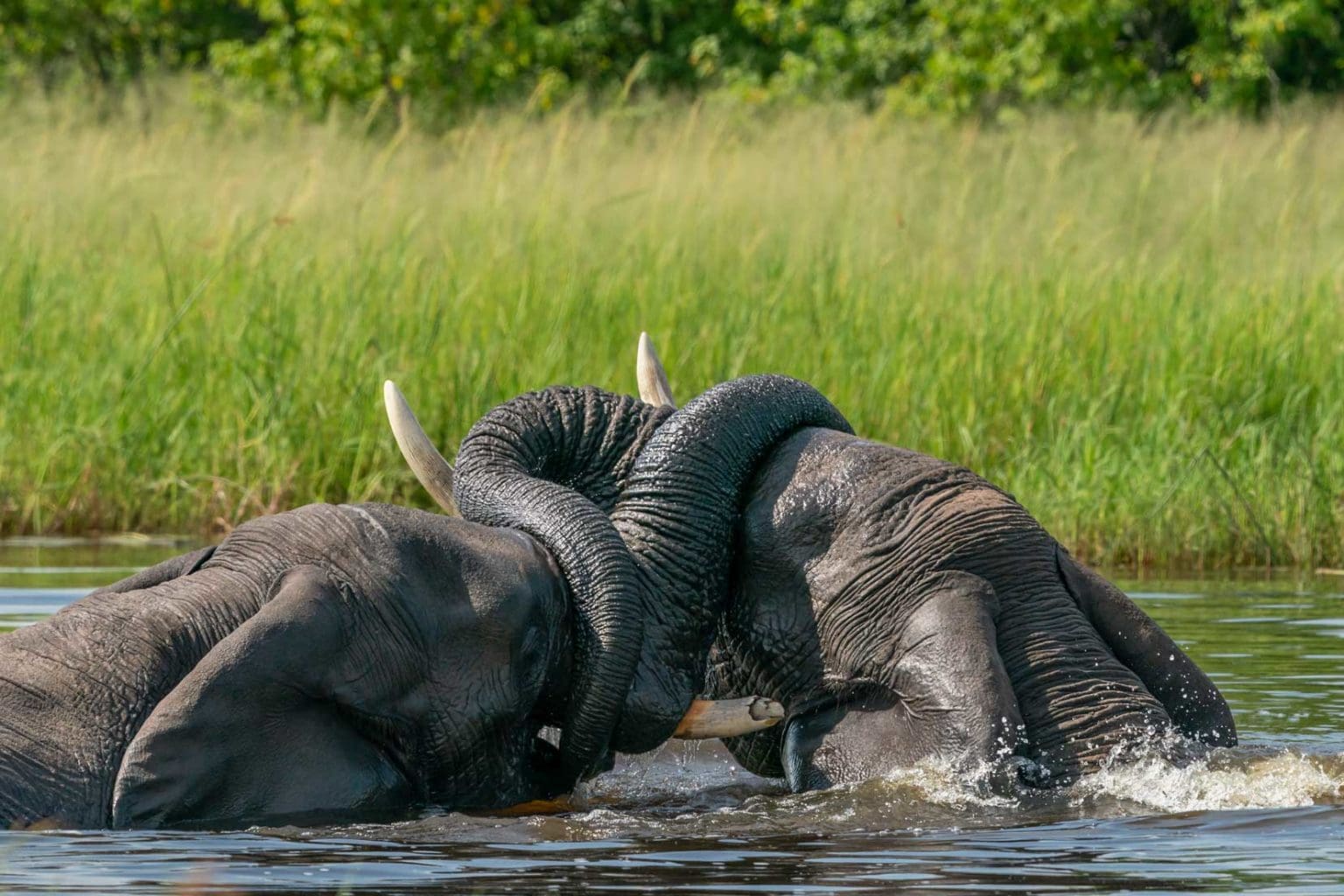
The Khwai Community Concession, located on the northeastern edge of the Moremi Game Reserve, is famous for its prolific wildlife and unique status as a community-run reserve. This allows for off-road driving, guided walking safaris, and night game drives, which are typically prohibited in national parks
Popular related tour packages related to Khwai Community Concession
4-days-best-khwai-concession-and-moremi-botswana-wildlife-safari-tour-package
5-days-savuti-khwai-and-mababe-botswana-safari-tour-package
1. Night Game Drives
When the sun dips below the horizon, a completely different world wakes up, offering one of the most thrilling dimensions of Botswana safaris. While national parks strictly enforce a dusk-to-dawn curfew, private concessions like Khwai allow for exhilarating night game drives. As twilight fades, your guide and tracker equip themselves with powerful, filtered spotlights to sweep the landscape. The goal is to catch the telltale glint of nocturnal eyes reflecting through the darkness, opening up a realm of wildlife viewing that is entirely hidden during the day.
The African night is alive with sounds and shadows. Under the cover of darkness, smaller, elusive predators emerge from their daytime hiding spots. Travelers on these specialized Botswana safaris have the rare opportunity to spot lesser-known species such as the ring-tailed genet, the cat-like civet, and the striking serval with its oversized ears. It is also the prime time to witness Africa’s apex predators in their element. Leopards, inherently nocturnal hunters, use the darkness to stalk their prey with unparalleled stealth. Watching a leopard move silently through the tall grass, muscles rippling under the spotlight, is an unforgettable experience.
Beyond the predators, night drives offer a glimpse into the bizarre and beautiful world of nocturnal herbivores and birds. You might spot springhares hopping like miniature kangaroos, white-tailed mongooses foraging through the brush, or bushbabies leaping between acacia branches. Overhead, Verreaux's eagle-owls and various nightjar species take to the skies. The atmosphere of a night drive is thick with anticipation; every snap of a twig or distant roar of a lion takes on a heightened sense of drama, offering a raw, unfiltered perspective on the continuous cycle of survival.
2. Off-Road Tracking
In standard African national parks, safari vehicles are strictly confined to designated dirt tracks. While this protects the environment, it can sometimes mean watching a spectacular wildlife sighting from hundreds of yards away. Fortunately, premier Botswana safaris operating in private concessions offer a different set of rules. Here, off-road tracking is permitted under careful guide supervision, transforming a standard game drive into an adrenaline-fueled tracking adventure where the rules of conventional sightseeing are left behind.
When a fresh set of tracks or a distant alarm call signals something exciting, your guide can turn off the main path and forge a new trail through the mopane woodlands and scrub. This freedom is particularly exhilarating when tracking highly mobile predators like the African wild dog. Botswana safaris in this region are famous for encountering healthy populations of these endangered canines. Because wild dogs hunt at incredible speeds, the ability to drive off-road allows your vehicle to keep pace with the pack as they maneuver through the bush, giving you a front-row seat to one of nature’s most strategic and thrilling spectacles.
Off-road tracking also brings you into intimate proximity with lions and leopards. Instead of peering through binoculars at a lion pride resting under a distant bush, your guide can safely maneuver the vehicle just meters away. You can hear the low, rumbling grunts of a pride communicating, watch cubs playing right beside the tires, or observe a leopard guarding its kill in the fork of a tree. This proximity allows for unparalleled wildlife photography and a deeply personal connection to the animals, all while your expert guide ensures the wildlife remains undisturbed.
3. Mokoro Safaris
For a complete change of pace, the mokoro safari offers a peaceful, meditative journey that has become a defining signature of luxury Botswana safaris. A mokoro is a traditional dugout canoe, historically carved from the trunks of large trees like the ebony or sausage tree, though modern versions are often made of eco-friendly fiberglass. You sit low in the water while an experienced local "poler" stands at the stern, expertly guiding the craft through the shallow, papyrus-lined channels of the Okavango Delta system.
Without the rumble of a diesel engine, this style of Botswana safaris shifts from active tracking to quiet immersion. The only sounds you will hear are the gentle ripple of water against the bow, the rustle of wind through the reeds, and the distant calls of African fish eagles. Gliding at water level gives you a unique, microscopic perspective on the delta’s vibrant ecosystem. You will drift past brilliant white and blue water lilies, spot tiny painted reed frogs clinging to stems, and watch colorful malachite kingfishers darting just above the surface.
While the focus is often on the smaller wonders, mokoro safaris frequently bring encounters with larger delta residents. You may find yourself sharing a wide pool with a pod of hippos, watching them yawn and splash from a safe, respectful distance. Elephants frequently cross these channels, and watching a massive bull elephant wade through the water just a short distance from your low-profile canoe is a humbling experience. It is a slow, soulful approach to wildlife viewing that forces you to decelerate, breathe, and appreciate the delicate, liquid wilderness.
4. Guided Bush Walks
To truly understand the African wilderness, you have to step out of the safari vehicle and plant your feet on the earth. Guided bush walks offer a visceral, sensory connection to nature that distinguishes the most immersive Botswana safaris. Accompanied by a highly trained, armed professional guide, you step into a world where you are no longer just an observer, but an active participant in the ecosystem. Your senses immediately sharpen as you tune into the smells, sounds, and subtle shifts of the environment.
On a foot safari, the focus shifts from the "Big Five" to the intricate details that keep the wilderness alive. Your guide will teach you the ancient art of tracking, showing you how to read the story of the morning written in the sand. This educational element is a hallmark of top-tier Botswana safaris. You will learn to differentiate between the footprint of a hyena and a leopard, determine how recently an elephant passed through by checking the warmth of its dung, and identify the warning calls of birds that signal a predator is nearby.
It is also an incredible opportunity to learn about the practical and medicinal uses of the local flora. You will discover which bushes serve as natural toothbrushes, which leaves can soothe an insect bite, and how indigenous communities have used specific trees for building and survival for centuries. Walking also allows for closer, quieter approaches to birdlife and smaller mammals that usually flee from loud vehicles. While safety is always the highest priority, the thrilling knowledge that you are walking through wild territory creates an unforgettable bond between you and the landscape.
5. Cultural Tours
A world-class African vacation is incomplete without recognizing that this pristine wilderness is tightly intertwined with the heritage of its human inhabitants. Integrating cultural tours into Botswana safaris provides an enlightening window into the daily lives, histories, and enduring traditions of local communities like the Bayei and Banoka. These groups have coexisted with the local wildlife for generations, developing an intimate, spiritual understanding of the land and its ecosystems.
During a village tour, you are welcomed by local residents who are eager to share their way of life. This is not a staged performance, but an authentic glimpse into modern rural Botswana. You can walk through the homesteads, see how traditional mud-and-reed huts are constructed, and observe daily routines such as the stamping of maize or the intricate weaving of baskets from palm fronds. The Bayei are historically known as the "people of the river," and speaking with elders reveals fascinating oral histories of how they migrated through the delta using early mokoros.
Supporting these cultural tours directly benefits the community, ensuring that tourism dollars actively contribute to local education, healthcare, and infrastructure. It provides a vital counter-narrative to standard wildlife viewing by highlighting the human element of conservation. By the time you leave, listening to the rhythmic songs and vibrant dances performed by community members, you gain a profound respect for the people who serve as the true guardians of this remarkable wilderness, adding immense depth to your overall experience of Botswana safaris.
6. Full-Day Safaris into Moremi
One of the greatest geographic advantages of staying in the Khwai Concession is its shared, unfenced border with the world-renowned Moremi Game Reserve. Khwai serves as the perfect launchpad for a full-day expedition into this iconic protected area, making it a highlight of premium Botswana safaris. Leaving early in the morning with a packed picnic lunch, you cross the rustic logs of the Khwai River bridge and enter a landscape celebrated as one of the most beautiful and wildlife-diverse reserves in all of Africa.
Moremi’s topography contrasts beautifully with neighboring private areas, featuring expansive mopane forests, sweeping floodplains, and the permanent lagoons of the delta. A full-day trip allows you the time to venture deep into distinct regions like the Khwai Riverfront or the mopane tongues. Because you have the entire day, there is no need to rush; your guide can navigate deeper tracks to seek out resident lion prides, large buffalo herds numbering in the hundreds, and some of the highest concentrations of elephants on the continent. Moremi is also a stronghold for the elusive cheetah, which favors the open plains for hunting.
Midday is spent enjoying a remote bush picnic under the shade of a massive jackalberry or sausage tree, listening to the grunts of hippos in a nearby pool. This extended time in the field gives you the unique opportunity to witness the shifting behaviors of animals as the day progresses—from the active hunting of the early morning to the sleepy shade-seeking of the midday heat, and finally the late afternoon trek to the waterholes. It is an exhausting but deeply rewarding day that showcases the very best of what high-end Botswana safaris have to offer.
When is the best time to visit Khwai Community Concession on Botswana safaris
The best time to visit Khwai Community Concession is mainly influenced by dry vs. wet seasons, because wildlife concentrates around water during the drier months. In general, June to October is considered peak safari time: days are cooler, roads are more passable, and animals are easier to spot as grasses thin out. This is also an excellent period for predators and high-quality photo safaris, since visibility is better.
If you prefer fewer crowds, late November to March can be rewarding too. Rains usually arrive in shorter bursts, and the landscape becomes lush—great for birdlife and scenic views. During the wet season, some areas can be muddy, but knowledgeable guides plan routes accordingly.
For a balance of good sightings and comfort, many travelers choose August–September or February. Roads of Adventure Safaris can match your ideal month with your goals, like predators, river activity, or birding.
Where to stay in Khwai Community Concession on Botswana safaris
Accommodation in Khwai Community Concession is typically high-comfort safari lodges and tented camps that focus on excellent game viewing and guided experiences. Because Khwai borders wildlife-rich areas, many stays offer direct access to game drives and shared community-led conservation experiences.
Most properties are designed for immersive wildlife encounters—meaning you’ll likely enjoy sunrise or sunset sightings right from your deck or camp area. Some camps provide activities such as mokoro (where conditions allow), walking safaris, and night game drives, while others focus mainly on classic day drives and sundowners.
When choosing where to stay, consider the type of tent/room, power availability, and whether meals and activities match your travel style (romantic, family-friendly, or photography-focused). Also check vehicle access and proximity to Khwai gate areas for smoother logistics. Roads of Adventure Safaris can recommend the best-fit lodge/camp based on your budget, preferred safari style, and travel dates.
Booking Khwai Community Concession on Botswana safaris with us Roads of Adventure safaris
Booking your Khwai Community Concession safari with Roads of Adventure Safaris ensures a smooth and well-planned journey from start to finish. We help you choose the best time and route for wildlife viewing, taking into account seasonal road conditions, wildlife patterns, and your personal interests—whether you want predator action, birdlife, or a calmer, photographic safari pace.
We also assist with selecting the right lodge or camp in and around Khwai, based on comfort level, room type, activity schedule, and budget. Once you book, we coordinate key details such as arrival logistics, safari vehicle arrangements, game drive scheduling, and conservation-related guidelines in the concession.
Our team provides clear communication about what’s included, what to pack, and how to prepare for early morning starts and time in the bush. With Roads of Adventure Safaris, you get an itinerary that’s realistic, exciting, and designed for maximum time in the wildlife areas. Contact us to create your tailor-made Khwai safari experience.
