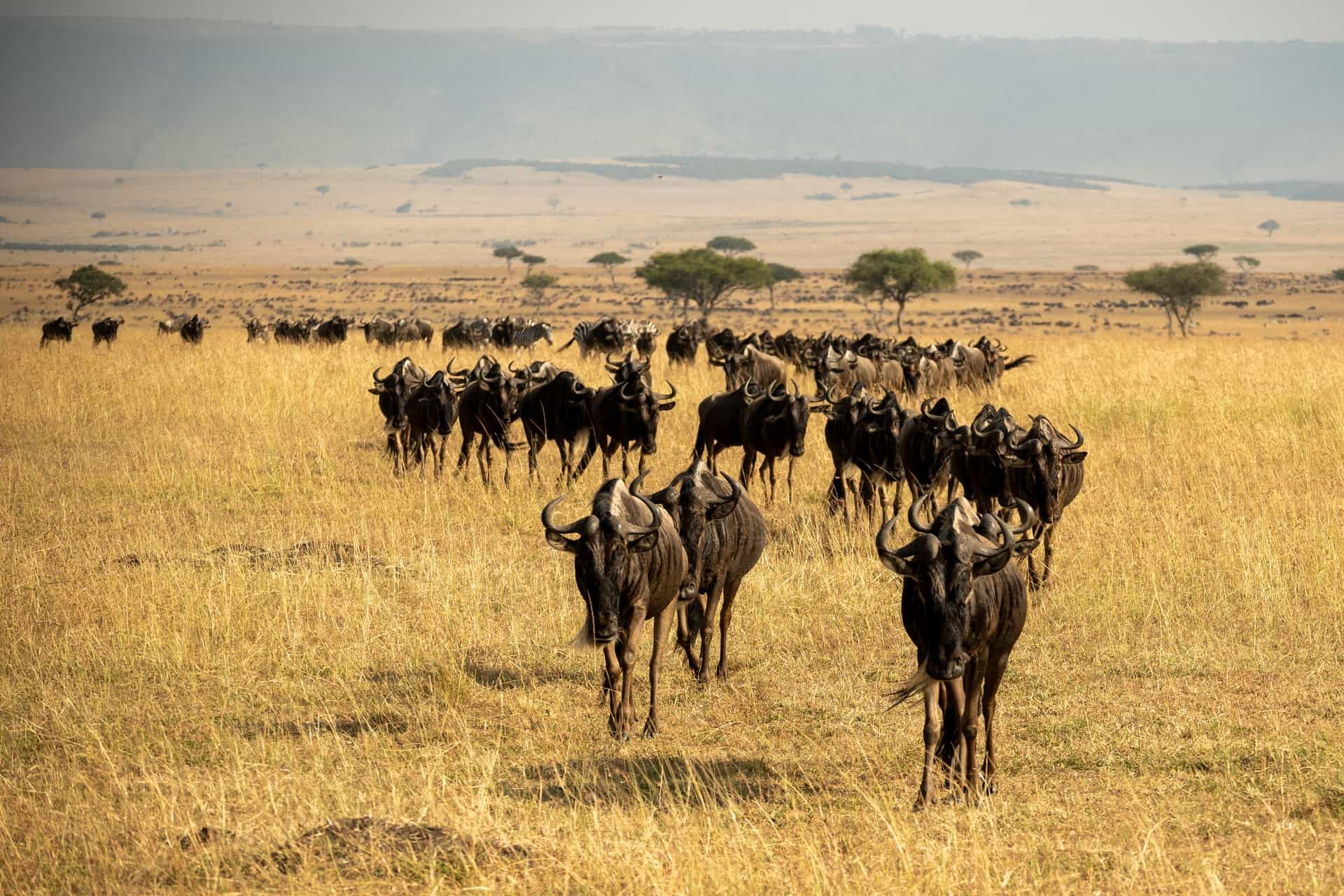
Serengeti National Park is the top most visited destination on a Tanzania safari tour. Famous for the annual Great Migration of over 1.5 million wildebeest and its exceptional year-round big cat sightings, it is the cornerstone of the Northern Circuit and Tanzanian tourism
8-days-great-mara-river-crossing-hadzabe-tribe-and-optional-hot-air-balloon-tanzania-safari
7-days-best-great-wildebeest-migration-safari-in-tanzania
6-days-ndutu-migration-and-tanzania-safari-itinerary
5-days-ultimate-ndutu-migration-calving-season-safari-to-tanzania
4-days-central-serengeti-safari-tour-and-mara-river-crossing-in-northern-serengeti
3-days-southern-serengeti-safari-tour-and-ngorongoro-crater-calving-season-package
Top Most Visited Safari Destinations
Serengeti National Park
The Serengeti National Park is Tanzania’s oldest and most iconic safari destination, covering approximately 14,763 square kilometers of "endless plains". Its global fame stems largely from the Great Migration, a colossal annual movement of over 1.5 million wildebeest and hundreds of thousands of zebras and gazelles. This natural spectacle is one of the world's most dramatic wildlife events, especially during the treacherous Mara River crossings.
Beyond the migration, the Serengeti is a year-round predator stronghold. It supports Africa’s largest lion population, estimated at over 4,000, alongside healthy numbers of leopards, cheetahs, and spotted hyenas. The vast savanna landscape is dotted with granite kopjes—rocky outcrops that often serve as lookout points for big cats. Travelers can experience the park through classic game drives, hot air balloon safaris at sunrise, or by staying in mobile tented camps that follow the migration's path. Designated as a UNESCO World Heritage Site in 1981, it remains the ultimate destination for witnessing the raw interplay between predator and prey in an untouched wilderness.
Ngorongoro Crater
Often called the "African Garden of Eden," the Ngorongoro Crater is the world's largest inactive, unfilled, and intact volcanic caldera. Formed nearly three million years ago when a massive volcano collapsed, the crater floor now spans 260 square kilometers and is enclosed by walls 600 meters high. This unique geography has created a natural enclosure that hosts one of the highest densities of large mammals in Africa.
A visit here offers a rare opportunity to spot the Big Five—lion, leopard, buffalo, elephant, and the critically endangered black rhino—often in a single day. The crater floor features diverse ecosystems, including the Lerai Fever Tree Forest, popular for leopard sightings, and the soda waters of Lake Magadi, which attract large flocks of flamingos. Uniquely, the Ngorongoro Conservation Area is a multiple land-use area where the Maasai people continue to graze their livestock alongside wild animals, maintaining a centuries-old cultural tradition.
Tarangire National Park
Tarangire National Park is defined by its massive elephant herds and ancient, iconic baobab trees, some of which are over a thousand years old. During the dry season (June to October), the park becomes a vital refuge for wildlife as animals migrate from surrounding areas to congregate around the Tarangire River, the region's only permanent water source. This concentration of game is second only to the Ngorongoro Crater but offers a more tranquil, less crowded experience.
The park's diverse landscape ranges from open grasslands to swamps and acacia woodlands, providing habitats for specialized dry-country species like the fringe-eared oryx and gerenuk. Bird enthusiasts can find over 600 species here, making it one of the best birding destinations in Tanzania. Activities include standard game drives, guided walking safaris with Maasai rangers, and night game drives, which reveal nocturnal creatures like the aardvark and genet.
Lake Manyara National Park
Located at the base of the Great Rift Valley escarpment, Lake Manyara National Park is famous for its tree-climbing lions and expansive soda lake that covers two-thirds of the park's area. The park is incredibly scenic, transitioning rapidly from a lush groundwater forest inhabited by baboons and blue monkeys to open floodplains where buffalo, wildebeest, and giraffes graze.
The shallow alkaline lake is a haven for water birds, most notably thousands of pink flamingos that seasonally line its shores. Beyond the wildlife, the park offers unique experiences like the Manyara Treetop Walkway, allowing visitors to walk among the canopy, and visits to the Maji Moto hot springs. Its proximity to Arusha and the Ngorongoro Crater makes it a popular stop for those embarking on a northern circuit safari.
Mount Kilimanjaro
Standing at 5,895 meters, Mount Kilimanjaro is Africa's highest peak and the world's tallest free-standing mountain. Unlike most high-altitude peaks, Kilimanjaro is accessible to trekkers without specialized mountaineering equipment, attracting over 50,000 climbers annually who seek to reach "the Roof of Africa". The climb takes trekkers through five distinct climate zones, starting in lush rainforests and ending in an arctic-like summit zone of glaciers and scree.
While primarily a trekking destination, the national park surrounding the mountain is home to various wildlife, including elephants, leopards, and buffalo, though they are rarely seen in the higher elevations. Most visitors combine a Kilimanjaro trek with a safari in the nearby Northern Circuit to experience both the physical challenge of the climb and the wildlife of the plains.
Zanzibar Archipelago
The Zanzibar Archipelago is the premier choice for post-safari relaxation, located just off the coast of mainland Tanzania. Known as the "Spice Islands," it offers a blend of pristine white-sand beaches, turquoise waters, and rich cultural history. The main island, Unguja, is home to Stone Town, a UNESCO World Heritage Site famous for its winding alleys, historic carved doors, and bustling spice markets.
Visitors can spend their days snorkeling or diving in vibrant coral reefs, taking traditional dhow cruises at sunset, or visiting spice plantations to learn about the island’s cloves, nutmeg, and cinnamon. The archipelago also includes more remote islands like Pemba and Mafia, which offer quieter retreats for those seeking seclusion. It is frequently the final stop for travelers, providing a tropical contrast to the rugged adventures of the safari bush.
1. Top Safari Destinations in Tanzania
Tanzania stands as the crown jewel of African wildlife tourism, offering a diverse array of ecosystems that cater to every type of traveler. The Northern Circuit is the most famous, headlined by the Serengeti National Park, a vast savannah that hosts the greatest wildlife spectacle on earth. Adjacent to it lies the Ngorongoro Crater, a self-contained Eden within a volcanic caldera. For those seeking variety, Tarangire National Park offers a rugged landscape dominated by ancient baobabs and massive elephant herds, while Lake Manyara provides a lush, groundwater forest setting famous for its avian life and unique predators.
Beyond the popular north, the southern and western circuits offer a more "wild" and exclusive feel. The Nyerere National Park (formerly Selous) is massive, offering boat safaris that you won't find in the north. For the truly adventurous, Ruaha National Park provides a hot, dry landscape with high predator concentrations and very few tourists. These destinations combined make Tanzania a powerhouse of biodiversity. Whether you are looking for the "Big Five" (lion, leopard, elephant, buffalo, and rhino) or rare wild dogs and cheetahs, the topographical variety—from the endless plains of the Serengeti to the deep forests of Mahale—ensures that no two game drives are ever the same.
2. Best Park for the Great Migration
The Serengeti National Park is synonymous with the Great Migration. This is not just a single event but a perpetual movement of over 1.5 million wildebeest, 200,000 zebras, and hundreds of thousands of Thompson’s gazelles. The scale of this movement is staggering, creating a massive "lawnmower" effect across the plains. The Serengeti’s unique ecosystem, which spans approximately 14,750 square kilometers, provides the necessary grazing land and water sources to sustain this massive biomass.
Watching the migration in the Serengeti is a visceral experience. It isn't just about the sheer numbers; it’s about the drama of survival. Following the herds are Africa's apex predators—lions, leopards, and hyenas—who take advantage of the abundance of prey. The Serengeti is divided into sectors (South, Central, Western Corridor, and North), and the migration's location dictates where the best viewing will be. While other parks like Kenya's Maasai Mara host the herds for a few months, the vast majority of the migration cycle occurs within the borders of the Serengeti, making it the undisputed "home" of the Great Migration.
3. Timing the Migration
Timing your visit to the Serengeti is crucial because the herds are constantly on the move in a clockwise cycle driven by rainfall and the search for fresh grass.
- January – March (The Calving Season): The herds settle in the southern Serengeti and Ngorongoro Conservation Area. This is a period of abundance; in February alone, roughly 500,000 wildebeest calves are born. This attracts an incredible number of predators, leading to frequent sightings of hunts.
- April – June (The Transition): As the plains dry out, the herds move North and West. June is typically when they gather in the Western Corridor before crossing the Grumeti River.
- July – October (The River Crossings): This is the most iconic phase. The herds reach the northern Serengeti and must cross the Mara River to reach greener pastures. These crossings are perilous, with crocodiles lying in wait and steep banks causing chaos.
- November – December (The Short Rains): The herds head back south through the eastern limits of the park to start the cycle again.
Understanding this rhythm is essential for booking the right lodge in the right location.
4. The Uniqueness of Ngorongoro Crater
The Ngorongoro Crater is often called the "Eighth Wonder of the World," and for good reason. It is the world’s largest inactive, intact, and unfilled volcanic caldera. Formed when a giant volcano exploded and collapsed on itself some three million years ago, the crater floor now covers about 260 square kilometers and sits 600 meters below the rim. This creates a natural enclosure that has resulted in a unique, high-density ecosystem where wildlife remains year-round.
The crater is one of the few places in Africa where you are almost guaranteed to see the Big Five in a single day. It is particularly famous for its population of the highly endangered Black Rhino, which are easier to spot here than almost anywhere else in East Africa. The landscape within the crater is incredibly diverse, ranging from open grasslands and swamps to the Lerai Fever Tree forest and the soda waters of Lake Magadi, which is often pink with flamingos. Because the animals are somewhat habituated to vehicles, the photographic opportunities are unparalleled, though the crater can become crowded during peak season.
5. Best Park for Elephants: Tarangire
While elephants are found throughout Tanzania, Tarangire National Park is the undisputed "Elephant Kingdom." During the dry season, the park hosts one of the highest concentrations of elephants in the world. It is not uncommon to see herds of several hundred individuals congregating along the banks of the Tarangire River. These elephants are known for being relatively relaxed around vehicles, allowing for intimate observations of their complex social behaviors.
The landscape of Tarangire adds to the majesty of the elephant sightings. The park is characterized by its prehistoric-looking Baobab trees, some of which are over a thousand years old. The sight of a massive bull elephant standing beneath the gnarled branches of an ancient baobab is one of the most iconic images of the African wilderness. Beyond elephants, Tarangire is a hidden gem for birdwatchers, with over 550 species, and it features a "mini-migration" of its own, as wildebeest and zebras flock to the river when the surrounding Maasai Steppe dries up.
6. Best Time to Visit Tarangire
The timing of a visit to Tarangire National Park is more sensitive to the seasons than the Serengeti. To see the park at its best, you should visit during the long dry season (June to October). During these months, the interior water holes dry up, forcing the wildlife to migrate toward the only permanent water source in the area: the Tarangire River.
This concentration of wildlife makes game viewing incredibly easy and rewarding. You can simply park your vehicle near a river crossing or a lagoon and watch a parade of animals—elephants, giraffes, buffalo, and various antelope—come down to drink. This density also attracts predators like lions and leopards. Conversely, during the wet season (November to May), the animals disperse across the vast Maasai Steppe, and the thick vegetation can make spotting them more difficult. Furthermore, Tarangire is known for having a high concentration of tsetse flies during the wetter months, which can be a nuisance for travelers. Therefore, the cool, dry winter months are the gold standard for a Tarangire safari.
7. Wildlife at Lake Manyara
Lake Manyara National Park may be small compared to the Serengeti, but it packs a significant punch in terms of biodiversity. Nestled at the base of the Great Rift Valley escarpment, the park is famous for its tree-climbing lions. While lions occasionally climb trees in other parks, the Manyara prides do it habitually, likely to escape the heat or biting insects on the ground. Spotting a lion lounging on an acacia branch is a highlight for any visitor.
The park is also a haven for primates and birds. As you enter, you pass through a lush groundwater forest where troops of baboons (some of the largest in Africa) and Blue Monkeys are ubiquitous. The centerpiece of the park is the alkaline lake itself, which covers two-thirds of the park’s area when water levels are high. The lake is often fringed by a shimmering pink ribbon of thousands of flamingos. Additionally, the park’s floodplains support large pods of hippos and herds of buffalo. Manyara offers a very different aesthetic from the dry savannahs, with its emerald greens and dramatic cliffside backdrops.
8. Climbing Mount Kilimanjaro
Mount Kilimanjaro, the "Roof of Africa," stands at 5,895 meters ($19,341$ feet) and is the highest free-standing mountain in the world. Because it is located near the equator, the climbing seasons are dictated by the rain. The best times to climb are during the two dry seasons: January to February and June to October.
The January-February window is generally warmer and offers excellent clarity, though it can be slightly busier. The June-October window is longer and slightly cooler, but it provides very stable weather, which is crucial for a successful summit attempt. Climbing during the rainy seasons (especially April and May) is not recommended, as the trails become slippery, visibility drops, and the higher reaches are often shrouded in heavy snow and clouds. Regardless of when you go, you will experience five distinct ecological zones—from tropical rainforest at the base to the arctic zone at the summit—making the climb a journey from the equator to the "North Pole" in just a matter of days.
9. Experience and Fitness for Kilimanjaro
One of the most common misconceptions about Mount Kilimanjaro is that you need to be a professional mountaineer to reach the top. Kilimanjaro is a "trekking mountain," meaning most routes do not require ropes, ice axes, or technical climbing skills. However, this does not mean it is easy. The primary challenge is the extreme altitude, which can cause Altitude Mountain Sickness (AMS) regardless of your fitness level.
That said, a high level of physical fitness is strongly recommended. You will be hiking for 6 to 9 days, often for 6-8 hours a day, culminating in a grueling 12-to-15-hour "summit day" that begins at midnight in sub-zero temperatures. Leg strength and cardiovascular endurance are key. More importantly, mental resilience is required to push through the fatigue and the thin air. The best preparation is hiking in your boots on hilly terrain before your trip. The golden rule on the mountain is "Pole, Pole" (Swahili for "slowly, slowly") to allow your body the best chance to acclimate to the decreasing oxygen levels.
10. Selous (Nyerere National Park)
Nyerere National Park (formerly part of the Selous Game Reserve) offers a starkly different experience from the Northern Circuit. It is one of the largest protected areas in Africa, and its sheer size ensures a sense of isolation and exclusivity. While the north can feel busy with many safari vehicles, in Nyerere, you can drive for hours without seeing another soul.
What truly sets Nyerere apart are the boat safaris on the Rufiji River. This allows you to view wildlife from a different perspective—watching elephants swim across channels, hippos jostling for space, and massive crocodiles basking on the banks. The park is also one of the last true strongholds for the endangered African Wild Dog. The vegetation is a mix of Borassus palms, riverine forests, and Miombo woodlands, providing a beautiful, wild backdrop. Because it is less accessible than the north, Nyerere is perfect for repeat visitors or those who want a "raw" African experience that includes walking safaris and fly-camping.
11. Chimpanzee Trekking
While Tanzania is famous for its savannahs, it also holds incredible treasures in its western forests. Mahale Mountains and Gombe Stream National Parks are the premier destinations for chimpanzee trekking. Gombe was made famous by the pioneering work of Dr. Jane Goodall, and it remains a vital site for primate research. However, Mahale is often considered the superior experience for tourists due to its stunning location on the shores of Lake Tanganyika.
Trekking for chimps is a physically demanding but deeply moving experience. You hike through dense, humid forests, guided by trackers who follow the sounds and nests of the primates. Once you find a troop, you are typically allowed one hour to observe them. Watching their human-like social interactions, grooming rituals, and occasional outbursts of vocalization is unforgettable. After a day of trekking in Mahale, you can relax by the crystal-clear waters of the lake, which feels more like a tropical ocean than a freshwater body, complete with white sandy beaches and colorful cichlid fish.
12. The Northern Circuit
The Northern Circuit is the most popular safari route in Africa, and for good reason. It links several of the world's most iconic natural wonders into one manageable itinerary. Most travelers start in Arusha and move through Tarangire, Lake Manyara, the Ngorongoro Crater, and finally the Serengeti. The beauty of the Northern Circuit is the diversity of landscapes and wildlife you see in a relatively short period.
Each park on this circuit offers something distinct: Tarangire for elephants, Manyara for birds and greenery, Ngorongoro for high-density "Big Five" viewing, and the Serengeti for endless plains and the migration. The infrastructure in the North is excellent, with a wide range of accommodation from luxury "glamping" tents to high-end lodges. Because the parks are relatively close together, drive times are reasonable (typically 2-4 hours between gates), and the roads offer a glimpse into Tanzanian culture as you pass through Maasai villages and bustling market towns like Karatu.
13. Post-Safari Beaches
After the dust and early mornings of a safari, most travelers head to the coast to "wash off the dust." Zanzibar is the primary choice, located just a short flight from the bush. The archipelago is famous for its "Spice Islands" history and its stunning white-sand beaches lapped by the turquoise waters of the Indian Ocean. Nungwi and Kendwa in the north are famous for their swimmable beaches (less affected by tides), while the east coast offers a more laid-back, kite-surfing vibe.
For those seeking even more seclusion, Mafia Island and Pemba Island are excellent alternatives. Mafia is a world-class destination for diving and is one of the best places in the world to swim with whale sharks (typically from October to March). Pemba is known for its lush "clove" hills and deep-water diving. These islands offer a perfect blend of relaxation, water sports, and historical exploration, allowing you to end your Tanzanian adventure with a cocktail in hand as the sun sets over the dhows in the harbor.
14. Activities in Zanzibar
Zanzibar is far more than just a beach destination; it is a melting pot of African, Arab, Indian, and European cultures. A visit to Stone Town, a UNESCO World Heritage site, is essential. Walking through its narrow, winding alleys, you’ll see intricately carved wooden doors, bustling spice markets, and historical sites like the Sultan’s Palace and the Old Slave Market. The city's history as a hub for the spice and slave trades is both fascinating and sobering.
For nature lovers, the Jozani Chwaka Bay National Park is the only place on Earth where you can see the Red Colobus Monkey. On the water, "Safari Blue" excursions are popular, involving a day on a traditional dhow boat, snorkeling in coral reefs, and enjoying a seafood barbecue on a sandbank. Diving and snorkeling at Mnemba Atoll offer the chance to see dolphins, turtles, and a kaleidoscope of tropical fish. Finally, a Spice Tour is a must-do, where you can see (and taste) how cloves, nutmeg, cinnamon, and vanilla are grown on the island.
15. Packing for a Safari
Packing for a safari requires a balance between practicality and comfort. The most important rule is to pack neutral-colored clothing—khaki, tan, and olive green are best. Avoid bright colors (which can startle animals) and dark blue or black (which attract tsetse flies). Camouflage clothing is often associated with the military and is generally discouraged or even illegal in some areas.
Layering is key. Even if it's hot during the day, early morning game drives can be surprisingly cold in an open-sided vehicle, especially in higher altitude areas like the Ngorongoro rim. A light fleece or windbreaker is essential. Don't forget a wide-brimmed hat, high-SPF sunscreen, and high-quality insect repellent. While most lodges provide basic toiletries, bring any specific medications you need. Lastly, invest in a good pair of binoculars. While your guide will have a pair, having your own allows you to scan the horizon and observe birdlife or distant predators at your own pace.
16. Tap Water and Hydration
In Tanzania, it is strongly advised not to drink tap water. While municipal water in cities like Dar es Salaam or Arusha is treated, the standards are not high enough to prevent stomach upsets or waterborne diseases for those unaccustomed to the local bacteria. Even for brushing your teeth, many travelers prefer to use bottled or filtered water.
Most safari lodges and camps provide unlimited treated or bottled water to guests. It is important to stay hydrated, as the combination of heat, wind, and altitude can lead to dehydration quickly. To reduce plastic waste, many high-end camps now use sophisticated filtration systems and provide guests with reusable stainless-steel bottles. When buying bottled water at local markets, always check that the seal is intact. Additionally, be cautious with ice in drinks and raw vegetables that may have been washed in tap water when eating outside of established tourist lodges.
17. Vaccinations and Health
Health preparations for Tanzania should begin at least two months before your trip. A Yellow Fever vaccination certificate is a legal requirement if you are arriving from a country where the disease is endemic (including layovers longer than 12 hours in countries like Ethiopia or Kenya). Even if you are flying directly from Europe or the US, it is sometimes requested by immigration officials, so carrying the "yellow card" is wise.
Beyond Yellow Fever, health officials generally recommend vaccinations for Typhoid, Hepatitis A and B, and Polio/Tetanus boosters. Malaria is also a significant concern in most parts of Tanzania. While there is no vaccine, you should consult your doctor about prophylactic pills (such as Malarone or Doxycycline). Prevention is equally important: wear long sleeves in the evening, use mosquito nets provided by lodges, and apply DEET-based repellent. With the right precautions, the health risks are very manageable, but being prepared ensures your safari isn't interrupted by illness.
18. Visa Requirements
Most foreign nationals require a visa to enter Tanzania. The most convenient method is the e-Visa, which can be applied for online through the official Tanzanian Immigration website. It is recommended to do this at least 2 to 3 weeks before departure. The cost is typically $50 for most nationalities, though United States citizens are required to purchase a multi-entry visa for $100.
If you don't have time to apply online, "Visa on Arrival" is still available at major entry points like Kilimanjaro International Airport (JRO), Julius Nyerere International Airport (DAR), and the Zanzibar airport (ZNZ). However, the queues can be long, especially if several international flights land at once. Ensure your passport is valid for at least six months beyond your date of departure and has at least two blank pages. Having the exact amount in US dollars (printed after 2006) for the visa fee is essential, as credit card machines at immigration can be unreliable.
19. Currency and Spending
The official currency is the Tanzanian Shilling (TZS). However, the US Dollar is effectively a second currency in the tourism industry. Prices for safaris, park fees, and luxury lodges are almost always quoted in USD. When bringing dollars, ensure the bills are printed after 2006 and are in good condition; local banks and businesses often reject older, torn, or heavily creased notes.
For smaller purchases like souvenirs, local meals, or tips, having some Tanzanian Shillings is beneficial and often results in a better exchange rate. ATMs are widely available in Arusha, Dar es Salaam, and Stone Town, but they are non-existent once you are inside the national parks. Credit cards (Visa and Mastercard) are accepted at major hotels and larger shops, but they often incur a surcharge of 3% to 5%. It’s a good idea to carry a mix of cash and cards, keeping your cash in a secure money belt.
20. Travel Between Parks
Tanzania is a massive country, and how you choose to get around will significantly impact your budget and experience.
- Road Safaris: Most people on the Northern Circuit travel in 4x4 Land Cruisers with a pop-up roof. This is the best way to see the "real" Tanzania, as you drive through villages and changing landscapes. It is also the most cost-effective for groups.
- Fly-in Safaris: For those with a higher budget or limited time, "bush flights" are the way to go. Small Cessna-style planes fly between dirt airstrips located inside the parks. This turns an 8-hour bumpy drive from the Serengeti to Arusha into a stunning 50-minute flight. Flying is essential if you want to combine the Northern Circuit with the South (Selous/Ruaha) or the West (Mahale), as the driving distances are prohibitive.
Booking Tanzania safari with us Roads of Adventure safaris
Roads of Adventure Safaris offers personalized Tanzania safari experiences, specializing in custom itineraries, expert guided tours, and options ranging from budget camps to luxury lodges. Based in Uganda, they provide seamless, all-inclusive planning for wildlife and cultural adventures
