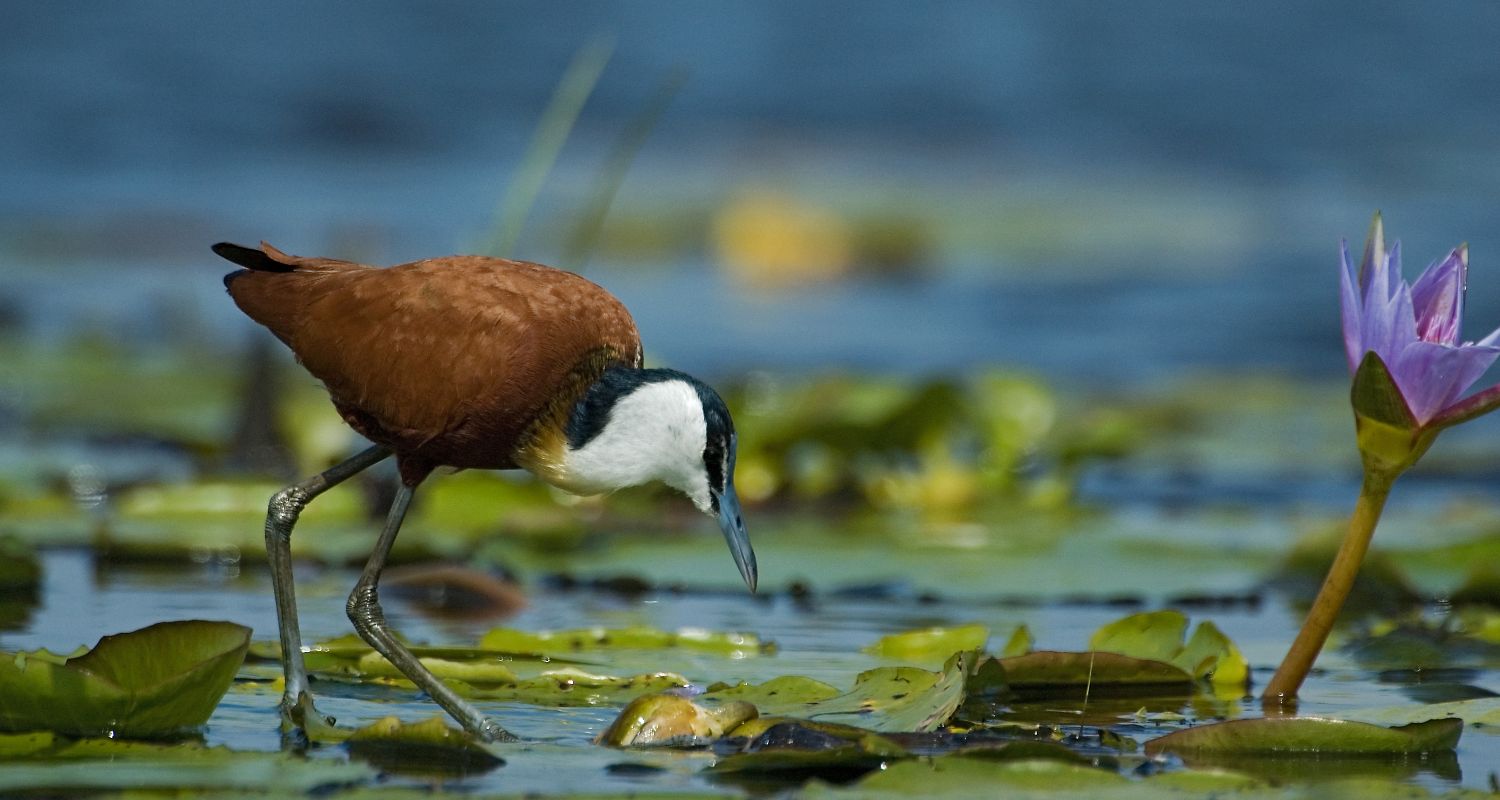
The best bird watching in Uganda is concentrated in Albertine Rift endemic hotspots like Bwindi Impenetrable and Mgahinga National Parks, and rich wetland sites such as Mabamba Swamp for the Shoebill. Top guiding involves expertise in bird calls, behavior, and habitats, focusing on species like Grauer’s broadbill and Shelley's crimson wing
30-days-best-uganda-birding-safari-extravaganza-and-wildlife-safari
25-days-complete-uganda-birding-safari-extravaganza-with-wildlife-viewing
22-days-best-uganda-primate-and-birding-safari-adventure
21-days-uganda-birding-safari-extravaganza-to-best-uganda-safari-parks
20-days-uganda-birding-safari-wildlife-gorilla-and-chimpanzee-tracking
20-days-uganda-birding-safari-to-uganda-national-park
19-days-best-photography-uganda-birding-safari-and-wildlife-adventure
Bwindi Impenetrable National Park
Bwindi is widely considered a "Global Birding Mecca," specifically for its concentration of Albertine Rift Endemics. Of the 24 endemics available in Uganda, Bwindi hosts an incredible 23, including the vivid Rwenzori Turaco and the elusive Shelley’s Crimsonwing. The park is a high-altitude sanctuary where the canopy is often alive with "feeding parties"—large, multi-species flocks that move through the forest together.
For dedicated birders, the Mubwindi Swamp Trail in the Ruhija sector is the most critical route. It is the most reliable site to find the rare African Green Broadbill, a small, blue-throated gem that is a top priority for any 2026 birding list. In the lower-altitude Buhoma sector, visitors can spot the striking Black Bee-eater and Black-billed Turaco. The best time for high species counts is between November and April, when resident birds are joined by Palearctic migrants, turning the forest into a vibrant cathedral of sound and colour.
Mabamba Swamp
Located on the edge of Lake Victoria near Entebbe, Mabamba Swamp is a Ramsar Wetland of International Importance and the most famous location in Africa to see the prehistoric Shoebill Stork. Tracking this "living fossil" is done via motorized wooden canoes that glide through narrow papyrus channels. The Shoebill is a master of patience, often standing motionless for hours while stalking its favourite prey, the lungfish.
Beyond the Shoebill, Mabamba is a sanctuary for wetland specialists. You can easily spot the Papyrus Gonolek, African Jacana, and the Malachite Kingfisher. The swamp is also home to the Red-chested Sunbird, a Lake Victoria biome endemic. In 2026, the local community-led conservation efforts have ensured high success rates for sightings. Early morning trips are recommended, as this is when the Shoebills are most active before the heat of the day causes them to rest deep within the reeds.
Queen Elizabeth National Park
With a bird list exceeding 600 species, Queen Elizabeth National Park (QENP) boasts the highest biodiversity of any protected area in Uganda. This is largely due to its incredible variety of biomes, ranging from open savannah and wetlands to humid rainforests. The Kazinga Channel, which connects Lake George and Lake Edward, is a world-class hotspot for water birds. A boat safari here provides close-up views of the African Fish Eagle, Great White Pelicans, and various kingfishers.
The park is also a premier destination for raptors, with dozens of eagle and vulture species patrolling the skies. For those seeking forest specialists, the Kyambura Gorge and Maramagambo Forest are home to the shy African Finfoot and the White-naped Pigeon. The Ishasha sector in the south is particularly good for scanning for larger birds like storks and birds of prey. Because it serves as a major migration corridor, the months between November and April offer an extraordinary mix of resident and migratory species.
Kibale National Park
While famous for its chimpanzees, Kibale is equally celebrated by ornithologists as the "Home of the Pitta." The Green-breasted Pitta is the ultimate prize here—a vibrant, elusive bird that is best sought at dawn when it performs its unique display. Kibale’s dense tropical forest supports over 375 species, including the Great Blue Turaco, which is often seen hopping through the high canopy with its striking blue and yellow plumage.
Adjacent to the forest is the Bigodi Wetland Sanctuary, a community-managed project that is essential for spotting wetland species like the Papyrus Yellow Warbler and the White-winged Warbler. The forest understory is home to shy skulkers such as the Scaly-breasted Illadopsis and the Abyssinian Ground Thrush. In 2026, birding walks in Kibale are often combined with primate treks, offering a comprehensive look at the Albertine Rift’s most charismatic wildlife in a single morning.
Kidepo Valley National Park
Kidepo is Uganda’s most remote wilderness and offers a birding experience that is vastly different from the lush forests of the south. This semi-arid savannah is home to over 470 species, including 60 that are found nowhere else in Uganda. It is the only place in the country where you can see the Common Ostrich and the only naturally occurring populations of the Rose-ringed Parakeet.
The park is the definitive location for arid-zone specials such as the Fox’s Weaver, Abyssinian Roller, and the spectacular Karamoja Apalis. Kidepo is also a stronghold for birds of prey, with 56 raptor species recorded, ranging from the tiny Pygmy Falcon to the massive Secretary Bird. The dry valleys and open horizons make spotting easier than in the dense jungles, and the months of March and April are particularly rewarding for local specials. Its "Last Great Wilderness" status ensures a quiet, uninterrupted birding experience that feels like stepping back in time.
What makes a Uganda bird watching safari unique?
Uganda is often described as a "one-stop shop" for birding because of its location at the intersection of several African biomes: the East African savannah, the West African rainforest, and the semi-arid north. This unique overlap allows visitors to spot Albertine Rift endemics, which are found nowhere else on earth, and the rare Shoebill Stork in a single trip. Unlike other birding destinations where you might spend days searching for one family of birds, Uganda’s high biodiversity density means you can transition from swamp-dwelling specialists to forest canopy dwellers in just a few hours.
Where are the best Uganda bird watching safari spots?
The "Birding Big Three" in Uganda are Mabamba Swamp, Bwindi Impenetrable Forest, and Kibale National Park. Mabamba is the premier site for the Shoebill, while Bwindi is a global hotspot for high-altitude forest species and Albertine Rift endemics like the African Green Broadbill. Kibale is the best place to find forest specialists, particularly the Green-breasted Pitta. Other essential stops include Queen Elizabeth National Park for wetland and savannah species and Murchison Falls for unique riverine birds like the Rock Pratincole.
When is the best time for a Uganda bird watching safari?
While birding in Uganda is productive year-round, the dry seasons (December to February and June to August) are generally preferred for ease of trekking. However, the window between September and March is considered ideal by many professionals. During this time, resident birds are joined by Palearctic migrants fleeing the northern winter, pushing species counts to their annual peak. If you are specifically tracking the Shoebill, the dry months are better as the water levels in the swamps are lower, making it easier for the birds to forage in accessible areas.
How many bird species can I see on a Uganda bird watching safari?
Uganda boasts a checklist of over 1,080 bird species, which represents more than 50% of all bird species found in Africa and roughly 10% of the global total. On a standard 14-day specialized birding itinerary, it is not uncommon for enthusiasts to tick off between 400 and 600 species. This incredible concentration is made possible by the country's diverse range of habitats—from high-altitude mountain forests to low-lying papyrus swamps and open acacia savannahs—all within a relatively compact geographical area.
What is the Shoebill and where can I see it?
The Shoebill (Balaeniceps rex) is a massive, prehistoric-looking bird that is a top priority for birders worldwide. Often described as a "living fossil," it is known for its bulbous, shoe-shaped bill and intense yellow eyes. The most reliable place to see it is Mabamba Swamp near Entebbe. The experience usually involves a guided canoe trip through narrow papyrus channels at dawn. Seeing a Shoebill standing motionless as it stalks lungfish is often the highlight of any Ugandan safari, offering a glimpse into a bird that has remained virtually unchanged for millions of years.
Can I combine a gorilla trip with a bird watching safari?
Absolutely. This is one of the most popular combinations in Uganda. Bwindi Impenetrable National Park is both a UNESCO World Heritage site for mountain gorillas and an Important Bird Area (IBA). While you spend your morning trekking to find the gorillas, the forest is alive with over 350 bird species. Many visitors book an extra day in the Ruhija or Buhoma sectors specifically for birding, allowing them to find the Regal Sunbird and Rwenzori Turaco after they have had their hour with the great apes.
What are the Albertine Rift endemics seen in Uganda?
The Albertine Rift endemics are a group of birds found only in the montane forests of the rift valley shared by Uganda, Rwanda, and Congo. In Uganda, Bwindi and the Rwenzori Mountains are the best spots to find them. Highly sought-after species include the African Green Broadbill, Regal Sunbird, Rwenzori Turaco, and Handsome Francolin. These birds are restricted to specific altitudes and habitats, making them "lifers" for serious ornithologists. Finding these colorful and rare species requires patience and an expert guide who knows their specific calls.
Is Murchison Falls National Park good for birding?
Yes, Murchison Falls offers a completely different palette of birds compared to the southern forests. It is excellent for savannah and riverine species. A boat trip to the base of the falls or downstream to the Delta provides sightings of the Rock Pratincole, Giant Kingfisher, and African Skimmer. On the northern banks, game drives through the savannah often reveal the Abyssinian Ground Hornbill, Secretary Bird, and various raptors. The park is also a great place to spot the Denham’s Bustard in the open grasslands.
What should I pack for a Uganda bird watching safari?
The most critical items are a high-quality pair of binoculars (8x42 is recommended) and a comprehensive field guide, such as The Birds of East Africa. For clothing, choose neutral-colored, moisture-wicking gear; avoid bright whites or neons that can startle birds. Sturdy, waterproof hiking boots are essential for forest trekking. A wide-brimmed hat, insect repellent, and a lightweight rain jacket are also "must-haves." For those with heavy camera gear, a beanbag or a sturdy monopod is useful for stabilizing long lenses in the low light of the forest canopy.
How do I book a specialized bird watching guide?
It is highly recommended to book through specialized companies like Bird Uganda Safaris or similar niche operators. Unlike general safari guides, specialized birding guides have an encyclopedic knowledge of bird calls (vocalizations), which is the only way to find many elusive forest species. These guides are often members of the Uganda Bird Guides Club and participate in annual bird-counting events. Booking a specialist ensures that your itinerary is paced correctly—leaving early enough for the "dawn chorus" and allowing enough time at each hotspot.
Are guided tours necessary for a bird watching safari?
Yes, a guide is virtually essential for a successful birding trip in Uganda. Many of the most prized species are "skulkers" that live in dense undergrowth or high in the canopy where they are hard to see. A local guide can identify hundreds of species by sound alone, leading you directly to the location of a specific pitta or cuckoo. Furthermore, guides handle the logistics of park entries and navigate the intricate tracks in places like Bwindi, allowing you to keep your eyes on the trees instead of the road.
Which Park has the highest species count?
Queen Elizabeth National Park holds the record for the highest bird species count in Uganda, with over 600 species recorded. This is one of the highest checklists of any protected area in Africa. The park’s incredible variety of biomes—including craters, savannah, wetlands, and forests—is responsible for this diversity. The Kazinga Channel boat cruise is a world-class hotspot where you can see hundreds of waterbirds, including pelicans, skimmers, and storks, in a single two-hour session.
Is Kibale Forest National Park included in a birding safari?
Kibale is a "must-visit" on any serious birding itinerary. While it is famous for its 1,500 chimpanzees, birders come here for the "holy grail" of forest birds: the Green-breasted Pitta. This bird is famously difficult to find, but Kibale is the most reliable place in Africa to spot it, especially during its display season in June. The forest is also home to the Great Blue Turaco, Black-billed Turaco, and the shy White-naped Pigeon, making it a primary destination for forest-dependent species.
What is a "Big 5" bird safari in Uganda?
While the term "Big 5" usually refers to mammals, the birding community in Uganda has adopted its own version. The "Big 5" birds often include the Shoebill, Great Blue Turaco, Green-breasted Pitta, African Green Broadbill, and the Grey Crowned Crane (Uganda’s national bird). Spotting all five requires visiting at least three different national parks, making it a challenging but rewarding "quest" for enthusiasts. Some lists also swap in the Long-crested Eagle or the Secretary Bird depending on the specific region.
Can a Uganda bird watching safari be family-friendly?
Yes, birding can be a great family activity, particularly in locations like Mabamba Swamp or Entebbe Botanical Gardens. These sites are easily accessible and offer "instant gratification" with large, colorful birds like the Great Blue Turaco or the Shoebill. Shorter day trips avoid the long drives associated with deep-forest trekking. Many lodges also have "resident birds" on their grounds, allowing children to practice using binoculars and identifying species in a relaxed, safe environment without the intensity of a full-day trek.
How do I spot the African Finfoot?
The African Finfoot is a shy, secretive water bird that is a highlight for many visitors. The most reliable place to see it is Lake Mburo National Park. Because the Finfoot prefers quiet, overhanging vegetation along riverbanks and lakeshores, the best way to spot it is via a boat safari. Staying quiet and scanning the water's edge under the shade of trees is key. Lake Mburo is also excellent for other water-associated species like the African Fish Eagle and the Giant Kingfisher.
What is the best way to travel between birding sites?
A customized 4x4 safari vehicle with a pop-up roof and a professional driver-guide is the best way to travel. Birding sites in Uganda are spread across the country, and navigating between them involves a mix of paved highways and rugged forest tracks. A private vehicle allows for "birding on the move"—stopping whenever a raptor is spotted on a fence post or a colorful roller crosses the road. It also provides enough space for heavy optics and birding books, ensuring you are comfortable during the transits.
Do I need to be an expert birder for a Uganda safari?
No, Uganda’s birdlife is so spectacular and colorful that it appeals to everyone from beginners to professional ornithologists. Many people visit for the gorillas and find themselves "converted" to birding after seeing a Regal Sunbird or a Crowned Crane. Specialized birding companies can tailor itineraries to be as technical or as relaxed as you like. For beginners, the focus is often on large, easily identifiable, and beautiful birds, while experts may spend hours tracking a single "Cisticola" or "Greenbul."
What birding spots are near Kampala for a quick safari?
If you only have a day or two in the capital, you are in luck. Mabamba Swamp is just an hour's drive from Kampala and is the best place in the country for the Shoebill. Mabira Forest, located on the road to Jinja, is a beautiful patch of tropical rainforest perfect for forest species like the Great Blue Turaco and various hornbills. Even the Entebbe Botanical Gardens offers fantastic birding, where you can easily spot Verreaux’s Eagle-owls and Orange-tufted Sunbirds within walking distance of your hotel.
Is it possible to take bird photography during a safari?
Yes, bird photography is a massive part of the Ugandan experience. However, the low light of the forest canopy requires fast lenses (f/4 or wider) and high-ISO capable cameras. Many birding guides are also experts in positioning vehicles or boats to get the best light for photos. For forest photography, a flash with a "better beamer" extender is often used by pros to fill in shadows. Whether you are using a 600mm prime lens or a high-end bridge camera, the colorful and relatively habituated birds of Uganda offer world-class photographic opportunities.
Booking Uganda bird watching with us Roads of Adventure safaris
Book your ultimate Uganda bird-watching adventure with Roads of Adventure Safaris to explore premier habitats, from Mabamba Swamp for the Shoebill to Bwindi’s Albertine endemics. We offer specialized 10–20-day itineraries featuring expert guides, tailored to your target species, ensuring a high-quality experience. Our packages include 4x4 transport, specialized birding guides, and top birding spots. With excellent reviews and a focus on intimate wildlife encounters, we ensure comfortable, unforgettable birding. Contact us to customize your 14-day Classic Birding Safari.
