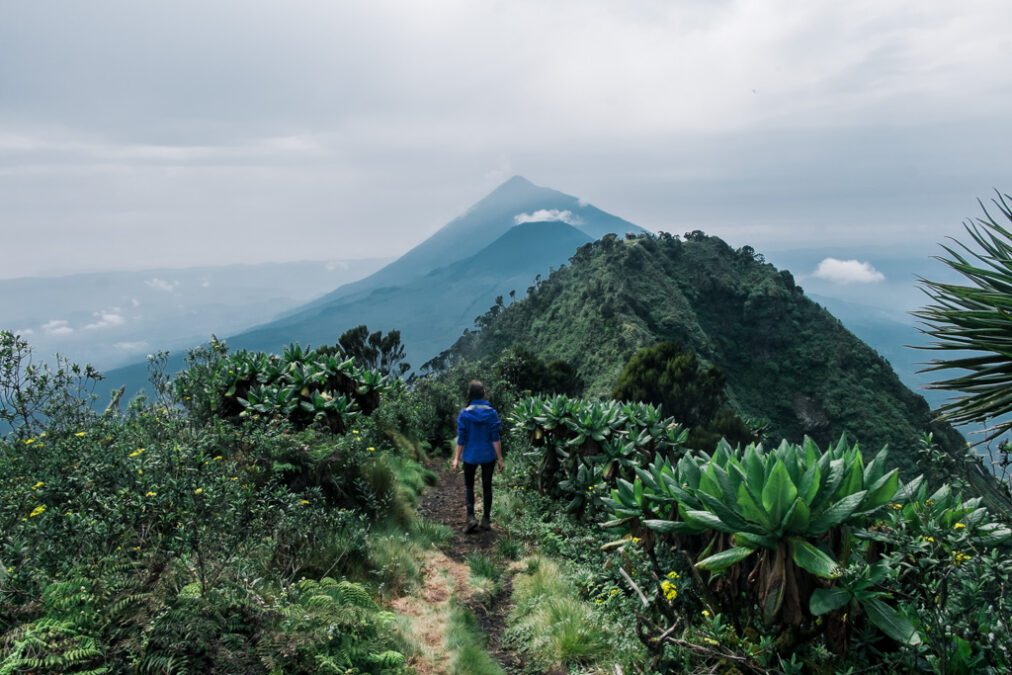
Mount Sabinyo offers a thrilling 8-hour technical summit hike that lets you stand in Rwanda, Uganda, and the DRC simultaneously. Top packages range from 3-day budget/mid-range climbs to 5-day extreme multi-mountain adventures. Most tours depart from Kigali, Rwanda (a 3–4-hour drive) or Entebbe, Uganda
3-day-hike-mount-sabinyo-and-explore-lake-bunyonyi
h3-days-muhabura-volcani-hike-adventure
The Short & Direct (3-Day Mount Sabyinyo Hike)
This 3-day, 2-night itinerary is designed for travelers who want a focused, high-reward adventure without adding lots of extra wildlife stops. The goal is simple: reach the summit experience on Mount Sabyinyo (Peak 3) and still have time to enjoy a calmer activity afterward. It’s ideal if you’re short on vacation days, traveling with a tight schedule, or you prefer separating “mountain activities” from “safari-style wildlife viewing.”
The highlight is a 1-day summit climb that delivers dramatic mountain scenery and a sense of accomplishment from climbing in the Virunga volcanic region. You’ll also get downtime and a change of scenery with a relaxing boat cruise on Lake Bunyonyi or Lake Mutanda (depending on the operator’s route and season). These lakes offer cooler breezes, beautiful landscapes, and an unhurried atmosphere—perfect for recovery after the climb.
Tours typically begin in Kigali, Rwanda or Kampala, Uganda, with logistics arranged so you can get to the trailheads efficiently.
A budget to mid-range estimate is about USD $500–$800, but the final price depends on guide fees, permits, accommodation level, transportation from your start city, and inclusions (like meals and park/lodge fees).
Is 1 Days Mountain Sabinyo hike Possible
Yes, hiking Mount Sabinyo is entirely possible. In fact, it is a popular one-day hike that takes about 8 hours round trip (4 hours up, 4 hours down). The mountain sits at an elevation of 3,645 meters and is famous for its jagged peak, which marks the exact border intersection of Uganda, Rwanda, and the Democratic Republic of the Congo
The Primate Combo (4-Day Gorillas and Sabinyo Hike)
The Primate Combo is a balanced, action-packed itinerary built for travelers who want both physical challenge and iconic wildlife encounters. In just four days, you combine the rewarding effort of climbing Mount Sabinyo with the emotional highlight of gorilla trekking. It’s a smart choice for people who don’t want to choose between adventure and wildlife—they want both, but still within a realistic timeframe.
What you’ll do: You start with the mountain segment, including the Mount Sabinyo climb, where you’ll experience volcanic landscapes, changing terrain, and the satisfaction of reaching higher vantage points. Afterward, the itinerary shifts toward Uganda’s primate experiences. Depending on your routing and availability, you’ll do one or two Mountain Gorilla trekking sessions in Mgahinga Gorilla National Park or in nearby areas such as Bwindi Impenetrable National Park. Gorilla trekking is not just a “tour”—it’s a deeply immersive encounter that depends on locating a gorilla family that day.
Why it works: Unlike very long safaris, this package keeps things streamlined. You’ll still get downtime and recovery, but you won’t spend days driving between far-flung locations. The combination also makes sense thematically: the Virunga region is about dramatic ecosystems—volcanic peaks in the morning, forest primates in the afternoon (or the next day).
Duration and cost: It runs 4 days / 3 nights, usually priced around USD $1,200–$1,500. Costs vary based on trek timing, permit availability, the number of gorilla days included, accommodation standards, and whether transfers are included.
The Complete Virunga Experience (5-Day Extreme Volcano Challenge)
The Complete Virunga Experience is for serious trekkers who want to push their limits and feel fully immersed in the volcanic landscapes of the region. This 5-day, 4-night package builds on the Mount Sabinyo challenge and adds more peaks, primate experiences, and cultural/nature variety—turning your trip into a true outdoor expedition rather than a standard itinerary.
What makes it “complete”: You begin with the Mount Sabinyo climb, but instead of stopping there, the program typically expands into additional high-altitude and technical trekking days. Many versions of this route include something like a Mount Muhabura climb for another intense summit challenge. This is where fitness, pacing, and acclimatization matter most—expect cold mornings, demanding ascents, and long-lasting views over the Virunga ranges.
Primate and nature highlights: After or between summit days, you’ll also include Golden Monkey tracking and at least one visit to Volcanoes National Park (or equivalent protected areas in the same ecosystem). Golden monkey tracking adds a different kind of excitement: instead of summit effort, you experience forest movement, guided search patterns, and the thrill of seeing rare wildlife.
Expect USD $1,200+ depending on the exact peak list, guide team size, permit structure, porter requirements, and the level of lodging and meals.
This package suits hikers who already have some trekking experience and who want more than one big “mountain day.” If you enjoy long, challenging days with minimal shortcuts, and you’re comfortable with the unpredictability of weather and trail conditions, this is the right style of adventure.
The Ultimate Mega-Safari (7-Day Sabinyo & Double Gorilla Trek)
If you want the “everything trip”—major climbing, multiple primate encounters, and full safari-style wilderness experiences—the Ultimate Mega-Safari is designed for you. This premium 7-day, 6-night itinerary combines Mount Sabinyo’s physical challenge with Uganda’s most celebrated wildlife destinations and some outstanding cultural/nature activities. It’s a comprehensive package for travelers who don’t mind paying extra for maximum variety and fewer compromises.
The itinerary typically begins with the Mount Sabinyo hike, then escalates into primate highlights with two Mountain Gorilla treks—often scheduled to maximize your chance of a meaningful encounter and to give you a deeper sense of how gorillas behave in the wild. Gorilla trekking is one of the most memorable wildlife experiences available in East Africa, and doing it twice adds a powerful “second story” to your journey.
Beyond gorillas, expect additional wildlife moments such as chimpanzee tracking in Kalinzu Forest Reserve, plus iconic savanna/park experiences like a Kazinga Channel boat cruise, where you can often spot hippos, birds, and other wildlife moving along the water. Some versions of this itinerary also include tree-lion spotting and other targeted excursions.
This is a luxury-tier program, generally USD $2,500+, largely driven by gorilla permit costs, multiple primate days, park fees, and higher-end lodging and logistics.
Tips for Mountain Sabinyo summit
Hiking Mount Sabinyo is a challenging 7-to-10-hour round trip that culminates at an elevation of 3,645 meters (11,959 ft) where the borders of Uganda, Rwanda, and the DRC meet. It is a rugged, exhilarating climb featuring sharp ridges and steep, fixed wooden ladders
Peak 1 is the warm-up with high consequence. You’re not just walking—you’re already working through altitude, steep volcanic terrain, and loose ground that can shift underfoot. The trail gradually forces you into a steady rhythm: hike with purpose, pause briefly to manage breathing, and keep your footing cautious. This first summit sets the mental and physical tone for the entire route, because you’ll be reminded quickly that Mount Sabinyo isn’t a casual climb.
Peak 1
Reaching Peak 1 means you’ve crossed the halfway threshold of “getting your legs and lungs ready” for what comes next. You learn how the trail behaves—how quickly the ground changes texture, and how the landscape demands constant attention. You also start to notice the sweeping views over the Virunga region, even if conditions limit visibility. By the time Peak 1 is behind you, you’re better prepared to commit to the harder days ahead and to conserve energy for the real challenge.
Peak 2
Peak 2 is where the climb becomes noticeably more demanding and focused. The terrain is steeper, the path is more exposed, and the effort required feels more continuous—there’s less “easy walking” and more sustained climbing. This peak tests endurance in a practical way: your legs feel the slope, your breathing becomes more deliberate, and you must keep your pace consistent rather than rushing.
Summiting Peak 2 is also crucial because it acts as the gateway to the route segment that many climbers find most intense: the approach to Peak 3. After Peak 2, you’re moving into the technical “transition” portion of the trek. From a psychological perspective, Peak 2 gives you a clear reward: you’ve already climbed two serious summits, proving to yourself that the final push is realistic.
When you stand on Peak 2, you can typically see more of the surrounding landscape and begin to anticipate the ladders, ropes, and near-vertical work ahead. It’s a peak that teaches caution, patience, and controlled movement—exactly what you’ll need before you reach the fixed ladder section.
Peak 3 (True Summit)
Peak 3 is the culmination—and the reason the route is so famous. The journey is no longer just about hiking up; it becomes about transitioning from strenuous climbing to technical, protected movement through a near-vertical section. Many trekkers describe the segment between Peak 2 and Peak 3 as the “climbing moment” of the trek, because it features fixed wooden ladders and ropes. That means balance, grip, and steady foot placement matter as much as strength.
When you reach Peak 3, the reward isn’t only the view—it’s the symbolic and surreal geographic achievement. At the true summit, you effectively stand at the boundary of three countries at once, giving you a rare feeling: one step can be shared by borders, cultures, and landscapes that meet at a single point. This moment tends to feel unforgettable because it’s both physically earned and visually dramatic.
Peak 3 also marks your final mental “lock-in”: once you’ve arrived, you’ve completed the hardest part of the climb’s structure. The true summit turns the entire expedition into a memorable achievement—proof that you successfully navigated the full sequence: Peak 1, Peak 2, then the demanding final stand at Peak 3.
Physical Preparation & Safety for Mountain Sabinyo hike
Fitness Level
The Mount Sabinyo route is physically demanding, and the difficulty is not limited to “how far” you hike—it’s about how steep and sustained the effort is. Even if you’re an active person, this trail can challenge your stamina because you’ll be climbing for extended stretches on uneven volcanic terrain. A reasonable baseline fitness usually means you can hike uphill for several hours, maintain a steady pace, and recover between climbs without needing constant breaks.
Preparation should focus on leg endurance and cardiovascular capacity. Think: regular uphill walking, stair climbing, or similar training that strengthens calves, quads, and the muscles you use to control your steps on steep slopes. Also prioritize mobility for ankles and hips, because the ground can be rocky or slippery, requiring careful foot placement.
A key safety benefit of fitness is not just reaching the summit—it’s maintaining control. When you’re tired, balance decreases and the risk of slips rises, especially near technical sections and exposed ridgelines. Strong fitness helps you stay calm, think clearly, and follow your guide’s instructions without rushing.
Heights and Vertigo
The ridge walk near the final peaks can be narrow and heavily exposed, with steep drops on either side. This is where many hikers discover a different kind of difficulty: not physical strength, but height perception and body control. If you experience vertigo, dizziness, or a fear of heights, the ridge section can feel intense even for fit travelers.
The most important safety approach is honesty. Let your authorized ranger and armed guide know if you’re uncomfortable with heights. Good guides can pace the route, suggest techniques for stability, and help you focus on safe movement rather than looking at the drop.
Preparation can include practicing balance and confidence on uneven terrain, but the real technique is mental: slow down, keep your gaze focused on the trail, and move deliberately—short steps, stable footing, and controlled breathing. Avoid sudden turns or rushing. If dizziness starts, communicate immediately.
Being cautious with heights doesn’t mean you’re incapable—it means you’re managing a real risk factor so you can complete the trek safely and stay in control during the most exposed moments.
Guides (Ranger + Armed Guide)
For Mount Sabinyo, hiking with the proper team is not optional—it’s a core safety requirement. You must hike with an authorized ranger and an armed guide. This is because the route involves protected areas, regulated access, and rugged conditions that can quickly become dangerous without local expertise. The guides also help manage safety on steep sections and ensure that group movement follows established protocols.
Typically, these arrangements are made through the ranger system and local operations, often coordinated at or around the Ntebeko Visitor Centre, where you receive your trek briefing and official escort assignment. Your guide team will confirm route timing, weather considerations, and any restrictions based on current conditions.
From a practical standpoint, guides also reduce risk in multiple ways: they pace you appropriately for the terrain, monitor members who are tiring or struggling, and assist with navigation in areas where the trail is challenging. The armed guide role adds additional security and helps maintain order in the broader region.
To stay safe, follow all instructions, stay close to your assigned ranger, and don’t separate from the group. This kind of guided trekking transforms the climb from “an adventurous hike” into a structured expedition where safety and expertise are built into the experience.
Packing List & Gear
Sturdy Footwear
Sturdy footwear is the foundation of a safe and enjoyable Mount Sabinyo trek. The route can be wet, muddy, and uneven, especially on volcanic ground and in areas with thick vegetation. Because traction matters as much as comfort, you’ll want well-broken-in hiking boots with high-traction soles (deep lugs) so your feet can grip reliably rather than sliding on slick surfaces. New boots—even if they look sturdy—often cause blisters, which can quickly become a major problem on long, steep days.
Good boots should also provide stable ankle support and a firm, protective sole that handles rocky patches and sudden changes in ground texture. Pay attention to the boot’s water resistance: in rainy or humid conditions, boots that drain well and dry faster are advantageous.
How to pack and prepare matters too. Bring the right socks (preferably moisture-wicking and cushioned), and consider doing a short test hike before your trip so you know your fit is reliable. If your socks get wet, friction increases, and you’ll feel discomfort sooner during ridge sections and ladders.
Ultimately, footwear isn’t just gear—it’s safety. Slips can be harder to recover from when you’re climbing steep terrain or moving near exposed sections. Strong boots reduce that risk, improve confidence, and help you keep your pace without constant worry about your footing.
Hand Protection
Hand protection is essential because the route includes sections where you’ll need to grip rough fixed wooden ladders and ropes. Even strong climbers can end up with scraped knuckles, blisters, or skin abrasions if they rely only on bare hands—especially when hands get sweaty and wet. Wearing gloves also improves control, giving you a better feel for the ladder rungs and rope texture.
Hiking gloves or gardening gloves are typically suitable, depending on thickness. The goal is not heavy winter insulation—it’s durable grip and abrasion protection. Look for gloves that provide a secure hold and some padding in high-contact areas like the palm and fingertips. If the gloves are too bulky, you may lose dexterity; if they’re too thin, they won’t protect against friction and rough wood.
Gloves also help with hygiene and weather comfort. Wet conditions can make hands slippery and fatigue increases when you overgrip to compensate. With gloves, you can grip more consistently and move through technical areas with less strain.
A smart packing strategy is to bring an extra pair or at least a backup glove, especially if you expect heavy rain or if you’re sharing gear in a group. When you’re moving through ladder-and-rope moments, your hands are actively supporting your body—protecting them is a direct investment in safety and endurance.
Clothing
Dressing correctly can make the difference between a manageable, comfortable trek and an exhausting one. Mount Sabinyo conditions often include moisture, thick vegetation, and unpredictable weather. Because the trail can cut through areas with bamboo, wild vegetation, and stinging nettles, you should wear long-sleeved shirts and long trousers rather than shorts or bare arms. This reduces scratches, bites, and contact with irritating plants.
Choose clothing made from moisture-wicking layers. Synthetics or performance fabrics help move sweat away from your skin, which matters during steep climbs where you’ll warm up quickly. Moisture-wicking reduces chill later when you slow down or when rain and mist roll through. Cotton can feel comfortable at first, but it holds moisture and can make you cold during wet conditions.
A practical layering system usually includes:
- A breathable base layer (moisture-wicking)
- A warm mid-layer for cooler periods
- An outer shell or rain layer when weather turns
Also consider that you may carry your jacket at times, so pockets and breathability are helpful. Gloves and a hat/scarf can provide extra protection against wind and cold mornings depending on the season.
Finally, ensure your clothing fits well—too loose can snag on vegetation, while too tight can restrict movement. The best clothing is protective, breathable, and flexible enough for steep ascents and steady descents without slowing you down.
Fuel & Hydration
Fuel and hydration are critical on steep, long days because your body is working continuously—climbing, balancing, and navigating technical terrain. A common recommendation is to bring at least 2 to 3 liters of drinking water, but you should also consider your pace, the season, and how hot or humid it feels during your trek. Dehydration can worsen fatigue, headaches, and dizziness, which is especially risky on exposed sections.
To support your energy levels, pack high-energy snacks that are easy to eat while moving or during short breaks. Good options include nuts, dried fruit, and protein bars. These provide a mix of calories and nutrients that can prevent energy crashes when the climb gets steep.
Plan how you’ll snack. Instead of eating everything at the end of the hardest segment, aim for smaller “fuel stops” so your body stays steady. This helps maintain performance and reduces the urge to rush when you feel low on energy.
Also be mindful of drink safety and convenience. Use bottles or a hydration system you can access quickly. If your trek involves limited opportunities for refills, treat your initial water as your primary supply and manage it with a sensible pace: sip regularly rather than drinking large amounts infrequently.
In short, hydration and snacks don’t just make the trek easier—they protect decision-making and balance. When your energy is stable, you’re more likely to move confidently and safely through all trail challenges.
Weather Gear
Weather in the Virunga ranges can change quickly. Even if the morning starts bright, you may encounter rain, mist, or sudden drops in temperature during the climb. That’s why a high-quality rain jacket and a waterproof daypack are among the most important items on your packing list.
A reliable rain jacket should be breathable enough to handle exertion, but waterproof enough to keep you dry when the weather turns. Look for a jacket with a hood, adjustable cuffs, and a design that allows you to keep moving without constantly readjusting. When you’re sweating uphill, you don’t want your jacket to trap moisture like plastic wrap—breathability helps prevent overheating and discomfort.
A waterproof daypack matters because your spare layers, snacks, and electronics can be ruined by sudden downpours. Even a “water-resistant” bag may fail in heavy rain, while a truly waterproof pack or a rain cover can save your essentials.
You should also protect what’s sensitive: keep a dry layer of clothing accessible, store snacks in sealed bags, and consider a small ziplock or dry pouch for valuables.
Weather gear is about reliability. If you’re warm, dry, and able to access your layers when needed, you reduce fatigue and keep your attention on safe movement rather than discomfort. Since the route includes steep ascents and exposed segments, staying comfortable directly supports stability, endurance, and safety throughout the trek.
Walking Stick
A sturdy walking stick can be a major aid on Mount Sabinyo, especially on steep ascents and steep descents. While some hikers climb without one, many find that a stick improves stability and reduces strain on knees and legs. The trail’s slopes and uneven surfaces demand careful foot placement, and a walking stick provides extra balance and confidence when the terrain gets challenging.
When used correctly, a stick helps you:
- Reduce the impact on your knees during downhills
- Maintain stability on slippery or muddy sections
- Improve posture when climbing steep grades
- Keep your rhythm consistent without overworking your legs
Choose a stick that feels solid and adjustable to your height. A collapsible trekking pole can work well because it’s easier to pack, but ensure it locks securely and doesn’t wobble. If you’re using one stick instead of two, make sure it’s long enough to support you comfortably during uphill segments without forcing your shoulders upward.
Also consider grip and hand comfort. If you’re already wearing gloves for ladder/rope sections, your stick grip should match that level of handling. A rubber tip is useful for traction, while a removable tip can help you switch between muddy and rockier ground.
The walking stick is not a substitute for careful technique, but it’s a safety tool. On steep terrain, balance can change quickly. With a walking stick, you get an extra “point of control,” helping you move steadily and confidently through the toughest parts of the route.
When is the best time for Mountain Sabinyo summit tour?
The best time is typically during the drier, clearer months, when trails are less slippery and skies are more likely to be clear for ridge views. Most travelers aim for June to September and December to February, since rain tends to be lighter and visibility can be better. However, routes can still be demanding year-round, and weather in the Virunga ranges can change quickly, even in “good” seasons. If you prefer fewer crowds, consider shoulder periods around the start/end of the dry seasons. If your priority is comfort and safety on steep, exposed terrain, choose dates that align with the driest conditions available for your travel window.
Where to stay on a Mountain Sabinyo summit tour?
Accommodation on Sabinyo tours usually ranges from comfortable lodges near the start/end points to park-adjacent camps or lodges depending on the itinerary and number of nights. Most programs include a night before the summit to help you arrive rested, plus another night after the climb so you can recover. Where you stay may also depend on whether your route is based in Rwanda or Uganda, and how the operator handles transfers. Commonly, travelers stay in areas around Ntebeko / Volcanoes National Park region (for Rwanda-based logistics) or nearby scenic lodges that offer warm meals and reliable transport coordination.
Booking Mountain Sabinyo summit tour with Roads of Adventure Safaris
Booking with Roads of Adventure Safaris means you get organized trekking logistics, experienced local guidance, and help tailoring your plan to your fitness and comfort level. We coordinate ranger and armed guide requirements, confirm route timing, and help you choose the best dates for your interests—whether you want the classic summit experience or to combine it with gorilla trekking or other Virunga activities. We also provide clear pre-trip guidance on what to pack (boots, rain gear, hydration) and what to expect on summit day, including the ladder-and-rope segment. If you want a smooth experience from arrival to return, Roads of Adventure Safaris helps you plan with confidence and structure.
