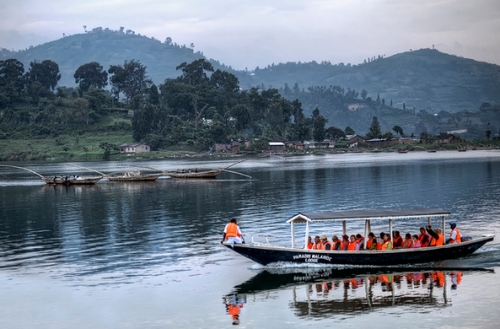
Rwanda, known as the "Land of a Thousand Hills," offers world-class safari experiences, primarily driven by gorilla trekking in Volcanoes National Park and chimpanzee tracking in Nyungwe. Key highlights include Akagera's Big Five, the scenic Lake Kivu, and rich cultural sites in Kigali, providing a safe, dense, and diverse safari experience
16-days-exclusive-rwanda-safari-tour-and-gorilla-trekking-tour-package
12-days-best-rwanda-wildlife-safari-and-rwanda-primate-safari-vacation
10-days-9-nights-midrange-rwanda-gorilla-trekking-wildlife-and-culture
11-days-best-rwanda-safari-tour-holiday-vacation
3-days-budget-chimpanzee-tracking-in-nyungwe-forest-park
3-day-chimpanzee-trekking-tour-package-canopy-and-lake-kivu
Volcanoes National Park
Perched high in the mist-shrouded Virunga Mountains, Volcanoes National Park is the beating heart of Rwanda’s conservation success. It is most famous for being the sanctuary of the endangered mountain gorillas, a species brought to the world’s attention by the legendary Dian Fossey. Stepping into this ancient, emerald-green forest feels like entering a cathedral of nature. The experience of trekking here is as much about the journey—climbing through thick bamboo stalks and stinging nettles—as it is about the destination.
When you finally come face-to-face with a gorilla family, the world seems to go quiet. Seeing a 200kg silverback gently grooming an infant or watching a mother’s watchful eye is a profound reminder of our shared biology. Beyond the gorillas, the park is home to the playful and striking golden monkeys, whose orange fur glows against the green canopy. The air here is thin, crisp, and carries the scent of wild herbs, making every breath feel like a renewal of the spirit.
Nyungwe Forest National Park
Nyungwe is not just a forest; it is one of the oldest and most biodiverse rainforests in Africa, having survived the last ice age. It is a dense, prehistoric world where giant ferns and ancient mahogany trees create a canopy so thick that the forest floor remains in a perpetual emerald twilight. For many, the highlight here is chimpanzee trekking. Hearing the distant, haunting hoots of a chimp community echoing through the valleys is a spine-tingling experience that signals the start of a wild pursuit through the undergrowth.
But Nyungwe also offers a perspective from above: the Canopy Walkway. Suspended 70 metres above the forest floor, this bridge allows you to walk amongst the treetops, eye-level with rare birds and some of the park’s 13 different primate species. As you stand on the swaying bridge, looking out over an endless sea of green that stretches toward the Burundi border, you feel the true, immense scale of the African jungle.
Akagera National Park
Akagera represents Rwanda’s incredible resilience. Once devastated by the aftermath of the 1994 genocide, the park has undergone a miraculous transformation into a thriving savannah ecosystem. It is now Rwanda’s only Big Five destination, thanks to the successful reintroduction of lions and black rhinos. The landscape here is a beautiful tapestry of rolling hills, open plains, and a complex network of lakes and papyrus swamps.
A boat safari on Lake Ihema is a must-see, where you can drift past massive pods of hippos and some of the largest crocodiles in East Africa. Unlike the crowded plains of the Serengeti, Akagera offers a sense of quiet discovery. You might spend an hour watching a pride of lions without seeing another vehicle. It is a place of big African skies and golden sunsets, proving that with enough dedication, nature can always find its way back.
Lake Kivu
After the physical exertion of trekking through forests, Lake Kivu serves as the country’s most beautiful "coastal" retreat. One of Africa’s Great Lakes, its crystal-clear turquoise waters are surrounded by emerald hills that drop steeply into the shoreline. In towns like Gisenyi and Kibuye, the atmosphere is one of total relaxation. There is something deeply therapeutic about watching the "singing fishermen" paddle their three-hulled dhows out into the lake at sunset, their rhythmic chants carrying across the water.
You can spend your days kayaking between uninhabited islands, visiting local coffee plantations, or simply enjoying the catch of the day—the tiny sambaza fish—on a lakeside terrace. Kivu isn’t just a body of water; it’s a place to decompress and reflect on the adventures of the bush, where the pace of life slows down to the gentle lap of waves against the shore.
Kigali City & Genocide Memorial
Kigali is often called the cleanest and safest city in Africa, but it is its soul that truly leaves an impression. The Kigali Genocide Memorial at Gisozi is an essential stop for any traveller. It is a place of immense sorrow but also of incredible grace, detailing the events of 1994 while focusing on the country’s path toward "Never Again." It provides the emotional foundation needed to understand the modern Rwanda you see today.
Away from the memorial, the city is a vibrant, hilly metropolis. Visiting the Kimironko Market is a sensory explosion—the smell of fresh passion fruit, the vibrant patterns of kitenge fabrics, and the friendly banter of vendors. Kigali is a city of "thousand hills" views, modern art galleries, and a thriving coffee culture, representing a nation that has firmly embraced the future without forgetting its past.
Iby’iwachu Cultural Village
Located just outside the gates of Volcanoes National Park, this village (also known as the Gorilla Guardians Cultural Village) offers a beautiful bridge between conservation and community. Many of the people working here are former poachers who have traded their snares for a life of sharing their heritage. It is a hands-on experience where you can try your hand at archery, watch traditional medicine men prepare herbal remedies, or learn the rhythmic steps of the Intore dance.
The highlight is often the mock coronation of a king, where visitors are invited to sit on the throne and learn about the ancient kingdom’s social structures. It’s a place of laughter and storytelling, ensuring that the economic benefits of gorilla tourism reach the people who live closest to the park. By visiting, you aren't just a spectator; you are part of a cycle that keeps both the community and the gorillas thriving.
Gishwati-Mukura National Park
As Rwanda’s newest national park, Gishwati-Mukura is a testament to the country’s "green" vision. Once nearly lost to deforestation, this forest has been painstakingly restored to connect two separate woodland patches. It is a quiet, burgeoning destination perfect for those who want to avoid the main tourist trails. Here, you can track a small but growing population of chimpanzees and find the rare L’Hoest’s monkeys.
The park is also a haven for birdwatchers, with over 230 species found in the canopy. Visiting Gishwati feels like being part of an ongoing conservation success story; every permit purchased contributes directly to the reforestation efforts. It is a place for the mindful traveller who appreciates the beauty of a forest being reborn and the return of wildlife to its ancestral home.
King’s Palace Museum (Nyanza)
For a deep dive into Rwanda’s pre-colonial history, a trip to Nyanza is indispensable. The King’s Palace is a stunning reconstruction of a traditional royal residence—a massive, thatched domed structure built entirely with traditional materials. It is an architectural marvel of woven reeds and grass. The real stars of the show, however, are the Inyambo cows.
These sacred, long-horned cattle are bred for their beauty rather than meat or milk. They are tended to by herders who sing to them, and the cows are even trained to move in a rhythmic, dance-like fashion during ceremonies. Watching these majestic animals, with their horns spanning nearly two metres, provides a glimpse into the regal and spiritual traditions that defined the Rwandan monarchy for centuries.
Ethnographic Museum (Huye)
Located in Huye (formerly Butare), this museum is widely regarded as one of the best in East Africa. Gifted by the King of Belgium in the late 1980s, the building itself is a beautiful piece of architecture. Inside, the seven galleries take you on a chronological journey through Rwandan life. You’ll find everything from ancient archaeological finds to traditional clothing, musical instruments, and intricate baskets.
The museum does an incredible job of explaining the "how" of Rwandan life—how they farmed, how they brewed banana beer, and how their sophisticated social structures functioned. It is a quiet, scholarly space that provides the technical and cultural "nuts and bolts" of the Rwandan identity. For anyone who wants to go beyond the surface-level tourist experience, a few hours spent here is like reading the definitive biography of the nation.
Nyamirambo Women’s Centre
To find the heartbeat of "real" Kigali, you must head to Nyamirambo. This community-based initiative was started by local women to provide education and vocational training. Their walking tours are the best way to see the city through a local lens. As you wander through the colourful, narrow streets, your guide will take you past local hair salons, tailors, and the neighborhood's famous mosques.
You’ll visit a local home to learn how to cook a traditional Rwandan meal and see how the women create the beautiful handicrafts sold in their shop. The tour isn't about looking at the neighborhood from the outside; it’s about engaging with the people who make it tick. It’s a powerful example of how tourism can directly empower women and celebrate the vibrant, everyday culture of urban Rwanda.
1. What are the top 10 places to visit in Rwanda?
Rwanda offers a breathtaking diversity of landscapes within a compact area. Volcanoes National Park is the crown jewel for gorilla trekking, while Nyungwe Forest and Cyamudongo serve as ancient havens for chimpanzees and rare primates. For a classic savannah experience, Akagera National Park is the go-to for the Big Five. Beyond the wildlife, the shimmering waters of Lake Kivu and the serene Lake Muhazi provide perfect retreats for relaxation.
Adventure seekers often flock to the Congo-Nile Trail, a 227-kilometre route perfect for hiking or cycling along the rift valley. The Virunga Mountains offer dramatic hiking opportunities to peaks like Mount Bisoke. To understand the nation's soul, the Kigali Genocide Memorial provides an essential historical perspective, while the Ethnographic Museum of Rwanda in Huye showcases one of Africa's best collections of traditional artifacts and royal history.
2. What is the best time for a safari in Rwanda?
While Rwanda is a year-round destination, the long dry season (mid-May to mid-October) is the gold standard for trekking. During these months, the trails in the rainforests are firmer and less slippery, making the hike to see gorillas or chimpanzees much more manageable. The vegetation is also less dense, which significantly improves visibility for photography.
The short dry season (December to February) is another excellent window, particularly for those looking to escape the northern winter. Conversely, the "Green Season" (March to May) brings heavier rains; while trekking is more physically demanding, the landscapes are incredibly lush and photogenic. For birdwatchers, the rainy season is actually a peak time, as migratory birds are present and the forests are alive with activity.
3. Where can I see Mountain Gorillas in Rwanda?
Gorilla trekking is exclusively conducted in Volcanoes National Park, situated in the rugged northwest of the country. This park is part of the larger Virunga Massif and was the base for Dian Fossey’s groundbreaking research. Currently, there are about 12 habituated gorilla groups open for tourism, each led by a dominant silverback.
The experience begins at the Kinigi park headquarters, where guests are assigned a family based on their fitness level. Whether you visit the legendary Susa group or the Amahoro group, the encounter is strictly regulated to ensure the primates' safety. Being in the presence of these gentle giants in their mist-covered forest home is widely considered one of the most profound wildlife experiences on Earth.
4. Can I see the "Big Five" in Rwanda?
Yes, Akagera National Park has undergone a remarkable restoration and is now a complete Big Five destination. Located along the border with Tanzania, the park features a stunning mix of acacia woodlands, open savannahs, and a network of lakes. After the successful reintroduction of lions and black rhinos, the park now hosts a thriving population of elephants, buffaloes, and leopards.
Unlike the vast, crowded plains of other East African parks, Akagera offers a more intimate and quiet safari experience. A boat trip on Lake Ihema is a highlight here, allowing you to see hippos and crocodiles from the water, while game drives through the northern plains provide the best chance to see predators on the hunt.
5. How much does a gorilla permit cost?
As of 2026, a single gorilla trekking permit in Rwanda costs $1,500 USD per person. This price applies to all international visitors. While it is the most expensive permit in the region, the revenue is vital for conservation. Approximately 10% of the permit fee is shared with local communities to fund schools, health clinics, and infrastructure, ensuring that the people living around the park benefit directly from tourism.
The permit covers your park entry, the services of professional trackers and armed rangers, and exactly one hour of observation once the gorilla family is located. Due to high demand and limited daily permits (only 8 people per group), it is highly recommended to book your permit at least 3 to 6 months in advance.
6. Where can I go chimpanzee tracking?
The primary destination for chimpanzee tracking is Nyungwe National Park, one of the oldest and most biodiverse rainforests in Africa. Two main groups of chimpanzees have been habituated for tourism: one in the main Nyungwe forest and another in the smaller, detached Cyamudongo Forest.
The trek usually starts very early in the morning, as trackers head out to locate the chimps’ nests. The experience is quite different from gorilla trekking; chimpanzees are highly mobile and vocal, often swinging through the high canopy. Seeing our closest relatives grooming, playing, and hooting in the wild is an exhilarating adventure that requires a decent level of fitness and a sense of curiosity.
7. Is Rwanda safe for tourists?
Rwanda is consistently ranked as one of the safest countries in the world, not just in Africa. The government has placed a high priority on security and cleanliness, and the results are evident the moment you arrive. Solo travellers, including women, frequently report feeling safe walking through the streets of Kigali or exploring rural areas.
The tourism industry is highly professionalized, with rangers and guides undergoing rigorous training. Whether you are in the heart of the city or deep in the national parks, there is a visible and reassuring presence of security. The "Umuganda" (community service) culture also fosters a strong sense of community and order, making it a very welcoming environment for international guests.
8. What is the best way to travel around Rwanda?
Due to Rwanda’s famously hilly terrain, the most efficient way to travel is by hiring a 4x4 tourist vehicle with a professional driver-guide. The roads between major hubs and national parks are excellently paved and scenic, but navigating the steep, winding mountain passes can be challenging for those unfamiliar with the area.
Having a guide is also a massive advantage for wildlife spotting and cultural insights. For those on a tighter schedule, domestic helicopter transfers are available between Kigali and the major parks, reducing a 5-hour drive to a 25-minute flight. While "matatus" (local minibuses) exist, they are less suited for safari itineraries where timing and comfort are key.
9. Do I need a visa to visit Rwanda?
Rwanda has one of the most progressive visa policies in Africa. Citizens of all countries are eligible for a visa on arrival at Kigali International Airport or any land border. The standard 30-day tourist visa costs $50 USD.
If you plan to combine your trip with Kenya or Uganda, the East Africa Tourist Visa ($100 USD) is the best option. It allows multiple entries between the three countries for 90 days. While the on-arrival process is very smooth, you can also apply for an e-visa in advance through the official Irembo portal to save time upon landing.
10. What is the Canopy Walkway in Nyungwe?
The Canopy Walkway is a thrilling 160-metre-long suspension bridge hanging 70 metres above the forest floor in Nyungwe National Park. It is the only one of its kind in East Africa. The walkway is divided into three sections, with the longest stretch being 90 metres.
Walking across the bridge gives you a unique bird’s-eye view of the ancient rainforest canopy. It is an incredible spot for seeing various primate species and rare birds that stay high in the trees. Even for those with a slight fear of heights, the experience of being eye-level with the treetops as the mist rolls through the valleys is an unforgettable highlight of a Nyungwe visit.
11. Can I visit Rwanda and Uganda together?
Absolutely, and it is highly recommended. Because Volcanoes National Park borders Uganda’s Mgahinga Gorilla National Park, it is very easy to cross the border at Cyanika or Gatuna. Many travellers choose to trek gorillas in both countries to compare the experiences—Rwanda offers easier accessibility, while Uganda’s Bwindi Impenetrable Forest offers a different, more rugged terrain.
Combining the two countries allows you to see a wider variety of landscapes and wildlife, such as the tree-climbing lions of Ishasha in Uganda or the chimpanzees of Nyungwe in Rwanda. With the East Africa Tourist Visa, the border crossing is a breeze, making a dual-country safari a seamless and rewarding adventure.
12. How long should a Rwanda safari be?
A typical, well-paced Rwanda safari lasts between 3 to 7 days. A 3-day itinerary is usually focused solely on gorilla trekking in Volcanoes National Park, starting and ending in Kigali. This is perfect for those on a short break or business trip.
A 7-day itinerary allows for a much more comprehensive "Classic Rwanda" experience. This would typically include 2 days in Nyungwe for chimpanzees and the canopy walk, 2 days in Akagera for a savannah safari, and 2 days in Volcanoes for the gorillas. This timeframe ensures you aren't rushing and have time to enjoy the scenic drives and cultural stops like the King's Palace in Nyanza along the way.
13. What should I pack for a Rwanda safari?
Since most safaris involve trekking in rainforests, waterproof hiking boots with good ankle support are the most important item. Pack lightweight, long trousers and long-sleeved shirts to protect against stinging nettles and insects. A high-quality rain jacket or poncho is essential, as it can rain at any time in the mountains.
Other "must-haves" include a pair of gardening gloves (to help you grip branches while trekking) and a wide-brimmed hat. Don't forget your camera with extra batteries and memory cards, as you'll be taking a lot of photos! Finally, bring some insect repellent and sunblock, as the equatorial sun can be quite strong even on cloudy days.
14. Where is the best place for a boat trip?
Lake Kivu, one of Africa’s Great Lakes, is the premier destination for water-based activities. The lake is incredibly scenic, with emerald-green hills dropping steeply into the turquoise water. Boat trips from Gisenyi (Rubavu) or Kibuye (Karongi) offer a chance to visit various islands, such as Napoleon Island, which is famous for its colony of fruit bats.
The lake is "bilharzia-free" and safe for swimming, kayaking, and paddleboarding. For a unique experience, you can join the "Singing Fishermen" in their three-hulled dhows at sunset. Watching them head out into the lake while chanting in unison is a beautiful cultural moment that perfectly complements the natural beauty of the western highlands.
15. What is the capital city like?
Kigali is a revelation for many first-time visitors. It is widely recognized as one of the cleanest and most organized cities in Africa. Built across several hills, the city offers stunning views from almost every corner. It is a vibrant, modern metropolis with a thriving café culture, art galleries like Inema Arts Center, and high-end restaurants.
The heart of the city is the Kigali Genocide Memorial, a beautifully maintained and somber site that is a must-visit to understand Rwanda’s history and its remarkable journey of reconciliation. Kigali is also home to the colorful Kimironko Market, where you can buy everything from fresh fruit to vibrant African fabrics. It is a city that feels both safe and full of energy—a perfect gateway to the rest of the country.
Booking visit to Rwanda with us Roads of Adventure safaris
Booking a visit to Rwanda with Roads of Adventure Safaris offers access to tailored gorilla trekking, chimpanzee tracking, and wildlife adventures, with options for both budget and luxury experiences. As a trusted tour operator specializing in East Africa, they provide private, fully organized trips that often include transport from Kigali and experienced guides.
