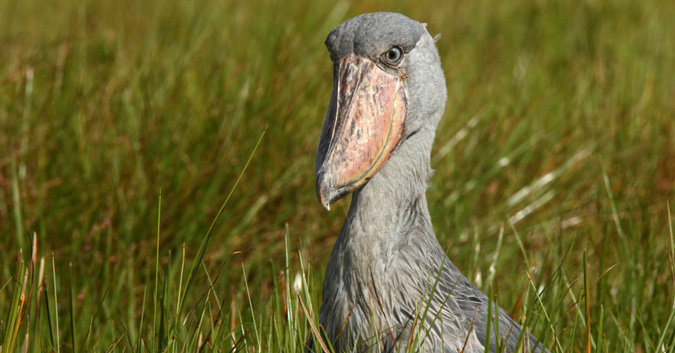
Maximize your 10-day Uganda birding safari holiday trip by combining key habitats. Start at the Mabamba Wetland for the elusive Shoebill Stork, then drive to Queen Elizabeth National Park for over 600 bird species. Conclude with forest birding and optional gorilla trekking at Bwindi Impenetrable National Park.
10-days-best-uganda-birding-safari-and-wildlife-experience
9-days-classic-uganda-birding-safari-tour
11-days-uganda-birding-safari-and-primate-experience
12-days-uganda-birding-tour-looking-for-rift-valley-endemic-birds-west-circuit
1. Best Time to Go
Timing is everything when organizing a 10 Days Uganda safari, as the country's equatorial climate creates distinct seasonal advantages depending on your primary goals.
The Dry Season Window
The dry months—stretching from June to August and again from December to February—are widely considered the gold standard for tracking. During these windows, rainfall is minimal, which significantly transforms the undergrowth of Bwindi Impenetrable Forest and Kibale Forest. Trails become firmer and much less slippery, making the strenuous, high-altitude hikes required to find mountain gorillas far more manageable.
Furthermore, the sparse vegetation improves line-of-sight tracking, while dropping water levels compel savannah wildlife in parks like Queen Elizabeth or Murchison Falls to congregate predictably around permanent watering holes and riverbanks. This makes classic game drives incredibly rewarding.
The Wet Season Alternative
Conversely, the wet seasons—running from March to May and September to November—should not be completely discounted, especially for avid birdwatchers. The arrival of rains triggers a massive influx of migratory bird species from Europe and northern Africa, causing local avian populations to skyrocket.
The landscapes turn into a vibrant, lush emerald green, providing stunning backdrops for photography. Additionally, safari operators often face lower demand, meaning you can secure premium wilderness lodges at a fraction of their peak-season rates. Just be fully prepared for sudden, torrential downpours, high humidity, and thick, muddy forest floors that turn everyday trail hikes into genuine physical challenges.
2. Must-Visit Hotspots
Uganda packs an astonishing diversity of ecosystems into a relatively compact geographic area, and a well-routed 10 Days Uganda safari seamlessly bridges these contrasting environments.
From Wetlands to Volcanoes
The journey typically begins near Entebbe at the Mabamba Wetland, a vast, papyrus-choked Ramsar site. Here, quiet, community-run wooden canoes navigate tight water channels to offer travelers their most reliable, up-close look at the prehistoric Shoebill Stork.
Moving southwest, Lake Mburo National Park provides a compact savannah setting ideal for spotting impalas, zebras, and the elusive African Finfoot along its quiet shores.
The Primate and River Powerhouses
As you climb into the Albertine Rift Valley, the terrain shifts dramatically to the misty, ancient slopes of Bwindi Impenetrable National Park. The Ruhija and Buhoma sectors are globally renowned, protecting nearly half of the world's remaining mountain gorilla population alongside localized endemics like the African Green Broadbill.
Exiting the dense forest brings you to Queen Elizabeth National Park, where the 32-kilometer-long Kazinga Channel hosts a breathtaking density of hippos, bathing elephants, and Nile crocodiles. Finally, heading northward toward Fort Portal brings you to the edge of Kibale National Park and the adjacent Bigodi Wetland Sanctuary, a community-run conservation success story where the tree canopies echo with the calls of Great Blue Turacos and eight distinct species of primates.
3. What to Pack
Packing correctly for a 10 Days Uganda safari requires preparing for two entirely different worlds: the open, dusty savannah and the cold, wet, dense rainforest canopy.
Essential Gear & Layering
High-quality optics are your most important tool; invest in a rugged, fog-proof pair of 8x42 or 10x42 binoculars to track fast-moving birds and primates hidden deep within high branches. For photography, a versatile telephoto zoom lens (minimum 300mm to 400mm) is crucial for capturing crisp wildlife expressions from a safe, respectful distance.
When it comes to clothing, look past bright colors and solid whites. Pack lightweight, moisture-wicking clothes in subdued earth tones like khaki, olive green, and deep tan. This palette blends seamlessly into the bush, avoiding startling sensitive wildlife while keeping you cool under the tropical sun.
Crucial Insect Protection: Avoid wearing black or dark blue, as these specific shades actively attract biting tsetse flies in woodland savannah areas.
Trail Armor
For forest treks, your choice of footwear can make or break the experience. You will need broken-in, ankle-high waterproof hiking boots featuring aggressive tread patterns to navigate steep, muddy inclines safely. Pair these with thick hiking socks, and bring long, durable canvas trousers that can be tucked cleanly into your boots—this creates an impenetrable barrier against safari ants on the march.
Top off your kit with a wide-brimmed sun hat, high-UV sunglasses, a lightweight waterproof rain jacket, a dedicated field guide like Birds of East Africa, and a potent insect repellent utilizing a high concentration of DEET to ward off mosquitoes and midges.
4. Logistics & Safety
Navigating the infrastructure and regulatory frameworks of East Africa requires careful, deliberate planning to ensure your 10 Days Uganda safari stays firmly on track.
Vehicles & Guides
The importance of renting a robust 4WD vehicle with excellent ground clearance cannot be overstated. While Uganda's primary highways are smoothly paved, the secondary roads leading directly into national park gates and interior game tracks consist of rough dirt and clay. During rainy spells, these tracks can quickly deteriorate into deep mud ruts that easily strand standard vehicles.
Coupling a capable vehicle with a professional local guide from the Uganda Safari Guides Association transforms the entire journey. These experts possess highly trained eyes and ears, allowing them to spot camouflaged wildlife at incredible distances, identify complex bird calls instantly, and expertly handle unexpected wilderness or mechanical logistics.
Primate Permits
Securing your government-regulated tracking permits is the most critical time-sensitive component of your planning. To protect wild populations and prevent overcrowding, the Uganda Wildlife Authority enforces strict daily caps on gorilla and chimpanzee encounters.
Because these permits are highly competitive, they regularly sell out half a year in advance during the popular peak dry seasons. Always finalize and pay for your primate permits three to six months before your scheduled arrival date to anchor your travel schedule securely.
Some of the Key locations you should not mis on 10 Days Uganda birding safari
1. The Shoebill Hunt at Mabamba Swamp
Mabamba Swamp is a sprawling, Ramsar-listed wetland on the edge of Lake Victoria, globally recognized as the premier location to spot the elusive Shoebill Stork. The adventure begins at dawn, where you board narrow, motorized wooden canoes managed by local community guides. As the boatman expertly glides through dense channels of towering papyrus and floating water lilies, the modern world completely fades away. The silence is broken only by the lap of water and the distant calls of the Malachite Kingfisher or the Papyrus Gonolek.
The target of this expedition is a living dinosaur. Standing nearly five feet tall with a massive, bulbous, clog-shaped beak, the Shoebill is an imposing apex predator of the shallows. It hunts by freezing completely still for hours, waiting to lung-collapse onto lungfish, frogs, or water snakes with sudden, terrifying speed. Spotting one of these giant, grey birds standing motionless amidst the reeds feels like stepping back into the Cretaceous period.
Because the swamp is community-conserved, your visit directly funds local fishermen who once hunted the birds but now protect them as invaluable ecotourism assets. Beyond the Shoebill, the swamp acts as a critical haven for migratory blue swallows, African pygmy geese, and lesser jacanas. It is a mandatory first stop for any serious birder arriving in Uganda, offering high-reward sightings just an hour outside the capital.
2. The Mubwindi Swamp Trek for the African Green Broadbill
Deep within the high-altitude, misty valleys of Bwindi Impenetrable National Park lies the Ruhija sector, home to the legendary Mubwindi Swamp. This is not a casual walk; it is a demanding, full-day forest hike down a steep, slippery ridge dropping to roughly 2,000 meters above sea level. The dense, ancient canopy hangs thick with moss and epiphytes, casting a cool, emerald twilight over the trail. Trekkers must navigate muddy descents, tangled roots, and damp mountain air, requiring sturdy boots and a solid level of physical fitness.
The ultimate prize waiting at the bottom is the African Green Broadbill, a holy grail species for global birders. This tiny, vivid-green bird with a bright blue throat and a black eye-stripe is an Albertine Rift endemic, meaning it lives nowhere else on Earth. It prefers the dense, primary forest canopy surrounding the swamp, often foraging in small, quiet flocks that easily blend into the vibrant green foliage.
Experienced guides rely on their sharp ears to track its distinct, high-pitched call amidst the forest din. Standing quietly in the damp air, waiting for a flash of leaf-green plumage, epitomizes the thrill of true wilderness birding. Along the way, the trail delivers an incredible supporting cast of montane specialties, including Grauer's Rush Warbler, the Handsome Francolin, and the Regal Sunbird, making the grueling uphill climb on the return leg entirely worth the exhaustion.
3. The Kazinga Channel Cruise at Queen Elizabeth National Park
The Kazinga Channel is a natural 32-kilometer waterway connecting Lake Edward and Lake George, slicing directly through the heart of Queen Elizabeth National Park. While traditional savannah game drives keep you confined to a vehicle, the afternoon launch cruise onto the channel offers a front-row seat to one of the greatest wildlife and waterbird spectacles in East Africa. As the double-decker boat drifts slowly along the lush, muddy banks, animals treat the vessel as a harmless fixture of the river, allowing for remarkably close encounters.
The sheer density of life here is staggering. Massive pods of hippos huff and submerge just meters from the boat, while giant Nile crocodiles sun themselves with jaws agape on the sandbars. Buffalo herds wallow in the shallows, and family tracks of elephants regularly wade down to the water’s edge to drink and bathe, offering spectacular photography opportunities against the backdrop of the Rift Valley.
For birders, the channel is paradise. The shoreline is packed with specialized flocks, including the striking African Skimmer, which flies inches above the water surface to scoop up fish with its elongated lower mandible. You will cruise past colonies of Pink-backed Pelicans, Yellow-billed Storks, Saddle-billed Storks, and vibrant clusters of pied and malachite kingfishers nesting in the clay banks. It is an effortless, highly social birding experience that balances the rugged physical demands of the Bwindi forest treks.
10 Days Uganda birding safari holiday
10 Days Uganda birding safari holiday provides a comprehensive journey across the country’s premier avian zones, linking Lake Victoria’s wetlands to the Albertine Rift. This carefully designed route offers serious enthusiasts an organized way to navigate diverse habitats, tracking localized endemics alongside traditional African megafauna.
Day 1: Arrival & Entebbe
Your 10 Days Uganda birding safari holiday starts with your arrival on the lush Entebbe peninsula. Depending on your flight time, you can settle into your lodging or jump right into early exploration at the Entebbe Botanical Gardens. Positioned on the edge of Lake Victoria, these ancient trees host an array of canopy and water species. Keep your binoculars ready for Ross’s and Great Blue Turacos jumping through the branches, black-and-white-casqued hornbills making their loud calls, and orange weavers nesting over the lake shore. It is an easy, highly productive introduction to the country's rich resident bird populations.
Day 2: Mabamba Swamp & Lake Mburo
The morning of this 10 Days Uganda birding safari holiday brings you to Mabamba Swamp, a vast papyrus wetland managed by local community members. Boarding narrow wooden canoes, you will look for the ancient Shoebill stork hiding in the reeds. The swamp is also a sanctuary for the papyrus gonolek, blue-breasted bee-eater, and lesser jacana. After the morning water trek, you will drive southwest through rural farmlands toward Lake Mburo National Park. Arrive in the late afternoon for initial birding amidst the dry acacia woodlands, looking for the grey crown crane.
Day 3: Lake Mburo Boat Cruise & Savannah Walk
On day three of your 10 Days Uganda birding safari holiday, join an armed park ranger for an early walk through the acacia scrub. Walking allows you to get close to localized targets like the red-faced barbet, bare-faced go-away-bird, and green-capped eremomela. In the afternoon, take a boat ride along Lake Mburo. This water circuit is famous for sightings of the secretive African finfoot along the vegetated banks. You are also likely to find the white-backed night heron, giant kingfisher, and African fish eagle perched high above the shoreline.
Day 4: Queen Elizabeth National Park
Your 10 Days Uganda birding safari holiday continues as you travel northwest, descending into the scenic Great Rift Valley ecosystem. The drive itself provides continuous birding opportunities as you scan roadside wires and large euphorbia trees for hunting raptors. Watch for the martial eagle, bateleur, and long-crested eagle searching the short grasses for prey. You will cross the Equator line before arriving at Queen Elizabeth National Park, transitioning from acacia woodlands to wide, open savannahs that hold an entirely different mix of specialized bird groups.
Day 5: Kasenyi Plains & Kazinga Channel
An early drive across the Kasenyi plains on this 10 Days Uganda birding safari holiday targets open grassland dwellers. Scan the tracks for the black-bellied bustard, Temminck's courser, and rufous-naped lark. In the afternoon, board a larger river vessel for a cruise down the historic Kazinga Channel. The muddy banks are packed with waterbirds, including large flocks of African skimmers, pink-backed pelicans, yellow-billed storks, and pied kingfishers burrowing nests into the clay walls, alongside hippos and bathing elephants.
Day 6: Ishasha Tree-Climbing Lions
This leg of your 10 Days Uganda birding safari holiday takes you south through the remote Ishasha sector. While scanning the low branches of giant fig trees for the famous tree-climbing lions, look closely for specialized woodland birds. This area supports the grey kestrel, double-toothed barbet, and Ross's turaco. Leaving the flat plains behind, your 4WD vehicle will begin climbing the winding roads into the Kigezi highlands, leading into the high-altitude cloud forests of Bwindi.
Day 7: Bwindi Impenetrable Forest (Ruhija)
Wake up in the cool montane air of Ruhija, the highest sector of Bwindi, which serves as a cornerstone for your 10 Days Uganda birding safari holiday. Walking along these steep forest tracks gives you access to a long list of Albertine Rift endemics. Your expert guide will help you isolate distinct calls to locate the colorful Rwenzori turaco, handsome francolin, stripe-breasted tit, and strange weaver. The dense canopy keeps you focused on every movement within the mist.
Day 8: Mubwindi Swamp Trail
The most demanding hike of your 10 Days Uganda birding safari holiday takes you down the steep ridge to Mubwindi Swamp. This primary forest trail is the world's top location to find the endangered African green broadbill. Slow, patient tracking around the swamp edge can also reveal the dusky crimsonwing, Grauer's rush warbler, and Archer's robin-chat. The physical effort of the steep return walk is well rewarded by seeing some of the rarest birds on the continent.
Day 9: Bwindi (Buhoma)
Transfer to the lower elevations of the Buhoma sector on day nine of your 10 Days Uganda birding safari holiday. Walking the main forest waterfall trail reveals a different mix of species, including Chapin's flycatcher, the black bee-eater, and various sunbirds like the blue-headed sunbird. If you want a break from forest birding, this day can also be reserved to trek for a habituated family of mountain gorillas.
Day 10: Departure
Your 10 Days Uganda birding safari holiday concludes with a morning transfer to the Kihihi Airstrip. Board your domestic scheduled flight back to Entebbe, looking out at the terraced hillsides from the air. You will land back at the main airport with plenty of time to check in for your international flight home, completing your loop of Uganda's wild ecosystems.
Best Time for 10 Days Uganda Birding Safari Holiday
The ultimate time for a 10-day Uganda birding safari spans from December to February and June to August. These dry seasons thin out the dense forest understory, offering premium visibility and clear forest trails in critical areas like Bwindi Impenetrable and Kibale National Parks. Birds are highly vocal and active during these months.
However, if you want to maximize your checklist, November to April introduces thousands of Palearctic and intra-African migratory birds, creating a spectacular overlap with resident species in Uganda’s vast wetlands and savannahs. For photography and tracking elusive species like the Green-breasted Pitta, the dry months minimize rain disruptions. Alternatively, the wet months of March to May bring lush landscapes and striking breeding plumages, though downpours can challenge navigation. Ultimately, Uganda’s unique equatorial climate guarantees an exceptional, species-rich birding experience no matter when you decide to pack your binoculars and travel.
What to Pack on 10 Days Uganda Birding Safari Holiday
Packing smartly is the secret to a comfortable 10-day avian adventure through Uganda's diverse ecosystems. Essential gear starts with high-quality, lightweight binoculars (8x42 or 10x42) and a camera with a robust telephoto lens. For your wardrobe, pack neutral, earth-toned clothing (khaki, green, and brown); avoid bright colors that startle birds, and skip blue or black, which attract tsetse flies.
Layering is vital. Bring lightweight, long-sleeved shirts and trousers to shield against sharp vegetation and insects, alongside a sturdy, breathable poncho or rain jacket for sudden forest downpours. Comfortable, waterproof hiking boots with excellent ankle support are mandatory for navigating muddy jungle terrain. Don't forget a wide-brimmed safari hat, high-SPF sunscreen, a reusable water bottle, and premium insect repellent containing DEET. Lastly, pack a field guide to East African birds and a headlamp for early morning expeditions.
Where to Stay on 10 Days Uganda Birding Safari Holiday
Uganda features spectacular, eco-friendly accommodation strategically positioned along prime birding corridors, catering beautifully to luxury, mid-range, and budget travelers alike. Near the famous Mabamba Wetlands—the hotspot for the prehistoric Shoebill Stork—Mabamba Lodge or Nkima Forest Lodge offer tranquil, immediate access to papyrus-lined channels.
Moving into the primate and forest-bird capitals, Primate Lodge or Turaco Treetops in Kibale put you right at the edge of the rainforest, where you can wake up to the morning calls of the Great Blue Turaco. For the montane forests of Bwindi Impenetrable National Park, Buhoma Haven Lodge or Ruhija Gorilla Lodge provide breathtaking mountain vistas and put Albertine Rift endemics right on your doorstep. Meanwhile, Murchison River Lodge or Mweya Safari Lodge sit spectacularly along historic rivers, offering infinity pools alongside incredible boat-safari birding right from your private deck.
Booking 10 Days Uganda Birding Safari Holiday with Roads of Adventure Safaris
Booking your 10-day itinerary with Roads of Adventure Safaris ensures a seamlessly executed, world-class expedition led by Uganda's elite avian specialists. We understand that serious birding requires custom pacing, early dawn starts, and deep local expertise to spot rare gems like the African Green Broadbill or the elusive Shoebill.
Our team manages every single detail: securing hard-to-get park permits, arranging top-tier 4x4 safari vehicles with pop-up roofs for optimal viewing, and matching you with expert guides who know bird calls, nesting sites, and territories like the back of their hands. We tailor the pace to your physical comfort and listing goals, balancing intense forest walks with relaxed wetland boat cruises. Contact Roads of Adventure Safaris today to transform your bucket-list dream into a finely tuned, unforgettable reality.
