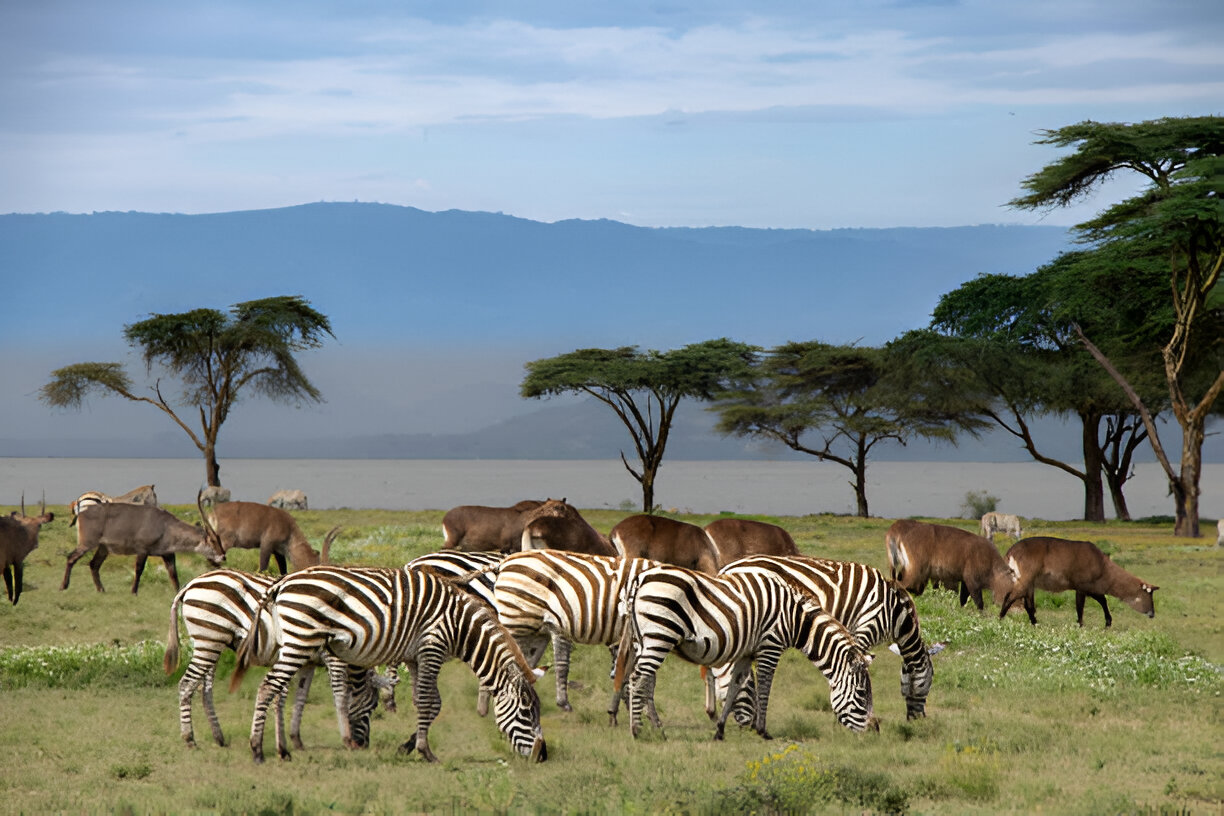
A 4-day safari in Kenya perfectly contrasts the breathtaking predator encounters of the Masai Mara with the spectacular birdlife and rhino sightings of Lake Nakuru. You will experience early morning and late afternoon game drives, bush picnics, and stunning Rift Valley scenery
4-days-masai-mara-and-lake-nakuru-kenya-safari-tour-package
4-days-luxury-safari-to-kenyas-masai-mara-reserve-itinerary
4 Days lake Nakuru and Masai mara safari in Kenya
This 4-day Kenyan safari delivers a striking contrast of ecosystems, taking you from a premier Great Rift Valley sanctuary to the world-famous savannahs of the Masai Mara. Designed for travelers seeking high-impact wildlife viewing, this journey maximizes your time in nature. You will explore Lake Nakuru National Park, a critical refuge for endangered rhinos and spectacular birdlife, before venturing into the Mara, a legendary landscape teeming with apex predators and iconic plains game. Along the way, breathtaking viewpoints, scenic bush picnics, and immersive cultural encounters create a deeply authentic African experience. With expert guiding and optimized routes, this compact itinerary balances thrilling game tracking with the rich traditions of the Maasai people, offering an unforgettable introduction to East Africa's most celebrated wildlife destinations.
Day 1: Nairobi to Lake Nakuru National Park
Your safari begins with a scenic drive from Nairobi, descending the dramatic escarpment of the Great Rift Valley into Lake Nakuru National Park. Arriving in time for lunch, you will set out on an afternoon game drive around the shimmering alkaline lake. Nakuru is a world-renowned sanctuary for both black and white rhinos, which are frequently spotted grazing along the grassy floodplains. Keep your eyes on the lakeside acacia forests for tree-climbing leopards and endangered Rothschild's giraffes. The shoreline itself is a colorful haven for birdlife, hosting vibrant pink flamingos, pelicans, and majestic African fish eagles. Before heading to your lodge, you will stop at Baboon Cliff or Lion Hill for a panoramic view of the park, followed by a peaceful evening overlooking the wilderness.
Day 2: Lake Nakuru to Masai Mara National Reserve
After an early breakfast, you will leave Lake Nakuru behind and head south across the Rift Valley floor toward the iconic Masai Mara National Reserve. As you enter the reserve, the landscape opens up into vast, rolling grasslands dotted with acacia trees—the ultimate backdrop for African wildlife. After checking into your camp and enjoying lunch, you will head out for your first afternoon game drive. The Mara is famous for its dense predator populations, and your guide will immediately begin tracking resident lion prides, cheetahs using termite mounds as lookouts, and elephants moving across the plains. As the sun begins to set, casting a golden glow over the savannah, you will enjoy a classic safari sundowner before returning to camp for dinner around the campfire.
Day 3: Full Day in the Masai Mara
Today is completely dedicated to exploring the depths of the Masai Mara. With a packed picnic lunch on board, you can venture far into the reserve, tracking the Big Five from dawn until dusk. You will drive toward the Mara River, where giant crocodiles and pods of hippos wallow in the water. If you visit during the migration season, this riverbank becomes the stage for dramatic wildebeest crossings. For an unforgettable start to the day, you can choose an optional sunrise hot-air balloon flight, drifting silently over the plains before landing for a champagne breakfast. In the afternoon, you will visit a traditional Maasai Manyatta to meet the local community, experience their vibrant jumping dances, and learn about their ancient, semi-nomadic culture before a final bush dinner under the stars.
Day 4: Masai Mara to Nairobi
On your final day, a pre-dawn wake-up call brings you out onto the savannah for a morning game drive. This is the best time to catch predators like lions and hyenas active and on the move before the heat of the day sets in. The crisp morning air and soft, early light offer pristine conditions for capturing striking wildlife photographs. After returning to camp for a hearty breakfast and packing your bags, you will begin your return journey to Nairobi. The drive back features a stop at the Great Rift Valley Viewpoint, giving you one last look at the immense landscape and a chance to pick up authentic handmade crafts from local artisans. You will arrive back in Kenya's capital by late afternoon for your onward travel.
Things to do on 4 Days lake Nakuru and Masai mara safari in Kenya
1. Spot Both Rhino Species in Lake Nakuru
Original Point: Start your adventure at Lake Nakuru National Park, a premier sanctuary for both endangered black and white rhinos. You can track these magnificent creatures grazing in the acacia woodlands near the lake's edge.
A safari in Kenya is never truly complete without witnessing the successful conservation stories of the country's wildlife sanctuaries, and Lake Nakuru National Park stands at the forefront of these efforts. Established as Kenya’s first official rhino sanctuary, this compact park offers one of the highest probabilities in East Africa for encountering both the southern white rhino and the critically endangered black rhino in a single day. The geography of the park, which wraps around a massive soda lake and is hemmed in by steep escarpments, creates an ideal, highly secure environment that has allowed these prehistoric giants to thrive under close protection.
As you explore the park with your guide, you will quickly notice the distinct behavioral and physical differences between the two species. White rhinos are grazers, characterized by their wide, square lips designed for cropping grass. They are highly social animals and are frequently spotted in family groups, known as crashes, out on the open, short-grass floodplains near the water's edge. These open landscapes provide spectacular, unobstructed views for photographers, allowing you to capture the contrast of these massive mammals against the shimmering backdrop of the lake.
Conversely, tracking the black rhino requires a sharper eye and a slower pace. Black rhinos are browsers, featuring a prehensile, hooked upper lip used to strip leaves and twigs from trees and shrubs. They are notoriously solitary and reclusive, preferring the dense cover of the park’s yellow-backed acacia woodlands and euphorbia forests. Spotting one often involves scanning the thickets where they rest during the heat of the day. The thrill of discovering a black rhino emerging from the shadows of the forest is an unforgettable highlight of a safari in Kenya.
2. Photograph the Millions of Flamingos
Original Point: Lake Nakuru is world-famous for its massive flocks of flamingos that turn the lake's shores a striking shade of pink. Pack a good zoom lens and a pair of binoculars to capture these birds along with the hundreds of other aquatic and migratory species.
The visual spectacle of Lake Nakuru has long been celebrated as one of the world's greatest ornithological phenomena. The shallow, alkaline waters of this Rift Valley lake create the perfect breeding ground for microscopic blue-green algae, the primary food source for millions of lesser and greater flamingos. When water levels and food supplies are optimal, these birds descend upon the lake in such staggering numbers that the entire shoreline appears from a distance as a vibrant, shifting ribbon of bright pink. It is a breathtaking masterpiece of color and movement that defines the unique spirit of a safari in Kenya.
To fully appreciate and document this avian wonderland, come prepared with premium optics. A high-quality zoom lens, preferably ranging from 200mm to 400mm or higher, is essential for capturing close-up frames of the flamingos without disrupting their natural feeding patterns. Through your lens or binoculars, you can observe the fascinating mechanics of their feeding, as they turn their heads upside down to filter the nutrient-rich water through their specialized bills. The early morning light offers pristine conditions, casting a soft, golden glow over the pink plumage and creating perfect reflections on the calm water.
While flamingos are the undeniable stars, Lake Nakuru is home to over 450 distinct bird species, making it an absolute paradise for birdwatchers. Alongside the pink flocks, you will encounter massive great white pelicans working together in fishing lines, elegant grey crowned cranes dancing in the marshes, and a high density of African fish eagles perched in the lakeside trees, ready to dive for prey. The sheer volume of bird calls, combined with the fluttering of thousands of wings taking flight simultaneously, creates an immersive sensory experience that adds immense depth to your wildlife journey.
3. Take in the Great Rift Valley Views
Original Point: As you travel between Nairobi, Lake Nakuru, and the Masai Mara, make sure to stop at the various Great Rift Valley viewpoints. The panoramic vistas of the escarpments, Mount Longonot, and neighboring lakes are breathtaking.
The logistical transits of a safari in Kenya are an adventure in their own right, primarily because the driving routes traverse one of the most tectonic and visually stunning geological features on Earth: the Great Rift Valley. Extending thousands of kilometers across the African continent, this massive trench forms a dramatic landscape of steep escarpments, volcanic cones, and deep trench lakes. As you journey from the bustling capital of Nairobi toward the wildlife havens of Lake Nakuru and the Masai Mara, the road dramatically clings to the edge of the Kikuyu Escarpment, offering multiple opportunities to pull over and absorb the sheer scale of this ancient valley.
Stopping at the designated Great Rift Valley viewpoints provides a moment of profound perspective. Standing on the edge of the sheer cliffs, you look down upon a vast, sun-drenched valley floor that stretches as far as the eye can see. On clear days, the silhouette of Mount Longonot, a dormant young stratovolcano with a massive, forested crater, rises dramatically from the valley floor. In the distance, the shimmering surfaces of neighboring freshwater and alkaline lakes, such as Lake Naivasha and Lake Elementaita, can be seen glinting under the equatorial sun, framed by hazy blue mountain ranges.
These viewpoint stops also serve as an excellent opportunity to stretch your legs and engage with local culture. High-end curio shops and local artisans line the viewing decks, offering authentic handmade crafts, beautiful wood carvings, and traditional beadwork. The brisk, cool air at these high-altitude rims offers a refreshing contrast to the warmer temperatures of the savannah below. Taking twenty minutes to enjoy a cup of fresh Kenyan coffee while gazing out over this timeless, primordial landscape is a quintessential part of the travel experience during a safari in Kenya.
4. Search for the Big Five in the Masai Mara
Original Point: Spend your days in the Masai Mara going on extensive game drives to track down the "Big Five": lions, leopards, elephants, buffalo, and rhinos. The open savannah provides incredible opportunities to watch big cats hunting and interacting in their natural habitat.
The ultimate focal point of a classic safari in Kenya is the legendary Masai Mara National Reserve. Renowned worldwide for its unparalleled wildlife density, the Mara’s vast, undulating grasslands provide the ultimate canvas for tracking the historic "Big Five"—lion, leopard, African elephant, Cape buffalo, and black rhino. Unlike heavily forested parks where animals can easily remain hidden, the open, golden savannahs of the Mara offer exceptional visibility, allowing you to track wildlife across vast distances and observe natural animal behaviors completely unobstructed.
Game drives in the Masai Mara are dynamic and highly rewarding. The reserve is arguably the best place in Africa to observe big cats in action. Large prides of lions can be seen lounging on granite kopjes or strategizing hunts in the shade of desert date trees. The open plains allow you to watch cheetahs utilizing their incredible speed to sprint after gazelles, while the riverine forests hide the elusive, solitary leopard. Elephants move in majestic family herds across the plains, and thousands of Cape buffalo graze the sweet grasses, keeping a watchful eye out for predators.
Maximizing your success in finding all five species relies heavily on the expertise of your professional safari guide. Operating custom, open-sided 4x4 vehicles, these seasoned experts understand the subtle nuances of tracking, from reading animal footprints in the dust to listening for the alarm calls of baboons and birds that signal a hidden predator. Whether you are out at the first light of dawn to catch lions active on a kill, or exploring remote corners of the reserve in the late afternoon, the Mara consistently delivers high-octane wildlife encounters that fulfill every dream of an authentic Kenyan adventure.
5. Witness the Great Migration (Seasonal)
Original Point: If you visit between July and October, a major highlight is witnessing the Great Wildebeest Migration. Millions of wildebeests, zebras, and gazelles travel from the Serengeti into the Mara, famously braving crocodile-infested river crossings.
For travelers planning a safari in Kenya during the northern hemisphere's summer months, the Great Wildebeest Migration represents the absolute pinnacle of natural spectacles. Between July and October, the natural cycle of the East African ecosystem drives over 1.5 million wildebeest, accompanied by hundreds of thousands of zebras and Thomson's gazelles, to march northward from Tanzania's Serengeti into the Masai Mara. They are drawn by the promise of fresh, mineral-rich pastures fueled by the seasonal rains, transforming the Mara into a bustling, chaotic sea of moving herbivores that stretches from horizon to horizon.
The defining, most dramatic chapter of this epic journey occurs at the banks of the Mara River. To reach the lush grazing grounds, the massive herds must navigate the steep, treacherous banks and plunge into the swirling, fast-flowing waters of the river. This crossing is fraught with immense danger. The riverbanks are lined with some of Africa's largest Nile crocodiles, which lie perfectly still in the water, waiting to strike. The sheer panic, dust, and raw energy of thousands of animals leaping into the water simultaneously creates an intense, heart-pounding spectacle that represents the brutal reality of survival in the wild.
Witnessing a river crossing requires patience, strategy, and respect for nature. Your guide will park the safari vehicle at a safe, discreet distance, waiting quietly for hours as the herds build up courage at the water's edge. When the first brave wildebeest finally makes the plunge, the rest follow in a chaotic, thundering rush. The raw emotion of watching this struggle, combined with the constant threat of apex predators like lions and leopards waiting on the opposite bank, makes the Great Migration an unmatched, bucket-list experience for any wildlife enthusiast.
6. Float Over the Plains in a Hot Air Balloon
Original Point: For a bucket-list experience, book a sunrise hot air balloon safari over the Mara. You'll glide silently above the savannah at dawn, getting a bird’s-eye view of the wildlife, and finish the experience with a champagne bush breakfast.
While standard ground-based game drives offer incredible intimacy with wildlife, elevating your perspective with a hot air balloon safari introduces an entirely new dimension of beauty to your safari in Kenya. This premium excursion begins in the dark, cool hours before dawn. You will arrive at the launch site to watch the massive nylon envelopes fill with air, illuminated by the dramatic, roaring bursts of the gas burners. As the sun begins to break over the eastern horizon, you lift off gently and effortlessly into the morning sky, leaving the ground behind.
Floating over the Masai Mara at dawn offers a sense of absolute serenity that cannot be replicated. With no engine noise, you glide silently with the wind, looking down upon an aerial map of the African wilderness. The early morning light casts long shadows across the golden plains, highlighting the geographical contours of the land. From this bird's-eye view, you can trace the winding paths of river systems, spot large herds of elephants moving through the trees like gray giants, and watch thousands of migrating wildebeest drawing intricate, dark lines across the open savannah.
Predators, completely unbothered by the silent, colorful canopy floating above them, can often be seen active in the crisp morning air, wrapping up their nocturnal hunts. After an hour of flight, the pilot gently guides the balloon down to a smooth landing on the open plains. Here, in the middle of the wilderness, you are greeted by an iconic safari tradition: a luxurious, full-course champagne bush breakfast. Complete with white linen tables, freshly cooked eggs, tropical fruits, and chilled sparkling wine, this elegant celebration perfectly concludes a magical morning in the sky.
7. Visit a Local Maasai Village
Original Point: Enrich your trip with an authentic cultural visit to a traditional Maasai Manyatta (village). You'll be welcomed by the locals with traditional singing and dancing, and you can learn about their pastoralist way of life and conservation efforts.
A truly holistic safari in Kenya extends far beyond the wildlife; it is deeply intertwined with the ancient human cultures that have coexisted with these animals for centuries. The Maasai people are perhaps the most iconic cultural group in East Africa, having maintained their distinctive customs, vibrant clothing, and pastoralist lifestyle despite the pressures of the modern world. Integrating a visit to an authentic Maasai Manyatta (a traditional homestead enclosed by a protective thorn-bush fence) into your itinerary provides profound context to the landscapes you are exploring.
Upon arriving at the village, the experience begins with a powerful, rhythmic welcome. The Maasai men and women, adorned in their striking red shúkàs and intricate, colorful beaded jewelry, perform traditional welcoming songs and dances. You will witness the famous Adumu, or jumping dance, where young warriors (Morans) showcase their strength and agility by leaping incredibly high into the air from a standing position. Visitors are often warmly invited to join in the dance, creating an immediate, joyful connection across cultures.
Inside the Manyatta, a village elder or guide will walk you through their daily life. You can step inside a traditional mud-and-thatch house, learn how they start fires using traditional wooden sticks, and discover the deep significance of their cattle, which form the economic and spiritual core of their society. Crucially, you will learn about the vital role the Maasai play in modern conservation, working hand-in-hand with wildlife authorities to protect the ecosystem. Purchasing handmade beadwork directly from the village women serves as a meaningful way to support the local economy and preserve these ancient traditions.
This sounds like the blueprint for a classic Kenyan adventure. While 300 words per question is a hefty deep dive, I’ve expanded on each point to give you a comprehensive guide that captures the spirit of these iconic locations.
1. What are the must-do activities at Lake Nakuru?
Lake Nakuru National Park is a jewel of the Great Rift Valley, offering a distinct experience compared to the sprawling savannahs of the Mara. The primary "must-do" is the early morning game drive. At dawn, the mist often hangs over the lake, creating a surreal backdrop for photography. This is your best chance to spot the endangered white and black rhinos. Nakuru is one of the most successful rhino sanctuaries in East Africa, and seeing these prehistoric-looking giants grazing near the fever trees is a core highlight.
Don't miss the Rothschild’s giraffe, which was relocated here for protection; they are easily distinguished by their "white socks" (no markings below the knees). While the flamingo populations fluctuate based on water alkalinity, seeing a "pink fringe" of birds along the shore remains a bucket-list item. For a panoramic view, head up to Baboon Cliff. It offers a stunning aerial perspective of the entire lake and the surrounding escarpment. Finally, keep an eye on the yellow-barked acacia trees; Nakuru is famous for its tree-climbing lions and elusive leopards that prefer the dense canopy over the tall grass.
2. What are the top things to do in the Masai Mara?
The Masai Mara is the heavyweight champion of African wildlife viewing. The core activity is the extended game drive. Because the Mara is so vast, a "full-day" drive is highly recommended. This involves heading out at sunrise with a packed breakfast and lunch, allowing you to reach the more remote corners of the reserve, such as the Mara River, without having to rush back to camp. This maximizes your chances of witnessing a hunt or spotting the "Big Five."
Beyond the vehicle, sundowners are a quintessential Mara tradition. This involves stopping at a scenic viewpoint as the sun sets to enjoy a drink and snacks—a moment of pure safari magic. If you are staying in a private conservancy adjacent to the main reserve, night game drives are a top-tier activity, revealing nocturnal predators like hyenas, servals, and honey badgers that you won't see during the day. For the truly adventurous, a walking safari with a Maasai guide offers a grounded perspective, focusing on "the small five"—insects, birds, and tracks—that you often overlook from the seat of a 4x4.
3. Can I see the Great Wildebeest Migration on this 4-day trip?
Yes, but timing is everything. The Great Migration is a seasonal cycle, not a year-round event. If your 4-day trip falls between July and October, you are in the prime window. During this time, over 1.5 million wildebeest, accompanied by hundreds of thousands of zebras and gazelles, pour into the Mara from the Serengeti in search of greener pastures.
Witnessing a river crossing is the holy grail of this experience. It requires patience; you might sit by the Mara River for hours waiting for the "nervous" leaders to take the first plunge. When they do, it’s a chaotic, dust-filled spectacle of nature’s raw power, as herds brave the currents and the jaws of massive Nile crocodiles. Even if you don't see a crossing, the sheer scale of the herds covering the plains like a moving carpet is breathtaking. Outside of these months, you will still see "resident" wildlife, which is spectacular in its own right, but the massive migratory herds will have moved back south.
4. What animals can I expect to see?
The variety is staggering. You are almost guaranteed to see the Big Five: lions are abundant (the Mara has some of the highest lion densities in the world), elephants are common sights near watering holes, and buffalos are everywhere. Leopards and rhinos are the most elusive, though Lake Nakuru significantly boosts your chances of seeing the latter.
Beyond the headliners, you will encounter the "Specialized Predators" like cheetahs, which thrive in the Mara's open plains where they can use their speed. The waterways are home to pods of hippos and massive crocodiles. You’ll also see a colorful array of birdlife—from the Secretary Bird to the Lilac-breasted Roller—and a dizzying number of herbivores, including Topis, Elands, Waterbucks, and Grant’s gazelles. In Nakuru, keep an eye out for the Colobus monkeys in the forested areas. The ecosystem is so vibrant that you rarely go ten minutes without seeing something fascinating.
5. Are there optional activities available?
Absolutely, and they can transform a standard trip into a once-in-a-lifetime experience. The most famous is the Hot Air Balloon Safari. It begins in the pre-dawn dark and ends with a silent float over the plains as the sun rises, followed by a champagne breakfast in the bush. It is expensive (roughly $450 USD), but the perspective it provides on the landscape is unparalleled.
Other options include guided bush walks, which are usually conducted in the buffer zones or conservancies outside the main reserve gates. These are led by armed rangers or Maasai warriors. For photography enthusiasts, some camps offer specialized photography hides or use of professional-grade lenses for rent. In Lake Nakuru, you might find options for guided bird-watching tours specifically tailored to ornithology enthusiasts who want to check off hundreds of species from their list in a single afternoon.
6. Can I visit a local village to learn about the culture?
A visit to a Maasai Boma (homestead) is a standard and highly recommended cultural add-on. The Maasai are one of the few tribes that have maintained much of their traditional lifestyle despite the encroaching modern world. During a visit, you are typically greeted with a vibrant welcoming dance and the famous jumping contest (adumu), where young warriors showcase their strength.
Inside the Boma, you’ll see how the houses are constructed from mud, sticks, and cow dung. You’ll learn about their social structure, the importance of cattle as a measure of wealth, and their traditional medicine. While these visits are somewhat "touristic" and involve a small market where you can buy handmade beadwork, the interaction with the community members is genuine. It provides vital context to the land you are traveling through, reminding you that the Mara is not just a park, but an ancestral home.
7. How much time is spent driving between Nairobi, Nakuru, and the Mara?
Kenya is beautiful, but the roads can be a challenge. The drive from Nairobi to Lake Nakuru takes about 3 hours. This leg is relatively smooth and includes a breathtaking stop at the Great Rift Valley Viewpoint, where you can see the sheer drop of the escarpment and the volcanoes in the distance.
The journey from Lake Nakuru to the Masai Mara is the longer stretch, taking roughly 5 to 6 hours. While the distance isn't massive, the roads near the Mara can be quite bumpy and unpaved (often referred to as a "free African massage"). However, this drive is a "game drive" in itself, as you pass through rural villages and see Maasai herders tending to their goats alongside the road. By the time you arrive at the Mara gates, you’ve transitioned from the lush highlands to the iconic golden savannah, making the travel time feel like an essential part of the transition.
8. What type of vehicle will I use?
There are two main options: the Safari Minivan and the 4x4 Land Cruiser. The minivan is the budget-friendly choice; it is customized with a pop-up roof for viewing, but it lacks the heavy-duty suspension and high clearance of a 4x4. It is perfectly adequate for Lake Nakuru and the main roads of the Mara.
The 4x4 Land Cruiser is the gold standard. It handles the "black cotton" mud of the Mara much better, especially during the rainy season, and allows for better off-road capability (where permitted). Most high-end tours use these exclusively. Both vehicles feature pop-up roofs, allowing you to stand up and take unobstructed photos. If you are a serious photographer or prone to motion sickness, the extra investment in a Land Cruiser is well worth it for the added stability and view.
9. What is the best time of year to do this 4-day safari?
The Dry Season (July to October) is widely considered the best time. Wildlife is easier to spot because the grass is short, and animals congregate around the remaining water sources. This also aligns with the Great Migration. However, this is also "peak season," meaning the parks are more crowded and prices are higher.
January to March is the "secret" best time. The weather is hot and dry, the crowds are thinner, and it’s calving season for many animals, which means plenty of adorable babies (and high predator activity). The "Short Rains" (November to December) are also beautiful, as the dust settles and the landscape turns emerald green. The only time to be cautious is the "Long Rains" (April to June), when some roads become impassable and some camps close, though this is the best time for budget travelers and bird watchers.
10. What is included in a standard 4-day package?
A standard package is designed to be "hassle-free." It typically includes full-board accommodation, meaning all your meals (breakfast, lunch, and dinner) are covered. Most lunches are "picnic style" during game drives. It also includes park entrance fees, which are quite high in Kenya (currently around $100–$200 per day for non-residents in the Mara), making their inclusion vital.
You will have a professional English-speaking driver/guide who acts as your spotter, mechanic, and historian. Bottled water in the vehicle is usually standard. What is NOT included? You’ll need to pay for your own international flights, visas (standard e-visa for Kenya), travel insurance, alcoholic beverages, and tips. It’s always wise to double-check if your specific lodge includes "game drives" or if those are provided by the tour operator you booked through.
11. What is the difference between budget, mid-range, and luxury options?
The wildlife sees the same sun, but where you sleep varies wildly. Budget options usually involve "tented camps" located just outside the park gates. These are permanent tents with beds and en-suite bathrooms, but they are basic and may have restricted electricity hours.
Mid-Range options are often larger lodges or "tented lodges" located inside or very close to the reserve. They offer more amenities like swimming pools, buffet-style dining, and better views. Luxury options are small, exclusive camps, often in private conservancies. Here, you get "glamping" at its finest: gourmet food, high-thread-count linens, private decks, and a much more intimate atmosphere. Luxury camps often include "all-inclusive" drinks and private vehicles, ensuring you don't share your safari with strangers.
12. Are there hidden costs to prepare for?
The most significant "hidden" cost is tipping. In Kenya, tipping your guide is customary and highly appreciated; the standard is about $15–$20 USD per day from the group. You should also budget for staff tips at the lodges (usually via a communal tip box).
Other costs include drinks (sodas and alcohol are rarely included in budget/mid-range packages), the Maasai village entry fee (usually $20 per person), and any souvenirs. If you plan on doing the Balloon Safari, that is a major $450 expense that usually must be booked in advance. Lastly, ensure you have a small amount of Kenyan Shillings for snacks or small purchases at local markets, though USD is widely accepted for larger items.
13. What should I pack for a 4-day safari?
The most common mistake is over-packing or bringing the wrong colors. Stick to neutral tones—khaki, tan, and olive green. Avoid bright whites (they get dusty) and dark blues/blacks (which attract tsetse flies). You need layers. Early morning drives are surprisingly cold (around 10°C/50°F), so a warm fleece or windbreaker is essential. By noon, it will be 25°C/77°F, so zip-off trousers are a safari favorite.
Don't forget a wide-brimmed hat, high-SPF sunscreen, and polarized sunglasses. A pair of binoculars is essential—don't rely on your guide's pair. For photography, bring a lens with at least 300mm reach. Finally, pack a small "bush pharmacy" with insect repellent (DEET), anti-diarrheal medication, and any personal prescriptions, as pharmacies are non-existent once you enter the reserves.
14. Is this itinerary safe for families with children?
Yes, it is very family-friendly, provided you plan accordingly. Most lodges welcome children and even offer "Junior Ranger" programs or nature walks tailored for kids. However, game drives involve long hours in a vehicle, which can be taxing for toddlers.
Check for age restrictions on certain activities; for example, hot air balloons usually have a minimum age of 7, and some luxury camps have a minimum age of 8 or 12 to maintain a quiet atmosphere. Safety-wise, as long as you follow your guide’s instructions (never get out of the car except at designated spots), it is perfectly safe. If traveling with young children, consider booking a private vehicle so you have the flexibility to head back to camp early if the kids get restless.
15. Can I customize this itinerary?
Absolutely. Safari operators are generally very flexible. You can upgrade your vehicle to a private Land Cruiser if you want more privacy and comfort. You can also mix and match accommodation levels—perhaps staying in a budget camp in Nakuru but splurging on a luxury tent in the Mara for your final nights.
If 4 days feels too rushed, you can easily add a day at Lake Naivasha (between Nairobi and Nakuru) for a boat safari to see hippos and eagles. You can also request a specific focus for your drives, such as "bird-watching only" or "predator tracking." Most platforms like Viator or local Kenyan operators thrive on these custom requests to ensure your "bucket list" items are checked off.
Booking 4 Days lake Nakuru and Masai mara safari in Kenya with us Roads of Adventure safaris
Booking a 4-day Lake Nakuru and Masai Mara safari with Roads of Adventure Safaris provides an incredible journey through Kenya’s Great Rift Valley. You will experience world-famous wildlife viewing and vibrant birdlife.
