Uganda, famously crowned the "Pearl of Africa," stands as one of the world's most ecologically diverse and enchanting safari destinations. Nestled in the heart of East Africa, this vibrant nation offers an extraordinary tapestry of landscapes, ranging from snow-capped mountain ranges and vast savannahs to dense, misty rainforests and the massive waters of Lake Victoria. Beyond its breathtaking scenery, Uganda’s true magic lies in its exceptional wildlife, hosting over half of the global population of mountain gorillas alongside robust populations of chimpanzees and classic African game. It is a place where traditional game drives meet deep jungle treks, offering travelers a rare and deeply intimate connection with nature. Whether you are tracking primates or viewing the Nile River cascade through a narrow gorge, a Ugandan safari holiday promises an immersive, unforgettable, and deeply authentic African adventure.
16-days-classic-uganda-wildlife-safari-and-gorilla-trekking-tour
13-days-best-uganda-safari-holiday-vacation-all-inclusive-tour-package
12-days-best-uganda-rwanda-primate-safaris-and-akagera-big-five-safaris
10-days-best-uganda-big-five-safaris-and-primate-experience
9-days-luxury-gorilla-and-uganda-safari-tour-package
7-days-photography-uganda-safari-all-big-five-chimpanzee-and-gorillas
1. Primate Trekking in Bwindi Impenetrable National Park
Bwindi Impenetrable National Park offers the ultimate primate safari experience, centered around the life-changing adventure of mountain gorilla trekking. Shrouded in mist and blanketed by one of Africa’s oldest and most biologically diverse rainforests, this UNESCO World Heritage site is home to roughly half of the world's remaining mountain gorilla population. The holiday begins with an early morning briefing before deep-forest trackers lead you through tangled vines, steep ridges, and thick undergrowth in search of a habituated gorilla family. The trek itself is an exhilarating physical challenge, but all exhaustion vanishes the exact moment you encounter these gentle giants. Spending a quiet hour watching silverbacks guard their families while juveniles play in the branches is a profoundly moving wildlife experience. Beyond the iconic gorilla treks, Bwindi provides exceptional bird watching, with over 350 recorded species, including many Albertine Rift endemics. Visitors can also engage in immersive cultural encounters with the indigenous Batwa community, learning about their ancient forest-dwelling heritage and hunter-gatherer traditions. Staying in eco-luxury forest lodges tucked into the canopy completes this raw, misty green escape, making Bwindi an unmissable anchor for any luxury safari itinerary in Uganda.
2. River Cruises and Big Game at Murchison Falls National Park
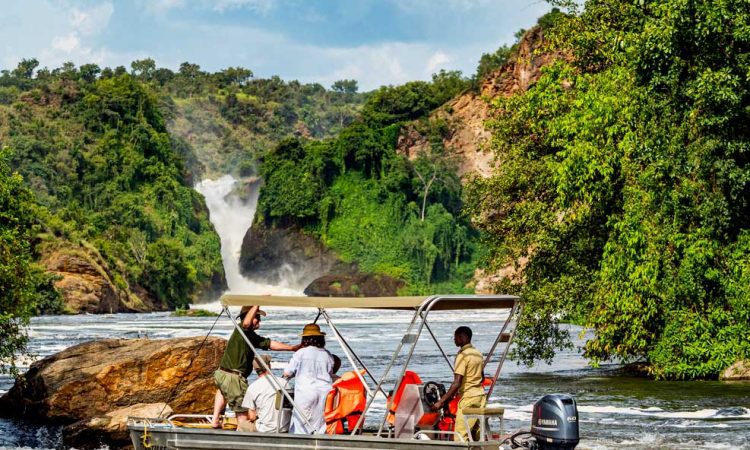
Murchison Falls National Park delivers a classic savannah safari paired with the dramatic, raw power of the world’s longest river. As Uganda’s largest protected area, the park is bisected by the Victoria Nile, which forces its massive volume through a tiny seven-meter canyon before plunging forty-three meters down into a thunderous foam. The signature holiday experience here combines traditional morning game drives across the northern savannah tracks with spectacular afternoon boat safaris along the river Nile. On the open plains, travelers routinely spot large herds of Rothschild’s giraffes, elephants, lions, leopards, cape buffalos, and various antelope species. The boat cruise takes you straight toward the base of the roaring waterfall, offering front-row seats to schools of hippos, giant Nile crocodiles, and diverse waterbirds lining the banks. For active adventurers, hiking up to the top of the falls provides a thrilling viewpoint to witness the earth shake from the river’s immense energy. Murchison Falls beautifully bridges the gap between classic big-game viewing and aquatic exploration, with premium riverfront lodges offering perfect spots to watch the African sun set over the historic Nile.
3. Savannah and Tree-Climbing Lions at Queen Elizabeth National Park
Queen Elizabeth National Park is Uganda’s most popular and eco-diverse safari destination, famed for its unique tree-climbing lions and dramatic volcanic crater topography. Set against the jagged backdrop of the Rwenzori Mountains, the park features a fascinating mosaic of open savannahs, dense swamps, humid forests, and serene crater lakes. The ultimate highlight of this safari holiday is exploring the remote Ishasha sector in the south, where lions famously lounge high within the branches of ancient fig trees to escape the midday heat. Another central attraction is the tranquil boat cruise along the Kazinga Channel, a natural waterway connecting Lake Edward and Lake George. This cruise offers remarkably close views of the world's highest concentration of hippos, massive bull elephants cooling off, and vibrant flocks of pink-backed pelicans. On the northern plains of Kasenyi, morning game drives reveal sweeping views populated by Ugandan kobs, leopards, and hyenas, while the nearby Kyambura Gorge offers an underground rainforest trek to track habituated wild chimpanzees. With its incredible variety of ecosystems, Queen Elizabeth National Park provides a comprehensively rich safari that effortlessly showcases the very best of East African wildlife.
What primate species can you encounter during a safari holiday Uganda?
Uganda is an unparalleled primate paradise, making a safari holiday Uganda itinerary a dream destination for wildlife enthusiasts. The undisputed highlight is the chance to see endangered mountain gorillas in Bwindi Impenetrable National Park and Mgahinga Gorilla National Park, which protect over half the global population. Beyond gorillas, Uganda is home to robust populations of common chimpanzees, our closest living evolutionary relatives. Kibale National Park, recognized as the primate capital of East Africa, hosts over 1,500 chimpanzees alongside twelve other distinct primate species. While trekking through these lush, ancient canopies, travelers frequently spot beautiful central African red colobus monkeys, black-and-white colobus monkeys, and L'Hoest's monkeys. The bamboo forests of the dramatic Virunga Volcanoes offer a rare chance to track endangered golden monkeys, known for their striking orange coats and playful behavior. In the lower riverine forests and savannah borders, you will routinely encounter large troops of olive baboons, vervet monkeys, and red-tailed monkeys. At night, guided nocturnal walks reveal lesser-known, fascinating nocturnal primates like bushbabies (galagos) and pottoes, whose glowing eyes pierce the dark forest canopy, completing an incredibly rich, diverse primate viewing experience.
How difficult is gorilla trekking on a safari holiday Uganda?
Gorilla trekking is the physical highlight of a safari holiday Uganda journey, requiring a moderate to high level of physical fitness. The activity takes place in Bwindi Impenetrable National Park and Mgahinga Gorilla National Park, where terrains are characterized by steep, muddy ridges, thick tangled undergrowth, and high altitudes ranging from 1,160 to 2,600 meters above sea level. Because wild gorillas move freely through their mountainous habitat, treks can last anywhere from two to eight hours before an encounter occurs. Rangers cut paths through dense vegetation using machetes, and footing can be slippery and unstable. To prepare, travelers should engage in cardiovascular exercise and hill walking prior to their trip. On the morning of the trek, park rangers sort visitors into groups based on fitness levels, assigning more accessible gorilla families to those with limited mobility. Additionally, travelers can hire local porters at the trailhead for a small fee. Porters are incredibly helpful, carrying heavy daypacks and providing physical stability by pulling or pushing you up challenging slopes. The physical exertion is completely forgotten the moment you sit with the gentle giants, making every ounce of effort worthwhile.
What classic Big Five wildlife can you see on a safari holiday Uganda?
While Uganda is famous for primates, a safari holiday Uganda itinerary also delivers an exceptional opportunity to view Africa's classic "Big Five" wildlife species. Massive herds of African bush elephants and Cape buffalos are incredibly common, frequently encountered on game drives and boat safaris throughout Murchison Falls and Queen Elizabeth National Parks. Apex predators like lions are widely distributed across the northern plains, while the elusive leopard can be spotted resting in thick thickets or camouflaged in large trees during early morning drives. Rhinos, however, are extinct in Uganda's wild national parks due to historical poaching. To see them, travelers visit the Ziwa Rhino Sanctuary, a successful conservation project located conveniently along the highway leading north to Murchison Falls. At Ziwa, guests enjoy a thrilling foot safari to track southern white rhinos up close with expert rangers. Combining a visit to this dedicated sanctuary with classic game drives in the major reserves allows wildlife enthusiasts to tick off all five iconic species. Uganda's diverse landscapes ensure that your big game viewing feels remarkably wild, varied, and distinct from traditional flat savannah destinations.
Why is Kibale National Park essential for a safari holiday Uganda?
Kibale National Park is an indispensable destination to include in a safari holiday Uganda plan, universally celebrated as the primate capital of East Africa. Covering 795 square kilometers, this magnificent rainforest contains one of the most beautiful and varied ecosystems on the continent. Kibale is home to the highest density and diversity of primates in all of Africa, hosting thirteen distinct species within its lush, ancient canopy. The primary reason travelers visit Kibale is for its world-class chimpanzee tracking experience. With a high habituation success rate, visitors are virtually guaranteed an exhilarating encounter with a wild chimpanzee community, watching them groom, play, and communicate loudly through the trees. For a deeper immersion, the park offers a unique Chimpanzee Habituation Experience (CHEX), allowing guests to spend an entire day accompanying researchers as they follow the chimps from their morning nests until they build new ones at dusk. Beyond chimpanzees, walks through Kibale reveal rare red colobus monkeys, L'Hoest's monkeys, and vibrant birdlife. The park seamlessly complements the gorilla tracking of Bwindi, completing a comprehensive and unforgettable African primate circuit.
What makes the tree-climbing lions a unique highlight of a safari holiday Uganda?
Spotting the legendary tree-climbing lions is an extraordinary highlight that draws many travelers to a safari holiday Uganda adventure. While lions are traditionally ground-dwelling apex predators, the unique prides in the remote Ishasha sector of Queen Elizabeth National Park have developed a fascinating behavioral trait of ascending high into the branches of ancient sycamore fig and marula trees. Witnessing full-grown lions lazily draped over thick tree limbs against the African sky is a magnificent, rare sight. Wildlife biologists believe these lions climb trees for two primary practical reasons: to escape the intense midday heat radiating from the ground and to catch cooling breezes circulating higher up. Additionally, ascending into the canopy protects the lions from the relentless bites of tsetse flies and insects hiding in the long savannah grasses below. The elevated vantage point also gives these predators an excellent panoramic view of the surrounding plains, allowing them to effortlessly monitor the movements of grazing herds of Ugandan kob and topis. Finding these magnificent big cats requires an experienced local safari guide who knows how to navigate the dirt tracks of Ishasha and spot camouflaged coats hidden among the dense green leaves.
Can you experience a boat safari during a safari holiday Uganda?
Yes, taking an aquatic boat cruise is a defining and unforgettable component of a safari holiday Uganda vacation, providing a refreshing break from traditional bumpy game drives. Uganda's rich water networks allow for spectacular boat safaris that bring you remarkably close to wildlife. The most famous cruise takes place along the historic Victoria Nile in Murchison Falls National Park. As the boat sails upstream, passengers drift past thousands of snorting hippos, massive Nile crocodiles basking on the banks, and elephants coming down to drink, all culminating at the dramatic base of the crashing waterfall. Another world-class boat safari is found along the Kazinga Channel in Queen Elizabeth National Park. This natural 32-kilometer waterway connects Lake Edward and Lake George and supports the highest concentration of hippos in the world. From the safety of a double-decker boat, you can photograph vibrant bird colonies, including pelicans and kingfishers, while buffalo walls in the mud nearby. These boat excursions offer a unique, low-impact perspective on African wildlife, allowing for steady, close-up photography and peaceful game viewing that simply cannot be replicated from a standard safari vehicle.
Why should Mgahinga Gorilla National Park be included in a safari holiday Uganda?
Mgahinga Gorilla National Park is a hidden gem that makes an exceptional addition to a safari holiday Uganda exploration. Located in the remote southwestern corner of the country, Mgahinga is Uganda's smallest national park, yet it packs a massive punch in terms of scenery and biodiversity. The park protects the Ugandan slopes of the dramatic Virunga Mountains, featuring three striking, extinct volcanoes: Mount Muhavura, Mount Gahinga, and Mount Sabinyo. Mgahinga offers a distinct, intimate alternative for mountain gorilla trekking, hosting the habituated Nyakagezi gorilla family, which is known for its high number of impressive silverbacks. Furthermore, it is the only place in Uganda where you can track the endangered golden monkey, allowing for a unique "Gold and Silver" primate combination within a single park. Active travelers can embark on challenging day hikes up the volcanic peaks, standing at the rugged intersection where the borders of Uganda, Rwanda, and the Democratic Republic of Congo meet. The dramatic volcanic backdrop, peaceful atmosphere, and lack of heavy tourist crowds make Mgahinga an unforgettable wilderness escape.
What unique birdwatching opportunities exist during a safari holiday Uganda?
For avid birders, a safari holiday Uganda trip is an extraordinary journey into one of the richest avian destinations on the planet. Despite its relatively small geographical size, Uganda boasts a remarkable bird list of over 1,090 recorded species, representing roughly half of Africa's total avian diversity. This incredible concentration is driven by the country's unique positioning at the intersection of the East African savannah, the West African rainforest, and the semi-desert zones. The ultimate prize for any birder visiting Uganda is spotting the prehistoric-looking Shoebill stork. This rare, massive bird is best sought in the quiet channels of the Mabamba Swamp near Entebbe, where travelers navigate local wooden canoes through papyrus reeds. Other premier birding hotspots include Bwindi Impenetrable National Park, which hosts twenty-three species endemic to the Albertine Rift, and Queen Elizabeth National Park, boasting over 600 species. From the dazzling, multi-colored sunbirds and elegant African green broadbills to majestic fish eagles and striking turacos, the sheer variety of plumage and birdsong turns every single game drive and boat cruise into an immersive, deeply rewarding ornithological expedition.
How much does a typical safari holiday Uganda itinerary cost for travelers?
The cost of a safari holiday Uganda package varies greatly depending on your travel style, accommodation choices, and the specific activities included. A budget itinerary utilizing mid-range local lodges and standard ground transport typically ranges from $300 to $500 per person, per day. For travelers seeking mid-luxury comforts, including boutique eco-lodges and private four-wheel-drive safari vehicles, daily costs generally average between $600 and $900. High-end luxury packages, featuring fly-in transfers via domestic bush flights and exclusive luxury forest canopy lodges, easily exceed $1,200 per day. A major fixed expense that significantly shapes the overall budget is the mandatory primate tracking permits. As of recent rates, a single gorilla habituation or trekking permit costs $800 per person, while chimpanzee tracking permits in Kibale Forest cost around $250. These permit fees directly fund vital conservation efforts and community development projects around the parks. When budgeting, travelers should also factor in international flights, visa fees, travel insurance, alcoholic beverages, and tipping for guides and lodge staff. Planning well in advance helps secure preferred lodging tiers and ensures permits are reserved before they completely sell out.
What are the accommodation options like for a safari holiday Uganda?
The lodging landscape available during a safari holiday Uganda trip is diverse and highly sophisticated, catering easily to every preference and budget level. In major towns and entry hubs like Entebbe and Kampala, travelers enjoy boutique guest houses and luxury international hotels overlooking Lake Victoria. Within the national parks, accommodations range from rustic community campsites and mid-range safari tents to opulent eco-luxury lodges. Mid-range options typically feature comfortable, self-contained cottages built from local stone and wood, offering hot showers, solar power, and private verandas with stunning wilderness views. For high-end luxury travelers, Uganda boasts award-winning forest lodges and safari camps that blend seamlessly into the natural environment. These exclusive properties offer premium amenities, including private plunge pools, fine dining, personal butler service, and relaxing spa facilities tucked deep within the jungle canopy or overlooking sweeping savannah plains. Many lodges operate with a strong commitment to sustainability, utilizing solar energy, harvesting rainwater, and sourcing organic ingredients from nearby farming communities, ensuring your stay minimizes environmental impact while maximizing local employment.
How does transit work on a typical safari holiday Uganda itinerary?
Understanding transit logistics is essential when structuring a safari holiday Uganda journey, as the country’s diverse geography requires careful route planning. The most common and cost-effective method of travel is ground transit using a private four-wheel-drive safari vehicle, such as a specially modified Toyota Land Cruiser with a pop-up roof for wildlife viewing. While major highways connecting Kampala to western regional hubs are smoothly paved, the secondary roads leading directly into the national parks are often unpaved dirt tracks that can become incredibly bumpy and muddy, particularly after heavy rains. Ground travel allows you to see the vibrant Ugandan countryside, local villages, and changing landscapes up close. However, driving distances between major parks can take anywhere from four to eight hours. For travelers with limited time or those wishing to avoid long road journeys, domestic fly-in options are widely available. Local aviation companies operate scheduled bush flights from Entebbe International Airport to strategic wilderness airstrips like Kihihi or Kisoro for Bwindi, and Mweya for Queen Elizabeth National Park, reducing day-long drives to scenic, comfortable one-hour flights.
What health preparations are required before a safari holiday Uganda departure?
Proper medical preparation is a vital first step when planning a safari holiday Uganda adventure to ensure a safe and healthy trip. The Ugandan government strictly requires all incoming travelers over the age of one to present an official international certificate of vaccination against Yellow Fever upon arrival at Entebbe International Airport. Additionally, because Uganda is a high-risk malaria zone, you must consult a travel clinic or physician well in advance to obtain the correct malaria prophylactic medication, such as Atovaquone/Proguanil (Malarone) or Doxycycline. Ensure your routine immunizations are up to date, including Hepatitis A and B, Typhoid, Tetanus, and Polio. Packed health kits should include a good supply of prescription medications, anti-diarrheal tablets, rehydration salts, antihistamines, and a broad-spectrum antibiotic. Protecting yourself against insect bites by using a strong DEET-based repellent and sleeping under mosquito nets provided by lodges is your best defense against vector-borne illnesses. Finally, secure comprehensive international travel insurance that includes emergency medical evacuation coverage, giving you complete peace of mind as you explore the remote, beautiful corners of the Pearl of Africa.
Is a safari holiday Uganda safe for international tourists and families?
A safari holiday Uganda trip is remarkably safe for international tourists, provided standard travel precautions and guidelines are followed. The Ugandan government recognizes tourism as a vital pillar of the national economy and places the highest priority on visitor security. Specialized, armed Uganda Wildlife Authority (UWA) rangers accompany every single primate trek and wilderness walk, ensuring guests are fully protected from both unpredictable wildlife and external security risks. The popular tourism circuits, including the southwest primate parks and western savannah reserves, enjoy long-standing stability and a warm, welcoming atmosphere. When traveling between destinations, hiring a reputable local tour operator ensures you navigate roads safely with an experienced driver who understands regional transit nuances. For health safety, visitors must obtain a Yellow Fever vaccination certificate to enter the country and should take prescribed malaria prophylactics. It is also wise to drink only bottled or filtered water and eat freshly cooked meals at established lodges. By respecting local cultural customs, listening closely to your professional safari guides, and avoiding walking alone in dark urban areas at night, your Ugandan journey will be a secure, smooth, and deeply enriching adventure.
What are the top packing essentials for a safari holiday Uganda trip?
Packing correctly is crucial to ensuring your comfort and safety during a safari holiday Uganda excursion. Because itineraries seamlessly blend open-vehicle savannah game drives with intense jungle trekking, your wardrobe must be highly versatile. Lightweight, moisture-wicking clothing in neutral earth tones like khaki, green, and tan is highly recommended; avoid bright colors, white clothing which soils easily, and dark blue or black fabrics that actively attract biting tsetse flies. For primate tracking, sturdy, broken-in waterproof hiking boots with excellent ankle support are absolutely mandatory. You should pack long-sleeved shirts, heavy-duty trousers, and tall gaiters or thick socks to tuck your pants into, protecting your skin from stinging nettles and aggressive safari ants. A high-quality waterproof jacket is essential, as tropical downpours can occur unexpectedly at any time. Do not forget a wide-brimmed sun hat, polarized sunglasses, and reef-safe sunscreen for UV protection. A strong insect repellent containing DEET or Picaridin is vital for avoiding mosquito bites. Finally, bring a durable daypack, high-quality binoculars, a camera with a powerful zoom lens, extra memory cards, and a reliable power bank to keep your electronics charged.
What cultural experiences can be integrated into a safari holiday Uganda?
Integrating local cultural interactions adds immense depth and heart to a safari holiday Uganda itinerary, transforming a standard wildlife viewing trip into a profound human experience. Uganda is home to over fifty distinct ethnic groups, each possessing unique traditions, languages, and art forms. A poignant cultural encounter is the Batwa Cultural Experience near Bwindi or Mgahinga. The Batwa people are indigenous hunter-gatherers who lived in harmony with the rainforest for millennia before it became a protected national park; guided walks led by Batwa elders reveal ancient forest survival secrets, traditional medicine, and historical fire-making techniques. In central Uganda, travelers can explore the rich history of the Buganda Kingdom or visit bustling local markets to try traditional foods like matooke (steamed green bananas). Many tour operators work closely with community-run tourism initiatives, such as the Boomu Women’s Group near Murchison Falls, where guests can learn traditional basket weaving, cooking, and organic farming methods. Participating in these community visits ensures tourism dollars directly support local livelihoods, fostering genuine cross-cultural connections and leaving travelers with meaningful memories that extend far beyond wildlife sightings.
How can travelers practice responsible tourism on a safari holiday Uganda?
Practicing responsible tourism is vital to ensuring a safari holiday Uganda journey supports long-term conservation and community well-being. Uganda's fragile ecosystems and endangered species require mindful travel habits from visitors. When tracking mountain gorillas and chimpanzees, it is imperative to strictly adhere to all park rules, such as maintaining a minimum distance of ten meters from the primates, wearing a face mask when required, and never tracking if you feel sick, as human illnesses can be fatal to wild primates. Avoid littering, and always stay on designated trails during game drives to prevent habitat degradation. You can maximize your positive local impact by purchasing authentic, handmade souvenirs directly from community craft markets and hiring local porters at trailheads. Choosing eco-certified lodges that employ local staff, utilize solar power, and invest in community development ensures your travel spend directly benefits the people living alongside the parks. By respecting local cultural customs, dressing modestly in villages, and asking permission before taking photos of people, you help foster a respectful, mutually beneficial relationship between international tourists and Ugandan hosts.
What photography tips are essential for a safari holiday Uganda?
Capturing stunning images during a safari holiday Uganda trip requires the right equipment and adaptation to diverse, challenging environments. Because you will switch between open, sunny savannahs and dark, misty rainforests, camera versatility is key. For primate tracking in Bwindi or Kibale, the dense canopy creates low-light conditions, meaning you will need a fast lens with a wide aperture (such as f/2.8 or f/4) and a camera body that handles high ISO settings smoothly without creating excessive noise. Flash photography is strictly forbidden as it scares the primates, so maximizing natural light is essential. A telephoto zoom lens (e.g., 100-400mm) is perfect for capturing close-up expressions of gorillas and distant savannah wildlife, while a wide-angle lens captures the dramatic landscapes of Murchison Falls. Bring a circular polarizer to manage glare on water safaris and protect your gear from sudden tropical downpours using waterproof dry bags or silicone rain covers. Finally, always look up from the viewfinder; spending time simply watching animal behaviors without a lens creates a deeper connection to Uganda's incredible wilderness.
What should you expect regarding food and dining on a safari holiday Uganda?
Dining during a safari holiday Uganda trip is a delightful experience that beautifully blends international culinary standards with vibrant local flavors. Most established safari lodges operate on a full-board basis, meaning your daily room rate includes breakfast, lunch, and multi-course dinners. Chefs at these lodges are highly skilled at preparing international cuisines, ranging from continental breakfasts and fresh salads to expertly grilled meats and vegetarian options, easily accommodating dietary restrictions with advance notice. Alongside Western dishes, lodges frequently introduce guests to delicious Ugandan culinary staples. You will have opportunities to sample matooke (mashed green bananas), posho (maize porridge), savory peanut sauces, and fresh tilapia or Nile perch caught from local lakes. A fun local street food snack to try is the famous "Rolex"—a tasty, freshly cooked rolled chapati omelet filled with diced tomatoes, onions, and cabbage. For beverages, Uganda produces excellent, rich Arabica coffee and refreshing local beers like Nile Special and Club. The combination of fresh, locally sourced ingredients and dining under the stars surrounded by the sounds of the African bush creates a wonderful culinary experience.
What is the best time of year to book a safari holiday Uganda experience?
The ideal time to book a safari holiday Uganda adventure is during the country’s two dry seasons: from December to February, and from June to August. During these months, weather conditions are optimal for outdoor exploration. Primate trekking in dense rainforests like Bwindi Impenetrable National Park becomes significantly easier because the forest trails are less muddy and slippery. Additionally, wildlife viewing in classic savannah parks, such as Murchison Falls and Queen Elizabeth National Park, is highly rewarding during the dry periods. Vegetation is thinner, which improves visibility, and animals naturally gather around permanent water sources like rivers and waterholes, making them much easier to spot on game drives. The rainy seasons, which run from March to May and September to November, bring heavy downpours that can wash out dirt roads and make forest navigation challenging. However, the wet season does offer distinct advantages, including lower lodge prices, fewer crowds, and beautifully lush, green landscapes that provide stunning backdrops for photography. Ultimately, choosing the dry season ensures the most comfortable and reliable conditions for maximizing your viewing opportunities across Uganda's diverse ecosystems.
Booking Safari holidays Uganda with us Roads of Adventure safaris
Welcome to Uganda! Booking your holiday through Roads of Adventure Safaris guarantees a highly personalized, custom-tailored journey through the Pearl of Africa. Based locally in Seguku along the Kampala-Entebbe Road, this operator specializes in seamlessly matching your timeline, budget, and travel preferences to the perfect itinerary.