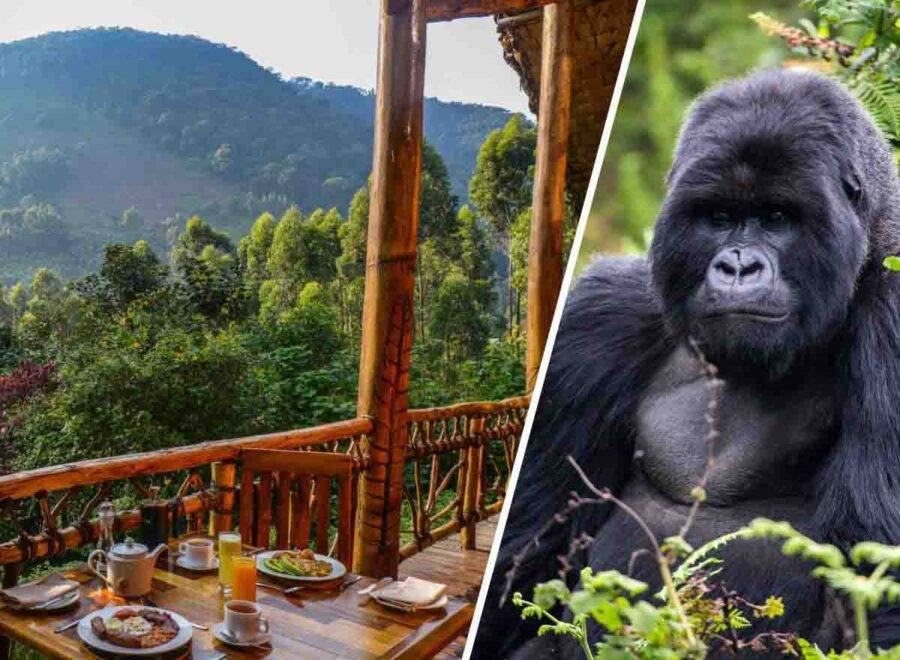
Rwanda gorilla trekking safari packages primarily take place in Volcanoes National Park; a premium primate destination located about 2.5 hours from Kigali. Booking can be managed directly via the official government portal or through licensed tour operators who bundle permits, luxury or mid-range lodging, and private transport into complete itineraries
2-days-nyungwe-luxury-fly-in-to-trek-with-chimpanzee
3-days-safari-in-rwanda-akagera-national-park-game-drive-and-lake-ihema-boat-trip
4-days-akagera-safari-and-chimpanzee-tracking-rwanda-safari
4-days-volcanoes-national-park-and-akagera-rwanda-wildlife-safari
2-days-nyungwe-chimpanzee-tracking-and-canopy-walk
3-days-luxury-honeymoon-chimpanzee-tracking-and-canopy-walk-in-nyungweb
3-days-budget-chimpanzee-tracking-in-nyungwe-forest-park
3-days-nyungwe-chimpanzee-tracking-and-lake-kivu-relaxation
3-days-best-rwanda-canopy-walk-and-nyungwe-chimpanzee-tracking-adventure
3-day-chimpanzee-trekking-tour-package-canopy-and-lake-kivu
4-days-nyungwe-chimpanzee-trekking-canopy-walk-and-lake-kivu-relaxation
Core Rwanda gorilla trekking Permit pricing for 2026
Under the Rwanda Development Board (RDB) framework, mountain gorilla tracking permits in Volcanoes National Park are structured across three primary pricing tiers. Here is a breakdown of each category.
1. International Visitors ($1,500 USD)
The headline rate of $1,500 USD per permit applies to foreign non-resident visitors. This tier forms the core of Rwanda’s high-value, low-impact eco-tourism model, which prioritizes strict conservation standards over high visitor volume. The $1,500 fee covers mandatory park entry, security provided by armed rangers, expert trackers who locate gorilla habituated families at first light, and exactly one hour of direct observation time with a designated gorilla family.
A substantial portion of this permit revenue directly finances anti-poaching patrols, veterinary interventions (such as the Gorilla Doctors network), habitat restoration, and local community development. Through Rwanda's community revenue-sharing initiative, 10% of total permit proceeds are funneled into building schools, healthcare clinics, and infrastructure for communities living adjacent to Volcanoes National Park.
International travelers can access a promotional discount under specific parameters: during the low season (November through May), RDB offers a 30% discount, bringing the permit price down to $1,050 USD. To qualify for this rate, visitors must combine their gorilla trek with at least two nights' stay in either Akagera National Park or Nyungwe National Park.
2. African Citizens & Foreign Residents ($500 USD)
The mid-tier fee of $500 USD per permit is designed to encourage regional tourism across the African continent and make conservation experiences accessible to expatriates working in the region. This rate represents a two-thirds reduction from the standard international permit price, applying to non-EAC African passport holders as well as foreign nationals residing in African countries.
To qualify for the $500 resident/African citizen rate, strict documentation must be submitted to RDB at the time of booking and verified upon arrival at park headquarters. Foreign residents must produce a valid passport along with proof of legal residency (such as a work permit, residency card, or diplomatic ID) that demonstrates at least four consecutive months of continuous residence status. African citizens outside the EAC must present a valid national passport.
The permit provides identical field access to the international tier, including guide services, tracker assistance, ranger security, and one full hour with a habituated gorilla group. While promotional rates run throughout much of the year, availability remains subject to the daily limit of 8 visitors per gorilla group.
3. East African Community (EAC) Citizens ($200 USD)
The heavily subsidized tier of $200 USD per permit (or equivalent in Rwandan Francs) is reserved for citizens of the East African Community (EAC) member states. This tier aims to foster domestic and regional tourism within the block, allowing local citizens to experience their natural heritage at an accessible rate.
Eligibility extends to citizens of EAC partner states—including Rwanda, Uganda, Kenya, Tanzania, Burundi, South Sudan, and the Democratic Republic of the Congo. To secure this rate, individuals must present official government-issued identification, such as a valid national ID card or EAC passport. Foreign residents living within EAC member states who hold valid work or residence visas (for at least four consecutive months) may also qualify for regional resident pricing.
Despite the discounted price, EAC permit holders receive the exact same high-level trek experience, safety oversight, and guided viewing hour as international tourists paying full price. Given the limited daily cap on permits (96 visitors total across 12 habituated families), EAC citizens are advised to book well in advance through the official Visit Rwanda portal or licensed tour operators, as demand for these subsidized allocations remains consistently high.
Here are 15 detailed questions based on Rwanda’s gorilla trekking permit structure and safari packages, each answered thoroughly in a warm, conversational, human voice.
Where do gorilla trekking safaris in Rwanda take place, and how accessible is the location?
Gorilla trekking in Rwanda takes place in Volcanoes National Park, nestled in the northwestern part of the country. What makes Rwanda particularly appealing for travellers is how remarkably accessible this park is compared to other gorilla destinations. It sits roughly 2.5 hours away from Kigali International Airport by road.
Because the highways leading out of Kigali are smoothly paved and well-maintained, your journey to the park double-functions as a scenic drive through Rwanda’s famous rolling green hills. You don't need an exhausting, day-long transfer or a domestic flight just to reach the trailhead. Most visitors land in Kigali, spend a night taking in the city's vibrant food scene or visiting historical sites like the Genocide Memorial, and then head up to the Virunga mountains the next morning.
Once you arrive near the park headquarters in Kinigi, you'll find a wide spectrum of accommodation options. These range from charming mid-range eco-lodges to some of the most luxurious, bucket-list safari resorts in the world. Whether you plan to drive yourself in a hired vehicle or hire a private tour operator to transfer you, reaching the gorillas is surprisingly straightforward.
What are the main ways to book a Rwanda gorilla trekking safari?
When planning a gorilla trek in Rwanda, you generally have two reliable paths for booking: direct government booking or using a licensed tour operator.
If you prefer a hands-on, self-managed trip, you can book your permit directly through the official government portal, Irembo (or via the official Visit Rwanda platform). The process is straightforward: you select your dates, submit your personal details, pay the fee, and receive an official permit reservation. This option works great if you’re an experienced traveller who enjoys handling your own transport, lodging, and logistics independently.
However, many visitors opt to book through a licensed Rwandan tour operator. Going this route takes the guesswork out of the trip. A local operator doesn't just buy your permit; they weave it into a full safari package. They’ll bundle your permit with private 4x4 transport, a professional driver-guide, and lodging that matches your style—whether that’s a cozy boutique stay or an ultra-luxury lodge. Operators also know the local timing, road conditions, and park rules inside and out, which means you can sit back and focus on the experience rather than scrambling to coordinate morning transfers to the park briefing.
How much does an international visitor permit cost, and what does it include?
For international non-resident visitors, a gorilla trekking permit in Volcanoes National Park costs $1,500 USD per person. While that price tag might make you double-take, it reflects Rwanda’s conscious choice to run a "high-value, low-impact" tourism model that emphasizes environmental protection over crowded trails.
When you purchase this permit, you aren't just buying a ticket to see an animal; you're securing a fully supported, highly regulated wilderness experience. The $1,500 fee covers your park entrance fees, the expertise of official trackers who head up the mountains at dawn to locate the gorilla families, and expert park guides who lead your group safely through the dense bamboo forests. It also includes armed park ranger security to ensure your safety in the wild.
Most importantly, the permit grants your group exactly one hour of quiet, magical observation time with a designated, habituated gorilla family once you reach them. That single hour is strictly enforced to protect the mountain gorillas from excessive stress and human illnesses, ensuring the interaction remains respectful, safe, and truly unforgettable.
How does gorilla trekking revenue support local communities and conservation efforts?
When you pay for a gorilla trekking permit in Rwanda, a massive portion of your money goes straight back into keeping the ecosystem healthy and empowering the people who live alongside it.
Through Rwanda's Community Revenue Share initiative, 10% of all permit proceeds are directed to local communities bordering Volcanoes National Park. This money builds essential public infrastructure, including clean water systems, modern schools, health clinics, and paved roads. By directly improving everyday life for nearby residents, the program transforms local communities into active partners in conservation rather than people who view the park as off-limits land.
Beyond community development, permit fees fuel intense anti-poaching operations. Teams of dedicated park rangers patrol the Virunga mountains daily to remove illegal snares and safeguard wildlife. The funds also help finance dedicated medical care from specialized networks like the Gorilla Doctors, who step in to treat injured or sick gorillas right in the wild. By taking a trek, you're directly paying the salaries of trackers and guards, restoring native forest habitats, and ensuring these endangered primates have a safe, thriving environment for generations to come.
What is the low-season promotional discount for international visitors, and how do you qualify?
If you're an international visitor looking to experience Rwanda's wildlife while saving a significant amount on your permit, Rwanda offers a strategic low-season discount. During the low-season months—which run from November through May—the Rwanda Development Board (RDB) slashes the standard international permit fee by 30%, dropping the price from $1,500 USD down to $1,050 USD per person.
However, you can't get this discount simply by booking a gorilla trek in November. To qualify for the $1,050 promotional rate, RDB requires you to turn your trip into a broader Rwandan safari. You must combine your gorilla trek with at least a two-night stay in one of Rwanda's other two major national parks: Akagera National Park (for classic savannah game drives with lions, elephants, and rhinos) or Nyungwe National Park (home to ancient rainforests, chimpanzees, and famous canopy walkways).
This setup is a win-win: you save $450 USD on your permit, and in return, you get to explore Rwanda's wonderfully diverse landscapes beyond the Virunga mountains. It’s an ideal option if you have a bit extra time to travel.
Who qualifies for the $500 foreign resident and African citizen permit rate?
The mid-tier permit fee of $500 USD is designed to make gorilla trekking more accessible to people living across Africa, as well as foreign expatriates working within the region. This rate drops the cost by two-thirds compared to the international fee, making it a great option for regional travelers.
To qualify under the African citizen category, you must hold a valid passport from an African country outside the East African Community (EAC). For example, a traveler carrying a Nigerian, South African, or Moroccan passport can access this $500 tier.
If you are a foreign national living and working in an African nation, you can also qualify for the $500 rate regardless of your original citizenship. However, the requirements are strict: you must show proof of legal residency in an African country that demonstrates at least four consecutive months of continuous residence status. This typically means providing your valid original passport alongside a legitimate work permit, long-term residency card, or diplomatic ID. Passing these documents along during booking ensures you get the discounted rate without any hiccups when you check in at headquarters.
What documentation is required to verify eligibility for the $500 permit tier?
Securing the $500 USD permit rate requires careful documentation because the park authorities verify your status thoroughly before letting you hit the trail. The Rwanda Development Board (RDB) checks your paperwork twice: first when you place the initial booking, and again in person on the morning of your trek at the Kinigi park headquarters.
If you are an African citizen living outside the EAC, the process is straightforward: you simply need to present your valid national passport showing your citizenship.
For foreign residents living in an African country, the paper trail needs to be a bit more detailed. You’ll need to present your original, valid passport along with official government-issued proof of legal residence. Acceptable proof includes a valid work visa, an official residence permit card, or a diplomatic identification card. The key detail is duration: your document must explicitly show that you have held legal resident status in that African country for at least four continuous, consecutive months. Bringing physical copies and having your original documents ready during the early morning briefing prevents last-minute administrative delays.
Who is eligible for the $200 East African Community (EAC) permit tier?
The most heavily discounted permit category in Rwanda is the $200 USD tier (which can also be paid in equivalent Rwandan Francs). This subsidized rate is specifically created to encourage domestic tourism and foster a strong sense of shared regional pride among citizens of the East African Community (EAC).
Eligibility for this special rate applies directly to citizens of official EAC partner states. This includes passport or national ID holders from Rwanda, Uganda, Kenya, Tanzania, Burundi, South Sudan, and the Democratic Republic of the Congo. Whether you are a Rwandan national living in Kigali or a Ugandan citizen taking a short trip across the border, holding citizenship in any of these member countries grants you access to the $200 rate.
Additionally, foreign nationals who live inside an EAC member state can also take advantage of regional resident pricing, provided they hold valid work or residence permits proving at least four consecutive months of local residency. This tier ensures that the people who call East Africa home have a genuine opportunity to witness one of the continent's greatest natural treasures.
What identification do EAC citizens need to present when booking and trekking?
To claim the $200 USD EAC citizen permit rate, you have to present clear, government-issued proof of your status both during the online booking process and at the park headquarters on the morning of the trek.
For citizens of EAC member states (Rwanda, Uganda, Kenya, Tanzania, Burundi, South Sudan, and the DRC), the documentation requirements are user-friendly. You can present either a valid national passport issued by your home country or an official, government-issued national identity card (such as a Kenyan National ID or Rwandan ID).
It is crucial that the physical identification you bring on the day of the trek matches the exact details and numbers you submitted when reserving your permit online. Park rangers at the Kinigi briefing station cross-check every visitor's identification against the daily master manifest. Keeping your original passport or national ID safely in your daypack—along with a printed copy of your booking confirmation—ensures a smooth, stress-free check-in before you meet your guide and head into the forest.
Does a discounted permit mean a different or shorter gorilla trekking experience?
Not at all! One of the great things about Rwanda's permit structure is that every single visitor receives the exact same high-quality, magical experience regardless of what tier they paid for.
Whether you bought an international permit for $1,500 USD, a resident permit for $500 USD, or an EAC citizen permit for $200 USD, you will be merged into small, mixed trekking groups of up to eight people. Every visitor gets assigned to a specific habituated gorilla family, walks the same beautiful trails alongside skilled trackers and armed rangers, and enjoys the guidance of an expert park interpreter.
Most importantly, every trekker receives the exact same sacred 60 minutes of observation time once your group locates the gorilla family. The park authorities maintain identical standards of visitor safety, ranger protection, and conservation ethics for everyone on the mountain. The tiered pricing is purely a policy tool designed to balance global conservation funding with regional accessibility—it never compromises the magical quality of your time spent with the gorillas.
Why is advance booking strongly recommended, especially for subsidized permit tiers?
Booking your gorilla trek far in advance is essential because permit supply is strictly capped to protect the mountain gorillas from environmental stress. To keep human presence minimal, the Rwanda Development Board limits visitor numbers to just 8 people per habituated gorilla family each day. With only 12 habituated families open for tourism in Volcanoes National Park, that means only 96 total gorilla permits are available per day for the entire world.
While international permits can sell out months ahead—especially during peak dry seasons (June to September and December to February)—the demand for heavily subsidized EAC ($200) and resident ($500) permits is equally intense. Local residents, regional tourists, and budget-conscious expat travelers snap up these limited discounted spots quickly.
If you attempt to book a permit at the last minute upon arriving in Rwanda, you risk finding zero availability for your desired dates. To build a stress-free travel itinerary and secure your spot on the mountain, it’s best to reserve your permits 3 to 6 months before you plan to travel.
What typically goes into a bundled gorilla trekking safari package in Rwanda?
When you book a full Rwanda gorilla trekking safari package through a tour operator, you’re buying an all-inclusive, seamless travel experience where every detail is taken care of from start to finish.
A standard safari package typically starts with private transport in a comfortable 4x4 safari land cruiser, complete with an experienced driver-guide who handles all navigation, park check-ins, and local timing. The operator secures your official gorilla trekking permits well ahead of time, saving you from administrative headaches. Packages also bundle in your accommodations, offering options ranging from atmospheric mid-range lodges to world-class luxury eco-resorts, with most meals included.
Beyond the main gorilla trek, full packages often build in extra experiences to enrich your trip. This might mean a guided Kigali city tour, a stop at the Gorilla Guardians Cultural Village to learn about traditional Rwandan life, or tracking rare golden monkeys in the bamboo canopy. Having everything bundled means you don't have to worry about tipping logistics, rental cars, or meal reservations—you simply enjoy the trip.
How physical is a gorilla trek in Volcanoes National Park, and how should visitors prepare?
Gorilla trekking in Volcanoes National Park is an exciting outdoor adventure, but it requires a reasonable level of physical fitness. The park sits at high elevations, generally ranging between 7,000 and 10,000 feet (2,100 to 3,000 meters) above sea level. The higher altitude alone can make you feel out of breath faster than usual, even on moderate inclines.
The terrain itself is terrain-rich and wild. You will hike through thick bamboo forests, scramble up muddy slopes, step over tangled roots, and navigate tall stinging nettles. Depending on where your assigned gorilla family traveled that morning, your hike might take anywhere from a brisk 30 minutes to an intense, multi-hour trek through dense bush.
To prepare, it helps to do some cardio conditioning and leg-strengthening exercises (like hiking hilly trails or using a stair climber) in the weeks leading up to your trip. On the morning of your trek, you can also hire a local porter at the park headquarters for a small fee. Hiring a porter is worth every penny—they carry your backpack, offer a steady hand on slippery trails, and provide direct income to local families living near the park.
What should you pack for a comfortable gorilla trekking experience in Rwanda?
Packing the right gear can make the difference between an unforgettable hike and a soggy, uncomfortable day in the jungle. The golden rule for gorilla trekking is to dress in protective, neutral-colored layers.
Here is a quick checklist of essential items to pack:
- Sturdy, broken-in hiking boots: Look for waterproof boots with good ankle support to navigate muddy slopes safely.
- Long hiking pants and tall socks: Tuck your pants directly into your socks to keep fire ants and brush off your legs.
- Long-sleeved shirt: Protects your arms from sharp branches and stinging nettles.
- Gardening or grip gloves: Invaluable for grabbing onto vegetation and muddy banks without getting scratched.
- Lightweight, waterproof rain jacket: Weather in the Virunga mountains changes quickly; rain can fall at any moment.
- Wide-brim hat and sunscreen: For protection when walking across open farmland up to the forest edge.
- Daypack with a rain cover: To safely carry your camera equipment, spare batteries, water, and lunch.
What are the key park rules during the one-hour observation time with the gorillas?
Once your guides bring you face-to-face with a mountain gorilla family, strict conservation rules take effect to keep both you and the animals safe. The primary rule is maintaining a minimum distance of 7 meters (about 23 feet) from the gorillas at all times. If a curious youngster approaches you, your guide will quietly instruct you to step back slowly.
Because gorillas are susceptible to human respiratory diseases, visitors are required to wear surgical masks while observing them. If you feel sick, coughing, or feverish on the day of your trek, you must report it to park authorities; you will be held back from the trek to protect the troop (and typically offered a permit refund or reschedule).
During your one hour together, speak in low, quiet whispers and avoid making sudden, jerky movements. Eating, drinking, or smoking near the gorillas is strictly forbidden. Finally, when taking photos, ensure your camera flash is completely turned off. Flashes can startle wild animals, causing unnecessary stress or defensive behavior from the dominant silverback. Respecting these boundaries ensures a calm, intimate encounter.
Booking Rwanda gorilla trekking with us Roads of Adventure safaris
Book your Rwanda gorilla trekking safari with Roads of Adventure Safaris for an unforgettable wildlife experience. We handle your entire journey, including securing mandatory trekking permits, arranging luxury or budget eco-lodges, and providing 4x4 transport.
Our expert local guides lead you through Volcanoes National Park to encounter majestic mountain gorillas in their natural habitat. We customize itineraries to fit your pace, budget, and travel dates, ensuring a seamless and magical adventure.
To finalize your booking, let us know your preferred travel dates, number of trekkers, and accommodation tier (budget, mid-range, or luxury).
