Choosing between a road trip and a flying safari to the Masai Mara comes down to trading time and budget for comfort and immersion. If you have 3 days or less, a flying safari is best as it maximizes game-viewing time. For longer trips or those on a budget, driving provides excellent value and cultural exposure
Some of the Popular Masai mara safari tour packages
6-days-best-masai-mara-and-lake-naivasha-kenya-wildlife-safari-holiday
5-day-best-luxury-kenya-safari-to-amboseli-lake-nakuru-and-maasai-mara-safari-tour
4-days-masai-mara-and-lake-nakuru-kenya-safari-tour-package
3-days-masai-mara-national-reserve-kenya-safari-tour-package
Flying Safari
The Travel Time: 45 Minutes of Pure Efficiency
Let's be honest: no one actually enjoys the transit part of a vacation. Driving to the Mara takes a massive chunk out of your day. Flying, on the other hand, is like a magic trick. You pull up to Wilson Airport—which feels more like a bustling bus station for small planes than a sterile airport—hop on a twin-propeller aircraft, and less than an hour later, the wheels are touching down on a dirt runway surrounded by zebras.
By skipping the road, you save almost a full day of your life. Instead of arriving at your lodge with a stiff back, a headache, and a craving for a shower to wash off the road dust, you’re sitting on a wooden deck with a cold drink in hand by lunchtime, watching hippos in the river.
The Pros: Saving Your Spine and Finding the Wild
The absolute biggest selling point of flying is avoiding the infamous "African massage." The highway from Nairobi is fine, but the closer you get to the park, the more the roads turn into a corrugated, teeth-rattling nightmare. Flying lets you breeze right over all of that.
It also changes where you can stay. The best wildlife viewing isn't actually in the crowded main reserve; it’s in the private conservancies that border it. Driving out to these remote, exclusive camps can turn a 5-hour drive into an 8-hour ordeal. A bush plane, however, drops you right on their doorstep. You get fewer crowds, better guiding, and zero transit exhaustion.
The Cons: The Hit to Your Wallet and Your Wardrobe
Now for the reality check: flying is expensive. While a safari vehicle cost can be split among a family, flight seats are priced per person, which can break the budget quickly.
Then there's the luggage situation, which is a genuine pain. You are strictly limited to 15 kg (33 lbs), and it must be in a soft duffel bag. Why? Because the pilots have to literally cram these bags into a tiny, awkwardly shaped cargo hold beneath the plane. If you bring a hard-shell suitcase, it simply won't fit, and you'll be forced to leave it behind in Nairobi. You also lose out on the local vibe. When you fly, you miss the chance to stop at a roadside shack, stretch your legs, and buy some fresh fruit or hand-carved souvenirs from a local vendor.
Best For: Short Trips, Couples, and Comfort Seekers
If you only have three days to spare, do not drive. If you drive, you spend two days traveling and only one day looking at animals. Flying turns a short weekend trip into a viable vacation.
It’s also a no-brainer for couples or solo travelers because you aren't paying to rent an entire 4x4 safari rig just for one or two people. And finally, if you are prone to motion sickness, or if you're traveling with elderly parents or young kids who get cranky after two hours in a car, just buy the plane ticket. Your sanity will thank you.
Let’s take off the travel agent hat and talk about what actually happens when you choose to drive. If you’re trying to decide whether to save some cash and take the road, here is the unfiltered, unglamorous truth of what those six hours look like.
Road Safari
The Travel Time: A Long, Living Journey
When a brochure says "5 to 6 hours," what they really mean is: "Buckle up, because you’re about to see the real Kenya." You start by crawling through Nairobi’s chaotic morning traffic, dodging matatus (local minibuses) and motorbikes. But once you break out of the city, the landscape opens up beautifully.
It is a long drive, and it will take up your entire morning and afternoon. You aren't just sitting passively; you’re watching the world change outside your window. You’ll pass through bustling market towns, see Maasai herders walking their cattle along the roadside, and watch the green highlands slowly flatten into the golden savannah. It’s a full day of travel, so don't expect to do much else on day one except collapse into bed after dinner.
The Pros: Freedom, Heavy Packing, and Keeping Your Cash
The biggest reason people drive is simple: your wallet will thank you. If you are traveling with a partner, family, or a group of friends, splitting the cost of one safari vehicle is a fraction of the cost of buying multiple flight seats.
And thank goodness, you can actually pack like a normal human being. If you want to bring three jackets, a massive bag of snacks, and a heavy camera tripod, you can just throw it all in the back. No one is weighing your bag at the door. Plus, you get to stop at the edge of the Great Rift Valley, step out into the cool air, and stare into a massive volcanic trench that looks like the edge of the world. Best of all, that 4x4 vehicle and your driver stay with you the whole trip. It’s your ride for every game drive, meaning you don't have to share your wildlife viewing with strangers at the lodge.
The Cons: The Dust, the Bumps, and the Sore Back
Now, let’s be real about the rough part. The main road from Nairobi is actually fully paved now, which is great. But the moment you branch off toward the park gates or your specific camp, the pavement disappears.
Welcome to the dirt tracks. If it’s dry, a fine, powdery red dust will find its way into every crevice—your hair, your clothes, and your camera gear. If it has been raining, those tracks turn into slick, slippery mud where you’ll be holding your breath hoping you don't get stuck. By hour five, your legs are going to feel stiff, your lower back will be aching from the bumps, and you’ll find yourself asking, "Are we there yet?" at least once. It is physically tiring, plain and simple.
Best For: The Budget-Conscious and the "Slow Travelers"
Driving is the absolute best choice if you are staying in the Mara for four days or more. If you have a long trip, losing half a day to the road on the way in and out doesn't hurt as bad because you still have plenty of time left to see the animals.
It’s also perfect for families with kids who need to stop for bathroom breaks every two hours, or groups of friends who want to throw on some music, chat, and make a road trip out of it. If you're the kind of traveler who believes the journey is part of the adventure—and you don't mind a little dirt on your shoes—driving gives you a connection to the country that you just can't get from 5,000 feet in the air.
10 Considerations if you are to fly or do road trip to Masai mara
1.iukjjuh The Reality of the Clock: Precious Vacation Time
Time is the ultimate luxury, and how much of it you have should heavily dictate your decision. If you have a short, three-day window to see the Mara, driving means you are sacrificing two full days to pure transit. You’ll spend day one staring at the bumper of a semi-truck and day three dreading the return journey, leaving you with only one full day to actually look for lions.
Flying transforms the clock. By taking a 45-minute bush flight, your arrival day isn't a throwaway day; you are at your lodge, unpacked, and eating a warm lunch by midday. If your trip is short, flying preserves every single hour for the wildlife. If you have a week or more to spare, the six-hour drive becomes a manageable chapter of a much larger story.
2. Budgetary Gravity: The Hard Cost Per Head
Let’s talk money, because this is usually where the rubber meets the road. Flying is a premium service, and airlines price their seats per individual person. If you are a solo traveler or a couple, the math might actually lean toward flying, as renting a private 4x4 vehicle just for one or two people is incredibly expensive.
However, if you are traveling as a family of four or a group of friends, the financial scales tip dramatically toward the road. Renting a single safari vehicle means you split the transport cost across the entire group. Taking a road safari can save a family thousands of dollars—money that could be reallocated toward a higher-end luxury lodge, a hot-air balloon ride, or bucket-list cultural experiences.
3. The Packing Puzzle: Luggage Freedom vs. Strict Limits
Packing for a flight to the Mara is an exercise in brutal minimalism. Because the bush planes are small—often Cessna Caravans carrying just a dozen people—space and weight are mathematically dictated. You are strictly capped at 15 kg (33 lbs) total, and that includes your hand luggage and heavy camera gear. Furthermore, you cannot bring hard-shell suitcases; everything must fit into soft, malleable duffel bags that the crew can squeeze into the plane's tiny belly pods.
Driving eliminates all of this anxiety. If you want to pack an extra pair of boots, three heavy sweaters, a massive bag of personal snacks, and a giant camera tripod, you can just toss them into the back of your vehicle. Nobody is standing by the trunk with a scale, and nobody cares if your suitcase has wheels or a hard exterior.
4. Physical Toll: The "African Massage" vs. The Smooth Coast
Even though the highway from Nairobi toward the Mara is fully paved, the final stretches leading to the various park gates and the roads inside the reserve itself are unpaved, rugged dirt tracks. By hour five of a road safari, your body will feel the vibration. The bumps, dips, and corrugations can be physically exhausting, especially for older travelers, anyone with a bad back, or young children who get easily fatigued.
Flying completely bypasses the physical wear and tear. You pull up to Wilson Airport, step onto a plane, and glide over the rough terrain. Instead of arriving at your destination stiff, dusty, and desperate for a massage, you land feeling fresh and energized, ready to jump straight into a safari vehicle for an evening drive.
5. The Dust and the Elements: Keeping Clean
The weather plays a massive role in what your road trip actually feels like. If you travel during the dry season, the unpaved roads become a dust bowl. A fine, powdery red volcanic dust will find its way through the window seals, coating your clothes, your hair, and your expensive camera lenses.
If you travel during the rainy season, that dust turns into slick, clay-like mud. A drive that takes five hours in July can easily stretch into seven or eight hours in April if your vehicle gets bogged down or has to navigate around flooded river crossings. When you fly, the weather might cause a short delay at the airport, but you completely avoid the gritty, muddy reality of the ground conditions.
6. Connection to the Land: Missing the Local Vibe
When you fly into the Mara, you are essentially teleporting from a bustling capital city directly into a wildlife paradise. It is hyper-efficient, but it is also sterile. You completely miss out on the rhythm of life that exists between the two points.
Driving gives you a front-row seat to the real Kenya. You get to stand at the edge of the Great Rift Valley viewpoint, feeling the cool wind hit your face as you look down into a massive volcanic trench. You pass through vibrant towns like Narok, watching people buy and sell produce, and you see Maasai herders clad in bright red shúkàs guiding their cattle along the roadsides. If you view travel as a holistic journey rather than just a destination, the drive provides a cultural context that 5,000 feet of altitude simply wipes out.
7. Vehicle Consistency: Your Dedicated 4x4 Ride
One of the best hidden perks of a road safari is that the vehicle you leave Nairobi in is the exact vehicle that stays with you for the duration of your trip. Whether it’s a rugged closed-sided Toyota Land Cruiser or a safari van, it is yours. You have a dedicated driver-guide who learns your pacing, knows exactly how you like your windows positioned, and adapts completely to your schedule.
If you fly, you leave the transport behind in Nairobi. When you land at the bush airstrip, you are picked up by your lodge’s open-sided 4x4 vehicles. While these open vehicles are fantastic for photography, you will often be sharing your game drives with other guests staying at the same lodge. If you want a private vehicle for your family after flying in, you usually have to pay a hefty daily premium to secure one.
8. Strategic Timing: Navigating the 2026 Park Regulations
The logistical game changed significantly with Kenya's updated park regulations. Park entry tickets are now strictly valid for 12 hours (from 6:00 AM to 6:00 PM) rather than the old 24-hour system. This means timing your arrival is absolutely crucial to avoid being charged for an extra day unnecessarily.
If you are driving, you have to wake up at the crack of dawn—usually leaving Nairobi by 5:00 AM—to ensure you clear the traffic, make your stops, and arrive at the gate right around midday to maximize your afternoon ticket. If you fly, the schedules are finely tuned to the lodges. You can catch a mid-morning flight that aligns perfectly with your check-in time, making the strict 12-hour window much easier to manage without feeling rushed.
9. Motion Sickness and Comfort Control
For anyone prone to motion or car sickness, the road to the Mara can be a daunting prospect. The winding descent down the Rift Valley escarpment followed by hours of bumpy, undulating dirt tracks can easily trigger nausea. While you can take medication, spending five hours fighting carsickness is a miserable way to start a dream vacation.
Flying is generally much smoother, though it comes with its own caveat: bush planes are small and lightweight. If it is a windy day, these aircraft can experience a bit of turbulence as they fly over the thermal currents of the savannah. However, because the flight is under an hour, it is over long before the physical exhaustion of a bumpy car ride sets in.
10. The Geography of the Mara: Conservancies vs. The Reserve
Where you are staying inside the massive Mara ecosystem should heavily influence how you get there. The Masai Mara is split between the main National Reserve and several ultra-exclusive private conservancies that wrap around its borders.
If your lodge is located in the far northern or western conservancies (like Mara North or Olare Orok), driving there from Nairobi adds hours of extra bumps to an already long day. These remote corners are where flying shines brightest. The bush planes service multiple different airstrips throughout the region, allowing you to land directly inside your exclusive conservancy, just a ten-minute drive away from a peaceful, low-vehicle-density wildlife paradise.
What Activities to Do in Masai Mara National Reserve
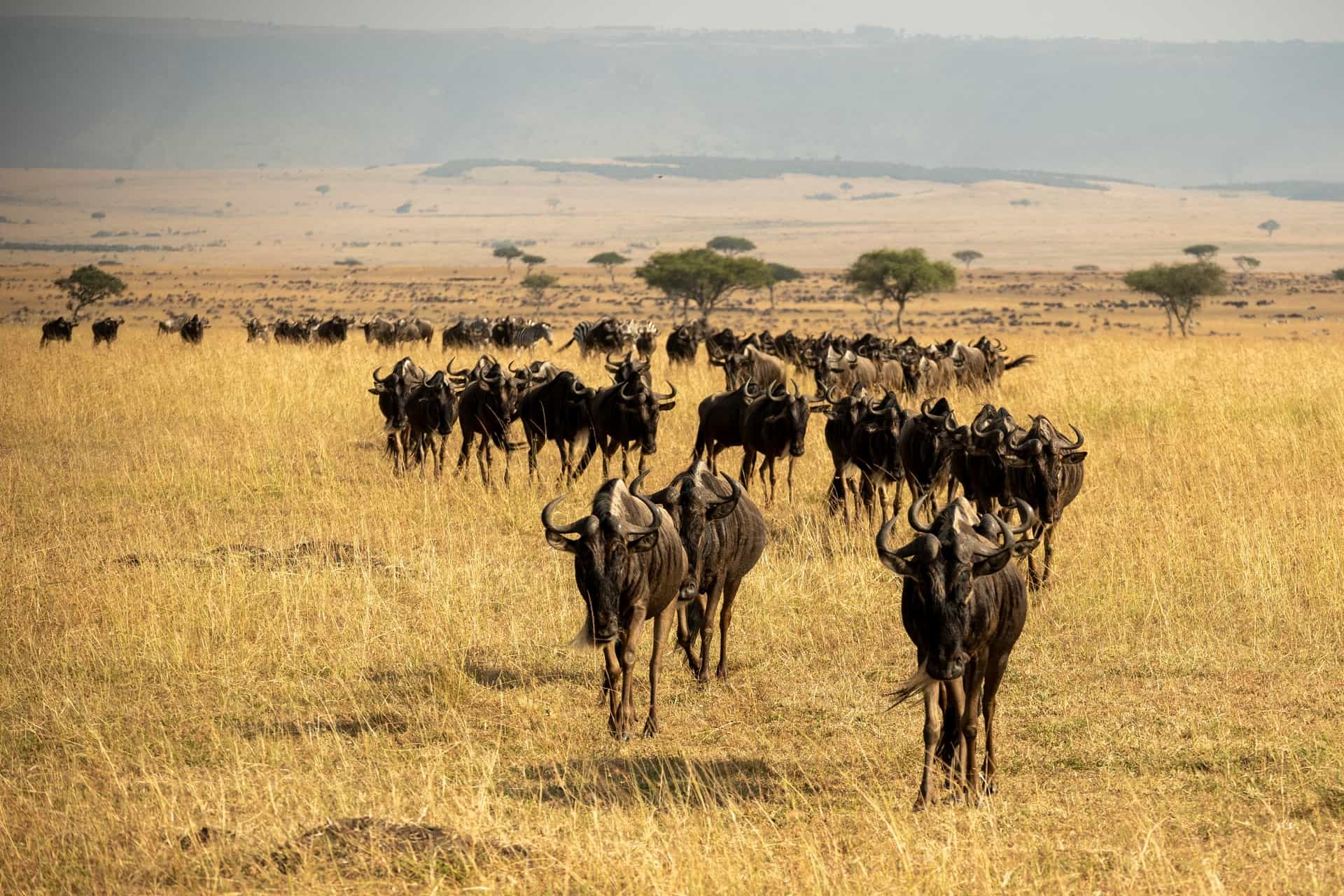
The absolute crown jewel of the Masai Mara is the classic 4x4 game drive. Setting out in the crisp early morning or late afternoon gives you front-row seats to the drama of the savannah, from pride of lions waking up to cheetahs hunting on the open plains. If you are traveling between July and October, witnessing the chaotic, adrenaline-pumping Wildebeest Migration at the Mara River crossings is an unforgettable spectacle. For a change of pace, floating peacefully over the golden plains in a hot-air balloon safari at sunrise offers a breathtaking view from above, usually followed by a champagne bush breakfast. On the ground, taking a guided walking safari lets you track footprints and appreciate the smaller details of the bush, while a Maasai village cultural visit offers a meaningful opportunity to connect with local communities, learn about their ancient traditions, and join in their vibrant jumping dances.
Where to Stay in Masai Mara National Reserve
Choosing the right place to sleep depends entirely on the vibe you are looking for. Inside the main National Reserve, iconic properties like Mara Serena Safari Lodge and Ashnil Mara Camp put you right in the center of the action, close to primary wildlife hotspots and dramatic river crossings. If you prefer high-end luxury paired with quiet exclusivity, the surrounding private conservancies host stunning, low-impact camps like Governors’ Camp, Olonana, or properties in Mara North Conservancy. These spots offer a highly peaceful atmosphere with strict vehicle limits, plus perks you cannot get inside the main reserve, like night game drives and off-roading for close-up views. For travelers keeping a close eye on their budget without sacrificing comfort, excellent tented lodges and eco-camps sit just outside the main gates, offering a cozy, authentic bush experience with easy day-use entry to the park plains.
Booking a Trip with Roads of Adventure Safaris
When you book your African getaway with Roads of Adventure Safaris, you are handing the logistics over to a team deeply passionate about the bush. We specialize in tailoring itineraries to fit your exact travel style, whether you want a fast-paced 2-day weekend rush or an extensive multi-day cross-country expedition. We understand that your driver-guide is the heartbeat of your journey, which is why our experts are highly trained in wildlife tracking, local ecology, and Maasai culture. We provide comfortable, custom-built 4x4 Land Cruisers and pop-top safari vehicles, ensuring every passenger has a window seat and a clear view for photography. From managing your park entries under Kenya's strict 12-hour ticket regulations to handpicking the finest lodges and camps, we take care of the heavy lifting. All you need to do is show up, sit back, and let the magic of the Masai Mara unfold around you.
