A perfectly paced 8-day Uganda safari for first-timers hits the "Primate & Wildlife" highlights without overwhelming you with too much driving. This route combines chimpanzee tracking, iconic savanna game drives, and a life-changing mountain gorilla trek, starting and ending in Entebbe/Kampala
Tour highlights for 8 Days Uganda safari and tour
Equator photo stop
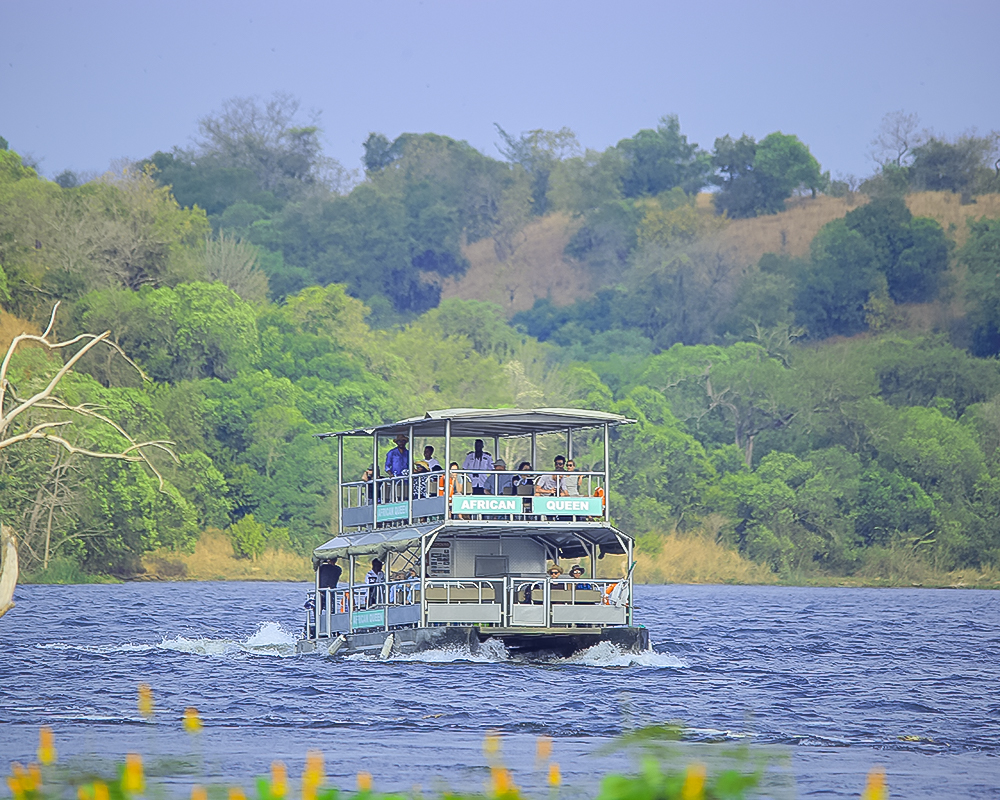
Mburo boat cruise
Morning safari walk
Scenic western drive
Bwindi forest trek
Mountain gorilla encounter
Surreal jungle hour
Ishasha lion search
Tree-climbing predator viewing
Kasenyi plains drive
Kazinga channel safari
Massive hippo pods
Crater lake vistas
Chimpanzee rainforest tracking
Bigodi swamp walk
Exotic primate spotting
Day by day 8 Days Uganda safari and tour
Day 1: Arrival & Transfer to Lake Mburo
Your 8 Days Uganda safari and tour begins the moment you touch down at Entebbe International Airport, where your friendly guide warmly welcomes you. After a quick briefing, you will hit the road and head west, leaving the bustling city behind for the tranquil countryside. Your first major stop is at the Equator crossing in Kayabwe, a classic landmark perfect for fun photographs and a delicious local lunch. Back on the road, you will pass through rolling hills and cattle farms before arriving at Lake Mburo National Park, Uganda’s smallest savannah gem. In the late afternoon, you will board a relaxing boat cruise along the lake's tranquil waters. Keep your camera ready to capture massive hippos wallowing near the banks, giant Nile crocodiles basking in the sun, and a vibrant array of waterbirds like the colorful kingfishers. Afterward, check into your lodge for dinner and a peaceful night under the African stars.
Day 2: Morning Safari Walk & Transfer to Bwindi
Wake up to the fresh wilderness air for an exhilarating early morning walking safari. Led by an armed park ranger, this unique trek lets you experience the wild on foot, stepping off the tracks to view grazing zebras, majestic topis, and elegant impalas up close without the noise of a safari vehicle engine. It is an immersive way to study animal tracks and learn about medicinal plants. After a hearty lunch back at the lodge, this 8 Days Uganda safari and tour journey continues further south. You will enjoy a deeply scenic drive that winds through the terraced hillsides of the Kigezi region, often called the "Switzerland of Africa" due to its breathtaking landscapes. As the elevation climbs and the temperature drops, you will arrive at the edge of the ancient, misty Bwindi Impenetrable National Park. Settle into your lodge, enjoy a warm dinner, and rest up for tomorrow's big adventure.
Day 3: Mountain Gorilla Trekking
Today marks the crown jewel of your 8 Days Uganda safari and tour. Following an early breakfast, you will head straight to the park headquarters for a vital safety briefing from the expert rangers. You will then be assigned to a specific gorilla family and plunge into the dense, tangled jungle of Bwindi. The trek can be physically demanding, involving steep climbs and thick vegetation, but the challenge vanishes the moment you locate the gorillas. You will spend a surreal, profoundly moving hour observing these gentle giants in their natural habitat. Watch the massive silverback watch over his family, playful juveniles tumbling through the vines, and mothers nursing their infants just a few meters away. This intimate encounter is one of the world's most exclusive wildlife experiences. Afterward, trek back to the base station to receive your graduation certificate before returning to your lodge to relax and reflect on a magical day.
Day 4: Ishasha Tree-Climbing Lions & Queen Elizabeth N.P.
Leave the misty rainforest behind and drive north toward Queen Elizabeth National Park. You will enter the park through the remote southern Ishasha sector, a wild landscape globally famous for its unique population of tree-climbing lions. These majestic predators climb high into the low branches of old fig trees to escape the midday heat and pesky ground insects. You will slowly scan the canopy on a game drive, looking for heavy paws dangling from the branches while spotting topis, buffalos, and elegant kobs grazing on the plains below. After a scenic picnic lunch in the wilderness, you will continue your journey north across the savanna, crossing the equator once more. As evening approaches, you will arrive at the northern sector of the park, where dramatic views of the Rwenzori Mountains open up before you check into your lodge for dinner and a well-earned rest.
Day 5: Game Drive & Kazinga Channel Boat Safari
An early morning wake-up call brings you out into the Kasenyi plains, the primary mating grounds for the Uganda kob and a hotspot for predators. With the help of your guide, you will track lions, leopards, massive herds of Cape buffalos, and elegant savannah elephants glowing in the golden sunrise. After a midday break and lunch at the lodge, this 8 Days Uganda safari and tour transitions from land to water. You will board a launched boat safari down the famous Kazinga Channel, a natural waterway connecting Lake Edward and Lake George. This cruise offers some of the best wildlife viewing in Africa. You will glide past thousands of wallowing hippos, enormous crocodiles resting on the muddy banks, and families of elephants drinking at the water's edge, all while surrounded by an incredible abundance of colorful local and migratory waterbirds.
Day 6: Transfer to Kibale National Park
Enjoy a relaxed breakfast at your lodge before bidding farewell to Queen Elizabeth National Park. Today's route treats you to a beautiful drive toward Fort Portal, a clean and vibrant town nestled under the shadow of the Rwenzori Mountains. You will pass through endless, rolling green tea plantations that blanket the hillsides like a vibrant carpet. The landscape shifts dramatically as you enter the famous crater lakes region, where you will stop to admire the deep, volcanic lakes formed millions of years ago, offering incredible photographic opportunities. This scenic journey brings you directly into the dense, tropical rainforest of Kibale National Park, recognized globally as the primate capital of East Africa. Upon arrival, check into your forest lodge, where the distant calls of monkeys and exotic birds welcome you. Spend the evening relaxing on your veranda, soaking in the sights and sounds of the jungle.
Day 7: Chimpanzee Trekking & Bigodi Swamp Walk
Double your primate tracking success on this 8 Days Uganda safari and tour by heading into Kibale Forest. After a morning briefing, you will venture into the jungle with specialized guides to track a community of habituated chimpanzees. As you walk beneath the ancient canopy, you will hear their echoing hoots and pant-grunts before finding them. You will spend an incredible hour watching our closest living relatives feed, groom, and swing effortlessly through the treetops. After lunch, the adventure shifts to the Bigodi Wetland Sanctuary for a guided nature walk. This community-run swamp boardwalk is a paradise for birdwatchers and primate enthusiasts alike. You will spot rare birds like the spectacular Great Blue Turaco and encounter up to eight different monkey species, including the grey-cheeked mangabey, red colobus, and L'Hoest's monkeys, all while supporting vital local community conservation initiatives.
Day 8: Departure
On the final morning of your 8 Days Uganda safari and tour, wake up to the peaceful symphony of the rainforest. You will enjoy a leisurely breakfast at the lodge, soaking in your final views of the lush jungle canopy. After checking out, you will board your safari vehicle and begin the smooth drive back toward central Uganda. The route takes you back through beautiful countryside, lively trading centers, and rolling hills, giving you a final glimpse of daily Ugandan life. You will stop along the way for a delicious lunch and to pick up any last-minute souvenirs or locally grown coffee. You will arrive back in Kampala or directly at Entebbe International Airport in the late afternoon, perfectly timed to check in for your evening departure flight home, carrying unforgettable memories of gorillas, chimpanzees, and wild savannah landscapes.
1. What physical fitness level is required for this specific itinerary?
This particular itinerary demands a moderate to high level of physical fitness, primarily due to the primate trekking scheduled on Day 3 and Day 7. While Day 1 (Lake Mburo cruise) and Day 5 (Queen Elizabeth game drives) are physically relaxed and spent inside a vehicle or boat, tracking mountain gorillas in Bwindi Impenetrable National Park is a true wilderness challenge. Bwindi’s terrain lives up to its name—you will be hiking at altitudes between 3,900 and 8,500 feet through thick, tangled vegetation, tackling muddy, steep ridges and slippery valleys. A trek can last anywhere from two to eight hours depending on where the gorilla family moved overnight. Day 7’s chimpanzee tracking in Kibale Forest is generally flatter but involves walking at a brisk pace off-trail through dense rainforest to keep up with fast-moving primate troops. To fully enjoy this 8 Days Uganda safari and tour, first-timers should prepare by doing cardiovascular exercises, stair-climbing, and trail hiking in broken-in boots for at least two months prior to departure.
2. What are the mandatory entry and health visa requirements for Uganda?
For a seamless arrival at Entebbe International Airport on Day 1, first-time travelers must secure an official Uganda Electronic Visa (e-Visa) completely in advance. Uganda no longer issues standard visas on arrival; you must apply online through the official Directorate of Citizenship and Immigration portal at least two to three weeks before your trip. Along with a passport valid for at least six months beyond your arrival date, the absolute most critical document you must upload and present physically is a valid Yellow Fever Vaccination Certificate. Health officials screen every incoming passenger for this document before you are even allowed into the immigration queue. Additionally, because this 8 Days Uganda safari and tour takes you through regions with high malaria transmission risk, taking a prescription malaria prophylactic (such as Malarone or Doxycycline) is highly recommended. Check with a travel clinic six weeks before departure to update standard immunizations like Hepatitis A, Tetanus, and Typhoid.
3. What should I pack specifically for the Bwindi gorilla trek versus the savannah game drives?
Packing for this journey requires a strategy for two entirely different ecosystems. For the open savannas of Lake Mburo and Queen Elizabeth National Park (Days 1, 4, and 5), you want lightweight, breathable clothing in neutral earth tones like khaki, green, or tan. Avoid bright colors which can spook wildlife, and strictly avoid blue or black clothing, as these shades actively attract biting tsetse flies. For the dense jungles of Bwindi and Kibale (Days 3 and 7), you must switch to protective gear: long-sleeved shirts and sturdy trousers are mandatory to shield your skin from stinging nettles, thorns, and sharp branches. You will need thick, calf-high hiking socks so you can tuck your trousers inside them—a vital trick that stops biting safari ants from crawling up your legs. Lastly, pack high-quality, waterproof hiking boots with deep ankle support, a lightweight rain poncho, and a pair of durable gardening gloves to help you grip wet branches on steep slopes.
4. How do gorilla and chimpanzee trekking permits work, and are they included?
Permits are the absolute lifeblood of this itinerary and must be secured months in advance. The Uganda Wildlife Authority (UWA) issues a strictly limited number of permits per day to protect the primates from stress and disease transmission—only eight tourists can visit a single gorilla family for exactly one hour per day. For a first-timer booking this 8 Days Uganda safari and tour, it is vital to clarify with your tour operator that both the Bwindi gorilla permit and the Kibale chimpanzee tracking permit are explicitly secured and included in your total trip price. A single gorilla permit costs $800 USD, while a chimpanzee permit is roughly $250 USD. Because these fees are non-refundable and heavily competitive, your tour dates are completely locked in around permit availability. When you hand over your passport at the park headquarters on Days 3 and 7, these pre-purchased permits are what grant you legal entry into the forest.
5. What are the strict behavioral rules when encountering wild gorillas and chimpanzees?
When you come face-to-face with great apes on Day 3 and Day 7, strict conservation protocols must be followed to ensure both your safety and the health of the primates. Because humans and primates share over 95% of the same DNA, wild apes are highly susceptible to human respiratory diseases. You will be required to wear a clean facemask when in close proximity to the gorillas and chimpanzees, and you must maintain a strict minimum distance of 32 feet (10 meters) from them at all times. If you feel sick or have a cold before the trek, you are legally required to disqualify yourself to protect the animals. Once you locate the primates, you are permitted exactly one hour of observation. During this time, you must keep your voice to a low whisper, refrain from eating or drinking near them, and ensure that your camera's flash is completely turned off, as sudden bright light can trigger an aggressive charge.
6. What is the vehicle type and driving comfort like on this western Uganda route?
First-timers should prepare for a significant amount of driving on this itinerary, as you are traversing a massive loop across western Uganda. The roads connecting major towns and park gates—such as the highway from Entebbe to Lake Mburo on Day 1 or the road to Fort Portal on Day 6—are well-paved, smooth asphalt. However, the internal park tracks within Lake Mburo, the remote Ishasha sector on Day 4, and the roads leading deep into Bwindi are unpaved, bumpy dirt roads. This layout means you will experience what safari veterans affectionately call the "African massage." To maximize your comfort over these long distances, ensure your tour operator utilizes a custom-built 4x4 Safari Land Cruiser or a 4x4 Safari Van featuring a pop-up roof for optimal game viewing. A 4x4 vehicle is absolute necessity; without it, navigating the muddy, steep terrain of Bwindi or the wet tracks of Queen Elizabeth National Park would be impossible.
7. What kind of accommodation can a first-timer expect in these remote parks?
Uganda features a phenomenal range of accommodations, but for a first-time visitor, choosing the right tier is key to your overall comfort. Most properties along this western circuit are divided into budget, mid-range, and luxury eco-lodges or permanent tented camps. Mid-range and luxury lodges are incredibly comfortable, offering beautifully designed en-suite cottages built from local stone and timber, complete with flushing toilets, hot running water, and mosquito netting over the beds. Many properties—especially those on the rim of Bwindi Forest or looking over the Kazinga Channel—boast stunning private verandas with sweeping views of the wilderness. Because you are in remote locations, electricity is primarily powered by solar systems or generators. This setup means lodges may turn off power during the middle of the night, so carrying a small flashlight or headlamp to navigate your room after dark is a smart move.
8. How does the weather vary across the locations in this 8-day circuit?
This itinerary crosses several distinct microclimates, meaning you will experience vastly different weather patterns within a single week. Lake Mburo and Queen Elizabeth National Park sit at lower elevations, making them relatively warm and humid, with daytime temperatures averaging around 82°F (28°C). On Days 1 and 5, you will want light, cool clothing. However, the climate shifts dramatically when you ascend into the high-altitude rainforests of Bwindi Impenetrable National Park on Day 2 and Day 3. Bwindi is significantly cooler, with daytime temperatures hovering around 68°F (20°C) and dropping sharply into the chilly 50s°F (10-12°C) at night, requiring a warm fleece or sweater. Furthermore, Bwindi and Kibale are tropical rainforests where downpours can happen entirely without warning, even during the designated dry seasons. A high-quality, durable rain jacket should remain packed in your daypack every single day of the trip.
9. What is the food and water safety situation like during the safari?
Food on a standard Ugandan safari is highly impressive and an absolute highlight for first-time travelers. The eco-lodges you stay at serve multi-course meals that expertly blend international continental cuisine with delicious local flavors. You can expect fresh soups, grilled meats, avocado salads, and local staples like matooke (steamed green bananas) and roasted sweet potatoes. Lodges and restaurants are highly experienced in catering to dietary restrictions, provided you inform your operator of any vegetarian, vegan, or gluten-free requirements well before Day 1. When it comes to hydration, drinking tap water is strictly off-limits throughout Uganda. To prevent any stomach upsets from derailing your adventure, you must use safe, bottled water or purified water provided by your safari guide and lodges for drinking, brushing your teeth, and washing your face throughout the entirety of your 8 Days Uganda safari and tour.
10. How are tipping and currency handled across the different stops?
Navigating money in remote African parks can be tricky for first-timers. The official currency is the Ugandan Shilling (UGX), but US Dollars (USD) are widely accepted by tour operators, park gift shops, and upscale lodges. If you bring US Dollars, they must be clean, un-torn, and printed after the year 2013, as older bills are routinely rejected by local banks due to counterfeiting fears. Carrying a good amount of local shillings in small denominations is essential for buying souvenirs at the Equator on Day 1, ordering extra drinks at your lodges, or buying community crafts in Bigodi on Day 7. Tipping is a standard and deeply appreciated practice within the Ugandan tourism industry. As a general guideline, budget roughly $10-15 USD per day for your professional safari driver-guide, $10-20 USD total per group for the specialist park rangers leading your primate tracks, and $5-10 USD per day for general lodge staff.
11. Is it necessary or helpful to hire a local porter for the Bwindi gorilla trek?
Hiring a local porter at the Bwindi park headquarters on Day 3 is something we highly recommend to every first-time safari-goer, regardless of your personal age or fitness level. For a standard fee of roughly $20 USD (plus an optional tip), a porter will carry your heavy backpack containing your lunchbox, rain gear, and heavy camera equipment, completely freeing you up to focus on navigating the steep, muddy terrain. More importantly, porles provide invaluable physical assistance, offering a steady, guiding hand to help you pull yourself up slippery clay slopes or cross tricky forest streams safely. Beyond the immense physical benefit to you, hiring a porter is an incredible act of responsible tourism. Most porters are residents of the local communities bordering the park, and some are reformed poachers. The direct income they earn from your trek directly funds their families, creating a powerful economic incentive for communities to protect the gorillas.
12. What are the best camera equipment and photography rules for this trip?
Capturing wild animals across savannas and thick rainforests requires some specific camera preparation. For the game drives in Queen Elizabeth National Park and the boat cruise on the Kazinga Channel (Day 5), animals can be far away, making a DSLR or mirrorless camera equipped with a telephoto zoom lens (minimum 200mm to 400mm) vital for crisp close-ups. However, inside the dark canopy of Bwindi on Day 3 and Kibale on Day 7, you will be much closer to the primates, but shooting conditions are challenging due to the heavy forest shade. Bring a lens with a wide aperture (like f/2.8 or f/4) to maximize light entry, and raise your camera's ISO settings to prevent blurry images. Most importantly, ensure your camera's flash is permanently disabled; flash photography is strictly illegal near primates as it can startle and anger them. Bring extra batteries and a waterproof dry bag to protect your gear from sudden jungle downpours.
13. What kind of medical emergency infrastructure is available during the safari?
Since this itinerary travels through remote regions of western Uganda, first-time travelers often worry about access to medical care. While major luxury lodges carry basic first-aid kits and park rangers are highly trained to handle minor injuries like cuts, blisters, or sprains on the trail, advanced medical facilities are far away from the parks. To ensure absolute peace of mind, every first-timer booking an 8 Days Uganda safari and tour should purchase comprehensive travel insurance that explicitly covers emergency medical evacuation. Most reputable tour operators automatically include membership to an evacuation service like AMREF Flying Doctors. In the rare event of a serious medical emergency, a helicopter or medical plane can be dispatched to evacuate you directly from a local airstrip (like the one near Queen Elizabeth National Park) to an international-standard hospital in Kampala or Entebbe within hours.
14. How can I ensure my trip directly supports local communities and conservation?
Uganda’s wildlife only survives if the local people living alongside the parks benefit directly from tourism. This specific itinerary offers brilliant opportunities to practice sustainable, community-first travel. On Day 7, your guided nature walk through the Bigodi Wetland Sanctuary is completely managed by the local community; 100% of the entry fees you pay go straight toward funding local primary schools, clean water projects, and small-business loans for women’s groups. You can further amplify your positive footprint by purchasing authentic hand-woven baskets, wood carvings, or locally grown coffee from community gift shops outside Bwindi and Kibale. Choosing to hire a porter on Day 3 directly injects funds into a local household. These conscious actions prove to the community that a living gorilla or a standing rainforest is worth far more over the long term than illegal poaching or deforestation, turning your holiday into active conservation support.
15. What are the charging options and internet connectivity like across the parks?
Staying connected while traveling through western Uganda is entirely possible, but requires a bit of planning. Most safari lodges feature Wi-Fi networks, though access is typically restricted to the central main lounge or dining area rather than individual guest cottages. Because connectivity relies on satellite systems or cellular networks in deep valleys, speeds can be slow and intermittent. If you require continuous internet access for work or family, you can easily purchase a local prepaid SIM card (from networks like MTN or Airtel) at Entebbe Airport on Day 1. Regarding electricity, charging your devices is effortless. Ugandan lodges use the UK-style Type G three-pin square plugs, and electricity runs at 240 volts. Most modern lodges feature a central charging station in the main lodge or multi-plug outlets directly inside your room. However, carrying a high-capacity portable power bank in your daypack ensures your phone and camera stay charged during long game drives.
Booking 8 Days Uganda safari with us Roads of Adventure safaris
Booking an 8-day Uganda safari with Roads of Adventure Safaris is a straightforward process. Wemspecialize in tailor-made "Gorillas, Chimps, and Wildlife" itineraries that cover bucket-list locations like Bwindi Impenetrable, Queen Elizabeth, and Kibale National Parks
