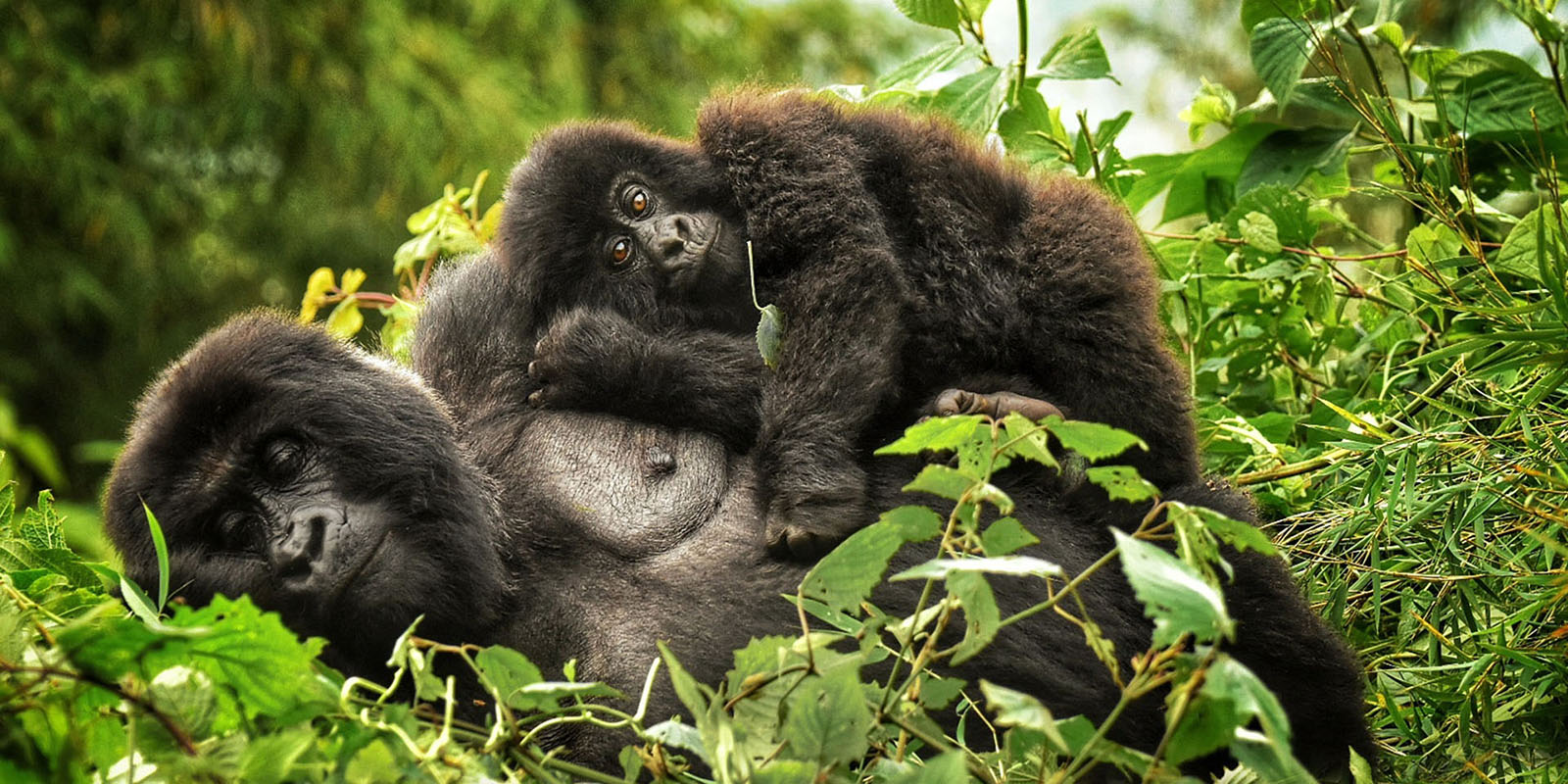
Located in southern Bwindi Impenetrable National Park, Nkuringo stands out for its dramatic ridges and exceptional primate encounters. Perched at an altitude of 2,072 meters (6,800 feet) above sea level, this sector is defined by its steep climbs, habituated mountain gorilla families, and sweeping views across the Virunga Massif. Below are 10 key aspects detailing what makes gorilla trekking in Nkuringo a unique mountain experience.
3-days-luxury-gorilla-trekking-in-nkuringo-sector-of-bwindi
Challenging Terrain
Gorilla trekking in Nkuringo is widely recognized as the most physically demanding experience in Bwindi Impenetrable National Park. The sector sits high on a ridge overlooking the Kashasha River valley, requiring trekkers to descend roughly 300 to 400 vertical meters into the dense forest before beginning their ascent to find the primates.
Trek lengths vary from 2 to 7 hours depending on where the habituated families built their nests the previous night. Navigating the damp, clay-rich soil, tangled vines, and slippery moss-covered roots tests cardiovascular endurance, especially on the steep return climb back up the ridge. The trail requires a solid level of fitness, proper hiking boots with ankle support, and steady footwork. hiring a local porter at the park headquarters for around USD $15 to $20 provides invaluable assistance on the steepest ascents while supporting the surrounding community.
First Habituated Family
The history of habituated gorilla trekking in southern Bwindi began directly in this sector with the Nkuringo family. Habituation efforts started in 1997 to reduce human-wildlife conflict, as this specific group frequently raided local crops in the surrounding village farmland. Following a careful seven-year process of habituation by Uganda Wildlife Authority (UWA) trackers, the family officially opened for eco-tourism in 2004.
The group was initially led by a silverback named Nkuringo, who passed away in 2008, leaving the family under the leadership of his sons, Rafiki and Safari. Following the loss of Rafiki in 2020, the group restructured and continues to range along the forest boundary, remaining a core part of southern Bwindi's conservation story.
Home to Multiple Groups
While the sector began with a single habituated group, expanded habituation efforts mean Nkuringo now hosts multiple gorilla families, offering diverse tracking experiences.
- The Nkuringo Group: The original habituated group in the sector, known for its frequent movements around the village outskirts and deep forest valleys.
- The Posho Group: A large, thriving family comprising around 19 to 20 individuals, including multiple silverbacks, females, and playful infants, making it one of the largest habituated groups in Bwindi.
- The Christmas Group: A smaller, highly mobile group led by a dominant silverback named Christmas, who was born on Christmas Day.
Having multiple habituated groups in the sector allows UWA to distribute tracking pressure evenly across different territories, giving researchers valuable insights into social dynamics, group splitting, and territory shifts within the park's dense canopy.
Volcano Views
One of the distinct features of gorilla trekking in Nkuringo is its location along a elevated ridge system, providing clear, wide-angle views across the Albertine Rift Valley. From several vantage points near the park office and surrounding lodges, trekkers can look out over the dense forest canopy toward the Virunga Mountains spanning the borders of Uganda, Rwanda, and the Democratic Republic of Congo.
On clear mornings, the horizon showcases six prominent volcanic peaks: Mount Muhavura, Mount Gahinga, and Mount Sabyinyo in the immediate tri-border region, alongside Mount Karisimbi, Mount Bisoke, and the active volcanic summits of Mount Nyiragongo and Mount Nyamuragira across the border in the Congo basin. This backdrop makes the long treks in Nkuringo visually striking before you even step beneath the forest canopy.
Strict Permit Limits
To safeguard the endangered mountain gorilla (Gorilla beringei beringei) population, UWA enforces strict conservation measures regarding permit allocations. In compliance with International Union for Conservation of Nature (IUCN) guidelines, a maximum of 8 tourists are permitted to trek a single habituated gorilla family each day.
With multiple habituated families operating in the sector, daily tracking availability remains tightly capped. Permits cost USD $800 per person for foreign non-residents and must be booked several months in advance through UWA or a licensed Ugandan tour operator. Limiting human contact minimizes stress on the primates, reduces the risk of human-borne respiratory disease transmission, and prevents behavioral disruptions within the wild groups.
One Magical Hour
Once trackers locate the mountain gorillas, your group is permitted exactly 60 minutes of observation time. This strict limit balances an immersive encounter with minimal disruption to the group's natural routines of feeding, grooming, and resting. During this hour, trekkers maintain a minimum distance of 7 to 10 meters (23 to 33 feet) from the animals, with face masks required to protect the primates from airborne infections.
Watching a dominant silverback weighing upwards of 180 kg (400 lbs) lead his family through the underbrush, or observing juveniles play in the bamboo shoots, offers an extraordinary window into their social hierarchy. Trackers use soft vocal grunts to reassure the silverback, ensuring a calm atmosphere throughout the encounter.
Gateway to Lake Mutanda
Nkuringo’s position on the southern fringe of Bwindi makes it a natural gateway to Lake Mutanda, located roughly 20 kilometers (12 miles) south along a winding dirt road. Nestled against the backdrop of the Virunga Volcanoes, this freshwater lake provides an ideal spot to unwind after a demanding trek in the forest.
Travelers frequently combine gorilla trekking with a 1 to 2-hour dugout canoe trip or motorized boat cruise across Lake Mutanda's calm waters. These excursions offer opportunities to explore small islands, such as Punishment Island, observe local fishermen using traditional wooden canoes, and spot waterbirds like the African fish eagle and pied kingfisher.
Batwa Cultural Experiences
Beyond wildlife encounters in the national park, visiting Nkuringo offers an opportunity to learn about the indigenous Batwa people. Historically known as the original hunter-gatherers of the Bwindi forest, the Batwa lived in harmony with the woodland ecosystem for thousands of years before the park was gazetted in 1991 for gorilla conservation.
Community-led cultural walks outside the park boundaries allow Batwa guides to demonstrate traditional forest survival skills, including herbal medicine preparation, wild honey harvesting, primitive fire-making techniques, and traditional archery. Engaging in these community initiatives provides direct economic benefits to the Batwa, preserving their rich cultural heritage while supporting sustainable development around the reserve.
High-End Lodging
Over the past two decades, Nkuringo has developed into a hub for premium eco-lodges, providing comfortable accommodation perched on high ridges overlooking the forest canopy. Establishments like Clouds Mountain Gorilla Lodge and Nkuringo Gorilla Lodge sit at elevated altitudes, offering sweeping views of the Bwindi canopy on one side and the Virunga volcanoes on the other.
These lodges utilize stone, timber, and volcanic rock in their design, incorporating cozy fireplaces to cut through the cool high-altitude evening air. Staying locally shortens transit times on the morning of your trek, as most lodges are located just a 5 to 15-minute drive or a short walk from the main UWA briefing point in Nkuringo village.
Trekking Certificates
Completing a gorilla trek in the Nkuringo sector is a notable physical achievement, given the steep ascents and thick jungle vegetation. Upon returning to the park headquarters after your excursion, UWA rangers present each participant with an official, personalized Gorilla Trekking Certificate.
This document verifies your participation in the conservation trek, displaying your name, the date, the specific habituated gorilla family visited, and official stamps from the Uganda Wildlife Authority. Beyond serving as a personal keepsake, the certificate symbolizes a direct financial contribution toward mountain gorilla conservation, local ranger patrols, and community development projects around Bwindi Impenetrable National Park
How physically demanding is a gorilla trek in the Nkuringo sector compared to other Bwindi sectors?
Nkuringo is widely considered the most physically challenging sector in Bwindi Impenetrable National Park. Located along a high ridge at 2,072 meters (6,800 feet), a trek here almost always begins with a steep descent into the Kashasha or Ivy River valleys, dropping 300 to 400 vertical meters before you even start looking for the gorillas.
Once you cross the valley floor, the real work begins as you climb back up through dense, untamed vegetation, muddy slopes, and tangled roots. The round trip can take anywhere from 3 to 8 hours depending on where the family moved overnight. Unlike flatter sectors, there are very few level paths in Nkuringo, making steady footwork and good cardiovascular endurance essential. Renting a walking stick and hiring a local porter at the briefing station are highly recommended strategies to manage the steep terrain safely.
What is the current permit process and cost for trekking gorillas in Nkuringo?
Gorilla trekking permits for Nkuringo are strictly regulated by the Uganda Wildlife Authority (UWA) to protect the habituated families from stress and disease. A permit currently costs USD $800 for foreign non-residents, USD $700 for foreign residents, and 300,000 East African Shillings for East African citizens.
Because UWA limits visits to just 8 people per habituated family each day, permit availability in Nkuringo is extremely tight. During peak travel months—from December to February and June to September—permits often sell out 3 to 6 months in advance. You can book permits directly through the official UWA booking portal or, more commonly, through a licensed Ugandan tour operator who can secure the permit alongside your lodge reservation and ground transfers.
How does the habituation history of the Nkuringo family impact the trekking experience today?
The Nkuringo family holds a special place in southern Bwindi's tourism history, as it was the very first group habituated in the area, opening to visitors in 2004. Initially habituated to stop them from raiding local crops along the park boundary, the group developed a long, peaceful history of human presence.
This deep habituation means the group is typically very calm around visitors, allowing trekkers to observe natural behaviors like grooming, feeding, and resting at close range without causing stress to the primates. Over the years, the group has survived leadership shifts following the loss of dominant silverbacks like Nkuringo and Rafiki. Today, the family remains resilient, known for its dynamic social interactions and frequent movements around the village border and deep valley floor.
What packing gear is essential for handling Nkuringo’s specific environment?
Packing correctly for Nkuringo can make the difference between a comfortable hike and a miserable crawl. Sturdy, waterproof hiking boots with deep tread and strong ankle support are non-negotiable for navigating the slick clay and steep slopes. Pair these with thick wool socks and lightweight gaiters to keep mud, biting ants, and debris out of your boots.
Wear long-sleeved, moisture-wicking shirts and durable trousers (like ripstop canvas) to protect your skin from stinging nettles and sharp thorns. Gardening gloves or lightweight padded gloves are extremely helpful when grabbing onto muddy branches or vines for balance on steep ascents. Finally, pack a lightweight, waterproof rain jacket, a hat, a dry bag for your camera gear, and at least two liters of drinking water.
What wildlife safety protocols must trekkers follow when encountering mountain gorillas?
Safety protocols in Nkuringo protect both human visitors and the endangered mountain gorillas. Before heading into the forest, rangers conduct a mandatory safety briefing covering basic conduct rules. Trekkers must maintain a minimum distance of 7 to 10 meters (23 to 33 feet) from the gorillas at all times to prevent disease transmission and avoid invading their personal space.
Wearing a face mask is mandatory when you are in the presence of the gorillas. You must keep your voice low, avoid sudden movements, and never touch the animals—even if a curious juvenile approaches you. Flash photography is strictly forbidden because sudden flashes can spook the dominant silverback. If a gorilla displays aggression or chest-beats, you are instructed to crouch down slowly, lower your eyes, and let the rangers handle the situation with reassuring vocalizations.
What are the main differences between the gorilla families residing in the Nkuringo sector?
Nkuringo hosts multiple habituated gorilla families, each offering a distinct social structure and tracking dynamic. The namesake Nkuringo family is famous for its long history and frequent foraging trips near the park boundary. It is a well-balanced group featuring silverbacks, adult females, and playful youngsters.
In contrast, the Posho family is known as one of the largest groups in the sector, often counting nearly 20 members. Seeing a large group like Posho provides a fascinating look at complex social hierarchies, with multiple silverbacks coexisting and managing numerous infants. The Christmas family is a smaller, nimbler group led by a dominant silverback named Christmas. This group tends to move quickly across steep terrain, often making for a more active, fast-paced tracking experience.
Why is hiring a local porter in Nkuringo highly recommended for every trekker?
Hiring a porter at the Nkuringo park office is one of the best decisions you can make for your trek, regardless of your fitness level. Porters are locals from the surrounding villages who know the mountain paths intimately. For a standard fee of USD $15 to $20 (plus an optional tip), a porter carries your heavy backpack, freeing you up to focus on your footwork and breathing.
On steep, slick slopes, porters offer a steady hand to pull you up difficult climbs or stabilize you on muddy descents. Beyond the physical help, hiring a porter provides direct, tangible economic support to local families living along the park boundary. This financial incentive builds strong community support for gorilla conservation, turning former agricultural land users into active protectors of Bwindi’s forest.
How do climate and weather patterns affect gorilla tracking in Nkuringo throughout the year?
Nkuringo’s high elevation means weather conditions can change rapidly, heavily influencing trail conditions. The dry seasons—from December to February and June to August—offer the easiest trekking conditions. Trails are drier, footings are firmer, and the risk of slipping on steep valley slopes is lower, though rain can still fall unexpectedly in a rainforest.
The wet seasons—from March to May and September to November—bring heavy afternoon downpours that turn trail clay into deep, slick mud. However, rainy season trekking has its perks: gorillas often move down to lower, warmer elevations to feed on fresh shoots, which can shorten hiking times. Additionally, lodges sometimes offer lower seasonal rates, and the forest is lush, green, and far less crowded.
What accommodation options are available near the Nkuringo tracking point?
The Nkuringo sector has developed an impressive range of eco-lodges situated along high ridges with stunning views of the forest canopy and the Virunga Volcanoes. For luxury travelers, places like Clouds Mountain Gorilla Lodge offer stone cottages with private fireplaces, butler service, and sweeping views across the Albertine Rift.
Mid-range options like Nkuringo Bwindi Gorilla Lodge provide comfortable, eco-friendly wooden chalets located just a short walk or quick drive from the main UWA briefing point. Budget travelers can find comfortable, locally-run guesthouses and campsites nearby. Staying directly within the Nkuringo area eliminates long, stressful early morning drives over rough dirt roads, allowing you to wake up rested and close to the starting line.
How do community cultural tours, such as Batwa experiences, complement a gorilla trek in Nkuringo?
Pairing a gorilla trek with a community tour offers a complete picture of the human and natural history of southern Bwindi. The Batwa people are the indigenous hunter-gatherers who lived inside the forest for centuries before Bwindi became a national park in 1991.
Participating in a Batwa-led cultural walk outside the park boundaries gives visitors a rare look at traditional forest survival techniques, including wild honey harvesting, medicinal plant identification, shelter construction, and traditional hunting methods. Engaging in these community-led tours provides the Batwa with an alternative income source, preserves their rich cultural heritage, and helps visitors understand the social and historical landscape surrounding mountain gorilla conservation.
Booking Nkuringo gorilla trekking with us Roads of Adventure safaris
Booking your Nkuringo gorilla trekking tour with Roads of Adventure Safaris ensures a seamless, expertly guided experience in Bwindi Impenetrable National Park. As a licensed tour operator based in Kampala, they handle all direct logistics, including Uganda Wildlife Authority (UWA) permit procurement, custom 4x4 transport, and regional lodge bookings.
