An 8-day primate safari in Rwanda typically costs between $4,250 and $7,500+ per person, depending heavily on accommodation style (budget, midrange, or luxury) and private versus group transport. The single largest fixed cost is the $1,500 gorilla trekking permit issued by the Rwanda Development Board
How Much Does an 8-Day Rwanda Safari Really Cost?
Rwanda focuses heavily on high-value, low-impact tourism. While this protects fragile rainforest habitats, it means trip costs are higher than in neighboring regions.
Cost Breakdown by Tier
- Budget Tier ($4,250 – $5,100 per person): Stay in clean, basic guesthouses or simpler eco-lodges, use a shared or standard 4x4 safari vehicle, and cover basic chimpanzee and golden monkey permits.
- Midrange Tier ($5,200 – $6,500 per person): Stay in comfortable 3-to-4-star safari lodges near Akagera, Volcanoes, and Nyungwe forests with full-board meals and a dedicated private driver-guide.
- Luxury / Deluxe Tier ($6,800 – $8,000+ per person): Stay in high-end luxury properties (such as Bisate Lodge or similar ultra-exclusive lodges), private 4x4 transport, and upgraded park or community experiences.
Essential Park & Activity Permit Fees for 8-Day Rwanda Primate & Big Five Safari
Park passes account for a major portion of your trip budget. These prices are set directly by the Rwanda Development Board and must be secured well in advance:
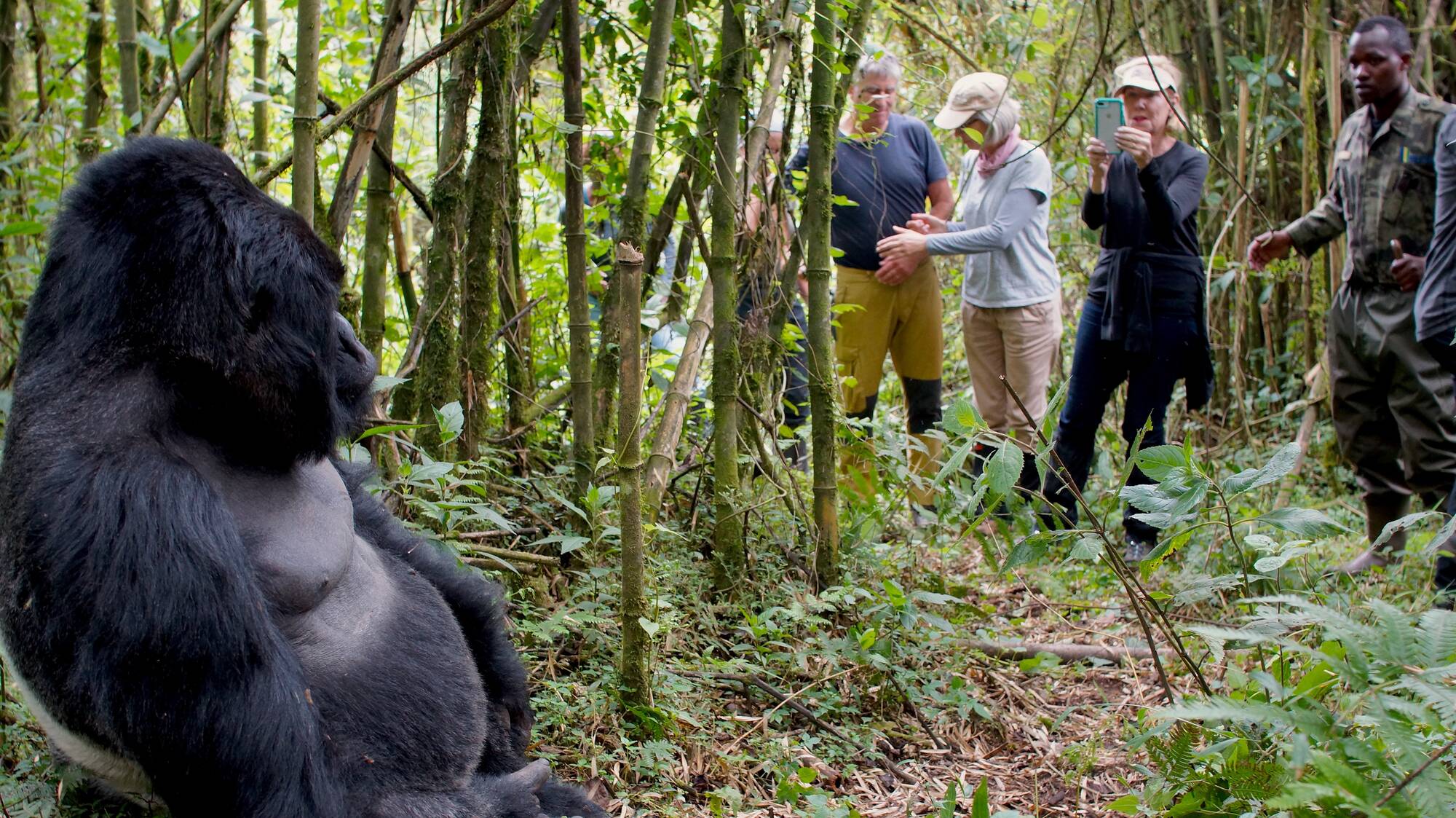
- Mountain Gorilla Permit: $1,500 per person (includes 1 full hour with a habituated gorilla family).
- Chimpanzee Tracking Permit: $150 – $250 per person (Nyungwe National Park).
- Golden Monkey Permit: $100 per person (Volcanoes National Park).
- Nyungwe Canopy Walkway: $60 per person.
Pro Tip: Gorilla permits sell out quickly during dry peak months (June–September and December–February). Aim to lock in your passes 3 to 6 months ahead of travel.
What Is Included in a Standard 8-Day Rwanda Primate & Big Five Safari Tour Package?
When working with a licensed local operator, your package price covers all daily operational details:
- 7 Nights Accommodation: Selected boutique hotels, safari lodges, or eco-camps.
- Pre-Booked Permits: Guaranteed entries for gorilla, chimp, and golden monkey treks.
- Private Ground Transport: A dedicated 4x4 safari vehicle with fuel, mineral water, and a certified local driver-guide.
- Full Board Meals: Daily breakfast, lunch, and dinner at your accommodations.
- Park Fees & Guided Excursions: Entry fees for Akagera game drives, Lake Ihema boat cruises, and community visits.
Packing & Trail Logistics: What You Need to Know for your 8-Day Rwanda Primate & Big Five Safari
Trekking through dense bamboo thickets and misty rainforests requires proper preparation:
- Footwear matters: Bring broken-in, waterproof hiking boots with solid ankle support and deep tread.
- Protect your skin: Wear long-sleeved quick-dry shirts and durable trousers. Tuck your pants into thick socks to block ants on forest trails.
- Grip and gear: Thick leather or gardening gloves help you grab onto vines and avoid stinging nettles on steep climbs.
- Hire a porter: At the trailhead, local porters offer assistance on slippery tracks for $15–$20. Hiring a porter provides steady support while directly helping local families in surrounding villages.
F
Planning an 8-Day Rwanda Primate & Big Five Safari: Costs, Tips & Realities
Planning a journey through the Land of a Thousand Hills is an unforgettable experience, but getting the details right makes all the difference. Balancing high-altitude rainforest treks with savannah drives requires clear budgeting, practical packing, and realistic expectations.
Here is a straightforward guide to help you navigate costs, permits, logistics, and planning for an 8-day trip across Rwanda’s top parks.
How Much Does an 8-Day Rwanda Safari Really Cost?
Rwanda focuses heavily on high-value, low-impact tourism. While this protects fragile rainforest habitats, it means trip costs are higher than in neighboring regions.
Travel Style
Estimated Cost (Per Person)
What Is Included
Mid-Range / Boutique
$3,950 – $5,500
Private 4x4 land cruiser, boutique lodge stays, full board meals, dedicated driver-guide, and all official permits.
Luxury & High-End
$11,500 – $17,500+
Stays at premier wilderness retreats (Bisate Lodge, Singita Kwitonda, One&Only), fine dining, private plunge pools, and optional helicopter transfers.
Essential Park & Activity Permit Fees for 8-Day Rwanda Primate & Big Five Safari
Park passes account for a major portion of your trip budget. These prices are set directly by the Rwanda Development Board and must be secured well in advance:
- Mountain Gorilla Permit: $1,500 per person (includes 1 full hour with a habituated gorilla family).
- Chimpanzee Tracking Permit: $150 – $250 per person (Nyungwe National Park).
- Golden Monkey Permit: $100 per person (Volcanoes National Park).
- Nyungwe Canopy Walkway: $60 per person.
Pro Tip: Gorilla permits sell out quickly during dry peak months (June–September and December–February). Aim to lock in your passes 3 to 6 months ahead of travel.
What Is Included in a Standard 8-Day Rwanda Primate & Big Five Safari Tour Package?
When working with a licensed local operator, your package price covers all daily operational details:
- 7 Nights Accommodation: Selected boutique hotels, safari lodges, or eco-camps.
- Pre-Booked Permits: Guaranteed entries for gorilla, chimp, and golden monkey treks.
- Private Ground Transport: A dedicated 4x4 safari vehicle with fuel, mineral water, and a certified local driver-guide.
- Full Board Meals: Daily breakfast, lunch, and dinner at your accommodations.
- Park Fees & Guided Excursions: Entry fees for Akagera game drives, Lake Ihema boat cruises, and community visits.
Packing & Trail Logistics: What You Need to Know for your 8-Day Rwanda Primate & Big Five Safari
Trekking through dense bamboo thickets and misty rainforests requires proper preparation:
- Footwear matters: Bring broken-in, waterproof hiking boots with solid ankle support and deep tread.
- Protect your skin: Wear long-sleeved quick-dry shirts and durable trousers. Tuck your pants into thick socks to block ants on forest trails.
- Grip and gear: Thick leather or gardening gloves help you grab onto vines and avoid stinging nettles on steep climbs.
- Hire a porter: At the trailhead, local porters offer assistance on slippery tracks for $15–$20. Hiring a porter provides steady support while directly helping local families in surrounding villages.
What physical fitness level is required for the treks on this 8-day itinerary?
This 8-day journey includes three distinct hiking excursions: chimpanzee tracking in Nyungwe, mountain gorilla trekking in Volcanoes National Park, and golden monkey tracking. You need a moderate to good level of physical fitness to enjoy these activities comfortably. In Volcanoes National Park, you will hike at high elevations between 2,500 and 3,000 meters above sea level through dense bamboo and steep, muddy slopes. Depending on where your assigned gorilla family moves on Day 5, your walk can range from 45 minutes to over four hours. Chimpanzee tracking in Nyungwe on Day 7 starts early in the morning over uneven rainforest terrain. Staying active before your trip with regular walking, stair climbing, and short hikes in your broken-in boots will ensure you navigate these trails with ease.
Is this 8-day Rwanda itinerary safe for solo travelers, families, and female adventurers?
Yes, this 8-day route is exceptionally safe and welcoming for all traveler types. Rwanda is known for its low crime rates, clean cities, and organized tourism infrastructure. Solo travelers and female adventurers will feel comfortable navigating Kigali on Day 1 and traveling across rural districts with our professional driver-guides. Families traveling with children are warmly welcomed at all lodges along the route. However, please note official age restrictions for primate tracking: children must be at least 15 years old for mountain gorilla trekking on Day 5 and at least 12 years old for chimpanzee tracking in Nyungwe on Day 7.
What entry visas and health documents are required before starting Day 1 of this trip?
Before landing at Kigali International Airport on Day 1, ensure your passport is valid for at least six months beyond your travel dates. Most international travelers can obtain a 30-day tourist visa on arrival or apply online in advance. If your travel plans include neighboring countries before or after this 8-day tour, the East Africa Tourist Visa ($100) covers multi-entry access across Rwanda, Uganda, and Kenya. Health-wise, a Yellow Fever vaccination certificate is mandatory if arriving from or transiting through endemic zones. Taking malaria prevention medication is recommended, especially for your nights near Akagera National Park on Days 2 and 3.
How far in advance should I book this 8-day itinerary to secure all required permits?
Booking this 8-day tour 3 to 6 months in advance is essential, particularly if traveling during the dry seasons from June through September or December through February. This specific route requires multiple time-sensitive permits: mountain gorilla tracking on Day 5, golden monkey tracking on Day 6, and chimpanzee tracking plus the canopy walk on Day 7. The Rwanda Development Board strictly caps daily permit allocations to protect wildlife. Reserving early guarantees your preferred dates, secures all park permits, and locks in your top-choice luxury or mid-range room availability.
What health regulations and time limits apply during the primate encounters on Days 5, 6, and 7?
Strict health protocols govern your primate visits on Days 5, 6, and 7 to protect mountain gorillas, golden monkeys, and chimpanzees from human illnesses. Anyone showing active signs of a cold, flu, or contagious respiratory infection will not be allowed on the trail. During the encounters, you must wear a mask if requested by park wardens and maintain a minimum distance of 7 to 10 meters from the animals. Additionally, official park rules restrict actual viewing time to exactly one hour once your group reaches the primates to minimize disturbance to their natural wild routines.
What does a typical daily schedule look like across this 8-day route?
Your daily routine adapts to the focus of each destination on the itinerary. On safari drive days like Day 3 in Akagera or travel days like Day 4, mornings start with a relaxed breakfast around 07:00 AM before embarking on game drives or scenic road transfers. On primate tracking days (Days 5, 6, and 7), wake-up calls are much earlier—around 04:30 AM for chimps in Nyungwe and 06:00 AM for gorillas at Kinigi. After morning treks, you return to your lodge for lunch, a shower, and downtime. Afternoons feature cultural experiences like the Gorilla Guardians village on Day 5 or canopy walks on Day 7, followed by a multi-course dinner and early rest.
How should I handle tipping for guides, rangers, and porters throughout these 8 days?
Tipping is an appreciated way to show gratitude for service across your 8-day journey. For your private driver-guide who accompanies you from Day 1 to Day 8, a tip of $10 to $20 per day from the group is customary. On primate tracking days (Days 5, 6, and 7), park rangers leading your group generally receive $15 to $20 per tracker, while security escorts appreciate $5 to $10 each. Hiring a local porter at the trailhead for $15 to $20 provides steady assistance on steep trails while directly supporting surrounding village families. For lodge staff, a communal tip box in the main lounge ($10 to $15 per room per day) covers behind-the-scenes service teams.
What camera equipment and settings work best for wildlife on Days 3, 5, 6, and 7?
Photographing open savannah wildlife in Akagera on Day 3 differs significantly from capturing primates under thick forest canopy on Days 5, 6, and 7. For Akagera, a telephoto zoom lens (70–300mm or 100–400mm) is ideal for distant wildlife. For rainforest tracking, bring a fast prime or zoom lens with a wide aperture (f/2.8 or f/4) to maximize ambient light under shaded trees. Keep your shutter speed high (at least 1/250s) to freeze quick movements, and increase your ISO as shadows deepen. Flash photography is strictly prohibited in all national parks. Pack waterproof rain covers or dry bags to protect your gear from sudden downpours in Nyungwe and Volcanoes.
What currency should I carry for incidental expenses across these 8 days?
While your 8-day package covers lodging, private transport, park fees, and full-board meals, you will want cash for tips, souvenirs, drinks, and personal expenses. The local currency is the Rwandan Franc (RWF), but US Dollars (USD) are widely accepted at safari lodges and tourist centers. Ensure your USD bills are clean, un-marred, and issued in 2013 or later, as older notes are frequently rejected by local banks. Visa and Mastercard are accepted at major hotels in Kigali, Musanze, and high-end lodges, though card processing fees of 3% to 5% may apply. Carrying small cash bills is best for purchasing handmade items at Kimironko Market on Day 1 or local craft shops on Day 8.
How do the wildlife encounters on this 8-day Rwanda itinerary differ from a safari in Uganda?
This 8-day itinerary is designed around Rwanda's compact geography and efficient highway connectivity. Driving distances between Kigali, Akagera, Volcanoes, and Nyungwe range from 2.5 to 6 hours on smooth paved roads, minimizing transit fatigue while combining savannah game viewing with premier primate tracking. In comparison, a similar combined safari in Uganda involves significantly longer ground travel (8 to 10-hour transit days) or multiple domestic flights between parks. While Uganda offers lower gorilla permit costs ($800 vs. $1,500), Rwanda's route provides a streamlined, seamless experience in a shorter travel window.
Can dietary restrictions be accommodated at the lodges selected for this 8-day tour?
Yes, all the boutique and luxury lodges listed across this 8-day itinerary cater seamlessly to dietary preferences when notified in advance. Whether you require vegetarian, vegan, gluten-free, dairy-free, or halal meals, kitchen teams at properties like The Retreat, Magashi Camp, Singita Kwitonda, and One&Only Nyungwe House prepare fresh, high-quality dishes tailored to your needs. When booking your tour, simply inform us of any severe food allergies or dietary guidelines so we can brief each lodge chef and pack appropriate road snacks for travel days like Day 4 and Day 6.
How does taking this 8-day safari directly support local conservation and community livelihoods?
Every step of this 8-day itinerary contributes directly to wildlife protection and local community development in Rwanda. Ten percent of all revenue generated from your park entry fees and primate permits is funneled directly back into local communities surrounding Akagera, Volcanoes, and Nyungwe National Parks to build schools, health clinics, and clean water points. Furthermore, your visit to the Iby’Iwacu Cultural Village on Day 5 directly employs former poachers as cultural performers and conservation stewards, creating stable income sources tied directly to preserving forest wildlife.
What electrical outlets and mobile connectivity should I expect over these 8 days?
Rwanda uses Type C and Type J electrical plugs operating on 230V voltage, so packing a universal adapter ensures you can charge camera batteries and phones every evening. Most lodges along the route provide Wi-Fi in their main lounge areas and guest rooms, though connection speeds can fluctuate in remote mountain areas like Nyungwe on Days 6 and 7. If you require continuous cellular data during transit days, you can easily purchase a local SIM card (MTN or Airtel) at Kigali Airport on Day 1, which offers reliable 4G coverage across major highways and towns.
What specific behavioral rules must I follow during the gorilla trek on Day 5?
During your morning briefing at Kinigi headquarters on Day 5, park wardens outline safety guidelines designed to protect both trackers and mountain gorillas. You must maintain a quiet voice, avoid sudden movements, and refrain from pointing or making direct, continuous eye contact with silverbacks. Eating, drinking, or dropping litter near the gorillas is strictly forbidden. If a playful juvenile or silverback moves toward you, remain calm, stay still, lower your eyes, and follow your ranger’s quiet instructions to give the animal space.
What personal medical preparations should I make for this 8-day trip?
Consult a travel health professional 4 to 6 weeks before departure to ensure your routine vaccinations are up to date and to obtain recommended malaria prophylaxis for your nights in Akagera and along Lake Kivu. Pack a personal travel kit containing insect repellent, high-SPF sunscreen, blister pads, antiseptic wipes, rehydration salts, antihistamines, and any daily prescription medications. We also require all travelers to carry comprehensive travel insurance covering emergency medical evacuation and trip interruption before beginning Day 1 of the tour.
What cultural norms should I keep in mind during community visits on Days 1, 5, and 8?
Rwandan culture emphasizes politeness, cleanliness, and mutual respect. Learning a few basic Kinyarwanda greetings like Muraho (hello) and Murakoze (thank you) is appreciated during market visits on Day 1 and community stops on Day 8. Always ask permission before taking photos of individuals in rural villages or local markets. Public littering is illegal across Rwanda, supported by Umuganda (a monthly community service day), and single-use plastic bags are prohibited nationwide. Dressing modestly by covering shoulders and knees is recommended when visiting rural communities and historical sites.
How challenging is the Nyungwe Canopy Walkway on Day 7 for those with a mild fear of heights?
The Uwinka Canopy Walkway on Day 7 is suspended 70 meters above deep forest valleys and spans 160 meters across three bridge sections. The activity begins with a guided 30-minute hike along a forested trail down to the platform. While the metal suspension bridge sways gently as you walk, it is built with high, sturdy safety railings on both sides. Most travelers with a mild hesitation toward heights complete the walk comfortably by looking straight ahead at the forest canopy rather than down into the valley, enjoying panoramic rainforest views.
Where are the best spots for souvenir shopping during this 8-day itinerary?
This 8-day route offers several opportunities to purchase authentic Rwandan handicrafts directly from local makers. On Day 1, Kimironko Market in Kigali features vibrant textiles, hand-woven Agaseke peace baskets, and carved wooden items. On Day 5, the artisan shops around Musanze and the Iby’Iwacu village offer handmade crafts produced by local cooperative members. Finally, on Day 8, you can visit artisan galleries in Kigali to pick up traditional Imigongo cow-dung paint art or packaged single-origin Rwandan coffee beans before your flight home.
How does seasonal weather affect wildlife viewing across Akagera, Volcanoes, and Nyungwe on this trip?
During the dry months (June to September and December to February), trails in Volcanoes and Nyungwe are firmer, making forest tracking on Days 5, 6, and 7 less muddy. In Akagera (Days 2 and 3), dry weather causes savannah vegetation to thin out and draws wildlife to permanent water sources like Lake Ihema, making animals easier to spot. Conversely, during the wetter months (March to May and October to November), rain makes forest trails mudder, but lush vegetation offers gorgeous scenery, primates often descend to lower fruit-rich altitudes, and Akagera displays vibrant landscapes filled with migratory bird species.
Why book this 8-day Rwanda safari with Roads of Adventure Safaris?
At Roads of Adventure Safaris, we bring years of specialized ground-handling experience, deep local knowledge, and personalized care to every private journey we operate across Rwanda and East Africa. Based right here in the region, our team manages all logistics seamlessly—from securing your time-sensitive gorilla, chimp, and golden monkey permits to matching you with expert local driver-guides and handpicked boutique or luxury lodges. We prioritize clear pricing, dependable 4x4 transport, and authentic local experiences from the moment you arrive in Kigali on Day 1 until your departure on Day 8. Partnering with us ensures a well-planned, ethical safari that directly supports regional wildlife conservation and local host communities.