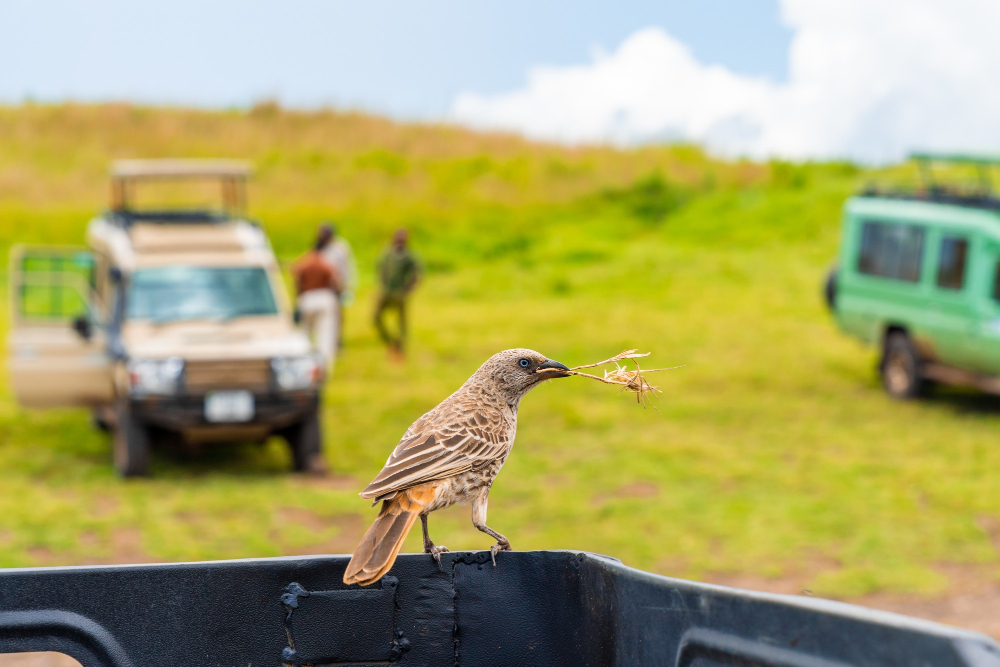
Capturing sharp wildlife and bird images on Uganda birding tours requires balancing long telephoto reach with fast shutter speeds to handle fast-moving birds and shifting lighting.
1-day-perfect-mabamba-swamp-shoebill-stork-uganda-birding-safari
5-days-uganda-bird-watching-safari-lake-victoria-shores-and-lake-mburo
7-days-best-uganda-birding-safari-tour
8-days-best-uganda-birding-safari-and-wildlife-watching-tour-package
9-days-best-uganda-birding-safari-tour-from-swamps-to-savannah-eastern-route
9-days-classic-uganda-birding-safari-tour
11-days-uganda-birding-safari-and-primate-experience
12-days-uganda-birding-tour-looking-for-rift-valley-endemic-birds-west-circuit
14-days-classic-uganda-birding-safari-expedition
17-days-uganda-birding-safari-itinerary
19-days-best-photography-uganda-birding-safari-and-wildlife-adventure
21-days-uganda-birding-safari-extravaganza-to-best-uganda-safari-parks
30-days-best-uganda-birding-safari-extravaganza-and-wildlife-safari
📸 Essential Camera Settings & Techniques
- Aperture Priority Mode: Use Aperture Priority Mode or Manual Mode with Auto ISO to control your depth of field and isolate birds from busy forest or wetland backgrounds.
- Fast Shutter Speeds: Keep your shutter speed at 1/1000s or faster (and up to 1/2500s for birds in flight) to freeze wing flaps and fast movement.
- Focus on the Eyes: Position your single-point or group autofocus sensor directly on the bird's eye for sharp portraits that create an immediate emotional connection.
- Burst Mode: Turn on continuous high-speed shooting (10–15 frames per second or more) since birds rarely stay still for long.
🔭 Recommended Lenses & Gear
- Telephoto Zoom (100–400mm or 150–600mm): Serves as the primary workhorse for capturing distant savannah birds, wetland species, and iconic subjects like the shoebill stork.
- Mid-Range Lens (24–70mm or 70–200mm): Ideal for broader environmental shots, forest landscapes, and larger mammals encountered during a combined safari.
- Support Gear (Bean Bags vs. Tripods): Pack a cloth bean bag to rest and stabilize heavy lenses on vehicle window frames or safari roofs, as full tripods are bulky in vehicles and prohibited during primate tracking.
- Weather & Dust Protection: Bring waterproof rain covers and silica gel packs to shield your gear from sudden downpours in places like Bwindi or Kibale, plus a blower to clean fine savannah dust.
🌿 Field Craft & Environment Tips
- Golden Hours Lighting: Prioritize shooting during the soft, warm light just after sunrise and right before sunset to reduce harsh shadows and boost color.
- Respect Wildlife Behavior: Keep a safe, ethical distance so you do not alter the bird's natural feeding or nesting patterns, and ask your driver-guide to turn off the vehicle engine to cut down on vibration blur.
- Iconic Locations: Target calm-water boat access at Mabamba Bay (near Entebbe) or the Albert Nile Delta for close-up shots of the Shoebill stork, and hire specialized local guides for forest endemics and pittas
How does ISO settings affect image sharpness when photographing fast birds in low-light dense rainforests like Bwindi?
In dense rainforests like Bwindi Impenetrable or Kibale, light levels under the thick canopy drop significantly, forcing photographers to balance shutter speed, aperture, and ISO to avoid motion blur. To keep your shutter speed at 1/1000s or faster for active birds, you often need to push ISO settings anywhere from 1600 up to 6400 or higher. While higher ISO values introduce digital noise, grain does not ruin an image as easily as motion blur or missed focus. Modern full-frame and APS-C mirrorless sensors handle elevated ISO values exceptionally well. Additionally, modern AI noise reduction tools (such as Lightroom Denoise or Topaz DeNoise) easily remove grain during post-processing while retaining crisp feathered details. Always prioritize a higher ISO to guarantee a crisp frame rather than lowering your ISO and suffering from blurry shots.
What are the key differences between shooting on foot in forest trails versus photographing from a safari vehicle in savannah parks?
Photographing on foot in dense forest trails requires agility, low weight, and rapid reaction times. You are often shooting upward into tree canopies or into dark understory brush, meaning hand-holding your camera or using a lightweight monopod is essential. In contrast, shooting from a 4x4 safari vehicle in open savannah parks (like Murchison Falls or Queen Elizabeth) allows you to support heavy telephoto lenses on window frames, bean bags, or pop-up roof bars. Vehicle-based shooting gives you greater stability for longer telephoto glass (such as 500mm or 600mm prime lenses) and lets you carry extra gear easily. However, vehicle engine vibration can cause camera shake, so you must always request your driver-guide to switch off the engine before pressing the shutter.
How do you effectively use Auto ISO with Manual Mode for bird photography in unpredictable lighting?
Using Manual Mode combined with Auto ISO is one of the most effective techniques for wildlife photography. In this exposure setup, you manually set your desired aperture (e.g.,  or
or  to keep the bird in sharp focus and blur the background) and your desired shutter speed (e.g., 1/1600s to freeze sudden movement). The camera’s exposure meter then automatically calculates and adjusts the ISO dynamically based on changing light conditions as a bird flies between bright open skies and dark foliage. You can set an Auto ISO upper limit (e.g., ISO 6400) to prevent extreme digital noise, and use Exposure Compensation to fine-tune exposure on bright or dark bird plumage.
What is the advantage of using continuous autofocus (AI Servo/AF-C) with Animal Eye Tracking during Uganda birding tours?
Continuous autofocus (known as AI Servo on Canon or AF-C on Nikon and Sony) constantly recalculates focus distance as long as the shutter button is half-pressed or back-button focus is held down. When paired with modern Animal Eye Detection AF, the camera's processing algorithms automatically lock onto a bird's eye, tracking it across the frame even if the bird hops between branches or twitches rapidly. This leaves you free to focus on composition and framing. Because a bird’s eye is tiny and often surrounded by distracting leaves or twigs, continuous eye-tracking eliminates focus hunting, ensuring that the sharpest point of your photograph remains squarely on the subject's eye for an engaging portrait.
Why is a cloth bean bag preferred over a full tripod when photographing wildlife from a 4x4 safari vehicle or boat?
A full tripod is awkward and restrictive inside a tight 4x4 safari vehicle or a small wooden canoe on wetlands like Mabamba Bay. Tripod legs clutter limited floor space and make rapid repositioning difficult when a bird suddenly flies in a different direction. A cloth bean bag filled with rice, beans, or maize offers a flexible, stable cushion that rests directly over vehicle door frames, pop-up roof rails, or boat gunwales. It absorbs vehicle vibration, cradles heavy telephoto lenses smoothly, and lets you quickly adjust your shooting angle without setting up cumbersome locking legs. Furthermore, full tripods are generally prohibited during primate trekking (like gorilla and chimpanzee tracking) due to terrain hazards and safety regulations.
What shutter speeds are recommended for freezing birds in flight versus perching birds in wetlands?
For perching birds resting on branches, reeds, or rocks, a shutter speed between 1/500s and 1/1000s is sufficient to produce sharp images while keeping your ISO relatively low. However, when target subjects launch into flight, flap their wings rapidly, or plunge to catch prey (such as kingfishers or raptors), shutter speeds should be elevated to 1/2000s, 1/2500s, or even 1/3200s. Fast-moving wings can create micro-blur at slower speeds; elevating your shutter speed ensures that wingtips, feather edges, and water droplets kicked up during takeoff remain crisp and fully frozen in motion.
How can exposure compensation be adjusted when photographing bright white birds against dark background vegetation?
When photographing light-colored or white birds (such as Great Egrets or Cattle Egrets) resting against dark forest cover or shadow-filled reeds, camera light meters can easily get tricked into overexposing the scene. This results in "blown-out" white highlights where feather detail is permanently lost. To prevent this, apply negative exposure compensation (typically  to
to  EV). Dropping the exposure protects the bright highlights on the bird's feathers, ensuring intricate plumage texture remains visible. You can easily lift shadow details in the dark background during post-processing, but lost highlight details cannot be recovered once clipped.
What precautions should photographers take to protect camera equipment from humidity and rain in Bwindi Impenetrable National Park?
Bwindi's tropical rainforest atmosphere is characterized by sudden downpours and high relative humidity that can damage electronic camera gear or cause internal lens fogging. Photographers should carry dedicated waterproof rain covers or heavy-duty dry bags that can be quickly slipped over camera setups when a downpour begins. Always pack plenty of silica gel packets inside sealed equipment bags to absorb ambient moisture overnight. When returning to your lodge after a damp trek, avoid immediately changing lenses in humid conditions, wipe down outer camera bodies with microfiber cloths, and allow gear to acclimate slowly to room temperature to prevent internal condensation on lens elements.
How do you photograph iconic wetland species like the Shoebill Stork from a narrow wooden canoe at Mabamba Bay?
Shoebill tracking at Mabamba Bay involves navigating narrow papyrus channels in motorized or hand-paddled wooden canoes. Because canoes rock gently on the water, stability is your main challenge. Resting your telephoto lens on a bean bag placed on the gunwale or seat edge dampens water movement. Keep your shutter speed higher than usual (at least 1/1200s) to counteract subtle boat motion. Shoot from a low perspective near water level to create a majestic background blur (bokeh) behind the bird. Maintain extreme silence and avoid sudden movements so the Shoebill remains undisturbed while hunting lungfish in the papyrus.
What role does Back-Button Focusing (BBF) play in improving reaction times on birding safaris?
Back-Button Focusing separates the autofocus trigger from the shutter release button, assigning focus execution to a dedicated button on the back of the camera body (such as AF-ON). This allows photographers to lock focus on a perched bird and recompose without triggering refocusing when pressing the shutter button. If the bird suddenly takes flight, holding down the back button allows continuous tracking (AF-C) without switching camera menus or dial settings. This split capability saves critical seconds, preventing missed focus when skittish birds make sudden movements.
How can you compose compelling environmental bird portraits rather than just extreme tight close-ups?
While frame-filling close-ups showcase intricate feather detail, environmental bird portraits tell a broader story about the subject’s habitat and behavior. To shoot environmental portraits, use a focal length like 70–200mm or zoom out on a 100–400mm lens to place the bird within its surrounding ecosystem—such as a Shoebill flanked by papyrus stalks, or a Great Blue Turaco nestled in a fruiting fig canopy. Apply the rule of thirds by placing the bird off-center, allowing natural habitat elements like branches, mist, or reflections to frame the subject and provide context.
What are the best strategies for managing savannah dust while changing camera lenses during game drives?
Fine savannah dust in parks like Kidepo Valley, Queen Elizabeth, and Murchison Falls can easily settle on camera sensors and lens elements, causing dust spots in your photos. To minimize dust intrusion, avoid changing lenses inside an open safari vehicle whenever possible. If a lens change is necessary, turn off the camera first to remove static charge from the sensor, face away from the wind, and hold the camera body pointed downwards toward your lap. Swap lenses quickly, use a handheld rubber air blower (never mouth air or compressed canned air) to blow away loose dust, and store unused lenses inside sealed camera bags.
How does high-speed continuous burst mode (framerate) increase your hit rate for bird action shots?
Birds execute lightning-fast micro-movements, such as blinking, head swivels, wing flicks, or sudden takeoffs, which occur too rapidly for human reflexes to catch on a single shutter press. Shooting in continuous high-speed burst mode (10 to 30 frames per second on modern mirrorless cameras) captures a sequence of micro-moments. This ensures that at least a few frames catch ideal wing positions, eye catchlights, and clear poses without motion blur, greatly increasing your percentage of successful wildlife photographs.
How can photographers effectively deal with harsh midday sunlight on African savannah safaris?
Midday sunlight on the African savannah creates harsh shadows, high-contrast highlights, and heat haze (atmospheric distortion) that ruins long-distance telephoto images. If shooting during peak daylight hours, position yourself so the sun is directly behind your back, illuminating the bird evenly to eliminate dark facial shadows. Alternatively, search for subjects resting in open shade under trees, which offers soft, diffused light. You can also adjust your shooting style to capture silhouetted bird shapes against a bright sky or focus on close-up detail shots where atmospheric distortion is minimized.
What are the advantages of using prime telephoto lenses versus telephoto zoom lenses on Uganda birding tours?
Prime telephoto lenses (e.g., 500mm  or 600mm ) offer maximum optical sharpness, wider maximum apertures for superior low-light performance, and fast autofocus drive speeds, making them exceptional for dark forest environments. However, telephoto zoom lenses (e.g., 100–400mm or 150–600mm) provide greater framing versatility. On a safari, birds may appear perched on a nearby branch or soaring high in the distance; a zoom lens allows you to instantly adjust framing without changing lenses or moving your location. For most travelers, the versatility and lighter weight of a zoom lens outweigh the optical advantages of heavy prime glass.
How do you adjust camera focus settings when targeting tiny forest endemics hiding behind dense undergrowth?
Small, fast-moving forest endemics (like the Green Broadbill or Albertine Rift warblers) often perch deep inside dense twigs and foliage, causing automatic multi-zone or wide-area autofocus systems to lock onto foreground leaves instead of the bird. To overcome this, switch your autofocus area mode to Single-Point AF or Pinpoint AF. This forces the camera to focus exclusively on a tiny spot within the frame. Aim the single AF point directly through gaps in the vegetation onto the bird’s head or eye. If twigs still interfere, use manual focus override to manually pull focus onto the bird.
Why is measuring exposure using Spot Metering helpful when capturing birds flying across mixed lighting conditions?
When birds fly across contrasting backgrounds—such as passing from bright open sky into dark forest hillsides—evaluative or matrix metering systems can miscalculate lighting, resulting in underexposed or overexposed frames. Spot metering measures light from a small spot (1–3% of the frame) directly surrounding the active focus point. Linking spot metering to your active AF point ensures the camera measures light off the bird's body regardless of whether the surrounding background is dark foliage or a bright sky, producing consistent exposures on your primary subject.
What post-processing techniques best highlight subtle plumage textures without over-sharpening bird photos?
When editing bird photographs, subtle enhancements are key to maintaining natural detail. Start by using localized sharpening adjustments applied only to the bird’s head, eye, and main feathers, keeping the background soft. Avoid global sharpening dials that introduce harsh digital artifacts or noise to soft backgrounds. Use "Texture" controls to enhance micro-details in feathers, and "Clarity" sparingly on beak and feet outlines. Finally, apply targeted noise reduction on smooth background areas while masking out the bird to keep feather textures crisp and clean.
How do sunrise and sunset "Golden Hours" enhance color depth and catchlights in wildlife photography?
During the golden hours—the first hour after sunrise and the last hour before sunset—the sun rests low on the horizon, filtering light through more atmosphere. This produces warm, soft tones that enhance the natural colors of bird plumage while eliminating harsh vertical shadows under eyes and beaks. The low angle of light creates natural, bright "catchlights" (reflections of light) in the bird's eyes, giving images vibrancy and emotional connection. The softer light also reduces dynamic range contrast, ensuring balanced exposures across bright feathers and dark surroundings.
How does booking a safari with Roads of Adventure Safaris elevate your photography and birding experience in Uganda?
Booking your birding and wildlife expedition with Roads of Adventure Safaris ensures that your itinerary and field craft are tailored specifically for birding and photography.
- Expert Birding Guides: Roads of Adventure Safaris pairs you with specialized local guides who possess deep knowledge of bird calls, species behavior, and micro-habitats across Uganda’s top Important Bird Areas (IBAs)—from Mabamba Swamp to Bwindi and Kibale.
Roads of Adventures Safaris
- Photography-Friendly Vehicles: Their customized 4x4 safari vehicles feature pop-up roofs, wide drop-down windows, and sturdy support points suitable for bean bags, offering comfortable, unobstructed viewing angles for heavy telephoto equipment.
Kampala City
- Tailored Field Execution: Guides understand critical photographic requirements—such as positioning vehicles for optimal lighting, turning off engines to eliminate vibration blur, and maintaining ethical distances to capture natural bird behavior.
- Seamless Logistics: From securing specialized tracking permits to arranging seamless boat excursions for Shoebill sightings, Roads of Adventure Safaris handles every detail, allowing you to focus entirely on capturing world-class bird and wildlife images.