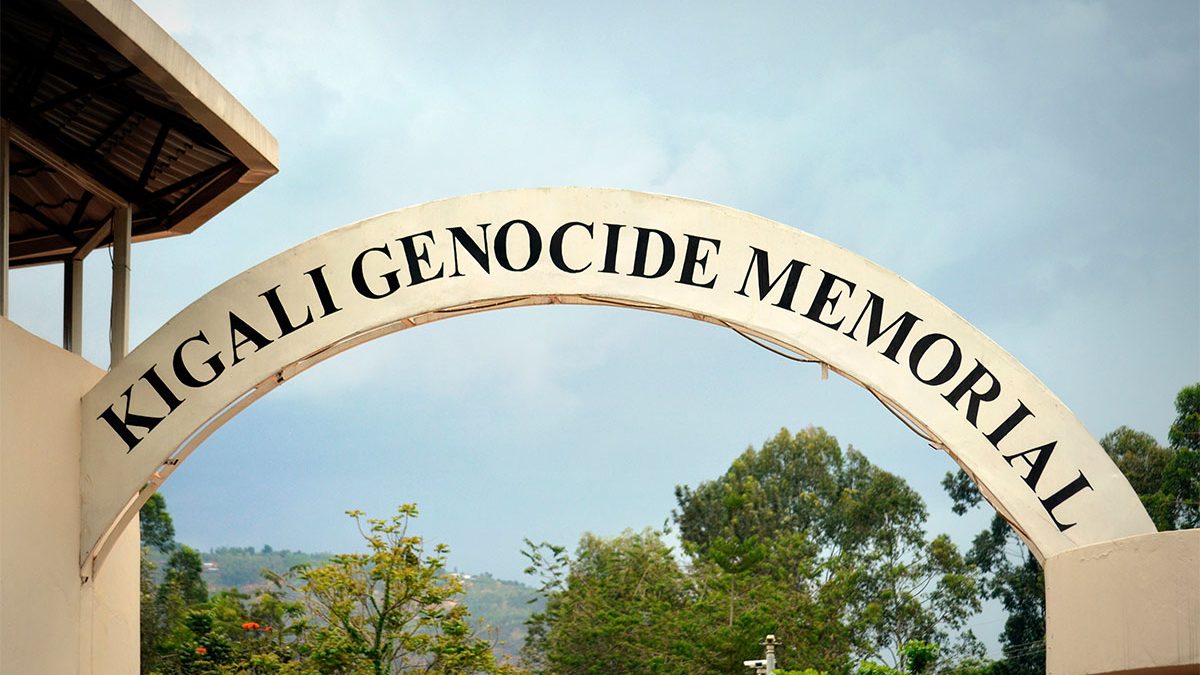
In 2026, Rwanda honors the memory of the 1994 Genocide against the Tutsi through several key memorial sites. Four of these locations—Nyamata, Murambi, Gisozi (Kigali), and Bisesero—have been officially inscribed on the UNESCO World Heritage List as of late 2023.
2-days-exciting-kigali-city-tour-itinerary
6-days-akagera-safari-and-volcanoes-gorilla-trekking-and-ibi-wacu-cultural-village
6-days-luxury-rwanda-gorilla-trekking-safari-tour-vacation
6-days-classic-uganda-rwanda-safari-tour-package-holiday
7-days-best-rwanda-honeymoon-safari-gorilla-trekking-and-lake-kivu-relaxation
9-days-rwanda-gorilla-trekking-and-adventure-activities-and-relaxation
8-day-safari-to-rwanda-and-kenya-safari-tour
9-days-best-family-rwanda-safari-holiday-big-five-canopy-walk-and-chimpanzee
10-days-rwanda-photography-safari-and-gorilla-trekking-adventure
11-days-best-uganda-rwanda-primate-safari-and-wildlife-from-kigali
14-days-luxury-rwanda-primate-safari-and-uganda-safari-tour-combo
Visitors on a Rwanda safari can include the following prominent grounds in their itinerary:
Camp Kigali Belgian Monument
The Camp Kigali Belgian Monument is a solemn site located in the heart of Kigali, serving as a reminder of the international failures during the 1994 Genocide against the Tutsi. It marks the exact location where ten Belgian UN peacekeepers (Blue Helmets) were murdered on April 7, 1994. These soldiers were part of the United Nations Assistance Mission for Rwanda (UNAMIR) and were assigned to protect Prime Minister Agathe Uwilingiyimana. Following her assassination, the soldiers were disarmed and taken to this military camp, where they were killed by Rwandan government troops.
In 2026, the site remains a powerful symbol of sacrifice and the consequences of global inaction. The memorial consists of a small museum (the former guard house where the soldiers sought refuge) and ten stone pillars. Each pillar represents one of the soldiers; the horizontal notches carved into the pillars indicate the age of each man at the time of his death. The bullet holes from the final assault are still visible on the building's walls. This site is frequently visited by those interested in the political and international dimensions of the tragedy, emphasizing the dangers faced by those who stood between the victims and the perpetrators.
Nyanza Genocide Memorial (Rebero)
The Nyanza Genocide Memorial, often referred to as the Rebero Memorial, is located in the Kicukiro district of Kigali. This site is uniquely significant because it highlights the abandonment of Tutsi civilians by the international community. In April 1994, over 2,000 Tutsi sought refuge at the ETO Kicukiro technical school under the protection of UNAMIR. However, when the Belgian UN troops withdrew from the site to evacuate, the refugees were left defenseless. They were immediately marched to the Nyanza hill by Interahamwe militias and slaughtered.
The memorial now serves as a final resting place for more than 10,000 victims. Beyond the mass graves, the site is notable for being the burial place of several prominent Rwandan politicians who opposed the genocide and were murdered for their moderate views, including Landouard Ndasingwa. In 2026, the site continues to educate visitors on the "Hill of Resistance" nearby, where some refugees attempted to fight back, and serves as a place of reflection on the moral responsibility of the global community to protect vulnerable populations during times of conflict.
Ntarama Genocide Memorial
Located approximately 30 kilometers south of Kigali in the Bugesera region, the Ntarama Genocide Memorial is one of the most visceral and haunting sites in Rwanda. Before the genocide, Ntarama was a Catholic church where Tutsis often sought sanctuary during periodic outbreaks of violence. In 1994, thousands fled to the church, believing that the sanctity of a religious building would provide safety. However, the church was attacked by militias who used grenades to blast through the walls before entering to kill those inside.
As of 2026, the site has been preserved exactly as it was found to serve as an "active" museum of the atrocity. Unlike traditional museums with glass cases, the church interior contains the personal belongings of the victims—shoes, clothing, and ID cards—piled upon the pews. The human remains are organized on shelves, and the holes in the brickwork from the grenades remain unrepaired. The proximity of the victims' lives to the site of their death creates an overwhelming sense of intimacy and loss, making Ntarama an essential stop for those wishing to understand the human scale of the genocide.
Nyamata Genocide Memorial
Just a short drive from Ntarama, the Nyamata Genocide Memorial is another former Catholic church that witnessed an immense scale of slaughter. More than 25,000 people are buried here, both inside the church and in mass graves behind the building. The killers at Nyamata used tools of everyday labor—machetes, clubs, and spears—to carry out their work, often after using explosives to gain entry to the locked sanctuary.
The interior of Nyamata is striking for its visual density. The pews are covered in the clothing of the victims, left there as a silent testament to the lives that were extinguished. One of the most harrowing features is the altar, where the blood-stained altar cloth was preserved for years as a reminder of the desecration of the holy space. In the basement, visitors can see the rows of skulls and bones of those who perished. Nyamata, alongside Ntarama, was inscribed as a UNESCO World Heritage site in 2023, ensuring that its message of "Never Again" is preserved for future generations as a global landmark of remembrance.
Murambi Genocide Memorial
Located in the Southern Province near Nyamagabe, the Murambi Genocide Memorial is perhaps the most physically arresting site in Rwanda. It was formerly a technical school under construction. During the genocide, local officials encouraged Tutsis to gather there, promising them protection. Once thousands had arrived, the water was cut off and the school was surrounded. On April 21, 1994, an estimated 40,000 to 50,000 people were murdered in a single night.
What sets Murambi apart in 2026 is the preservation of the victims' bodies. Due to the lime-rich soil and the specific conditions of the mass graves, many bodies were partially mummified. Hundreds of these bodies are now displayed on wooden frames within the former classrooms. They remain in the positions in which they died—some cowering, some covering their faces—offering an undeniable, forensic proof of the genocide that is impossible to ignore. The site also includes a cemetery where many more are buried. Because of its graphic nature, it is considered one of the most difficult but important sites to visit for a full understanding of the systematic nature of the killings.
12 Frequently asked questions about Rwanda genocide
In 2026, Rwanda continues to grapple with the legacy of the 1994 Genocide against the Tutsi while moving forward through reconciliation. Below are 12 of the most frequently asked questions regarding the tragedy, its causes, and its aftermath.
1. What was the 1994 Genocide against the Tutsi?
The 1994 Genocide against the Tutsi was a meticulously planned campaign of mass murder that occurred in Rwanda over approximately 100 days, from April 7 to mid-July 1994. Triggered by the assassination of President Juvénal Habyarimana, extremist elements of the Hutu-led government and militias aimed to exterminate the Tutsi minority and any moderate Hutus who opposed their genocidal agenda. The slaughter was characterized by its extreme speed and the use of rudimentary weapons like machetes, often by neighbors against neighbors. By the time the violence was halted, an estimated 800,000 to over 1,000,000 people had been killed.
2. How did colonial rule contribute to the genocide?
Ethnic tensions in Rwanda were significantly exacerbated during the colonial period, first under Germany and later Belgium. In 1932, Belgian authorities introduced identity cards that classified every Rwandan as Hutu, Tutsi, or Twa, formalizing previously fluid social categories into rigid racial identities. The Belgians favored the Tutsi minority, granting them better access to education and administrative roles, which bred deep resentment among the Hutu majority. When Belgium later shifted support to the Hutus leading up to independence in 1962, this resentment manifested in cycles of violence and the eventual Hutu Power ideology that fueled the 1994 genocide.
3. What role did the "Interahamwe" play?
The Interahamwe (Kinyarwanda for "those who attack together") was an extremist Hutu paramilitary organization formed in the early 1990s as the youth wing of the ruling MRND party. During the genocide, they were the primary perpetrators of mass killings, acting under the guidance and support of the Rwandan government and military. They set up roadblocks across the country to identify and slaughter Tutsis and were notorious for their use of machetes and systematic sexual violence. After the genocide, many members fled to the Democratic Republic of the Congo, where their remnants continued to pose a regional security threat.
4. How was media used to incite the killings?
Media played a crucial role in mobilizing the population and dehumanizing the victims. The Radio Télévision Libre des Mille Collines (RTLM) began broadcasting hate messages in 1993, referring to Tutsis as "cockroaches" (inyenzi) and calling for their total annihilation. During the 100 days of slaughter, RTLM broadcasted the names and locations of specific individuals to be targeted, effectively serving as a coordination tool for the killers. This pervasive propaganda created an atmosphere of racial hostility that made ordinary citizens believe they were acting in self-defense or out of national duty by murdering their neighbors.
5. Why did the international community fail to intervene?
Despite early warnings, the international community largely remained indifferent to the escalating violence. The UN Assistance Mission for Rwanda (UNAMIR), led by General Roméo Dallaire, was hampered by a restrictive mandate that only allowed soldiers to fire in self-defense. After ten Belgian peacekeepers were murdered on April 7, Belgium withdrew its forces, leading the UN Security Council to reduce the total peacekeeping presence to just 270 personnel at the height of the genocide. This hesitation was partly due to the "Somalia effect"—a reluctance to intervene in African conflicts following a disastrous mission in Mogadishu a year earlier.
6. How did the genocide finally end?
The genocide ended in July 1994 when the Rwandan Patriotic Front (RPF), a Tutsi-led rebel group based in Uganda and commanded by Paul Kagame, launched a successful military offensive. The RPF captured the capital, Kigali, on July 4 and established a ceasefire by mid-July as the genocidal government and militias fled into neighboring Zaire (now DR Congo). Following their victory, the RPF formed a Government of National Unity on July 19, 1994, signaling the official end of the systematic killings within Rwanda's borders.
7. What were the "Gacaca" courts?
To handle the overwhelming backlog of nearly two million genocide suspects, Rwanda revived and modified a traditional community-based justice system known as Gacaca. From 2002 to 2012, more than 12,000 local courts held trials where victims and perpetrators could face each other in their own communities. These courts focused on truth-telling, confession, and community service rather than just punishment, aiming for national reconciliation. While criticized for not meeting international fair-trial standards, Gacaca successfully prosecuted over 1.9 million cases and played a pivotal role in eradicating the culture of impunity.
8. What happened to the masterminds of the genocide?
High-ranking officials and organizers were tried by the International Criminal Tribunal for Rwanda (ICTR), established by the UN in Arusha, Tanzania. Between 1995 and its closure in 2015, the ICTR indicted 93 individuals, including the interim Prime Minister Jean Kambanda, who received a life sentence. The tribunal made history by being the first to recognize rape as an act of genocide and by convicting media leaders for incitement. Lower-level perpetrators were handled through Rwanda’s national courts or the Gacaca system.
9. What is "Kwibuka"?
Kwibuka (meaning "to remember" in Kinyarwanda) is the annual period of national mourning and reflection. It begins on April 7 each year with the lighting of the Flame of Remembrance at the Kigali Genocide Memorial, which burns for 100 days to match the duration of the genocide. During 2026 and previous years, the commemoration includes vigils, lectures, and moments of silence to honor the more than one million victims and educate the younger generation about the importance of "Never Again".
10. How is ethnic identity treated in Rwanda today?
In an effort to foster national unity, the post-genocide government has officially outlawed ethnic classification in the public sphere. Modern Rwandan identity is promoted through a philosophy of "Ndi Umunyarwanda" (I am Rwandan), and the 2003 Constitution removed all references to Hutu, Tutsi, or Twa. While this has been central to social cohesion and preventing future conflict, some critics argue that the regulation of ethnic discussion can sometimes be used to suppress political dissent.
11. What were the "revenge killings" mentioned in reports?
During and immediately after the genocide, some RPF soldiers and Tutsi survivors were accused of carrying out revenge killings of Hutus. Human rights organizations reported that tens of thousands of Hutus were killed in these reprisal attacks as the RPF consolidated power. Additionally, the conflict spilled over into the Democratic Republic of the Congo, where RPF-led forces attacked refugee camps containing both innocent civilians and genocidaires, leading to further mass atrocities and the start of decades of regional warfare.
12. Where can visitors learn about the genocide in Rwanda?
The Kigali Genocide Memorial (Gisozi) is the most prominent site, serving as the final resting place for over 250,000 victims. Other major memorials include Nyamata and Ntarama (former churches where massive slaughters occurred), Murambi (a technical school where preserved bodies are displayed), and Bisesero (the Hill of Resistance). In 2023, four of these sites were designated as UNESCO World Heritage sites to ensure their preservation as evidence of the atrocity and as vital tools for global education.
Booking Rwanda safari with us Road of Adventure safaris
Thank you for choosing Roads of Adventure Safaris for your Rwanda safari! We are thrilled to assist you in planning an unforgettable experience. Our team is dedicated to ensuring your trip is seamless and enjoyable. Please feel free to reach out with any questions or special requests. We're here to make your adventure extraordinary!
