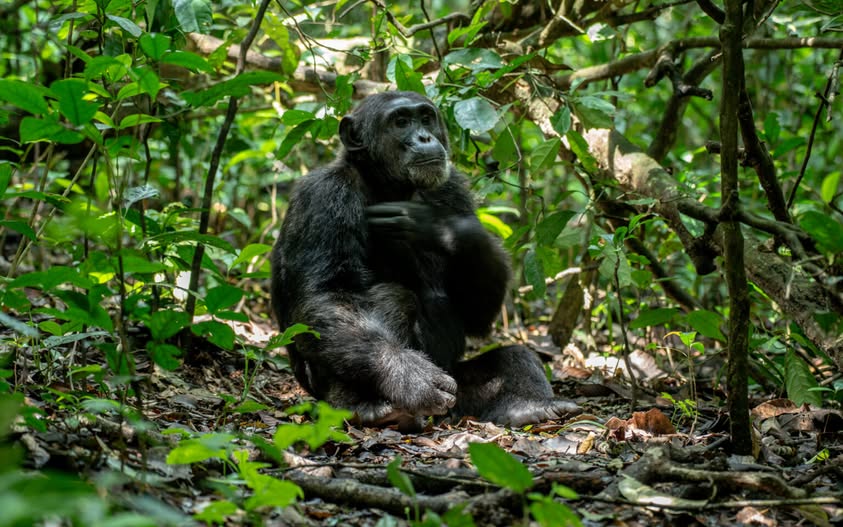
Kyambura Gorge vs. Kalinzu Forest: Which Chimp Trek Should You Choose?. Choose Kalinzu Forest if you want the highest chance of seeing chimpanzees, and choose Kyambura Gorge if you prefer dramatic underground gorge scenery and a unique adventure right inside Queen Elizabeth National Park
3-days-trips-to-queen-elizabeth-national-park-for-chimpanzee-tracking-in-kyambura-gorge
4-days-budget-queen-elizabeth-park-and-chimpanzee-tracking-in-kalinzu-forest
Comparison Breakdown
Feature
Kyambura Gorge
Kalinzu Forest
Location
Inside Queen Elizabeth National Park
On the edge of Queen Elizabeth National Park
Sighting Success Rate
Lower and less predictable (~hit or miss)
Much higher (typically over 85% to 90% chance)
Terrain & Physical Demand
Steep, rugged descent/ascent (~100m down into a rift valley); short burst of high physical effort
Gentler, rolling forest trails, taking roughly 2 to 4 hours
Permit Cost (Approx.)
Around $150 USD
Around $135 USD
Best Paired With
Game drives directly inside Queen Elizabeth National Park
The Kazinga Channel boat safari (great for a full-day split)
Which One Should You Pick?
- Pick Kalinzu Forest if:
- Seeing chimpanzees is your top priority.
- You want a more reliable, higher-probability sighting rate (~90%).
- You prefer a standard forest walk rather than climbing down and up a steep gorge wall.
- You are looking to pair the trek easily with a Kazinga Channel boat safari in the afternoon.
- Pick Kyambura Gorge if:
- You are already staying inside Queen Elizabeth National Park and want maximum location convenience.
- You value dramatic underground riverine valley landscapes and adventurous terrain.
- You treat the chimp tracking as a scenic bonus rather than a guaranteed sighting
Which location offers a better chimpanzee sighting success rate?
If seeing wild chimpanzees is your main objective, Kalinzu Forest is the clear winner. Kalinzu boasts a sighting success rate of over 85% to 90%, thanks to its large, well-habituated chimpanzee community and interconnected forest canopy. Range guides track these primates daily, making them relatively easy to locate as they move through the trees.
In contrast, Kyambura Gorge offers a less predictable experience, with success rates hovering around 50% to 60%. Because Kyambura is a narrow, isolated riverine valley, the resident chimp population is small and highly mobile. They frequently move across rugged terrain or forage deep in thick vegetation, making sightings a rewarding surprise rather than a guarantee. Choose Kalinzu for reliability, or Kyambura if you treat primate sightings as an added bonus to a dramatic landscape walk.
How do the landscape and terrain compare between Kyambura Gorge and Kalinzu Forest?
The physical terrain at these two sites creates vastly different trekking experiences. Kyambura Gorge, often dubbed the "Valley of Apes," features a dramatic 100-meter drop into a sunken tropical rainforest carved out by the Kyambura River. The trek involves a steep, short descent down wooden ladders or earthen steps, followed by hiking along a humid riverbed surrounded by towering canyon walls. It requires brief bursts of high physical exertion, especially on the climb back out.
Kalinzu Forest provides a classic equatorial rainforest trek. The trails wind across rolling hills with gentler inclines, soft underfoot soil, and open canopy clearings. While you will encounter exposed roots and muddy sections, the overall topography is far less intense than Kyambura’s steep canyon walls.
What is the difference in permit costs between Kyambura Gorge and Kalinzu Forest?
Permit pricing is an essential consideration when planning your safari budget. Kalinzu Forest permits cost around $130 to $135 USD per person for foreign non-residents. Managed under the National Forestry Authority (NFA) in partnership with conservation teams, Kalinzu offers exceptional value given its high sighting success rate.
Kyambura Gorge permits, managed by the Uganda Wildlife Authority (UWA), cost around $100 to $150 USD depending on current UWA tariff updates. While the cost is comparable, trekking in Kyambura also requires paying standard park entry fees for Queen Elizabeth National Park. Factor in these additional park entrance costs when calculating your overall budget for Kyambura Gorge.
How difficult is the trek in Kyambura Gorge compared to Kalinzu Forest?
Trekking in Kyambura Gorge is physically demanding in short bursts. Descending and ascending the steep, 100-meter canyon walls requires good balance, knee strength, and decent stamina. Damp humidity at the gorge floor can make the trail slippery and warm, adding to the physical challenge.
Kalinzu Forest offers a moderate, endurance-based walk. Trekking usually lasts between 2 and 4 hours over rolling terrain. While you may cover a longer distance than in Kyambura, the paths are broader and safer for hikers of average fitness. If you have joint issues or prefer a steady walking pace without steep climbs, Kalinzu Forest is much easier on the body.
Can I combine a morning chimp trek with an afternoon Kazinga Channel boat safari?
Yes! Both destinations allow you to experience a primate trek in the morning and a boat safari on the Kazinga Channel in the afternoon, but logistically, Kalinzu Forest is ideal.
Kalinzu’s park office is roughly a 30 to 45-minute drive from Mweya Peninsula, where Kazinga Channel boat cruises depart. Finishing a 3-hour morning trek in Kalinzu gives you plenty of time to enjoy lunch before your afternoon boat cruise. Kyambura Gorge is even closer to the central safari lodges, but because the trek can involve tricky climbs, your return timing might vary slightly. Either way, pairing morning primates with afternoon river wildlife makes for an extraordinary day.
Why is Kyambura Gorge called the "Valley of Apes"?
Kyambura Gorge earned the name "Valley of Apes" because it forms a bio-diverse island of tropical rainforest surrounded by savannah plains. Looking down from the rim, you see a deep green rift splitting the open landscape.
Inside this gorge lives an isolated community of chimpanzees that has adapted to life within the sunken river valley. Because the gorge is physically separated from larger forest blocks, these chimps have developed unique behavioral patterns, foraging along the riverbank and scaling steep cliff edges. Walking through this sunken eco-system feels like stepping into a lost world, earning it a reputation as one of East Africa's most atmospheric trekking spots.
What other wildlife can I see in Kalinzu Forest besides chimpanzees?
While chimpanzees are the main attraction in Kalinzu Forest, the reserve is rich in bio-diversity. Kalinzu is home to six species of primates, including black-and-white colobus monkeys, red-tailed monkeys, blue monkeys, l'Hoest's monkeys, and nocturnal bushbabies.
The forest also hosts over 370 bird species, making it a haven for birdwatchers seeking forest endemics like the Great Blue Turaco, Black-and-white-casqued Hornbill, and various sunbirds. You might also spot forest butterflies, rare plant species, and occasionally forest elephants or wild pigs moving through the dense undergrowth.
What other wildlife can I see in Kyambura Gorge?
Kyambura Gorge offers a unique mix of savannah and riverine wildlife. While searching for chimpanzees along the riverbank, you may spot black-and-white colobus monkeys, red-tailed monkeys, baboons, and vervet monkeys swinging through the canopy.
The Kyambura River flows through the gorge floor, attracting hippos and crocodiles resting along the water's edge. Birds are abundant, including giant kingfishers, African finfoots, black bee-eaters, and various flycatchers. Additionally, as you descend into or exit the gorge, you might catch sight of savannah wildlife like elephants or buffaloes grazing near the rim.
Which destination is better for birdwatchers?
Both locations are excellent for birdwatchers, but they cater to different birding interests. Kalinzu Forest is superior for dedicated forest birding. With over 370 recorded bird species, it provides dense forest habitat ideal for spotting canopy dwellers, greenbuls, hornbills, and rare forest species.
Kyambura Gorge offers an incredible mix of forest, riverine, and savannah birdlife. In a single trek, you can spot forest specialists inside the gorge, waterbirds along the Kyambura River, and raptors or bee-eaters on the canyon rim. For sheer numbers and forest species, pick Kalinzu; for variety across different habitats, choose Kyambura.
How long do the chimpanzee treks last at each location?
At both locations, a typical chimpanzee trekking excursion lasts between 2 to 4 hours in total. This duration includes the initial safety briefing, the search through the forest or gorge, and the time spent with the primates once located.
Under international primate viewing guidelines, once your ranger group locates the chimpanzees, you are permitted exactly one hour to observe, photograph, and watch them interact. The time taken to locate the chimps varies—in Kalinzu, you might find them within 45 minutes, whereas in Kyambura, tracking through the ravine can take longer depending on their movement.
What should I wear and pack for a chimp trek in Kalinzu or Kyambura?
Proper gear ensures a comfortable and safe trekking experience in both environments:
- Footwear: Sturdy, broken-in hiking boots with good traction are essential, especially for the steep, muddy slopes of Kyambura.
- Clothing: Wear long-sleeved shirts and lightweight trousers to protect your skin from stinging nettles, thorns, and biting insects. Tuck your pants into your socks to keep fire ants out.
- Essentials: Pack lightweight rain gear, garden gloves for gripping branches, insect repellent, a hat, and at least 2 liters of drinking water. Don't forget a camera with a good zoom lens (flash photography is prohibited).
Are there age restrictions for chimpanzee trekking in Kyambura and Kalinzu?
Yes, strict conservation rules apply to primate trekking across Uganda. The minimum age for chimpanzee trekking in both Kyambura Gorge and Kalinzu Forest is 12 years old.
This age limit is enforced for safety and conservation reasons. Children under 12 may struggle with the physical demands of steep terrain or fail to follow strict wildlife safety protocols. Younger kids are also more susceptible to carrying airborne illnesses like colds or flu, which can be transmitted to wild chimpanzees and threaten their populations.
What happens if I don't see chimpanzees during my trek?
While ranger guides use expert tracking skills to locate chimpanzee nests and vocalizations, wild animal sightings can never be 100% guaranteed. If you do not encounter chimps in Kalinzu Forest, it is rare due to their high sighting success rate (>90%).
If you miss them in Kyambura Gorge, the trip remains worthwhile thanks to the stunning gorge scenery, riverine walks, and other primate sightings. Park authorities do not offer permit refunds for missed sightings, but rangers make every effort to track the habituated groups during your designated session.
Which option is best for travelers with limited mobility or knee issues?
If you have joint concerns, bad knees, or limited mobility, Kalinzu Forest is by far the better choice. Kalinzu’s trails are flatter, wider, and easier to navigate without dramatic elevation changes.
Kyambura Gorge requires climbing down steep canyon banks using uneven earthen steps and wooden ladders, followed by navigating muddy river banks and climbing back out. The steep incline puts significant pressure on knees and ankles. Anyone with mobility limitations should avoid Kyambura Gorge in favor of Kalinzu or Kibale Forest.
How far are these two locations from major safari lodges in Queen Elizabeth National Park?
Kyambura Gorge is located directly on the eastern boundary of Queen Elizabeth National Park. It is extremely convenient—roughly a 15 to 30-minute drive from popular accommodation hubs around Fig Tree, Katara, and the Kyambura trading center.
Kalinzu Forest sits just outside the park boundary along the Kasese-Ishaka highway. It takes approximately 30 to 45 minutes to drive to Kalinzu from central Queen Elizabeth lodges (like Mweya Peninsula or Kasenyi). The short drive passes through beautiful tea plantations, making it an easy and pleasant transfer.
What is the best time of year to trek chimpanzees in Kalinzu and Kyambura?
Chimpanzee trekking is available year-round, but the dry seasons (June to September and December to February) offer the best conditions. During these months, forest trails are less muddy, footing is firmer, and the climb down into Kyambura Gorge is much safer.
During the wet seasons (March to May and October to November), rain makes forest paths slippery and muddy. However, wet season tracking has its perks: wild fruits are abundant, meaning chimps don't travel as far to forage, often resulting in shorter walking distances.
How does trekking in these locations compare to Kibale National Park?
Kibale National Park is East Africa’s premier chimpanzee destination, home to over 1,500 chimps and a sighting success rate of nearly 99%. However, Kibale permits cost $250–$300 USD.
Kalinzu Forest offers an experience nearly identical to Kibale in terms of sighting success (~90%), but at roughly half the permit price, making it an incredible budget-friendly alternative. Kyambura Gorge cannot match Kibale’s sighting consistency, but it provides a scenic, adventurous canyon landscape that Kibale’s flat forest terrain does not offer.
Can I track chimpanzees in the morning and afternoon at both places?
Yes, both Kyambura Gorge and Kalinzu Forest offer two daily tracking sessions: a morning session starting around 8:00 AM and an afternoon session starting around 2:00 PM.
Morning sessions are generally preferred because chimpanzees are most active early in the day—feeding, vocalizing, and moving through the canopy. By afternoon, chimps often rest in shade or high canopy branches during the heat. However, afternoon sessions offer more flexible scheduling if you are driving in from another region during the morning.
Do I need a professional guide, or can I trek on my own?
You cannot trek chimpanzees on your own in either location. All primate tracking must be conducted with a certified ranger guide provided by the Uganda Wildlife Authority (Kyambura) or the National Forestry Authority (Kalinzu).
These trained guides know the forest terrain, track chimp vocalizations and nests, ensure your safety around wild animals, and share fascinating insights about forest ecology. Additionally, armed wildlife rangers accompany groups to protect travelers from potential encounters with wild elephants or buffaloes.
How do I book my Kyambura or Kalinzu chimp trek with Roads of Adventure Safaris Ltd?
Booking your chimpanzee trekking safari with Roads of Adventure Safaris Ltd is seamless and hassle-free. Our expert team handles every detail—from securing your official UWA or NFA chimpanzee permits to arranging private 4x4 safari transport, luxury lodge stays, and experienced driver-guides.
Whether you choose the dramatic landscapes of Kyambura Gorge or the high-sighting reliability of Kalinzu Forest, we customize your itinerary to match your preferences. Simply contact us today to lock in your permits and design your dream Uganda wildlife safari!
- Email: info@roadsofadventuresafaris.com
- Website: www.roadsofadventuresafaris.com