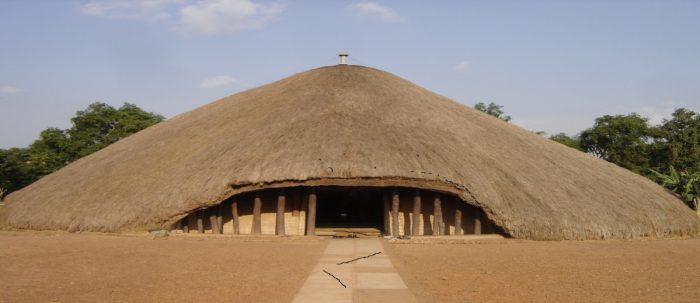
Yes, including the Kasubi Tombs on your Uganda safari is highly recommended for a comprehensive experience, particularly if you are interested in history and culture. As a UNESCO World Heritage site, it offers an intimate look into the Buganda Kingdom’s royal heritage, traditional architecture, and spiritual life, often acting as a bridge between Uganda's past and present.
1-day-kampala-city-tour-excursion-full-day-tour
7-days-perfect-road-trip-uganda-safari-tour
8-day-best-uganda-gorilla-trekking-chimpanzee-wildlife-and-culture
10-days-uganda-safari-all-big-five-gorilla-and-chimpanzee-tracking-adventure
Deep Cultural Significance
Kasubi Tombs are among Uganda’s most revered cultural landmarks, serving as the traditional burial site for four Kabakas (kings) of Buganda and remaining a living spiritual center for the Baganda people. Visiting the tombs is not simply seeing a historic monument; it is stepping into an active cultural landscape where rituals, memory and authority converge. The site is central to the Baganda cosmology and royal lineage: the Kabaka’s tomb is treated with profound respect, and the grounds host ceremonies that maintain social cohesion, ancestral veneration and continuity of traditions. Local clans and royal officials still use the site for rites that mark major events and seasonal observances, making Kasubi a dynamic cultural institution rather than a static museum piece.
A guided visit offers more than architectural appreciation—knowledgeable guides (often drawn from the community) explain the protocols surrounding the tombs, the taboos that protect specific spaces, and the symbolism embedded in objects and rituals. Visitors learn how the site embodies Baganda worldviews about kingship, cosmology and the link between the living and the ancestors. Because it remains a place of active worship and royal commemoration, etiquette matters: visitors are briefed on respectful behavior, photography limits and the cultural significance of particular zones.
Kasubi’s importance extends beyond local practice—its 2001 inscription as a UNESCO World Heritage site recognized its outstanding universal value as a rare example of royal ritual architecture and an outstanding testimony to the Baganda people’s intangible cultural heritage. For travelers interested in cultural anthropology, history, or the living traditions of Uganda, Kasubi Tombs provide a profound encounter with a national identity anchored in place, memory and ceremony—an essential complement to ecological and wildlife-focused experiences on any Uganda itinerary.
Architectural Wonder
The Kasubi Tombs are an extraordinary example of indigenous Ganda architecture and craftsmanship. At the heart of the site is the Musoleum (the Namulondo), a vast circular, grass-thatched building constructed using traditional techniques—timber joinery, reed binding and an intricate wooden frame—without the use of nails. The scale of the roof alone, whose steeply pitched thatch rises to a high central peak, is visually arresting: a living, breathable structure that has sheltered royal relics and rituals for generations. The compound’s arrangement—spacious courtyards, satellite buildings and ritual houses—follows cultural logic, with each structure serving a defined role in funerary practice, royal memory and clan stewardship.
Decorative elements and symbolic artifacts reinforce the site’s architectural meaning. Inside the main house, carved posts, ritual objects and patterned mats delineate spaces of authority, remembrance and reverence. The use of organic materials—wood, thatch, reed and bark—creates a tactile, sensory experience: smells of grass and wood, the muted sound of footsteps on packed earth and a pervasive sense of continuity with natural building traditions. The overtly functional details—drainage eaves, thatch overlaps, and wooden tie systems—reveal centuries of empirical refinement adapted to Uganda’s climate.
Kasubi’s architecture is not merely aesthetic; it encodes social memory and kinship. The spatial hierarchy and orientation relate to Baganda cosmology and the political symbolism of kingship. The compound’s preservation of technique is itself an educational resource, demonstrating pre-colonial building knowledge and survival through social change. Although the 2010 fire severely damaged parts of the complex, restoration efforts have emphasized traditional materials and methods to retain authenticity. For architecture enthusiasts, conservation specialists and cultural travelers, Kasubi provides an essential study in vernacular excellence—an architectural wonder that links technique, symbolism and living tradition in the heart of Kampala.
Convenience & Cost
One of Kasubi Tombs’ greatest practical advantages is its accessibility from Kampala—its proximity makes it an easy, economical cultural stop that fits neatly into urban itineraries or extensions of wildlife safaris. Situated within the city, the Tombs typically require only a brief drive (often 30 minutes from central Kampala, though traffic can extend this during peak times), so visitors can add a meaningful cultural experience without significant detours or added travel costs. For visitors flying through Entebbe or Kampala, Kasubi is an ideal first or last stop: it helps frame a Uganda trip with historical and human context before or after nature-focused excursions.
Admission fees and guided-tour costs are modest compared with extended excursions into national parks; most visitors hire local guides whose fees directly support site caretakers and community programs. The short duration of a typical visit (often one to two hours) means it fits well into tight schedules, allowing travelers to balance museum visits, markets or urban dining the same day. For group tours and safari operators, including Kasubi is a low‑cost, high‑value cultural enrichment that complements wildlife viewing—offering insight into the social foundations of Uganda often missed on natural-history routes.
Visitors should account for modest extras—transport, guide gratuities and possible permit or photography fees—and plan around traffic to ensure timing efficiency. The site’s centrality also reduces logistical complexity for tour planning: no special 4x4 vehicles, remote permits or long transfers are required. For budget-conscious travelers or those seeking a concentrated cultural encounter on a tight schedule, Kasubi Tombs deliver exceptional return on time and money—an accessible, affordable window into the heritage of the Baganda people.
Rich History & Local Connection
Kasubi Tombs are steeped in layered history and intimate local ties that give the place its compelling significance. Founded in the late 19th century as the burial ground for Buganda’s royal lineage, Kasubi became the primary tomb complex after successive Kabakas were interred there. Each burial augmented the site’s symbolic power, infusing the compound with relics, regalia and clan associations that continue to shape Baganda identity. The site’s narrative intersects with colonialism, religious missions, and post-independence nation‑building, making it a microcosm for Uganda’s broader historical arcs.
Local communities are central to the tombs’ stewardship. Custodial clans, traditional leaders and cultural institutions manage rituals, upkeep and interpretive responsibilities—ensuring practices remain rooted in local norms. Guided tours are often led by community members who blend historical detail with oral tradition, offering visitors personal accounts, clan stories and explanations of ritual objects that written plaques cannot reproduce. This living transmission of knowledge creates a tangible link between the visitor and the community, turning a short visit into an interpersonal cultural exchange.
The site’s modern history includes challenges and resilience: the devastating 2010 fire that damaged the main mausoleum prompted national and international support for restoration, highlighting Kasubi’s significance beyond local boundaries. Reconstruction emphasized traditional techniques and the participation of local artisans, reinforcing the community’s role in preservation. Visiting Kasubi supports these ongoing conservation and cultural education efforts: entrance fees, guided‑tour payments and respectful engagement all contribute to sustaining rituals and training new generations in heritage crafts.
For travelers seeking deeper connection, Kasubi Tombs provide narrative layers—royal history, clan dynamics, colonial encounters and contemporary conservation—that enrich understanding of Uganda’s people and identity. The site’s combination of oral history, ritual practice and community stewardship makes it a profound stop for anyone wanting context and humanity alongside the country’s natural attractions.
What is the significance of the Kasubi Tombs in a Uganda safari?
Kasubi Tombs occupies a unique place in a Uganda safari itinerary by providing cultural balance to the country’s strong nature‑based attractions. Inscribed as a UNESCO World Heritage site in 2001, Kasubi is the spiritual and historical heart of the Buganda Kingdom—the most populous and politically influential kingdom within Uganda. For safari travelers who typically concentrate on wildlife and landscapes, a visit to Kasubi deepens the trip’s narrative by introducing royal lineage, long‑standing rituals, and a living cultural institution that predates colonial rule. The tombs house the remains and regalia of four Kabakas (kings), and the compound functions as both a funerary site and a venue for ceremonies that reinforce clan identity and community cohesion. Its centrality to Buganda cosmology offers insight into pre‑colonial governance and the symbolic foundations of contemporary Baganda culture. Including Kasubi on a Uganda safari helps contextualize the human histories that shaped the landscapes and people encountered in parks and reserves—linking biological diversity with cultural continuity. The site’s accessibility from Kampala makes it an easy add‑on to arrival or departure days, allowing visitors to juxtapose the country’s natural wonders with its intangible heritage. Moreover, Kasubi’s preservation and ongoing restoration highlight themes of resilience and community stewardship that resonate with conservation narratives in national parks. In short, Kasubi enhances a Uganda safari by adding layers of meaning—spiritual, historical and social—so travelers leave with a more rounded understanding of the nation beyond its spectacular wildlife.
Is it worth visiting Kasubi Tombs for history enthusiasts?
For history enthusiasts, Kasubi Tombs is an essential stop in Uganda that offers direct access to nineteenth‑ and twentieth‑century narratives of kingship, colonial interaction and post‑independence identity. The site was established as the royal burial ground for Buganda’s Kabakas and evolved into a dynamic repository of royal regalia, oral histories and ritual practice. Fields of enquiry abound: the architecture itself speaks to indigenous construction technologies and social organization; the arrangement of compounds and ritual houses conveys clan relationships and funerary protocols; and the objects preserved—bark cloth, spears, drums and royal insignia—embody material culture that historians and anthropologists prize. Kasubi’s significance extends beyond local history. During the colonial period, Buganda’s political structures mediated relationships with the British Protectorate, influencing administrative and social reforms across what became Uganda. Post‑independence developments, including the restoration of kingdoms in the 1990s, have renewed interest in sites like Kasubi as symbols of cultural revival. The 2010 fire that damaged parts of the complex added a contemporary chapter to the site’s history: debates over restoration, authenticity and international conservation support framed Kasubi as a case study in heritage resilience. Guided tours led by community custodians provide oral narratives not captured in textbooks—personal stories, clan memories and ritual meanings that enrich academic perspectives. For those fascinated by material culture, power structures and living tradition, Kasubi yields layered, first‑hand material that contextualizes Uganda’s national story within the intimate scale of royal ceremony and community life. It’s not merely worthwhile; for history enthusiasts seeking depth, Kasubi is indispensable.
What architectural style is featured at the Kasubi Tombs?
Kasubi Tombs exemplifies traditional Ganda vernacular architecture and is best understood as an integrated system of organic materials, craftsmanship and symbolic spatial design. The central structure, Muzibu‑Azaala‑Mpanga (often called the main mausoleum), is a monumental circular building topped with a steep, conical thatched roof constructed from local grass and supported by a timber framework. Unlike colonial or Western building styles, this architecture uses joinery, lashings and pegged wood—techniques passed down through generations—without nails or modern fixings. The choice of bamboo, poles, reeds and thatch responds directly to the local climate, providing shade, ventilation and a breathable envelope that insulates the interior while shedding heavy rains. The compound’s layout—perimeter houses, ritual huts, courtyards and a guardhouse—follows cultural logic: each building performs specific roles in funerary rites, clan gatherings and royal administration. Decorative and structural posts inside the main house are carved and arranged to denote status and lineage, and patterned mats and stored regalia articulate spatial hierarchy. The materials and construction techniques are not merely practical; they convey cosmological meanings. Orientation, roofing height, and the use of particular woods are embedded in Baganda symbolic systems, where architecture mediates between the living and the ancestral realm. After the damaging 2010 fire, restoration efforts emphasized using original materials and traditional methods to preserve authenticity. Conservation teams worked with local artisans to reconstruct elements of the timber frame and thatch roof, reaffirming the importance of technique as cultural patrimony. For architects and conservationists, Kasubi provides a rare, large‑scale example of successful vernacular design—one that fuses environmental adaptation, social order and spiritual symbolism into a coherent built form.
How do the tombs contribute to understanding Buganda culture?
Kasubi Tombs is an active cultural nucleus that illuminates core aspects of Buganda social life, cosmology and governance. As the resting place of Kabakas, the tombs embody the centrality of kingship in Baganda identity: rituals performed at the site reinforce clan allegiances, succession norms and ritual responsibilities that maintain social order. Visitors witnessing guided explanations or, when appropriate, public ceremonies, gain first‑hand exposure to practices such as libations, ancestral veneration and the handling of royal regalia—activities that make abstract cultural concepts tangible. The site’s custodial system, wherein specific clans manage sections of the complex and ritual duties, reveals how social roles are distributed and perpetuated across generations. Material culture at Kasubi—bark cloth, drums, spears, carved posts and ritual stools—provides concrete evidence of symbolic systems, where objects mediate between the living community and ancestral spirits. Oral histories shared by local guides complement the physical environment, supplying narratives about each Kabaka, clan histories, and the meanings behind ritual prohibitions and taboos. Kasubi’s living role—still used for rites, consultations with traditional healers and sometimes engagements by the current Kabaka—demonstrates that Baganda culture remains dynamic, not frozen in the past. The site also illustrates how colonial encounters and post‑colonial politics impacted traditional authority, shaping contemporary cultural revival movements. By observing stewardship practices—how the community maintains, reconstructs and interprets the site—visitors learn about contemporary cultural resilience and the negotiation between tradition and modernization. In short, Kasubi functions as an immersive classroom where architecture, ritual, material culture and community practice converge to reveal the social logic of Buganda life.
Are the Kasubi Tombs open to the public after the fire?
Yes. Following the devastating fire of March 16, 2010, which severely damaged the main mausoleum and several ancillary structures, the Kasubi Tombs site has undergone phased restoration and conservation efforts, coordinated by the Buganda Kingdom, the Ugandan government and international partners including UNESCO. Restoration has prioritized the use of traditional materials and rebuilding methods to conserve the site’s authenticity and cultural meaning. Throughout the reconstruction process, access has been managed to ensure visitor safety, protect ongoing conservation work, and respect ritual schedules. As restoration progressed, portions of the compound were reopened for guided visits so the public could continue to engage with the site’s history and living traditions. Visitors may observe reconstruction activities, which form part of the contemporary narrative of Kasubi—testimony to cultural resilience and collaborative heritage management. It’s important for prospective visitors to check current visiting arrangements and any temporary closures before travel, since certain ritual activities or conservation phases can affect public access. Guided tours remain the standard means of visiting: guides explain the impact of the fire, outline restoration techniques, and interpret both historic and contemporary elements of the compound. Visiting during restoration offers a unique opportunity to witness conservation practices, learn about traditional building techniques being revived, and support ongoing funding through entrance fees and donations. In summary, while the 2010 fire was a major setback, Kasubi Tombs continues to welcome visitors, balancing public access with the sensitive demands of reconstruction and spiritual practice.
How long does a tour of the Kasubi Tombs take?
A typical guided tour of the Kasubi Tombs lasts between one and two hours, making it an efficient and meaningful addition to Kampala itineraries or the start/end of a Uganda safari. The usual tour length depends on visitor interest, group size, and whether guests wish to spend additional time in the compound’s surrounding gardens or meet with custodians for deeper discussion. A standard one‑hour visit covers the main highlights: an explanation of the site’s history and significance, an external viewing of Muzibu‑Azaala‑Mpanga (the main mausoleum), a visit to selected ancillary buildings (such as the guardhouse and widow’s house), and display of key artifacts with commentary. The guide will typically discuss burial protocol, the role of clans in site stewardship, and the meanings of symbolic objects. For history buffs or researchers, tours can extend toward two hours to allow detailed discussions, extra time with elders or custodians, and observation of ongoing ritual practices or restoration work. Because the site remains an active cultural location, some areas may be restricted depending on ritual schedules; guides will allocate time accordingly and advise on appropriate etiquette. Practical considerations that can lengthen a visit include traffic into Kampala (affecting arrival/departure planning), group photography needs, and time spent at the on‑site visitor center or craft stalls. The manageable duration is one of Kasubi’s appeals: it offers a deep cultural encounter without requiring a full day, allowing travelers to integrate it seamlessly into broader Uganda safari plans.
What are the key cultural artifacts at the Kasubi Tombs?
Kasubi Tombs houses a rich array of cultural artifacts that collectively narrate the history, authority and ritual life of the Buganda Kingdom. Among the most significant are bark cloth (lubugo), ceremonial drums, spears and shields, carved wooden stools and regalia associated with the Kabakas. Bark cloth, formerly widespread in central Uganda, has particular ritual significance at Kasubi: strips of cloth are used in ceremonies, and preserved pieces form part of the material legacy of past monarchs. Drums at Kasubi are not merely musical instruments; they are emblematic of royal communication, ritual timing and ancestral invocation—special drums are reserved for particular clans or occasions. Spears and shields represent pre‑colonial martial symbolism and are often displayed as markers of status and historical authority. Carved posts and ritual stools within the main house delineate spatial hierarchy and often bear motifs tied to clan identities or royal lineage. Additionally, the site preserves smaller reliquaries, carved figures, and objects used in libations and purification rituals—each item carries specific symbolic meaning in funerary and commemorative practices. The material culture extends to everyday items that contextualize royal life: storage containers, woven mats, and tools illustrating domestic and ceremonial practices. Because Kasubi is an active spiritual site, some artifacts are not on public display or are used periodically in rites; guides explain their meanings and the protocols surrounding them. The 2010 fire affected many objects, prompting conservation and documentation efforts; where originals were lost, the restoration process emphasized recording oral histories and, when possible, reconstructing or preserving related artifacts. For visitors, encountering these items provides tangible links to Baganda worldviews, social organization and the continuity of royal traditions.
Is it possible to visit the Kasubi Tombs while in Kampala?
Absolutely. Kasubi Tombs is centrally located within Kampala, making it readily accessible to visitors based in the capital or transiting through Entebbe. The journey time from central Kampala is typically short—often 20–40 minutes depending on traffic—so it’s well suited to half‑day city tours, arrival or departure day activities, and flexible scheduling within Uganda safari itineraries. Public and private transport options are available: taxis, ride‑hailing services, and organized tour vehicles regularly service the site. The tombs’ proximity to other Kampala attractions (such as the Uganda Museum, Namirembe Cathedral, and craft markets) makes it convenient to combine visits into a broader cultural circuit. Visitors should plan for potential traffic congestion during peak hours; early morning or late afternoon slots often provide a smoother transit and cooler touring conditions. Prior booking of guided tours is recommended—guides ensure compliance with cultural protocols, coordinate access to restricted areas, and provide contextual narratives that enhance the visit. On‑site visitor facilities are modest but functional, with a small welcome area and spaces for guide briefings. Because Kasubi is an active sacred site, visitors should expect briefings on etiquette, photography limits and dress codes upon arrival. For safari operators and independent travelers, Kasubi offers a low‑effort, high‑value cultural stop that integrates easily with urban logistics in Kampala.
Who looks after the Kasubi Tombs?
The custodianship and management of Kasubi Tombs are shared responsibilities involving the Buganda Kingdom, the Ugandan government, and international heritage organizations—most notably UNESCO. Primary day‑to‑day stewardship is undertaken by the custodial clans and traditional authorities of Buganda, who maintain ritual practices, oversee ceremonies and perform cultural care duties linked to the site’s spiritual functions. These clan responsibilities include managing access during sensitive rites, preserving oral histories, and teaching younger generations the rituals and crafts associated with the tombs. From an institutional standpoint, the Buganda Kingdom and the Uganda government collaborate on administrative oversight, funding, and legal protection; the site falls under national heritage legislations that regulate its conservation and public access. After the 2010 fire, international partners including UNESCO, conservation NGOs and donor governments became actively involved in restoration planning and technical support. Conservation projects have emphasized community engagement—retraining local artisans in traditional building skills, documenting material culture, and involving elders in interpretive programming. Operational management often includes a coordination committee made up of kingdom representatives, government heritage officials and technical advisors who guide restoration priorities, visitor policies and educational outreach. This multi‑stakeholder stewardship model aims to balance the site’s spiritual functions with public access and conservation imperatives. For visitors, payments of entrance fees, guide charges and donations get channeled to site maintenance, community livelihood projects and ongoing conservation—supporting both the material and intangible aspects of Kasubi’s heritage.
What is the spiritual importance of the Kasubi Tombs?
Kasubi Tombs functions as a living spiritual center for the Baganda people, embodying the link between the living community and ancestral authority. As the burial ground for Kabakas, the site is a locus for rituals that honor ancestors—ceremonies that include libations, offerings and invocations intended to secure blessings, guidance and continuity for the kingdom and its people. Traditional healers and cultural leaders consult the tombs in matters of communal importance; in some instances, the current Kabaka and royal officials may engage with rites at Kasubi to assert legitimacy or seek ancestral sanction for public acts. The tombs’ spiritual potency is reinforced by its custodial system, where clans entrusted with caretaking duties perform regulated rites and maintain prohibitions that protect the site’s sanctity. These taboos and protocols—such as restrictions on certain types of movement within the compound or rules about who may enter specific buildings—are integral expressions of Baganda cosmology. Visitors encountering the site learn that Kasubi is not merely a museum but a sacrosanct space where the sacred and everyday intersect: births, disputes, and communal milestones often carry rituals linked to ancestral guidance mediated through the tombs. Even the built environment is intended to facilitate spiritual exchange—the orientation of structures, the materials used, and the arrangement of objects all contribute to a setting optimized for ancestral communication. The spiritual centrality of Kasubi also explains the community’s determined efforts to restore the site after the 2010 fire, as the loss was felt not only architecturally but metaphysically. For travelers, witnessing or learning about Kasubi’s spiritual practices offers insight into how religion, authority and social cohesion are interwoven in Buganda life.
Are guided tours available at the Kasubi Tombs?
Yes—guided tours are the standard and recommended way to visit Kasubi Tombs. Guides are typically recruited from the local community and often include custodians or elders with direct ties to the site; their knowledge blends historical facts, oral tradition and ritual practice, offering visitors a nuanced understanding of the compound’s meaning. Tours begin with a briefing on etiquette, dress code and photography restrictions to ensure respect for the tombs’ spiritual character. During the tour, guides explain the site’s history, the sequence and symbolism of funeral rites, the significance of the architectural features, and the meaning of the artifacts displayed. Because certain areas remain sacred or are only accessible during specific rituals, guides help manage expectations and facilitate views while upholding cultural protocols. Small‑group tours are encouraged to minimize disturbance and provide space for in‑depth questions; researchers and history students can often arrange longer, more detailed sessions by prior appointment with site managers. After the 2010 fire, guides have also played an important role in communicating restoration efforts, conservation techniques, and the community’s resilience. Hiring a guide not only enhances the interpretive value of the visit but also supports local livelihoods—their fees contribute directly to site maintenance and community programs. For tour operators and independent travelers, pre‑booking guided visits through official channels or reputable agencies is advisable, especially if you seek to meet custodians or attend ceremonial events that require coordination.
Is it necessary to dress modestly at the Kasubi Tombs?
Yes. Kasubi Tombs is an active sacred site and visitors are expected to show cultural respect through modest attire and behavior. While there are no rigid dress codes enforced with uniforms, common courtesies apply: covering shoulders and knees is advised for both men and women, and revealing clothing or beachwear is inappropriate. In some ritual contexts, visitors may be asked to remove shoes before entering certain spaces or to avoid entering specific buildings altogether; guides will brief guests on these expectations during the pre‑tour orientation. Modest dress is about more than appearance—it signals an understanding of the site’s sanctity and sensitivity to local customs. Beyond clothing, behavioral modesty is important: loud conversation, public displays of affection, and intrusive photography should be avoided. When photographing, always ask the guide for permission—certain artifacts and spaces are restricted due to spiritual reasons. Respectful dress and conduct help foster positive interactions with custodians and the local community, demonstrating that visitors acknowledge the site’s living significance rather than treating it solely as an anthropological exhibit. For travelers wishing to prepare, light, conservative clothing that also protects against sun and insects is practical. If you are uncertain about specific expectations for a ceremony or a custodial visit, your guide will advise you in advance so you can dress appropriately and avoid unintended offense. Modesty supports the dignity of the site and enriches the visitor experience by aligning behavior with local cultural norms.
How does visiting the tombs support local tourism?
Visiting Kasubi Tombs directly supports local tourism and community livelihoods in several tangible ways. Entrance fees, guide charges and donations collected at the site are channeled into maintenance, conservation projects, and stipends for custodial clans—funding that helps sustain ritual practice and reconstruct damaged structures. Employment opportunities arise through guided tours, site management, craft sales, and restoration work; local artisans and craftsmen trained in traditional building techniques gained income during restoration efforts and continue to benefit from conservation projects. Tourists who visit also stimulate demand for related services—transport providers, local restaurants, cultural performers and small vendors—helping disperse tourism revenue within surrounding neighborhoods in Kampala. Furthermore, Kasubi’s international profile as a UNESCO World Heritage site attracts academic researchers, cultural tourists and heritage specialists whose longer stays and project funding can support broader community initiatives. Responsible tourism practices promoted by the site’s managers encourage cultural exchange while ensuring that benefits reach custodians and community programs, including educational outreach about Baganda history. In the wake of the 2010 fire, global donors and tourists contributed to restoration funding, demonstrating how visitor engagement can have a direct conservation impact. By choosing guided visits through official channels, tourists ensure that their spending contributes to authentic stewardship rather than informal operators. Thus, including Kasubi Tombs on a Uganda safari not only enriches the visitor experience but also channels resources into cultural preservation, livelihoods and skills transmission—sustaining both tangible structures and the intangible heritage they represent.
What other buildings exist at the Kasubi Tombs?
The Kasubi compound comprises more than the central Muzibu‑Azaala‑Mpanga mausoleum; it is a complex of interrelated traditional buildings each serving ritual, residential and administrative functions. Surrounding the main tomb are a series of satellite structures: guardhouses that historically served to protect the site and regulate access; the widow’s houses—traditional dwellings where royal widows historically lived and performed caretaking rituals for the graves; storage huts and granaries used to hold ritual paraphernalia and provisions for ceremonies; and smaller ritual houses dedicated to specific clans or functions. The compound also includes open courtyards used for public gatherings, procession routes, and outdoor ceremonies, as well as delineated spaces for libations and ancestral offerings. Each building is constructed in traditional materials—timber, palm, reed and thatch—and follows design logics that indicate status and functional purpose. For example, certain huts are reserved for clan elders or custodians and may be off‑limits to general visitors except by special permission. Beyond built structures, the site includes memorial trees, carved posts and stored regalia that function as part of the architectural ensemble. During restoration phases, temporary shelters and work yards may appear on site to support artisans; these are typically removed upon project completion. For visitors, guides will usually explain the role of each building, the associated taboos and the ways these structures interact during funerary rites. Understanding the compound as an integrated set of buildings enhances appreciation for Kasubi’s social architecture—how space, material and ritual interlock to sustain royal and community life.
What is the best time of year to visit the Kasubi Tombs?
Kasubi Tombs is open year‑round, but timing your visit can enhance the depth of the experience. For general visitors, the dry seasons (December–February and June–September) typically offer more comfortable touring conditions in Kampala—less rain means easier travel, fewer interrupted tours, and clearer conditions for photography. Importantly, visiting during periods when cultural events or Buganda ceremonies are scheduled can provide richer context: traditional festivals, royal commemorations or clan gatherings sometimes include public elements that illuminate ritual practice and give travelers a rare window into living tradition. However, such ceremonies may also restrict access to some areas, so prior coordination with site management or tour operators is recommended to confirm visitor allowances. Visiting during educational outreach events or craft markets can be rewarding for those interested in local artisanship and heritage crafts. Conversely, the rainy seasons (March–May and October–November) see fewer tourists and sometimes reduced fees or quieter guides, which can be advantageous for more private, contemplative visits—though travel may be slowed by traffic and wet roads. If your interest specifically focuses on observing restoration work or engaging with conservation teams, check for scheduled public demonstrations or workshops; these may be timed to coincide with restoration funding cycles or training programs. Ultimately, while Kasubi is accessible year‑round, coordinating your visit with local guides or the Buganda Kingdom’s cultural calendar will maximize learning opportunities and ensure respect for ritual schedules.
Anything else you should know —
Before visiting Kasubi Tombs, it helps to be prepared for a culturally sensitive and living heritage experience rather than a passive museum tour. Visitors should expect guided tours that include etiquette briefings—dress modestly, ask permission before photographing, and follow instructions regarding restricted areas. Because Kasubi remains an active spiritual site, there may be sudden ritual activities or closures tied to clan ceremonies; flexibility and patience are appreciated. Plan to hire an official guide through the site’s management to gain the richest interpretive experience and to channel benefits to the custodial community. If you are especially interested in architecture or conservation, inquire in advance about opportunities to observe restoration techniques or meet artisans involved in reconstruction; many projects have benefited from international partnerships and often allow supervised visits. For researchers or students seeking deeper engagement, contacting the Buganda Kingdom’s cultural offices ahead of time enables arranged interviews with elders and access to archival material. Note that facilities are modest, so bring water, sun protection and comfortable shoes for walking on packed earth. Finally, consider combining Kasubi with nearby Kampala attractions—museums, markets and religious sites—to situate the visit within a broader urban cultural tour. Visiting Kasubi supports ongoing heritage preservation: entrance fees, guide payments and respectful participation contribute directly to the community that keeps the site alive. With cultural sensitivity and curiosity, a visit to Kasubi Tombs yields meaningful insight into Uganda’s history, royal traditions and the continuing vitality of the Baganda people.
Booking Uganda safari with us Roads of Adventure safaris
Experience the heart of the Pearl of Africa with Roads of Adventure Safaris. We specialize in crafting immersive, tailor-made journeys that connect you with Uganda’s raw beauty. Whether you’re trekking to find the legendary Mountain Gorillas in Bwindi, tracking chimpanzees, or embarking on classic savannah game drives, we handle every detail with expert care.
Our local guides bring the landscape to life, ensuring safe, authentic, and unforgettable encounters. From luxury lodges to rugged wilderness camps, we bridge the gap between adventure and comfort. Book your safari today and let us turn your Ugandan dream into a reality.
