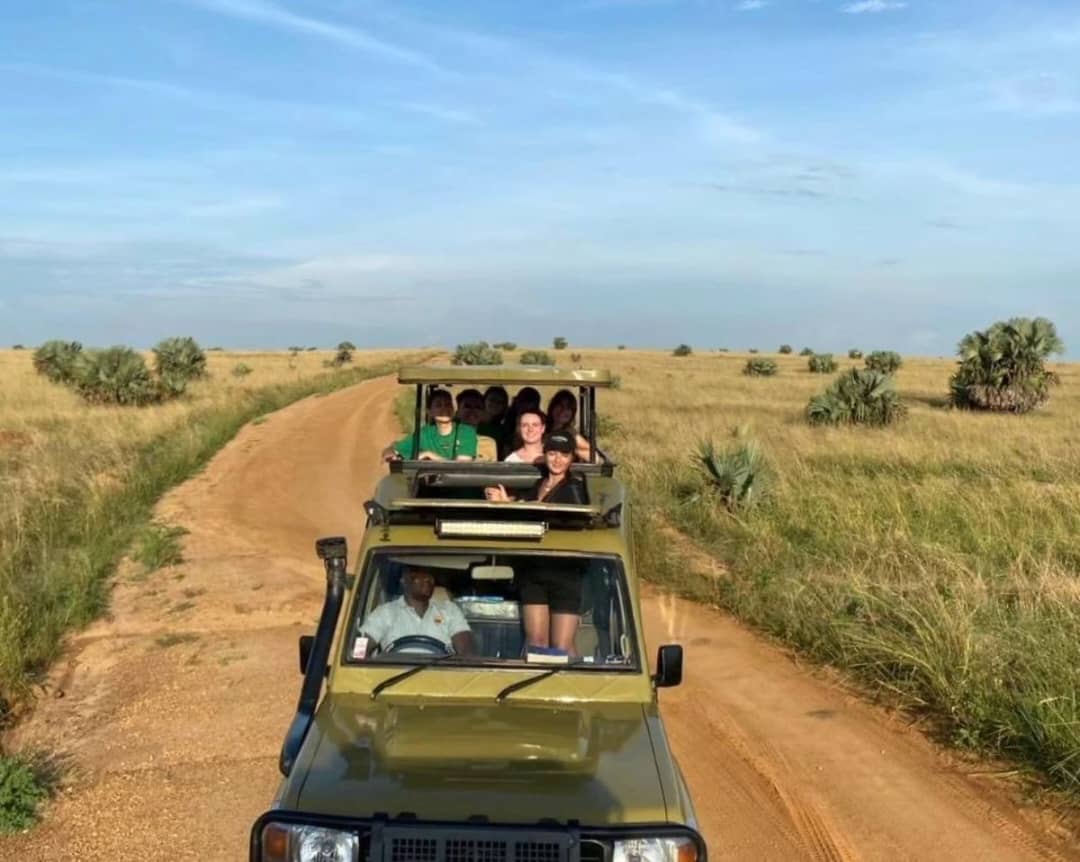
A 10-day Uganda safari is highly recommendable for a family, provided the itinerary is paced well. It is the ideal length to cover the major highlights—such as Murchison Falls, Kibale chimpanzees, and Bwindi gorillas—without rushing, allowing your family to balance wildlife viewing with much-needed rest.
Popular 10 days Uganda safari packages to compare before visiting Uganda
10-days-best-uganda-big-five-safaris-and-primate-experience
10-days-uganda-rwanda-primate-safari-vacation-and-game-drive-safari
10-days-uganda-safari-all-big-five-gorilla-and-chimpanzee-tracking-adventure
10-days-luxury-uganda-gorilla-trekking-safari-and-big-five-safari-vacation
10-days-uganda-gorilla-trekking-and-safari-tour-vacation-holiday
10-days-best-of-uganda-and-rwanda-all-big-five-animal-and-gorilla-trekking
10-days-best-honeymoon-uganda-safari-tour-vacation-holiday
10-days-exclusive-family-uganda-safari-with-kids
10-days-budget-uganda-safari-holiday-vacation-tour-road-trip
10-days-best-uganda-birding-safari-and-wildlife-experience
10-days-9-nights-midrange-uganda-wildlife-safari-and-cultural-experience
Reasons why 10 days Uganda safari is perfect for families
1. Relaxed Pacing (No "Safari Burnout")
When planning an African safari for a family, the single biggest logistical mistake is underestimating travel fatigue, often referred to as "safari burnout." Uganda is a country of staggering geographic beauty, but its infrastructure means that traveling between the northern savannahs, the central rainforests, and the southwestern misty mountains involves navigating long, winding, and often heavily corrugated dirt roads. If you attempt to condense Uganda’s highlights into a five- or seven-day itinerary, your family will spend the vast majority of their vacation trapped inside a closed 4x4 vehicle, watching the country blur past through a dusty window. For children, this leads to restlessness and irritability; for adults, it results in physical exhaustion.
A ten-day itinerary completely transforms this dynamic by introducing the luxury of time. This timeframe unlocks the ability to implement a "slow travel" philosophy, allowing for comfortable two-night stays at almost every primary destination. Instead of checking in after dark, eating a rushed dinner, and packing bags again at dawn, your family can actually experience the high-end lodges you are paying for. After an exhilarating morning game drive, you don't have to hit the highway; instead, you return to the lodge for a multi-course lunch, followed by an afternoon of complete relaxation.
Kids can splash in swimming pools overlooking the river, parents can enjoy a massage, and grandparents can sit on a private veranda with a book, watching baboons or elephants move along the lodge boundaries. Two-night stays mean you only pack your suitcases three or four times over the course of an entire week and a half, dramatically reducing travel friction. By breaking up the driving days with full days dedicated entirely to localized exploration, the vehicle shifts from being a tedious transit bubble into an exciting launchpad for daily adventure, keeping everyone's energy high.
2. Ultimate Wildlife Diversity
What makes Uganda one of the most compelling safari destinations on earth is its unique position at the ecological crossroads of Africa. It is the precise geographical zone where the sweeping, golden savannahs of East Africa collide with the dense, emerald rainforests of the West African Congo basin. Because of this phenomenal ecological convergence, Uganda boasts a level of biodiversity that very few countries on the continent can match. However, witnessing both of these contrasting biomes requires a geographic journey that simply cannot be rushed. A ten-day window is the exact amount of time required to seamlessly sample both distinct worlds without compromising on the quality of either experience.
With ten days, your family does not have to choose between a classic wildlife safari and an immersive primate trek; you get the ultimate dual-narrative holiday. The first half of your journey can be dedicated entirely to the classic African savannah. In parks like Murchison Falls or Queen Elizabeth, your family will explore vast plains to spot iconic megafauna, including large herds of African bush elephants, Cape buffaloes, towering Rothschild giraffes, and apex predators like lions and leopards. These wide-open spaces offer the classic "Lion King" experience that children dream about.
Then, the itinerary smoothly transitions into the ancient, deep jungles of Kibale Forest and Bwindi Impenetrable National Park. Here, the open-top safari vehicles are exchanged for hiking boots as you enter a completely different world dominated by mist, colossal mahogany trees, and wild vines. Your family will experience the magic of tracking habituated chimpanzee troops, listening to their deafening vocalizations echo through the canopy, and the profound, life-changing emotional weight of sitting just meters away from a family of endangered mountain gorillas. This rich contrast ensures the safari never feels repetitive.
3. Built-In Buffer Days for Flexible Fun
The secret to a successful multi-generational vacation is flexibility, and a ten-day Uganda safari provides the perfect framework for built-in buffer days and adaptive scheduling. When traveling with younger children or older relatives, a rigid, hyper-scheduled itinerary is a recipe for disaster. Unexpected fatigue, minor travel ailments, or simply a rainy morning can easily derail a tightly packed trip. Ten days introduces a critical safety valve into your travel plans: breathing room. Because you are not racing against the clock to reach the next park before nightfall, you have the freedom to scale activities up or down depending on how your family is feeling on any given morning.
These buffer periods allow you to weave in enriching, low-stress activities that add immense depth to the vacation. Instead of another strenuous game drive, you can opt for an immersive cultural afternoon. Your family can walk through local community villages or visit the Bigodi women’s groups to learn how traditional coffee is roasted, see how banana juice is brewed, or watch local artisans weave intricate baskets. These human connections are often what children remember most vividly. Furthermore, this extra time allows you to swap bumpy overland travel for tranquil water-based safaris.
Scenic boat cruises along the Kazinga Channel or the historic Victoria Nile offer a peaceful, seated, and shaded vantage point to witness wildlife. Everyone can sit back with cold drinks as massive pods of hippos, giant Nile crocodiles, and thirsty elephant herds come directly to the water's edge, completely unbothered by the boat. You can even dedicate an afternoon to canoeing or relaxing on the islands of Lake Bunyonyi. This balance of high-adrenaline wildlife trekking, cultural immersion, and dedicated downtime ensures that every family member experiences an incredibly rewarding, perfectly paced African adventure.
Key Highlights for Families
Ziwa Rhino Sanctuary
Ziwa Rhino Sanctuary offers a rare, thrilling wildlife encounter that serves as the perfect introduction to a family safari. Located just a few hours' drive north of Kampala, it is the only place in Uganda where you can see southern white rhinos in the wild. Because the sanctuary is fully fenced and heavily monitored by dedicated rangers, it provides an exceptionally controlled environment, making it one of the safest on-foot big-game tracking experiences available for families with children.
The primary highlight here is the rhino trekking itself. Guided by an expert ranger, your family will drive closer to where the rhinos were last spotted and then set out on foot. Rangers are fantastic at adapting their pace for smaller legs and teaching children how to read wildlife signs, like massive footprints or broken branches. Walking just a few dozen meters away from a 2-ton prehistoric creature is an unforgettable core memory for kids, fostering an early respect for wildlife conservation.
Beyond the rhinos, Ziwa is a paradise for younger nature enthusiasts. The sanctuary features rich swamp networks perfect for a canoe ride in search of the elusive, bizarre-looking prehistoric shoebill stork. It is also home to monkeys, antelopes, and abundant birdlife, which can be explored via safe night walks or nature trails.
Family Packing Tip: The terrain is mostly flat but can be bushy and muddy. Ensure everyone wears sturdy, closed-toe walking shoes and long trousers to protect against sharp grass and bugs. Bring plenty of sunscreen and insect repellent, as you will be fully exposed during the trek.
Murchison Falls National Park
Murchison Falls National Park is Uganda’s largest conservation area and a spectacular playground for families. The landscape is defined by the dramatic Victoria Nile, which bisects the park and squeezes through a narrow 7-meter canyon to create the world's most powerful waterfall. For families, the sheer variety of ways to see wildlife—by land and by water—keeps children completely engaged without the burnout that sometimes comes from long, monotonous drives.
The absolute crown jewel for families is the Nile boat cruise. Unlike traditional game drives where kids have to stay tightly strapped into a vehicle, a boat cruise allows them to stretch their legs, move around, and enjoy a gentle breeze. The riverbanks are packed with wildlife. Children will be thrilled by the sheer volume of yawning hippos, massive Nile crocodiles sunning on the banks, and herds of elephants coming down to drink and bathe. The boat takes you right to the base of the frothing falls, offering a magnificent, safe view of nature’s raw power.
For land adventures, the northern delta features classic savannah game drives where you can spot towering Rothschild's giraffes, lions, leopards, and massive herds of buffalo. Many lodges in Murchison cater beautifully to families, offering swimming pools to cool off during the hot afternoons and spacious family tents or cottages.
- Best Age Group: Perfect for all ages, including toddlers, thanks to the comfort and ease of the boat safaris.
- Don't Miss: The top-of-the-falls viewing area. It is accessible by car, requires very little walking, and lets the family safely look right down into the roaring chasm from secure viewpoints.
Kibale National Park
Kibale National Park is a magical, dense rainforest known as the "Primate Capital of the World," boasting 13 different primate species. While it is world-renowned for chimpanzee trekking, families traveling with younger children must navigate a critical logistical boundary: children must be 15 years or older to participate in the main chimpanzee tracking or habituation experiences. This rule is strictly enforced for the safety of both the children and the primates, as chimpanzees can be unpredictable and are highly susceptible to human childhood illnesses.
However, if you are traveling with teenagers aged 15 and up, Kibale offers an unmatched educational adventure. Walking through the roots of giant mahogany trees, listening to the deafening cacophony of pant-hoots echoing through the canopy, and watching a community of chimps groom, play, and swing through the branches is an incredibly mature, bonding experience for a family.
If your children are under 15, Kibale is still well worth a visit thanks to excellent alternative programs. The neighboring Bigodi Wetland Sanctuary offers guided jungle swamp walks tailored for families. Here, kids can easily spot colorful monkeys—like the Red Colobus and L'Hoest's monkey—and the stunning Great Blue Turaco bird. Local community walks also allow kids to interact with Ugandan culture, visiting nearby schools, learning how traditional coffee is made, or meeting local weavers.
Health Note: Because humans and chimpanzees share over 98% of their DNA, anyone showing signs of a communicable disease (like a cold or flu) will not be allowed on the trek. Ensure the whole family stays healthy and hydrated leading up to the visit.
Lake Mburo National Park
Lake Mburo National Park is often the unsung hero of a family safari in Uganda. It is the smallest of the country's savannah parks and is conveniently located closest to Kampala, making it a perfect first or last stop to break up long travel days. What truly sets Lake Mburo apart—and makes it a paradise for parents with kids of all ages—is the complete absence of large, dangerous predators like lions or elephants.
Because the park is exceptionally peaceful, it is one of the few places where your family can step outside the metal safari vehicle and truly immerse themselves in nature. The park is famous for its gentle, active safaris. Families can embark on guided walking safaris across rolling hills, take a mountain bike ride along wildlife tracks, or go horseback riding through the savannah. Imagining your children riding bicycles or horses alongside herds of gentle zebras, impalas, and massive eland antelopes is the definition of a fairytale African experience.
The terrain is beautifully scenic, dotted with acacia woodlands and a serene central lake. A tranquil boat ride on Lake Mburo offers close-up views of hippos and vibrant water birds without the crowds found in larger parks. The lodges here are deeply accustomed to hosting families, often featuring kid-friendly menus and beautiful views where wildlife walks right past your balcony.
Crucial Considerations for Families who would love to take up a 10 days Uganda safari
Navigating Primate Age Limits
One of the most critical logistical boundaries to understand when planning your 10-day itinerary revolves around Uganda's strict primate tracking regulations. The Uganda Wildlife Authority enforces a firm minimum age limit of 15 years for mountain gorilla trekking in Bwindi Impenetrable and Mgahinga National Parks. For standard chimpanzee trekking (such as in Kibale Forest), the official baseline age limit is actually 12 years old, though a minimum of 15 is required for the full-day habituation experiences.
These rules exist for two vital reasons: primate safety and child safety. Because humans share over 98% of our DNA with these primates, they are highly susceptible to human childhood illnesses (like colds, flu, and chickenpox). Furthermore, treks require hours of quiet, predictable behavior, steep hiking, and a calm response if a silverback or chimp makes a sudden mock charge—tasks much better suited for older teens.
If you are traveling with a mixed-age family, do not let this discourage you. Tour operators are deeply accustomed to managing "split itineraries." While parents and older siblings are in the forest tracking primates, younger children can participate in beautifully curated, low-risk alternative activities. These include guided children's eco-walks just outside the park boundaries, community village tours where they can visit local schools, or interactive traditional craft-making workshops.
Choosing Family-Friendly Lodging
Safaris can be visually and physically exhausting for kids, making your choice of lodging a massive factor in keeping the family happy, healthy, and rested. When selecting lodges across your 10-day loop, look past the standard luxury ratings and look specifically for family-centric amenities: swimming pools, secure grounds, and children's menus.
A swimming pool is the ultimate secret weapon for a family safari. After a dusty, hot, four-hour morning game drive, children often have a buildup of restless energy. A couple of hours splashing in a pool during the mid-day heat acts as a physical reset, ensuring they don't burn out before the evening activity. Additionally, look closely at property layouts. You want properties with fenced or heavily secured perimeter grounds, especially in parks like Queen Elizabeth or Murchison Falls, where hippos, elephants, and baboons frequently wander through camps at night.
Food is another common friction point. Traditional safari lodges often serve set, multi-course gourmet menus heavy on local spices or complex flavor profiles that may alienate pickier eaters. Choosing lodges that offer flexible, kid-friendly menus (with familiar basics like pasta, fresh fruit, fries, and simple grilled chicken) saves parents from mealtime battles. Finally, ensure you book early to secure dedicated interconnected family tents or multi-bedroom cottages, keeping your family safely under one roof without forcing parents to sleep in entirely separate, distant structures.
Managing Travel Sickness & Road Comfort
Uganda is affectionately called the Pearl of Africa, but its infrastructure between national parks can present a physical challenge. While primary highways are well-paved, the access roads leading directly into remote gems like Bwindi or Queen Elizabeth National Park are frequently unpaved, deeply rutted, "washboard" dirt roads. A 10-day itinerary involves significant driving distances—often five to seven hours between destinations—which can easily trigger severe motion sickness and fatigue in children.
To counter this, your choice of vehicle is paramount. You must insist on a customized 4x4 safari land cruiser rather than a smaller safari van. These heavy-duty vehicles feature vastly superior suspension systems designed to iron out the worst of the African "massage" (as locals affectionately call the bumpy terrain).
Ensure the vehicle is equipped with working air conditioning; keeping windows rolled up on dirt tracks is mandatory to prevent the cabin from filling with thick, choking red dust. A cruiser with a pop-up roof allows children to stand up comfortably and view wildlife directly from the vehicle, giving them a 360-degree view without forcing them to constantly strain their necks against glass windows.
Proactive Parent Tip: Pack a dedicated "travel kit" inside the vehicle cabin. This should include motion sickness wristbands or medication, standard rehydration salts, a tablet loaded with offline movies for long transit stretches, and a sealed cooler stocked with familiar snacks and cold bottled water.
Typical 10 Days family Uganda safari
A typical 10-day family Uganda safari follows a classic western and northern circuit that perfectly combines Big Five wildlife viewing, primate trekking, and family-friendly boat cruises. This classic loop starts and ends at Entebbe International Airport
Here is a beautifully tailored, day-by-day breakdown of your 10 Days family Uganda safari, carefully paced to give you a clear look at what each day holds for your loved ones.
Day 1: Arrival in Entebbe
Your 10 Days family Uganda safari kicks off as you land at Entebbe International Airport, stepping into the warm, welcoming heart of East Africa. After clearing customs, your dedicated family guide will meet you and transfer you to a peaceful, secure lodge near the shores of Lake Victoria. This first day is intentionally slow-paced to let children shake off jet lag and acclimate to the new surroundings. You can spend the afternoon taking a gentle stroll through private, lush gardens or relaxing by the beach, watching fishermen cast their nets as the sun dips below the horizon of Africa's largest lake.
Day 2: Ziwa Rhino Sanctuary to Murchison Falls
Leaving the lakeside behind, your family journeys north through changing landscapes toward the legendary Murchison Falls. The ultimate highlight of today's drive is a stop at the securely fenced Ziwa Rhino Sanctuary. Here, expert rangers guide your family on a thrilling, highly safe on-foot trek to see magnificent southern white rhinos up close—an educational, core-memory-building experience for children. Afterward, you will continue north into Murchison Falls National Park, arriving just in time to witness the earth-shaking power of the Nile River squeezing through a tiny, seven-meter rocky canyon.
Day 3: Savannah Game Drive & Nile Boat Cruise
An early wake-up call rewards your family with a morning game drive across the sweeping northern delta. Kids can keep their eyes peeled for towering giraffes, lions, elephants, and leopards from the comfort of a 4x4 land cruiser with a pop-up roof. The afternoon portion of your 10 Days family Uganda safari shifts to the water with a gentle boat cruise up the Victoria Nile. This is incredibly relaxing for children, offering a front-row seat to view hundreds of yawning hippos, massive sunbathing crocodiles, and elephants cooling off in the river.
Day 4: Scenic Drive to Kibale Forest
Today is a dedicated transit day as you head south toward the dense, emerald rainforests of Kibale. The route takes you through incredibly scenic landscapes, winding past local villages, bustling markets, and endless rolling green tea plantations. Your guide will make plenty of stops for leg-stretching, fresh fruit snacks, and family photos against the backdrop of the Rwenzori Mountains. Arrive at your family-friendly forest lodge in the afternoon, where kids can listen to the fascinating, wild symphony of distant monkeys and birds echoing through the canopy before a cozy dinner.
Day 5: Chimpanzee Tracking & Bigodi Swamp
The morning is dedicated to exploring the jungle as older family members (ages 12 and up) set out to track habituated chimpanzees swinging through the high branches. For younger kids, custom forest walks can be beautifully arranged nearby. In the afternoon, the entire family reunites for a relaxed, easy-paced walk through the community-run Bigodi Wetland Sanctuary. Boarded walkways make it smooth for small feet as local guides point out eight different species of primates, including playful colobus monkeys, alongside exotic birds like the massive, colorful Great Blue Turaco.
Day 6: Queen Elizabeth National Park & Kazinga Channel
Your 10 Days family Uganda safari continues with a short, scenic drive to Queen Elizabeth National Park, crossing the equator along the way. The centerpiece of the day is a spectacular afternoon boat safari down the famous Kazinga Channel. This natural waterway acts as an absolute magnet for wildlife, allowing your family to safely glide within meters of massive herds of buffaloes, wallowing hippos, and families of elephants drinking at the water's edge, all while resting comfortably on the boat's viewing deck.
Day 7: Ishasha Sector Tree-Climbing Lions
Today you venture into the remote, wild southern sector of the park known as Ishasha. This area is world-famous for its highly unique population of tree-climbing lions. Children will love the ultimate scavenger hunt of scanning the low, sprawling branches of ancient sycamore-fig trees to spot massive lions lazily napping away the heat of the afternoon. The savannah landscape here is vast and untamed, offering a classic, old-world African safari feel that will completely captivate the imagination of your young explorers.
Day 8: Journey to Bwindi Impenetrable Forest
Bid farewell to the flat savannahs as your vehicle climbs up into the breathtaking, misty, terraced highlands of southwestern Uganda. This drive to Bwindi Impenetrable Forest is exceptionally beautiful, often called the "Switzerland of Africa" due to its steep, cultivate hillsides. You will arrive at a cozy, family-centric mountain lodge nestled on the edge of the ancient rainforest, where the cool, crisp mountain air provides a refreshing break from the heat, setting a magical mood for tomorrow's big adventure.
Day 9: Mountain Gorilla Trekking
This is the absolute crown jewel of your 10 Days family Uganda safari. After a thorough morning briefing, family members aged 15 and up will enter the misty jungle with expert rangers to track wild mountain gorillas, culminating in an unforgettable, magical hour sitting quietly with a gorilla family. For younger children, operators arrange wonderful alternative village tours, traditional dance performances, or supervised junior eco-ranger walks, ensuring every single member of the family has an empowering, deeply enriching, and completely safe day of wilderness exploration.
Day 10: Lake Bunyonyi Relaxation & Return
Your grand adventure concludes with a peaceful morning canoe ride across the glassy, island-dotted waters of Lake Bunyonyi, a safe, crocodile-free volcanic lake. Afterward, embark on the return drive back toward Entebbe. You will make a classic, celebratory stop at the Equator monument for a fun family photo with one foot in each hemisphere and a final souvenir shopping trip. Your guide will deliver you safely to the airport in the evening for your flight home, concluding an unforgettable journey.
What are the strict age limits for primate trekking?
The single most important constraint when evaluating if a 10 Days family Uganda safari is recommendable for your group is the primate age limit. The Uganda Wildlife Authority enforces a strict minimum age of 15 years for mountain gorilla trekking in Bwindi. For standard chimpanzee trekking in Kibale Forest, the baseline age limit is 12 years old.
These rules protect vulnerable primates from human childhood illnesses and ensure safety on steep trails. If your children are over 12 or 15, a 10-day loop is highly recommendable, serving as an exceptional educational milestone. If you have younger kids, the trip remains viable via a "split-trek" strategy: while parents track, children participate in the Junior Ranger Program, localized monkey walks, or interactive cultural activities.
Is the driving distance manageable for young children?
A standard 10 Days family Uganda safari covers a large geographical loop from Entebbe up to Murchison Falls, down through Kibale and Queen Elizabeth, and into Bwindi. Driving times can range from 4 to 7 hours between destinations. For families with toddlers or impatient young children, this raw transit time can lead to severe restlessness.
To make a 10-day trip highly recommendable, you must consciously alter the transit strategy. Instruct your tour operator to utilize a heavy-duty 4x4 safari Land Cruiser with customized suspension, internal air conditioning to keep out the red dust, and plenty of onboard entertainment. For families with larger budgets, swapping long overland sectors with short, 45-minute domestic bush flights (such as flying from Entebbe to Murchison Falls or Bwindi to Entebbe) completely eliminates long-distance vehicle fatigue.
What activities are available for kids under 15?
If your kids are under the primate age limits, a 10 Days family Uganda safari is still highly recommendable due to an incredible ecosystem of child-centric alternatives. In Murchison Falls and Queen Elizabeth National Park, boat cruises allow kids to stretch out safely while coming face-to-face with elephants, hippos, and crocodiles without being strapped into a vehicle.
Furthermore, Ziwa Rhino Sanctuary permits on-foot tracking for kids aged 6 and up, offering an interactive, ranger-led "poo walk" to identify tracking signs. Near Bwindi, the Batwa Forest Trail invites children of all ages to learn primitive bushcraft, like starting fires with sticks and practicing target archery. Uganda’s widespread introduction of the "Junior Ranger Program" gives kids a physical travel journal to collect wildlife tracking stamps, turning the safari into an engaging game.
Are safari lodges safe and well-equipped for families?
Accommodation safety is a primary concern for parents. Uganda’s safari infrastructure features excellent, highly recommendable family options, but selecting them requires deliberate choices over a 10-day route. Many traditional camps in Queen Elizabeth and Murchison Falls are unfenced, meaning wild animals like hippos or elephants can freely wander through the grounds at night.
For a family trip, look for properties that offer fully enclosed, secure grounds or permanent physical cottages rather than standalone canvas tents. Prioritize lodges featuring swimming pools, which act as a vital mid-day "reset" button for children to burn off restless energy between morning and evening game drives. Always request dedicated family suites or interconnected rooms early in the booking process to avoid having your family split across distant structures.
Can picky eaters find suitable food options?
The culinary aspect of a 10 Days family Uganda safari is surprisingly accommodating, making it an easy recommendation for families. While remote lodges pride themselves on serving multi-course gourmet menus featuring local, organic produce, chefs are highly flexible and deeply accustomed to international children's palates.
Most child-friendly lodges offer a dedicated kid's menu or will happily customize meals to feature simple, familiar staples like pasta, French fries, fresh tropical fruits, and grilled chicken. Because safaris operate on custom, private bases, your safari vehicle will carry an onboard cooler. Parents can work with their guide on Day 1 in Entebbe to stock up on familiar snacks, juice boxes, and crackers from large local supermarkets, ensuring children stay energized during transit days.
How safe is a Uganda safari regarding predators?
A 10-day safari is extraordinarily safe, provided standard wilderness protocols are followed. In savannah parks like Murchison Falls and Queen Elizabeth, all wildlife viewing is conducted from the secure interior of a 4x4 safari Land Cruiser. Animals view the vehicle as a single, large, non-threatening object, meaning your family can safely watch a pride of lions from just a few meters away.
On-foot encounters, such as rhino tracking at Ziwa or walking safaris in Lake Mburo, are escorted by armed, highly trained Uganda Wildlife Authority rangers who specialize in reading animal behavior and maintaining strict safety distances. The controlled nature of these excursions makes the trip highly recommendable for families seeking authentic adventure without exposing children to genuine danger.
What are the malaria risks and health precautions?
Uganda is a malaria-endemic country, which is a major health consideration for families. However, a 10 Days family Uganda safari is entirely manageable and recommendable if proactive medical steps are taken prior to departure. Parents must consult a travel clinic well in advance to secure pediatric malaria prophylactics and ensure routine vaccinations are up to date.
Logistically, the risk is mitigated by the habits of safari lodges. Virtually all family-friendly accommodations provide high-quality mosquito netting over beds, conduct evening insect spraying (turn-down service), and feature screened windows. Parents should pack long-sleeved clothing, high-quality insect repellent containing DEET, and lightweight trousers for children to wear during the dawn and dusk hours when mosquitoes are most active.
Is the pace of a 10-day itinerary too exhausting?
A poorly planned itinerary will quickly exhaust a family, but a well-paced 10 Days family Uganda safari is highly recommendable. The secret lies in avoiding the "one-night-stop" trap. Moving to a new lodge every single night creates packing friction and leaves children perpetually tired
What is the best time of year for a family safari?
Timing dictates the comfort level of your family. Uganda's dry seasons—from June to August and December to February—are the most recommendable windows for a family trip. During these months, rainfall is minimal, meaning tracks are less muddy, roads are easier to navigate, and the risk of getting stuck is low.
[Best Family Travel Windows]
Peak Dry Season: June to August (Perfect for summer school breaks)
Short Dry Season: December to February (Great for winter holidays)
For families, the dry season also means wildlife concentrates heavily around permanent water sources like the Nile River and Kazinga Channel. This high wildlife density ensures children spot animals quickly and frequently, avoiding long, tedious drives searching through thick bush, which can rapidly cause kids to lose interest.
Is a private safari better than a group tour for families?
For a family trip, a private 10 Days family Uganda safari is not just recommendable; it is practically mandatory. Group tours operate on rigid, unyielding schedules that do not accommodate a child’s sudden bathroom emergency, a bout of motion sickness, or a afternoon meltdown.
A private safari grants your family exclusive use of a 4x4 Land Cruiser and a dedicated professional guide. This allows you to completely dictate the daily schedule. If the kids are tired, you can cut a morning game drive short to head to the pool. If they are captivated by a group of elephants, your guide can turn off the engine and wait for an hour. This absolute flexibility removes travel pressure, making a private 10-day Uganda loop the ultimate family bonding experience.
Booking 10 Days Uganda safari for your family with us Roads of Adventure safaris
Thank you for choosing Roads of Adventure Safaris to plan your family's incredible 10-day Uganda safari! Uganda is a magnificent destination for families, offering an unforgettable mix of dramatic wildlife, rich cultures, and beautiful landscapes.
