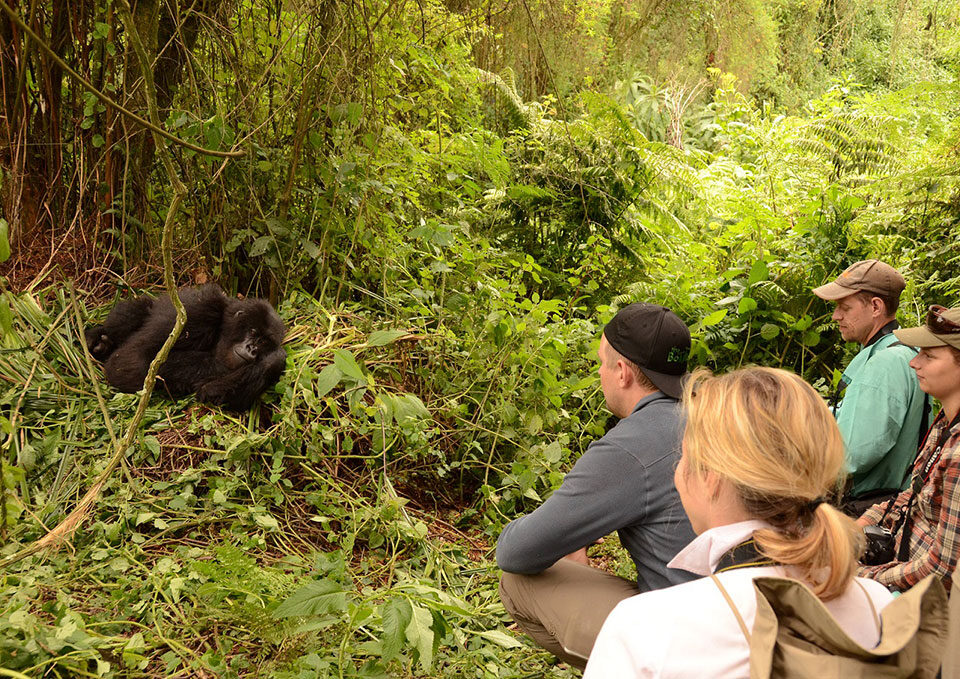
A 14-day Rwanda safari is highly worthwhile for travelers seeking an immersive, high-end experience combining mountain gorilla trekking in Volcanoes National Park, chimpanzee tracking in Nyungwe, and wildlife safaris in Akagera. It offers a deep dive into "the land of a thousand hills" with luxurious accommodation, top-tier service, and superior safety.
14-days-luxury-rwanda-primate-safari-and-uganda-safari-tour-combo
14-days-magical-rwanda-photography-safari
14-days-uganda-and-rwanda-safari-tour-itinerary
14-days-of-rwanda-uganda-gorilla-safari-and-zanzibar-beach-holidays
Why 14 Days in Rwanda is Worth It
Comprehensive Wildlife & Primates
A 14-day itinerary is the only way to experience the full ecological spectrum of Rwanda. While the mountain gorillas are the primary draw, Rwanda’s biodiversity is far more diverse than just the Virunga highlands. In two weeks, you can start in the east at Akagera National Park, where the low-lying savanna and wetlands host the "Big Five." This provides the classic African safari experience—lions on the hunt, rhinos in the brush, and elephants by the lakeshore—which serves as a perfect counterpoint to the mountain rainforests.
Moving west, you enter Nyungwe National Park, one of the oldest rainforests in Africa. A longer stay allows you the time to track chimpanzees and walk the canopy bridge, but it also gives you the flexibility to search for the rare L’Hoest’s monkeys or the Owl-faced monkeys that shorter trips miss. Finally, you conclude in Volcanoes National Park for the gorillas and golden monkeys. This "Triple Crown" of Rwandan wildlife ensures that you witness the evolution of the landscape and the incredible variety of species that have been successfully brought back from the brink of extinction through intense conservation efforts.
Deep Cultural & Landscape Immersion
Beyond the animals, Rwanda’s soul is found in its people and its topography. A 14-day journey provides the "breathing room" necessary to process the country's complex history. Spending several days in Kigali allows for a non-rushed visit to the Kigali Genocide Memorial, an essential experience for understanding the "New Rwanda." You can explore the city’s vibrant culinary scene and its burgeoning fashion and art sectors, seeing firsthand how a nation can rebuild itself with such unity.
The extended timeframe also permits a multi-day stay at Lake Kivu. This is not just a place for relaxation; it is a cultural corridor. You can kayak with the "singing fishermen," visit coffee washing stations to see how some of the world's best beans are processed, and explore the Congo Nile Trail. Visits to the Iby’iwacu Cultural Village become more meaningful when you have the time to sit and talk with the former poachers who now protect the gorillas. This immersion turns a vacation into a narrative, helping you understand the "thousand hills" not just as a scenic backdrop, but as a living, breathing community.
Unrivaled Luxury & Convenience
Rwanda has intentionally positioned itself as a "High-Value, Low-Impact" destination. This strategy has resulted in some of the most spectacular lodge architecture on the planet. A 14-day trip allows you to experience the pinnacle of African hospitality at lodges like Bisate, Singita Kwitonda, or Magashi. These are not just hotels; they are immersive conservation hubs built into the landscape. With two weeks, you aren't constantly packing and unpacking; you can spend three or four nights at a single property, truly absorbing the atmosphere and world-class service.
The logistical "secret" of Rwanda is its size. Unlike Kenya or Tanzania, where you might spend ten hours in a vehicle between parks, Rwanda’s major hubs are only 2.5 to 5 hours apart. In a 14-day trip, your total "transit time" is remarkably low. This means you spend your mornings on a gorilla trek and your afternoons relaxing by a fireplace or visiting a local school, rather than sitting in a car. The convenience of the infrastructure, combined with the extreme luxury of the accommodations, ensures that even a physically demanding trekking holiday feels like a refined, high-end vacation.
Active Conservation Contribution
The most significant reason to choose a 14-day Rwanda safari is the direct impact your presence has on the survival of endangered species. Rwanda’s gorilla permits are priced at $1,500, a deliberate choice to fund the protection of the Mountain Gorilla. When you stay for 14 days, your contribution extends far beyond that single permit. You are supporting the rangers, trackers, and porters who protect the parks 365 days a year. A portion of every permit and park fee goes directly into community benefit funds, which build schools, health clinics, and water systems for the people living on the park borders.
By choosing a longer itinerary, you are also supporting the "buffer zones" around the parks, such as the tea and coffee plantations that prevent encroachment into the forest. Your visit provides a tangible economic incentive for local communities to value a living gorilla or elephant over a poached one. This 14-day commitment makes you an active stakeholder in one of the world's most successful conservation stories. You aren't just an observer; you are a vital part of the financial engine that ensures these ancient forests and their inhabitants will exist for generations to come.
14-day Rwanda safari tour holiday
This 14-day Rwanda safari tour holiday is a comprehensive journey through the "Land of a Thousand Hills," offering an intimate look at one of Africa’s most inspiring success stories. Over two weeks, you will navigate the entire geographical and ecological spectrum of this small but mighty nation. Starting in the sophisticated capital of Kigali, the route heads east to the savanna plains of Akagera for a classic Big Five safari, then south to the ancient mountain rainforests of Nyungwe, and finally north to the misty volcanic peaks of the Virungas. This itinerary is designed for deep immersion, balancing high-adrenaline primate trekking with cultural exchanges and lakeside relaxation. You will stand in the presence of mountain gorillas, track chimpanzees through the canopy, and witness the successful restoration of Rwanda’s wild landscapes. It is a transformative expedition that highlights the profound connection between Rwanda’s resilient people and its protected wilderness.
Day 1: Arrival in Kigali and City Immersion
Your 14-day Rwanda safari tour holiday begins in Kigali, widely recognized as Africa's cleanest and most orderly capital. After a warm welcome at the airport, you will transfer to your hotel to refresh. Your first afternoon is dedicated to a guided city tour that provides vital context for your journey. You will visit the Kigali Genocide Memorial, a powerful site that honors the victims of the 1994 tragedy while celebrating the nation’s journey toward unity and reconciliation. Following this, you will explore the vibrant Kimironko Market, where the sights and sounds of local trade come alive. This introductory day balances the solemn history of the past with the optimistic energy of modern Rwanda, ensuring you understand the cultural fabric of the people you will meet across the country over the next two weeks.
Day 2: Transfer to Akagera National Park
On day two, you leave the hilly interior and travel east toward the border with Tanzania to Akagera National Park. The landscape transforms from terraced hills to low-lying savanna and sprawling wetlands. Akagera is a conservation triumph, having been restored to its former glory with the reintroduction of lions and black rhinos. Upon arrival, you will check into your lodge overlooking the plains and enjoy an afternoon game drive. This park is the only place in Rwanda where you can see the Big Five. As you navigate the acacia woodlands, you will encounter giraffes, zebras, and several species of antelope. The contrast between the open savanna and the lakes makes Akagera a unique entry point for your 14-day Rwanda safari tour holiday, offering a classic African wildlife experience.
Day 3: Game Drives and Lake Ihema Boat Safari
Today is dedicated to exploring the diverse habitats of Akagera. You will embark on a morning game drive into the northern plains, where the concentration of wildlife is highest. Here, you will search for lions and leopards as they begin their day, alongside massive herds of buffalo and elephants. After a picnic lunch in the bush, you will head to the southern sector for a boat safari on Lake Ihema. This is a highlight for birdwatchers, offering sightings of the rare shoebill stork, fish eagles, and kingfishers. You will also get remarkably close to large pods of hippos and crocodiles basking on the banks. The combination of land and water safaris ensures you see the full biological diversity of Rwanda’s only savanna ecosystem.
Day 4: Akagera to Kigali and Nyamirambo Walking Tour
After a final sunrise game drive in Akagera to catch the predators at their most active, you will begin the journey back to Kigali. The afternoon features a unique cultural experience in the vibrant neighborhood of Nyamirambo. You will join a walking tour led by the Nyamirambo Women’s Center, which supports local education and vocational training. This tour takes you through the heart of the community, visiting local tailors, hair salons, and a mosque. You will conclude the afternoon with a traditional Rwandan cooking class, learning to prepare local staples like matooke (steamed bananas) and isombe (cassava leaves). This day provides a meaningful connection to the urban heart of Rwanda, emphasizing the social empowerment that is central to the country's modern identity.
Day 5: Transfer to Nyungwe National Park via Huye
Your 14-day Rwanda safari tour holiday now moves south toward the ancient Nyungwe National Park. The drive is a scenic trek through the southern highlands, passing through picturesque tea plantations. Along the way, you will stop in Huye, the cultural heart of Rwanda, to visit the Ethnographic Museum. This world-class facility houses an extensive collection of traditional tools, clothing, and artifacts that provide deep insight into pre-colonial Rwandan life and royal history. After lunch in Huye, you continue the drive into the misty mountains of Nyungwe. This 1,000-square-kilometer rainforest is one of the oldest in Africa and is home to 13 primate species. You will arrive at your lodge on the forest edge, greeted by the sounds of the high-altitude canopy.
Day 6: Chimpanzee Tracking and Canopy Walk
Your day begins before dawn as you head into the forest to track chimpanzees. Nyungwe’s chimps are highly vocal and active, and the experience of following their calls through the thick undergrowth is exhilarating. You will spend an hour observing these intelligent primates as they forage and interact within the trees. In the afternoon, you will take on the famous Nyungwe Canopy Walk. Suspended 70 meters above the forest floor on a sturdy metal bridge, you will walk among the ancient mahogany and fern trees. This perspective offers an unrivaled view of the forest’s birdlife and the vast, rolling hills of the surrounding region. It is a day of high-adrenaline nature exploration that defines the primate-focused portion of your 14-day Rwanda safari tour holiday.
Day 7: Colobus Monkey Trekking and Tea Estate Visit
Today you will search for the striking Black-and-White Colobus monkeys. Nyungwe is unique for hosting "mega-troops" of these monkeys, sometimes numbering in the hundreds. The trek is typically less strenuous than chimp tracking, allowing you more time to focus on photography and the diverse flora of the rainforest. In the afternoon, you will transition from the wild forest to the structured beauty of a local tea plantation. Rwanda is famous for its high-quality tea, and you will walk through the emerald-green fields to learn about the picking and drying process. Engaging with the local farmers provides a perspective on how agriculture and conservation coexist in this region. You will end the day with a fresh tea-tasting session, overlooking the misty forest you explored earlier.
Day 8: Transfer to Lake Kivu (Kibuye)
Leaving the rainforest, you drive toward the sparkling shores of Lake Kivu, one of Africa's Great Lakes. Your destination is the tranquil town of Kibuye, famous for its steep, emerald hills that drop into the turquoise water. This is the relaxation phase of your 14-day Rwanda safari tour holiday. Upon arrival, you will take a boat trip out to Napoleon Island, named for its resemblance to the emperor's hat. The island is home to a massive colony of fruit bats, and a short hike to the summit provides a 360-degree view of the lake and the distant volcanoes. The evening is spent at a lakeside resort, where you can watch the sunset and the local fishermen in their traditional wooden boats, singing in unison as they head out for the night's catch.
Day 9: The Congo Nile Trail to Gisenyi
Today you follow the scenic Congo Nile Trail northward along the shores of Lake Kivu to Gisenyi. This drive is one of the most beautiful in Africa, winding through small fishing villages, coffee washing stations, and terraced farms. You will have multiple opportunities to stop and interact with local residents, witnessing the daily rhythms of life on the lake. Gisenyi is a bustling town with a tropical feel, featuring sandy beaches and palm trees. It sits at the base of the Virunga Volcanoes, providing your first close-up look at the peaks you will be trekking in the coming days. You can spend the afternoon relaxing by the water or visiting the local hot springs, which are a popular social hub for the community.
Day 10: Transfer to Volcanoes National Park
After a relaxed morning in Gisenyi, you make the short drive to the Volcanoes National Park headquarters in Kinigi. The air becomes noticeably cooler as you ascend into the volcanic highlands. This is the most famous conservation area in Rwanda, serving as the sanctuary for the endangered mountain gorilla. In the afternoon, you will visit the Ellen DeGeneres Campus of the Dian Fossey Gorilla Fund. This state-of-the-art facility features interactive exhibits that explain the biology of the gorillas, the history of Fossey’s research, and the modern science behind their protection. It is an essential educational stop that prepares you intellectually for the emotional experience of standing in the presence of the Great Apes the following day.
Day 11: The Mountain Gorilla Trek
This is the pinnacle of your 14-day Rwanda safari tour holiday. After a briefing and being assigned a gorilla family, you head into the bamboo-covered slopes of the Virungas. Accompanied by expert rangers, you will trek through the dense forest until you locate your assigned group. You will spend one hour observing the gorillas as they eat, play, and groom one another. The proximity to these powerful yet gentle creatures is a profound experience that stays with travelers for a lifetime. The sheer size of the silverback and the playful antics of the infants provide a masterclass in social behavior. After the trek, you return to the lodge for a celebratory lunch and a certificate ceremony, spending the afternoon in quiet reflection on this transformative wildlife encounter.
Day 12: Golden Monkey Trekking and Gorilla Guardians Village
Today you return to the forest to track the rare and playful Golden Monkeys. These striking, orange-furred primates are endemic to the Virungas and live in the lower bamboo zones. They are much more active than the gorillas, often leaping through the trees in large groups. This trek is lighter and offers a high-energy contrast to the gravity of the gorilla experience. In the afternoon, you will visit the Iby’iwacu Cultural Village, also known as the Gorilla Guardians Village. This community-led project was founded by former poachers who now work in conservation. You will learn about traditional medicine, archery, and participate in Rwandan music and dance. It is a joyful celebration of the "New Rwanda" where tourism directly supports community livelihoods and wildlife protection.
Day 13: Twin Lakes and Musanze Caves Exploration
Your final full day in the north is spent exploring the scenic and geological wonders surrounding Musanze. You will visit the Twin Lakes, Burera and Ruhondo, which sit at the base of the volcanoes. A boat ride on these deep blue waters offers spectacular views of the volcanic chain and an opportunity to meet the island-dwelling fishing communities. Afterward, you will explore the Musanze Caves, a series of underground tunnels formed by ancient volcanic activity. These caves provide a unique look at the region’s geological history and have served as shelter during various periods of Rwandan history. The rest of the afternoon is free for souvenir shopping in Musanze town, where you can find traditional Agaseke baskets and wood carvings to take home.
Day 14: Return to Kigali and Departure
On the final day of your 14-day Rwanda safari tour holiday, you will enjoy a last breakfast overlooking the misty volcanoes before driving back to Kigali. The journey takes you through the heart of the "thousand hills," offering a final opportunity to appreciate the terraced agriculture that defines the Rwandan landscape. Upon arrival in Kigali, you will have time for a farewell lunch and a visit to the Caplaki Craft Village for any last-minute gifts. Depending on your flight schedule, you will be transferred to Kigali International Airport for your departure. You leave Rwanda with a comprehensive understanding of its ecosystems, a deep respect for its conservation efforts, and a lasting connection to the resilient spirit of its people.
1. Is a 14-day Rwanda safari worth the cost?
The value of a 14-day Rwanda safari lies in its comprehensive nature. While the upfront cost is higher than shorter trips, the "cost per experience" is often better because you aren't rushing through expensive logistics. A two-week stay allows you to distribute the high cost of a gorilla permit across a longer itinerary that includes lower-cost, high-value activities like savanna game drives in Akagera or cultural walks in Kigali. Furthermore, traveling in a group for 14 days allows you to share the significant expenses of a 4x4 safari vehicle and a professional driver-guide.
The true worth, however, is found in the depth of immersion. You aren't just seeing a gorilla; you are seeing the entire biological context of East Africa. By visiting all three major national parks, you witness how Rwanda has successfully integrated tourism with community development. The luxury level in Rwanda is world-class, meaning your investment translates into stay-of-a-lifetime lodges that focus on sustainability and personalized service. When you consider that a portion of every fee goes toward protecting endangered species and supporting local schools, the cost becomes a contribution to a global conservation success story.
2. What are the top highlights of a 14-day tour?
A 14-day tour provides the luxury of time to visit every major highlight without fatigue. The undisputed centerpiece is tracking mountain gorillas in Volcanoes National Park, an experience that many describe as spiritual. This is perfectly complemented by golden monkey tracking in the same region. In the south, the highlights shift to chimpanzee tracking in the ancient Nyungwe Forest and the exhilarating Canopy Walkway, which suspended 70 meters above the forest floor, offers a bird’s-eye view of the primate kingdom.
In the east, the highlight is a Big Five safari in Akagera National Park, where you can see lions, rhinos, and elephants against a backdrop of lakes and savanna. Beyond wildlife, the cultural highlights are equally profound. A visit to the Iby’iwacu Cultural Village (Gorilla Guardians) allows you to meet former poachers who now protect the park, while a stay at Lake Kivu provides a tranquil break between trekking days. Finally, exploring Kigali’s history and art scene ensures you understand the heartbeat of modern Rwanda, making the 14 days a well-rounded educational and adventurous odyssey.
3. What is the best time for a 14-day Rwanda safari?
The best time for a two-week safari is during the long dry season from June to September. During these months, the country experiences minimal rainfall, which is critical for the "trekking" portions of your trip. Dry trails in Volcanoes and Nyungwe make the steep, forested slopes much easier to navigate, and the lack of mud reduces the physical strain of the journey. In Akagera, the dry weather causes vegetation to thin out and animals to congregate around water sources, making wildlife viewing significantly more productive and predictable.
The short dry season from December to February is also an excellent window, especially for those looking to combine a safari with a festive break. While Rwanda can be visited year-round, the rainy seasons (March–May and October–November) make the mountainous regions much more challenging. However, if you are a birdwatcher or a photographer, the "Green Season" offers lush, vibrant landscapes and the best light for photography. For a 14-day trip that covers all parks, the June–September window remains the gold standard for logistical ease and weather stability.
4. How much does a 14-day Rwanda safari typically cost?
The cost of a 14-day tour is generally at the premium end of the African travel market. Rwanda has intentionally avoided "mass tourism," focusing instead on high-end, low-impact travel. A mid-range 14-day safari can cost between $6,000 and $9,000 per person, while a luxury itinerary utilizing world-class lodges like Bisate or Singita can easily exceed $15,000 to $20,000. These costs are driven by three main factors: high-end accommodation, private 4x4 transport, and multiple permit fees.
A significant portion of the budget is consumed by the $1,500 gorilla permit and the $90–$150 chimpanzee permits. Additionally, high-end lodges in Rwanda often include all meals and many activities in their nightly rates. To get the best value, travelers often combine the high-cost primate days with more affordable activities in Kigali or relaxing days at Lake Kivu. While the price tag is high, it reflects the exclusivity of the experience and the high level of service, safety, and conservation support that defines the Rwandan tourism model.
5. How much is the Rwanda gorilla trekking permit?
The price for a single gorilla trekking permit in Rwanda is US$ 1,500 per person. This price applies to all foreign non-residents regardless of the season. This fee is the highest in East Africa (compared to $800 in Uganda), but it is a cornerstone of Rwanda’s conservation strategy. The high price limit ensures that visitor numbers remain low, reducing the risk of disease transmission to the gorillas and preventing environmental degradation of their habitat.
Importantly, 10% of the permit revenue is funneled directly back into the communities surrounding the national parks. This funding builds schools, health clinics, and provides clean water, ensuring that local people view the gorillas as a valuable resource to be protected. When you purchase a permit, you are paying for the rangers who guard the families 24/7, the veterinary teams that monitor their health, and the long-term security of the species. It is a direct investment in the survival of one of our closest biological relatives.
6. Is 14 days too long for a Rwanda safari?
No, 14 days is actually the ideal duration for a Rwanda safari. Many people make the mistake of visiting Rwanda for only 3 or 4 days, focusing solely on the gorillas. This "hit and run" style of travel often leaves visitors exhausted and missing the true character of the country. A 14-day itinerary allows you to explore all three major national parks—Volcanoes, Nyungwe, and Akagera—at a pace that allows for genuine relaxation and immersion.
With two weeks, you don't have to choose between savanna and forest; you can have both. You can spend a few days in Kigali to understand the culture, three days in Akagera for the Big Five, four days in Nyungwe for chimpanzees and birding, and then conclude with the mountain gorillas. This duration also allows for "buffer days" at Lake Kivu, where you can kayak or visit islands, preventing "safari burnout." In a country as small and topographically diverse as Rwanda, 14 days is the threshold for a trip that feels like a comprehensive life experience rather than just a vacation.
7. Can I combine wildlife with culture in 14 days?
Absolutely. In fact, a 14-day itinerary is the best way to do this. Rwanda’s culture is inextricably linked to its landscape, and two weeks provides the time to explore this connection deeply. Beyond the parks, you can spend time in Kigali visiting the Genocide Memorial and the Belgian Peacekeepers Memorial, which provide a profound understanding of the nation’s past. You can also visit local cooperatives where women weave the famous "Agaseke" peace baskets.
In the north, the Iby’iwacu Cultural Village offers a chance to participate in traditional dances, learn about herbal medicine, and see how a community that once relied on poaching has transitioned to conservation. A longer trip also allows for "home visits" or village walks where you can see traditional farming techniques on the terraced hills. Combining these human stories with the wildlife encounters gives you a holistic view of Rwanda. You see not just the animals, but the people who share their land with them, making your 14-day journey a much richer and more empathetic experience.
8. What kind of wildlife will I see besides gorillas?
While gorillas are the stars, a 14-day safari reveals an incredible cast of supporting wildlife. In Nyungwe Forest, you will track chimpanzees and see massive troops of Black-and-White Colobus monkeys, as well as the rare L’Hoest’s monkey. In Volcanoes National Park, you will encounter the vibrant Golden Monkeys, which are endemic to the Virunga region. The primate diversity alone is worth the trip, but the savanna of Akagera adds an entirely different dimension.
In Akagera, you will see the "Big Five": lions, leopards, rhinos, elephants, and buffalo. The park is also home to thousands of hippos and crocodiles in its lakes, as well as giraffes, zebras, and topis on its plains. For birdwatchers, Rwanda is a paradise with over 700 species, including the prehistoric-looking Shoebill stork and the stunning Great Blue Turaco. By the end of 14 days, you will have seen a biological cross-section of Africa, from the primates of the deep forest to the predators of the open savanna.
9. Is Rwanda safe for a two-week safari?
Yes, Rwanda is consistently ranked as one of the safest and most stable countries in Africa. The government places a very high priority on security, and this is evident from the moment you land in Kigali. The streets are clean, well-lit, and safe to walk in at night. Within the national parks, the safety protocols are world-class. When you go gorilla or chimpanzee tracking, you are accompanied by professional, armed rangers whose primary job is the safety of both the tourists and the primates.
For a two-week traveler, the "safety" also extends to health and infrastructure. The roads are among the best in the region, and the tourism industry is highly regulated. While you should always take standard travel precautions—such as using a safe for your passport and drinking bottled water—the general atmosphere in Rwanda is one of peace and hospitality. The country’s commitment to safety is a key reason why it has become such a popular destination for luxury travelers, solo adventurers, and families alike.
10. What is the accommodation like on a long Rwanda tour?
Accommodation on a 14-day Rwanda tour is one of the trip's major highlights. Rwanda has seen an explosion of high-end, eco-chic luxury lodges that are destinations in their own right. Properties like Bisate Lodge, Sabyinyo Silverback Lodge, and Singita Kwitonda offer an unparalleled level of comfort, with private fireplaces, stunning volcanic views, and world-class dining. These lodges are often built using local materials and traditional designs, blending seamlessly into the environment.
For those on a more modest budget, there are excellent mid-range lodges like Mountain Gorilla View Lodge or Akagera Game Lodge, which provide clean, comfortable rooms, great service, and scenic locations. Even the mid-range options in Rwanda tend to be situated in prime locations near park entrances. Because a 14-day tour involves multiple nights in each location, you really get to appreciate the hospitality. Whether you are staying in a luxury forest villa or a cozy savanna tent, the standard of service is exceptionally high across the board.
11. Do I need a visa for 14 days in Rwanda?
Yes, most foreign nationals require a visa to enter Rwanda. For a 14-day safari, the most convenient option is the East African Tourist Visa. This visa costs $100 and allows you to enter Rwanda, Uganda, and Kenya multiple times within a 90-day period. It is ideal if you are planning to cross borders or if your international flight connects through Nairobi. Alternatively, a single-entry Rwanda tourist visa is available for $50.
Visas can be obtained online through the Irembo or Rwanda Directorate General of Immigration and Emigration websites, or they can be purchased upon arrival at Kigali International Airport. The process is generally quick and efficient. Having your visa sorted in advance (or knowing you can get it on arrival) takes the stress out of the first day of your 14-day journey. Always ensure your passport has at least six months of validity and several blank pages before you set off.
12. Is chimpanzee tracking included?
Yes, a 14-day itinerary almost always includes chimpanzee tracking in Nyungwe National Park. Because you have two weeks, you have the time to drive south to this ancient rainforest, which is about 5 hours from Kigali. Chimpanzee tracking is a more active and unpredictable experience than gorilla tracking; the chimps are often on the move, swinging through the canopy, and you may find yourself hiking at a brisk pace to keep up with them.
In addition to the chimps, 14-day tours usually include the Canopy Walkway in Nyungwe. This is a 160-meter-long suspension bridge that hangs 70 meters above the forest floor, providing a unique perspective on the rainforest’s ecosystem. Including Nyungwe in your trip is essential for a "full" primate experience, as it offers a completely different environment and set of species compared to the volcanic highlands of the north.
13. How fit do I need to be for this safari?
You need a moderate level of fitness for a 14-day Rwanda safari. While the savanna game drives in Akagera are sedentary, the primate tracking in Volcanoes and Nyungwe involves hiking through dense forest on uneven, often muddy terrain. Gorilla trekking can take anywhere from 1 hour to 7 hours depending on the family’s location, and you may be hiking at altitudes of over 2,500 meters, where the air is thinner.
You don’t need to be an elite athlete, but you should be comfortable walking on inclines for several hours. If you have mobility concerns, "porters" are available for hire at the park headquarters for about $15–$20; they are incredibly helpful, carrying your bag and literally giving you a hand up the steep parts. For those with significant physical limitations, "sedan chair" services can be arranged where you are carried to the gorillas by a team of porters, ensuring the experience is accessible to almost everyone.
14. What is the accommodation like on a long Rwanda tour?
On a long 14-day tour, the accommodation serves as your sanctuary between adventures. The industry focuses on boutique experiences rather than large-scale hotels. In the primate regions, lodges are designed to be warm and cozy, featuring stone fireplaces and heavy blankets to combat the cool mountain nights. Many of the newer luxury lodges are built on old farmland as part of reforestation projects, meaning your stay directly contributes to expanding the gorillas' habitat.
Service at these lodges is exceptionally personalized. You will often have a dedicated "butler" who looks after your needs, from cleaning your muddy boots after a trek to arranging a private sundowner on your deck. The food is another highlight, with many lodges operating "farm-to-table" kitchens that showcase Rwanda’s fresh produce and high-quality coffee. This level of comfort is essential on a 14-day trip, providing the physical and mental restoration needed after days of intensive hiking and wildlife watching.
15. What should I pack for a 14-day Rwanda safari?
For a 14-day trip, you must pack for "four seasons in one day." The absolute essentials include sturdy, waterproof hiking boots with good ankle support—do not rely on sneakers for the forest. You need long trousers and long-sleeved shirts to protect against stinging nettles and insects. Garden gloves are highly recommended for the forest, as you will need to grab onto branches for balance.
A high-quality rain jacket is mandatory, as it can rain at any time in the rainforest. Pack neutral-colored clothing (khaki, green, beige) for game drives and avoid blue or black, which attract tsetse flies. Don't forget a camera with extra batteries, a power bank, and waterproof bags to protect your gear from the mist. Finally, bring a wide-brimmed hat, sunscreen, and polarized sunglasses for the savanna days. Being well-prepared with the right gear ensures you stay comfortable throughout the varied environments of your two-week odyssey.
Booking 14 Days Rwanda safari with us Roads of Adventure safaris
Booking your 14-day Rwanda safari with Roads of Adventure Safaris offers a comprehensive exploration of the "Land of a Thousand Hills," covering everything from primate tracking to savanna game drives.
