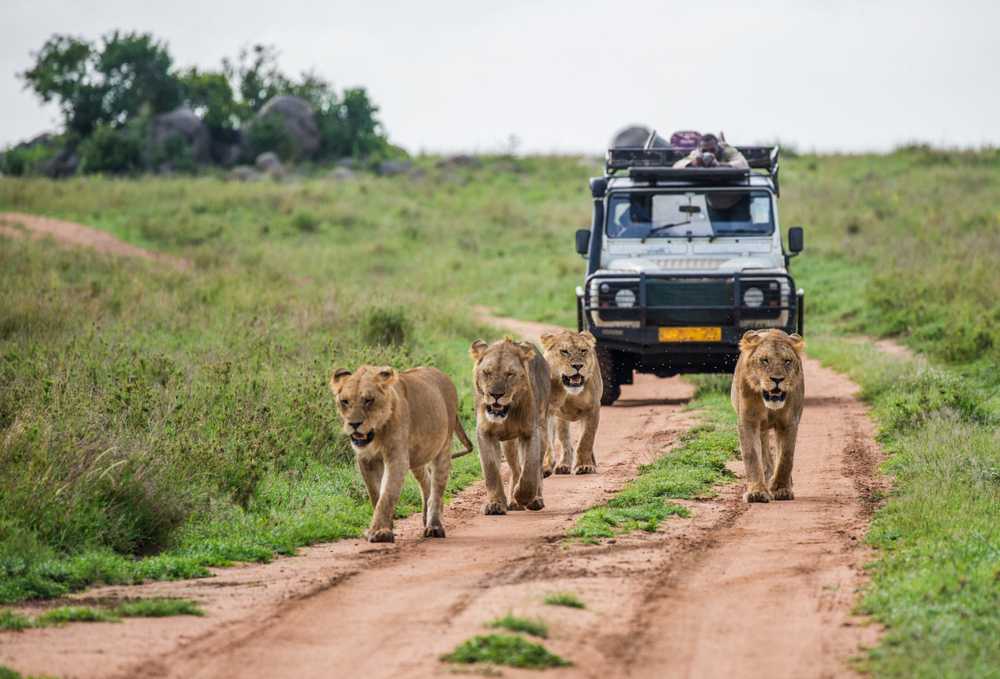
Yes, 10 days is considered the perfect amount of time for a comprehensive Uganda safari to see the "Big Five" (rhinos, lions, elephants, leopards, and buffaloes), along with mountain gorillas and chimpanzees. This duration allows for a well-rounded itinerary covering major parks without feeling excessively rushed, balancing game drives with primate trekking.
10-days-best-photography-uganda-wildlife-safari-holiday-and-gorilla-trekking
10-days-luxury-uganda-gorilla-trekking-safari-and-big-five-safari-vacation
10-days-budget-uganda-safari-holiday-vacation-tour-road-trip
10-days-best-honeymoon-uganda-safari-tour-vacation-holiday
10-days-best-uganda-birding-safari-and-wildlife-experience
10-days-best-of-uganda-and-rwanda-all-big-five-animal-and-gorilla-trekking
10-days-uganda-gorilla-trekking-and-safari-tour-vacation-holiday
10-days-9-nights-midrange-uganda-wildlife-safari-and-cultural-experience
10-days-uganda-safari-all-big-five-gorilla-and-chimpanzee-tracking-adventure
10-days-uganda-rwanda-primate-safari-vacation-and-game-drive-safari
10-days-exclusive-family-uganda-safari-with-kids
Key Components of a 10-Day Big Five Safari:
- Rhinos: Tracked at Ziwa Rhino Sanctuary.
- Elephants, Leopards, Lions, Buffaloes: Found in Murchison Falls National Park, Queen Elizabeth National Park (including tree-climbing lions in Ishasha), and Lake Mburo National Park.
- Primates: Gorilla trekking in Bwindi Impenetrable National Park and chimpanzee tracking in Kibale Forest National Park.
10 Days Uganda safari
- Days 1-2: Arrival & Ziwa Rhino Sanctuary.
- Days 3-4: Murchison Falls National Park (Big game/boat cruise).
- Days 5-6: Kibale Forest (Chimps) & Queen Elizabeth National Park.
- Days 7-9: Ishasha Sector (Tree-climbing lions) & Bwindi Gorillas.
- Day 10: Lake Mburo/Return to Kampala.
10-Day Uganda Safari
This 10-Day Uganda Safari is a masterfully curated journey through the "Pearl of Africa," offering a seamless blend of high-energy adventure and profound nature immersion. In 2026, Uganda stands as the world’s premier primate destination, and this itinerary captures the very best of its diverse biomes. You will traverse from the thundering Murchison Falls in the north to the misty, ancient rainforests of Bwindi in the south. Along the way, you’ll encounter the "Big Five" on the golden savannahs, track chimpanzees in the world’s primate capital, and witness the unique tree-climbing lions of Ishasha. This isn't just a wildlife tour; it is a deep dive into Uganda’s soul, featuring boat cruises on the Nile, cultural encounters with local communities, and quiet moments on the shores of Lake Mburo. With expert guiding and refined eco-lodges, this 10-day odyssey offers a transformative connection to one of Earth’s last truly wild frontiers.
Day 1: Arrival and Entebbe Immersion
Your journey begins at Entebbe International Airport, situated on a lush peninsula of Lake Victoria. After a VIP greeting, you’ll transfer to your boutique hotel to shake off any jet lag. Depending on your arrival time, you might enjoy a sunset boat cruise to the Mabamba Swamp to spot the prehistoric shoebill stork or wander through the Entebbe Botanical Gardens. The evening is spent with your private guide for a safari briefing over a gourmet dinner. As the equatorial breeze carries the scent of tropical flowers, you’ll get your first taste of Ugandan hospitality. This initial day is all about "safari slow-down," ensuring you are refreshed and ready for the adventure that lies ahead in the northern wilderness tomorrow.
Day 2: Ziwa Sanctuary and Rhino Tracking
Leaving the shores of Lake Victoria, you head north toward the Ziwa Rhino Sanctuary, a critical conservation success story. Here, you will join an expert ranger to track southern white rhinos on foot—an intimate, ground-level encounter that marks your first of the "Big Five." Being on the same level as these three-ton giants provides a humbling sense of scale that a vehicle-based game drive cannot replicate. After a traditional lunch, you continue into the heart of the Nakasongola district, settling into your lodge inside the sanctuary or just outside the park boundaries. The evening is perfect for a night walk to spot nocturnal birds or simply relaxing by the campfire, soaking in the sounds of the African bush as you prepare for the thundering Nile tomorrow.
Day 3: Murchison Falls and the Nile’s Power
You enter Murchison Falls National Park, reaching the "Top of the Falls." You’ll stand where the entire Victoria Nile forces itself through a tiny 7-meter gap before dropping 43 meters with a roar that vibrates through the earth. It is a spectacle of raw power and permanent rainbows, providing a dramatic introduction to the scale of Uganda’s natural wonders. In the afternoon, the perspective shifts to the water with a private boat cruise up the Victoria Nile. You’ll drift past thousands of wallowing hippos and massive Nile crocodiles basking on the banks. The boat takes you to the "Devil’s Cauldron," the base of the falls, where the water churns in a magnificent display of white foam. For birders, the riverbanks are a theatre of color, featuring kingfishers and fish eagles.
Day 4: Savannah Game Drive and Delta Exploration
Rise at dawn for a game drive across the northern plains, where the sunrise illuminates a landscape teeming with life. You’ll track lions, leopards, and elephants while admiring the world’s largest population of Rothschild’s giraffes. The open savannah allows for clear, long-distance sightings of herds of Jackson's hartebeest and Uganda kob. In the afternoon, you explore the Albert Delta, where the Nile flows into Lake Albert. This region is a birdwatcher's paradise and a frequent haunt for the elusive shoebill stork. The tranquility of the delta, combined with the golden light of the afternoon, provides a stunning backdrop for photography. As the sun sets over the water, you’ll reflect on the day's encounters while driving back to your lodge, surrounded by the calls of the African wilderness.
Day 5: Kibale Forest and Chimpanzee Tracking
Today is a scenic transition day as you travel south toward the Kibale Forest National Park, famously known as the "Primate Capital of the World." The drive takes you through the lush, rolling emerald hills of the tea plantations near Fort Portal. Upon arrival, you’ll head into the dense, ancient canopy with a ranger to track a community of habituated chimpanzees. Witnessing their complex social dynamics, tool-use, and acrobatic displays in the canopy is an adrenaline-fueled highlight. The forest is home to 12 other primate species, including the Red Colobus and L’Hoest’s monkey. After the trek, you’ll enjoy a forest-edge lodge stay, where the evening sounds are dominated by the distant "pant-hoots" of the chimps and the rhythmic songs of tropical cicadas.
Day 6: Queen Elizabeth NP and Kazinga Channel
A short drive brings you to Queen Elizabeth National Park, crossing the Equator for a classic photo opportunity. This park is a geographical marvel, featuring volcanic explosion craters and vast grassy plains. After a mid-day rest, you’ll embark on a boat cruise along the Kazinga Channel, which connects Lake Edward and Lake George. In 2026, this remains one of the highest concentrations of hippos and buffalos in Africa. From the comfort of the boat, you can observe elephants coming down to drink and a staggering array of water birds. The afternoon light on the channel is a photographer’s dream, providing effortless, "eye-level" shots of wildlife without the need for a long lens, all while you enjoy a refreshing drink on deck before an evening game drive.
Day 7: Ishasha’s Tree-Climbing Lions
You travel today to the remote Ishasha Sector in the southern part of Queen Elizabeth Park. This wilder, quieter corner is world-famous for its unique population of tree-climbing lions. Unlike their cousins elsewhere, these prides spend their afternoons lounging in the giant sycamore-fig trees to escape the ground heat and insects. Finding a lion draped over a massive limb is a rare and iconic sight that requires a bit of luck and a skilled guide. The Ishasha landscape is characterized by open woodlands and vast savannahs, also home to large herds of topis and buffaloes. You’ll enjoy a private picnic lunch under an acacia tree, soaking in the profound silence of the bush before heading toward the mist-covered mountains of the Bwindi Impenetrable Forest.
Day 8: Bwindi Gorillas: Into the Mist
This is the pinnacle of your 10-day safari. After an early briefing, you’ll enter the prehistoric, tangled undergrowth of Bwindi Impenetrable National Park with expert trackers. The hike can be physically demanding, navigating steep and muddy terrain, but the reward is life-altering: a full hour spent in the presence of a habituated mountain gorilla family. Standing just meters away from a 400-pound silverback and his playful offspring is a silent, sacred experience that words often fail to capture. In 2026, your permit contributes directly to the 24-hour protection of these endangered apes. After the trek, you’ll return to your lodge for a "gorilla ceremony," reflecting on one of the most moving wildlife encounters on the planet while overlooking the vast, emerald forest canopy from your balcony.
Day 9: Forest Culture and Lake Mburo
Leaving the high-altitude forests, you travel through the Kigezi Highlands, often called the "Switzerland of Africa" for its terraced hills and misty valleys. You’ll visit a local community or the Batwa "Keepers of the Forest" to learn about their ancient heritage before continuing to Lake Mburo National Park. This is the only place in western Uganda to see zebras and impalas. You’ll enjoy an evening game drive or a boat ride on the lake, observing hippos and the rare African Finfoot. The park's rolling green hills and acacia woodlands provide a beautiful final safari setting. The evening features a "night game drive" with spotlights, offering a rare chance to spot the elusive leopard or nocturnal bushbabies, marking a gentle conclusion to your wildlife tracking adventures.
Day 10: Zebras and Return to Kampala
On your final morning, you’ll enjoy a sunrise "walking safari," an intimate way to see giraffes and elands without the noise of an engine. It is a peaceful, grounding experience to walk among the wildlife one last time. Following a celebratory farewell lunch, you begin the return journey toward Kampala and Entebbe. You’ll make a significant stop at the Uganda Equator Line for a water-flow demonstration and last-minute souvenir shopping for hand-carved crafts. As you drive through the vibrant countryside, you’ll pass through the "Long Horned Cattle" country of the Ankole people. Arriving in Entebbe in the late afternoon, your guide will transfer you to the airport for your flight home. You leave with a heart full of the spirit of the "Pearl of Africa."
Is 10 days enough for a Uganda safari to see the Big Five and Gorillas?
A 10-day duration is widely considered the "gold standard" for a comprehensive Ugandan safari. It provides the perfect window to bridge the gap between the sprawling northern savannas and the dense southwestern rainforests. In this timeframe, you don't have to choose between the Big Five and the Great Apes; you have ample time to do both. A 10-day trip allows for a logical progression: starting with rhino tracking, moving into the lion and elephant territories of the Nile basin, and culminating in the misty mountains of Bwindi for gorilla trekking. This duration also accounts for the necessary travel days between parks, ensuring that you spend more time watching wildlife than you do looking at the road. It strikes a balance that avoids the exhaustion of a "marathon" safari while ensuring you check off every major item on a typical African bucket list.
Which parks are essential for a 10-day Big Five Uganda safari?
To successfully "collect" the Big Five in Uganda, your 10-day itinerary must include a specific trifecta of locations. First is the Ziwa Rhino Sanctuary, the only place in the country where you can track wild white rhinos on foot. Following this, Murchison Falls National Park is essential; its northern bank is a stronghold for massive herds of elephants and buffaloes, as well as healthy populations of lions and leopards. Finally, Queen Elizabeth National Park serves as a vital secondary location for lions (including the famous tree-climbing variety) and buffaloes. While Bwindi is the home of the gorillas, these three savanna and sanctuary locations are the mechanical necessity for completing the Big Five circuit. Including them ensures that you are traversing the best-managed and most wildlife-dense sectors of the country.
Can I see all Big Five on a 10-day Uganda safari?
Yes, seeing the complete Big Five in Uganda is highly achievable within a 10-day window, provided your route is planned correctly. Because Uganda’s Big Five are spread across different regions—with rhinos in a central sanctuary and the others in the northern and western parks—a shorter trip might force you to skip one. However, 10 days allow you to visit the Ziwa Rhino Sanctuary for the first "member" of the group, and then spend multiple days in Murchison Falls and Queen Elizabeth to find the remaining four. While leopards are always the most elusive, 10 days give you multiple game drives and "eyes on the ground" via expert guides, significantly increasing your statistical probability of a clean sweep. It is a comprehensive timeframe that respects the unpredictability of the wild while maximizing your opportunities for success.
Is a 10-day Uganda safari too rushed?
Quite the opposite; a 10-day itinerary is regarded as unhurried and paced for discovery. Many travelers attempt to see the gorillas and the savanna in just 5 or 7 days, which often results in "dashboard fatigue" from spending 6–8 hours a day in a vehicle. In contrast, 10 days allow for a "two-night minimum" at most major parks. This means you have full days dedicated entirely to game drives, boat cruises, or trekking, rather than arriving late and leaving early the next morning. It provides the flexibility to have a "slow morning" or to spend an extra hour photographing a pride of lions without worrying about reaching the next destination. For those who want to actually experience the Pearl of Africa rather than just see it through a window, 10 days is the ideal, relaxed tempo.
What is the best itinerary for a 10-day Uganda safari?
The most effective 10-day itinerary follows a "Western Circuit" that hits the country’s high-diversity hotspots. It typically starts in Entebbe, moving north to Murchison Falls National Park (via Ziwa Rhino Sanctuary). From there, you head south to Kibale Forest for chimpanzee tracking, followed by Queen Elizabeth National Park for a traditional savanna safari and the Kazinga Channel boat cruise. The journey then moves to the Ishasha Sector to search for tree-climbing lions before reaching the pinnacle: Bwindi Impenetrable National Park for gorilla trekking. The trip often concludes with a relaxing night at Lake Mburo or Lake Bunyonyi before returning to Entebbe. This route is favored because it minimizes backtracking and offers a diverse "crescendo" of experiences, starting with the power of the Nile and ending with the emotional depth of the gorillas.
Where do I see rhinos on a 10-day Uganda safari?
In Uganda, rhinos are exclusively found at the Ziwa Rhino Sanctuary in Nakasongola district. Since rhinos were reintroduced to the country, this 7,000-hectare sanctuary has become a vital stop on the way to Murchison Falls. During your 10-day safari, you will typically stop here on Day 2. The experience is unique because it is conducted on foot; accompanied by armed UWA rangers, you walk through the savanna to find the rhinos grazing. Because they are in a protected sanctuary, the sighting is almost 100% guaranteed. It is a thrilling way to start your "Big Five" checklist, as standing just a few meters away from a multi-ton white rhino provides a perspective on their size and power that you simply cannot get from inside a vehicle.
Is gorilla trekking included in a 10-day Uganda safari?
Gorilla trekking is almost universally included as the "anchor" activity of a 10-day Ugandan safari. Because Bwindi is located in the far southwest of the country, it requires a significant journey to reach, which is why shorter trips often struggle to include it alongside the savanna parks. In a 10-day framework, you have the luxury of dedicating two or three days to the Bwindi region. This allows you to have a "rest day" before or after the trek, which can be physically demanding. Trekking for gorillas is the emotional heart of the trip, and having a 10-day cushion ensures that even if there are travel delays or heavy rains, your permit date remains secure. It is the highlight that most travelers spend their entire 10 days anticipating.
What is the cost of a 10-day Uganda safari?
The cost of a 10-day safari varies significantly based on your preferred level of luxury, but it is generally viewed as a mid-to-high-tier investment. A 10-day trip is comprehensive, meaning the price must cover 10 days of a private 4x4 vehicle and professional guide, fuel for long distances, lodge accommodation (usually full board), and multiple park entrance fees. The largest fixed costs are the permits: currently USD 800 for Gorillas and USD 250 for Chimpanzees (though prices vary by park). A mid-range 10-day safari might cost between USD 3,000 and USD 4,500 per person, while luxury options with high-end lodges and internal flights can exceed USD 7,000. While it is a significant investment, the 10-day format offers the best "value per day" as it covers almost every major attraction the country has to offer in a single go.
Can I add chimpanzee trekking to a 10-day Uganda safari?
Absolutely; in fact, it would be a missed opportunity not to. Kibale National Park, the "Primate Capital of the World," is located right between Murchison Falls and Queen Elizabeth National Park, making it a logical and easy addition to a 10-day route. Chimpanzee tracking is the perfect "warm-up" for gorilla trekking. It offers a higher-energy experience as you follow these loud, active primates through the forest canopy. In a 10-day itinerary, you typically spend one night near Kibale, allowing you to do a morning trek followed by a visit to the Bigodi Wetland Sanctuary. Adding chimpanzees completes the "primate trifecta" (Gorillas, Chimps, and Monkeys) and ensures that your 10-day holiday covers the full spectrum of Uganda’s world-famous ape populations.
Which is the best time for a 10-day Big Five Uganda safari?
For the best 10-day Big Five experience, you should aim for the dry seasons: June to September and December to February. These months offer the most "reliable" wildlife viewing. In the savanna parks, the dry weather forces animals like elephants, buffaloes, and even lions to congregate around permanent water sources, making them much easier for your guide to locate. Furthermore, the dry conditions are essential for successful leopard spotting, as they often lounge in the trees along the tracks. For the primate portion of your trip, dry trails make the hike into Bwindi or Kibale significantly more comfortable. While the rainy season is beautiful and lush, the 10-day dry season window provides the most consistent weather for photography and long game drives.
Do I need to fly or drive for a 10-day Uganda safari?
This is a choice between convenience and immersion. Driving is the most popular way to experience a 10-day safari because it allows you to see the "real" Uganda—the vibrant roadside markets, the changing landscapes of the Albertine Rift, and the rural villages. It is also more cost-effective. However, Uganda is a large country with some rugged roads; the drive from Murchison to Kibale can take 7–8 hours. Flying (via domestic scheduled flights) can reduce these long travel days to just 60 minutes, leaving you more time for relaxation at your lodge. Many travelers opt for a "hybrid" approach: driving the first half of the trip to see the countryside and then taking a flight back to Entebbe from Bwindi on Day 10 to avoid the final long drive.
What wildlife can I see in Murchison Falls during a 10-day Uganda safari?
Murchison Falls is often the wildlife highlight of the 10-day circuit because of its sheer volume of animals. You can reliably see four of the Big Five here: massive herds of African elephants, thousands of Cape buffaloes, and a high concentration of lions (especially in the Delta area). Leopards are also present, though they require a bit more searching. Beyond the Big Five, the park is famous for its Rothschild giraffes—it holds the largest population in the world. You will also see thousands of Uganda Kobs, Jackson’s hartebeests, and Oribis. The boat cruise on the Nile adds hippos and Nile crocodiles to your list. For many, the variety seen in Murchison during a 10-day trip is what truly defines their African safari experience.
Is a 10-day Uganda safari suitable for families?
Yes, a 10-day safari is arguably the best duration for families. Unlike shorter, "high-pressure" trips, 10 days allow for a slower pace with more "pool time" and leisure at the lodges. This helps prevent "safari burnout" in younger children. It is important to remember the age restrictions: 15 years for gorillas and 12 years for chimpanzees. However, for families with younger children, the 10-day itinerary can be modified to include more boat cruises, shorter game drives, and community visits. Many lodges have family suites and swimming pools, and the constant excitement of seeing giraffes and elephants keeps kids engaged. A 10-day trip provides enough time to balance the "must-see" wildlife with the practical needs of traveling as a family.
How safe is a 10-day Uganda safari?
Uganda is a very safe destination for a 10-day safari holiday. The country has a dedicated Tourism Police force, and the national parks are heavily patrolled by armed UWA rangers who prioritize visitor security. Your most constant companion will be your professional driver-guide, who is trained in both safety and wildlife management. The "safari circuit" is well-established and monitored, and the lodges are secure environments. While standard travel precautions apply in large cities like Kampala, the experience within the parks is one of tranquility and professional management. Traveling for 10 days with a reputable tour operator ensures that every logistical and security detail is handled, allowing you to focus entirely on the beauty of the landscape and the wildlife.
What should I pack for a 10-day Uganda safari?
Packing for 10 days in Uganda requires preparing for two very different climates. For the savanna parks (Murchison and Queen Elizabeth), you need light, breathable clothing in neutral colors like khaki and beige. For the rainforests (Bwindi and Kibale), you need "trekking gear": sturdy hiking boots, long-sleeved shirts, and long trousers to protect against nettles and insects. Because many parks are at high altitudes, mornings can be quite cold, so a warm fleece or sweater is essential. You must also pack a high-quality rain jacket, as tropical showers can happen at any time. Finally, don't forget your "tech" kit: extra camera batteries, plenty of memory cards, and a good pair of binoculars. Packing for both heat and cold ensures you stay comfortable across all 10 days of your diverse Ugandan adventure.
Booking Uganda safari with us Roads of Adventure safaris
Booking a Uganda safari with Roads of Adventure Safaris offers a personalized and comprehensive experience in the "Pearl of Africa". As a Uganda-based operator, they specialize in gorilla trekking, chimpanzee tracking, and wildlife adventures, offering customized itineraries that span popular locations like Bwindi Impenetrable National Park and Queen Elizabeth National Park.
