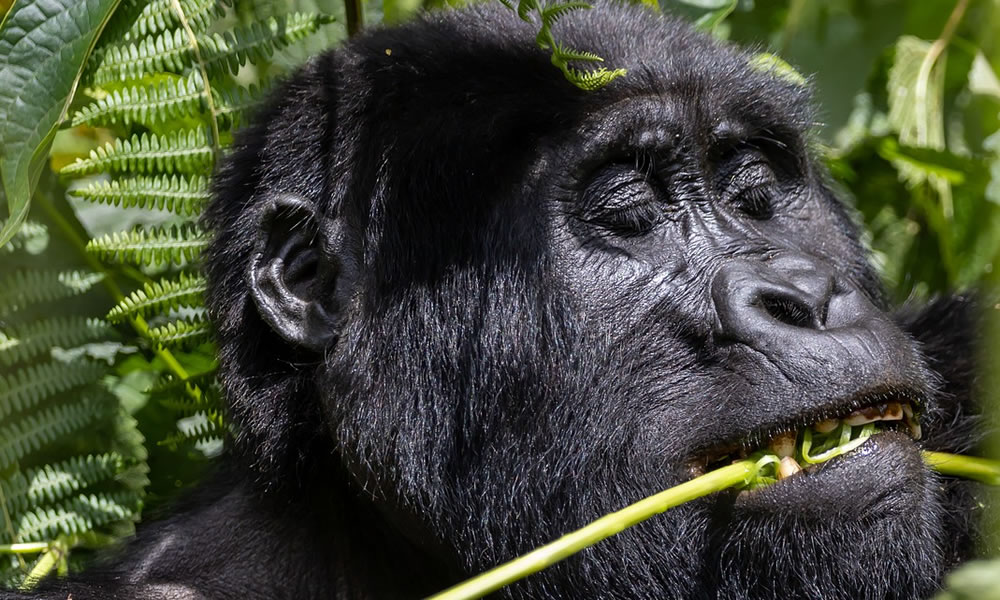
A 3-day Rwanda gorilla trekking tour is a tightly packed, immersive itinerary taking place in Volcanoes National Park (Musanze). You will arrive in Kigali, drive to the park, trek to see the mountain gorillas, and return to the capital
3-days-midrange-rwanda-gorilla-trekking-in-volcanoes-national-park
Day 1: Arrival & Transfer
Your Rwandan adventure begins at Kigali International Airport, where the crisp mountain air welcomes you. If you land in the morning, dive straight into the heart of the country’s history with a moving visit to the Kigali Genocide Memorial. It’s a deeply poignant experience that provides essential context for Rwanda’s inspiring journey of renewal.
Next, you will board a private 4x4 vehicle for a scenic, 3-hour drive north toward Musanze, the vibrant gateway to Volcanoes National Park. The journey winds through Rwanda’s famous rolling hills, offering stunning views of terraced agriculture and local villages. As the mist-covered peaks of the Virunga volcanoes loom into view, you will arrive at your accommodation, such as the charming Da Vinci Gorilla Lodge. Settle into your room, enjoy a hearty dinner, and fall asleep to the tranquil sounds of the mountain forest, resting up for the big adventure ahead.
Day 2: Gorilla Trekking
The big day starts early with a 7:00 AM briefing at the Kinigi park headquarters. Sip fresh local coffee as rangers assign you to a gorilla family based on your fitness level. Soon, you will venture into the dense, misty bamboo forests, embarking on a hike that can last anywhere from two to six hours.
The effort vanishes the moment you find them. You have exactly one hour to sit quietly just meters away from a mountain gorilla family. Watching silverbacks command respect and infants play in the foliage is an otherworldly, deeply emotional encounter. Afterward, trek back down the volcano for a well-deserved lunch. In the afternoon, you can choose to unwind at your lodge or visit the nearby Iby'iwacu Cultural Village, where vibrant traditional dances, archery demonstrations, and local lore offer an authentic glimpse into Rwanda’s rich heritage.
Day 3: Departure
Your final morning in the shadow of the Virungas offers a choice between high energy and pure relaxation. If you are eager for more wildlife, head back into the park for Golden Monkey tracking to watch these playful, endangered primates leap through the bamboo canopy. Alternatively, history enthusiasts can opt for the challenging hike to Dian Fossey’s historic Karisoke research site and grave.
If you prefer a slower pace, enjoy a leisurely breakfast at the lodge, soaking in the sweeping volcanic vistas and snapping last-minute photos of the stunning landscape. Afterward, you will check out and board your private 4x4 for the return drive to Kigali. As the emerald hills roll past your window, you will head to the airport for your departure flight, carrying unforgettable memories of Rwanda's wild beauty and warmth.
1. How do I secure a gorilla trekking permit for a 3-day itinerary?
Securing your permit is the absolute first step of planning this trip, as it dictates your entire schedule. Rwanda mountain gorilla permits cost $1,500 USD per person for international residents. Because availability is strictly capped at 96 permits per day (8 people per habituated gorilla family), you should book several months in advance.
For a 3-day trip, your permit must specifically be booked for Day 2. You can purchase it directly through the official online portal, Irembo, or have an authorized tour operator secure it for you. Your passport details are required for booking, and the permit is non-transferable. When booking, double-check that the date matches Day 2 of your travel window, as missing this specific date means forfeiting the experience.
2. Is a 3-day timeline long enough for a Rwanda gorilla safari?
Yes, a 3-day timeline is the absolute sweet spot for a focused Rwanda gorilla safari. Because Volcanoes National Park is located just 70 miles (113 km) north of Kigali International Airport, the driving time is relatively short—typically between 2.5 to 3 hours on well-paved, winding roads. This compact geography eliminates the need for domestic flights or grueling, dawn-to-dusk drives.
- Day 1 handles your arrival, a brief cultural or historical city tour, and the scenic drive north to your lodge.
- Day 2 is completely dedicated to the early morning trek and your hour with the gorillas, leaving the afternoon open for relaxation or local culture.
- Day 3 allows for a quick morning activity before a seamless transfer back to Kigali for your evening flight. It is highly efficient and minimizes downtime.
3. What time should my flight arrive on Day 1 and depart on Day 3?
To make a 3-day itinerary work seamlessly without unnecessary stress, your flight timing is everything:
- Day 1 Arrival: Aim to land at Kigali International Airport (KGL) before 12:00 PM. Landing early guarantees enough time to clear customs, meet your driver, enjoy lunch, visit the Kigali Genocide Memorial, and drive to Musanze before nightfall. Driving the winding mountain roads in the dark is not recommended.
- Day 3 Departure: Book a late-night flight out of Kigali, ideally after 7:00 PM. This cushion ensures that even if you choose a lengthy Day 3 morning activity, like tracking Golden Monkeys or hiking to Dian Fossey's grave, you can still comfortably drive back to Kigali, have dinner, and check in for your international flight without rushing.
4. What are the best transportation options from Kigali to Musanze?
The most reliable and comfortable option for a 3-day trip is hiring a private 4x4 safari vehicle with a professional driver-guide. Most travelers book this as a complete package through a tour operator. A 4x4 is highly recommended, not because the main highway from Kigali to Musanze is bad—it is actually beautifully paved—but because the dirt roads leading from Musanze up to the park headquarters and the various trailhead starting points are rocky, muddy, and uneven.
Having a professional driver handles the stress of navigating mountain switchbacks and ensures you arrive at the Kinigi park headquarters precisely at 7:00 AM on Day 2 without getting lost. Self-driving is possible but generally discouraged for such a short, time-sensitive itinerary.
5. Where should I stay near Volcanoes National Park on a mid-range budget?
Musanze and the fringes of Volcanoes National Park host world-class accommodations ranging from ultra-luxury lodges to comfortable mid-range options. For a high-quality, mid-range experience that balances comfort, proximity, and local charm, Da Vinci Gorilla Lodge is an excellent choice. It features cozy stone cottages, hot showers, and fireplace heating to combat the chilly mountain nights.
Other superb options include Le Bambou Gorilla Lodge, known for its traditional wooden architecture, and Five Volcanoes Boutique Hotel, which offers a slightly more upscale boutique feel with a pool. Choosing a lodge within a 15-to-30-minute drive of the Kinigi headquarters is vital, as it allows you to get a bit more sleep before your 7:00 AM briefing on Day 2.
6. What happens during the Day 2 morning briefing at Kinigi?
The morning of Day 2 begins precisely at 7:00 AM at the Kinigi Park Headquarters. You will register your permit and be greeted by traditional dancers and complimentary local coffee or tea. Rangers will divide the day's visitors into small groups of eight.
During this time, the park staff determines which gorilla family you will track. This allocation is done thoughtfully; rangers assess your age, overall physical fitness, and any preferences you communicate. If you prefer a shorter, flatter walk, you will be assigned a family currently located closer to the park boundary. If you are an avid hiker looking for a challenge, you can request a family deep in the higher volcanic slopes. The lead ranger then briefs your group on safety protocols and gorilla etiquette.
7. How physically demanding is the gorilla trek in Volcanoes National Park?
Gorilla trekking can range from a moderately easy walk to an intense, physically demanding hike. Volcanoes National Park sits at altitudes ranging from 7,500 to over 11,000 feet (2,300 to 3,400+ meters). The air is thin, and the terrain consists of steep slopes, thick bamboo thickets, tangled vines, and muddy, slippery paths.
The duration of the trek is unpredictable; you might walk for 45 minutes across relatively flat potato fields before encountering a family near the stone buffalo wall, or you might climb uphill through dense brush for 3 to 4 hours. Preparing with cardiovascular exercise and leg conditioning in the weeks leading up to your trip will significantly enhance your comfort and enjoyment of the experience.
8. What are the essential items to pack for the trekking day?
Packing the right gear directly impacts your comfort on the mountain. Your trekking wardrobe should prioritize protection over fashion:
- Clothing: Long-sleeved shirts and sturdy trousers are mandatory to protect your skin from stinging nettles and sharp branches. Lightweight, waterproof rain gear is essential, as downpours can happen instantly in the rainforest.
- Footwear: Sturdy, waterproof hiking boots with excellent ankle support and deep traction are non-negotiable.
- Accessories: Bring thick gardening gloves to protect your hands when grabbing vines or sliding on mud, and long socks to tuck your pants into (this keeps biting ants out).
- Gear: A lightweight, waterproof backpack to carry 2 liters of water, packed lunch snacks, your passport, and your camera gear wrapped in a protective dry bag.
9. Should I hire a porter at the park trailhead on Day 2?
Yes, hiring a local porter is highly recommended, regardless of your fitness level. At the trailhead, porters from the local community wait to offer their services for a standard fee of $20 USD (plus an optional tip).
A porter will carry your backpack, leaving you free to focus entirely on your footing, balance, and photography. More importantly, they provide physical assistance, offering a steady hand to pull you up steep muddy slopes or stabilize you on slippery descents. Beyond the practical help, hiring a porter directly supports the community surrounding the park. Many porters are former poachers who now rely on tourism for sustainable livelihoods, making this a direct investment in gorilla conservation.
10. What are the strict rules for interacting with mountain gorillas?
To protect both the endangered gorillas and visitors, Rwanda National Parks enforces strict behavioral guidelines. You must maintain a minimum distance of 23 feet (7 meters) from the gorillas at all times, though the animals may occasionally approach closer on their own.
You must keep your voice to a whisper and avoid sudden movements or direct, prolonged eye contact with a silverback, which can be interpreted as a challenge. Flash photography is strictly forbidden as it can startle the animals and trigger a defensive charge. If you feel a cough or sneeze coming on, you must turn away and cover your face to prevent transmitting human respiratory pathogens to the gorillas, who share roughly 98% of our DNA and lack immunity to common human illnesses.
11. How can I capture high-quality photos during my one hour with the gorillas?
Your time with the gorillas is capped at exactly 60 minutes, so technical preparation ensures you do not waste precious moments fiddling with gear. The rainforest canopy creates challenging, low-light conditions with harsh contrast.
- Set your camera to a relatively high ISO (800 to 3200) to maintain a fast shutter speed (at least 1/250s) to combat hand shake and animal movement.
- Use a versatile zoom lens, such as a 24-70mm or 70-200mm, as the gorillas can move close unexpectedly, making long fixed telephoto lenses difficult to use.
- Turn off all camera beeps and verify multiple times that your flash is fully disabled.
- Spend the first 10 minutes taking your essential shots, then put the camera down for a few minutes to fully absorb the experience with your own eyes.
12. Is the Iby’iwacu Cultural Village visit worth adding on Day 2?
Visiting the Iby'iwacu Cultural Village (also known as the Gorilla Guardians Village) in the afternoon of Day 2 is highly worthwhile. Located just outside the park, this community-led project offers an engaging look into traditional Rwandan life.
During a 1.5-to-2-hour visit, you can watch energetic Intore dance performances, try your hand at shooting a traditional bow and arrow, learn how local medicines are prepared from native plants, and tour a replica of a historical king's palace. The project is staffed primarily by reformed poachers. By visiting and paying the entry fee (around $35 USD), you directly fund community incentives that keep the forest safe, making it a perfect cultural complement to your morning trek.
13. Which Day 3 activity is better: Golden Monkeys or the Dian Fossey Hike?
Choosing your Day 3 morning activity depends entirely on your energy levels and interests:
- Golden Monkey Tracking: This is ideal if you want a lighter, highly photogenic wildlife experience. These striking, bamboo-dwelling primates are active and playful. The trek is relatively flat, short (usually 2 to 3 hours total), and highly entertaining, making it easy to finish and head to the airport.
- Dian Fossey Hike: This is best for history buffs and fit hikers. It is a demanding, 4-to-5-hour trek that climbs to 9,000 feet to visit the ruins of the Karisoke Research Center and Fossey's final resting place alongside her beloved gorillas. It is emotionally powerful but physically exhausting and can run late, requiring careful coordination with your departure flight.
14. What are the passport, visa, and health requirements for entering Rwanda?
To enter Rwanda, your passport must be valid for at least six months beyond your arrival date and have at least one blank page. Citizens of all countries can obtain a 30-day visa upon arrival at Kigali International Airport. Citizens of the African Union, Commonwealth, and La Francophonie countries receive this visa free of charge, while others pay a fee of $50 USD (payable via credit card or cash).
Regarding health requirements, a Yellow Fever vaccination certificate is required if you are traveling from a country with a risk of Yellow Fever transmission. Additionally, because Volcanoes National Park is a malaria-risk zone, consulting your travel clinic for a prescription of malaria prophylaxis before your trip is highly recommended.
15. How much cash should I bring, and what tipping etiquette should I follow?
While major hotels and tour operators accept credit cards, carrying cash is essential for tips, porters, and small souvenir purchases. US Dollars printed after 2013 (clean, un-torn bills) are widely accepted, but having local currency, Rwandan Francs (RWF), is highly useful for tipping small amounts.
For standard tipping on a 3-day gorilla safari, budget the following amounts per person:
- Driver-guide: $15 to $20 USD per day.
- Lead park ranger/guide: $10 to $15 USD for the group pool.
- Park trackers (who find the gorillas): $5 to $10 USD per tracker.
- Porters: $20 USD standard fee, plus a $5 USD tip if they perform exceptionally well.
- Lodge staff: $10 to $15 USD per day into the communal staff tip box.
Booking 3 Day Rwanda gorilla trekking with us Roads of Adventure safaris
A 3-day Rwanda gorilla trekking itinerary with Roads of Adventure Safaris usually starts in Kigali. It features a city and genocide memorial tour, a thrilling trek with the endangered mountain gorillas in Volcanoes National Park, and ends with golden monkey trekking or cultural visits
