To travel on a 16-day Uganda safari, book through a licensed local tour operator. They will handle your logistics, book your gorilla permit ($800) well in advance, and provide a 4x4 Land Cruiser with a local guide to safely navigate the country's diverse and rugged terrain.
16-days-ultimate-uganda-safari-to-rwanda-safari-tour-package-combo
16-days-classic-uganda-wildlife-safari-and-gorilla-trekking-tour
16-days-best-of-uganda-birding-safari-holiday-extravaganza
16-days-classic-uganda-photography-safari
2. The Western Primate Circuit (Days 6–11)
Shifting into the western segment of your journey, the landscape transforms drastically from dry northern plains into rich savannahs and dense tropical rainforests. Your first destination is Murchison Falls National Park, Uganda's largest protected reserve. Here, the entire Victoria Nile is forced through a tiny seven-meter canyon fissure, creating a roaring explosion of water. You will board a launch cruise to navigate up the river directly to the base of the falls, marveling at giant Nile crocodiles and pods of yawning hippos along the banks. Game drives across the northern delta tracks offer exceptional opportunities to spot prides of lions, leopards, and massive herds of Rothschild giraffes. Birdwatchers will also carefully scan the river deltas for the legendary, highly sought-after Shoebill stork hiding in the papyrus.
Heading further south along the Albertine Rift Valley, you enter Kibale Forest National Park, a lush primeval jungle globally recognized as the primate capital of the world. Kibale protects thirteen distinct primate species within its thick canopy. The undisputed highlight here is a morning trek to track habituated communities of wild chimpanzees, observing their complex social structures and thunderous vocalizations up close. Afterward, you will transition to the adjacent, community-run Bigodi Wetland Sanctuary for a guided boardwalk swamp walk to view rare canopy birds like the Great Blue Turaco and multiple monkey species.
The western loop finishes in Queen Elizabeth National Park. You will embark on classic jeep safaris across the open Kasenyi Plains to view massive herds of Ugandan kob, followed by a peaceful boat cruise along the Kazinga Channel to see elephants bathing. Finally, you will journey to the remote, southern Ishasha Sector, searching low-hanging fig tree branches for the park's famous tree-climbing lions.
3. The Southern Gorilla & Lake Region (Days 12–16)
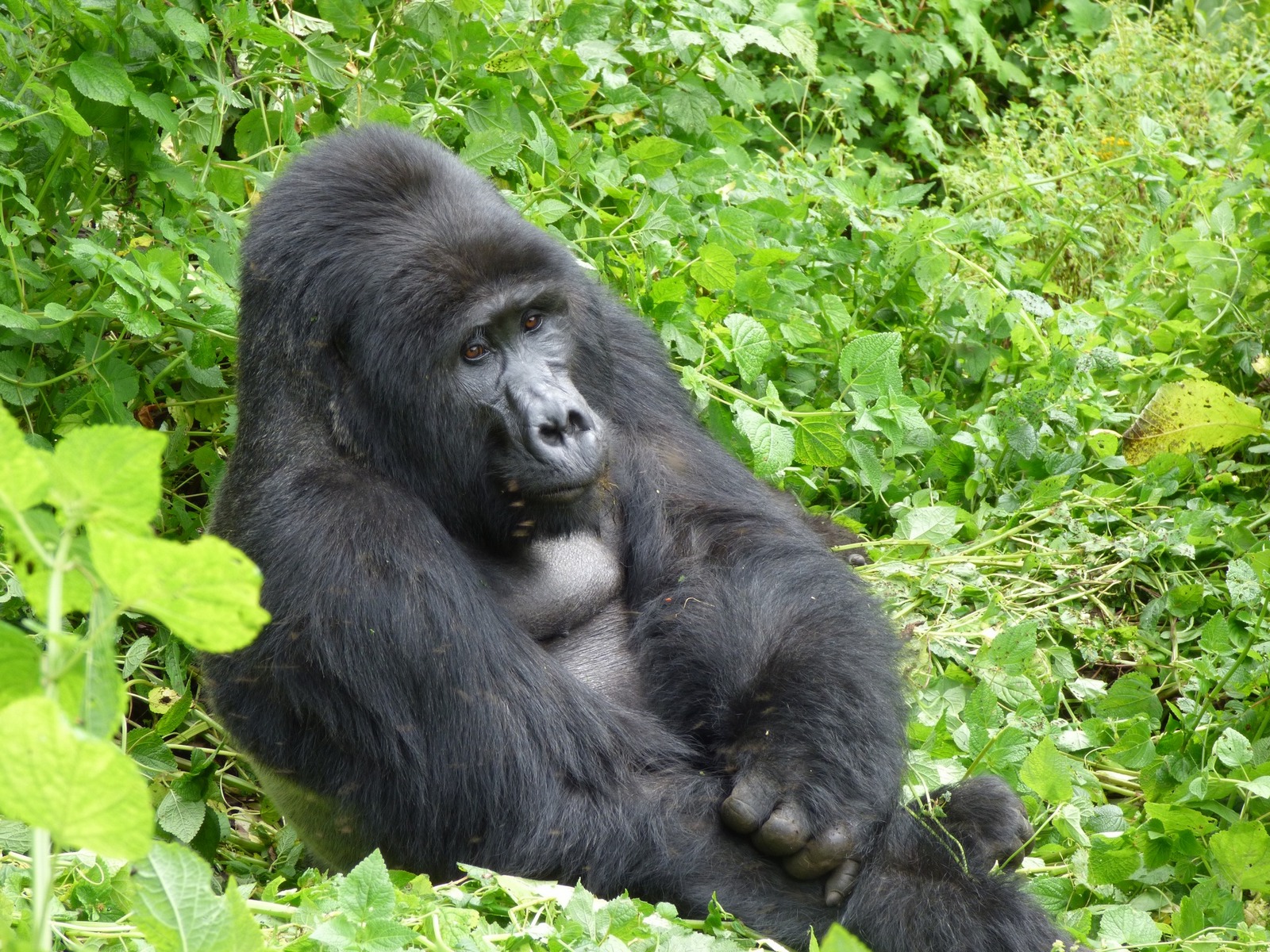
The final circuit of your multi-week expedition heads into the steep, high-altitude mountains of southwestern Uganda. You will enter the ancient, mist-covered cloud forests of Bwindi Impenetrable National Park, a UNESCO World Heritage site dating back over 25,000 years. Bwindi protects roughly half of the world's remaining endangered mountain gorilla population. Your day here is spent undertaking a physically demanding trek through thick vines and muddy slopes to locate a habituated gorilla family. Standing mere meters away from a massive 400-pound Silverback as the family grooms, feeds, and plays is widely considered the most emotionally powerful and unforgettable wildlife encounter on Earth.
To recover from the physical intensity of the jungle, you will transfer to the serene waters of Lake Bunyonyi. As Uganda's deepest lake, Bunyonyi is a safe, bilharzia-free paradise framed by steep, hand-terraced agricultural hillsides. You will spend your time relaxing at a lakeside resort and hopping between some of the lake's 29 unique islands using a traditional dugout canoe or a motorized boat, learning about the fascinating local history of the Bakiga people.
Your journey concludes by heading back toward the east, stopping at Lake Mburo National Park. Mburo is a compact acacia woodland oasis that serves as an essential rest break on long travel days. Here, you will take part in an exciting evening walking safari on foot, moving safely alongside herds of impalas, zebras, and giant eland antelopes. The next morning, you will complete the loop back toward Entebbe, stopping directly at the Equator line for geographical experiments and souvenir shopping, before transferring to Entebbe International Airport to check in for your evening departure flight home.
16 Days safari to Uganda this travel season
Uganda offers a breathtaking mosaic of dense tropical rainforests, roaring waterfalls, and open savannahs brimming with unique wildlife. Balancing the timing of your multi-week expedition with the country's equatorial weather seasons is the key to locking in smooth dirt-road travel and ideal primate tracking conditions. Selecting a 16 Days safari to Uganda this travel season means stepping directly into the heart of East Africa’s most diverse landscapes during prime wildlife-viewing months.
Whether you choose the sun-drenched dry windows of June to August and December to February for firm forest trails, or the lush green shoulder months of September to November for dramatic photography, this perfectly timed itinerary maximizes your time in the field. From the powerful cascades of Murchison Falls to the mist-shrouded ridges of Bwindi, every destination has been logistically optimized. Here is your day-by-day, 150-word guide to the ultimate pearl of Africa adventure.
Day 1: Entebbe Arrival and Urban Relaxation
Your grand East African adventure officially begins as you land at Entebbe International Airport, stepping into the fresh, lakeside air of the peninsula. Your professional safari guide will welcome you warmly, handling your luggage and transferring you to your tranquil hotel along the peaceful shores of Lake Victoria. Use this first evening to shake off any jet lag, unwind by the pool, and enjoy fresh-caught tilapia for dinner. Your guide will provide a comprehensive briefing detailing the diverse route map and incredible primate tracking highlights ahead. Falling asleep to the gentle lapping of lake waves sets a relaxing tone before your journey pushes deep into the wild country tomorrow. This evening provides the perfect, smooth launchpad for an unforgettable 16 Days safari to Uganda this travel season.
Day 2: Ziwa Rhino Tracking and Murchison Falls
Wake up early for a hearty breakfast before boarding your 4x4 safari vehicle and driving north out of the city. Your first major destination is the Ziwa Rhino Sanctuary, a critical 70-square-kilometer breeding oasis. Here, you will step out into the bush on foot with armed rangers to track magnificent Southern White Rhinos just meters away. After this thrilling encounter, enjoy a fresh lunch and continue driving north into Murchison Falls National Park. As you enter the reserve, the landscape opens beautifully into rolling savannahs dotted with classic Borassus palm trees. Arrive at your riverfront lodge along the historic Nile River in the late afternoon. Unwind on your private deck, watching hippos emerge from the water as the stars light up your 16 Days safari to Uganda this travel season.
Day 3: Northern Game Drive and Victoria Nile Cruise
The golden morning light brings prime predator activity across the northern delta tracks of Murchison. Your open-roof vehicle provides excellent lines of sight to spot massive herds of elephants, Rothschild giraffes, Cape buffaloes, and lions hunting in the high grass. After a mid-day rest, head to the jetty for a legendary three-hour boat cruise up the Victoria Nile toward the base of the world's most powerful waterfall. You will drift safely past hundreds of yawning hippos, giant Nile crocodiles basking on sandbanks, and vibrant colonies of red-throated bee-eaters. The boat brings you close to the crashing white froth, offering spectacular, misty views that make this classic river cruise a defining highlight of your 16 Days safari to Uganda this travel season.
Day 4: Top of the Falls Hike and Delta Birding
Disembark your cruise boat directly at the base of the canyon to begin your exhilarating 45-minute trek. Hiking up the steep stone trail to the "Top of the Falls" lets you feel the immense power of the river firsthand. Stand at the rock viewpoints to watch the entire Nile squeeze through a narrow seven-meter fissure before plunging down a dramatic 43-meter cliff. In the afternoon, shift gears by taking a peaceful boat cruise down toward the quiet Nile Delta where the river enters Lake Albert. This marshy ecosystem is a world-renowned paradise for birdwatchers, offering your absolute best chance to spot the rare, prehistoric-looking Shoebill stork hiding in the papyrus beds. It is a brilliant, highly varied day for your 16 Days safari to Uganda this travel season.
Day 5: Scenic Mountain Transfer to Fort Portal
Bid farewell to the roaring waters of Murchison as you embark on a highly scenic south-bound drive along the Albertine Rift Valley escarpment. The road offers breathtaking panoramic views of the vast rift valley floor and distant Congolese blue mountains. You will travel through vibrant rural trading centers and sprawling, emerald-green tea plantations that carpet the landscape. Your destination is Fort Portal, a lovely tourism city nestled beneath the shadow of the jagged, snow-capped Rwenzori Mountains. Continue a short distance further to check into your secluded forest lodge on the edge of Kibale National Park. Falling asleep tonight to the exotic hoots of wild tree hyraxes reminds you that you are deep within the primate capital, continuing your 16 Days safari to Uganda this travel season.
Day 6: Chimpanzee Tracking and Bigodi Wetland Walk
An unforgettable primate encounter awaits you inside the lush depths of Kibale Forest. After an essential morning safety briefing from park rangers, enter the thick jungle to track our closest living relatives. Hearing the thunderous, echoing pant-hoots of wild chimpanzees moving through the high canopy is completely thrilling. You will spend one magical hour observing a habituated community as they swing from branches, groom, and play on the forest floor. After lunch, head over to the community-run Bigodi Wetland Sanctuary for a guided boardwalk swamp walk. This rich community trail is a haven for primate lovers and birders alike, letting you spot the spectacular Great Blue Turaco and multiple colorful monkey species leaping through the marshland canopy during your 16 Days safari to Uganda this travel season.
Day 7: Equator Crossing to Queen Elizabeth Park
Enjoy a relaxed morning breakfast before driving south toward Queen Elizabeth National Park, crossing directly over the Equator line for fun geographic photos. As you descend into the rift valley floor, the landscape opens into wide savannahs, ancient volcanic craters, and serene crater lakes. Arrive at your lodge in time for a fresh lunch overlooking the park’s vast plains. In the late afternoon, embark on your first introductory game drive across the scenic Kasenyi tracks. The sweeping grasslands are home to massive herds of Ugandan kob, cautious buffaloes, and warthogs. Keep your eyes peeled for stealthy leopards resting on the branches of old cactus trees before returning to camp, adding another spectacular wildlife ecosystem to your 16 Days safari to Uganda this travel season.
Day 8: Kazinga Channel Cruise and Ishasha Lions
Start your morning with an iconic two-hour boat cruise along the famous Kazinga Channel. This natural 32-kilometer waterway links Lake Edward and Lake George, drawing an incredible density of wildlife to its banks. The boat glides safely close to massive pods of hippos, drinking elephants, and giant monitor lizards. After the cruise, drive south toward the remote Ishasha Sector of the park. This unique southern wilderness is globally famous for its unusual population of tree-climbing lions. You will scan the low-hanging branches of giant sycamore fig trees, where these majestic apex predators spend their hot afternoons escaping ground insects. Finding a pride of lions lounging lazily high in the trees is a surreal, unforgettable memory on your 16 Days safari to Uganda this travel season.
Valiant Safaris
Day 9: Winding Up into the Kigezi Highlands
Leave the savannahs behind as your 4x4 climbs steadily into the rugged, mist-covered Kigezi highlands. The road winds upward through incredibly steep, hand-terraced hillsides, earning this spectacular mountainous region the nickname "The Switzerland of Africa." This dramatic visual shift showcases the stunning geographic diversity of the country. Your destination is Bwindi Impenetrable National Park, a magnificent UNESCO World Heritage site that dates back over 25,000 years. Bwindi is home to roughly half of the world's remaining endangered mountain gorillas. Check into your mountain lodge, where the cool, crisp cloud-forest air provides a refreshing break from the hot savannah plains. Relax by the fireplace tonight, preparing your mind for the life-changing trek tomorrow on your 16 Days safari to Uganda this travel season.
Day 10: The Mountain Gorilla Trekking Experience
This is the emotional peak of your entire journey. Wake up early for an essential briefing at the park headquarters, where you will be assigned to a specific gorilla family group. Your trek into Bwindi's dense, tangled jungle can last anywhere from two to six hours, navigating steep, muddy slopes and thick vines. The physical exertion vanishes instantly the moment you look into the deep brown eyes of a massive, 400-pound wild Silverback gorilla. Spend one unforgettable, silent hour standing just meters away from the family as gentle mothers nurse infants and playful juveniles tumble through the bushes. Return to the base to collect your tracking certificate, enjoying a proud, peaceful evening back at the lodge on your 16 Days safari to Uganda this travel season.
Day 11: Island Hopping on Beautiful Lake Bunyonyi
After consecutive days of intense jungle trekking, it is time to slow down and restore your energy. Take a short, incredibly scenic drive over the ridges to Lake Bunyonyi, the deepest and most beautiful lake in Uganda. Surrounded by steep terraced hillsides, this peaceful body of water is a legendary relaxation paradise. Bunyonyi means "place of many little birds," and the air is constantly filled with sweet melodies. Check into your lakeside resort and board a traditional dugout canoe or motorized boat to explore the lake’s 29 unique islands. Visit Punishment Island to learn about the fascinating, dark history of the local Bakiga people. Spend your afternoon swimming or watching the sunset over the ridges on your 16 Days safari to Uganda this travel season.
Day 12: Journey to Compact Lake Mburo National Park
Bid farewell to the tranquil islands of Bunyonyi as you journey back eastward toward Lake Mburo National Park. This gem is Uganda's smallest savannah park, but it packs a major punch with habitats ranging from open acacia woodlands to peaceful wetlands. Arrive at the park in the afternoon and check into your lodge, which is often built directly into giant granite kopjes. In the evening, set out for an exciting night game drive using powerful spotlights. Mburo is one of the absolute best places in Uganda to spot elusive nocturnal creatures. Your guide will help you find hunting leopards, spotted hyenas, porcupines, and bush babies jumping through the trees, making a thrilling night addition to your 16 Days safari to Uganda this travel season.
Day 13: Immersive Walking Safari and Boat Cruise
Experience the African wilderness from a completely different perspective today. Lake Mburo is one of the few national parks in Uganda where you can safely enjoy a guided walking safari on foot. Accompanied by an expert armed ranger, you will walk tracks alongside herds of zebras, impalas, and massive eland antelopes, learning to read animal dung prints and tracks. In the afternoon, take a peaceful boat cruise on Lake Mburo itself. The quiet waters are home to dense populations of hippos, crocodiles, and specialized waterbirds like the rare African Finfoot. Return to the lodge for a final evening overlooking the golden savannah, enjoying the peaceful atmosphere and reflecting on the incredible variety of your 16 Days safari to Uganda this travel season.
Day 14: Transfer to Jinja, the Adventure Capital
Your journey continues across the country today as you drive through the bustling capital city of Kampala to reach Jinja. Located on the shores of Lake Victoria, Jinja is globally recognized as the adventure capital of East Africa, making it a perfect final destination. The town is full of charm, featuring historic colonial-era architecture and vibrant local markets. Upon arrival, take a relaxing boat cruise out to the exact spot where the legendary Nile River flows out of Lake Victoria to begin its long journey north. Stand at the historic monument dedicated to explorer John Hanning Speke, who discovered this source in 1858. Check into your riverside lodge, preparing for tomorrow’s ultimate adrenaline rush on your 16 Days safari to Uganda this travel season.
Day 15: White-Water Rafting on the Mighty Nile
Prepare yourself for an absolute adrenaline-fueled highlight on the water. Today you face the mighty rapids of the historic River Nile. After a comprehensive safety briefing and paddle practice with professional river guides, you will plunge headfirst into a world-class white-water rafting adventure. Taming these legendary Grade 4 and Grade 5 rapids provides the ultimate grand finale to your trip. Feel the immense power of the river as your raft navigates massive waves and dramatic drops. Between the intense rapids, float peacefully down calm stretches of the river to admire the spectacular green islands and diverse birdlife. Celebrate your triumphant wild river run with a well-earned barbecue feast at the riverside base, highlighting your 16 Days safari to Uganda this travel season.
Day 16: Departure Flight via Entebbe
Your incredible African expedition draws to a close today. Enjoy a final breakfast overlooking the Nile before boarding your vehicle for the drive back toward Entebbe International Airport. As you travel along the highway, you will pass through the lush canopy of Mabira Forest and cross the major urban center of Kampala. Take this time to pick up any last-minute souvenirs, beautiful local wood carvings, or rich Ugandan coffee beans from local markets along the route. Arrive at the airport in the afternoon to check in for your international departure flight home. As your plane lifts off over the glittering waters of Lake Victoria, you will carry a lifetime of spectacular memories from your 16 Days safari to Uganda this travel season.
1. How does seasonal rainfall affect the road logistics on this itinerary?
The timing of your travel directly impacts how smoothly your vehicle navigates the diverse terrain built into this circuit. During the dry windows from June to August and December to February, dirt roads leading into deep wilderness areas like the Ishasha sector of Queen Elizabeth National Park or the remote ridges of Bwindi remain firm and highly navigable. This keeps your transfers predictable, avoiding delays on long travel segments like the Day 5 drive to Fort Portal or the Day 9 climb into the steep Kigezi highlands.
Conversely, choosing the lush green shoulder months from September to November brings heavy equatorial downpours. While this rain paints the country in an emerald-green hue that is perfect for dramatic photography, it transforms unpaved tracks into deep, slick clay mud. The unpaved routes climbing through the mountains toward Bwindi become highly technical, requiring expert 4x4 engagement and slow, careful driving. Bridges over small river channels can experience flash swelling, occasionally forcing sudden route alterations.
Furthermore, the remote northern savannah tracks in Murchison Falls National Park can wash out, restricting your access to prime delta game trails. Understanding these seasonal shifts helps your guide manage driving times, ensuring your 16 Days safari to Uganda this travel season balances road safety with spectacular wildlife viewing. Packing your patience along with a robust four-wheel-drive vehicle ensures that even if a sudden downpour slows down a mountain pass, the stunning, mist-shrouded scenery outside your window keeps the journey deeply rewarding.
2. What specific camera gear is recommended for capturing primates and savannah wildlife?
Photographing Uganda's breathtaking mosaic of ecosystems requires a versatile, well-thought-out camera kit that can adapt instantly to vastly different lighting and distance scenarios. For the open, sun-drenched savannah plains of Murchison Falls and Queen Elizabeth National Park, distance is your primary challenge. You will want a telephoto zoom lens, such as a 100-400mm or a 200-600mm, to capture distant prides of lions, leopards resting in cactus trees, or the rare Shoebill stork hiding in the distant papyrus beds of the Nile delta.
The gear requirements shift completely when you step under the dense, dark tropical rainforest canopy of Kibale Forest and Bwindi. Primate tracking takes place in low-light environments where wild chimpanzees and mountain gorillas move quickly through thick viny undergrowth. Here, a fast telephoto lens with a wide aperture, like a 70-200mm f/2.8, is your absolute best tool. This allows you to gather maximum light without dropping your shutter speed too low, preventing blurry images when a juvenile gorilla tumbles through the brush.
Because the Uganda Wildlife Authority strictly bans flash photography to avoid startling the animals, your camera body must handle high ISO settings cleanly. Always pack plenty of extra camera batteries, as the cool mountain nights in Bwindi and long days in the field can drain power rapidly. Bring a high-capacity, waterproof daypack to shield your gear from sudden rainforest downpours, and carry microfiber cleaning cloths to wipe away the constant jungle mist and fine savannah dust that naturally accumulates during your 16 Days safari to Uganda this travel season.
3. What are the current permit regulations and costs for gorilla tracking?
Securing your mountain gorilla tracking permit early is the single most critical administrative component of planning your multi-week expedition. The Uganda Wildlife Authority strictly limits access to Bwindi Impenetrable National Park to protect the health and natural behavior of these endangered primates. For foreign non-residents, a single gorilla trekking permit costs $800. This fee grants you access to the park, the protection of armed rangers, the tracking expertise of local guides, and exactly one hour of quiet observation once your assigned family is located.
Permits are non-transferable and must be paid for in full at the time of booking. Because only eight travelers are permitted to visit a single habituated gorilla family group each day, availability is exceptionally tight during the peak dry seasons. It is highly recommended to secure your permits six to nine months in advance through a trusted tour operator. When you pick up your permit at the park headquarters on Day 10, you must present your original passport to verify your identity.
A strict minimum age limit of 15 years is enforced for all trackers to ensure physical capability and reduce the risk of childhood disease transmission to the gorillas. Furthermore, if you display any symptoms of active communicable illness, such as a cold or flu, park rangers reserve the right to cancel your trek to prevent infecting the gorillas. Knowing that 20% of your permit fee goes directly to community development projects around the forest adds a wonderful sense of sustainability to your 16 Days safari to Uganda this travel season.
4. How should a traveler physically prepare for the Bwindi gorilla trek?
The gorilla trekking experience in Bwindi is widely considered the emotional peak of this itinerary, but it requires a reasonable baseline of physical fitness to fully enjoy. Bwindi's terrain consists of incredibly steep, muddy ridges, deep valleys, and thick, untamed undergrowth without any established walking paths. The park's elevation ranges from 1,160 to over 2,600 meters above sea level, meaning the thin mountain air makes physical exertion significantly harder than at sea level.
To prepare your body effectively, focus on cardiovascular training, such as stair climbing, trail running, or hiking with a weighted backpack, for at least two months before your departure date. Building leg strength and ankle stability is key to navigating the slippery surfaces and loose rocks you will encounter while slashing through the jungle vines. On the morning of your trek, take advantage of the local porter services available at the park briefing station for a small fee of $20.
Hiring a porter provides invaluable physical support, as they will patiently push or pull you up steep mud banks and carry your heavy daypack, allowing you to focus entirely on the forest. For travelers with severe mobility challenges, a specialized sedan chair service can be pre-arranged, where a dedicated team of porters carries you through the jungle. Approaching the trek with a steady, unhurried pace and proper physical prep ensures you reach the gorilla family safely, making the physical effort a proud milestone of your 16 Days safari to Uganda this travel season.
5. What clothing layering strategy works best across these varying microclimates?
Packing for this multi-week itinerary demands a highly adaptive clothing strategy that can handle dramatic shifts in temperature and humidity. Your journey kicks off in the warm, humid lakeside environment of Entebbe and the hot, open savannahs of Murchison Falls, where lightweight, breathable, moisture-wicking shirts and shorts are ideal. However, as you climb into the high-altitude Kigezi highlands toward Bwindi on Day 9, the evening temperatures plunge drastically, requiring a warm fleece jacket, long trousers, and a thermal base layer to stay comfortable by the lodge fireplace.
When transitioning into the thick jungles of Kibale and Bwindi for primate tracking, your wardrobe requirements change toward maximum skin protection. You must wear long, lightweight trekking trousers and tuck them securely into thick wool socks to create an effective barrier against biting safari ants on the forest floor. A long-sleeved shirt is essential to shield your arms from sharp vines and stinging nettles.
Do not forget to pack heavy-duty gardening gloves, which allow you to safely grab thorny branches for balance on steep, unscripted mud trails. A high-quality, breathable, waterproof rain jacket must live inside your daypack at all times, as sudden torrential downpours can strike the rainforest canopy without warning. Sticking to neutral, earthy colors like khaki, olive green, and tan keeps you blended into the environment, avoids drawing biting tsetse flies, and keeps you perfectly comfortable throughout your 16 Days safari to Uganda this travel season.
6. What health precautions and vaccinations are mandatory for entry?
Prioritizing your medical preparation ensures your journey through Uganda remains completely safe and uncompromised. The single most important health requirement for entering the country is a valid International Certificate of Vaccination for Yellow Fever. Immigration officials at Entebbe International Airport strictly inspect this physical yellow card upon arrival on Day 1, and failure to present it will result in denied entry or mandatory on-site vaccination.
Additionally, because malaria is highly endemic across most regions of Uganda, taking a prescription malaria prophylaxis is strongly advised. Consult with a specialized travel clinic or your physician well before your trip to select an effective preventative medication, such as Malarone or Doxycycline, and follow the exact dosage schedule before, during, and after your tour.
Bite prevention serves as your secondary line of defense against malaria-carrying mosquitoes. Always apply a high-concentration DEET insect repellent to exposed skin every evening before heading out for game drives or dinners, and ensure you sleep beneath the insecticide-treated mosquito nets provided by your lodges. It is also highly recommended to update your routine immunizations, including Hepatitis A and B, Typhoid, Tetanus, and Polio. Carrying a personalized medical kit filled with broad-spectrum antibiotics, rehydration salts, anti-diarrheal medication, and blister bandages keeps you fully prepared for any minor ailments, ensuring your health remains optimal for every milestone of your 16 Days safari to Uganda this travel season.
7. How do chimpanzee tracking dynamics in Kibale differ from gorilla trekking in Bwindi?
While both primate encounters are deeply immersive, the behavioral dynamics and physical pacing of tracking chimpanzees in Kibale Forest differ significantly from trekking mountain gorillas in Bwindi. Chimpanzees are highly arboreal, active, and vocal animals that spend a massive portion of their day high up in the fruit canopy. Tracking them on Day 6 involves walking briskly through relatively flat terrain, guided by their loud, thunderous pant-hoot calls echoing through the jungle.
Once you locate a community, the experience is fast-paced; you will often follow them on foot through the forest floor as they travel quickly between feeding sites, requiring you to navigate around roots and thick undergrowth at a rapid clip. Mountain gorillas, on the other hand, are massive, ground-dwelling herbivores that move at a much slower, deliberate pace. Gorilla trekking in Bwindi on Day 10 involves a more physically demanding climb up steep mountain slopes to find where the family is nesting.
Once reached, the gorilla encounter is remarkably calm and stationary. The 400-pound Silverback will typically pick a clearing to feed and rest, allowing you to stand quietly in one place to observe their gentle social interactions, grooming habits, and playful juveniles. Both excursions enforce a strict one-hour viewing limit and require a seven-to-ten-meter safety distance, but Kibale treats you to a high-energy, vocal display of primate agility, whereas Bwindi offers a deeply quiet, profound connection with a peaceful family unit during your 16 Days safari to Uganda this travel season.
8. What water safety and hydration rules should international travelers follow?
Staying thoroughly hydrated while maintaining strict water hygiene is key to avoiding stomach disruptions during your multi-week tour. Tap water in Uganda is not chemically treated to international safety standards and should never be consumed, used to rinse your mouth when brushing your teeth, or used to wash raw fruits. Consuming unfiltered tap water exposes your digestive system to unfamiliar bacteria, which can lead to severe gastrointestinal illness and disrupt your planned activities.
To stay completely safe, rely exclusively on sealed bottled mineral water, which your safari guide will provide in unlimited quantities inside your 4x4 vehicle. Most lodges will also place complimentary bottles in your room daily. Always inspect the plastic neck seal of any water bottle to ensure it is fully intact before opening it.
When dining at your safari lodges, you can enjoy fresh salads and ice cubes with total confidence, as tourism properties utilize purified water for all kitchen prep. However, if you explore local markets in Fort Portal or Jinja, steer clear of ice in drinks and stick to fruits that you can peel yourself, such as bananas and passionfruit. The intense equatorial sun combined with high physical exertion during the Top of the Falls hike and gorilla trek means you should aim to drink at least three liters of clean water daily, keeping your energy high for your 16 Days safari to Uganda this travel season.
9. What are the luggage size and weight restrictions for safari vehicles?
When packing your gear for this multi-week loop, understanding the physical constraints of safari transport ensures a smooth boarding process on Day 2. Your journey is conducted in a customized 4x4 safari Land Cruiser or van, which features a specialized cargo compartment designed to hold luggage for up to six passengers. Because space is carefully managed to maximize passenger comfort and legroom, large, rigid, hard-shell suitcases are highly impractical and often impossible to pack efficiently.
You are strongly required to use a durable, weather-resistant, soft-sided duffel bag or a large backpack. Soft luggage can compress, bend, and stack easily into the vehicle's storage zones without causing damage or cluttering the interior cabin. The standard weight limit recommended by local operators is typically capped at 15 to 20 kilograms (33 to 44 pounds) per person.
This weight ceiling becomes a strict, non-negotiable legal requirement if you choose to upgrade any long driving legs to domestic regional flights with local bush carriers like Aerolink Uganda. Small aircraft flying between regional airstrips enforce a strict 15-kilogram limit for checked baggage, and excess weight can result in expensive fees or your bags being left behind for a later flight. To keep your soft duffel bag light and highly manageable, take advantage of the affordable, efficient daily laundry services offered at almost all your overnight safari lodges throughout your 16 Days safari to Uganda this travel season.
10. What financial practices regarding currency and tipping should travelers know?
Navigating your daily expenses and tipping culture smoothly adds a wonderful layer of ease to your journey across Uganda. The country's official currency is the Ugandan Shilling (UGX), which is ideal for handling small local purchases, buying crafts at the Equator crossing, or paying for drinks at community stops like Bigodi. However, the United States Dollar (USD) is universally accepted across the tourism sector for lodge services, park activities, and tipping.
If you choose to carry US Dollar cash, your bills must be completely clean, un-torn, and printed in or after the year 2013, as older bills are systematically rejected by local banks due to historical counterfeiting concerns. Credit cards, primarily Visa, are accepted at major safari lodges but frequently carry a processing surcharge of 3% to 5%. ATMs are available in major towns like Fort Portal and Jinja but are entirely absent inside deep national parks, making cash reserves absolute king.
Tipping is a deeply appreciated custom that directly supports the livelihoods of the hospitality professionals guiding you through the country. As a standard guideline, plan to tip your dedicated safari driver-guide roughly $10 to $20 per day from your travel group. For specialized park rangers and trackers during your gorilla and chimpanzee excursions, a tip of $10 to $20 per group is standard practice. Lodge staff can be tipped collectively using the communal tip box at reception, with a guideline of $5 to $10 per day.
11. What boat safety protocols are followed on the Nile and Kazinga cruises?
The aquatic safaris featured on this itinerary offer spectacular close-up views of wildlife, backed by rigorous safety protocols to ensure total peace of mind on the water. During your Day 3 Victoria Nile cruise in Murchison Falls and your Day 8 Kazinga Channel cruise in Queen Elizabeth National Park, you will board large, stable, double-decker launch boats or sturdy aluminum speedboats. These commercial vessels are custom-built for wildlife viewing, featuring wide observation decks and flat bottoms that allow them to glide smoothly through shallow river channels without rocking.
Before leaving the jetty, your captain will conduct a brief safety orientation, highlighting the location of emergency equipment and enforcing proper weight distribution across the decks. High-flotation life jackets are provided onboard for every passenger, and wearing them is mandatory during rougher stretches of water or smaller boat excursions.
The captains are highly experienced mariners who maintain a safe, respectful distance of at least ten to fifteen meters from massive pods of hippos and basking crocodiles. Hippos are intensely territorial aquatic mammals, and the boat captains are trained to read their behavioral warnings—such as wide yawning displays or sudden submerging—to ensure the vessel never blocks their deep-water escape routes. Remaining comfortably seated while the boat is in motion and avoiding leaning heavily over the guardrails ensures you enjoy a safe, steady platform for world-class wildlife photography throughout your 16 Days safari to Uganda this travel season.
12. How reliable are electricity and Wi-Fi connectivity at remote lodges?
Modern connectivity and power access have advanced significantly across Uganda's tourism sectors, but understanding the digital limits of remote areas helps manage your expectations. Most mid-range and luxury safari lodges along your route operate on robust, eco-friendly solar power systems backed up by clean generators. These properties provide standard 240-volt electricity, utilizing British-style Type G three-pin plugs.
While charging stations are readily available in your private cottage or inside the central main lounge lounge, some remote eco-lodges turn off their main inverter power systems overnight to conserve battery banks. Therefore, you should make a habit of charging your camera batteries and phones during the afternoon rest hours or while driving in your safari vehicle, which comes equipped with custom power inverters.
Wi-Fi connectivity is complimentary at nearly all overnight properties, but access is usually restricted to the central public spaces like the dining room and bar lounge rather than extending to private canvas tents. Because these isolated lodges rely on satellite or cellular networks, internet speeds can be slow, intermittent, and completely insufficient for streaming video or uploading large files. If you require consistent internet to stay in touch with family, purchase a local prepaid tourist SIM card from MTN or Airtel at Entebbe Airport on Day 1, which offers cheap data packages and surprisingly wide 4G coverage across the country.
13. What are the safety guidelines for the white-water rafting excursion in Jinja?
The white-water rafting adventure on Day 15 faces the immense power of the historic River Nile, backed by world-class safety standards that make it accessible for beginners and experts alike. The rafting section features deep-water rapids ranging from Grade 3 to Grade 5, meaning the river is incredibly high-volume and free of shallow, jagged rocks. If your raft capsizes, you simply float safely into warm, calm pools of deep water.
Your day begins at the river base with an intensive, mandatory safety briefing conducted by professional, internationally certified river guides. You will be outfitted with a high-visibility, professional-grade life jacket and a heavy-duty helmet. Before approaching the major rapids, your guide will take your team out onto a calm stretch of water to practice paddling synchronization, leaning commands, and safety maneuvers, including how to pull a teammate back into the boat or pull yourself underneath a flipped raft.
A dedicated team of expert safety kayakers paddles directly ahead of your raft, trained to pull swimmers out of the current within seconds. Additionally, a motorized rescue boat follows the entire expedition down the river to provide instant support. This seamless combination of top-tier safety gear, professional guides, and deep-water river geography allows you to take on the wild rapids of the Nile with total confidence, providing an empowering grand finale to your 16 Days safari to Uganda this travel season.
14. How do community tourism projects directly support conservation along this route?
Integrating community-led tourism into your itinerary adds immense cultural depth while playing a direct, measurable role in protecting endangered wildlife. Across East Africa, successful modern conservation relies on ensuring that local communities living along park boundaries receive direct financial benefits from international travel, providing a powerful alternative to illegal poaching and deforestation. A prime example of this model is your Day 6 walk through the Bigodi Wetland Sanctuary. Bigodi is entirely owned and operated by the local community; 100% of the revenue generated from your walking ticket goes directly toward building local primary schools, financing clean water wells, and supporting women's craft cooperatives.
Similarly, when you purchase your mountain gorilla permit for Bwindi, 20% of the revenue is legally funneled by the government directly into infrastructure projects for parishes bordering the national park. By visiting these organized community initiatives, your travel dollars directly uplift families, turning former poachers into passionate wildlife protectors.
When shopping for beautiful hand-woven baskets or wood carvings at the Equator crossing or local villages, purchasing directly from the artisans ensures your financial impact stays local. Practicing ethical travel by respecting cultural boundaries, hiring local porters, and supporting community-run projects ensures your 16 Days safari to Uganda this travel season leaves a proud, sustainable legacy that preserves the country's spectacular heritage.
15. What makes the Shoebill stork unique and where can it be spotted?
The prehistoric-looking Shoebill stork is one of the most highly sought-after and biologically fascinating avian species in the world, making its sighting a true bucket-list milestone for birdwatchers. Standing up to five feet tall with a massive, bulbous, shoe-shaped bill featuring a sharp hook at the end, this ancient bird resembles a living dinosaur. The Shoebill is a solitary, patient apex predator of the marshes, specializing in lungfish, water snakes, and baby crocodiles.
It stands completely motionless in shallow papyrus swamps for hours, waiting for prey to surface before collapsing forward with immense force to strike. On this optimized itinerary, you have two excellent geographic opportunities to spot this rare bird in its natural habitat. Your first and most prominent opportunity occurs on Day 4 during the peaceful afternoon boat cruise through the marshy Nile Delta in Murchison Falls National Park, where the river meets Lake Albert.
Your expert guide will navigate the quiet papyrus channels where these magnificent birds prefer to nest. A secondary, world-renowned hotspot for the Shoebill is the Mabamba Swamp, located near Entebbe, which can easily be added as an excursion on your arrival or departure days. Spotting a wild Shoebill stork standing tall in the floating vegetation is a thrilling, unforgettable wildlife highlight that showcases the rich ecological diversity built into your 16 Days safari to Uganda this travel season.
Booking 16 Days safari to Uganda with us Roads of Adventure safaris
Booking your 16-day safari with Roads of Adventure Safaris involves a 30% deposit to lock in your spot and secure hard-to-get permits (like mountain gorillas). The agency is located in Seguku, Kampala. To finalize your trip, you will need to customize your itinerary and pay the balance 60 days prior to departure
