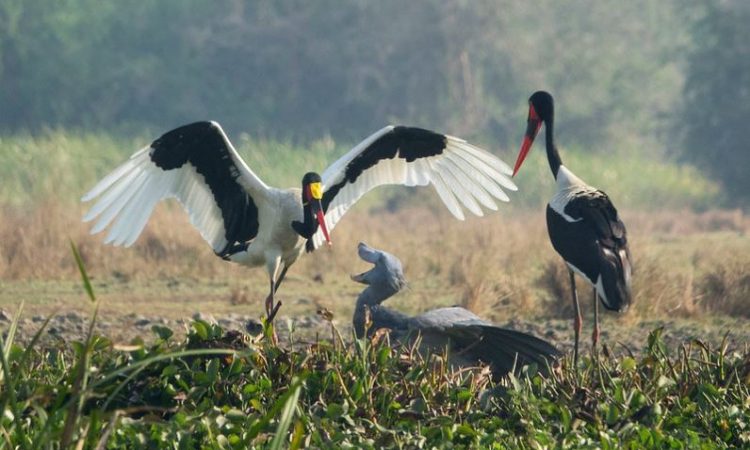
To experience a 10-day birding safari in Uganda, your journey should ideally combine the lush wetlands of Mabamba Swamp for the elusive Shoebill Stork, the savanna habitats of Lake Mburo, and the high-altitude Albertine Rift Endemics of Bwindi Impenetrable National Park
10-days-best-uganda-birding-safari-and-wildlife-experience
9-days-classic-uganda-birding-safari-tour
11-days-uganda-birding-safari-and-primate-experience
12-days-uganda-birding-tour-looking-for-rift-valley-endemic-birds-west-circuit
Day 1: Entebbe Arrival & Mabamba Swamp
Welcome to your 10 Days Uganda bird watching safari beginning in Entebbe. After landing at Entebbe International Airport, you will enjoy a comfortable transfer to Mabamba Wetland, one of the best birding areas for classic “river-and-papyrus” species. The day is designed to start strong with a memorable dugout canoe ride through the marshy channels. As you glide quietly across the water, you’ll scan papyrus edges and shallow lagoons for the elusive Shoebill Stork—one of Uganda’s most sought-after birds. Your guide will also help you spot other regional favorites such as the Papyrus Gonolek and African Jacana, alongside many additional wetland birds. You’ll learn how to read habitat cues for easier sightings, including where to expect birds and which sounds to listen for. This first day sets the tone for a highly focused and productive birding safari.
Day 2: Lake Mburo National Park (Birding Habitats & Species Focus)
On Day 2 of your 10 Days Uganda bird watching safari, you travel south to Lake Mburo National Park. The journey itself gives opportunities for informal bird stops, but your main focus will be on the park’s acacia woodland, wetlands, and open savanna zones. Lake Mburo is excellent for birders who want a balanced mix of land and water species, especially where acacia habitats concentrate many colorful birds. With your expert guide, you’ll spend the day searching for key targets such as the Red-faced Barbet, Crested Francolin, and other signature savanna birds. You will also look for waterbirds around the lakeshore depending on the season and weather conditions. This itinerary day is structured for maximum sightings—short walks, strategic scanning, and habitat-based birding techniques. In the evening, you’ll relax while your guide shares local bird behavior, feeding patterns, and identification tips to prepare you for Bwindi.
Day 3: Lake Mburo National Park (Full Birding Day)
Day 3 continues your 10 Days Uganda bird watching safari with a full day inside Lake Mburo National Park. After breakfast, you’ll move between the best viewpoints and bird-rich microhabitats, focusing on acacia associations and the transitional zones where different species overlap. This is the perfect time to refine your bird list and carefully photograph or record behavior—calls, feeding strategies, and flight patterns. Your guide will concentrate on high-probability species targets, including Brown-chested Lapwing and Crested Francolin, plus additional birds that are often missed when travelers rush. Depending on movement and seasonal conditions, you may also encounter other waterbirds and savanna specialties around the lake edges. The pace remains relaxed but active: guided walks and observation sessions are planned around the best times for bird activity. By the end of the day, you will have strengthened your identification skills and gained confidence for the forest endemics ahead in Bwindi.
Day 4: Bwindi Impenetrable National Park (Ruhija Sector)
Today you begin the forest phase of your 10 Days Uganda bird watching safari with travel to Bwindi Impenetrable National Park and transfer to the Ruhija Sector. Bwindi is famous for Albertine Rift endemics and offers birding experiences that feel truly special—dense vegetation, misty valleys, and rich bird soundscapes. After settling in, you’ll start guided bird walks designed to locate forest-dependent species. Your local guide will show you how to identify birds not only by appearance but also by calls and habitat preference—important in deep forest where visibility can be limited. The day focuses on forest edge birding and swampy pockets near Mubwindi, where bird diversity is high. You’ll look for endemic and near-endemic species while also enjoying the atmosphere of Bwindi’s unique ecosystem. The goal is to build a strong species list early, so you can enjoy more targeted searches on Days 5–6, especially for broadbills and other high-value birds.
Day 5: Bwindi (Mubwindi Swamp Bird Walks)
Day 5 of your 10 Days Uganda bird watching safari is dedicated to Mubwindi Swamp and surrounding forest habitats. This area is one of the best places to connect with Albertine Rift bird endemics in a realistic, guided way. Early in the day, you’ll go out with your expert guide for focused bird walks through the swamp-edge vegetation and humid forest zones. The emphasis is on identifying species by both sight and sound, because many of the most wanted birds can be easier to detect by call than by direct viewing. Your key targets include the Grauer’s Broadbill, African Green Broadbill, and Regal Sunbird—birds that can require patience and quiet observation. Depending on conditions, you may also record other forest specials with similar habitat needs. Your guide will manage walking routes, scanning points, and timing to keep sightings realistic and productive. This day offers one of the most exciting “endemic birding” experiences of the entire trip. By nightfall, you’ll have a much stronger understanding of Bwindi’s birding hotspots.
Day 6: Bwindi (Endemic Bird Focus & Forest Strategies)
On Day 6, your 10 Days Uganda bird watching safari continues deeper into Bwindi’s bird-rich areas, with additional time in the Ruhija/Buhoma region depending on movements and sightings. This day is planned for strategic endemic bird searching—slow, careful observation and repeated scanning of likely feeding areas. Your guide will focus on understanding which zones are best for each target species, including canopy layers, undergrowth, and humid forest pockets. In many cases, birds move quietly, so you will learn how to position yourself for better chances—standing still, watching through binoculars, listening for calls, and using habitat cues to predict where birds will appear. While the exact species depend on the day and bird activity, the itinerary prioritizes Albertine Rift specials and other high-value forest birds that birders travel to Uganda specifically to see. You’ll also enjoy comfortable pacing, with short breaks and time to review your sightings and notes for better accuracy during the remaining days. This is one of the key building blocks for a successful Bwindi birding experience.
Day 7: Optional Gorilla Trekking or Extra Birding
Day 7 offers flexibility during your 10 Days Uganda bird watching safari—you can choose between optional mountain gorilla trekking in Bwindi or continuing dedicated birding along forest edges. If you select gorilla trekking, you’ll experience a once-in-a-lifetime conservation encounter while your guide supports the plan in a way that still respects your birding interests. Alternatively, if you prefer to stay focused purely on birds, you can enjoy additional habitat time that increases your chance of new forest additions, especially in areas where birds are active after early trekking hours. Your guide will tailor route and timing to the option you choose, ensuring you get the most from your morning and afternoon. Whether gorillas or birds, the purpose of Day 7 is to keep your journey memorable and balanced—mixing intense birding effort with a broader wilderness experience. By evening, you’ll review your sightings, compare them with target lists, and prepare for the savanna and lake-birding highlights of Queen Elizabeth National Park.
Day 8: Queen Elizabeth National Park (Kazinga Channel Cruise)
Today your 10 Days Uganda bird watching safari shifts from Bwindi to Queen Elizabeth National Park. After travel, you will settle into the park area and enjoy one of the most productive birding experiences— a Kazinga Channel boat cruise. This channel is known for concentrating waterbirds and raptors, offering excellent viewing from the water. As your boat moves slowly along the shoreline, you’ll scan for species such as African Fish Eagle, Pink-backed Pelicans, and multiple kingfisher species. The cruise is designed to match bird behavior: you’ll observe feeding spots, roosting areas, and active flight lines around the channel. After the cruise, there is time for additional birding observations depending on timing and energy levels. This day is perfect for birders who want a major jump in aquatic bird diversity, with both dramatic raptors and colorful smaller birds. Your guide will help with identification and will also share how to interpret movement patterns so you can “read” where birds will appear next. The evening becomes an excellent time for reviewing your best sightings of the cruise.
Day 9: Queen Elizabeth National Park (Ishasha Sector Game Drive)
Day 9 continues your 10 Days Uganda bird watching safari with time in the Ishasha sector of Queen Elizabeth National Park. Ishasha is well known for its distinctive landscapes and wildlife, but it can also offer strong birding opportunities, especially where habitat variation supports diverse species. After breakfast, you’ll head out on a game drive that blends birdwatching with wildlife viewing. During the drive, your guide will keep a strong focus on birds—watching tree canopies, open grass patches, and edges where birds feed and call. You’ll scan for raptors and other species that benefit from the sector’s unique conditions. The timing of the day is chosen to maximize active bird periods, with stops made when birds are spotted. This approach ensures you don’t miss opportunities when sightings are present. Even though game drives are often associated with animals, this itinerary is curated to keep birds at the center of each stop. By the end of the day, you will likely add new species to your list and gain fresh confidence in how birds behave across different ecosystems—forest, lakes, and savanna.
Day 10: Departure (Maramagambo Forest Morning Walk)
On your final day of your 10 Days Uganda bird watching safari, you’ll enjoy a last birding experience before departure. After an early morning setup, you will take a birding walk in Maramagambo Forest. This area provides a softer, bird-rich environment—ideal for final species additions, especially for listeners who enjoy identifying birds by call in humid forest surroundings. Your guide will tailor the walk based on what you have already seen, focusing on birds that are likely remaining on your target list. This helps ensure the last hours of the safari remain productive rather than repetitive. Once the morning birding session is complete, you will begin the journey back to Kampala or Entebbe Airport for your flight home. The trip closes with reflection and gratitude—reviewing your best moments, your most exciting sightings, and the learning you gained from habitat-based birding guidance. You leave with a complete birding memory, a strong species list, and the confidence to identify birds across Uganda’s diverse habitats.
Best time for 10 Days Uganda bird watching safari
The best time for a 10 Days Uganda bird watching safari in Uganda depends on weather, bird activity, and your comfort. Uganda has two main rainy seasons: March–May and September–November. During heavier rains, birding can still be excellent, but some roads may be wetter and gorilla/forest conditions can be more challenging in Bwindi. For most travelers, the most popular and reliable birding periods are December–February (drier, cooler, excellent visibility) and June–August (generally dry to relatively stable). These months are ideal if you want comfortable walking, easier transfers, and strong chances for spotting birds at wetlands and savanna parks like Lake Mburo and Queen Elizabeth. If you want greener landscapes and fewer crowds, shoulder months may also work well. Your guide will adapt the route and timing to match seasonal bird behavior, so you still get a productive itinerary even when conditions change.
What to pack on 10 Days Uganda bird watching safari
Packing well makes your 10 Days Uganda bird watching safari more comfortable, easier, and more productive. Bring a good pair of binoculars (essential), and if possible, a camera with telephoto lens. Wear lightweight, neutral-colored clothing for forest and savanna habitats—avoid bright colors. Pack a rain jacket or waterproof poncho, because Uganda’s weather can change quickly, especially near swamps and during forest walks. Include comfortable walking shoes (closed-toe) with good grip for Bwindi trails. Bring a hat, sunscreen, and insect repellent—mosquito protection is important around wetlands and evenings. Carry a reusable water bottle and basic snacks for long outings. In your day bag, pack tissues, wet wipes, and a small first-aid kit. For night comfort, pack a warm layer if you get cold, particularly in cooler highland areas. Lastly, bring a power bank for keeping your phone/camera ready for photos and records.
Where to stay on 10 Days Uganda bird watching safari
Where you stay during your 10 Days Uganda bird watching safari depends on your preferred comfort level and the pace of the itinerary. At Entebbe, you can choose hotels close to the airport for easy start and smooth rest the night before travel. For Lake Mburo National Park, lodging is typically within or near the park area so you can begin birding early and maximize time in acacia and lake habitats. In Bwindi (Ruhija/Buhoma sectors), you’ll generally find lodges and guesthouses close to trail access points, making it easier to start forest walks early and reduce transfer time. For Queen Elizabeth National Park, many accommodations are located near park entrances and viewpoints to support morning boat cruises on the Kazinga Channel and game drives later in the day. When booking with Roads of Adventure Safaris, we match your stay to your budget and birding goals, ensuring convenient locations, reliable services, and comfortable rest after long birding days.
Booking 10 Days Uganda bird watching safari with Roads of Adventure Safaris
Booking your 10 Days Uganda bird watching safari with Roads of Adventure Safaris means you get a well-organized birding experience guided by knowledgeable professionals. We plan your itinerary to focus on Uganda’s best birding habitats—from wetlands like Mabamba to endemic-rich forests in Bwindi, and lake/river birding around Queen Elizabeth. After you express your interests and target birds, we tailor the daily schedule to match timing and seasonal bird activity, helping you maximize sightings without feeling rushed. You also benefit from local guidance—our team helps with identification, behavior reading, and best viewing techniques, so your bird list grows meaningfully each day. We handle logistics like transport, timing, and confirmations, so you can stay focused on the birds and the experience. To book, share your travel dates, number of travelers, and preferred accommodation level, and we’ll recommend the best plan and availability for August 2027 or your chosen season.
