Traveling on a 25-day bird-watching safari in Uganda requires a comprehensive, custom-tailored itinerary booked through a local tour operator like Roads of Adventure safaris. You will need a specialized 4x4 safari vehicle and an expert local bird guide to cover diverse ecosystems and successfully spot over 1,000 recorded bird species across the country.
25 bird watching safari in Uganda
Embark on the ultimate 25 bird watching safari in Uganda, a premier African destination boasting over 1,000 avian species. This comprehensive 25 bird watching safari in Uganda traverses’ diverse ecosystems, from lush equatorial rainforests to expansive savannahs and tranquil wetlands. Uganda is a birding paradise where enthusiasts can spot rare endemics, spectacular migratory flocks, and iconic species like the prehistoric Shoebill stork. Throughout this 25-bird watching safari in Uganda, expert local guides will lead you through prime birding hotspots, ensuring remarkable sightings and unforgettable wilderness encounters. You will explore top national parks, localized forest reserves, and community-managed swamps that make the country a global birding magnet. Whether you are a lifelong twitcher or a passionate nature lover, this meticulously crafted 25 bird watching safari in Uganda offers the perfect balance of prolific bird life, stunning landscapes, and rich cultural interactions. Prepare your binoculars for an extraordinary journey across Uganda’s finest avian habitats.
Day 1: Arrival at Entebbe International Airport
Welcome to your highly anticipated 25 bird watching safari in Uganda. Upon arrival at Entebbe International Airport, your professional guide will meet you and transfer you to your boutique hotel. Entebbe sits on a lush peninsula jutting into Lake Victoria, providing an immediate introduction to the region's rich birdlife. After checking in and settling down, you will step out into the hotel’s mature gardens for an afternoon introductory birding walk. Keep your eyes peeled for the colorful Great Blue Turaco, Eastern Plantain-eater, and the African Openbill stork flying overhead. You might also spot the vibrant Red-chested Sunbird, African Thrush, and various weavers nesting in the lakeside trees. This relaxed first session sets a wonderful pace for the rest of your 25 bird watching safari in Uganda. Enjoy a delicious welcome dinner while briefing with your guide on the incredible route ahead.
Day 2: Birding in Mabamba Swamp
Today, your 25-bird watching safari in Uganda targets one of Africa's most sought-after avian icons: the elusive Shoebill Stork. You will head out early to Mabamba Swamp, a massive Ramsar wetland site located on the shores of Lake Victoria. Navigating the narrow, papyrus-fringed channels in a traditional motorized canoe allows for an intimate look at this unique habitat. Your expert local skipper knows exactly where the prehistoric-looking Shoebill likes to stalk its lungfish prey. Beyond this legendary giant, Mabamba is teeming with other spectacular wetland specialists. Watch for the striking Lesser Jacana, African Pygmy-goose, Blue-breasted Bee-eater, and Malachite Kingfisher darting across the water. You will also look out for the Swamp Flycatcher, Papyrus Gonolek, and Long-toed Lapwing. This morning excursion is an absolute highlight of the 25 bird watching safari in Uganda, offering unbeatable photography opportunities before returning to Entebbe for a restful evening.
Day 3: Transfer to Mabira Forest Reserve
Your 25 bird watching safari in Uganda shifts toward dense equatorial rainforest environments today. You will drive eastward through vibrant local towns to reach the beautiful Mabira Forest Reserve, one of Uganda's largest remaining natural forests. Mabira is home to over 300 bird species, many of which are specialized forest canopy dwellers. Upon arrival, you will embark on a guided walk along the well-maintained network of forest trails. Under the towering primary trees, you will listen closely for the distinct calls of the Nahan's Francolin and the spectacular Great Blue Turaco. Scan the mid-canopy for the Purple-throated Cuckoo-shrike, Forest Wood-hoopoe, and the brilliant African Shrike-flycatcher. The forest floor and undergrowth also hide gems like the Fire-crested Alethe and Scaly-breasted Illadopsis. This immersive forest walk provides a stark, thrilling contrast to the wetlands, expanding your growing checklist.
Day 4: Birding Mabira Forest and Transfer to Jinja
Start the morning with another productive forest trail walk on this 25 bird watching safari in Uganda. Early morning is the peak activity time for forest birds as they feed on morning insects. You will look for the Yellow-crested Woodpecker, Blue-throated Roller, and various elusive greenbuls like the Toro Olive Greenbul. After an exciting morning of forest birding, you will check out and drive to the nearby historic town of Jinja. Famous as the source of the mighty Nile River, Jinja offers fantastic riverine birding opportunities. In the afternoon, you will take a boat cruise right to the exact point where the Nile exits Lake Victoria. Along the riverbanks, you will observe the giant African Finfoot, Rock Pratincole, White-browed Coucal, and Pied Kingfishers hovering gracefully over the water. This combination of forest and river birding highlights the diverse geography of Uganda.
Day 5: Journey to Mount Elgon National Park
The 25 bird watching safari in Uganda moves further east toward the majestic montane landscapes of Mount Elgon National Park. This extinct shield volcano on the Kenya-Uganda border hosts an array of montane forest and moorland bird species. The drive itself is scenic, passing through vast sugarcane fields, rocky outcrops, and terraced agricultural hillsides. You will arrive at the Kapkwai Forest Exploration Centre in the afternoon, which serves as a prime birding hub. The cool, high-altitude mountain air is refreshing and invites immediate exploration along the forest loop trails. Here, your targets include the stunning Jackson's Francolin, Moorland Francolin, and the spectacular Hartlaub's Turaco. You will also look out for the Tacazze Sunbird, Black-collared Apalis, and White-starred Robin. The high-canopy montane forest provides a completely unique ecosystem, adding dozens of specialized high-altitude birds to your comprehensive itinerary.
Day 6: Montane Birding at Mount Elgon
Dedicate a full day to exploring the altitudinal zones of Mount Elgon on this 25 bird watching safari in Uganda. Accompanied by armed park rangers and specialized local guides, you will hike through the lush bamboo zones and montane forests. The bird life here is diverse and highly localized, making every step an exciting discovery. Look out for the rare Hunter's Cisticola, Mustached Green Tinkerbird, and the Beautiful Sunbird feeding on flowering alpine plants. Overhead, look out for powerful raptors such as the Lammergeier (Bearded Vulture) and Ayres's Hawk-Eagle riding the mountain thermals. In the denser bamboo thickets, you might spot the elusive Cinnamon Bracken Warbler and the African Hill Babbler. The serenity of Mount Elgon, coupled with its lack of heavy tourist crowds, makes this an exceptionally peaceful and rewarding birding day. You will return to your lodge for dinner.
Day 7: Transfer to Pian Upe Wildlife Reserve
Today your 25 bird watching safari in Uganda takes you north into the vast, semi-arid plains of the Pian Upe Wildlife Reserve. This under-visited gem features large expanses of pristine savannah, rocky hills, and acacia woodlands, contrasting sharply with the wet forests you have seen so far. The drive offers excellent roadside birding, with chances to spot various hornbills and raptors. Upon arrival in Pian Upe, you will instantly notice the dramatic shift in bird populations. This dry habitat is a stronghold for the giant Common Ostrich and the elegant Secretarybird walking majestically through the grasslands. In the afternoon, an introductory game drive will reveal the Fox's Weaver, Uganda's only strict endemic bird species. You will also scan for the White-bellied Bustard, Karamoja Apalis, and Abyssinian Ground Hornbill, enjoying a wild savannah sunset.
Day 8: Full Day Birding in Pian Upe
Spend a marvelous, uninterrupted day exploring the wild landscapes of Pian Upe on your 25 bird watching safari in Uganda. The open savannah allows for excellent long-range visibility, perfect for spotting predatory birds. You will scan the isolated acacia trees for a wide variety of raptors, including the Martial Eagle, Bateleur, and Lesser Kestrel. The grasslands are alive with smaller, vibrant species like the Superb Starling, Yellow-billed Shrike, and Jackson's Hornbill. Your guide will also search the rocky kopjes for the Stone Partridge and Fox Kestrel. As you search for birds, you will likely encounter unique wildlife like the Cheetah, Roan Antelope, and Eland. The combination of rare dry-country birds and classic African big game makes this safari section highly memorable. Camp under a canopy of stars, listening to the night jars.
Day 9: Drive to Kidepo Valley National Park
Your 25 bird watching safari in Uganda ventures into the remote northern frontier as you drive to Kidepo Valley National Park. Located in the rugged hills of Karamoja, Kidepo is widely celebrated as one of Africa's most beautiful and virgin wildernesses. It boasts a checklist of over 475 bird species, many of which cannot be found anywhere else in Uganda. The drive is an adventurous journey through traditional Karamojong homesteads, known as manyattas, offering rich cultural vistas. You will arrive at Kidepo in the late afternoon just as the wildlife becomes active again. An evening drive around the Narus Valley reveals an incredible abundance of birds alongside massive herds of African Buffalo and Elephants. Look for the striking Rose-ringed Parakeet, Clapperton's Francolin, and the beautiful Abyssinian Roller perched on dead branches, welcoming you to this northern paradise.
Day 10: Birding the Narus and Kidepo Valleys
Enjoy a comprehensive exploration of Kidepo’s twin valleys on this 25 bird watching safari in Uganda. You will begin with an early morning drive through the Narus Valley, where permanent water sources attract high concentrations of birds and mammals. Scan the plains for the Black-breasted Barbet, Kori Bustard, and Fox Kestrel. The riverine woodlands are excellent spots to find the Violet-tipped Courser, Heuglin's Wheatear, and Pygmy Falcon. In the afternoon, you will drive north toward the sand-river of the Kidepo Valley near the South Sudan border. Here, the landscape features beautiful borassus palm forests where the African Mustached Warbler and Rufous-crowned Roller reside. You will also search the dry scrub for the Karamoja Apalis and Golden Pipit. The sheer wildness and breathtaking mountain backdrops make this a standout day for photography.
Day 11: Transfer to Murchison Falls National Park
The 25 bird watching safari in Uganda continues southwest toward Murchison Falls National Park, Uganda's oldest and largest protected area. The journey takes you through Gulu town and enters the park from its northern gate. Murchison Falls isbisected by the historic Victoria Nile and features an exceptional variety of habitats, including Borassus palm savannahs, riverine woodlands, and wetlands. This diversity supports over 450 bird species, making it an essential stop on any serious Ugandan birding itinerary. As you enter the park, you will immediately start birding along the game tracks, looking out for the Abyssinian Ground Hornbill, Denham's Bustard, and Black-headed Lapwing. You will reach your comfortable lodge overlooking the Nile just in time for a relaxing dinner, falling asleep to the distant grunts of hippos wallowing in the river.
Day 12: Delta Boat Cruise and Game Drive
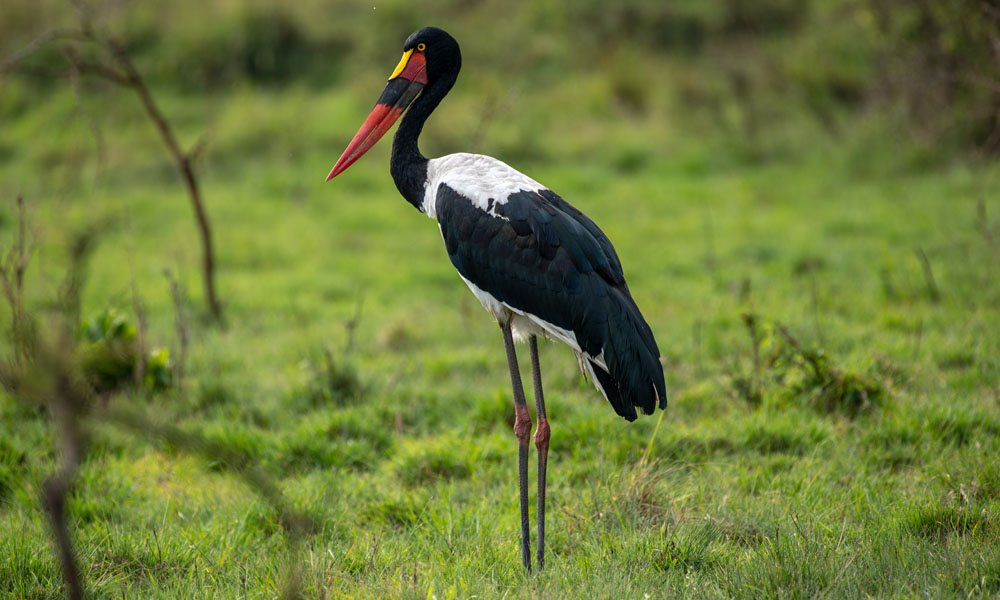
A truly magical day awaits on this 25 bird watching safari in Uganda as you take a morning boat cruise downstream toward the Nile Delta. This area, where the river empties into Lake Albert, is a globally recognized wetland rich in water birds. You will quietly glide past papyrus banks, looking for another chance at the legendary Shoebill Stork. Watch for the Saddle-billed Stork, Goliath Heron, African Fish Eagle, and the beautiful Malachite Kingfisher. Huge colonies of Red-throated Bee-eaters nest in the sandy river cliffs, creating a spectacular display of color and movement. In the afternoon, you will embark on a game drive through the northern savannah tracks. Here, you will aim to spot the Secretarybird, Martial Eagle, and Swallow-tailed Bee-eater, while also observing large numbers of Rothschild's Giraffes, Lions, and Hartebeests.
Day 13: Top of the Falls and Budongo Forest
This morning, your 25 bird watching safari in Uganda brings you to the magnificent Top of Murchison Falls. Here, the entire Nile compresses through a narrow seven-meter canyon, creating a thunderous roar and a permanent rainbow mist. Rock Pratincoles can often be seen clinging to the wet rocks amidst the spraying water. After witnessing this natural wonder, you will drive south to the Kaniyo Pabidi sector of the Budongo Forest Reserve. Budongo is a massive mahogany forest famous for both chimpanzees and exceptional West African forest bird species. You will take an afternoon guided walk under the tall canopy, searching for the Puvel's Illadopsis, a rare species found only here in East Africa. You will also look for the Chocolate-backed Kingfisher, Rufous-crowned Eremomela, and Yellow-crested Woodpecker, enjoying the cool forest shade.
Day 14: Birding the Famous Royal Mile
Today features a legendary highlight of this 25 bird watching safari in Uganda: birding the historic "Royal Mile" in the Busingiro sector of Budongo Forest. This wide, flat forest track was historically maintained for the local King and now provides the premier forest birding lane in all of Africa. The open overhead canopy allows superb visibility for spotting difficult forest interior species. Guided by an expert tracker, you will search for the rare Nahan's Francolin, Lemon-bellied Crombec, and the spectacular Blue-breasted Kingfisher. Keep your eyes sharp for the Dwarf Kingfisher, Chestnut-capped Flycatcher, and Ituri Batis. The forest is also alive with various greenbuls, illadopsises, and sunbirds, including the tiny Western Violet-backed Sunbird. Spending a full day along the Royal Mile will dramatically boost your forest bird checklist with highly prized West African species.
Day 15: Transfer to Kibale Forest National Park
Your 25 bird watching safari in Uganda journeys further south along the scenic Albertine Rift valley toward Kibale Forest National Park. The drive offers stunning vistas of traditional tea plantations blanketing the rolling hills around Fort Portal town. Kibale Forest is renowned as the primate capital of East Africa, hosting 13 species including chimpanzees, but it is equally famous as a prime birding destination with over 375 recorded species. You will check into your lodge nestled on the forest fringe in the afternoon. Afterward, you will take a guided evening walk along the forest edges, looking for the spectacular Great Blue Turaco, Joyful Greenbul, and Black-and-white Casqued Hornbill. You will also look out for the Narrow-tailed Starling and Olive Sunbird feeding on forest edge blossoms, preparing for tomorrow's deep-forest adventure.
Day 16: Green-breasted Pitta Search and Chimpanzee Tracking
An exceptionally early start on this 25 bird watching safari in Uganda gives you the best chance to witness the rare Green-breasted Pitta. This elusive forest floor dweller displays early in the morning before dawn, making it a dream target for serious birders worldwide. You will venture into the dark forest with specialized rangers, listening for its distinct wing-clapping sound. Once found, seeing this brilliantly colored bird is an unforgettable milestone. Later in the morning, you will switch gears to track habituated Chimpanzees, observing our closest relatives swinging through the high canopy. In the afternoon, you will explore the nearby Bigodi Wetland Sanctuary. This community-run boardwalk trail is excellent for viewing the Great Blue Turaco, Papyrus Gonolek, White-winged Warbler, and the colorful Black-billed Turaco, while supporting local conservation initiatives.
Day 17: Transfer to Queen Elizabeth National Park
Today, your 25 bird watching safari in Uganda heads south across the equator to Queen Elizabeth National Park. This park boasts an astonishing list of over 600 bird species, reflecting its incredible mix of savannah, wetlands, craters, and lowland forest. The drive offers majestic views of the towering Rwenzori Mountains rising sharply on the horizon. Upon entering the park, you will take an introductory game drive across the Kasenyi plains. This open savannah area is an excellent spot to find the African Wattled Lapwing, Temminck's Courser, and Martial Eagle. You will also look out for the Rufous-naped Lark and Flappet Lark performing their distinct aerial displays. Along with spectacular bird life, you will likely encounter large schools of Uganda Kob, African Elephants, and Lions, showcasing the classic African safari experience.
Day 18: Kazinga Channel Boat Cruise and Game Drive
Another classic highlight of this 25 bird watching safari in Uganda takes place today along the Kazinga Channel, a natural 32-kilometer waterway connecting Lake Edward and Lake George. In the afternoon, you will embark on an unforgettable boat cruise that brings you within feet of the water edge. The channel banks are crowded with hundreds of Pied Kingfishers, African Skimmers, Yellow-billed Storks, and Great White Pelicans. You will also spot the giant Goliath Heron, Black Crake, and various migratory waders. Large numbers of Hippos, Nile Crocodiles, and Elephants come down to drink, providing amazing close-up photography. In the morning, you will have explored the crater lakes area, searching for the Lesser Flamingo that occasionally visits the salt lakes. This day beautifully blends heavy aquatic birding with big game viewing.
Day 19: Birding Maramagambo Forest and Ishasha Sector
Your 25 bird watching safari in Uganda explores the southern reaches of Queen Elizabeth National Park today. You will start with a morning walk into the dark, shady Maramagambo Forest, which contrasts sharply with the nearby open savannahs. This lush forest surrounds a beautiful volcanic crater lake and is home to the rare Black Bee-eater, Blue-breasted Kingfisher, and Yellow-throated Tinkerbird. You will also visit a massive bat cave where African Rock Pythons can sometimes be spotted hunting fruit bats. Afterward, you will drive south to the remote Ishasha Sector of the park. Ishasha is world-famous for its unique tree-climbing lions, which lounge lazily in the branches of giant fig trees. As you scan the trees for lions, you will also spot the Broad-billed Roller, Striped Kingfisher, and White-headed Barbet.
Day 20: Transfer to Bwindi Impenetrable National Park
The 25-bird watching safari in Uganda climbs into the rugged Kigezi highlands to reach Bwindi Impenetrable National Park, a UNESCO World Heritage site. Bwindi is the premier birding destination in Uganda, hosting 23 Albertine Rift endemics that cannot be seen outside this specific mountain region. The steep, mist-covered hills are cloaked in ancient, dense rainforest that has survived for over 25,000 years. You will check into your lodge in the Buhoma sector, enjoying the cool mountain air. In the afternoon, you will start your Bwindi checklist along the river trail. Look out for the spectacular Blue-throated Roller, Short-tailed Warbler, and the beautiful Bar-tailed Trogon. You will also watch for the Kivu Ground Thrush and White-bellied Robin-Chat hiding in the dense undergrowth, enjoying this montane paradise.
Day 21: Gorilla Tracking and Forest Edge Birding
Today offers a legendary wildlife experience seamlessly woven into your 25 bird watching safari in Uganda: tracking the endangered Mountain Gorilla. While hiking through the steep, dense jungle slopes in search of a habituated gorilla family, keep your binoculars ready. The forest canopy is alive with Albertine Rift endemics like the Regal Sunbird and Rwenzori Batis. Spending an hour sitting just feet away from a giant Silverback gorilla is a profound, life-changing encounter. After returning from this thrilling trek, you will spend the late afternoon birding along the Buhoma community tracks. Here, you can easily spot the Black-billed Weaver, Magpie Mannikin, and Narrow-tailed Starling nesting near the village. This combination of iconic primate tracking and specialized mountain birding makes Bwindi an absolute crown jewel of the entire safari itinerary.
Day 22: Birding the Ruhija Sector of Bwindi
Your 25-bird watching safari in Uganda moves to the higher-altitude Ruhija sector of Bwindi National Park. Ruhija is the ultimate hotspot for Albertine Rift endemics, sitting at over 2,300 meters above sea level. Along the mountain road and forest trails, you will search for the critically endangered African Green Broadbill, one of Africa's most elusive and sought-after birds. Your expert guide will also help you identify the Handsome Francolin, Archer's Robin-Chat, and Stripe-breasted Tit. Scan the bamboo thickets for the Rwenzori Apalis, Mountain Masked Apalis, and Red-faced Woodland Warbler. The cool, misty mountain environment requires patient birding, but the rewards are unmatched, with nearly all of Uganda's key montane endemics present in these high-altitude ridges. You will spend the night at a cozy montane lodge.
Day 23: Transfer to Lake Bunyonyi via Mubwindi Swamp
Embark on an adventurous morning hike down to the Mubwindi Swamp inside Bwindi on this 25 bird watching safari in Uganda. This steep, rewarding trail is the absolute best location to confirm the African Green Broadbill and the rare Grauer's Rush Warbler. You will also look out for the Carruthers's Cisticola, Purple-breasted Sunbird, and Montane Sooty Boubou. After climbing back up from the swamp, you will check out and drive to the stunning Lake Bunyonyi. Known as the "Lake of a Thousand Islands," Bunyonyi is a deep, scenic body of water framed by intensely terraced agricultural hillsides. The lake’s name translates to "the place of many little birds," making it a perfect spot to unwind. In the evening, relax on a peaceful canoe ride, spotting the African Kingfisher, Bronze Mannikin, and various weavers.
Day 24: Transfer to Lake Mburo National Park
The 25-bird watching safari in Uganda heads eastward toward Lake Mburo National Park, Uganda's smallest savannah park but a powerhouse for specialized acacia-country birds. The drive takes you back through the rolling hills of Mbarara, arriving at Lake Mburo by early afternoon. This park features an attractive mix of acacia woodlands, rocky ridges, and a network of papyrus-fringed lakes. Upon arrival, an afternoon game drive will target the rare African Finfoot and the striking Red-faced Barbet, a localized specialty. You will also look out for the Rufous-bellied Heron, Coqui Francolin, and Tabora Cisticola. Lake Mburo is also the only park in southern Uganda where you can see large herds of Impala and Burchell's Zebra, providing a beautiful backdrop as you close out your extensive wildlife checklist.
Day 25: Morning Boat Cruise and Departure
On the grand final day of your 25-bird watching safari in Uganda, enjoy a serene morning boat cruise on Lake Mburo. This final excursion provides excellent; close-up looks at the rare African Finfoot swimming quietly along the grassy banks. Watch for the White-backed Night-Heron, Papyrus Yellow Warbler, and Shining-blue Kingfisher darting across the water. After the cruise, you will check out and begin your drive back to Entebbe International Airport. Along the way, you will make a memorable stop at the Equator crossing for photographs and souvenir shopping. Your guide will transfer you directly to the airport for your evening departure flight home. You leave with an enormous bird checklist, beautiful photographs, and lifelong memories of the spectacular 25 bird watching safari in Uganda.
1. What is the best time of year to book a 25-bird watching safari in Uganda?
Planning a comprehensive 25 bird watching safari in Uganda requires careful consideration of the country’s distinct seasonal weather patterns to maximize your avian sightings. While Uganda is a fantastic year-round birding destination due to its equatorial climate, the absolute best window for an extensive multi-week tour runs from late May to September, and again from December to February. During these drier months, forest trails in hotspots like Bwindi Impenetrable National Park and Kibale Forest are less muddy, making it much easier to track elusive forest floor dwellers like the Green-breasted Pitta or various Albertine Rift endemics.
Furthermore, if your primary goal during a 25-bird watching safari in Uganda includes witnessing spectacular populations of migratory birds, you should aim to travel between November and April. During this specific window, millions of palearctic migrants fly from Europe and northern Africa to settle temporarily in Uganda’s vast wetlands and savannahs. This influx drastically boosts your overall daily species checklist. However, the heavy rainy seasons of April and May can make remote northern roads leading to places like Kidepo Valley National Park challenging to navigate, potentially delaying a tightly packed itinerary. By scheduling your journey during the transitional dry periods, you balance comfortable traveling conditions, active local breeding displays, and excellent visibility across all major geographical zones.
2. What specialized gear should I pack for a 25-bird watching safari in Uganda?
Packing the correct equipment is vital to ensuring the ultimate comfort and success of an intensive 25 bird watching safari in Uganda. First and foremost, a high-quality pair of binoculars is your most essential tool; standard 8x42 or 10x42 magnification binoculars with excellent low-light capabilities are highly recommended for scanning dark, dense rainforest canopies. Given the vast length of a 25-bird watching safari in Uganda, you will also want to carry a lightweight spotting scope equipped with a sturdy tripod, which is invaluable for identifying distant waterbirds in places like the Nile Delta or Mabamba Swamp.
For documentation, bring a DSLR or mirrorless camera fitted with a telephoto lens of at least 400mm to capture crisp, detailed close-ups of fast-moving species. Because Uganda’s premier birding habitats span hot, semi-arid savannahs like Pian Upe to chilly, high-altitude montane forests like Mount Elgon, a versatile layering system of clothing is required. Pack lightweight, quick-drying shirts in neutral, earthy tones like khaki or green to blend seamlessly into the wilderness. Avoid bright primary colors, particularly blue, which actively attracts pesky tsetse flies in woodland environments. Finally, do not forget sturdy, broken-in waterproof hiking boots to handle rugged rainforest trails, a wide-brimmed sun hat, a durable rain poncho, and a comfortable, ergonomic backpack equipped with a waterproof rain cover to protect your sensitive electronics during sudden equatorial downpours.
3. How do I physically prepare for a 25-bird watching safari in Uganda?
An extensive 25 bird watching safari in Uganda is an incredible adventure, but it demands a good level of physical fitness and stamina. Over the course of nearly a month, you will engage in daily, multi-hour walking excursions across wildly diverse terrain types. To adequately prepare for your 25-bird watching safari in Uganda, you should begin a regular cardio and strength routine at least two to three months before your departure date. Focus on building lower body strength and endurance by taking long walks or hikes in your local area, gradually adding weight to a daypack to simulate carrying your personal birding gear.
A significant portion of this itinerary involves hiking through dense, high-altitude montane environments. For example, tracking Albertine Rift endemics in Bwindi or exploring Mount Elgon involves navigating steep, slippery ridges at elevations exceeding 2,000 meters above sea level. This high altitude can make standard trekking feel much more exhausting. Additionally, tracking down a family of mountain gorillas or seeking the rare African Green Broadbill inside Mubwindi Swamp requires hours of off-trail scrambling through tangled undergrowth and thick roots. By building up your physical stamina beforehand, ensuring your knees and ankles are strong, and getting used to walking in warm, humid conditions, you will minimize physical exhaustion and maximize your pure enjoyment of the birds.
4. Which specific endemic species can I expect to tick off during this tour?
The primary allure of booking a lengthy 25 bird watching safari in Uganda is the unparalleled opportunity to view highly localized bird species that cannot be found anywhere else on the planet. Uganda is home to Fox’s Weaver, the country’s only strictly defined endemic species, which resides primarily in the remote, swampy, acacia-dominated plains of eastern Uganda and the Pian Upe Wildlife Reserve. A dedicated 25 bird watching safari in Uganda will deliberately target this rare bird alongside a stunning array of Albertine Rift endemics, which are highly localized to the ancient montane forests shared along the western border.
As you traverse the high-altitude ridges of Bwindi Impenetrable National Park and the Rwenzori region, your expert guides will actively search for key endemic targets. These include the stunning Regal Sunbird, Archer’s Robin-Chat, Handsome Francolin, Rwenzori Batis, and the Mountain Masked Apalis. Perhaps the most coveted and critically endangered species on this list is the rare African Green Broadbill, which requires an adventurous trek into the depths of Bwindi's Ruhija sector. By dedicating a full 25 days to exploring the country's deepest biological pockets, you afford yourself the necessary time and multiple attempts needed to locate these incredibly secretive, range-restricted species, making your final master checklist an enviable achievement among global birders.
5. What are the vehicle requirements for a 25-bird watching safari in Uganda?
The immense geographic diversity of a 25-bird watching safari in Uganda means you will cover thousands of kilometers across paved highways, bumpy dirt roads, and rugged, muddy wilderness tracks. To ensure your safety, comfort, and optimal viewing capability, a robust 4x4 safari vehicle is non-negotiable. The ideal choice for a comprehensive 25 bird watching safari in Uganda is a customized 4x4 Toyota Land Cruiser, specifically retrofitted with a large pop-up roof or large, clear sliding windows that allow for seamless, 360-degree photography and binocular scanning during game drives.
Your vehicle must be equipped with heavy-duty suspension to absorb the impact of rough corrugated roads, particularly on the long journey up to the northern frontier of Kidepo Valley. It should also carry dual spare tires, a high-lift jack, and a reliable winch for pulling out of deep mud during unexpected rainforest downpours. Given the sheer length of time you will spend inside the vehicle traveling between far-flung national parks, onboard amenities like charging ports for your camera batteries, a built-in refrigerator to keep drinking water cold, and comfortable, window-adjacent seating are essential. Investing in a top-tier vehicle configuration guarantees that your long transit days are smooth and productive birding experiences.
6. How does a 25-bird watching safari in Uganda handle the Shoebill Stork search?
Locating the prehistoric-looking Shoebill Stork is an undisputed highlight of any 25-bird watching safari in Uganda, and the itinerary is strategically designed to maximize your chances of a successful sighting. This massive, enigmatic bird favors dense, undisturbed papyrus swamps where it can easily hunt lungfish in shallow waters. To find it, your 25-bird watching safari in Uganda will include dedicated excursions to globally recognized Ramsar wetland sites, most notably the Mabamba Swamp on Lake Victoria and the Nile Delta region within Murchison Falls National Park.
The search itself is carried out using traditional, narrow motorized wooden canoes that can quietly glide through the tight, hand-cut papyrus channels. You will head out at first light when the temperature is cool and the Shoebills are most active, standing completely motionless as they wait to ambush their prey. Local community guides, who monitor the movements of individual birds daily, work closely with your tour leader to track them down. Because these wetlands are delicate ecosystems, the search is conducted with the utmost environmental respect, maintaining a safe distance to avoid stressing the birds. Dedicating multiple days to different swamp locations across the 25 days ensures that even if weather conditions mask them on day one, you have backup opportunities to secure an unforgettable view.
7. What health precautions and vaccinations are needed for this trip?
A long-duration 25 bird watching safari in Uganda requires proactive health planning to ensure you remain vibrant and well throughout your month-long adventure. Because you will be traveling through remote wilderness zones, you must consult a travel clinic or your doctor at least six weeks prior to departure. A valid Yellow Fever vaccination certificate is a mandatory entry requirement for Uganda and will be checked by health officials upon arrival at Entebbe International Airport. Additionally, routine vaccines such as Hepatitis A, Hepatitis B, Typhoid, and Tetanus should be fully up to date.
Malaria is endemic throughout most regions visited on a 25-bird watching safari in Uganda, particularly in low-lying savannahs and wetland areas. Therefore, taking a prescribed malaria prophylactic is essential. Combine this with personal protective measures: apply a high-concentration DEET insect repellent daily, and wear long-sleeved clothing during dawn and dusk hours when mosquitoes are most active. Always sleep under a mosquito net, which is standard in all reputable safari lodges. Since birding involves long walks in tropical climates, staying hydrated by drinking only bottled or filtered water is vital. Carry a personal first-aid kit stocked with motion sickness pills, anti-diarrheal medication, rehydration salts, and any personal prescriptions to maintain peak physical health.
8. How do local community guides enhance a 25-bird watching safari in Uganda?
The success of a 25-bird watching safari in Uganda relies heavily on the profound expertise of local site guides who possess an intimate, lifelong knowledge of their specific regional habitats. While your main tour guide handles overall logistics and nationwide spotting, your 25-bird watching safari in Uganda will regularly integrate specialized local community guides at various stops, such as the Bigodi Wetland Sanctuary, Mabira Forest, and the slopes of Mount Elgon. These individuals live on the fringes of the protected areas and can recognize localized avian calls instantly.
These site experts know the exact territory, nesting trees, and daily behavioral patterns of highly secretive species. For instance, finding a tiny, camouflaged roosting African Scops-Owl or a nesting Green-breasted Pitta in a massive rainforest is nearly impossible without a local tracker who checked the location just hours prior. Furthermore, employing local guides ensures that the financial benefits of your 25-bird watching safari in Uganda flow directly back into the surrounding communities. This economic incentive directly fosters grassroots conservation, encouraging local residents to protect vital avian habitats from deforestation and poaching. Their unique cultural storytelling also adds immense depth to your journey, transforming a standard birding trip into a rich human experience.
9. What are the accommodation options like during a month-long safari?
Comfort and proper rest are essential on a 25-bird watching safari in Uganda, as early mornings and long days in the field can be physically taxing. Uganda offers an exceptional range of safari accommodations that can be tailored to your budget, ranging from rustic eco-camps to ultra-luxury wilderness lodges. Throughout a 25-bird watching safari in Uganda, your lodging will vary dramatically based on the geography, offering a unique architectural flavor at each destination.
In savannah parks like Murchison Falls or Queen Elizabeth, you can stay in beautifully appointed canvas safari tents raised on wooden platforms, offering en-suite bathrooms and private verandas that overlook active riverbanks or rolling plains. When traveling through montane rainforests like Bwindi or Kibale, accommodations shift to cozy stone cottages featuring fireplaces to ward off the chilly mountain night air. Most reputable lodges are strategically situated inside or immediately adjacent to the park boundaries, meaning the birding begins the moment you step outside your room. You can regularly spot sunbirds, hornbills, and weavers right from the dining terrace. These properties provide delicious multi-course meals, packed lunch boxes for long days in the bush, and reliable power systems to charge your essential camera gear
10. How can I balance birding with iconic primate tracking in Uganda?
One of the greatest advantages of booking a 25-bird watching safari in Uganda is the ability to seamlessly integrate world-class primate tracking into a comprehensive avian itinerary. Uganda’s premier birding forests happen to be the global strongholds for endangered primates. A well-planned 25 bird watching safari in Uganda capitalizes on this ecological overlap, allowing you to track wild Chimpanzees in Kibale Forest and Mountain Gorillas in Bwindi Impenetrable National Park without compromising your primary birding goals.
During a chimpanzee or gorilla trek, you will hike through the exact pristine forests that harbor rare Albertine Rift endemic birds. While the primary objective during those specific morning hours is locating the primates, your rangers are highly attuned to the environment and will happily point out striking birds like the Bar-tailed Trogon or Great Blue Turaco along the way. Once you spend your magical hour with the primates, the remainder of the afternoon is immediately pivoted back to dedicated, slow-paced trail birding or wetland walks. This dual-focus approach creates a highly dynamic and diverse safari experience, ensuring you witness Africa's most iconic megafauna and spectacular primate species while systematically executing a professional-grade birding tour.
11. What is the role of boat safaris on a 25-bird watching safari in Uganda?
Water-based excursions play a fundamental role in maximizing your species count on a 25-bird watching safari in Uganda, offering access to specialized riverine and wetland habitats that are completely inaccessible by foot or vehicle. Over the course of a 25-bird watching safari in Uganda, you will embark on several distinct boat safaris, each offering a totally unique micro-ecosystem and an incredible density of large waterbirds. These cruises allow for highly stable, close-up photography without disturbing the animals.
Key aquatic highlights include the famous boat cruise along the Kazinga Channel in Queen Elizabeth National Park, where the banks host massive congregations of Great White Pelicans, African Skimmers, and Kingfishers. In Murchison Falls National Park, a private boat cruise downstream to the Nile Delta provides a prime platform for viewing specialized marsh birds like the Saddle-billed Stork and Goliath Heron against a backdrop of hippos and crocodiles. Whether paddling quietly in a dugout canoe on the tranquil, high-altitude waters of Lake Bunyonyi or navigating the papyrus-lined channels of Mabamba Swamp, these boat safaris offer a relaxing yet incredibly productive break from trekking, adding a wealth of unique waders, herons, and raptors to your growing list.
12. How do I manage electricity and internet connectivity in remote areas?
Maintaining communication and keeping your sensitive electronic equipment fully powered is a vital logistical consideration on a 25-bird watching safari in Uganda, particularly when venturing into remote northern frontier regions like Kidepo Valley or Pian Upe. Throughout your 25-bird watching safari in Uganda, you will find that while major cities have robust infrastructure, remote wilderness lodges often operate entirely on independent solar power systems or generator grids, which may only run during specific hours of the morning and evening.
To ensure your cameras, binoculars, and phones never die in the field, carry a high-capacity portable power bank and a multi-socket travel adapter compatible with the UK-style G plugs used in Uganda. Many custom 4x4 safari vehicles feature built-in inverters, allowing you to charge your camera batteries directly while driving between birding hotspots. For internet connectivity, purchasing a local SIM card (such as MTN or Airtel) at Entebbe Airport upon arrival is highly recommended. While high-end lodges usually offer Wi-Fi in their central lounge areas, connection speeds can be slow and unpredictable in deep forests. Having a local data roaming plan provides surprisingly reliable 3G or 4G coverage across a majority of the country, letting you upload daily checklists to apps like eBird seamlessly.
13. What permit fees and park regulations should I be aware of?
Executing a legal, safe, and organized 25 bird watching safari in Uganda requires securing a variety of official permits and strictly adhering to national park regulations managed by the Uganda Wildlife Authority (UWA). A significant portion of your tour budget during a 25-bird watching safari in Uganda will go directly toward park entry fees, which are typically charged per person per 24-hour period. Specialized activities, such as birding walks within forest reserves, launch trips on the Nile, and swamp guiding fees, require independent local permits that must be booked well in advance.
If you choose to incorporate the iconic primate experiences, you must secure official Chimpanzee tracking permits for Kibale Forest and Mountain Gorilla tracking permits for Bwindi. Because these primate permits are strictly limited to protect animal health and prevent overcrowding, they must be booked months ahead of your arrival date. While inside the parks, regulations are strictly enforced to protect the delicate ecosystems. You must always remain on designated trails unless accompanied by an authorized park ranger, maintain silence to avoid flushing nesting birds, and strictly follow the "leave no trace" principle by disposing of all trash properly, ensuring these pristine habitats remain vibrant for generations to come.
14. What are the dining and dietary options on a 25-bird watching safari in Uganda?
Sustaining your energy levels through a rigorous 25 bird watching safari in Uganda is easy thanks to the excellent dining standards maintained across Uganda’s safari hospitality sector. Throughout your 25 bird watching safari in Uganda, most of your meals will be provided on a full-board basis by your chosen lodges. Breakfasts are typically served very early to accommodate pre-dawn birding departures, featuring a hearty spread of eggs, fresh tropical fruits like pineapple and passion fruit, freshly baked bread, and world-class organic Ugandan coffee or tea.
For lunch, because you will often spend the entire day exploring deep forests or distant savannah tracks, lodges will provide a customized packed lunch box containing sandwiches, chicken, fruit, and snacks to enjoy at a scenic wilderness picnic site. Dinners are typically relaxed, multi-course meals served back at the lodge, featuring a blend of international cuisine and traditional Ugandan dishes like matooke (steamed green bananas) and peanut stews. Reputable lodges are exceptionally accommodating when it comes to managing specific dietary requirements. Whether you are vegetarian, vegan, gluten-free, or have specific food allergies, simply inform your tour operator at the time of booking so the lodge chefs can curate safe, delicious meals for you every day.
15. Why should I use the eBird app on a 25-bird watching safari in Uganda?
Utilizing citizen science tools like the eBird mobile application can immensely enhance the structure and global impact of your 25-bird watching safari in Uganda. Developed by the Cornell Lab of Ornithology, eBird serves as a digital logbook that allows you to record every single species you see and hear in real-time. Given that a 25-bird watching safari in Uganda will expose you to hundreds of diverse species across vastly different geographical coordinates, using this digital app keeps your daily checklists highly organized, mapping your exact GPS locations automatically.
Beyond personal organization, logging your sightings on eBird contributes invaluable data to global avian conservation efforts. Scientists and local researchers use this crowdsourced data to track migratory patterns, monitor fluctuations in bird populations, and assess the overall health of threatened ecosystems like the Albertine Rift or the papyrus wetlands. The app also allows you to explore regional hotspots beforehand, showing you what other birders have recently spotted in Mabamba or Budongo Forest. This helps you and your guide fine-tune your daily targets. Sharing your completed 25-day master list electronically with your local guide is a wonderful way to celebrate a successful trip while supporting the broader Ugandan birding community.
Booking 25 bird watching safari in Uganda with us Roads of Adventure safaris
To book the 25-day Complete Uganda Birding Safari Extravaganza with Roads of Adventure Safaris, visit their Roads of Adventures Safaris homepage or review their specific 25 Days Complete Uganda Birding Safari tour page to view the full itinerary and submit your reservation request.
