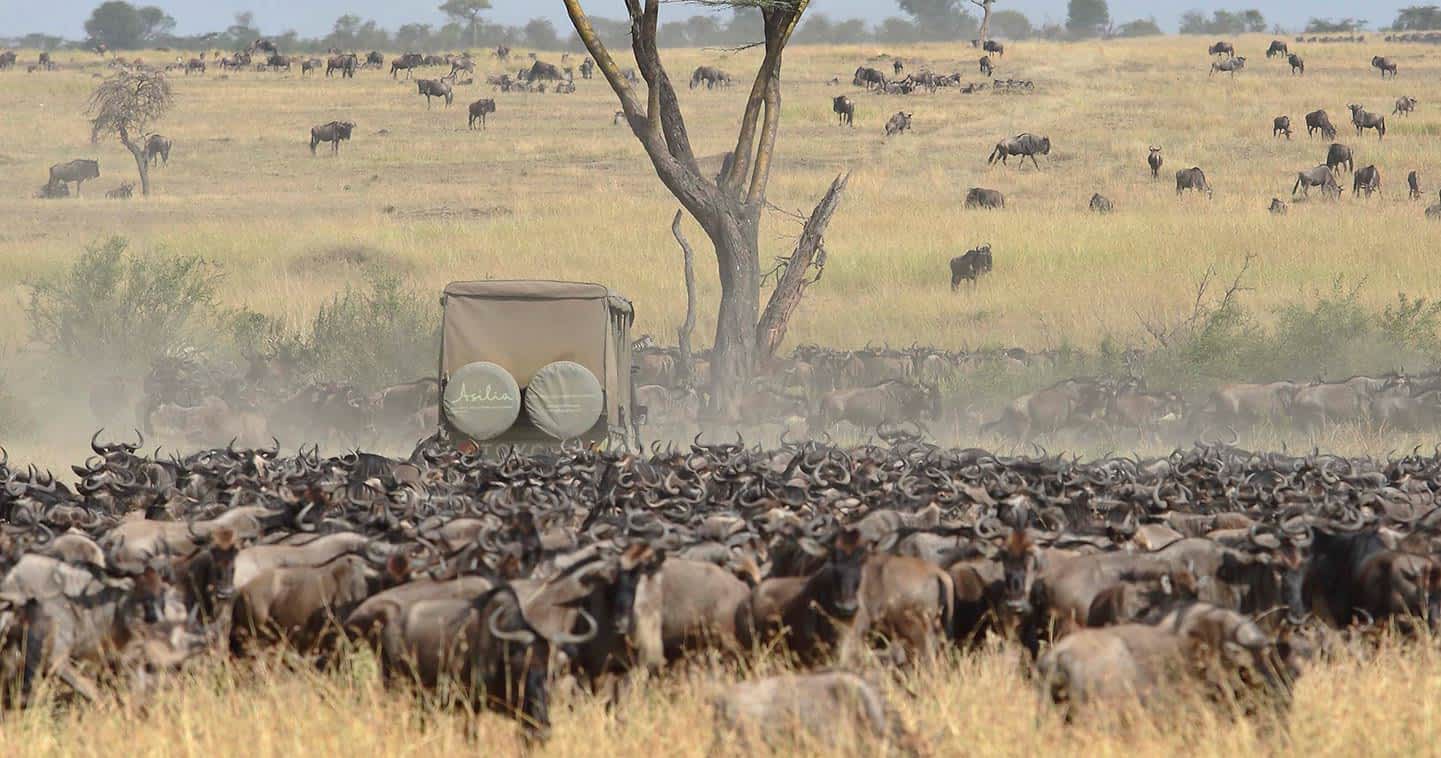
To secure a last-minute Serengeti safari in Tanzania this travel season, your most effective strategy is to book a group-joining safari through a reputable local tour operator and remain highly flexible with your travel dates and accommodation type
Popular 3 days Serengeti safari tour packages
3-days-serengeti-safari-fly-in-ngorongoro-big-five-safari-from-zanzibar-island
3-days-best-of-central-serengeti-safari-begive-spotting-and-game-watching
3-days-ndutu-and-ngorongoro-crater-safari-in-tanzania
3-budget-tanzania-to-safari-serengeti-and-ngorongoro
3-days-southern-serengeti-safari-tour-and-ngorongoro-crater-calving-season-package
3-days-amazing-serengeti-safari-to-ngorongoro-crater-tanzania-tour
5-days-tanzania-safari-to-tarangire-serengeti-ngorongoro-and-lake-manyara
4-days-central-serengeti-safari-tour-and-mara-river-crossing-in-northern-serengeti
1. Act Fast and Connect with Local Operators
When time is running out, bypassing international travel agencies is the single most important step you can take. Global booking platforms and foreign agents often face dynamic communication gaps across time zones and lack immediate visibility into vehicle fleets and campsite availability on the ground. To execute a successful last-minute Serengeti safari, you must directly contact established, Arusha-based tour operators. Arusha serves as the undisputed logistical hub for Tanzania’s northern safari circuit, housing the head offices, vehicle garages, and guide networks for the country's premier operators.
Local operators possess an invaluable advantage: on-the-ground, immediate insider connections. While small, independent safari lodges deep within the Serengeti may show zero availability on global search engines, local Arusha agents frequently hold pre-booked room allocations or maintain a direct WhatsApp line with lodge managers. They are the first to know when an international group cancels a block of luxury tents, allowing them to instantly snap up newly opened rooms for you.
To maximize your chances of success, send precise inquiries via WhatsApp or direct email to multiple local agencies simultaneously. Do not waste time asking vague questions. State your exact target dates, your total traveler count, and your explicit budget level in your first message. This allows local agents to cross-reference your needs with live vehicle availability, coordinate park permit allocations through the Tanzania National Parks Authority (TANAPA) online reservation system, and deliver an actionable, fully priced quote within hours. This rapid turnaround is the key to transforming a spontaneous travel idea into a seamless safari reality before the last park permits slip away.
2. Be Flexible with Dates and Itineraries
Securing a spot on a short-notice safari requires a high degree of structural flexibility. The Serengeti is one of the most sought-after wildlife destinations on earth, meaning that rigid adherence to a specific date or a highly customized, isolated route can result in an immediate logistical dead end. If your initial travel dates appear completely blocked, shifting your perspective by just three to four days can completely rewrite your accommodation and vehicle availability options.
Nairobi/Arusha ---> Tarangire or Lake Manyara ---> Ngorongoro Crater ---> Serengeti Plains
Additionally, look beyond the absolute peak of the dry season (July to October) when lodge prices are at their highest and crowding is intense. Embracing the shoulder or "Green Season" windows—such as late spring or the short rains of November—dramatically increases your odds of securing last-minute permits. During these periods, international traveler numbers soften, room rates drop, and vehicle availability rises, yet the resident big cat and elephant viewing remains spectacular across the emerald-green savannah plains.
When communicating with Arusha agents, explicitly ask about established, multi-destination circuits rather than a standalone Serengeti trip. A classic 4-to-6-day northern circuit itinerary typically pairs the Serengeti with the Ngorongoro Crater, Tarangire National Park, or Lake Manyara. Because operators run these loops continuously, they can easily slot a last-minute traveler into an existing vehicle route. This approach saves you money and ensures a diverse wildlife experience, taking you from the elephant-rich baobab forests of Tarangire directly to the high-density predator populations of the Ngorongoro Crater floor.
3. Choose Group-Joining Safaris (Or Basic Camping)
Attempting to book a fully private, highly customized luxury lodge safari at the eleventh hour is incredibly difficult and financially punitive. During peak travel windows, elite permanent tented camps sell out up to a year in advance. To guarantee a spot on short notice, you must pivot toward a group-joining safari model. In a group-joining setup, you purchase a seat in a shared 4×4 safari Land Cruiser with other travelers who are following the exact same northern circuit route.
This shared approach offers massive structural and financial benefits. Because the fixed costs of the vehicle, fuel, and professional driver-guide are split evenly among the passengers, the per-person price drops significantly compared to a private tour. Furthermore, group-joining tours run on fixed daily departures, making them much easier for local operators to confirm at a moment's notice since the vehicle and guide are already secured.
To overcome accommodation roadblocks, ask your operator for public tented camps or basic mobile camping options. While permanent luxury lodges have a rigid and limited room capacity, public and special campsites managed by TANAPA rarely sell out. On a basic camping safari, your operator provides high-quality canvas dome tents, sleeping mattresses, and a dedicated safari chef who travels with the group to prepare fresh meals over campfires. This style bypasses the room availability crisis, immerses you deeply in the wild sounds of the African night, and keeps your spontaneous trip highly affordable and completely flexible.
4. Handle Logistics and Visas
Executing a spontaneous safari requires rapid and flawless execution of your international arrival logistics and border health compliance. Your primary aviation objective should be flying directly into Kilimanjaro International Airport (JRO). Situated seamlessly between the towns of Arusha and Moshi, JRO serves as the main gateway to the northern safari circuit, eliminating the grueling, day-long overland transfers required if you mistakenly land at Julius Nyerere International Airport (DAR) in Dar es Salaam.
International Flight ---> Kilimanjaro Airport (JRO) ---> 1-Hour Transfer ---> Arusha Hub
Simultaneously, you must address your legal entry documentation. Your passport must possess a minimum validity of six months beyond your planned date of departure and contain at least one completely blank page for physical immigration endorsements. You should immediately apply for your Tanzania Tourist Visa via the official Electronic Visa Application System portal. While the automated e-visa system is highly efficient, processing typically takes two to five business days. If your departure date is less than 48 hours away, check your nationality's eligibility for a Visa on Arrival at the JRO immigration counters; however, be prepared for long queues during peak seasons. The standard single-entry tourist visa fee sits at $50 USD for most international passport holders, while United States citizens are required to secure a $100 USD multiple-entry holiday visa.
Finally, do not overlook critical regional health regulations. If your sudden flight route transits through or originates from a country with a known risk of Yellow Fever transmission (such as neighboring Kenya or Uganda), Tanzanian border officials will strictly demand a physical Yellow Fever international certificate of vaccination. Ensure your physical card is packed in your hand luggage alongside printed copies of your approved e-visa and detailed safari itinerary to avoid costly administrative delays at the border checkpoint
1. How do dynamic seasonal shifts in the Serengeti affect a last-minute booking?
When executing a last-minute booking, you must align your itinerary with the Great Migration's current location. From July to October, the massive wildebeest herds dominate the Northern Serengeti (Kogatende) and cross the Mara River, meaning you must target northern airstrips and camps.
If you are booking spontaneously during the short rains of November and December, or the calving season from January to March, the herds shift dramatically to the southern Ndutu plains. Booking the wrong sector at the eleventh hour will leave you facing empty savannahs and long, exhausting daily transit drives.
2. Why should a traveler contact an Arusha-based operator rather than a global agency?
International agencies often face response delays across time zones and lack live visibility into ground-level logistics. Arusha serves as the direct operational heartbeat of Tanzania's northern safari circuit.
Local Arusha operators hold real-time WhatsApp networks with remote lodge managers. They are immediately notified of last-minute cancellations, possess their own dedicated 4×4 vehicle fleets, and can secure mandatory TANAPA park permits within minutes, bypassing the delays that commonly stall foreign travel brokers.
3. What are the strict luggage guidelines for Serengeti bush flights?
If you opt for a last-minute fly-in safari via regional hubs like AirKenya, Safarilink, or Coastal Aviation, you must adhere to a strict weight cap of 15kg (33 lbs) per passenger, inclusive of hand luggage.
Because small turboprop aircraft utilize unpaved bush airstrips, they cannot accommodate rigid, hard-shell suitcases. Spontaneous travelers must pack entirely in soft-sided duffel bags that can be easily compressed into the aircraft's narrow under-fuselage cargo pods.
4. How can a group-joining safari resolve last-minute accommodation shortages?
Elite permanent luxury lodges inside the Seronera valley frequently sell out a year in advance. If your target properties show zero room availability, asking a local operator to slot you into an established group-joining safari is an exceptional workaround.
These shared vehicles operate on predefined routes with pre-allocated camp spaces or public campsite setups, allowing independent or solo travelers to secure an immediate safari seat without the logistical hurdle of booking an isolated private tour.
5. What are the real costs and rules governing TANAPA park entrance fees?
Tanzania National Parks Authority (TANAPA) structures Serengeti entry fees strictly on a rolling 24-hour clock. For foreign non-residents over the age of 16, the entry fee sits at $83 USD per person per 24 hours (subject to an additional 18% VAT, bringing the functional total to roughly $98 USD).
Serengeti National Park+ 1
If you exit the park even a few minutes past your original check-in timestamp the following day, you will be automatically penalized with an additional full day's fee.
6. What is a lodge concession fee, and how does it impact a spontaneous budget?
A common financial surprise for spontaneous planners is the mandatory overnight concession fee. If you stay at any lodge, permanent camp, or special campsite located physically inside the national park boundaries, TANAPA levies an additional $60 USD per adult per night (plus 18% VAT).
Serengeti National Park
When reviewing an ultra-fast, last-minute safari quote, you must explicitly double-check that this concession fee is fully inclusive so you don't face a massive unexpected invoice at check-out.
7. How does the Ngorongoro Crater vehicle fee alter a combined circuit itinerary?
Most Serengeti itineraries naturally loop through the Ngorongoro Conservation Area. Aside from the individual conservation entry fees ($70.80 USD per adult), descending onto the actual crater floor requires a mandatory Ngorongoro Crater Vehicle Fee of $295 USD per vehicle per descent.
Roadtrip Africa
For a last-minute solo traveler or couple, booking a private vehicle makes this single afternoon incredibly expensive, which is why joining a shared group tour is highly recommended to split this fixed municipal charge.
8. Is an overland drive from Arusha logistically feasible for a short trip?
Driving overland from Arusha to the central Seronera sector of the Serengeti takes roughly 7 to 8 hours of continuous travel, crossing rough, unpaved corrugated tracks past the Rift Valley wall.
If your travel window is under four days, a pure overland drive is highly inefficient, as it consumes two full days in transit. Spontaneous travelers should blend transport styles: drive out via Tarangire and Ngorongoro, but fly back to Arusha from a Serengeti airstrip to protect their limited time.
9. How do you secure a Tanzania tourist visa at the absolute last second?
While Tanzania utilizes an efficient online e-visa portal, processing can take up to 10 days during peak travel waves. If you are departing abruptly, securing a Visa on Arrival at Kilimanjaro International Airport (JRO) is your safest operational route.
Tulia Zanzibar
You will need a passport valid for 6 months, a return flight ticket, and exactly $50 USD in crisp cash ($100 USD for US citizens due to mandatory multi-entry requirements). Note that credit card terminals at the border checkpoints can experience sudden network drops.
10. What specific currency protocols must be followed when paying in the field?
The safari economy across mainland Tanzania relies heavily on physical US Dollars or Tanzanian Shillings (TZS). Crucially, local banks, lodges, and park rangers will flatly reject any US Dollar bills printed before the year 2013.
Furthermore, bills that are torn, stamped, heavily creased, or written on will be declined. Spontaneous travelers must visit their home bank immediately before departure to secure clean, unblemished, post-2013 notes in mixed denominations.
11. What are the operational differences between public and special campsites?
If permanent lodges are entirely full, your operator will offer public or special camping. Public campsites (like Dik Dik or Pimbi) feature shared pit toilets, running water basins, and a communal dining boma protected from wildlife.
Special campsites are entirely wild, unfenced clearings with zero permanent infrastructure. They are booked exclusively by a single operator who pitches a fully mobile canvas camp with chemical bucket showers and chemical toilets, offering an unmatched, intimate wilderness immersion.
Roadtrip Africa
12. Why is the Yellow Fever vaccination card strictly policed at Tanzanian entry points?
While Tanzania is not universally endemic for Yellow Fever, border officials at JRO strictly audit incoming travelers arriving from or transiting through infected zones.
Travel
If your last-minute flight path routes you through Addis Ababa (Ethiopia) or Nairobi (Kenya) for a layover exceeding 12 hours, you must present a physical Yellow Fever International Certificate of Vaccination upon landing, or face mandatory quarantine or immediate border refusal.
Travel
13. How does a traveler arrange a last-minute Serengeti hot air balloon safari?
A dawn balloon flight over the Seronera or Mara rivers is a highly coveted addition to any itinerary. Securing a spot on short notice requires bypassing international aggregators and having your Arusha operator call companies like Serengeti Balloon Safaris directly to check for late cancellations.
Expect a cost of roughly $550 to $600 USD per person, which typically includes a mandatory $50 USD TANAPA balloon landing fee, a champagne toast, and a full bush breakfast upon touchdown.
14. What specific health preparations are vital for a sudden Serengeti trip?
The low-lying savannahs and acacia woodlands of the Serengeti ecosystem constitute a high-risk malaria zone. Because you are traveling on short notice, you must immediately consult a medical professional for an emergency prescription of prophylaxis.
Medications like Malarone (Atovaquone/Proguanil) are ideal for spontaneous departures because the regimen only needs to begin 24 to 48 hours before entering the park, unlike alternatives that require weeks of priming.
15. How should a traveler pack for the drastic daily temperature fluctuations?
Spontaneous travelers often assume equatorial Africa is uniformly hot, leaving them unprepared for early morning game drives. At 6:00 AM, temperatures on the elevated crater rims and open plains can plummet to 10°C (50°F), made colder by the wind chill in open-sided 4×4 vehicles.
You must pack a windproof jacket, fleece layers, a beanie, and long trousers. By 1:00 PM, temperatures routinely climb to 28°C (82°F), requiring breathable, neutral-colored linen or cotton clothing underneath.
16. What are the legal park rules regarding off-road driving and night safaris?
Unlike private conservancies in neighboring countries, the main Serengeti National Park operates under strict TANAPA conservation laws. Driving past 6:00 PM or before 6:00 AM is completely illegal, and violating these hours carries heavy municipal fines for your guide.
Serengeti National Park
Additionally, off-road driving is strictly banned across the central plains to protect nesting birds and fragile soil structures. Spontaneous travelers must understand that tracking animals means remaining on designated tracks, making the sharp tracking eyes of an experienced local guide absolutely paramount.
Booking last minute Serengeti safari in Tanzania with us Roads of Adventure safaris
To book a last-minute Serengeti safari with Roads of Adventure Safaris, the fastest approach is to contact their team directly through the Roads of Adventure Safaris website or via WhatsApp. They specialize in budget to mid-range customized tours, including popular 3-day Serengeti safari tours and 9-day Tanzania safari holidays.
