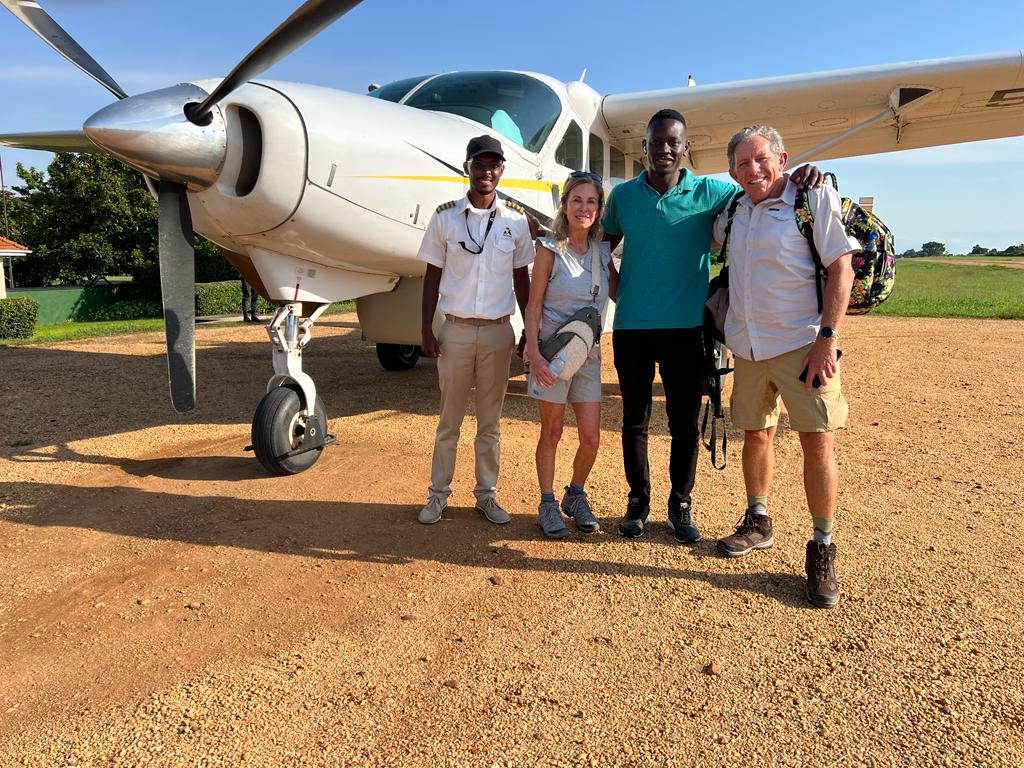
To get to the Maasai Mara National Reserve, travelers either fly from Nairobi's Wilson Airport on a 45-minute bush flight to local airstrips, or embark on a 5- to 6-hour scenic drive via a guided 4x4 safari from Nairobi
Some of the Popular Masai mara safari tour packages
6-days-best-masai-mara-and-lake-naivasha-kenya-wildlife-safari-holiday
5-day-best-luxury-kenya-safari-to-amboseli-lake-nakuru-and-maasai-mara-safari-tour
4-days-masai-mara-and-lake-nakuru-kenya-safari-tour-package
3-days-masai-mara-national-reserve-kenya-safari-tour-package
1. By Air: The Fast and Convenient Fly-In Safari
Traveling by air is the ultimate option for those looking to maximize their time inside the reserve. Flights primarily depart from Nairobi’s Wilson Airport (WIL), a bustling hub for regional safari flights, and land directly on the red-dirt runways scattered across the Mara. Instead of spending a full day traveling on rough roads, a flight gets you from the city to the wild in just 45 to 60 minutes.
Domestic carriers like Safari link and Airkenya operate reliable daily scheduled flights. Because the Maasai Mara is vast, these planes function like a bus service in the sky, touching down at different airstrips—such as Keekorok, Musiara, or Serena—depending on where passengers have booked their lodging. When you land, your lodge’s 4x4 vehicle is usually waiting at the dirt runway to pick you up, starting your first game drive immediately.
While convenient, flying requires careful planning. Tickets generally cost between $185 and $220 one-way, and strict luggage limits are enforced due to the small aircraft size. Passengers are usually restricted to 15 kg (33 lbs) of luggage, which must be packed in soft-sided bags rather than hard suitcases. Despite the extra cost and packing constraints, the aerial views of the African landscape and the sheer time saved make it a highly rewarding travel choice.
2. By Road: The Scenic and Immersive Overland Route
Taking the road from Nairobi to the Maasai Mara offers an authentic, ground-level look at Kenya’s changing landscapes. The drive spans roughly 270 kilometers and takes between 5 to 6 hours. The journey begins on smooth tarmac, winding down the escarpment of the Great Rift Valley, offering spectacular views. However, the final stretch after Narok Town transitions into rough, unpaved gravel roads, a bumpy experience affectionately known by travelers as the "African massage."
The most popular overland option is booking a guided safari in a private 4x4 Land Cruiser or a customized safari minivan. This option includes a professional driver-guide who handles the navigation, border entries, and bumpy terrain, allowing you to relax and enjoy the scenery. For hyper-budget independent travelers, it is possible to take a public matatu (minibus) from Nairobi to Narok Town, and then catch a local taxi to one of the park gates, though this requires independent coordination.
Your arrival point depends entirely on which of the five main gates aligns with your lodge: Sekenani, Talek, Musiara, Oloololo, or Oloolaimutiek. All gates operate strictly from 06:00 to 18:00, making timing critical. If you arrive late, you will not be allowed to enter the reserve until the following morning. Driving takes longer than flying, but it provides context to the country, costs less for groups, and serves as an unforgettable introduction to East Africa.
Planning a journey to the Maasai Mara National Reserve requires careful logistics. Below are 10 essential questions regarding transport, packing, timing, and entry rules, detailed comprehensively to help you navigate your journey seamlessly.
Which airport should I fly into when traveling to the Maasai Mara?
When booking international travel to Kenya, your primary destination will be Jomo Kenyatta International Airport (NBO) in Nairobi. This serves as the major global gateway for the country. However, if you choose to take a domestic flight to the Maasai Mara, you must transfer across the city to Nairobi Wilson Airport (WIL). Wilson Airport is located approximately 18 kilometers from Jomo Kenyatta International Airport and acts as the main hub for light aircraft and safari bush flights heading into the wild.
It is incredibly important to budget plenty of time for the transfer between these two airports. Nairobi is notorious for its dense, unpredictable traffic, and a cross-city road transfer can easily take anywhere from 45 minutes to two full hours depending on the time of day. Most domestic airlines require you to check in at Wilson Airport at least one hour before your scheduled departure.
Additionally, you do not fly into a single central airport within the Maasai Mara itself. The reserve features several distinct, unpaved runways known as airstrips. You must confirm the exact location of your safari camp or lodge before booking your flight ticket, as you will need to choose the specific runway closest to your accommodation. Common airstrips include Serena, Musiara, Keekorok, Ol Kiombo, and Kichwa Tembo. Once your flight lands on the dirt strip, a representative from your lodge will typically be waiting in a 4x4 vehicle to pick you up and transfer you directly to camp, creating a highly convenient door-to-door transit experience.
What are the luggage restrictions on flights to the Maasai Mara?
Packing for a fly-in safari to the Maasai Mara requires a strategy because domestic bush flights enforce incredibly strict baggage allowances. Due to the small size and strict weight capacities of the light aircraft, such as the Cessna Caravan, passengers are restricted to a maximum total baggage weight of 15 kilograms (33 pounds) per person. This weight limit is strictly comprehensive, meaning it includes both your checked piece of luggage and your smaller carry-on backpack or personal handbag combined.
The structural material of your luggage is just as important as its weight. Hard-sided suitcases with rigid plastic shells, metal frames, or heavy wheels are completely prohibited on these flights. The cargo holds of light safari aircraft are compact and irregularly shaped, requiring luggage to be squeezed tightly into small spaces. Consequently, you must use soft-sided bags, such as canvas duffel bags, flexible backpacks, or soft sports bags, which can easily compress.
If your bag exceeds the weight limit or contains a rigid frame, the airline staff may refuse to load it onto the plane. Fortunately, if you have excess luggage filled with items you only need for city travel or business, most travelers can easily store their extra hard suitcases securely at Wilson Airport or at their base hotel in Nairobi for a small fee. For professional photographers carrying heavy, bulky lenses and camera bodies that cannot be compromised, some domestic airlines allow you to purchase an additional "freight seat" in advance, which grants you up to 75 kilograms of extra, confirmed weight allowance.
How long does it take to drive from Nairobi to the Maasai Mara?
The road journey from central Nairobi to the gates of the Maasai Mara National Reserve covers a distance of approximately 270 kilometers. On average, this drive takes between 5 to 6 hours to complete, though the total duration can fluctuate significantly based on traffic conditions leaving Nairobi, the weather, and the specific entry gate you are targeting. The route itself is a tale of two distinct halves, moving from comfortable highways to intense off-road tracks.
The initial portion of the drive follows smooth, well-paved tarmac as you head out of Nairobi and descend into the breathtaking expanses of the Great Rift Valley. You will pass through the scenic town of Narok, which serves as the final major fuel and rest stop before entering the wilderness. Once you pass Narok Town, the infrastructure changes dramatically. The final 50 to 80 kilometers of the journey transition onto unpaved, corrugated dirt roads. This rough terrain creates a bumpy ride that frequent safari travelers playfully refer to as the "African massage."
During the heavy rainy seasons, these dirt tracks can quickly turn into thick, challenging mud, which can easily extend your travel time by an extra hour or two. Because of these demanding road conditions, renting a standard saloon passenger car is highly discouraged and often dangerous. Completing this journey successfully requires a sturdy, high-clearance 4x4 vehicle, such as a customized safari Land Cruiser or a robust 4x4 minivan, operated by a driver who understands how to safely navigate deep ruts and rocky transitions.
What are the operating hours for the Maasai Mara gates?
Timing is everything when you are planning an overland drive to the reserve, because the entry checkpoints operate under very strict schedules. All five main entry gates to the Maasai Mara National Reserve—Sekenani, Talek, Musiara, Oloololo, and Oloolaimutiek—open their doors at 06:00 in the morning and close firmly at 18:00 (6:00 PM) daily. These operating hours align closely with daylight hours, as driving within the reserve after dark is strictly prohibited for safety and conservation reasons.
If you are driving independently or with a private guide from Nairobi, you must calculate your departure time carefully to ensure you reach your designated gate well before closing time. If you experience vehicle delays or heavy traffic along the way and arrive at the gate after 18:00, rangers will deny you entry, leaving you stranded outside the reserve boundaries for the night. This can create a stressful situation, forcing you to find emergency accommodation at a nearby community camp or village outside the park.
Furthermore, your departure timing on your final day is subject to specific rules. Tickets operate on strict windows. Road departures must occur by 10:00 AM on your final day to avoid being automatically charged an additional full-day park fee. If you are departing via an airstrip, you must arrive at the runway by 10:00 AM to comply with the same regulations. Staying or driving within the park boundaries past these designated cutoff hours without a newly purchased, valid entry ticket can result in steep financial penalties from the Narok County rangers.
Can I self-drive to the Maasai Mara, or should I hire a guide?
Choosing between a self-drive adventure and hiring a professional driver-guide is a major decision for any traveler. While a self-drive trip offers complete independence and a sense of rugged isolation, it is generally recommended only for highly experienced off-road drivers. Navigating the unpaved, rutted routes leading to the Mara gates, and successfully driving across the trackless interior of the reserve itself, requires excellent mechanical knowledge and deep concentration. Getting a flat tire or getting stuck in deep mud without cellular signal can turn a holiday into an emergency.
Hiring a professional local guide provides immense value that goes far beyond simple vehicle navigation. Safari guides possess years of tracking experience and share a network of radio communications with other drivers, allowing them to locate elusive wildlife like leopards, lions, and rhinos far faster than an independent tourist could. They understand animal behavior deeply, knowing exactly how close to position the vehicle safely without causing distress to a herd of elephants or a hunting pride of lions.
Additionally, a guide takes away the logistical stress of checking vehicle entry fees and navigating the vast, confusing network of dirt tracks inside the park, where clear signposts do not exist. If you choose to self-drive, you must ensure your rental vehicle is a verified 4x4 with excellent ground clearance, a functioning winch, and at least two spare tires. For the vast majority of international visitors, booking a safari package that includes an experienced driver-guide results in a far safer, more educational, and highly productive wildlife viewing experience.
What are the current park entry fees for the Maasai Mara?
Budgeting for park entry fees is a major component of planning your journey, as conservation tariffs have adjusted significantly to support local communities and protect the ecosystem. The Maasai Mara National Reserve structures its pricing based on residency status and the season of travel. For foreign non-resident adults, the entry fee is structured at $100 USD per person, per day if you travel during the low season months spanning from January 1st to June 30th.
However, if you plan your trip to witness the world-famous Great Migration during the peak season, which runs from July 1st through December 31st, the adult non-resident rate increases to $200 USD per person, per day. For international children aged 9 to 17 years old, the rate remains fixed at $50 USD per day year-round, while young children aged 8 years old and under are granted completely free entry into the reserve. These fees apply regardless of whether your lodge is located inside or outside the park lines.
When planning your budget, you must remember that these fees are typically valid for a 12-hour period from 06:00 to 18:00, rather than a rolling 24-hour window. If you are staying at a lodge located outside the gates and wish to enter the reserve for morning and afternoon game drives across multiple days, you must pay this daily rate for every single entry. Most main gates have transitioned to completely digital or cashless payment systems, accepting international credit cards or local mobile money systems like M-Pesa, so you should avoid carrying large amounts of physical cash for gate fees.
What is the difference between entering the National Reserve vs. a Conservancy?
When figuring out how to get to the Maasai Mara, you must understand the distinction between the main Maasai Mara National Reserve and the surrounding private conservancies. The National Reserve is public land managed by the local government. It contains iconic landmarks like the Mara River and features a high concentration of lodges, meaning it attracts a large number of vehicles, particularly during the peak migration months. Anyone with a valid park ticket can drive through the National Reserve.
In contrast, the private conservancies—such as Mara North, Naboisho, and Olare Motorogi—are protected wilderness areas bordering the main reserve. These lands are leased from local Maasai landowners and are managed privately. Conservancies offer extreme exclusivity because entry is strictly limited to guests who are staying at small, eco-friendly luxury camps located directly within that specific conservancy. Vehicle numbers are strictly controlled, ensuring you will never experience crowds around an animal sighting.
Furthermore, private conservancies allow special activities that are banned inside the main National Reserve, including guided walking safaris, bush dinners, and exciting night game drives using specialized spotlights. However, your transit route will change depending on your choice. A standard National Reserve ticket will not grant you access to a private conservancy. If you stay in a conservancy, you will pay their specific conservation fee, which is often bundled directly into your all-inclusive accommodation rate, granting you a much quieter and highly customized wilderness experience.
Which Maasai Mara entry gate should I use?
Choosing the correct entry gate is vital because the Maasai Mara is massive, covering over 1,500 square kilometers, and choosing the wrong gate can add hours of exhausting driving to your itinerary. The reserve features five primary gates spread across its borders, and your selection must match the precise geographical location of your lodge. Sekenani Gate is the main entrance and the most frequently used gate for vehicles arriving from Nairobi via Narok Town, making it ideal for lodges located in the eastern sector.
If your accommodation is situated in the south-central region, Talek Gate is your best option, as it sits right along a natural water channel and serves a wide variety of mid-range tented camps. For those staying in the western reaches or the rugged Mara Triangle area, Oloololo Gate or Musiara Gate will be your primary access points. Lastly, Oloolaimutiek Gate is positioned in the far eastern corner of the reserve, servicing a dense cluster of budget-friendly properties and community-run campsites.
Before setting out on the road from Nairobi, explicitly ask your lodge host or tour operator which gate you should input into your navigation system. Attempting to drive across the interior of the reserve from an eastern gate to a western lodge late in the afternoon is incredibly difficult due to rough river crossings and strict speed limits. By targeting the correct gate from the beginning, you can ensure a smooth check-in process with the park rangers and arrive at your safari camp in time for lunch.
Is it safe to travel by road to the Maasai Mara?
Traveling by road from Nairobi to the Maasai Mara is generally considered safe and is experienced by thousands of international tourists every year. The primary route utilizes major highways and established safari corridors that are constantly monitored by highway authorities. However, the true challenges of a road journey to the Mara do not stem from security concerns, but rather from the demanding driving conditions and localized traffic patterns typical of developing infrastructure.
The initial descent down the steep escarpment of the Great Rift Valley features sharp turns and heavy commercial truck traffic, requiring cautious driving and defensive road maneuvers. Once you pass Narok Town and reach the unpaved gravel roads, the primary safety risk becomes vehicle strain. The terrain is highly uneven, with deep ruts, flying loose stones, and thick dust clouds created by passing cars, which can temporarily reduce your visibility to near zero.
To maximize safety, it is critical to avoid driving at night. Street lighting does not exist outside major towns, and domestic livestock or wild animals can wander onto the dark roads unexpectedly. If you hire a professional safari operator, your safety is enhanced significantly, as these drivers utilize heavy-duty 4x4 vehicles equipped with specialized radio tracking, heavy suspension, and reinforced tires. They are expertly trained to handle complex road conditions calmly, ensuring that your long overland trip remains an enjoyable, comfortable, and highly scenic introduction to the Kenyan countryside.
Can I take public transit from Nairobi to the Maasai Mara?
Using public transit to reach the Maasai Mara is possible, but it is a complex, multi-stage journey that is generally suited only for independent, highly adventurous budget travelers. Kenya does not have a direct public bus or train service that runs from Nairobi into the interior of the reserve. To attempt this route, you must first board a shared public minibus, known locally as a matatu, from the downtown business district of Nairobi heading to the town of Narok.
The ride to Narok takes about 3 to 4 hours. Once you arrive at the bustling Narok bus terminal, the public transit options heading directly toward the park gates become far more irregular. You will typically need to negotiate a ride on a local shared taxi, or find a community vehicle heading toward the Sekenani or Talek trading centers. These vehicles often wait until they are completely full of passengers and market goods before departing, making scheduling highly unpredictable.
The biggest drawback to utilizing public transit occurs once you finally arrive at the park gates. Walking inside the Maasai Mara National Reserve is strictly illegal due to the dangerous presence of wild predators. Public minibuses are not permitted to enter the reserve for game viewing. Consequently, once you reach the gate, you will be stranded unless you have previously arranged for a local lodge vehicle to meet you, or successfully negotiate a costly daily rate to hire an independent local 4x4 guide waiting at the entrance.
Booking road trip of flying safari to Masi mara national reserve
Booking a trip to the Masai Mara National Reserve depends heavily on whether you choose a fly-in safari or an overland road trip. Fly-in safaris from Nairobi offer rapid 45-minute transfers via small aircraft, whereas road trips deliver scenic 6-hour drives using 4x4 vehicles
