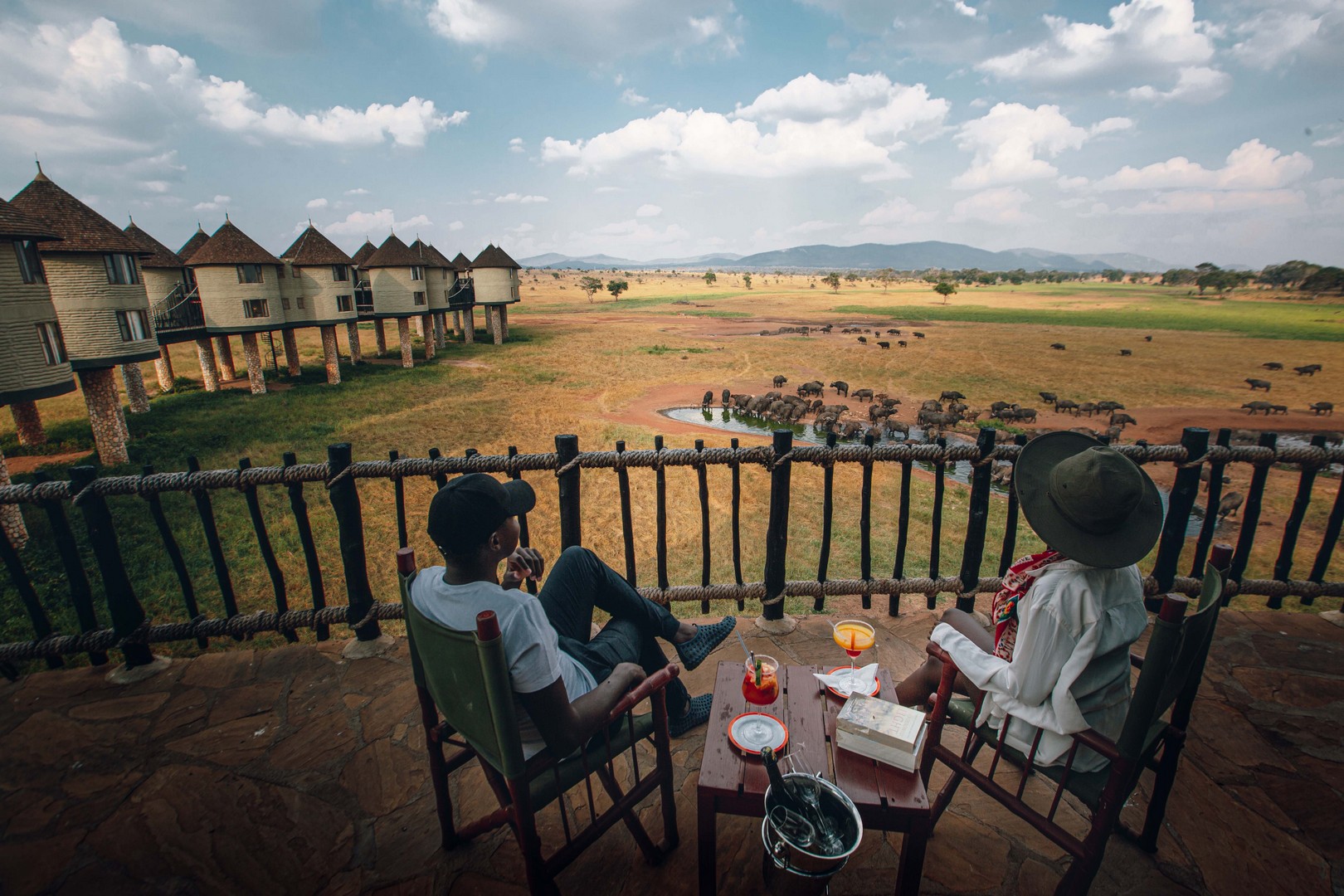
To make the most of your first Kenya safari, avoid rushing between too many parks, packing bright clothing, and skipping pre-safari acclimatization. Focus on 2 to 3 reserves, such as the Maasai Mara National Reserve and Amboseli National Park, give yourself time to recover from jet lag in Nairobi, and pack neutral colors to blend in with the bush
11-days-ultimate-kenya-tanzania-safari-combined-tour
9-days-kenya-wildlife-safari-in-masai-mara-and-uganda-primate-safari-tour
9-days-photography-kenya-tanzania-safari-holiday-vacation
8-days-masai-mara-lake-nakuru-amboseli-and-mombasa-beach-holidays
7-days-perfect-kenya-wildlife-safari-and-optional-hot-air-balloon-safari
6-days-circuit-kenya-safari-to-masai-mara-lake-nakuru-and-amboseli-park
4-days-best-luxury-kenya-safari-to-lake-nakuru-and-masai-mara-safari-tour
12-days-lake-nakuru-masai-mara-central-serengeti-ngorongoro-crater-amboseli-kenya-tanzania-safari
12-days-kenya-tanzania-safari-and-zanzibar-beach-holiday-vacation
12-days-comprehensive-kenya-safari-circuit
12-days-northern-wilderness-and-conservation-focus-kenya-wildlife-safari
12-days-kenya-and-uganda-primate-and-savanna-circuit
1. Itinerary & Travel: The Art of Slowing Down
One of the most common pitfalls for travelers embarking on a Kenya wildlife safari is the urge to treat the savanna like a checklist. The vast geography of parks like the Maasai Mara, Amboseli, and Samburu means that transit times are significant. Driving from one park to another often involves navigating rough terrain, which can be exhausting. If you attempt to cram five destinations into a ten-day trip, you will spend more time in a 4x4 than you will observing wildlife.
Instead, adopt the local "pole pole" (slowly, slowly) philosophy. We recommend choosing one or two primary regions—such as a combination of the Mara and a northern reserve—and committing to a minimum of three to four nights in each. This duration is crucial. It allows you to move beyond the "surface level" sightings. When you stay longer, you stop rushing to see the "Big Five" and start noticing the complex interrelationships of the ecosystem: the alarm calls of a zebra, the territorial behavior of a vulture, or the subtle shifting of light across the savanna.
Furthermore, consider your arrival logistics. Nairobi is located at a high altitude, and the city traffic can be intense. Landing after an international flight and immediately heading into a full-day game drive is a recipe for fatigue and altitude-related headaches. Use your first day to rest, acclimate, and perhaps visit the Nairobi National Park or the Sheldrick Wildlife Trust. By prioritizing deep immersion over quantity, you transform your trip from a chaotic dash into a profound connection with the wilderness.
2. Packing & Wardrobe: Mastering the Bush Logistics
Packing for a Kenya wildlife safari requires a marriage of practicality and physics. The most critical constraint you will face is the luggage weight limit, usually capped at 15kg (33 lbs). This isn't just an airline policy; it is a safety requirement for the light aircraft used for domestic bush flights. Because these small planes have irregular, cramped cargo holds, rigid suitcases are essentially useless. Always pack in soft-sided, flexible duffel bags that can be molded to fit the storage compartments.
Beyond logistics, your wardrobe choices have real-world consequences. While bright colors like red or white are popular for city fashion, they act as visual alarms in the bush, potentially spooking wildlife before you can get a good look. Even more critical is the avoidance of dark blue and black clothing. These colors are scientifically proven to attract tsetse flies—nasty insects whose bites are not only painful but can transmit diseases. Stick to a neutral palette of khaki, tan, olive, and grey.
Finally, you must master the "onion" strategy. Temperature fluctuations on the savanna are extreme. A sunrise game drive at 6:00 AM can be freezing, requiring a fleece, a scarf, and perhaps a windbreaker. Yet, by 10:30 AM, you will be sweltering in 30°C (86°F) heat. If you wear a single heavy coat, you will spend your morning game drive alternating between sweating and shivering. By wearing layers—a moisture-wicking base, a light shirt, and a warm mid-layer—you can easily adjust to the rapidly changing conditions, ensuring you remain comfortable throughout the day.
3. Safari & Wildlife Etiquette: Respecting the Wild
A Kenya wildlife safari is fundamentally an exercise in humility. Many travelers arrive with a subconscious expectation that wildlife will perform on cue, like actors in a film. When the animals are sleeping—which they do for the majority of the day—or hiding in the brush, inexperienced travelers may pressure their guides to chase sightings or get dangerously close. This is both unethical and counterproductive. Wildlife does not operate on a script; the joy of the bush lies in the unpredictability. Patience is your most valuable asset. The guide's primary role is safety, not entertainment, and pushing them to violate distance protocols endangers everyone.
Behavior inside the vehicle is equally important. While it might feel natural to talk excitedly when you spot a lion or a leopard, noise travels incredibly far in the open savanna. Loud conversations, ringing cell phones, or sudden, sharp movements can startle animals, causing them to retreat into the tall grass before everyone has had a chance to view them.
The rule of thumb is to observe in silence. Listen to the sounds of the bush—the rustling of the grass, the distant roar of a predator, or the call of a bird. If you must talk, whisper. Additionally, never stand up abruptly in an open-top vehicle. From a predator’s perspective, the vehicle looks like a large, singular shape. Standing up disrupts that silhouette and can make the animals nervous or aggressive. By keeping a low profile and maintaining a quiet environment, you ensure that you remain a respectful observer rather than a disruptive intrusion in their habitat.
4. Health & Admin: The Essentials of Safety
Health and administrative preparation are the unglamorous but necessary pillars of a successful Kenya wildlife safari. The sun near the equator is significantly more intense than what most travelers are accustomed to, even on overcast days. Without proper protection, severe burns can set in within an hour. Your packing list must include a high-SPF, broad-spectrum sunscreen, high-quality UV-protected sunglasses, and a wide-brimmed hat that offers shade for your neck and ears. Do not underestimate the toll the equatorial sun takes on your hydration levels; drink more water than you think you need, even if you don't feel thirsty.
In addition to sun protection, bugs are a reality of the environment. While your clothing choice (neutral colors) helps, you must pack a robust insect repellent containing DEET or Picaridin. Malaria remains a risk in many parts of East Africa, so consult your doctor well in advance of your trip regarding prophylaxis.
Finally, do not travel without comprehensive insurance. This is non-negotiable. Ensure your policy specifically includes "emergency medical evacuation" and "search and rescue" coverage. In the remote regions of the bush, professional medical facilities are often hours away, and an air-evacuation (such as the AMREF Flying Doctors service) can be the difference between a manageable incident and a catastrophe. Verify that your insurance covers the activities you plan to participate in—whether that is a walking safari, a balloon flight, or general game drives—so you can travel with the peace of mind that you are covered, no matter how far off the grid you venture.
Here is an expanded, comprehensive breakdown of each of these 15 essential safari rules, tailored with expert insight into planning and executing an unforgettable Kenya wildlife safari.
Is it a mistake to try and visit too many parks?
Cramming four or five distinct national parks into a short, one-week itinerary is one of the most common pitfalls when planning a Kenya wildlife safari. It is easy to look at a map and assume that hopping from the arid landscapes of Samburu down to the sweeping savannahs of the Maasai Mara, and then over to the dramatic backdrops of Amboseli or Tsavo, is a seamless task. In reality, Kenya is vast, and the infrastructure connecting these regions often involves rough, unpaved terrain or unpredictable highway traffic.
When you over-schedule your trip, you inadvertently turn an immersive wildlife adventure into an exhausting cross-country road rally. A typical overland transfer between major parks can consume five to eight hours of your day. This means you lose precious morning and late-afternoon windows—the exact times when predators are most active, temperatures are cool, and the lighting is perfect for photography. Instead of watching a pride of lions stalk their prey, you spend those golden hours staring at the dusty bumper of a transport truck on a transit highway.
The true magic of a Kenya wildlife safari lies in patience and presence. It takes time to understand the rhythm of an ecosystem, track a elusive leopard, or witness the dramatic river crossings of the Great Migration. By restricting your itinerary to two or three distinct ecosystems (such as a combination of a private conservancy in Laikipia, a Rift Valley lake like Naivasha, and the Maasai Mara), you drastically cut down on transit friction. You give yourself the luxury of multi-day stays, allowing your guide the time to track specific animals, explore hidden river loops, and offer you a deep, unhurried immersion into the wild.
Why shouldn't I stand up in the safari vehicle at any time?
Maintaining a safe, low profile inside your customized 4x4 cruiser or open-sided vehicle is a fundamental rule of tracking animals. Most wildlife in heavily visited areas has grown habituated to the familiar, blocky silhouette of safari vehicles. To a lion, an elephant, or a cheetah, the vehicle is perceived as a single, large, non-threatening object that doesn't smell like food and doesn't pose an immediate danger. However, the moment a passenger stands up suddenly, extends their torso over the side, or breaks that uniform silhouette, that comforting illusion vanishes.
Standing up completely changes how predators and large herbivores perceive your presence on a Kenya wildlife safari. To an animal, a human silhouette suddenly emerging from the vehicle can be interpreted as an encroaching predator, an existential threat, or a challenge. A skittish cheetah or an endangered black rhino might immediately bolt, ruining an otherwise incredible, close-range sighting for everyone in the vehicle. More dangerously, breaking the vehicle's profile can trigger a defensive, aggressive response from protective elephant matriarchs, Cape buffaloes, or territorial big cats who feel cornered or threatened.
Safety during movement is another critical factor. Safari tracks are notoriously uneven, riddled with hidden potholes, deep ruts, and sudden washaways. If you are standing up while the vehicle is in motion or when the driver suddenly brakes to avoid a deep trench, you risk severe injury from being thrown against the steel pop-up roof frame or entirely out of the vehicle. Always wait until the vehicle has come to a complete halt, and closely follow your driver-guide's explicit signal before standing up to use the hatch for photography.
What is the dress code for a Kenya safari?
Dressing appropriately for a Kenya wildlife safari requires a thoughtful balance between environmental camouflage, personal comfort, and insect protection. The golden rule is to blend seamlessly into the natural landscape. This means packing clothing dominated by neutral, earth-tone shades such as khaki, tan, beige, olive green, and muted brown. These colors allow you to remain inconspicuous to the wildlife, ensuring that your vehicle does not look like a bright, flashing warning sign rolling through the pristine bush.
Conversely, there are specific color spectrums that you must completely eliminate from your safari wardrobe. Bright, neon colors like hot pinks, vibrant yellows, and stark whites should be avoided because they flash intensely across the savannah, easily startling sensitive wildlife and causing them to retreat before you can get a close look. Even more critical is the total avoidance of dark blue and pitch black. In East Africa, these specific dark shades possess an intense, scientific attraction for tsetse flies—bloodsucking insects found in specific wooded areas and dense bush. A tsetse fly bite is not only remarkably painful but can also carry African trypanosomiasis (sleeping sickness).
Additionally, leave your military-style camouflage patterns at home. In Kenya, as in many African nations, multi-terrain camouflage clothing is legally reserved for the armed forces and park rangers; wearing it as a civilian can cause uncomfortable delays or questioning at security checkpoints. Prioritize lightweight, breathable, moisture-wicking fabrics that offer built-in sun protection, long sleeves to guard against thorny branches and evening mosquitoes, and sturdy, closed-toe shoes for camp paths and guided bush walks.
Do I need to worry about the weather being too hot?
When people visualize a Kenya wildlife safari, they typically picture shimmering, heat-soaked African plains under a blazing equatorial sun. While daytime temperatures can certainly climb into the upper 80s or 90s Fahrenheit, particularly in arid northern regions like Samburu or lower-altitude parks like Tsavo, travelers are routinely caught completely off guard by how intensely freezing the bush can be during the early morning hours and late evenings.
The daily schedule of a classic safari maximizes the times when wildlife is most active. This means your morning game drive will routinely begin at the crack of dawn, around 6:00 AM, just as the first light breaks. At this hour, high-altitude regions like the Maasai Mara (which sits at roughly 5,000 feet above sea level) or the rim of the Great Rift Valley can see temperatures drop into the chilly 40s or low 50s Fahrenheit. When you combine these crisp ambient temperatures with the wind-chill factor of riding in a customized land cruiser with an open pop-up roof or fully open sides moving at 20 miles per hour, the cold can feel absolutely biting.
The secret to staying comfortable throughout the day is mastering the art of layering. You should head out for your morning drive wearing a warm, windproof outer jacket or fleece, a lightweight sweater, a scarf, and long trousers. As the equatorial sun quickly climbs higher in the sky, the temperature rises rapidly. By mid-morning, you will find yourself shedding your heavy outer layers down to a breathable t-shirt or linen shirt. Alwayspack clothing that can easily adapt to these dramatic, rapid 40-degree temperature swings to ensure you stay focused on the wildlife rather than your physical discomfort.
How much time should I allocate for road travel between parks?
One of the most frequent misconceptions travelers have about a Kenya wildlife safari is underestimating the sheer logistical reality of driving between destinations. Distances that look short on a digital map can take twice as long as expected in the real world. For example, the journey from Kenya’s capital city, Nairobi, to the gates of the world-famous Maasai Mara National Reserve is roughly 150 miles. On a modern highway, that would take under three hours; in Kenya, it routinely requires a grueling five to six hours of driving.
This extended travel time is caused by a mix of factors: dense traffic leaving urban centers, strict speed limits for commercial safari vehicles, and the infamous "African massage"—the bumpy, unpaved, corrugated dirt and gravel tracks that comprise the final stretches leading to park gates. During the rainy seasons, these dirt roads can transform into deep, slippery mud pools that slow travel down to a crawl or require slow, tactical navigation by your 4x4 driver. Expecting a western-style highway experience will only lead to deep frustration and missed itineraries.
To maximize your time on the ground, always budget a full day for long-distance road transfers, viewing the drive itself as a cultural journey through rural villages and local markets. Alternatively, if your budget permits, you can entirely bypass the bumpy roads by booking a "fly-in" safari. Utilizing Kenya’s highly efficient network of light aircraft services (such as Airkenya or Safarilink) allows you to board a scheduled flight from Nairobi's Wilson Airport and land on a remote bush airstrip in the Maasai Mara or Amboseli in under an hour, turning a exhausting travel day into a quick, scenic flight.
Can I drink tap water while on safari?
When embarking on a Kenya wildlife safari, managing your hydration safely is paramount to keeping your trip on track. Under no circumstances should you ever drink untreated tap water from hotels, urban guesthouses, or remote tented bush camps. The local water treatment infrastructure and the microbial ecosystems present in the water lines are drastically different from what a traveler’s digestive system is conditioned to handle. Consuming even a small amount of contaminated tap water can quickly lead to severe gastrointestinal distress, dehydration, and bacterial infections that can confine you to your tent and ruin your hard-earned vacation.
This strict "no tap water" policy extends well beyond simply filling up a drinking glass. You must be equally vigilant during your daily hygiene routines. Always use bottled, filtered, or purified water provided by your lodge to rinse your mouth and clean your toothbrush. When taking a shower or washing your face, be careful to keep your mouth firmly closed to prevent accidental swallowing. Additionally, you should be cautious about eating raw, unpeeled fruits or salads that may have been thoroughly washed in standard tap water at lower-end establishments; sticking to cooked, steaming-hot meals and fruits you can peel yourself (like bananas or oranges) is a much safer route.
Thankfully, reputable luxury lodges, boutique camps, and professional safari operators prioritize guest safety by providing ample supplies of safe drinking water. Many eco-conscious properties now install advanced, reverse-osmosis filtration systems in-house, offering guests purified water via reusable glass carafes or dedicated refilling stations to minimize waste. Always ensure your personal reusable flask is filled to the brim with this verified, safe water before heading out on long, dusty game drives.
Should I skip packing insect repellent and anti-malarial medication?
Neglecting your medical preparation before jetting off on a Kenya wildlife safari is a massive gamble with your personal health. Large portions of East Africa, including premier low-and-mid-altitude safari destinations like the Maasai Mara, Samburu, and the coastal lowlands, are classified as endemic malaria zones. Malaria is a serious, life-threatening disease transmitted through the bite of infected female Anopheles mosquitoes, which are most active between dusk and dawn. Protecting yourself requires a comprehensive, dual-layered strategy: taking preventative internal medication and aggressively blocking external insect bites.
Your medical preparation should begin at least six to eight weeks before your departure date. Schedule an appointment with a specialized travel clinic or your primary physician to discuss which prescription anti-malarial prophylactic (such as Atovaquone/Proguanil, Doxycycline, or Mefloquine) is best suited for your medical history and specific itinerary. It is vital to remember that these medications must be started before you enter the safari zones and continued consistently for a specified duration after you return home to ensure complete efficacy. Additionally, ensure you carry proof of your routine immunizations and a valid Yellow Fever international certificate if you are entering Kenya from an endemic country.
To supplement your internal medication, you must pack a high-quality insect repellent containing an active ingredient like DEET (around 30% to 50% concentration) or Picaridin. Apply this repellent generously to exposed skin every morning and evening, and spray it directly onto your clothing. At night, always make use of the protective mosquito netting draped over your bed at your safari lodge, and keep your tent zippers securely sealed at all times to prevent any unwanted insects from entering your sleeping space.
Are binoculars really necessary if I have a zoom camera lens?
A surprising number of modern travelers assume that because they are packing a high-end digital camera equipped with a powerful 300mm or 400mm telephoto lens, they have no practical need to carry a dedicated pair of binoculars on a Kenya wildlife safari. This is a major tactical mistake that can significantly degrade your viewing experience. A camera lens and a pair of binoculars serve two completely different cognitive functions in the bush: one is designed for capturing a static frame, while the other is built for wide-area scanning, tracking, and deep visual immersion.
Trying to spot wildlife by staring continuously through a camera's small electronic viewfinder or at its rear LCD screen is incredibly fatiguing for your eyes. It gives you a highly restricted, tunnel-vision perspective of the vast landscape, making it exceptionally difficult to track a fast-moving predator or scan a distant treeline for a hidden leopard. Furthermore, holding a heavy, long telephoto lens up to your face for extended periods while waiting for an animal to move can quickly strain your arms and back, leading to unstable, shaky viewing.
A premium, compact pair of binoculars (ideally an 8x42 or 10x42 configuration) provides a bright, wide, highly stable, and three-dimensional field of view. Binoculars allow you to comfortably scan the horizon for hours, appreciate the intricate plumage of a rare bird perched in the acacia canopy, or watch the subtle ear twitches of a well-camouflaged lioness hidden deep in the golden grass. By using your binoculars as your primary tool for discovery and scanning, you can enjoy the wild landscape in real-time, switching over to your camera only when it's time to capture the perfect, well-framed shot.
Is it okay to make noise or shout to get an animal's attention?
The natural wilderness of East Africa operates on a subtle, delicate sensory balance, and maintaining a quiet, respectful presence is paramount while on a Kenya wildlife safari. One of the most disruptive behaviors a traveler can exhibit is making loud noises, whistling, shouting, or banging on the side of the safari vehicle in an attempt to force a sleeping lion to open its eyes, make a cheetah look toward a camera, or cause a herd of zebras to run. This behavior shows a profound disrespect for the environment and reveals a fundamental misunderstanding of wildlife tracking.
Loud, unnatural human noises are immediately perceived by wild animals as a direct threat or a highly stressful disturbance. Sudden, sharp sounds can easily cause skittish herbivores—like gazelles, giraffes, or impalas—to panic and flee, burning critical metabolic energy they need for survival and cutting short an otherwise beautiful, peaceful sighting for your group. For apex predators, such as a hunting pack of lions or a cheetah stalking its prey, loud human interruptions can shatter their concentration, alert their target prey, and ultimately disrupt their ability to successfully hunt and feed their cubs.
In more dangerous scenarios, shouting or making aggressive noises near large, unpredictable animals like a lone male elephant bull, a protective rhino, or a herd of Cape buffalo can actively provoke a defensive charge. These massive animals can easily trample bush vegetation or severely damage a vehicle if they feel challenged or cornered. Always communicate with your guide and fellow passengers in hushed, low whispers, silence all cell phones and camera beeps, and allow the animals to behave completely naturally without human interference.
Do I need to overpack heavy clothing and extra shoes?
When packing your bags for a Kenya wildlife safari, the absolute best policy is minimal, deliberate simplicity. The urge to overpack by bringing multiple changes of heavy formal outfits, multiple pairs of bulky hiking boots, and endless lifestyle accessories is an incredibly common mistake. This extra weight quickly becomes a logistical nightmare once you move away from international airports and begin traveling within the country via regional transport networks.
The primary constraint dictating your luggage weight is the strict regulation enforced by Kenya's domestic light aircraft airlines. These bush planes, which shuttle passengers directly between Nairobi and remote wilderness airstrips, have small, tightly budgeted cargo holds. They strictly enforce a maximum baggage allowance of 15 kilograms (33 pounds) per passenger, and this limit explicitly includes your carry-on items and heavy camera gear. Furthermore, they mandate that all luggage must be packed in soft-sided, flexible duffel bags rather than rigid, hard-shell suitcases, as hard bags cannot be contorted to fit into the aircraft's compact under-belly pods or safari vehicle trunks.
Fortunately, packing light is incredibly easy because of the stellar services provided by safari properties. Virtually all mid-range and luxury tented camps and safari lodges across Kenya offer highly efficient, same-day laundry services, often included in your accommodation rate or available for a nominal fee. This means you realistically only need to pack three sets of functional, earth-toned safari outfits that you can rotate throughout your trip. Leave the heavy boots behind unless you are booking an intense mountain trek; a single pair of comfortable, sturdy walking shoes and a pair of light camp sandals are all you need.
Is it a mistake to use single-use plastics in the parks?
Kenya stands at the absolute forefront of global environmental conservation and anti-plastic legislation, making the use of single-use plastics a major mistake—and a legal liability—while on a Kenya wildlife safari. In 2017, the Kenyan government implemented one of the world's strictest nationwide bans on the manufacture, sale, and commercial distribution of single-use plastic carrier bags. This ban is heavily enforced; carrying standard plastic grocery bags or duty-free shopping bags into the country can result in confiscation at customs, steep monetary fines, or legal penalties.
Building upon this powerful national legislation, Kenya took its eco-conscious policies a step further in June 2020 by officially banning all forms of single-use plastics from entering protected national parks, game reserves, forests, and marine conservancies. This comprehensive ban includes plastic disposable water bottles, single-use soda bottles, plastic food wrappers, disposable plates, and plastic straws. Park rangers at entry gates reserve the right to search safari vehicles, and finding disposable plastic items can lead to embarrassing delays, fines for your guide, and immediate confiscation of the items.
These strict rules are designed to protect Kenya's fragile wildlife populations. Discarded plastic waste is a severe hazard in the bush; inquisitive animals like baboons, hyenas, and elephants frequently ingest plastic debris, leading to fatal intestinal blockages and toxic poisoning. To comply perfectly with these laws and protect the environment, always pack a durable, reusable stainless steel or heavy-duty insulated water flask. Your safari vehicle and lodges will provide large, purified water containers from which you can easily refill your bottle throughout the day, ensuring a completely plastic-free footprint.
Should I ignore the advice of my safari guide?
Your relationship with your professional driver-guide is the single most important factor determining the safety, success, and quality of your Kenya wildlife safari. Safari guides in Kenya undergo years of rigorous academic training and field examinations through institutions like the Kenya Professional Safari Guides Association (KPSGA). They possess a deep, encyclopedic understanding of animal psychology, tracking techniques, regional ecosystems, and emergency safety protocols. Intentionally ignoring or countermanding their professional instructions is a recipe for a compromised experience or severe danger.
A skilled guide reads the subtle body language of wildlife that a traveler cannot possibly see. They know exactly when an elephant's relaxed ear-flapping shifts into an aggressive, warning posture, or when a lioness is preparing to launch an ambush. If your guide tells you to sit down, instructs the vehicle to roll its windows up, or explains that the vehicle must back away from a sighting immediately, you must follow their command instantly without argument. Pushing a guide to drive off the marked trails to get closer to an animal destroys the habitat, stresses the wildlife, and can result in your vehicle getting heavily bogged down in deep mud.
Additionally, your guide is highly knowledgeable about the complex, fluid regulations that govern national reserves and private conservancies, such as mandatory gate closing times and strict proximity distances around rare species like the black rhino. Respect their expertise regarding scheduling, safety boundaries, and cultural etiquette when visiting local communities. By operating as a respectful, cooperative team with your guide, you earn their trust, tap into their deep wealth of bush knowledge, and unlock an incomparably richer safari experience.
Do I need to be worried about getting close to dangerous wildlife?
Embarking on a Kenya wildlife safari provides an exhilarating, raw opportunity to step completely outside of the artificial barriers of modern civilization and enter an unaltered, ancient ecosystem. However, it is vital to remember that national parks and reserves are not managed zoos or controlled theme parks; they are vast, unfenced wilderness areas populated entirely by wild, apex predators and massive megafauna. While it is thrilling to watch a pride of lions sleep a few feet from your tire, a deep, healthy respect for the inherent unpredictability of these animals is mandatory.
The safety of a modern safari relies entirely on maintaining proper boundaries. The golden rule of the bush is to always remain securely inside the physical structure of your vehicle unless your driver-guide has brought you to an explicitly designated, scout-secured safe walking area, such as an official picnic site or a ranger-guarded viewpoint. Never under any circumstances step out onto the vehicle's running boards, hang completely out of the windows, or sit on the roof frame to get a better camera angle. To an animal, a human who stays completely inside the vehicle is part of a non-threatening object; a human who steps outside instantly becomes an exposed target for a predator or an interloper to be attacked.
Furthermore, never attempt to attract, lure, or feed any animal, including the seemingly harmless birds or cheeky baboons around camp picnic areas. Feeding wildlife destroys their natural foraging behaviors, habituates them to associating humans with food, and turns them into aggressive "problem animals" that park rangers are eventually forced to euthanize for public safety. Treat the wild animals with the solemn, distant reverence they deserve.
Are there any restrictions on what I can photograph?
A Kenya wildlife safari is a dream come true for visual creators, offering endless opportunities to photograph stunning landscapes, golden sunrises, and iconic big game. However, your photographic freedom is subject to strict legal boundaries and cultural courtesies that you must understand before pointing your camera lens. Failing to respect these boundaries can result in severe legal trouble, the confiscation of your expensive memory cards, or deep personal offense to local communities.
From a strict legal and national security standpoint, Kenya enforces a categorical ban on photographing or filming sensitive government infrastructure and tactical installations. This strict prohibition applies explicitly to all military bases, barracks, personnel in uniform, border checkpoints, airports, naval ports, and key government buildings, including parliament houses and central police stations. Pointing a long telephoto lens at these strategic locations can easily be interpreted as espionage or a security threat, leading to immediate detention, intensive interrogation by local authorities, and the seizure of your photographic equipment.
Equally critical is the cultural lens through which you photograph human subjects, such as the vibrant Maasai, Samburu, or Turkana communities. It is deeply disrespectful to treat local people as exotic static exhibits by snapping close-up portraits without their knowledge or explicit consent. Always ask your guide to facilitate communication, greet the individuals warmly, and request permission before taking a photo. Within formal cultural homestead visits (Manyattas), specific community photography protocols and small village fees are standardized; respecting these practices ensures that your tourism dollars directly support the local families who preserve these ancient heritages.
Is there decent Wi-Fi and power available in the bush?
Managing your digital connectivity and energy expectations is an important part of preparing for a modern Kenya wildlife safari. The availability of electrical power and internet access varies drastically depending on the style, luxury tier, and geographical isolation of the lodges or tented camps you select. While you will certainly find robust, high-speed Wi-Fi and 24-hour electricity in major urban transit hotels in Nairobi, your journey into remote wilderness areas like the deep interior of the Maasai Mara, Tsavo, or Amboseli requires a shift in expectations.
Many of Kenya’s premier eco-lodges and luxury tented camps operate completely off-grid, utilizing advanced solar panel arrays and backup generators to source their energy. To remain ecologically responsible and preserve the serene tranquility of the bush, these properties frequently implement strict power schedules. They may activate the main power lines only during specific daytime windows and early evenings, completely switching off electricity overnight. Furthermore, you may find that electrical charging sockets are not available inside your individual guest tent; instead, you will use a centralized charging station located in the main lounge or mess tent. Always bring a high-capacity power bank and multiple spare camera batteries to keep your gear operational during long drives.
Internet access follows a similarly restricted pattern. While a growing number of upscale camps provide Wi-Fi, it is often intentionally confined exclusively to the main reception lounge rather than your private canvas room, encouraging guests to disconnect from the digital world and connect with nature. Cellular network coverage across Kenya is surprisingly widespread due to robust networks like Safaricom, but deep valley folds, rocky escarpments, and dense riverine forests will see your signal drop completely. Embrace these inevitable connectivity gaps as a therapeutic opportunity to digitally detox and immerse yourself fully in the timeless rhythms of the African wild.
Booking Kenya wildlife safari with us Roads of Adventure safaris
Book your Kenya wildlife safari with Roads of Adventure Safaris by contacting their expert team to customize your itinerary. Prices generally range from $300 to $1,000 per person, per day, covering 4x4 land cruisers, park fees, and accommodation
