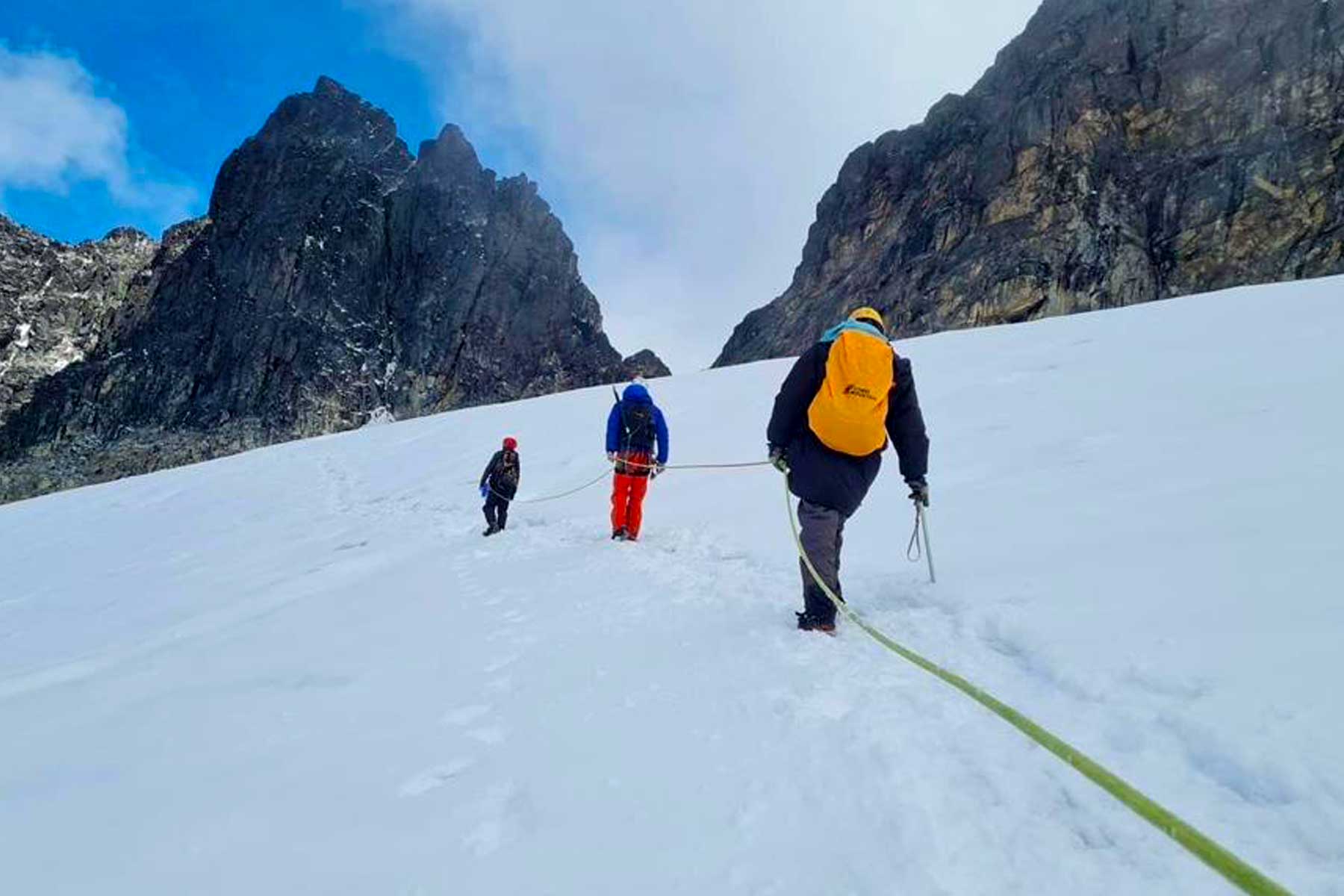
A standard 9-day trek through Uganda's Mount Rwenzori typically costs between $1,700 and $1,900 USD per person for foreign non-residents. This base price combines the operator's core package—covering expert mountain guides, porters, hut accommodations, and all meals—with the mandatory Uganda Wildlife Authority park entrance fees of $280 USD ($35 per day). East African citizens and regional residents enjoy heavily discounted rates starting as low as $520 USD. When planning your budget, remember to set aside extra cash for technical equipment rentals like crampons, harnesses, and ice axes ($50–$100), as well as daily tips for your dedicated mountain crew ($15–$20 per day). Lastly, factor in regional transport from Kampala to Kasese and hotel stays before and after your trek to ensure a seamless, hassle-free high-altitude expedition.
Cost breakdown for 9 Day Mountain Rwenzori hike
1. Permits and Park Fees
Before setting foot on the trails of Mount Rwenzori, a significant portion of your total budget goes toward official government park entry and conservation fees. Managed by the Uganda Wildlife Authority (UWA), the Rwenzori Mountains National Park is a protected UNESCO World Heritage Site. These mandatory fees ensure continuous conservation, trail maintenance, ranger security, and ecosystem preservation across its fragile Afro-alpine zones.
For Foreign Non-Residents, the UWA daily entrance fee is $35 per day, totaling $315 over a 9-day itinerary. If you are a Foreign Resident holding a valid Ugandan work permit or visa, this fee drops to $25 per day ($225 total). For East African Citizens (including Ugandans), park access is heavily subsidized at UGX 150,000 per day.
In addition to gate entrance, sleeping on the mountain incurs camping and hut fees, which range between $30 and $45 per night depending on the specific route (such as the Kilembe Trail or the Central Circuit). On standard 9-day summit packages, hut fees are usually bundled directly into the base rate quoted by your tour operator. Understanding these fixed baseline costs helps explain why mountain trekking packages carry a higher price point—nearly a third of your payment goes straight to park management before taking a single step.
2. Climbing Logistics (Guides & Porters)
A successful expedition to Margherita Peak relies on an experienced, dedicated mountain crew. Due to the Rwenzori's rugged terrain, unpredictable mountain weather, and technical glacial crossings, climbing independently is not permitted.
Your support team is led by a licensed Lead Guide (charging $30 to $50 per day), who is responsible for route finding, safety protocols, and pace management. On summit days or for groups larger than two hikers, Assistant Guides (charging $20 to $30 per day) are added to maintain safety ratios on snow and ice fields.
Because there are no pack animals on the Rwenzori, Porters (charging $15 to $20 per day) carry heavy gear, cooking gas, food rations, and group camping equipment. Plan on needing 1 to 2 porters per hiker. These local porters—often from neighboring Bakonzo communities—are the backbone of the trek. They carry up to 15 kg of personal luggage alongside group supplies, set up camp before you arrive, and ensure hot water is ready after long days on the trail.
3. Equipment & Gear Rental
Climbing Mount Rwenzori demands a specialized equipment list. Unlike typical trekking peaks, reaching Margherita Peak (5,109 m) involves navigating actual equatorial glaciers, requiring technical ice-climbing equipment.
When you book a standard 9-day peak-summit package, most reputable outfitters include core technical climbing gear—such as crampons, ice axes, climbing harnesses, helmets, and safety ropes—in the package price. However, if you are booking a modular package, renting technical hardware at the base station costs around $50 to $100 for the entire trek.
For personal gear, you can rent specialized high-altitude clothing locally if you want to avoid flying with bulky equipment. Recommended items available for rent include sub-zero sleeping bags, heavy down jackets, waterproof gaiters, and high-traction rubber boots ("gumboots"). Gumboots are an absolute necessity for navigating the Rwenzori's infamous mud bogs in the lower and mid-elevation valleys. Budgeting $50 to $100 for personal rental gear ensures you stay warm, dry, and properly equipped without overpacking for your international flights.
4. Food and Camping Supplies
Maintaining proper nutrition and caloric intake is essential when trekking at high altitudes over nine continuous days. On a 9-day Rwenzori hike, full-board mountain catering generally costs between $40 and $60 per day per person.
Unlike mountains with permanent alpine tea houses, the Rwenzori wilderness requires bringing every ingredient, cooking utensil, and fuel canister up from the base. A dedicated mountain chef travels with your expedition to prepare three warm, energy-dense meals daily. Breakfasts typically feature hot porridge, eggs, pancakes, and tea, while lunches consist of packed sandwiches, fruit, and energy bars. Dinners are hearty multi-course meals featuring soups, rice, pasta, potatoes, fresh vegetables, and meats designed to replenish burned calories.
The chef also boils and filters mountain stream water daily to keep you hydrated. Because cold temperatures at high altitudes suppress appetite, having a skilled chef prepare hot, flavorful meals makes a substantial difference in maintaining stamina for the midnight summit push.
5. Transportation Logistics
Reaching the Rwenzori trailhead in Western Uganda requires planning regional transport from the primary travel hubs in Kampala or Entebbe Airport. You have three main transport options depending on your budget and timeframe:
- Private 4x4 Vehicle: Hiring a private 4x4 safari vehicle with a driver-guide costs roughly $200 to $300 one-way ($400–$600 round-trip). This option offers convenience, flexibility, and a scenic 6-to-8-hour drive through the Ugandan countryside.
- Public Bus: The most economical choice is taking a public coach (such as Link Bus) from Kampala to Kasese town for approximately $14 USD. From Kasese, a local private taxi to the trailheads at Kilembe or Nyakalengija costs another $15 to $20 USD.
- Domestic Flight: For travelers short on time, domestic airlines (like AeroLink or Bar Aviation) operate daily scheduled flights from Entebbe International Airport to Kasese Airstrip. Flights take about one hour and cost $150 to $200 one-way, followed by a short 30-minute taxi ride to the base camp.
6. Additional On-Mountain Costs
When finalizing your total travel budget, keep these important out-of-pocket expenses in mind:
- Crew Tipping: Tipping is a customary way to thank your hardworking guide and porter team. Recommended guidelines are $10–$15 per day for the lead guide, $5–$10 per day for the chef, and $3–$5 per day for each porter. For a 9-day trek, set aside $150 to $250 total in cash for tipping.
- Base Camp Accommodations: Plan for pre- and post-trek hotel stays in Kasese, Kilembe, or Nyakalengija. Budget accommodations cost $30 to $50 per night, while comfortable mid-range lodges run $60 to $120 per night.
- Travel & Evacuation Insurance: High-altitude medical insurance covering search, rescue, and helicopter evacuation up to 5,500 meters is mandatory and typically costs $100 to $200 depending on your home country.
9 Day Mountain Rwenzori hike
The 9-day Rwenzori Mountains expedition following the legendary Central Circuit is a premier high-altitude adventure in East Africa. Managed by Rwenzori Mountaineering Services alongside the Uganda Wildlife Authority, this classic trail ascends through five distinct ecological zones—ranging from dense tropical montane rainforests and giant bamboo thickets to heather valleys, alpine moorlands, and permanent equatorial glaciers. Starting at the Nyakalengija trailboard at 1,615 meters, trekkers navigate boardwalks over muddy bogs, scramble across granite boulder fields, and cross glacial lakes beneath towering peaks. The ultimate highlight is the pre-dawn summit push up Mount Stanley’s icefalls to Margherita Peak at 5,109 meters—the third highest point in Africa. With dedicated local guides and porters, it provides an unforgettable wilderness challenge.
Day 1: Transfer from Kampala/Entebbe to Kasese
Your expedition begins with a morning pick-up from Kampala or Entebbe Airport for a scenic 300-kilometer overland drive across Western Uganda. You travel through lush tea plantations, rolling green hills, and bustling rural trading centers, stopping at Kayabwe for photos at the equator. By late afternoon, you arrive in Kasese near the base of the Rwenzori range. Here, you visit the Rwenzori Mountaineering Services headquarters at Nyakalengija for mandatory park registration, safety briefings, and gear checks. Your lead guide and support crew verify all technical climbing hardware, high-altitude clothing, and food rations, distributing loads to porters. Afterwards, you check into a comfortable nearby lodge in Ibanda or Kasese to enjoy a hearty dinner and rest ahead of your mountain ascent tomorrow.
Day 2: Nyakalengija (1,615 m) to Nyabitaba Hut (2,651 m)
Leaving the trailhead at Nyakalengija (1,615 m), you begin your trek along a dirt path passing through traditional Bakonzo homesteads and banana plantations. Crossing the official park boundary, the trail ascends steeply into a dense, humid tropical montane forest along the roaring Mobuku River. Keep an eye out for black-and-white colobus monkeys, blue monkeys, and colorful endemic birds like the brilliant Rwenzori turaco flitting through the canopy. The path climbs over mossy tree roots and slick rocks, requiring a steady pace during this initial 8-kilometer trek. After 5 to 7 hours of steady hiking, you emerge into a clearing to reach Nyabitaba Hut (2,651 m). Nestled high on a forest ridge, the wooden hut offers sweeping views of the Portal Peaks and Mount Speke, where you settle in for a warm meal and rest.
Day 3: Nyabitaba Hut (2,651 m) to John Matte Hut (3,505 m)
From Nyabitaba Hut, the trail drops through forest down to the Kurt Shafer Bridge, crossing the swirling confluence of the Bujuku and Mobuku rivers. You then enter a fairytale-like giant bamboo forest mixed with moss-draped trees and steep granite cliffs. As you gain altitude, the bamboo gives way to the otherworldly giant heather zone, characterized by ancient tree heathers hung with thick beard moss. You stop for lunch at the historic Nyamuleju rock shelter, enjoying views of Mount Stanley and Speke on clear days. The 11-kilometer path becomes increasingly muddy and rocky, making waterproof boots essential. After 6 to 7 hours of challenging trekking, you reach John Matte Hut (3,505 m) near the Bujuku River for a hot dinner and overnight stay.
Day 4: John Matte Hut (3,505 m) to Bujuku Hut (3,962 m)
Leaving John Matte Hut, you cross the Bujuku River and step into the famous Lower Bigo Bog. Wooden boardwalks now cover much of the swamp, though jumping between giant tussock grass mounds still provides an adventurous challenge. The landscape is dominated by surreal, giant lobelias and senecio plants towering overhead. Ascending into Upper Bigo Bog, you reach drier terrain and follow the trail toward scenic Lake Bujuku. Surrounded by the jagged ice peaks of Mount Stanley, Mount Speke, and Mount Baker, the mountain vistas here are truly spectacular. Today's trek covers roughly 5 kilometers over 4 to 5 hours of sustained hiking. You arrive at Bujuku Hut (3,962 m) in the early afternoon, giving you time to rest and acclimatize before tomorrow's steep climb.
Day 5: Bujuku Hut (3,962 m) to Elena Hut (4,541 m)
Today's trek ascends out of the valley into the stark alpine rock zone. Leaving Bujuku Hut, you navigate muddy trails along Lake Bujuku before tackling the steep, boulder-strewn climb up Groundsel Gully. You scramble over fixed metal ladders on sheer rock faces to reach a trail junction near Scott-Elliot Pass (4,372 m). While the left path drops toward Kitandara, your route branches right, climbing large, freezing granite boulders toward Mount Stanley. The 4-to-5-hour hike brings you through cold, exposed terrain where vegetation disappears completely. You reach Elena Hut (4,541 m) by afternoon, sitting at the base of the glaciers. Your guide conducts a technical gear review with crampons, harnesses, and ice axes before an early 5:00 PM dinner and early sleep.
Day 6: Summit Margherita Peak (5,109 m) to Kitandara Hut (4,023 m)
Waking up at 2:00 AM, you don headlamps, heavy down insulation, and climbing harnesses for a 3:00 AM start. Scrambling up cold granite, you reach the edge of the Stanley Glacier. You strap on crampons and rope together with your guide to navigate crevasses and steep ice sections up the Margherita Glacier. A final fixed-rope climb brings you onto Margherita Peak (5,109 m) around sunrise. Standing on Africa's third-highest summit, you take in stunning panoramas across the Democratic Republic of Congo and neighboring peaks. You carefully descend back to Elena Hut for a hot meal and rest. In the afternoon, you continue down through Scott-Elliot Pass to Kitandara Hut (4,023 m), nestled beside beautiful twin glacial lakes.
Day 7: Kitandara Hut (4,023 m) to Guy Yeoman Hut (3,505 m)
After breakfast at Lake Kitandara, you begin your day with a steep climb up the headwall to Freshfield Pass (4,215 m). Reaching the pass rewards you with magnificent panoramic vistas looking west into the Congo wilderness and north toward Mount Stanley. From the pass, you descend through high alpine landscapes of mossy rock fields and towering groundsel trees. You pass Bujongolo rock shelter, the historic base camp used by the Duke of Abruzzi's expedition in 1906. The path continues steeply downhill along muddy river gullies, where careful footwork is required on wet roots. Today's trek lasts 6 to 8 hours, bringing you to Guy Yeoman Hut (3,505 m) in the Mobuku Valley for a well-deserved dinner and overnight stay.
Day 8: Guy Yeoman Hut (3,505 m) to Nyabitaba Hut (2,651 m)
From Guy Yeoman Hut, you begin a long descent following the fast-flowing Mobuku River valley. The trail drops down the steep cliffs of Kichuchu, requiring careful footwork on ladders and wet rocks. Below Kichuchu, you re-enter the lush bamboo forest zone, crossing the river twice on wooden bridges. With every kilometer descended, the air becomes warmer and richer in oxygen. Though the trail can be slick and muddy, the reduced altitude makes walking feel light and energizing. This leg covers 5 to 7 hours of steady downhill hiking. You complete the circuit loop as you arrive back at Nyabitaba Hut (2,651 m) by late afternoon, where you celebrate with your guide and porter crew on your final night on the mountain.
Day 9: Nyabitaba Hut (2,651 m) to Nyakalengija (1,615 m) and Transfer to Kampala
On your final morning, you enjoy a warm breakfast at Nyabitaba Hut before completing the final descent down the forest ridge. Retracing your steps past local Bakonzo farmlands, you reach the park gate at Nyakalengija (1,615 m) after 2 to 3 hours of downhill walking. At the Rwenzori Mountaineering Services headquarters, you sign out and receive your official summit certificates. After saying goodbye to your guide crew and handing out well-earned tips, your private transfer driver greets you for the journey back. You embark on the scenic 6-to-8-hour drive across Western Uganda to Kampala or Entebbe Airport. Arriving by late evening, you drop off at your hotel or catch your homebound flight, successfully concluding your epic 9-day Rwenzori adventure.
What is the total estimated cost for a 9-day Rwenzori hike?
For foreign non-residents, a standard 9-day Mount Rwenzori hike typically costs between $1,700 and $2,500 USD per person. This estimate covers your full tour operator package as well as essential out-of-pocket expenses required for a complete expedition.
The base package quoted by tour outfitters usually falls between $1,500 and $1,900 USD. This core price includes mandatory Uganda Wildlife Authority (UWA) park entry fees, mountain hut accommodations, daily meals, local guides, and porters. However, your total expenditure will depend on additional out-of-pocket costs such as technical gear rentals ($50–$100), mountain crew tips ($150–$250), regional transfers to Kasese, and pre- or post-trek hotel stays.
East African citizens and Ugandan residents benefit from heavily discounted park fees, bringing their total estimated costs down to around $520 to $1,200 USD. Budgeting realistically for both package fees and personal extras ensures a smooth, well-funded trek.
How much are the mandatory park entry fees?
Park entrance fees for the Rwenzori Mountains National Park are set by the Uganda Wildlife Authority (UWA) and vary based on your residency status. For foreign non-residents, the daily park entrance fee is $35 USD per day, totaling $315 USD for a 9-day itinerary.
For foreign residents living in Uganda with a valid work permit or residency visa, the park fee is reduced to $25 USD per day, or $225 USD total. East African citizens (including Ugandan nationals) receive the highest subsidy, paying UGX 150,000 per day (approximately $40 USD per day).
In addition to gate entrance, sleeping on the mountain incurs camping or hut fees ranging from $30 to $45 USD per night. When booking a comprehensive 9-day summit package with a registered tour operator, these park entrance and accommodation fees are almost always bundled directly into your total quoted package price.
Are guide and porter fees included in the package?
Yes, standard 9-day Rwenzori packages include the base daily wages for your licensed lead guides, assistant guides, mountain chef, and porters. Due to the technical nature of the climb and unpredictable alpine weather, climbing Mount Rwenzori independently without registered local guides is strictly prohibited.
Your support crew is crucial to a successful climb. The lead guide (earning $30 to $50 USD per day) handles navigation and safety protocols, while assistant guides ($20 to $30 USD per day) assist on technical glacier sections. Porters ($15 to $20 USD per day) carry heavy gear, food supplies, and cooking fuel up the mountain, with each hiker typically assigned 1 to 2 porters.
While their standard working wages are covered in your upfront package price, cash tips are customary and expected at the end of the trek to reward their hard work and dedication.
How much does technical gear rental cost?
Renting technical climbing equipment for Margherita Peak generally costs between $50 and $100 USD for the entire 9-day trek if it is not already included in your package. Summiting Margherita Peak (5,109 meters) involves crossing active equatorial glaciers, which requires specialized ice-climbing hardware.
Core technical equipment needed for the glacier ascent includes:
- Crampons
- Ice axes
- Climbing harnesses
- Helmets and safety ropes
Many reputable tour operators include this technical hardware in their standard peak-summit quotes. However, if you need to rent personal items at the base station—such as sub-zero sleeping bags, heavy down jackets, or high-traction rubber gumboots for navigating lower-elevation mud bogs—you should budget an extra $50 to $100 USD total. Renting gear locally helps avoid carrying heavy, specialized equipment on international flights.
What are the food and catering expenses on the trail?
On a 9-day full-board Rwenzori trek, food and catering costs are built into your package, generally averaging between $40 and $60 USD per day per person. Because there are no restaurants or tea houses on the mountain, all food, fuel, and cooking gear must be carried up from the base.
A dedicated mountain chef travels with your group to prepare three fresh, high-energy meals daily:
- Breakfast: Hot porridge, eggs, pancakes, toast, and hot drinks.
- Lunch: Packed lunches with sandwiches, boiled eggs, fruit, and energy bars.
- Dinner: Multi-course warm meals featuring soups, pasta, rice, meats, and fresh vegetables.
The kitchen crew also boils and filters mountain water daily to keep you properly hydrated. Having a dedicated chef prepare hot, calorie-dense meals is essential for maintaining stamina at high altitudes.
How much does transportation from Kampala to Kasese cost?
Transport costs from Kampala or Entebbe Airport to the Rwenzori trailhead near Kasese vary depending on your preferred mode of travel:
- Private 4x4 Vehicle: Hiring a private safari land cruiser or van with a professional driver-guide costs $200 to $300 USD one-way ($400–$600 USD round-trip). This option offers maximum comfort, flexibility, and a scenic 6-to-8-hour drive.
- Public Bus: The most economical option is taking a public coach (such as Link Bus) from Kampala to Kasese town for about $14 USD. A local taxi from Kasese to the trailhead at Nyakalengija or Kilembe costs an additional $15 to $20 USD.
- Domestic Flight: Scheduled domestic flights from Entebbe to Kasese Airstrip take about one hour and cost $150 to $200 USD one-way, followed by a short taxi ride to base camp.
How much cash should I budget for crew tipping?
You should set aside $150 to $250 USD total in cash per hiker for mountain crew tips on a 9-day Rwenzori trek. Tipping is a traditional and deeply appreciated gesture in East African trekking culture, supplementing the base income of hard-working local guides and porters.
Industry-standard tipping guidelines per day include:
- Lead Guide: $10 – $15 USD per day
- Assistant Guide / Chef: $5 – $10 USD per day
- Porters: $3 – $5 USD per porter per day
Tips are typically pooled together by your trekking group and handed out during a celebratory farewell ceremony at the base camp on the final day. It is best to bring crisp US Dollars or local Ugandan Shillings (UGX) in smaller denominations for easy distribution.
What are the costs for pre- and post-trek hotels?
Accommodations before and after your 9-day hike typically cost between $30 and $120 USD per night, depending on your desired level of comfort in Kasese, Ibanda, or Nyakalengija.
Budgeting for at least two nights—one night before starting the trek for safety briefings and gear checks, and one night after descending to rest and shower—is essential for a smooth travel experience.
- Budget Guesthouses: Clean, basic rooms near the park gates cost $30 to $50 USD per night, including basic breakfasts.
- Mid-Range Safari Lodges: Comfortable hotels featuring private en-suite bathrooms, hot showers, gardens, and full dining services run $60 to $120 USD per night.
Factoring these hotel stays into your overall travel budget prevents unexpected expenses around your mountain itinerary.
How much does required high-altitude insurance cost?
Specialized high-altitude travel and medical evacuation insurance typically costs between $100 and $200 USD for a 9-day Mount Rwenzori expedition. Standard travel insurance policies usually exclude coverage for trekking above 3,000 meters or technical ice-climbing activities.
Because Margherita Peak reaches 5,109 meters, your policy must explicitly cover:
- High-altitude trekking up to 5,500 meters
- Mountaineering with technical gear (crampons and ice axes)
- Emergency air ambulance and helicopter search-and-rescue operations
Reputable tour operators mandate proof of adequate high-altitude insurance before allowing hikers on the trail. Obtaining coverage through specialized providers like World Nomads or Global Rescue ensures financial protection in the event of severe altitude sickness, sudden injury, or medical emergency.
Are there unexpected hidden costs on the Central Circuit?
While comprehensive packages cover most core expenses, potential out-of-pocket hidden costs can arise during a 9-day Central Circuit trek if you do not plan ahead.
Common additional costs to account for include:
- Personal Snacks: Trail mix, energy gels, chocolates, and electrolyte powders ($20–$40 USD).
- Extra Porter Fees: Hiring an additional personal porter if your luggage exceeds the standard 15 kg weight limit ($15–$20 USD per day).
- Souvenirs & Crafts: Purchasing handmade crafts or wood carvings from local Bakonzo artisan cooperatives near Nyakalengija ($20–$50 USD).
- Ugandan Tourist Visa: Single-entry tourist visa required for foreign travelers ($50 USD, applied for online prior to arrival).
Booking 9-day Rwenzori hike with us Roads of Adventure safaris
Booking your nine-day Mount Rwenzori expedition with Roads of Adventure Safaris is the ultimate way to stand on Africa’s third-highest summit, Margherita Peak (5,109m). Your journey starts with a brief 40-minute transfer from Kasese airstrip directly to the Nyakalengija trailhead, where our expert team handles all the groundwork. From there, you will traverse stunning ecological zones—ascending through vibrant bamboo forests, giant heather valleys, and dramatic alpine landscapes toward the glaciers above. With full support, technical gear, and expert guides provided, we make sure your high-altitude trek is safe, well-managed, and truly unforgettable. Reach out today to start planning your climb!
