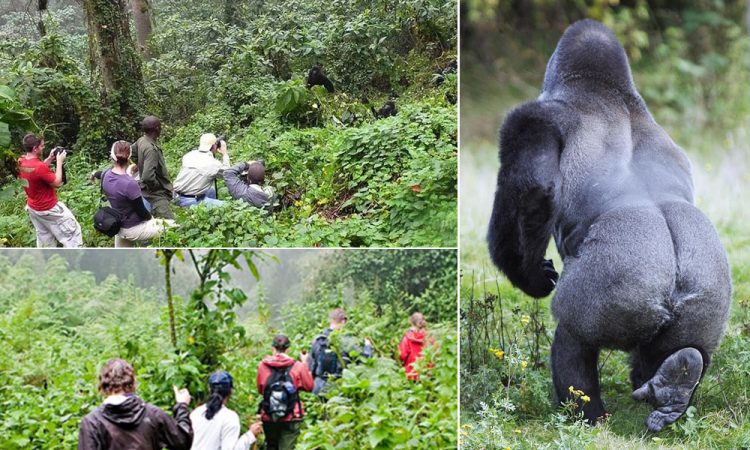
A total of 8 permits are issued daily for the gorilla habituation experience in Bwindi Impenetrable National Park.
Key Details
- Allocation: These permits are split across 2 semi-habituated gorilla families (4 permits per group each day).
- Location: The habituation experience is restricted to the southern sectors of Bwindi, primarily Rushaga.
- Duration: Unlike regular trekking (which allows 1 hour), habituation permits allow visitors to spend 4 hours with the gorillas alongside researchers.
- Issuing Authority: Permits are strictly issued by the Uganda Wildlife Authority (UWA) or authorized operators
4-days-gorilla-habituation-in-bwindi-impenetrable-forest-park
3-days-gorilla-habituation-in-bwindi-impenetrable-forest-park
What does the term "semi-habituated" actually mean for the gorillas you visit?
When you book a habituation experience, you are visiting gorilla families that are still in the middle of getting used to human presence. Unlike fully habituated groups that barely pay attention to tourists, semi-habituated troops can sometimes remain a bit more unpredictable, shy, or cautious. This means they might still display natural wary behaviors, keeping things raw, wild, and intensely authentic. When you travel with Roads of Adventure Safaris, your guide prepares you mentally for this dynamic environment, explaining how researchers slowly build trust over years without changing the animals' natural instincts. It is an incredible educational journey that lets you witness conservation science in action rather than just a standard tourist walkthrough.
Why is the gorilla habituation experience restricted exclusively to the Rushaga sector?
Bwindi Impenetrable National Park is divided into multiple administrative sectors, but habituation is strictly isolated down in the southern Rushaga region. This is because the specific wild troops undergoing the multi-year training process happen to range across these dense southern valleys. When planning your safari with Roads of Adventure Safaris, your routing is carefully mapped out to ensure you stay at a lodge close to the Rushaga trailhead. Focusing habituation in one specific zone helps the Uganda Wildlife Authority tightly control human traffic, protect sensitive wildlife corridors, and ensure that the experimental troops are not overwhelmed by overlapping tourism pressures from different sectors.
How do researchers choose which wild gorilla groups undergo the habituation process?
The choice to begin habituating a wild gorilla family is not made lightly; it requires years of careful observation by conservation biologists. Wildlife authorities select groups that frequently range near park boundaries or interact with local communities, making peaceful coexistence vital. When your expert guide from Roads of Adventure Safaris shares background stories during your transit to Bwindi, you will learn how researchers spend months watching these troops from a safe distance before ever attempting close contact. Participating in the habituation program means you are directly supporting this delicate, long-term scientific mission, helping expand safe tourism spaces while safeguarding the future of the greater mountain gorilla population.
What specific training do the accompanying researchers and trackers have?
You won't just be walking into the forest with a standard park guide; habituation groups are accompanied by seasoned researchers, specialized trackers, and armed conservation rangers. These professionals have spent years studying the individual facial features, vocalizations, and family hierarchies of the specific troop you are visiting. When you journey with Roads of Adventure Safaris, your team connects you with these field experts who can whisper names and background stories about every gorilla you encounter. Their deep knowledge turns a quiet forest walk into an interactive masterclass on primate behavior, ecology, and the complex daily efforts required to keep wild apes safe from poachers.
How does a four-hour habituation visit differ logistically from a standard morning briefing?
While standard morning briefings at park headquarters involve large groups of up to eight tourists per family split across multiple sectors, the habituation briefing is much smaller, quieter, and more intimate. Because only four permits are issued daily for habituation, you meet your specialized researchers in a small, focused huddle. Your representative from Roads of Adventure Safaris ensures you arrive at the Rushaga meeting point early, where you receive specific instructions on how to behave around semi-wild animals, how to record data alongside researchers, and what safety protocols to follow if a curious silverback approaches your tight four-person circle.
Can I request a private habituation group just for my own family or traveling party?
Given that the daily limit for habituation is capped at a strict total of four permits per group, your traveling party essentially fills the entire slot if you book four spaces together. If you are traveling as a couple or a solo adventurer, you will likely be grouped with other like-minded wildlife enthusiasts to reach that maximum cap of four. When coordinating your booking through Roads of Adventure Safaris, your travel planner will clearly explain who else might share your permit slot or help you coordinate private multi-day itineraries so your entire family can share the anticipation, excitement, and post-trek celebrations together at your lodge.
What happens if the semi-habituated gorillas move away or hide during your four hours?
Because semi-habituated troops are still learning to tolerate human neighbors, they can sometimes decide to retreat into thick, tangled underbrush or move rapidly across steep ridges. Unlike standard trekking where your hour is strictly timed, habituation allows researchers to patiently follow the troop's natural rhythms. When your guide from Roads of Adventure Safaris leads you through the forest, they remind you to remain flexible and patient. Even if the gorillas spend an hour resting out of sight in dense bamboo, your extended window gives you plenty of time to catch them when they become active, forage, groom, and play out in the open.
How do researchers record data while you share those four hours with the gorillas?
When you join a habituation trek, you aren't just a passive tourist; you become an active observer alongside working scientists. Researchers constantly jot down notes regarding feeding habits, nesting locations, interactions between dominant silverbacks and juveniles, and responses to human presence. When your group travels with Roads of Adventure Safaris, your guide will encourage you to watch how the researchers work quietly behind the pad and pen. You can ask questions about how these daily logs contribute to official conservation databases managed by the Uganda Wildlife Authority, giving you a rare backstage pass into professional wildlife management.
Why are cameras and shutter sounds managed more strictly during habituation?
Because semi-habituated gorillas are still adjusting to human sights and sounds, sudden noises like loud camera clicks, motor drives, or flash usage can startle them. While photography is fully permitted, researchers will ask you to be mindful of your shutter noise and avoid sudden movements. When planning your camera gear with Roads of Adventure Safaris, experts recommend using silent shooting modes on digital cameras or smartphones. Keeping your movements slow and deliberate ensures the gorillas remain calm, allowing you to capture stunning, intimate portraits of these majestic creatures without altering their natural daily behaviors or causing unnecessary stress.
What kind of physical stamina is required for an all-day forest habituation trek?
A standard gorilla trek can sometimes be relatively short if the family nests close by, but a habituation experience frequently turns into an all-day endurance test. Because semi-habituated troops roam deep into remote, untamed sections of Bwindi's steep southern valleys, your total time in the jungle can stretch up to seven or eight hours. When booking through Roads of Adventure Safaris, your consultant will emphasize the importance of physical preparation—like stair climbing and cardio training—weeks before your trip. Packing high-energy snacks, plenty of water, and hiring a local porter ensures you have the physical backup needed to conquer the rugged terrain.
How do local porters assist travelers during the intense Rushaga habituation hikes?
Hiring a local community porter at the Rushaga trailhead is an absolute game-changer for an all-day habituation trek. These local community members carry your heavy daypacks filled with water, rain gear, and camera equipment, while offering a steady, reassuring hand across slick mud and steep ravines. When your guide from Roads of Adventure Safaris sets up your porter at the start of the trail, you are directly supporting families living along the park boundary. Working alongside a local porter transforms a grueling, slippery climb into a collaborative, shared adventure where you and your community assistant conquer the mountain together.
Are there specific clothing requirements to protect against stinging plants in Bwindi?
The dense equatorial undergrowth of Bwindi Impenetrable National Park is filled with rough vines, sharp briars, and notorious stinging nettles that test your clothing. When preparing for your habituation adventure, Roads of Adventure Safaris provides a specialized packing list that insists on thick, breathable long-sleeved shirts, durable long trousers, and high gardening gloves. Tucking your trousers firmly into high wool socks creates an impenetrable barrier against crawling insects. Wearing these rugged layers might look utilitarian, but you will be endlessly grateful when you grab onto thick vegetation for balance without worrying about scratches or stinging leaves.
How do luxury lodges in the Rushaga sector cater to habituation guests?
Staying close to the Rushaga trailhead means you want a comfortable, warm retreat to return to after a long, muddy day in the rainforest. The lodges nestled in the southern sector—such as Chameleon Hill Lodge, Rushaga Gorilla Camp, or Gorilla Safari Lodge—specialize in pampering tired travelers. When Roads of Adventure Safaris builds your itinerary, they match you with properties that offer crackling fireplaces, hot showers, cozy dining rooms, and soothing massage services. Returning from a seven-hour trek to a hot meal and a private balcony overlooking the misty forest canopy provides the ultimate balance of rugged adventure and refined comfort.
What makes the emotional bond formed during four hours so different from one hour?
Ask any traveler who has experienced both, and they will tell you that four hours with gorillas changes your perspective entirely compared to a quick one-hour visit. During the first hour, your heart is pounding with excitement and adrenaline. By the second and third hours, the initial novelty fades, the gorillas realize you pose no threat, and the atmosphere becomes deeply peaceful. When your guide from Roads of Adventure Safaris gives you time to sit quietly, you start recognizing individual personalities, family squabbles, and tender maternal moments. That extended immersion leaves you with a profound, lifelong emotional attachment to wildlife conservation.
Do participants receive a special certificate after completing the habituation experience?
Achieving a successful all-day trek through Bwindi's rugged jungle is a major milestone worth celebrating. Once you return safely to the park headquarters at the end of your four-hour immersion, the Uganda Wildlife Authority awards participants an official Gorilla Habituation Experience Certificate. When your driver-guide from Roads of Adventure Safaris hands you this personalized keepsake during your celebratory evening dinner, it serves as a proud reminder of your physical endurance and your direct contribution to global primate conservation, making a wonderful framing piece for your home office.
How far in advance must these rare daily permits be secured with tour operators?
Because only eight total habituation permits exist per day across the entire park, global demand vastly outweighs available supply, making them some of the most competitive tickets in Africa. Travel experts at Roads of Adventure Safaris strongly recommend initiating your booking process at least nine to twelve months prior to your intended travel date. If you wait until just a few months before your holiday, the live UWA system will almost certainly show completely booked calendars. Locking in your dates early ensures your spot is secured in the government registry without last-minute disappointment.
Can I combine a gorilla habituation experience with chimpanzee tracking in Nyungwe or Kibale?
For ultimate primate enthusiasts, combining Bwindi's rare four-hour gorilla habituation with chimpanzee tracking creates the ultimate African wildlife holiday. Planning a multi-park primate expedition requires intricate transit routing between southwestern Uganda and national parks further north or across borders. Experienced destination planners at Roads of Adventure Safaris specialize in crafting these seamless multi-destination journeys. They handle all complex permit allocations, private 4x4 vehicle transfers, and luxury lodge bookings, allowing you to experience the full spectrum of Africa's incredible great ape diversity in one smooth, expertly managed trip.
What happens if adverse weather forces a temporary postponement of your habituation date?
While mountain rainforests experience frequent mist and tropical showers, complete cancellations due to severe weather are rare, as gorillas continue their daily routines through rain. However, in the unlikely event that extreme natural events or park safety alerts force a rescheduling, official UWA guidelines apply. When booking through Roads of Adventure Safaris, their support team assists you in navigating these rare adjustments. They also strongly recommend purchasing comprehensive travel insurance that covers weather-related trip interruptions, giving you total financial security as you prepare for your remote wilderness expedition.
How do Roads of Adventure Safaris handle private 4x4 transport from Kigali to Rushaga?
Driving from Kigali International Airport in Rwanda down to the southern Rushaga sector of Bwindi in Uganda offers one of the most scenic cross-border routes in East Africa. When you book your expedition with Roads of Adventure Safaris, you travel in a custom-built 4x4 Land Cruiser or safari van driven by an expert professional guide. Your driver handles all border-crossing documentation, East African tourist visas, and winding mountain roads smoothly. This turns your 4-to-5-hour transfer into an educational, comfortable journey filled with stunning views of terraced hills, volcanic lakes, and local rural communities.
How do I book my Rwanda and Uganda gorilla habituation safari step-by-step with Roads of Adventure Safaris?
Embarking on your dream primate expedition is straightforward and completely stress-free when you partner with industry professionals. To start your booking process with Roads of Adventure Safaris, simply visit their official website to fill out a custom safari inquiry form, or reach out directly via their support email (info@roadsofadventuresafaris.com) or WhatsApp consultation lines. Share your preferred travel dates, group size, and your dream of experiencing the rare four-hour habituation. Their responsive travel experts will instantly check live permit availability with the Uganda Wildlife Authority, draft a transparent, tailored itinerary covering your luxury eco-lodges and 4x4 transport, and guide you securely through every step. Contact Roads of Adventure Safaris today to turn your ultimate wildlife dream into reality!
