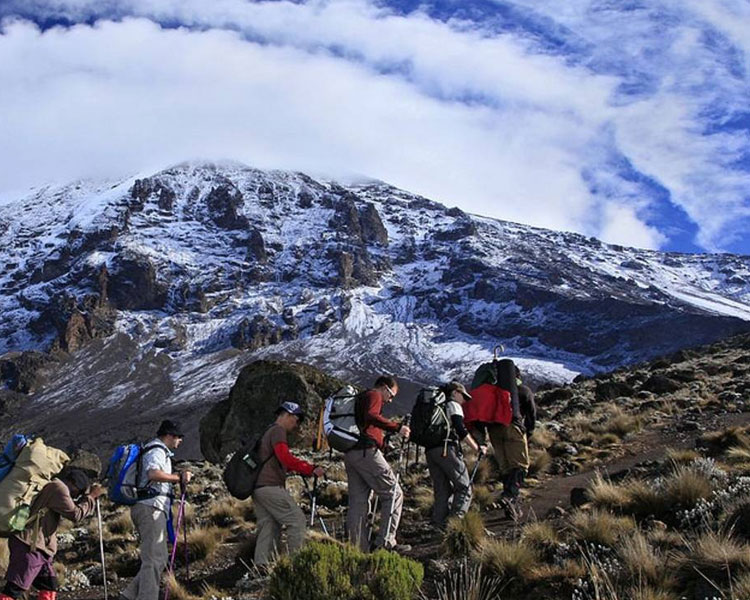
Planning a 9-day Kilimanjaro trek requires choosing an extended-duration route like the Northern Circuit or Lemosho Route, booking with a licensed tour operator, and physically preparing for 6-9 hours of daily walking. Proper gear, acclimatization, and Tanzania entry documents are also essential
9-days-northern-circuit-kilimanjaro-climb-adventure
1. Choose the Right Route
For those seeking the highest probability of standing on Uhuru Peak, a 9-day itinerary is the gold standard. By extending your time on the mountain, you allow your body the necessary window to acclimatize to the thinning oxygen, drastically reducing the risk of altitude sickness. Among these extended options, the Northern Circuit stands out as the premier route. It is not only the longest but also the most scenic, approaching from the western slopes before taking a magnificent loop around the northern face of the peak. This trail is far less crowded than the standard routes, providing a sense of solitude and immersion in the mountain's raw, wild beauty.
Alternatively, the Lemosho Route is a fantastic choice that also begins from the west. It is famous for its stunning passage through lush, primordial rainforests and its breathtaking traversal of the Shira Plateau. On the Lemosho trail, you are more likely to encounter wildlife, such as colobus monkeys, in the lower forests. As you climb, the route eventually merges with the Northern Circuit or other high-altitude trails, offering a diverse landscape that shifts dramatically from tropical greenery to high-altitude moorland.
Choosing between these two comes down to your personal travel style. The Northern Circuit is the ultimate "slow and steady" approach, designed specifically for maximum acclimatization and visual reward. Lemosho is slightly more varied in its early stages but offers a similar benefit of extended exposure. Both routes avoid the frantic pace of the 6-day climbs, ensuring that you arrive at your summit push feeling rested, adjusted, and ready to enjoy the accomplishment of a lifetime rather than fighting the severe fatigue associated with faster, more aggressive ascents.
2. Book a Licensed Tour Operator like Roads of Adventure safaris
Under Tanzanian law, an independent climb of Mount Kilimanjaro is impossible; you are legally required to book your expedition through a licensed and registered tour operator. This operator acts as the architect of your entire mountain experience, handling the complex logistics of park permits, professional guides, expert porters, and a dedicated mountain cook. Your booking is far more than a transaction; it is a partnership that determines your safety, comfort, and, ultimately, your summit success.
When researching operators, avoid the temptation to select based purely on the lowest price. Kilimanjaro trekking is a service-based industry, and "cheap" packages are almost always achieved by cutting corners on staff wages, food quality, or safety equipment. Instead, prioritize ethical, highly-rated operators. Check platforms like TripAdvisor for recent, verified reviews, but specifically look for companies that are Kilimanjaro Porter Assistance Project (KPAP) certified. This is the most reliable indicator that an operator pays their crew a fair wage, provides them with proper clothing and shelter, and respects their rights.
When you contact these operators, ask for a custom itinerary tailored to a 9-day duration. An ethical company will appreciate your commitment to a longer, safer schedule. Discuss the ratio of guides to climbers, the availability of emergency oxygen, and their protocols for managing altitude sickness. A professional operator should be transparent and proactive in their communication. By choosing an ethical, experienced partner, you are not only investing in your own summit success but also supporting a sustainable tourism model that treats the incredible local mountain workers with the dignity they deserve.
3. Plan Your Logistics & Dates
Strategic planning is the bedrock of a successful Kilimanjaro climb. To maximize your chances of success, align your trip with Tanzania's dry seasons: January to March or June to October. These windows offer the best weather, characterized by clear skies and manageable temperatures. While these months are popular, the trade-off is superior visibility and a much lower likelihood of enduring freezing, muddy trail conditions that often define the rainy seasons (mid-March to early June).
Logistics extend well beyond the mountain itself. You should arrive in Tanzania at least 1–2 days before your scheduled trek start. These buffer days are not merely for relaxation; they are critical for recovering from long-haul travel, adjusting to the time zone, and ensuring that you and your luggage arrive in sync. If the airline loses your bag, those 48 hours provide a vital window to source replacements in the shops of Moshi or Arusha.
Furthermore, these buffer days allow you to meet your lead guide for a final gear check and briefing. Use this time to buy last-minute essentials, finalize your visa documents, and absorb the local environment. Rushing from the airport to the trailhead is a common mistake that leaves climbers exhausted and physically vulnerable from the start. By giving yourself this logistical cushion, you enter the mountain gate with your head clear, your gear confirmed, and your body rested. This careful preparation minimizes stress, allowing you to focus entirely on the challenge of the climb when the real work begins.
4. Prepare Physically
Mount Kilimanjaro does not require technical mountaineering skills like rope work or rock climbing, but it does demand exceptional endurance. A 9-day trek is a marathon, not a sprint, and your body will be tested by the sustained exertion required to move uphill for several hours every day. Physical preparation should be a consistent, 2-to-3-month commitment that prioritizes aerobic fitness and structural resilience.
Cardiovascular training is the cornerstone of your routine. You need to build a base that allows you to move steadily while oxygen is increasingly scarce. Incorporate 3 to 4 sessions per week of activities like jogging, cycling, or stair-climbing. The goal is not intensity, but duration; you want to train your heart to work steadily for hours.
Equally important is "trekking-specific" training. At least once a week, head to a local trail with a backpack loaded with 10–20 pounds of weight. This simulates the actual conditions you will face on the mountain, conditioning your core and stabilizing muscles to handle the load over uneven, rocky terrain. Never attempt the climb in brand-new boots; wear the boots you plan to use during these long training hikes to ensure they are fully broken in. Consistency is the secret to success. Following a structured gym and hiking program will not only build the necessary muscle but also provide the mental confidence that you can handle the strenuous days ahead. Arrive at the trailhead knowing your body is a proven, reliable engine.
5. Obtain the Necessary Gear
Trekking Kilimanjaro is a unique experience precisely because you traverse five distinct climate zones in less than two weeks, moving from hot, humid rainforests to freezing, arctic-like glacial environments. Your gear must be adaptable to these rapid changes. The foundation of your clothing system should be the "three-layer rule": moisture-wicking base layers to keep your skin dry, a fleece or down mid-layer for heat retention, and a high-quality, waterproof, and windproof outer shell to block mountain storms.
Key gear items are non-negotiable. Invest in a professional-grade, 4-season sleeping bag—rated for temperatures well below freezing—to ensure you can recover from the day's exertion during cold nights. Sturdy, waterproof, and broken-in hiking boots are your most important tool; keep your feet warm and blister-free, and you will dramatically increase your success rate. Trekking poles are also essential, as they significantly reduce the impact on your knees during the long descent.
The good news is that you don't need to buy every single item of expensive expedition gear. Many reputable outfitters in the towns of Moshi and Arusha provide high-quality rental services for specialized equipment like sub-zero sleeping bags, heavy down parkas, and gaiters. This is an excellent, cost-effective way to prepare without over-packing your luggage for international travel. Always consult your tour operator’s official packing list as you prepare. They are the experts on the mountain’s specific needs for your dates, and following their guidance ensures you are perfectly equipped for the diverse conditions that lie ahead.
6. Health, Safety & Documentation
A safe Kilimanjaro expedition is built on strict attention to health, safety, and documentation. If you are traveling to Tanzania from a region where yellow fever is prevalent—such as Uganda or other parts of Central Africa—a Yellow Fever Vaccination Certificate is mandatory for entry. Do not leave this to chance; customs officials will check for this documentation, and lacking it can complicate or even prevent your entry.
Your health planning must also be proactive regarding altitude sickness. While a 9-day schedule is an excellent strategy for acclimatization, altitude remains the primary challenge. Consult your doctor about altitude medication like Diamox (Acetazolamide) and discuss its proper dosage and potential side effects before you depart. Always carry high-quality medical insurance that specifically covers high-altitude trekking and emergency helicopter evacuation. Many standard travel policies exclude these, which could leave you financially responsible for a very expensive rescue.
9 Days Mountain Kilimanjaro climb and hike
Finally, your behavior on the mountain is your ultimate safety protocol. Listen to your guide—they are the professionals who monitor your heart rate and health daily. Practice pole pole (slowly, slowly) to keep your breathing steady and your energy reserves high. Drink 3 to 4 liters of water every day, even when you aren't thirsty, to keep your blood oxygenated. If you feel symptoms of altitude sickness like persistent headaches or nausea, report them to your guide immediately. Your goal is to reach the summit and return safely; by combining the right documentation, medical readiness, and a humble approach to the mountain's power, you are doing everything possible to ensure a successful and life-changing journey.
The 9 Days Mountain Kilimanjaro climb and hike stands as the ultimate expedition for adventurers seeking the most comprehensive, safe, and breathtaking route to Africa’s highest point. By choosing this extended itinerary, you bypass the rush of standard paths, prioritizing a deliberate pace that maximizes your body's vital acclimatization process. This route takes you on a spectacular journey starting from the western slopes, looping elegantly around the remote northern face of the massif. Throughout this 9 Days Mountain Kilimanjaro climb and hike, you will traverse five distinct ecological zones, moving from lush, humid rainforests to the stark, haunting beauty of the alpine desert and finally the arctic summit conditions. Designed for those who value endurance, photography, and deep immersion in nature, this strategy provides the highest statistical probability of reaching Uhuru Peak. Prepare for a life-changing adventure where expert-led pacing meets the unparalleled majesty of the "Roof of Africa," ensuring a triumphant, safe, and deeply rewarding experience.
Day 1: Londorossi Gate to Big Tree Camp Your 9 Days Mountain Kilimanjaro climb and hike begins at the Londorossi Gate, located on the mountain’s western flank. After finalizing park entry, you enter a vibrant, lush montane rainforest, a true botanical wonderland. This initial 3-to-4-hour trek climbs from 2,100 meters to 2,750 meters, winding through dense canopies, ancient ferns, and vibrant wildflowers. The air here is rich and cool, filled with the sounds of colobus monkeys and exotic birdlife. As you ascend, the humidity of the forest floor gives way to a refreshing, crisp breeze. Upon reaching Big Tree Camp, your tents will be ready, thanks to your support team. Use this time to organize your gear, enjoy a nutritious dinner, and mentally prepare for the transition into the higher altitudes. The peaceful forest setting provides a perfect, grounding start to your journey before the terrain becomes more exposed in the coming days.
Day 2: Big Tree Camp to Shira 1 Camp Leaving the lush forest canopy behind, your second day on this 9 Days Mountain Kilimanjaro climb and hike takes you into the expansive heather and moorland zones. This 5-to-6-hour hike leads you from 2,750 meters to 3,500 meters, where the dense vegetation thins to reveal stunning, sweeping vistas of the mountain’s massive slopes. You will encounter unique flora, such as the giant lobelias that thrive in this thinner, wind-swept environment. Reaching the Shira Plateau is a significant milestone, marking your entry into a vast, high-altitude landscape with incredible, unobstructed views toward the distant summit. Shira 1 Camp provides a serene place to spend the night, offering an expansive horizon and a profound sense of the massif’s true scale. Focus on deep breathing and consistent hydration tonight, as your body begins the essential process of adjusting to the increasing altitude, setting the stage for the challenges ahead.
Day 3: Shira 1 Camp to Moir Hut Day three moves you deeper into the high-altitude wilderness, transitioning from the moorland into the rugged, volcanic beauty of the alpine desert. This 5-to-7-hour trek climbs from 3,500 meters to 4,200 meters. As the ground becomes rockier and vegetation turns sparse, you will truly feel the effects of lower oxygen levels. The trail heads toward Moir Hut, a secluded, pristine site nestled near the base of the massive Kibo cone. This area is remarkably quiet, far removed from the busier southern routes, making for an otherworldly, tranquil experience. The surrounding volcanic rock formations create a stark, beautiful backdrop for your acclimatization efforts. Spend your time here relaxing, focusing on rhythmic, deep breathing, and soaking in the silence of this remote landscape. Your steady progress on this 9 Days Mountain Kilimanjaro climb and hike continues to prioritize your health, ensuring your body adapts well to the thin air.
Day 4: Moir Hut to Buffalo Camp Day four highlights the true advantage of the 9 Days Mountain Kilimanjaro climb and hike, as you maintain a balanced altitude to foster superior acclimatization. You will hike for 5 to 7 hours, crossing from Moir Hut (4,200 m) to Buffalo Camp (4,120 m). While the net elevation change is minimal, the route traverses undulating, dramatic terrain that keeps your body working steadily. The landscape is a magnificent, stark alpine desert where every ridge and rock formation feels unique. Moving along the northern slopes, you are treated to sweeping, unobstructed views of the plains far below. Buffalo Camp is perched on a ridge that offers some of the most dramatic, panoramic vistas on the entire mountain. It is a place of raw, natural beauty and solitude. Rest well tonight, eat heartily, and keep your focus on steady breathing, as you prepare for the next phase of your ascent.
Day 5: Buffalo Camp to Third Cave Continuing your traverse on day five, you head toward the Third Cave, covering a 5-to-7-hour stretch. You will descend slightly from 4,120 meters to 3,870 meters—a strategic move that allows your body to recover and further adapt before the intense final push. The landscape remains a hauntingly beautiful alpine desert, dominated by shades of volcanic gray and dusty, weathered earth. This section of the mountain is rarely visited by climbers on shorter itineraries, providing a unique sense of peace and deep isolation. As you approach the Third Cave, the massive Kibo massif looms overhead, a constant, impressive reminder of the ultimate goal that awaits. Your support team will ensure camp is ready for your arrival. Tonight is the perfect opportunity to double-check your summit gear. The slow, intentional pace of this 9 Days Mountain Kilimanjaro climb and hike is keeping you strong, energized, and mentally focused.
Day 6: Third Cave to School Hut Day six marks the transition to your high-altitude base camp. You will trek for 4 to 5 hours, ascending from 3,870 meters to 4,750 meters at School Hut. The terrain is steep, rocky, and undeniably challenging as you climb toward the "Saddle" between the Kibo and Mawenzi peaks. The air here is very thin, and every step requires deliberate, focused energy. School Hut serves as the vital staging point for your final summit push. It is a place of anticipation and intense preparation, where the silence of the high alpine desert creates an almost reverent atmosphere. Once you arrive, the priority is total rest. You will eat an early dinner, attend a comprehensive safety briefing, and try to get some sleep. Your guides will double-check all your gear for the midnight departure, which marks the start of your ultimate summit attempt on this 9 Days Mountain Kilimanjaro climb and hike.
Day 7: Acclimatization Day at School Hut Day seven is a critical strategic rest day at School Hut (4,750 m), a luxury rarely afforded on faster itineraries. This day is specifically designed to allow your body to stabilize and prepare for the enormous physiological challenge of the summit push. You will spend the day resting, hydrating, and focusing on your mental preparation. The altitude is extreme here, so you will notice that even the simplest movements feel heavier. Your guides will monitor your vitals, ensuring you are fully ready for the final ascent. This is a day of quiet reflection and gathering strength. You might spend time looking at the route ahead, chatting with fellow climbers, or simply enjoying the stark, thin-air serenity of the mountain. By staying at this high camp for an extra day, you significantly improve your odds of success and ensure that your body is thoroughly prepared for tomorrow’s summit attempt.
Day 8: Summit Day! (School Hut to Uhuru Peak to Mweka Camp) This is the ultimate test of your 9 Days Mountain Kilimanjaro climb and hike. You will begin your summit attempt around midnight, climbing through the cold, dark night toward Uhuru Peak (5,895 m). This is a grueling 12-to-16-hour day that demands every ounce of your physical and mental stamina. As you push through the scree and finally reach the crater rim, the rising sun will reveal a world of glaciers and expansive clouds below—a sight few people ever witness. Standing at the highest point in Africa, the fatigue instantly vanishes in the glow of victory. After your time at the summit, you will begin the long, careful descent to Mweka Camp (3,100 m). Your legs will be tired, but the satisfaction of standing on the "Roof of Africa" provides an unparalleled rush. It is a legendary, life-changing day that you will remember forever.
Day 9: Mweka Camp to Mweka Gate On the final morning of your 9 Days Mountain Kilimanjaro climb and hike, you will wake up with a profound sense of accomplishment. The descent from Mweka Camp (3,100 m) to the Mweka Gate (1,640 m) takes roughly 3 to 4 hours. As you walk, the air grows warmer and richer with oxygen, and the stark, freezing alpine desert slowly transitions back into the vibrant, lush rainforest you traversed on day one. It is a triumphant, easy-going walk that allows you to fully absorb the scale of what you have achieved. Upon reaching the gate, you will officially sign out, receive your hard-earned summit certificates, and share emotional, joyful farewells with your porters and guides. As you are driven back to your hotel for a long-awaited hot shower, you can look back on this journey as a masterclass in patience, resilience, and the sheer power of adventure.
1. What is the best 9-day route for Kilimanjaro?
The Northern Circuit is widely regarded as the superior 9-day route. It is the longest and most remote trail, offering an unparalleled "climb high, sleep low" profile that maximizes acclimatization. By looping around the entire northern face of the mountain, this route allows trekkers to avoid the crowds found on shorter paths. The gradual ascent through pristine moorland and alpine desert provides a quieter, more immersive wilderness experience. Because you spend more time at altitude, your body has the best possible opportunity to adjust, which is why the Northern Circuit consistently records the highest summit success rates—often between 95% and 98%—for those completing the full itinerary.
2. Is a 9-day trek strictly mandatory?
While you can technically complete a climb in 5 to 7 days, it is not recommended. Shorter itineraries force a rapid ascent that significantly increases the risk of Acute Mountain Sickness (AMS) and exhaustion. The Wilderness Medical Society emphasizes that controlling the rate of ascent is a highly effective way to prevent altitude illness. By opting for an 8 or 9-day trek, you allow your body the necessary time to naturally produce more hemoglobin and adjust to the lower oxygen pressure. Furthermore, longer routes are simply more enjoyable; they allow you to appreciate the changing landscapes without the physical toll of back-to-back, high-intensity hiking days.
3. Can I climb on my own?
No. Under the regulations set by the Tanzania National Park Authority (TANAPA), all hikers are legally required to be accompanied by a licensed mountain guide. Solo climbing is strictly prohibited, and you will be denied entry at the park gates if you are not part of a registered group. This law is in place to ensure your safety and to protect the fragile environment of the mountain. Your tour operator handles all legal requirements, including permits, and provides the essential support team of guides, porters, and cooks who make a safe ascent possible.
4. How much should a 9-day trek cost?
You should budget between $2,500 and $4,000 per person for a high-quality, 9-day expedition. This price covers essential fixed costs, including park entrance fees, rescue fees, professional wages for your crew, high-quality food, and reliable safety equipment like portable oxygen and pulse oximeters. Be extremely cautious of "budget" operators offering significantly lower prices. These companies often cut costs by underpaying their porters (failing to meet ethical standards), using worn-out gear, or skimping on food and safety measures. A higher price point is a direct investment in your own safety and the fair treatment of the local staff.
5. What kind of shape do I need to be in?
Kilimanjaro is a "walk-up" mountain, meaning it requires endurance rather than specialized technical skills like rock climbing. However, you should prepare for the reality of moving uphill for 4 to 8 hours daily for over a week. Your training should focus on cardiovascular health and leg strength. Start 2–3 months before your trip by incorporating long walks and stair-climbing sessions into your routine. Crucially, practice hiking with a loaded backpack (10–20 lbs) to condition your back, core, and legs for the daily load you will carry on the trail. Being in good cardiovascular shape also helps your body process oxygen more efficiently at higher altitudes.
6. Do I need to carry all my own gear?
No. One of the most supportive aspects of a Kilimanjaro trek is your porter crew. Porters carry your heavy duffel bag—which holds your sleeping bag, extra clothes, and personal items—between camps. You are only responsible for carrying a daypack containing your immediate needs for the day, such as water (3–4 liters), snacks, sun protection, rain gear, and extra clothing layers. This division of labor allows you to focus on your breathing and pacing, which are the most important elements for a successful summit push.
7. What happens if I get altitude sickness?
Your lead guide is trained to monitor your health daily, tracking your blood oxygen saturation and heart rate. If you experience mild symptoms of altitude sickness—such as a headache or nausea—you may be advised to rest or take an extra acclimatization day. However, if symptoms become severe or indicate a higher risk (like confusion or extreme fatigue), the only medically approved treatment is an immediate descent. Guides are expert at executing these emergency descents, and safety should always take precedence over your goal of reaching the summit.
8. What is the weather like on the mountain?
You will traverse five distinct ecological zones, meaning you’ll experience a vast range of weather. On the lower slopes (rainforest), expect warm temperatures between 20°C and 30°C. As you ascend into the moorland and alpine desert, the temperatures drop significantly. On summit night, temperatures can easily fall to -15°C or lower, and the wind chill can make it feel even colder. Your gear must be versatile enough to handle both the tropical heat of the trailhead and the brutal, arctic-like conditions of the Uhuru Peak summit.
9. What are the accommodations like?
On the Northern Circuit and most other non-Marangu routes, you will stay in high-quality, four-season canvas tents. Your porters will set up and dismantle these tents at each campsite, ensuring they are placed in the most sheltered and scenic spots possible. These tents provide a warm, secure space to sleep. While the Marangu route is the only one offering permanent wooden huts with dormitory-style beds, the tented experience on the Northern Circuit is widely considered more immersive and rewarding for those seeking a true wilderness expedition.
10. Are there showers and toilets on the mountain?
There are no permanent showers on the trail, though your crew will provide warm basin water for washing. Sanitary facilities are basic; most campsites have communal, "long-drop" pit latrines. Because these can be crowded or less sanitary, many 9-day trekkers choose to rent a private portable toilet (a "loo tent") through their operator. This is a small, personal tent set up at each camp that offers significantly better hygiene and convenience, particularly during the cold, windy nights.
11. What is the food like?
Your mountain chef will prepare high-calorie, carbohydrate-rich meals designed to fuel your ascent. Because metabolism at high altitude works more efficiently with carbohydrates, you can expect a menu featuring hearty soups, pasta, rice, potatoes, fresh vegetables, and bread. Most reputable companies are fully capable of accommodating dietary requirements like vegan, vegetarian, or gluten-free meals. Even if you lose your appetite—a common reaction to high altitude—your guides will encourage you to eat as much as possible to maintain the energy required for the trek.
12. How is drinking water supplied?
Your crew collects natural water from mountain streams, which is then boiled and purified each morning and at each camp. You are responsible for carrying 3–4 liters of water per day in your own hydration bladder (CamelBak or similar) and wide-mouth water bottles (Nalgene). It is vital to drink consistently while you hike, as dehydration significantly worsens the effects of altitude sickness. On summit night, carry your water in an insulated bottle, or store it upside down in your pack, as the extreme cold can cause tubes to freeze.
13. When is the best time of year to climb?
The ideal climbing conditions occur during Tanzania’s two dry seasons: mid-December to mid-March and mid-June to the end of October. These months offer the most predictable weather, with clearer skies and less mud on the trails. While June through October is the most popular window, the shoulder season of mid-May to early June can also be a great time if you are looking for fewer crowds. Always avoid the primary rainy seasons (mid-March to mid-May and November to early December), as heavy rains make the trails slippery and visibility poor.
14. What travel documents do I need?
You must have a passport valid for at least six months beyond your departure date. Most international travelers, including those from the US, UK, and EU, require a Tanzania Tourist Visa, which can be applied for online as an e-Visa through the Tanzania Immigration Services website. Additionally, you should carry a copy of your trip itinerary, proof of your medical insurance, and any relevant vaccination records. If you are entering Tanzania from a country with a risk of yellow fever, you are legally required to carry a Yellow Fever Vaccination Certificate.
15. Do I need special travel insurance?
Yes, travel insurance is mandatory for Kilimanjaro climbers. Because standard travel policies often exclude high-altitude activities, you must specifically verify that your policy covers trekking at altitudes up to 6,000 meters. Your insurance must also include a provision for emergency helicopter evacuation, as this is the only way to quickly transport a climber from the mountain to a hospital in the event of a medical emergency. Always keep a printed copy of your policy and emergency contact details in your daypack throughout the duration of your climb
Booking 9 Days Kilimanjaro with us Roads of Adventure safaris
Booking a 9-day Kilimanjaro climb via the scenic Lemosho Route with Roads of Adventure Safaris guarantees a fantastic balance of acclimatization, low traffic, and high summit success. The fully supported trek guides you through five diverse climate zones, from lush rainforests to the alpine desert, culminating at Uhuru Peak
