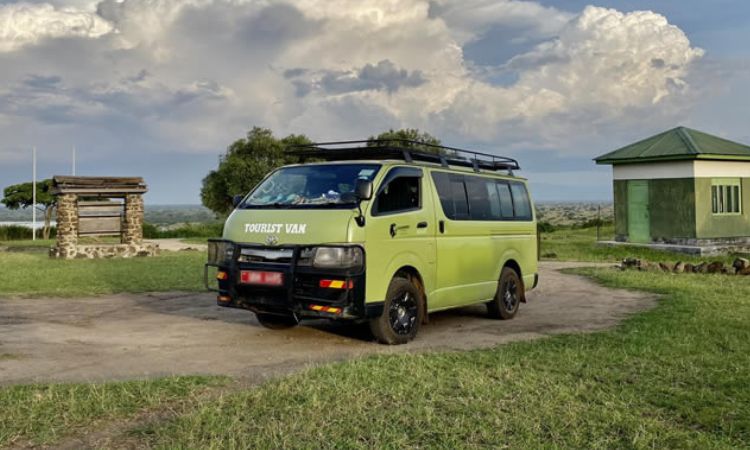
Hiring a safari car in Uganda for $70 per day is an excellent and highly realistic budget sweet spot. At this price point, you can secure a rugged 4x4 capable of navigating both the paved highways and the muddy, rough tracks of premier national parks like Bwindi Impenetrable Forest or Murchison Falls
17-days-uganda-honeymoon-safari-holiday-tourn
15-days-best-uganda-honeymoon-safari-holiday
10-days-best-honeymoon-uganda-safari-tour-vacation-holiday
5-days-gorilla-trekking-and-jinja-white-water-rafting
5-days-perfect-uganda-honeymoon-safari-in-jinja
1-day-tubing-and-water-massage-jinja-tour-package
14-days-uganda-primate-safari-and-jinja-white-water-rafting
6-days-jinja-white-water-rafting-gorilla-trekking-and-chimpanzee-tracking-adventure
6-days-jinja-white-water-rafting-bwindi-impenetrable-and-lake-mburo-park
5-days-gorilla-trekking-and-jinja-white-water-rafting
1. Toyota Land Cruiser Prado (TX/TZ)
The Toyota Land Cruiser Prado (TX/TZ) is widely considered the quintessential mid-range, self-drive 4x4 for African safaris. For $70 per day, it hits the absolute sweet spot between rugged mechanical capability and passenger comfort.
Off-Road Mastery
Built on a high-strength steel chassis with a full-time or selective four-wheel-drive (4WD) system, the Prado is designed to navigate deep mud, gravel roads (murram), and steep terrain. Its impressive ground clearance protects the undercarriage from jagged rocks and deep potholes, giving self-drive travelers the confidence to explore remote national parks independently.
Interior and Safari Modifications
Inside, the Prado comfortably accommodates up to 5 adults with a generous rear cargo bay for luggage or heavy-duty camping gear. Crucially, many rental agencies custom-modify these Prados for wildlife enthusiasts. At this price point, you can regularly find models fitted with a customized mechanical pop-up roof. This feature allows passengers to stand up safely during game drives, offering an elevated, 360-degree, unobstructed view of animals—perfect for taking photos without glare from the windows. Air conditioning and robust suspension come standard, turning long, bumpy transits into smooth, manageable journeys.
2. Toyota Safari Van (Hiace)
If you are traveling as a family or a small group of friends, spending your entire budget on a single SUV can feel cramped. The Toyota Hiace Safari Van provides an incredibly cost-effective alternative for exactly $70 per day on a self-drive or budget-driver basis.
Group Dynamics and Space
Unlike standard city mini-buses, a dedicated safari van is elevated with heavy-duty leaf-spring rear suspension and a lifted 4x4 drivetrain to handle rough park roads. It is engineered to comfortably carry 5 to 9 passengers while ensuring that nobody gets squished into a middle seat. The van features large, continuous side windows that maximize visibility for everyone on board.
The Safari Advantage
The standout feature of the Hiace Safari Van is its oversized hand-raised pop-up roof. When opened, multiple travelers can simultaneously stand up to track lions or elephants across the savannah. Furthermore, these vans are built like workhorses; they utilize highly efficient, high-torque diesel engines that cover long highway distances between national parks without breaking the bank on fuel. At $70 split across a group, it represents the ultimate value per person.
3. Toyota RAV4 (With a Professional Driver-Guide)
While the previous two options require you to sit behind the wheel and navigate unfamiliar dirt tracks yourself, allocating $70 per day toward a Toyota RAV4 inclusive of a local driver-guide shifts the entire experience from an expedition to a stress-free vacation.
Trading Size for Chauffeur Luxury
On a pure self-drive basis, a compact 4x4 Toyota RAV4 is highly economical, costing roughly $45 to $50 per day. Stepping up to the $70 threshold allows you to utilize that financial surplus to hire a professional local driver-guide. The RAV4 itself is a nimble, fuel-efficient crossover crossover. While it lacks a pop-up roof and has less ground clearance than a Land Cruiser, its continuous 4WD handles standard park tracks remarkably well.
The Value of a Local Guide
By letting a professional handle the driving, you are free to stare out the window and fully immerse yourself in the landscape. A local guide brings invaluable benefits:
- Expert Navigation: They effortlessly navigate difficult terrain, avoid getting lost in remote areas, and know how to handle local traffic customs.
- Wildlife Spotting: Experienced guides communicate with park rangers via radio networks and possess trained eyes to spot camouflaged wildlife that an untrained self-driver would miss completely.
- Cultural Connection: They bridge the language barrier, giving you rich historical context about the regions and villages you pass through.
Typical Rental Costs in Uganda Comparison
1. Toyota RAV4
The Toyota RAV4 is the undisputed champion for budget-conscious travelers, solo explorers, and couples. Priced at a highly accessible $45 to $50 per day for self-drive and scaling to $70 to $80 with a local driver, it offers incredible fuel economy and nimble handling.
Performance and Ideal Use
While it lacks the heavy-duty low-range gears of larger SUVs, its full-time 4WD system handles tarmac highways and well-maintained park tracks with ease. It is perfect for navigating Kampala’s traffic or taking short weekend getaways to destinations with solid infrastructure, like Lake Mburo National Park or Jinja for source-of-the-Nile excursions. It provides a compact, cozy interior with enough boot space for two large suitcases and camping gear, making it a highly practical choice for light-terrain road trips.
2. Land Cruiser Prado (TX/TZ)
The Toyota Land Cruiser Prado (TX/TZ) is the most versatile all-rounder on the Ugandan safari circuit. Running $70 to $80 per day for self-drive and $90 to $100 with a professional driver, it represents the sweet spot where rugged off-road performance meets passenger comfort.
Built for the Bush
Featuring high ground clearance, a robust suspension system, and a powerful engine, the Prado confidently tackles the rough murram (gravel) roads, steep ridges, and deep mud common in Southwestern Uganda. It is highly recommended for journeys to Queen Elizabeth or Murchison Falls National Parks. Many models come modified with a pop-up roof, giving up to 5 passengers a superb elevated platform for unobstructed wildlife photography. It is the ultimate vehicle for travelers who want true safari capabilities without paying luxury prices.
3. 4x4 Safari Van (Hiace)
For families, small group tours, or primate tracking groups, the 4x4 Toyota Hiace Safari Van offers unmatched collective value. It ranges from $70 to $80 per day for self-drive (though highly recommended with a budget driver at $90 to $120 to ease the burden of navigating long regional transits).
Group Comfort and Views
The van's spacious interior comfortably accommodates 5 to 9 passengers without sacrificing legroom or storage space for heavy luggage. It is heavily modified for tourism, featuring a lifted 4x4 suspension to handle rough tracks and a large, hand-raised pop-up roof. This allows multiple passengers to stand simultaneously during game drives to view wildlife. If you are heading out for group gorilla trekking in Bwindi or chimpanzee tracking in Kibale, splitting the daily cost of this workhorse makes it incredibly cost-effective per person.
4. Extended Safari Land Cruiser (70 Series)
The Extended Safari Land Cruiser is the gold standard of African luxury travel and specialized field expeditions. Because of its complex mechanics, high value, and sheer size, it is not available for self-drive, commanding $150 to $200+ per day inclusive of a professional driver-guide.
Premium Capability
This heavy-duty, customized vehicle features an extended chassis designed to give 6 to 8 passengers guaranteed window seats. It is equipped with heavy-duty suspension, specialized off-road tires, a massive pop-up roof (or open-sided canopy), and on-board amenities like electronic charging ports and an integrated fridge/cooler. It is the definitive choice for high-end luxury safaris, professional wildlife photography, documentary filming crews, or anyone navigating Uganda's most remote and challenging terrains, such as the rugged roads leading to Kidepo Valley National Park.
Important Fine Print to Consider
1. Fuel Policy
When budgeting for a Ugandan safari, it is critical to remember that the daily rental rate covers the vehicle alone; fuel costs are entirely your responsibility. In Uganda, reputable agencies typically operate on either a "full-to-full" or a "same-to-same" basis, meaning you return the vehicle with the same amount of fuel it had upon delivery.
Budgeting for Safari Distances
Because safari destinations like Bwindi Impenetrable National Park or Kidepo Valley involve long-distance driving across varying terrains, fuel will be one of your largest trip expenses. Large 4x4s like the Land Cruiser Prado or a Safari Van generally feature high-torque diesel or petrol engines that consume more fuel, especially when navigating muddy tracks or steep inclines in the Western highlands. It is always wise to map out your route in advance, factor in the average consumption rate of your specific vehicle, and ensure you top up at major towns, as fuel stations can become incredibly sparse once you enter remote conservation areas.
2. Insurance Included
A standard $70 daily rate from an established Ugandan car rental agency almost always includes comprehensive insurance. This typically covers a Collision Damage Waiver (CDW), third-party liability, and basic theft protection. While this provides peace of mind when navigating unpredictable road conditions, it is vital to read the fine print before signing the rental agreement.
Understanding the Excess Fee
Standard insurance rarely covers 100% of all damages. Most policies carry an insurance excess fee (deductible), which is the maximum amount you are liable to pay out of pocket if the vehicle is damaged or involved in an accident. Furthermore, distinct components—such as single-vehicle rollovers, tire punctures, damaged glass, or undercarriage ruin caused by rough off-roading—are frequently excluded from standard CDW policies. Always clarify the exact excess amount and understand what specific damages are covered so you can drive confidently through the national parks.
3. Long-Term Discounts
If you are planning an extended exploration of Uganda—such as a comprehensive 10 to 14-day itinerary covering multiple parks—you can leverage the duration of your trip to secure better rates. Local rental agencies are highly inclined to offer long-term discounts because extended bookings minimize vehicle downtime and reduce administrative turnover between clients.
Maximizing Your Savings
For rentals stretching beyond two weeks, agencies will frequently drop their standard daily rates by $5 to $10 per day. Over a 14-day trip, a $10 daily discount translates to $140 in direct savings—effectively freeing up enough budget to cover a couple of park entry fees, boat cruises, or several tanks of fuel. When requesting a quote for an extended safari, always ask the provider explicitly for their long-term tier pricing rather than accepting the baseline daily rate, as most operators are flexible for longer expeditions.
4. Driver Fees
Opting for a driver-guided safari instead of a self-drive trip adds an extra layer of comfort, but it requires understanding how driver compensation works. The standard incremental fee of $30 to $40 per day to add a professional driver-guide covers far more than just their time behind the wheel.
All-Inclusive Driver Expenses
A major benefit of this fee is that it is traditionally all-inclusive. The daily rate covers the driver's personal meals, allowance, and daily accommodation anywhere in Uganda. You are not obligated to pay for their hotel room or their dinners at safari lodges, as they typically stay in dedicated staff quarters provided by the lodges or nearby towns. The only variance might be park entry fees for the driver and the vehicle, which are minimal for national citizens. Paying this minor daily premium grants you an expert navigator, an experienced wildlife spotter, and a stress-free travel experience.
Does the daily rate change during the peak safari seasons?
Uganda’s high seasons—primarily the dry months from June to August and December to February—see a massive surge in tourism. Because demand for reliable 4x4s skyrockets, some agencies implement peak-season surcharges. It is vital to confirm whether your quoted $70 rate is locked in or subject to inflation during these busy months. Booking several months in advance is highly recommended to secure seasonal price protection, ensuring your budget remains intact while guaranteeing vehicle availability when tracking demand is at its absolute highest.
What specific damages are excluded from the insurance coverage?
While comprehensive insurance is standard, policies rarely cover everything. Tyres, windscreens, side mirrors, and undercarriage damage caused by rough off-roading are almost universally excluded from basic collision damage waivers. Additionally, if an accident occurs due to negligence—such as speeding or driving after dark—the insurance is completely voided. Always request a clear list of exclusions before signing so you know exactly what financial risks you are carrying while traversing rugged national park tracks.
Are there any geographical restrictions on where I can drive?
Some rental agencies restrict self-drive clients from accessing notoriously challenging regions, such as the remote Karamoja plains or the rugged tracks leading to Kidepo Valley National Park. Others completely prohibit border crossings into Rwanda, Kenya, or Tanzania unless specialized international documentation (COMESA yellow card and authority letters) is arranged in advance. Clarifying these boundary limits prevents contract violations and ensures your roadside assistance remains valid throughout your entire customized regional itinerary.
How do you handle mechanical breakdowns in remote areas?
When you are deep in the bush, miles away from major towns, a breakdown can disrupt an entire itinerary. You need to know the agency's exact emergency protocol. Do they have a network of partner mechanics across western and northern Uganda? Will they dispatch a rescue vehicle to replace the car if it cannot be fixed within 24 hours? Ensuring the provider offers 24/7 phone support and a clear breakdown policy is essential for peace of mind.
Does the vehicle come with unlimited mileage for safaris?
Ugandan safaris cover massive distances, often spanning hundreds of kilometers between national parks. While most reputable local operators offer unlimited mileage as standard, some budget tiers include a daily kilometer cap, charging steep penalties for any excess. Always confirm that your agreement specifies unlimited mileage so you can freely explore hidden tracks, undertake extended game drives, and change course spontaneously without worrying about an odometer watching your every move.
What essential emergency equipment is included with the vehicle?
Navigating unpredictable terrain requires the right recovery gear. Before setting off, always ask if the vehicle is equipped with a functional spare tyre (ideally two for remote routes), a heavy-duty jack, a wheel spanner, jumper cables, and a tow rope. If you are planning a self-drive camping safari, check whether basic tools, first-aid kits, and fire extinguishers come standard, as these items are legally required and crucial for handling minor mishaps independently.
How are park entry fees for the driver handled?
If you opt for a driver-guided safari, the driver's personal accommodation and meals are covered in their daily fee, but park entrance regulations require separate attention. As a Ugandan citizen, your driver-guide pays significantly lower national entry fees compared to foreign tourists. You should clarify whether the agency includes these minor fees and the vehicle's park entrance permits in the overall quote, or if you need to pay them directly at the conservation gates.
What is your policy regarding driving at night time?
Almost all car rental companies in Uganda strictly prohibit driving their vehicles outside major towns after 6:30 PM. This rule is designed for your safety, as rural highways lack streetlights, livestock often roam the roads, and emergency assistance is incredibly difficult to coordinate after dark. Understanding this restriction helps you design a realistic daytime travel schedule, ensuring you arrive at your safari lodge safely before dusk falls.
Can I pay the rental balance using credit cards?
While booking deposits are typically handled online, settling the final balance requires knowing the local payment landscape. Many Ugandan agencies accept credit cards but add a 3% to 5% surcharge to cover bank processing fees. Alternatively, paying in cash (US Dollars or Uganda Shillings) avoids these extra costs, though US Dollar bills must be clean, unteared, and printed after 2013 to be accepted by local banking institutions.
Is a rooftop tent option available for this vehicle?
For travelers seeking an authentic wilderness adventure, transforming a Land Cruiser Prado into a mobile campsite is highly popular. You should ask if the agency can mount a rooftop tent and supply full camping gear (mattresses, sleeping bags, cooking gas, and utensils). This setup usually incurs an extra daily cost but eliminates the need for expensive lodge bookings, offering a unique way to experience Uganda’s spectacular landscapes.
Booking Uganda safari with us Roads of Adventure safaris
To book your Uganda safari with Roads of Adventure Safaris, contact them directly by calling +256 701041637, emailing info@roadsofadventuresafaris.com, or visiting their Roads of Adventure Safaris page. A 30% deposit is typically required to secure your permits and lodging.
