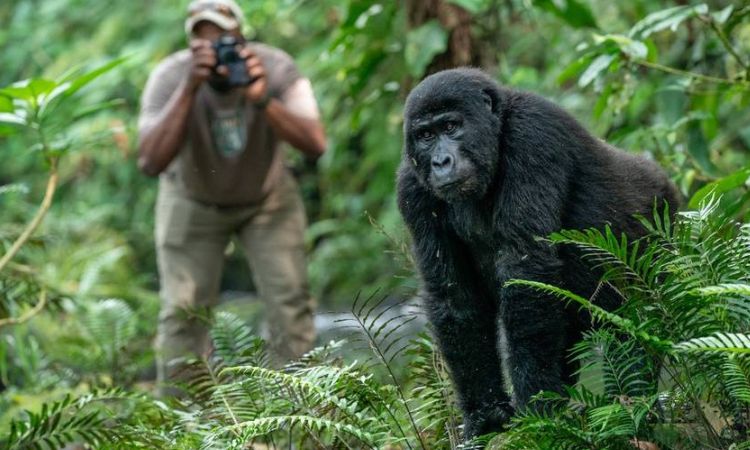
Gorilla habituation in Uganda is an amazing journey where people help wild mountain apes get used to human presence. Taking 2 to 3 years, this careful work lets lucky travelers join researchers in Bwindi Impenetrable National Park. Unlike quick visits, you spend 4 hours with semi-wild giants, learning their unique names and daily habits while supporting vital conservation
3-days-gorilla-habituation-in-bwindi-impenetrable-forest
What exactly is gorilla habituation, and how does it work?
Gorilla habituation in Uganda is a gentle, step-by-step conservation process designed to train wild mountain gorillas (Gorilla beringei beringei) to tolerate human presence without feeling threatened or changing their natural behaviors. Specialized researchers, trackers, and Uganda Wildlife Authority (UWA) rangers visit an unhabituated wild gorilla family daily for 2 to 3 years. They start by maintaining a distance of over 100 meters, mimicking vocalizations, and using submissive postures. Over time, as trust builds, they slowly move closer until the dominant silverback accepts humans. Booking through expert operators like Roads of Adventure Safaris allows travelers to step directly into the field alongside these research teams for an incredible, immersive look at wild primate science.
How does gorilla habituation differ from standard gorilla trekking?
Standard gorilla trekking allows groups of up to 8 tourists to spend exactly 1 hour with a fully habituated gorilla family that has already finished its multi-year habituation training. In contrast, the gorilla habituation in Uganda experience limits group sizes to just 4 visitors per day, giving you 4 full hours with a semi-habituated family. During this extended experience, gorillas are still adjusting to human boundaries, meaning their reactions are wilder, more spontaneous, and unpredictable. Roads of Adventure Safaris organizes seamless, custom trips that highlight these distinct differences, ensuring travelers choose the exact depth of wildlife interaction they desire.
Where in the world does gorilla habituation take place?
The specialized tourism model for gorilla habituation in Uganda takes place exclusively inside Bwindi Impenetrable National Park in southwestern Uganda. Neighboring destinations like Rwanda’s Volcanoes National Park or the Democratic Republic of Congo’s Virunga National Park do not offer open public habituation permits to travelers. Within Bwindi, habituation activities are concentrated in the park's southern sectors—primarily Rushaga and occasionally Nkuringo. Roads of Adventure Safaris provides expert ground transport in custom 4x4 Land Cruisers, ensuring safe and smooth navigation along the steep, unpaved mountain roads that lead directly to these southern Bwindi trailheads.
How long does the full gorilla habituation process take?
The full timeline for gorilla habituation in Uganda takes 2 to 3 years of continuous, highly disciplined daily effort. UWA trackers and research team members head out into the ancient forest every single day, rain or shine, from early morning until late afternoon. They track fresh footprints, dung, and bent vegetation to locate the group and build gradual familiarity. Partnering with a dedicated operator like Roads of Adventure Safaris gives travelers a deep appreciation for this multi-year commitment, as their professional guides explain the exact history, timeline, and daily milestones of the specific gorilla family you are tracking.
What makes the 4-hour Gorilla Habituation Experience unique?
Rather than acting as passive observers during a brief visit, participants in gorilla habituation in Uganda actively join field researchers in their daily work. Over 4 full hours, you move alongside wild primates, learning to identify individual gorillas by their unique nose prints and facial features, documenting their diet (such as wild celery and bamboo shoots), and observing raw social interactions. Roads of Adventure Safaris enhances this unique journey by pairing you with seasoned driver-guides who provide deep context before and after your trek, enriching your understanding of field research and wild primate behavior.
What is the maximum group size allowed per day?
To protect semi-habituated primates from excessive stress, UWA strictly limits the group size for gorilla habituation in Uganda to just 4 tourists per gorilla family per day. Combined with 2 to 3 rangers, researchers, and armed escorts, the total human group remains very small. This micro-group setting guarantees an exceptionally private and uncrowded wilderness encounter. Roads of Adventure Safaris specializes in securing these highly exclusive, ultra-limited permits well in advance, crafting personalized itineraries tailored around these tiny daily permit allocations.
How much does a gorilla habituation permit cost?
As set by UWA tariffs, a permit for gorilla habituation in Uganda costs $1,500 USD for Foreign Non-Residents, $1,000 USD for Foreign Residents and Rest of Africa citizens, and UGX 750,000 for East African Community (EAC) citizens. While standard trekking permits cost $800 USD for one hour of viewing, the habituation permit offers four times the viewing duration. Roads of Adventure Safaris handles the complete, hassle-free permit reservation process directly with UWA, incorporating permit fees transparently into their custom safari packages.
What does the permit fee cover?
The permit fee for gorilla habituation in Uganda covers your official park entry fees into Bwindi Impenetrable National Park, 4 hours of viewing time once the wild family is located, lead researcher fees, ranger guides, armed safety escorts, community development levies, and a personalized UWA completion certificate. Roads of Adventure Safaris ensures complete clarity by managing all permit logistics alongside your private 4x4 transportation, expert guide services, and handpicked lodge accommodations into one comprehensive itinerary.
What is the minimum age required to join gorilla habituation?
The strict minimum age requirement for gorilla habituation in Uganda is 15 years old. UWA strictly enforces this age limit at the trailhead briefing to ensure participants have the physical stamina for strenuous off-trail bushwhacking and the emotional maturity to follow safety protocols during unpredictable wild encounters. Roads of Adventure Safaris assists families traveling with younger children by organizing alternative, engaging activities—such as guided nature walks, birdwatching, or Batwa cultural tours—with reliable staff while older family members complete their habituation trek.
How far in advance should I book a gorilla habituation permit?
Because UWA issues only 4 permits per gorilla family daily (typically totaling just 8 to 12 permits per day across active habituation groups), booking gorilla habituation in Uganda requires planning 6 to 9 months in advance. Availability fills up rapidly, especially during peak dry seasons (June–September and December–February). Roads of Adventure Safaris leverages direct reservation channels with UWA to secure these scarce permits quickly, reserving your preferred dates within 24 hours of booking.
Can I get a refund if I cancel my permit?
Official UWA refund guidelines for gorilla habituation in Uganda state that cancellations made 91 days or more before the trek date receive a 75% refund, 46 to 90 days receive 50%, 8 to 45 days receive 25%, and cancellations 7 days or fewer prior receive no refund. However, if park medical staff declare you unfit to trek due to a contagious illness on the morning of your hike, UWA facilitates medical reschedules or partial refund assessments. Roads of Adventure Safaris guides guests through these policies, offering expert advice on travel insurance to safeguard your investment.
What health regulations apply to gorilla encounters?
Because mountain gorillas share roughly 98% of their DNA with humans, they are highly susceptible to human respiratory pathogens. Rules for gorilla habituation in Uganda mandate that visitors suffering from colds, flu, COVID-19, or stomach viruses are barred from trekking. All participants must wear protective face masks (N95 or surgical grade) while near the family and maintain a strict distance of 7 to 10 meters (23 to 33 feet). Roads of Adventure Safaris provides clear health pre-check briefings and supplies protective gear to ensure travelers meet all park safety standards.
How far is Bwindi Impenetrable National Park from Entebbe International Airport?
By road, the driving distance for gorilla habituation in Uganda from Entebbe International Airport or Kampala to the southern Rushaga/Nkuringo sectors of Bwindi is approximately 470 to 500 kilometers (290 to 310 miles). This journey traverses beautiful rolling highlands, local agricultural towns, and scenic countryside. Roads of Adventure Safaris makes this long overland transfer smooth and comfortable by providing heavy-duty 4x4 safari Land Cruisers equipped with pop-up roofs, charging ports, and cushioned suspension designed for rugged East African roads.
How long is the drive from Entebbe to Bwindi?
Driving from Entebbe or Kampala to Bwindi for gorilla habituation in Uganda takes about 8 to 10 hours, depending on traffic and road conditions. The route travels along the Kampala-Masaka-Mbarara-Kabale highway. Roads of Adventure Safaris breaks up this long drive with enjoyable, curated stopovers—including a memorable stop at the Equator in Kayabwe for photos and coffee, plus a delicious hot lunch in Mbarara—turning a long transit into an engaging sightseeing tour.
Can I fly to Bwindi instead of driving?
Yes, travelers seeking a faster route for gorilla habituation in Uganda can take domestic scheduled flights operated by airlines like AeroLink Uganda. Flying from Entebbe International Airport (EBB) to Kisoro Airstrip takes roughly 1 hour and 15 minutes. From Kisoro, it is a scenic 1 to 1.5-hour road drive to southern Bwindi lodges. Roads of Adventure Safaris seamlessly coordinates flight bookings and arranges private 4x4 transfers from Kisoro Airstrip directly to your luxury or mid-range lodge.
Is it shorter to travel to Bwindi from Kigali, Rwanda?
Yes, flying into Kigali International Airport (KGL) in Rwanda is a popular shortcut for gorilla habituation in Uganda. The drive from Kigali across the border at Cyanika or Katuna to Bwindi’s Rushaga sector is only about 170 kilometers (105 miles) and takes just 4 to 5 hours, including border formalities. Roads of Adventure Safaris frequently operates cross-border itineraries, providing private 4x4 transfers and managing East Africa Tourist Visas for a swift, stress-free cross-border journey.
Which specific sectors in Bwindi offer gorilla habituation?
While standard trekking takes place across all four sectors of Bwindi (Buhoma, Ruhija, Rushaga, and Nkuringo), official gorilla habituation in Uganda is available exclusively in the southern sectors—primarily Rushaga and occasionally neighboring Nkuringo. This restriction ensures habituation efforts remain concentrated where active research groups reside. Roads of Adventure Safaris ensures your lodge is booked in the correct southern sector, eliminating long morning drives to the trailhead.
Where should I stay when doing the habituation experience?
To ensure timely arrival for your early morning gorilla habituation in Uganda briefing, you should stay at a lodge within or near the Rushaga or Nkuringo sectors. Excellent options include Four Gorillas Lodge, Chameleon Hill Lodge, Gorilla Heights Lodge, Rushaga Gorilla Lodge, and Mutanda Lake Resort. Roads of Adventure Safaris partners with top-rated luxury, mid-range, and eco-budget lodges to guarantee exceptional comfort, outstanding views, and quick access to park headquarters.
What does a typical gorilla habituation day schedule look like?
A day of gorilla habituation in Uganda begins with breakfast at 06:00 AM, followed by an essential UWA briefing at the Rushaga trailhead at 07:30 AM. Trekking into the rainforest begins by 08:00 AM, with trackers spending 1 to 3 hours searching for night nests. Once found, you spend 4 full hours (roughly 11:30 AM to 03:30 PM) following, observing, and documenting the gorilla family alongside researchers before hiking back to receive your certificate. Roads of Adventure Safaris manages every detail of this schedule, ensuring timely departures and providing packed meals.
How long is the hike before finding the gorillas?
The hike to locate wild primates during gorilla habituation in Uganda usually takes 1 to 4 hours of off-trail walking each way. Duration depends entirely on where the family constructed their night nests and how far they traveled in search of food like fresh bamboo shoots. Roads of Adventure Safaris prepares guests with realistic expectations and detailed briefings, ensuring travelers are physically and mentally ready for a full day in Bwindi's untamed forest.
How difficult is the physical terrain in Bwindi?
Trekking for gorilla habituation in Uganda involves navigating rugged, demanding terrain. Bwindi Impenetrable National Park sits at high altitudes ranging from 1,160 to 2,607 meters (3,800 to 8,550 feet) above sea level. You will climb steep ridges, traverse muddy ravines, and push through dense vines and stinging nettles without clear walking paths. Roads of Adventure Safaris supplies lightweight walking sticks and provides pre-trip fitness tips to help travelers conquer these mountain slopes comfortably.
What happens if the gorillas move continuously during the 4 hours?
Because semi-habituated apes are still building trust with humans, they do not remain static like fully habituated groups. During gorilla habituation in Uganda, the family may move steadily through dense vegetation while foraging. You will walk along with UWA researchers, navigating thick underbrush to keep pace while documenting their habits. Roads of Adventure Safaris guides assist you on the trail, ensuring you stay safe and comfortable while keeping up with the researchers and gorillas.
Why do habituation briefings start earlier than standard treks?
Briefings for gorilla habituation in Uganda start early (at 07:30 AM) because researchers need to enter the forest as early as possible to intercept the gorilla family near their fresh morning nesting sites. Tracking them before they travel far into deep valleys optimizes viewing time. Roads of Adventure Safaris coordinates seamless morning departures from your lodge, ensuring you arrive relaxed and fully prepared at the UWA headquarters well before the orientation begins.
Should I hire a local porter, and how much do they cost?
Hiring a local porter for gorilla habituation in Uganda is strongly recommended. Porters carry heavy daypacks, carry camera gear, and offer a steadying hand on slippery, steep slopes. Hiring a porter costs $15 to $20 USD per day and directly supports surrounding local communities. Roads of Adventure Safaris encourages all guests to hire local porters, fostering sustainable community tourism while making your trek far easier and more enjoyable.
How many mountain gorillas live in the wild today?
There are approximately 1,063 mountain gorillas remaining on Earth, divided between the Virunga Massif and Bwindi Impenetrable National Park. Bwindi protects roughly half of the world's population (around 459 individuals). Conducting gorilla habituation in Uganda plays an essential role in monitoring and protecting these endangered primates. Roads of Adventure Safaris integrates valuable conservation education into their itineraries, illustrating how your permit fee actively supports the recovery of this global population.
How do semi-habituated gorillas react when humans approach?
During gorilla habituation in Uganda, semi-habituated gorillas exhibit natural, uninhibited wild behaviors. They may beat their chests, hide behind foliage, or move away rapidly. The dominant silverback may even perform a mock charge to establish dominance. Rangers and researchers respond by making soothing vocalizations and adopting submissive postures. Roads of Adventure Safaris prepares guests through pre-trek safety briefings so you remain calm, composed, and confident during these exciting displays.
What biological traits make mountain gorillas distinct?
Mountain gorillas (Gorilla beringei beringei) feature thicker, longer black hair than lowland gorillas, enabling them to thrive in chilly, high-altitude rainforests. An adult male silverback weighs between 136 and 195 kg (300 to 430 lbs), stands 1.5 to 1.8 meters (5 to 6 feet) tall, and possesses physical strength estimated at 4 to 8 times that of an average adult human. Observing these incredible physical traits up close during gorilla habituation in Uganda is an unforgettable highlight expertly arranged by Roads of Adventure Safaris.
What other wildlife might I encounter during the trek?
While participating in gorilla habituation in Uganda, you explore an ancient UNESCO World Heritage ecosystem home to 120 mammal species. Alongside gorillas, trekkers frequently spot L'Hoest's monkeys, black-and-white colobus monkeys, blue monkeys, forest elephants, bushbucks, and giant forest hogs. Roads of Adventure Safaris equips your private tour with knowledgeable driver-guides who help identify diverse wildlife tracks and sightings throughout your safari journey.
What bird species live in Bwindi?
Bwindi is a premier birding destination sheltering over 350 bird species, including 23 species endemic to the Albertine Rift. While tracking for gorilla habituation in Uganda, bird enthusiasts can spot rare species like the African green broadbill, Rwenzori turaco, handsome francolin, blue-headed sunbird, and Neumann's warbler. Roads of Adventure Safaris can customize bird-watching extensions into your habituation itinerary, pairing you with specialist birding guides across Bwindi's forest trails.
What do mountain gorillas eat throughout the day?
Mountain gorillas are folivores that eat up to 18 to 30 kg (40 to 66 lbs) of vegetation daily. Their diet consists of wild celery, bamboo shoots, thistle stems, tree bark, juicy roots, and fleshy leaves, along with occasional ant or termite larvae. During gorilla habituation in Uganda, you will spend 4 hours observing their specific feeding habits and watching how they strip thistles and gather fresh leaves. Roads of Adventure Safaris ensures you have ample time to capture photos and appreciate these fascinating daily feeding patterns.
What are the best months of the year for gorilla habituation?
The ideal times for gorilla habituation in Uganda are during the dry seasons: June to September and December to February. During these months, trails are less muddy, footing is firmer, and heavy downpours are less frequent. However, rain can fall at any time in a tropical rainforest. Roads of Adventure Safaris operates high-quality safaris year-round, assisting guests in selecting ideal travel dates and providing flexible schedules regardless of seasonal conditions.
Is gorilla habituation possible during the wet rainy season?
Yes, gorilla habituation in Uganda is available year-round. The wet season months (March to May and October to November) bring heavier rainfall and slick, muddy paths, but they also offer unique perks. Gorillas often stay at lower altitudes where food and bamboo are abundant, potentially shortening trek times. Roads of Adventure Safaris provides robust 4x4 transport and detailed packing guidance to make rainy season safaris smooth, rewarding, and fully accessible.
What clothing should I pack for the forest?
When preparing for gorilla habituation in Uganda, pack high-performance trail gear:
- Sturdy, waterproof hiking boots with deep tread and strong ankle support.
- Long-sleeved shirts and lightweight trousers to guard against thorns and stinging nettles.
- Long wool socks (to tuck trousers into) or gaiters to block fire ants.
- Heavy-duty gardening gloves to grab vegetation on steep slopes.
- A breathable, lightweight rain jacket or poncho.
Roads of Adventure Safaris provides a detailed packing checklist before travel so you arrive thoroughly prepared for the rainforest terrain.
What gear and supplies should I carry in my daypack?
Your daypack for gorilla habituation in Uganda should contain 2 to 3 liters of drinking water, a packed lunch provided by your lodge, high-energy snacks (nuts, dried fruit, energy bars), insect repellent, face masks, a small personal first-aid kit, and camera equipment stored inside waterproof dry bags. Roads of Adventure Safaris supplies complimentary bottled mineral water inside their safari vehicles and coordinates fresh, hearty packed lunches with your lodge every morning.
What camera guidelines should I follow when photographing gorillas?
Flash photography is strictly banned during gorilla habituation in Uganda because sudden bright flashes startle wild animals and provoke defensive reactions. Turn off your camera's flash, focus-assist lights, and shutter sounds. Bring a camera lens with good zoom capabilities (e.g., 70-200mm) because semi-habituated gorillas may stay slightly farther back in thick foliage. Roads of Adventure Safaris briefs photographers on optimal camera settings and spatial awareness so you capture incredible photos while keeping the animals calm.
How does my $1,500 permit fee contribute to local conservation?
Purchasing a permit for gorilla habituation in Uganda directly finances critical conservation. UWA allocates 20% of all permit and park revenue to local communities surrounding Bwindi to build schools, health clinics, and clean water facilities. Permits also fund ranger salaries, anti-poaching patrols, and expert veterinary care through Gorilla Doctors. By booking your safari with Roads of Adventure Safaris, you support a Ugandan tour operator committed to sustainable tourism, community empowerment, and wildlife protection across East Africa.
Booking gorilla habituation in Uganda with us Roads of Adventure safaris
Booking your Gorilla Habituation Experience in Uganda through Roads of Adventure Safaris guarantees an exclusive, face-to-face encounter with mountain gorillas in their natural habitat. Unlike standard gorilla trekking—which permits only one hour of observation—the Gorilla Habituation Experience grants you up to four full hours alongside researchers, trackers, and conservationists as they gently accustom a wild gorilla family to human presence.
Because permits are strictly limited to just 4 participants per day for each family (compared to 8 for regular trekking), securing your spot early is absolutely critical
