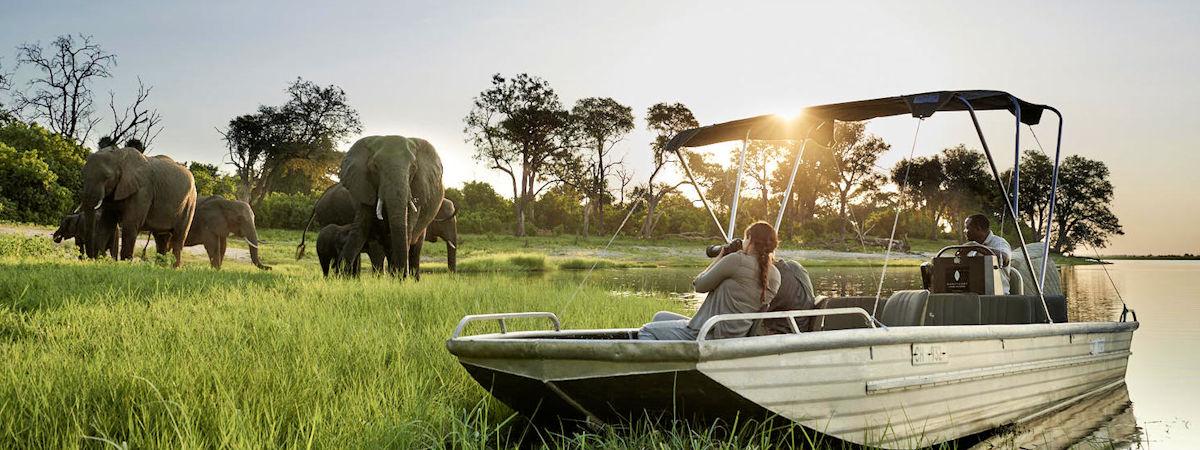
Chobe National Park, Botswana's first national park, is an elephant lover's paradise boasting the highest elephant density in Africa. Between 50,000 to 120,000 Kalahari elephants roam its massive 11,700-square-kilometer expanse. Visitors can enjoy boat-based safaris and game drives to explore four wildly diverse ecosystems
Here is a detailed breakdown of what makes a Botswana safari in Chobe National Park one of the most remarkable wildlife experiences on earth.
3-days-chobe-national-park-botswana-safari-tour-package-from-victoria-falls-town
6-day-best-victoria-falls-tour-chobe-and-hwange-zambia-wildlife-safari-holiday
8-days-best-zimbabwe-botswana-safari-all-inclusive-tour-package-from-victoria-falls
9-days-okavango-delta-moremi-game-reserve-chobe-river-front-and-victoria-falls-tour-package
11-days-un-comparable-best-botswana-safari-itinerary-and-optional-victoria-falls-tour
The Elephant Empire of Chobe
When you embark on a Botswana safari in Chobe National Park, you are entering the undisputed capital of the elephant world. Spanning a massive 11,700 square kilometers, this park protects between 50,000 and 120,000 Kalahari elephants—the highest concentration of these gentle giants found anywhere in Africa.
What makes these elephants unique is their adaptation to the harsh, sandy environment. These Kalahari elephants are physically distinct, often possessing lighter skin tones to deflect the intense sun and sturdier, though sometimes shorter and more brittle, tusks shaped by foraging in mineral-deficient soils.
The true magic happens during the dry winter season (May to October). As the interior watering holes vanish, an incredible migration takes place. Thousands of elephants trek vast distances toward the Chobe Riverfront.
The Sight: It is entirely common to sit on a riverboat and witness mega-herds numbering up to 200 elephants at a single time gathering at the water's edge to drink, bathe, and play.
For example, a typical afternoon game drive might treat you to the sight of entire family structures—from massive matriarchs to tiny calves—submerging themselves in the river, using their trunks like snorkels. This unparalleled density ensures that every single day on safari delivers intimate, jaw-dropping encounters with these magnificent creatures.
The Mystique of the Savuti Channel and Ancient History
Venture deeper into the park’s interior on your Botswana safari, and you will encounter the legendary Savuti region—a place defined by geological anomalies and dramatic wildlife survival.
At the heart of this ecosystem is the Savuti Channel, famously dubbed "The Ghost River." This enigmatic waterway operates on a bizarre hydrological cycle, abruptly drying up and flowing again without an obvious local cause. For instance, the channel completely ceased flowing in 1888 and remained bone-dry for 70 long years before suddenly coming back to life in 1957. When it dries, the landscape transforms into a brutal, competitive arena; when it flows, it turns into a lush paradise teeming with life.
This volatile environment has bred some of the most formidable predators on the planet. The local lion prides have achieved global fame for their unique, learned behavior of hunting megafauna.
- The Predator Epicenter: Because resources get scarce, these lions have adapted to successfully hunt massive prey like buffalo and even sub-adult elephants—a phenomenon rarely witnessed anywhere else in Africa.
But Savuti isn't just about the raw theater of nature; it is also a sanctuary of human history. Tucked away on the rocky slopes of Gobabis Hill, you can step out of your safari vehicle to view incredible, well-preserved rock paintings created by indigenous Khoisan hunters. These ancient art pieces are estimated to be roughly 4,000 years old, depicting rhinos, elands, and elephants, proving that this patch of Botswana has been a wildlife haven for millennia.
The Shapeshifting Chobe River Ecosystem
The lifeblood of northern Chobe is its riverfront, dominated by a single, shapeshifting body of water. A fascinating quirk of this Botswana safari highlight is that the river actually changes its name four times as it winds across the African grid. It begins its journey as the Kwando River, morphs into the Linyanti, transforms into the Itenge, and finally becomes the Chobe River before emptying its waters into the mighty Zambezi.
This river creates a dynamic oasis that supports four wildly diverse ecosystems within a single park: the lush riverfront, the cat-rich Savuti marshes, the dense Linyanti woodlands, and the hot, dry interior. This ecological variety means you can experience entirely different safaris on the same day.
For example, a morning game drive through the teak forests might yield sightings of rare sable antelope and leopards lounging in branches. By afternoon, you can swap the 4x4 for a specialized safari boat.
Drifting silently along the Chobe River allows you to glide within meters of pods of hippos, massive Nile crocodiles basking on the banks, and an absolute explosion of birdlife—including the iconic African fish eagle. The combination of deep waterways and arid bushveld provides a dual perspective on African wildlife that few other safari destinations can match.
What makes the Chobe Riverfront safari so incredibly unique?
The Chobe Riverfront is an absolute masterclass in water-based wildlife viewing. Unlike traditional safaris where you are confined to a bumpy 4x4 vehicle, here you get to glide smoothly on a riverboat. This completely changes the dynamic between you and the animals. Because boats move quietly and don't look like a threat on land, animals are remarkably relaxed.
You can drift just meters away from a massive pod of hippos splashing in the shallows or watch a Nile crocodile sunbathing on a sandy bank without startling them. The real magic happens in the late afternoon when the golden light hits the water and herds of elephants come down to drink. You might see a family of thirty elephants swim across the river, using their trunks as snorkels.
Additionally, the riverfront acts as a magnet for an array of vibrant birdlife, from the colorful carmine bee-eater to the iconic African fish eagle swooping down for a catch. It’s a sensory experience that combines the tranquility of a river cruise with the raw excitement of a premier African wilderness, offering a perspective you simply cannot get from a dusty trail.
How many elephants actually live within Chobe National Park?
Chobe National Park boasts the highest concentration of elephants anywhere on the African continent, with an estimated population ranging between 50,000 and 120,000 individuals. To put that into perspective, you are looking at a massive living landscape where elephants easily outnumber the human residents of the surrounding areas.
These aren't just isolated sightings; the elephants are deeply woven into the fabric of the entire 11,700-square-kilometer park. This staggering density is a testament to decades of successful conservation efforts by the Botswana government and local communities, creating a safe haven for these majestic creatures to roam freely.
During the dry season, this massive population becomes incredibly visible as the interior watering holes evaporate. The elephants are forced to converge on the permanent waters of the Chobe River. This creates unparalleled spectacles where you can look out across the floodplains and see thousands of elephants dotting the horizon at once. It is a humbling, jaw-dropping scale of wildlife that makes you realize just how wild and untamed this corner of the world truly is, earning Chobe its rightful title as Africa's ultimate elephant empire.
Why does the Savuti Channel dry up so mysteriously?
The Savuti Channel is one of nature’s greatest geological riddles, famous for abruptly drying up and flowing again without any clear link to local rainfall. The channel completely ceased flowing in 1888 and remained bone-dry for 70 years before suddenly springing back to life in 1957. It dried up again in the 1980s and flowed again in 2010.
This erratic behavior is driven by subterranean tectonic activity rather than the weather. The region sits on fault lines at the tail end of Africa's Great Rift Valley. Minor, imperceptible shifts deep underground can raise or lower the earth's crust by just a few centimeters.
Because the landscape is incredibly flat, a tiny tilt in the terrain is enough to completely block the water or redirect it down the channel. When the water disappears, the lush marsh turns into a dusty, brutal battlefield where wildlife must adapt to survive. When the water returns, it breathes life back into the plain, transforming it into a vibrant paradise. This unpredictable "ghost river" cycle shapes the entire ecosystem, dictating the survival strategies of every predator and prey animal in the region.
What can visitors see at the historic Gobabis Hill?
Gobabis Hill is a fascinating open-air museum tucked away in the rugged landscape of the Savuti region. When you step out of your safari vehicle and hike up the rocky slopes, you are stepping back in time to witness incredible rock paintings left behind by indigenous Khoisan hunters. These remarkably well-preserved artworks are estimated to be roughly 4,000 years old, offering a rare window into the ancient human history of the region.
Using natural pigments made from ochre, animal fat, and plant sap, these ancient artists detailed their deep connection to the land. As you look closely at the rock faces, you can clearly identify paintings of elands, rhinos, giraffes, and elephants.
What makes Gobabis Hill so special is the realization that the very animals you are tracking on your modern safari today are the exact same species that humans revered and hunted thousands of years ago on these exact plains. It provides a profound sense of continuity, reminding us that this modern wildlife sanctuary has been a vital ecosystem for millennia, long before it was designated as a national park.
Why are Savuti lions famous for hunting large elephants?
The lions of the Savuti region have earned worldwide fame—and a bit of notoriety—for their unique and incredibly daring hunting habits. Unlike prides in other parts of Africa that typically steer clear of megafauna, Savuti lions have learned how to successfully hunt sub-adult elephants. This extreme behavior is born out of pure necessity during the harsh dry seasons when standard prey like zebra and wildebeest migrate away, leaving the resident lions desperate for food.
Over generations, these prides developed specialized, highly coordinated team strategies to take down these giants. They typically target young or injured elephants under the cover of pitch-black darkness, using their numbers to isolate a target from the protection of the herd.
It takes immense courage and flawless cooperation, with multiple lions leaping onto the back of the prey while others work to slow it down. Witnessing or hearing this raw, dramatic interaction is a chilling reminder of the intense pressure cooker that is the Savuti ecosystem. It showcases a rare evolutionary adaptation where predators have rewritten the rules of survival to conquer the biggest challenges their environment throws at them.
How many times does the Chobe River change names?
The Chobe River is a fascinating geographical chameleon, changing its official name four times as it journeys across the African landscape. It begins its life high up in the highlands of Angola, where it is known as the Kwando River. As it flows south and crosses into the flat, marshy borderlands of Botswana, it transitions into the Linyanti River.
Further along its path, it takes on the local moniker of the Itenge River for a brief stretch, before finally becoming the famous Chobe River as it reaches the northern border of the national park. Eventually, these waters empty into the mighty Zambezi River near the point where four countries meet.
This shifting identity isn't just a quirky map trivia point; it reflects the incredibly diverse terrain the water passes through. Each name change marks a shift in the landscape, moving from deep channels and dense reed beds to wide, sweeping floodplains. For travelers, tracing this river system means exploring a dynamic lifeline that alters its shape, current, and surrounding habitats, creating a rich patchwork of ecosystems that support a staggering variety of wildlife along the way.
What are the four diverse ecosystems found in Chobe?
Chobe National Park is incredibly unique because it packs four distinct ecosystems into one park. First is the Chobe Riverfront in the north, characterized by lush floodplains, dense woodlands, and deep waters that draw massive herds of elephants and hippos. Moving west, you hit the Linyanti Swamps, a labyrinth of papyrus reeds, lagoons, and riverine forests that mirror the Okavango Delta and attract rare antelopes and wild dogs.
Deep in the interior lies the legendary Savuti, a stark, dramatic landscape of dry marshes, open grasslands, and rocky hills famous for its intense predator action. Finally, there is the hot, dry interior hinterland, dominated by deep Kalahari sands and dense teak forests where animals retreat during the wet season.
This ecological variety means that a single park offers completely different safari experiences. You can spend the morning tracking leopards through thick woodlands, the afternoon watching lions on open savanna plains, and the evening drifting past crocodiles on a riverboat. It ensures your safari never feels repetitive, as every turn reveals a brand-new landscape with its own unique cast of wildlife characters.
How do Kalahari elephants adapt to their harsh home?
The elephants roaming Chobe are officially classified as Kalahari elephants, and they have developed fascinating physical and behavioral traits to survive their unforgiving environment. Living in a region dominated by deep, arid sands and intense heat, these gentle giants are physically distinct from their cousin populations. They are known for having slightly lighter skin tones, an adaptation that helps deflect the blazing African sun and keep their core body temperatures down.
Furthermore, their tusks are often noticeably sturdier, though they tend to be shorter and more brittle. This is a direct result of the mineral-deficient soils of the Kalahari; the elephants constantly use their tusks to dig into the ground and strip bark from trees to find vital nutrients, wearing them down over time.
Behaviorally, they are incredible endurance walkers. Because food and water are rarely in the same place, these elephants think nothing of trekking up to eighty kilometers a day through thick sand just to commute between feeding grounds and the river. Their resilience and specialized anatomy make them true masters of survival in one of Africa's most challenging landscapes.
When is the best time for a Chobe safari?
The absolute prime time to pack your bags for a Chobe safari is during the dry winter months, running from May to October. During this window, the weather is beautifully predictable, featuring clear blue skies, warm days, and cool, refreshing nights. But the real draw is how the dry weather alters animal behavior. As the temporary inland watering holes completely dry up, wildlife is forced to leave the thick bush and gather along the permanent water sources like the Chobe Riverfront.
This makes game viewing incredibly easy and rewarding. You don't have to search hard to find animals; you simply drive down to the river and watch the spectacle unfold. Vegetation also thins out significantly during these months, meaning predators can no longer easily hide in the brush, giving you a front-row seat to dramatic chases.
If you visit in August or September, you will witness the peak of the elephant migrations, where the river banks become a bustling highway of activity. It is the quintessential African safari experience, offering maximum wildlife activity and comfortable weather that makes long days out in the bush an absolute pleasure.
Can you see the Big Five on Chobe safaris?
While Chobe National Park is a world-class wildlife destination, checking off the traditional "Big Five" can be a bit of a treasure hunt due to the park’s specific ecosystem dynamics. You are absolutely guaranteed to check off elephants and buffaloes, which roam the park in staggering, eye-popping numbers. Lions are also highly visible, especially if you venture into the predator-rich plains of the Savuti region. Leopards, while notoriously elusive, thrive in the dense riverine forests and woodlands along the Chobe and Linyanti rivers, often spotted lounging in the branches of large trees.
The missing piece of the puzzle is the rhino. Due to heavy historical poaching across the continent, rhinos are incredibly rare in Chobe and are heavily protected in secret, monitored sanctuaries elsewhere in Botswana.
However, what Chobe lacks in rhinos, it more than makes up for with bonus species you won't easily see elsewhere. You will have fantastic opportunities to spot rare African wild dogs, sleek cheetahs, and unique antelopes like the water-loving puku and the majestic sable. It is a wildly rich safari experience that easily outshines a simple checklist.
Booking Botswana safari with us Roads of Adventure safaris
Planning your dream Botswana safari is a breeze with Roads of Adventure Safaris. Based out of Seguku, Kampala, their passionate team handles every moving part so you can just focus on the excitement. To lock in your custom itinerary, you simply secure your dates with a 30% deposit, paying the remaining balance 60 days before takeoff.
Once booked, they orchestrate a seamless, multi-day expedition. You'll enjoy elite guiding through the Okavango Delta and Chobe National Park, thrilling game drives, boat cruises, and traditional mokoro trips—with all the logistics, including private light aircraft bush transfers, completely taken care of.
