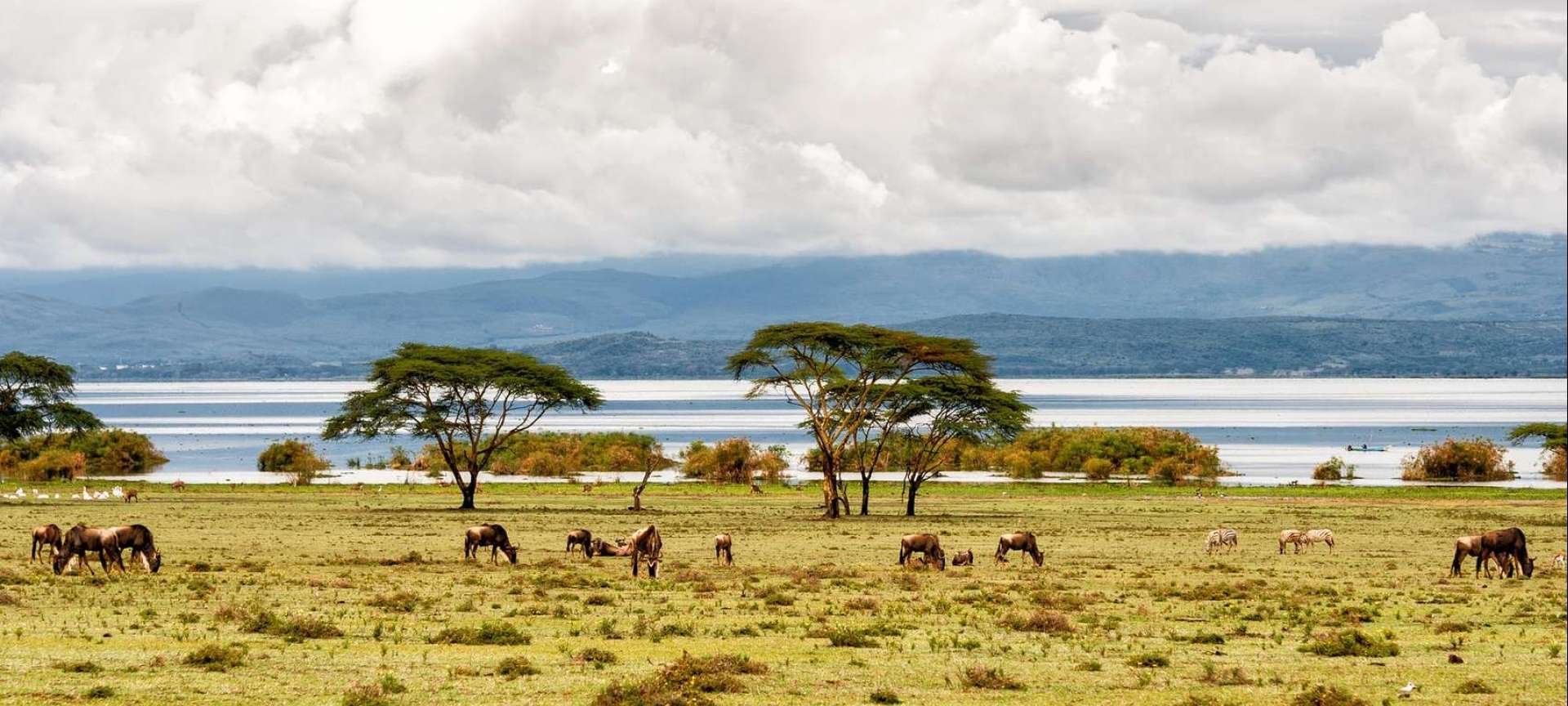
Escaping Nairobi’s buzz for the serene shores of Lake Naivasha is the perfect way to kick off your Kenya safari adventure. Covering just 90 kilometers (56 miles), the drive typically takes 2 to 2.5 hours, though Nairobi's heavy morning traffic can stretch this if you depart late.
You will journey along the smooth A104 highway, climbing to 2,200 meters above sea level along the stunning Kikuyu Escarpment. Be sure to stop at the main Great Rift Valley Viewpoint to spot the extinct volcano, Mount Longonot, towering at 2,776 meters in the distance.
While a private transfer or Uber costs around $45 USD, budget-friendly local matatus cost only 500 KES ($4 USD). Departing by 7:00 AM ensures you beat the slow cargo trucks, arriving in Naivasha by 9:30 AM for a morning boat ride alongside yawning hippos.
2-days-masai-mara-safari-africa-big-cats-safaris
3-days-luxury-masai-mara-kenya-honeymoon-safari-vacation
3-days-fly-in-masai-mara-safari-tour-package
2-days-lake-nakuru-national-park-and-lake-naivasha-combined-kenya-safari-tour
3-days-lake-nakuru-safari-in-kenya
4-days-masai-mara-national-reserve-kenya-wildlife-safari-trip
5-days-masai-mara-safari-lake-nakuru-and-hells-gate-national-park-kenya-tour
6-days-5-nights-midrange-kenya-wildlife-safari-vacation
7-days-incredible-africa-big-five-kenya-tanzania-combined-tour
How far is the drive from Nairobi to Lake Naivasha?
The driving distance from Nairobi's central business district to the shores of Lake Naivasha is approximately 90 to 105 kilometers (56 to 65 miles). This variation depends entirely on whether you are heading to the northern side of the lake or staying along the popular lodges on Moi South Lake Road.
For instance, driving from the Nairobi National Museum directly to Enashipai Resort is exactly 94 kilometers. If your destination is a campsite further down the lake, like Camp Carnelley’s, the route stretches to 104 kilometers. Despite the relatively short physical distance, you should plan for a journey of 2 to 2.5 hours. The first 30 kilometers out of Nairobi involve navigating heavy city traffic and climbing the Kikuyu Escarpment. Once you clear the Limuru area and join the main A104 highway, the road descends smoothly into the Great Rift Valley, allowing you to maintain a steady speed of 80 km/h for the remainder of the trip.
What is the best route from Nairobi to Naivasha?
The absolute best and most popular route is traveling via the fully paved Nairobi–Nakuru Highway (A104). This road provides the safest, smoothest, and most reliable connection between the capital city and the lake.
This route takes you northwest out of Nairobi, climbing past Limuru before dropping down the spectacular escarpment wall. An incredible alternative for scenic travelers is the Old Naivasha Road (B3), which runs parallel to the main highway but lower down the valley. While the B3 is quieter, the main A104 highway remains the preferred choice for a Kenya safari because it is wider, features better overtaking lanes, and is heavily populated with service stations. Choosing the A104 ensures that you have access to modern, clean restrooms, reliable fuel stops like Shell and Total, and several emergency breakdown services. It also features the main Great Rift Valley Viewpoint at an elevation of 2,200 meters, which is the perfect place to pause for photos.
How long does the journey take on average?
On average, the journey from Nairobi to Lake Naivasha takes 2 hours and 15 minutes, though this time can fluctuate between 1.5 to 3.5 hours depending entirely on your departure time.
If you leave Nairobi during the chaotic morning rush hour between 7:30 AM and 9:00 AM, escaping the city limits alone can eat up an hour, pushing your total travel time close to 3 hours. Conversely, a smooth, early-morning departure at 6:30 AM will see you arrive at the lake in just 1 hour and 45 minutes, as you will easily beat the slow-moving cargo trucks climbing the steep escarpment. Weekend traffic also plays a major role; on Friday afternoons, Nairobi residents flock to Naivasha for weekend getaways, which can cause significant bottleneck delays near the Rironi area. To guarantee a predictable, stress-free transit, professional tour drivers always recommend scheduling your departure before the morning rush or after 10:00 AM.
Is the highway safe for self-driving international tourists?
Self-driving the A104 highway from Nairobi to Naivasha is highly feasible but requires a confident driver who is comfortable with aggressive, fast-paced defensive driving.
While the highway is entirely asphalt and generally in good condition, the traffic dynamics are intense. You will share a single, winding, two-lane road with massive 20-ton cargo trucks traveling slowly uphill at 20 km/h, and fast-moving, 14-seater public matatu minibuses overtaking on blind corners at 100 km/h. The steep descent down the escarpment features sharp bends that require constant engine braking to prevent your brakes from overheating. If you choose to self-drive, it is a strict rule of thumb to never drive this route at night. After 6:30 PM, visibility on the escarpment drops to near zero due to thick, sudden mountain fog, and the road lacks streetlights or reflective cat-eyes, making night driving highly hazardous for visitors.
Where can travelers safely stop along the highway?
The best and most scenic stopover on the Nairobi-to-Naivasha route is the official Great Rift Valley Viewpoint, located approximately 40 kilometers (25 miles) into your journey.
Sitting at an altitude of 2,200 meters, this stop offers a breathtaking, sheer drop view of the valley floor stretching out below. Here, you will find a secure parking lot, clean public restrooms, and a collection of local souvenir shops where you can browse hand-carved Maasai ornaments. If you prefer a more modern, commercial stop for food and coffee, the Delamere Shopping Canal on the outskirts of Naivasha town is the ultimate hub. Located about 80 kilometers from Nairobi, this clean, well-lit plaza features a large petrol station, a bakery, clean flush toilets, and quick-service restaurants where you can buy a hot lunch and fresh Kenyan coffee for about 800 KES ($6 USD). It is the safest and most popular resting point for international safari-goers.
Can you take a public matatu to Naivasha?
Yes, taking a local public minibus, or matatu, is the cheapest and most authentic way to travel between Nairobi and Naivasha, costing only 400 to 600 Kenyan Shillings ($3 to $5 USD) one-way.
To catch one, you will need to head to the Nyamakima or Country Bus stages in Nairobi’s downtown Central Business District. Reputable shuttle companies like Molo Line or 2NK Sacco operate clean, 11-seater and 14-seater vans. These shuttles do not run on a set time schedule; instead, they depart the moment every single seat is filled and paid for, which usually takes about 15 to 20 minutes during peak hours. While highly budget-friendly, this option is not recommended if you are carrying bulky Kenya safari luggage, as there are no large luggage compartments. The ride is fast, loud, and takes about 2.5 hours, dropping you off at the main Naivasha town terminal, where you can easily hire a taxi to your final lakeside lodge.
How much does a private transfer cost?
For maximum comfort, safety, and convenience, a private transfer from Nairobi to Lake Naivasha is highly recommended and costs between $40 to $80 USD one-way for a standard vehicle.
If you book a private ride through a ride-hailing app like Uber or Bolt from Nairobi, the fare typically averages 5,500 to 7,000 KES ($42 to $53 USD). However, because Naivasha is outside their standard city operating zones, many drivers will request an additional cash top-up to cover their fuel return costs. For a more reliable and professional experience, booking a private safari vehicle with a tour operator like Roads of Adventure Safaris costs about $80 to $100 USD. This premium option gets you a spacious, high-clearance 4x4 Toyota Land Cruiser or safari van, a professional, English-speaking driver-guide, bottled mineral water, and the flexibility to make unlimited stops along the scenic highway viewpoints for photos or snacks.
What is the best departure time from Nairobi?
To ensure a smooth, pleasant drive down the Rift Valley, the absolute golden departure time from Nairobi is 6:30 AM.
Leaving at this hour allows you to completely bypass Nairobi’s notorious morning gridlock, which typically paralyzes the outbound highways by 7:30 AM. It also ensures you tackle the steep, winding escarpment road before it becomes clogged with slow-moving cargo trucks carrying goods from the Mombasa port. With a 6:30 AM start, you will arrive at the Great Rift Valley Viewpoint by 7:30 AM, enjoying the crisp, cool morning air and clear views before the midday haze rolls in. You will pull up to your Lake Naivasha resort by 9:00 AM, giving you a full, uninterrupted day to enjoy a morning boat safari, hike Crescent Island, or ride bicycles through Hell’s Gate National Park without feeling rushed.
Are there budget transport options for solo travelers?
For solo travelers looking to save money while avoiding the chaotic downtown matatu stages, booking a seat on a shared digital shuttle or using a localized hail-ride service is the best option.
A brilliant and highly secure budget option is Swvl or similar regional shuttle apps, which operate scheduled, air-conditioned executive minibuses along the Nairobi-Naivasha corridor. A seat on these modern shuttles costs roughly 800 to 1,200 KES ($6 to consol $9 USD) and can be booked and paid for directly through your smartphone. These shuttles depart from safer, less crowded pick-up points in upmarket suburbs like Westlands or Kilimani, making them highly popular with solo female travelers and backpackers. The vehicles are clean, feature speed-limiters for safety, and offer a much more relaxed environment than traditional matatus, allowing you to comfortably travel the 90-kilometer distance while keeping your personal backpack safely at your feet.
Do you need a 4x4 to get there?
While a heavy-duty 4x4 vehicle is not strictly required to drive the paved highway from Nairobi to Naivasha, having a high-clearance vehicle becomes highly beneficial once you exit the main road.
The main A104 highway is exceptionally smooth asphalt, meaning a standard two-wheel-drive sedan can easily handle the first 80 kilometers of the journey. However, the moment you branch off onto Moi South Lake Road to access the lakeside lodges, campsites, and national parks, the terrain changes. While the main access road is paved, the private driveways leading to lakeside camps and the roads inside Hell’s Gate National Park are rough, unpaved dirt tracks filled with deep sandy patches and sharp volcanic rocks. If you are traveling during the rainy seasons (March to May), these dirt tracks can quickly turn into slippery clay. Using a high-clearance SUV or a 4x4 safari cruiser ensures you won't scrape the underside of your vehicle or get stuck in the mud.
Can you travel from Nairobi to Naivasha by train?
Yes, you can travel from Nairobi to Naivasha using the modern Standard Gauge Railway (SGR), which offers a highly scenic, incredibly safe, and fast alternative to the highway.
The SGR passenger train departs from the Nairobi Terminus in Syokimau and travels along a spectacular, elevated track that cuts directly through the Nairobi National Park and across the floor of the Great Rift Valley. The train journey to the Suswa/Naivasha station takes just 1 hour and 15 minutes, completely bypassing all highway traffic and road delays. An economy-class ticket is incredibly cheap, costing only 600 KES ($4.50 USD). However, the major downside is that the Naivasha SGR station is located in a remote area near Mai Mahiu, roughly 30 kilometers away from the actual lakeside resort zone. To cover this final stretch, you will need to pre-arrange a private taxi transfer with your lodge or tour operator, which typically costs about 3,000 KES ($23 USD).
What scenery can you see during the drive?
The drive from Nairobi to Naivasha is essentially a beautiful, visual transition from a bustling metropolitan highlands city directly into a dramatic, volcanic wilderness.
As you exit Nairobi, you will pass through the lush, green agricultural zones of Limuru, which sit at an altitude of over 2,300 meters and are famous for their sprawling, emerald-green tea plantations. As the road begins its dramatic descent down the Kikuyu Escarpment, the vegetation thins out, opening up to jaw-dropping, panoramic views of the semi-arid Rift Valley floor stretching out for miles. Along the descent, you will clearly spot the perfectly symmetrical volcanic cone of Mount Longonot, which rises 2,776 meters into the sky. You will also pass the unique, tiny Travelers Church, a historic stone chapel built by Italian prisoners of war in 1942 during the construction of the road. Finally, as you reach the valley floor, the landscape opens up to dry acacia scrubland where herds of Maasai cows graze alongside wild zebras.
What altitude changes happen during this journey?
Traveling from Nairobi to Lake Naivasha involves significant altitude shifts that dramatically affect the weather and air density along the way.
You will start your journey in Nairobi, which sits at a comfortable altitude of approximately 1,661 meters (5,450 feet) above sea level. As you drive northwest toward Limuru, the road climbs steadily, reaching its highest point along the escarpment at a chilly 2,300 meters (7,545 feet). This high-altitude section is often shrouded in thick mist and experiences cool temperatures averaging 14°C (57°F). From this peak, the highway drops dramatically down the escarpment wall over a span of just 15 kilometers, descending to the floor of the Great Rift Valley. Lake Naivasha itself sits at an altitude of 1,884 meters (6,180 feet). While this is slightly higher than Nairobi, the valley floor is shielded by the surrounding highlands, resulting in a much warmer, semi-arid climate with daytime temperatures frequently reaching 26°C (79°F).
Are there police checkpoints on the Nairobi-Naivasha highway?
Yes, there are several active Kenyan Police checkpoints along the Nairobi-Nakuru (A104) highway, placed primarily to enforce speed limits, monitor vehicle safety, and ensure smooth traffic flow.
The most common speed-trap zones are located around the Limuru, Rironi, and Kikuyu sections, where the speed limit drops from 100 km/h to 50 km/h as you pass through populated trading centers. Traffic police frequently use handheld laser speed guns to catch speeding drivers, and fines for exceeding the limit can range from 5,000 to 10,000 KES ($38 to $76 USD). If you are self-driving, always ensure you have your physical driver's license, car rental agreement, and valid insurance stickers displayed on the windshield. For tourists traveling with professional tour operators like Roads of Adventure Safaris, these checkpoints are completely hassle-free, as our drivers maintain strict adherence to speed limits and all vehicles carry the necessary commercial tourism licenses required by the Transport Licensing Board (TLB).
What are the fuel costs for this drive?
For travelers planning to drive a rental car from Nairobi to Naivasha, estimating your fuel costs is highly straightforward based on current Kenyan fuel prices.
A round-trip journey from Nairobi to Lake Naivasha, including some light game driving around the lake and Hell's Gate National Park, covers approximately 250 kilometers (155 miles). A standard mid-sized SUV or a 4x4 safari vehicle averages a fuel consumption rate of about 8 to 10 kilometers per liter. This means you will require approximately 25 to 30 liters of fuel for the entire excursion. With super petrol prices in Kenya currently averaging around 190 to 200 KES per liter ($1.45 to $1.52 USD), you should budget roughly 5,000 to 6,000 KES ($38 to $45 USD) for fuel. It is highly recommended to fuel your vehicle fully before leaving Nairobi, as fuel prices can occasionally be slightly higher at the smaller stations along the highway or near the lake.
Can you stop for animal viewing on the way?
While the A104 is a busy commercial highway, you can actually spot wildlife grazing right beside the road once you descend the escarpment and approach the Rift Valley floor.
Between the towns of Mai Mahiu and Naivasha, the highway passes directly through open, unfenced community conservancies. As you cruise at 80 km/h, it is incredibly common to spot herds of 20 to 30 common zebras, families of warthogs foraging in the roadside ditches, and elegant giraffes feeding on the tall acacia trees lining the highway. Additionally, large troops of olive baboons frequently sit on the concrete roadside barriers, especially near the escarpment viewpoints, hoping to beg for food from passing travelers. Local guides strongly warn against feeding these baboons, as they can become aggressive and are highly skilled at snatching items from open car windows. This brief, free preview of Kenya’s wildlife makes the highway journey feel like an exciting, active start to your broader Kenya safari experience.
