Planning your dream Kenyan safari? Traveling from the iconic Masai Mara to Lake Nakuru National Park is a scenic, dusty adventure. Although the map shows a 240-kilometer (150-mile) route, Kenya’s diverse terrain means "safari time" is different. Expect a drive of about 6 hours total, navigating bumpy dirt tracks and winding highways.
Leaving Sekenani Gate, you’ll trade rough wilderness paths for the smooth tarmac of the B3 highway, passing breathtaking Great Rift Valley views. Halfway through, the bustling town of Narok offers a perfect human moment to stretch your legs, grab a fresh local coffee, and use a clean restroom.
Pro Tip: Leave the Mara at 7:00 AM to arrive in Nakuru by 1:00 PM (exactly 6 hours). This gets you settled just in time for lunch and a beautiful golden-hour afternoon game drive to spot Nakuru's white rhinos!
2-days-masai-mara-safari-africa-big-cats-safaris
3-days-luxury-masai-mara-kenya-honeymoon-safari-vacation
3-days-fly-in-masai-mara-safari-tour-package
2-days-lake-nakuru-national-park-and-lake-naivasha-combined-kenya-safari-tour
3-days-lake-nakuru-safari-in-kenya
4-days-masai-mara-national-reserve-kenya-wildlife-safari-trip
5-days-masai-mara-safari-lake-nakuru-and-hells-gate-national-park-kenya-tour
6-days-5-nights-midrange-kenya-wildlife-safari-vacation
7-days-incredible-africa-big-five-kenya-tanzania-combined-tour
How far is Masai Mara from Lake Nakuru?
The road distance from the Masai Mara to Lake Nakuru National Park is approximately 240 kilometers (150 miles). However, the exact mileage fluctuates depending on your starting point within the reserve. Departing from an eastern entry gate like Sekenani keeps the trip closer to 220 kilometers, whereas leaving from the Mara Triangle or western gates stretches the journey to about 260 kilometers.
How long does the road journey usually take?
Driving between the two parks typically takes 5 to 6 hours in a standard  safari Land Cruiser. While 240 kilometers might take under 3 hours on a modern highway, African safari travel moves at a different tempo. Expect to spend the first 1.5 to 2 hours navigating rough, unpaved gravel tracks inside the Mara before hitting the paved B3 highway toward Narok.
Are the roads safe for self-driving tourists?
Self-driving this route is entirely possible but requires a high level of confidence, defensive driving skills, and a robust 4x4 vehicle. While the 160 kilometers of paved highway are generally well-maintained, Kenyan traffic dynamics can be incredibly intimidating for international travelers unaccustomed to local driving habits.
The major challenge isn't just the potholes; it's the chaotic mix of road users. On the A104 highway, you will share a two-lane road with massive long-haul cargo trucks moving at 30 km/h uphill, speeding long-distance matatus (minibuses) hitting 100 km/h, and sudden livestock crossings. Potholes on the unpaved C12 section can be deep enough to damage a standard sedan's axle, which is why a high-clearance vehicle with a snorkel and heavy-duty suspension is mandatory. Additionally, sudden tropical downpours can turn dry dirt tracks into slick, muddy traps within 15 minutes. If you do choose to self-drive, local car rental agencies usually require you to sign a waiver, and it is a strict rule of thumb to never drive after 6:00 PM when visibility plummets and street lighting becomes non-existent.
What is the most scenic route to drive?
The most popular and scenic route takes you via the Narok-Mau Summit highway. You’ll descend through the dramatic landscapes of the Great Rift Valley, elevated at roughly 2,000 meters (6,500 feet) above sea level. This path offers breathtaking views of dormant volcanoes like Mount Longonot and wide vistas of pastoral Maasai herds grazing along open, acacia-dotted plains.
Where is the best place to stop halfway?
The ideal mid-way pitstop is Narok Town, situated roughly 100 kilometers out of the Mara. It serves as the primary commercial hub for the Maasai region. Travelers usually spend 30 to 45 minutes here to refuel, grab a hot Kenyan coffee, use clean restrooms, and shop for authentic handmade beaded jewelry at local artisan markets.
Can you fly instead of driving between parks?
Yes, you can take a bush flight to save time. Flights operate daily out of Mara airstrips (like Keekorok or Serena) to Naishi Airstrip located inside Lake Nakuru National Park. The flight takes just 30 to 45 minutes, cutting your travel time down by over 80%, though it costs around $250 to $400 per person compared to driving.
What road conditions should travelers expect along the way?
Expect a sharp contrast in road conditions! The first 50 to 70 kilometers leaving the Mara consist of bumpy, corrugated dirt trails that safari guides playfully call a "free African massage". Once you reach the main highway, the remaining 170 kilometers are smooth, paved asphalt, though you'll encounter frequent speed bumps near local villages.
What wildlife can you spot during the transfer?
While the main drive follows public highways, the journey itself feels like an extended game drive. Outside the park gates, you’ll regularly spot baboons lounging along the roadside, gazelles grazing near livestock, and zebras crossing the dirt tracks. Once inside Lake Nakuru, you enter a sanctuary housing over 100 white and black rhinos and 400+ bird species.
What is the ideal time of day to travel?
Departing early at 7:00 AM is highly recommended. Leaving at dawn lets you avoid heavy regional truck traffic and gets you to Lake Nakuru by 1:00 PM. This timing allows you to check into your lodge, enjoy a fresh lunch, and hit the park by 3:30 PM for a golden-hour afternoon game drive when predators are most active.
How much does a road transfer typically cost?
For independent travelers, hiring a private safari vehicle with a professional driver-guide costs between $200 and $350 per vehicle for the transfer day. If you are on an all-inclusive 4-to-6-day Kenya safari package, this transport cost is already bundled into the total price, which generally averages $300 to $600 per person, per day.
Where can we stop for a lunch break?
The absolute best place to break up your journey is the bustling town of Narok, located roughly 100 kilometers (62 miles) from the Masai Mara gates. Reaching Narok takes about 2 to 2.5 hours, making it the perfect halfway mark to stretch your legs and refuel.
In Narok, popular hubs like the Seasons Fairmont Hotel or the Narok Coffee House cater specifically to safari travelers. Here, you can sit down for a quick, hot meal of traditional nyama choma (roasted meat) with ugali, or stick to familiar continental dishes like a club sandwich and fries for about 800 to 1,500 Kenyan Shillings ($6 to $11 USD). These stops are highly valued because they provide clean, western-style flush toilets—a luxury you will appreciate after hours on a dusty road. They also feature small curio shops where you can haggle for beaded jewelry. Spending 45 minutes here allows your driver to rest, ensures your hydration levels are up, and breaks the monotony of the long drive before you tackle the second leg toward the Great Rift Valley.
Can you add other lakes to this itinerary?
Absolutely! Many travelers expand this leg into a multi-lake circuit by adding Lake Naivasha and Lake Elementaita. Doing so adds about 30 to 50 extra kilometers to your total journey. It breaks up the driving time nicely, letting you enjoy a 1-hour boat safari among hippos at Naivasha before continuing to Nakuru.
Is Lake Nakuru still famous for pink flamingos?
Lake Nakuru’s flamingo population is highly unpredictable due to significant environmental changes over the past decade. Historically, the lake hosted over 1.5 million lesser flamingos, turning the shoreline into a massive, vibrant pink ribbon visible from space.
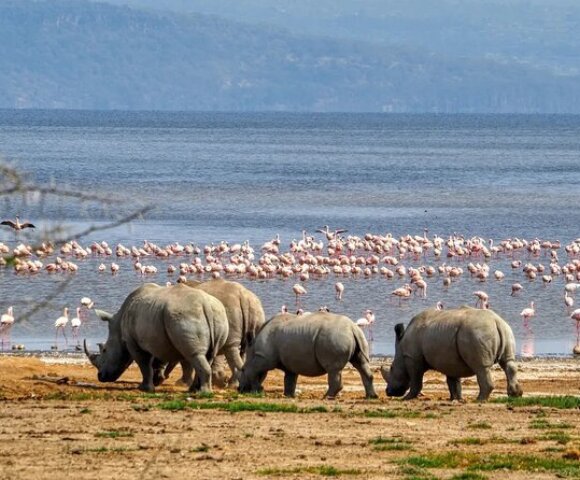
However, starting around 2010, historic heavy rains caused the lake's water levels to rise by several meters, flooding the surrounding acacia forests and diluting the water's salinity. This drastic change destroyed the specialized spirulina algae that flamingos feed on. As a result, hundreds of thousands of flamingos migrated to other Rift Valley lakes, like Lake Bogoria and Lake Elementaita. Today, while you will still see flocks of a few thousand flamingos feeding along the shallows, the spectacle is no longer a guaranteed pink wall. Instead, Lake Nakuru has rebranded itself as one of Kenya’s premier sanctuaries for rhinos. The park is home to over 100 southern white and critically endangered black rhinos, making it a near-certainty that you will spot these majestic, armor-plated giants grazing peacefully along the new, expanded shoreline.
Activities to do at lake Nakuru national park on Kenya tour
An exploration of the 188-square-kilometer Lake Nakuru National Park offers a thrilling mix of dramatic landscapes and rare wildlife encounters. The undisputed highlight is tracking the park’s flourishing sanctuary of over 100 critically endangered black and southern white rhinos grazing along the acacia-fringed shoreline. While the lake's rising water levels have shifted the behavior of its famous lesser flamingos, you can still witness thousands of these pink birds feeding alongside massive great white pelicans. For the ultimate view, drive up to Baboon Cliff for a stunning, 180-degree panoramic sweep of the shimmering rift valley floor, before heading south to hear the soothing rush of the 10-meter-high Makalia Falls.
Where to stay at Lake Nakuru national park on Kenya tour
Finding the perfect base inside or bordering this compact park is easy, with premium options catering to every style of traveler. For ultra-luxury seekers, The Cliff Nakuru offers an exclusive boutique experience featuring just 10 elegant, tented suites perched dramatically on a 100-meter-high cliff, where freestanding bathtubs overlook the entire lake. Families and classic safari enthusiasts will love Sarova Lion Hill Game Lodge, nestled along the green slopes with 64 cozy chalets and a heated pool perfect for relaxing after a dusty drive. Alternatively, the historic Lake Nakuru Lodge offers a relaxed, eco-friendly atmosphere across 95 rooms, complete with an active on-site watering hole where zebras and buffalos regularly drink right in front of the dining terrace.
Booking Kenya tour to Masai Mara and lake Nakuru with us Roads of Adventure safaris
Partnering with Roads of Adventure Safaris guarantees an effortless, unforgettable East African journey seamlessly connecting the golden plains of the Masai Mara to the volcanic wonders of Lake Nakuru. Our Kampala-based team specializes in tailored, private itineraries utilizing our own fleet of rugged, custom-built 4x4 Toyota Land Cruisers equipped with pop-up roofs, 360-degree viewing windows, and on-board coolers to keep your drinks ice-cold. Driven by expert local guides with over a decade of tracking experience, we handle every detail—from securing your park permits at Sekenani Gate to scheduling your optimal 7:00 AM departures—so you can focus entirely on photographing the Big Five and enjoying a world-class safari.
