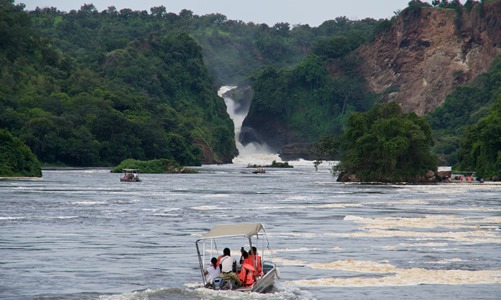
Starting your Uganda safari by traveling from the vibrant adventure hub of Jinja to the raw, untamed wilderness of Murchison Falls National Park is an unforgettable journey spanning roughly 380 kilometers (236 miles). Because you must navigate around the sprawling traffic of Kampala, the entire drive typically takes between 7 to 8 hours.
Most travelers prefer leaving Jinja early by 7:00 AM to beat the heavy gridlock on the highway. You will drive west through the lush, green canopy of Mabira Forest before connecting to the main Kampala-Gulu highway. A highly recommended halfway stop is the Ziwa Rhino Sanctuary, located about 176 kilometers from Kampala. Here, you can pay a $50 USD entry fee to stretch your legs and track Uganda's only wild rhinos on foot for 2 hours, before heading north through Masindi town to enter the park.
2-days-jinja-white-water-rafting-tour-package
3-days-jinja-white-water-rafting-and-fishing-uganda-safari-tour
5-days-gorilla-trekking-and-jinja-white-water-rafting
5-days-perfect-uganda-honeymoon-safari-in-jinja
1-day-tubing-and-water-massage-jinja-tour-package
3-days-murchison-falls-national-park-best-uganda-safari-road-trip
4-days-luxury-murchison-falls-and-jinja-uganda-safari-vacation
How far is Jinja from Murchison Falls National Park?
The road distance from the adrenaline capital of Jinja to the raw wilderness of Murchison Falls National Park ranges between 380 to 410 kilometers (236 to 254 miles), depending on your final lodge destination. If your safari booking takes you to the southern sector of the park near Masindi, you will cover roughly 380 kilometers. However, if you are crossing the River Nile to stay at a luxury lodge in the northern savannah sector, like Paraa Safari Lodge, you will easily add another 30 kilometers to your journey.
This is not a drive you want to rush. The route transitions from the lush, green shores of Lake Victoria, cuts through the sugarcane-heavy landscapes of Busoga, bypasses the bustling capital of Kampala, and heads straight into the semi-arid savannahs of Nakasongola. Cover this vast distance in a sturdy 4x4 safari Land Cruiser to ensure a comfortable ride, especially on the final 80-kilometer unpaved dirt stretches inside the park. The diversity of the landscapes along this trans-Uganda highway makes every single kilometer of the drive a fascinating visual story.
How long does the entire drive typically take to complete?
You should plan for the entire drive from Jinja to Murchison Falls National Park to take between 7 to 8 hours of active travel time. While a 380-kilometer drive on a modern European or American highway might only take 4 hours, navigating Ugandan roads requires a much slower, more defensive pace.
Your journey is split into three very distinct driving phases. Phase one is the 80-kilometer crawl from Jinja to Kampala, which can take up to 2.5 hours due to heavy cargo trucks on the single-lane highway. Phase two is a smooth, 176-kilometer cruise up the paved Kampala-Gulu highway to Ziwa Rhino Sanctuary, taking about 3 hours at a steady 80 km/h. Phase three is the final 120-kilometer leg from Ziwa into the park, which takes another 2.5 hours as you transition to bumpy, gravel roads. Adding a mandatory 2-hour lunch and rhino tracking break at Ziwa means you will leave Jinja in the morning and arrive at your park lodge just in time to catch a beautiful golden-hour sunset over the Nile.
Why should safari travelers leave Jinja by seven AM?
Setting off from Jinja by 7:00 AM is the ultimate pro-tip for a smooth transit. The main reason for this early start is Kampala's notorious, gridlocked commuter traffic. If you delay your departure until 8:30 AM, you will hit the eastern entrance of Kampala right at the peak of rush hour, adding an extra 1.5 to 2 hours of frustrating delays in the sweltering heat.
An early 7:00 AM departure means you will cruise past the industrial town of Namanve and onto the Kampala Northern Bypass by 8:15 AM, successfully dodging the city center's chaos. This timing allows you to hit the open Kampala-Gulu highway by 9:00 AM. Driving during the cool morning hours also keeps your vehicle’s engine running efficiently at temperatures around 22°C (72°F), avoiding the midday peak of 30°C (86°F). Most importantly, arriving early at your halfway stop, Ziwa Rhino Sanctuary, by 11:30 AM gives you plenty of time to enjoy a relaxed lunch and track rhinos before the afternoon heat makes the animals retreat deep into the thick shade.
Which beautiful forest will you drive through after leaving Jinja?
Shortly after leaving Jinja, your Uganda safari vehicle will enter the breathtaking, cool canopy of the ancient Mabira Forest. This lush, moist semi-deciduous rainforest spans approximately 300 square kilometers (120 square miles) and is located just 50 kilometers west of Jinja.
As you drive along the well-paved highway slicing through the forest, the temperature outside your vehicle will drop noticeably by 3°C to 4°C, replaced by the sweet, earthy scent of damp tropical foliage. Mabira is a massive biodiversity hotspot, home to over 312 species of trees, 315 species of wild birds, and several rare primates like the Uganda mangabey. While you won't have time for a full forest hike on a transit day, the 15-minute drive under the towering, 40-meter-high tree canopy is an absolute sensory delight. Keep your window rolled down slightly to hear the incredible chorus of forest hornbills and African grey parrots, and watch out for playful red-tailed monkeys swinging near the roadside barriers.
What major city traffic must travelers navigate around on route?
To get from eastern Jinja to the northern park, you must navigate around the sprawling, chaotic capital city of Kampala. Kampala is home to over 1.5 million residents, and its road network is notoriously overwhelmed by a wild mix of passenger cars, heavy trucks, and thousands of boda-boda motorcycle taxis.
To save yourself from hours of gridlock, your driver will utilize the 21-kilometer Kampala Northern Bypass. This dual-carriageway highway is specifically designed to route long-distance transit traffic around the northern suburbs of the city, connecting Bweyogerere directly to the Gulu highway at Kalerwe. While the bypass is much faster than driving directly through Kampala’s central business district, it still experiences heavy bottlenecks between 7:30 AM and 9:30 AM. Passing through this section requires a highly experienced local driver who knows how to defensively navigate the sudden lane merges and roundabout traffic. This urban stretch serves as a striking, vibrant contrast to the tranquil natural beauty of the Jinja Nile and the wild savannahs that await you in Murchison Falls.
Which main highway connects Kampala to the northern park route?
After navigating the Kampala bypass, you will merge directly onto the Kampala-Gulu Highway (A109). This is the primary national arterial road connecting the capital city to northern Uganda and the South Sudan border, making it exceptionally well-maintained and smooth.
The highway is fully asphalted and features wide shoulders, allowing safari vehicles to safely cruise at the national speed limit of 80 km/h (50 mph). As you head north, you will cover roughly 176 kilometers of this highway before branching off to the rhino sanctuary. The road cuts through the historic Luweero Triangle, an area of great significance in Uganda’s modern political history. Along the roadside, you will pass vibrant local fruit markets where vendors sell giant sweet pineapples for just 3,000 UGX ($0.80 USD) and roasted bananas (gonja). The smooth road surface makes this portion of the journey incredibly relaxed, allowing you to sit back, listen to some local Ugandan music, and watch the rolling green hills gradually flatten into dry, expansive woodlands.
Where is the best place to stop along the way?
The absolute best and most rewarding place to break up your long road journey is the world-renowned Ziwa Rhino Sanctuary. Located in the Nakasongola district, this private, non-profit sanctuary spans 70 square kilometers (27 square miles) of pristine savannah woodlands.
Ziwa is the perfect halfway mark, situated roughly 176 kilometers north of Kampala and 120 kilometers south of Murchison Falls. It is a highly secure, fully fenced sanctuary surrounded by a 2-meter-high electric fence to protect its precious inhabitants from poachers. Stopping here allows you to escape the confined cabin of your safari vehicle after several hours of driving. The sanctuary features a beautiful, rustic restaurant called Kabalega Diner, which serves delicious hot meals, fresh juices, and ice-cold drinks. Spending a few hours at Ziwa turns a tedious, exhausting transit day into an active, highly educational wildlife adventure, ensuring that you arrive at your final national park destination feeling thoroughly refreshed, stretched, and highly energized.
How far is the rhino sanctuary located from Kampala city?
Ziwa Rhino Sanctuary is located exactly 176 kilometers (110 miles) north of Kampala city center. Under normal driving conditions on the smooth Kampala-Gulu highway, it takes approximately 3 to 3.5 hours to cover this distance.
The journey to the sanctuary takes you through the towns of Luweero and Nakasongola. As you clock the kilometers, you will notice the landscape becoming drier and the classic long-horned Ankole cattle grazing in the vast community pastures beside the road. The sanctuary's entrance gate is located just 5 kilometers off the main paved highway along a well-graded gravel road. Because it is positioned so perfectly along the route, almost every tour operator uses Ziwa as the designated lunch and rest stop. Reaching this milestone means you have successfully conquered the most traffic-heavy and challenging half of your transit day, leaving only a straightforward, highly scenic afternoon drive to reach the gates of Murchison Falls National Park.
What is the entry fee for tracking rhinos at Ziwa?
The entry fee for the rhino tracking experience at Ziwa Rhino Sanctuary is $50 USD per international adult. This conservation fee is a direct and vital contribution to the Rhino Fund Uganda, which works tirelessly to reintroduce wild rhinos back into the country’s national parks.
For East African community citizens, the entry fee is discounted to 150,000 UGX (approximately $40 USD). This fee includes the services of a highly trained, armed wildlife ranger who will accompany you throughout your trek. The sanctuary is entirely self-funded, meaning your $50 USD ticket goes directly toward paying the salaries of the 80+ rangers who provide 24-hour security for the rhinos, maintaining the extensive electric boundaries, and funding veterinary care. Given that you are guaranteed to get within just 6 to 10 meters of these magnificent, prehistoric-looking giants on foot, the entry fee is widely considered by international travelers to be one of the best-value, most impactful conservation activities in East Africa.
How much time do travelers spend tracking rhinos on foot?
You will spend approximately 1.5 to 2 hours participating in the active, on-foot rhino tracking adventure at the sanctuary. The experience begins with a 10-minute safety briefing from your ranger guide at the main headquarters.
After the briefing, you will drive a short distance into the bush before setting off on foot. The actual walking portion of the trek typically lasts about 1 hour. Because the sanctuary's terrain is mostly flat savannah grassland and light acacia woodland, the walk is highly accessible and requires only a moderate level of physical fitness. Your ranger guide will use expert tracking skills, looking for fresh footprints and dung, to locate the rhinos. Once you find a family group, you are permitted to spend a thrilling 30 minutes standing in their presence, taking photos, and watching them graze. It is a surreal, slow-paced experience that stands in stark contrast to the fast, bumpy vehicle travel of the highway.
What can you track on foot at the halfway stop?
At Ziwa, you get the incredibly rare and thrilling opportunity to track Southern White Rhinos completely on foot. This is the only place in the entirety of Uganda where you can see wild rhinos roaming free.
Historically, both black and northern white rhinos were indigenous to Uganda’s national parks, but due to rampant poaching during civil unrest, they were declared completely extinct in the country by 1983. Ziwa was established in 2005 with just 6 breeding rhinos imported from Kenya and the Disney Animal Kingdom in the USA. Today, thanks to a highly successful breeding program, the sanctuary's population has flourished to over 30 healthy individuals. Standing on foot just 8 meters away from a massive, 2.3-ton white rhino is an awe-inspiring experience. Unlike black rhinos, which are notoriously aggressive, white rhinos are relatively calm and gentle giants, allowing you to safely observe their natural social interactions, mother-calf bonding, and grazing habits in the wild.
Which northern town do you pass before entering the park?
The final major urban hub you will pass through before entering Murchison Falls National Park is the historic, welcoming town of Masindi. Located approximately 300 kilometers from Jinja, Masindi is a quiet agricultural town surrounded by sugarcane plantations.
Masindi serves as the official southern gateway to the park. It is the perfect place to make a quick 15-minute pit stop to refuel your safari vehicle at one of the modern petrol stations, as there are no fuel stations inside the park itself. If you are not stopping at Ziwa, Masindi is home to the historic Masindi Hotel, built in 1923, making it the oldest hotel in Uganda. Famous historical figures like Ernest Hemingway and Humphrey Bogart stayed here during their African adventures. From Masindi, the paved road ends, and you will tackle the final 30-kilometer dirt road climb up the spectacular Rift Valley escarpment to enter the park through the Kichumbanyobo Gate, leaving all urban infrastructure behind for the wild bush.
Which wild destination is the final stop of this journey?
Your ultimate, breathtaking destination is the world-famous Murchison Falls National Park. Spanning a massive 3,840 square kilometers (1,480 square miles), it is Uganda’s oldest and largest protected natural conservation area.
The park is bisected by the Victoria Nile, which flows from east to west, carving through a narrow, 7-meter volcanic rock gorge to create the world's most powerful waterfall. This dramatic landscape is home to 76 species of mammals, including massive herds of Rothschild giraffes, lions, leopards, and elephants. The northern sector of the park features sweeping, golden savannahs dotted with Borassus palm trees, while the southern sector is dominated by dense, green woodlands. Arriving here marks the true beginning of your wild Uganda safari. Whether you are taking a boat cruise to the base of the thunderous falls, trekking chimpanzees in Budongo Forest, or enjoying an early morning game drive, Murchison Falls offers a raw, untouched wilderness experience that easily rewards you for the long, dusty highway drive.
Why is the road trip to Murchison Falls considered unforgettable?
This road trip is considered absolutely unforgettable because it showcases the incredible ecological and cultural transition of East Africa over a single day. In just 8 hours, you will watch Uganda’s landscape completely reinvent itself multiple times.
You begin your day at the source of the longest river in the world in Jinja, surrounded by rapids and lush tea estates. Within an hour, you are enveloped by the ancient, misty canopy of Mabira Forest, before being thrust into the vibrant, high-energy urban chaos of Kampala. Heading north, the green hills of central Uganda slowly dry out into the vast, sun-baked Nakasongola woodlands where wild rhinos roam. Finally, you descend the dramatic Albertine Rift Valley escarpment, where the blue waters of Lake Albert appear on the horizon, before entering the wild palm-fringed savannahs of Murchison Falls. It is a visual, sensory journey that gives you a deep, authentic appreciation for Uganda’s diverse geography, warm local communities, and rich natural heritage.
What is the best way to break up this long drive?
The absolute best itinerary to break up this 7-to-8-hour journey is to structure your day with clear, well-timed rest stops that divide the drive into manageable 2-hour segments.
Start your day with a prompt 7:00 AM departure from Jinja. Drive for roughly 2.5 hours, bypassing Kampala to arrive at the roadside town of Luweero by 9:30 AM for a quick stretch and some fresh bananas. Back on the road, drive another 2 hours to reach Ziwa Rhino Sanctuary by 11:30 AM. Dedicate the next 3 hours of your day here to enjoy a delicious hot lunch at Kabalega Diner and participate in the thrilling 2-hour on-foot rhino tracking walk. Depart Ziwa at 2:30 PM and drive 1.5 hours to the town of Masindi to top up your fuel tank. From Masindi, complete the final, scenic 1.5-hour dirt-road drive through Budongo Forest, arriving at your Murchison Falls lodge by 5:30 PM—perfectly timed for a cold drink as the sun sets over the Nile.
Booking Uganda safari to jinja and Marchisin falls with us Roads of Adventure safaris
Ready for the ultimate Ugandan getaway? Booking with Roads of Adventure Safaris makes your dream trip seamless and stress-free. Our popular 5-day packages perfectly bundle the thunderous roar of Murchison Falls, on-foot rhino tracking at Ziwa, and wild white-water rafting in Jinja—the adventure capital of East Africa.
We handle every detail, from custom 4x4 Land Cruisers to top-notch local guides. Ready to lock in your dates? Drop us an email at info@roadsofadventuresafaris.com, call +256701041637, or visit our office in Seguku Lubowa along the Kampala-Entebbe Road. Let's start planning!
