The  (
( ) drive from Arusha to the Ngorongoro Crater takes about
  along the paved A104 and B144 highways, taking you past scenic Maasai steppes and up the dramatic Great Rift Valley escarpment. While the road is smooth up to the Loduare Gate, the tracks inside the conservation area turn into rugged, unpaved gravel that strictly requires a
  vehicle. Because an
  round-trip drive makes a single-day safari incredibly exhausting, the best way to structure this itinerary is to include an overnight stay in Karatu or directly on the crater rim; this positions your travelers perfectly for a sunrise descent when the wildlife is most active and the crowds are thin.
3-days-luxury-honeymoon-tanzania-safari-holiday-tour-in-serengeti-and-ngorongoro
3-days-luxury-honeymoon-tanzania-safari-holiday-tour-in-serengeti-and-ngorongoro
3-days-southern-serengeti-safari-tour-and-ngorongoro-crater-calving-season-package
4-days-budget-tanzania-safari-tour-to-serengeti-ngorongoro-and-tarangire
5-days-tanzania-safari-to-tarangire-serengeti-ngorongoro-and-lake-manyara
6-days-best-northern-circuit-tanzania-safari-to-best-tanzania-safari-parks
7-days-tanzania-wildlife-safari-africa-safari-tour-best-park-visits
8-days-7-nights-midrange-safari-in-tanzania-northern-circuit-parks
How far is the crater from Arusha town?
The driving distance from Arusha to the Ngorongoro Crater’s main Loduare Gate is exactly  (
( ). When you factor in navigating the town's traffic and the initial speed limits, this scenic journey takes roughly by road. The drive is highly enjoyable, transitioning smoothly from urban pavement to beautiful rural landscapes. You'll watch the bustling city blocks of Arusha fade into expansive Maasai plains, punctuated by iconic acacia trees and distant volcanic hills.
Because the entire route is fully tarmacked right up to the conservation area's gate, it's a very comfortable, smooth cruise. However, the real physical transition happens once you cross the threshold into the reserve, where the roads quickly shift to rough gravel. For safari planners, calculating this segment is crucial for setting expectations. It is the primary transit artery for the entire Northern Circuit, meaning almost every traveler heading to the Serengeti will traverse this exact stretch of road. It serves as a beautiful, slow-motion introduction to the sheer scale of Tanzania’s wilderness.
What are the road conditions along the route?
For the first  from Arusha to the Loduare Gate, you will enjoy a beautifully paved, smooth tarmac highway. This section of the B144 is well-maintained, allowing for an easy, comfortable cruise through northern Tanzania's countryside. The smooth ride ends, however, the moment you clear the main gate and enter the Ngorongoro Conservation Area. From this point forward, the infrastructure transitions entirely into unpaved, rugged, and often dusty gravel tracks.
Once inside, the road climbs steeply up the outer walls of the caldera, which can become incredibly slick and muddy during the rainy season. Inside the crater itself, the tracks are rough and uneven, filled with ruts that will test any vehicle's suspension. This dramatic shift in terrain is why standard minivans are absolutely not allowed on the crater floor. You must navigate these final, bumpy stretches in a heavy-duty safari vehicle. It’s a classic "African massage" that adds to the raw, authentic adventure of the safari experience.
How long does the road journey take?
Under normal conditions, the drive from Arusha to the Ngorongoro Crater rim takes approximately . This duration includes the initial  stretch covering
  to the bustling gateway town of Karatu. From Karatu, it is another
  climb to reach the Loduare Gate, followed by a final, slower
  drive through the lush canopy to the crater rim itself.
However, "safari time" can be highly unpredictable. Your actual travel time can easily stretch to  or more if you encounter heavy commercial truck traffic leaving Arusha. Delays are also common at the Loduare Gate, where processing park permits and vehicle entry clearances can take up to
  during the peak travel months of July and August. It is always wise to advise your travelers to embrace a slow, relaxed pace. This is not a race, but rather a slow-unfolding journey where the changing landscapes, roadside markets, and Maasai herders are all part of the daily show.
Can travelers fly to the crater instead?
Yes, travelers can bypass the  drive entirely by booking a convenient "fly-in" safari. This route begins with a scenic
  domestic flight from Arusha Airport (ARK) to the Lake Manyara Airstrip (LKY). Flying offers a stunning, bird’s-eye perspective of the Great Rift Valley’s dramatic escarpment and the glittering waters of Lake Manyara below. It is an incredible way to start a premium Tanzanian holiday.
Once your plane touches down at Manyara, a professional safari guide will be waiting to meet your travelers. From the airstrip, it is a scenic  road transfer in a private vehicle up the steep escarpment to the crater rim. While flying is significantly more expensive than driving, it is an invaluable option for travelers with limited time, those who find long road journeys physically taxing, or high-end guests looking for maximum comfort. It turns a half-day road commute into an seamless, elegant, and highly memorable transit experience.
What vehicle is required for this trip?
A robust, high-clearance vehicle is absolutely mandatory for descending into the Ngorongoro Crater. The local conservation authorities strictly prohibit standard two-wheel-drive cars, minivans, or small crossovers from entering the crater floor due to the steep, rugged, and highly unpredictable terrain. The descent and ascent roads are incredibly steep, single-lane dirt tracks carved directly into the caldera's towering walls, which require low-range four-wheel drive and heavy-duty braking systems to navigate safely.
The industry gold standard for this journey is a customized Toyota Land Cruiser, specifically engineered with heavy-duty suspension and a pop-up roof for optimal wildlife viewing. These rugged vehicles easily handle the rough gravel, deep ruts, and muddy patches found inside the crater. For self-drive travelers, a park-authorized ranger must also accompany the vehicle, ensuring safety and proper navigation on the designated tracks. Choosing the right vehicle guarantees a safe, comfortable, and stress-free adventure.
What towns do you pass along driving?
The drive from Arusha to the crater takes you through several incredibly vibrant, culturally rich Tanzanian towns. About two hours into the journey, you will pass through Mto wa Mbu (which translates to "River of Mosquitoes"). This bustling agricultural hub is famous for its unique green red-bananas, lively open-air markets, and incredible cultural diversity, housing over  distinct tribes. It is the perfect place to stretch your legs, browse local woodcarvings, and experience authentic local life.
Continuing up the Great Rift Valley escarpment, you will next enter Karatu, fondly known as the gateway to the highlands. Karatu is a rapidly growing safari town surrounded by lush, green coffee plantations and rolling hills. It serves as the final major outpost for fuel, supermarkets, pharmacies, and comfortable tourist lodges before you enter the wild conservation area. Passing through these towns adds immense depth to the safari, offering travelers a vibrant glimpse into daily Tanzanian life.
Are there any park fees for Ngorongoro?
Yes, visiting the Ngorongoro Conservation Area involves a structured set of conservation fees that must be paid in advance. For international visitors aged  and older, the daily conservation entry fee is
  (which includes
  plus the mandatory
  VAT). Children aged
  to
to  pay a discounted rate of
  per day, while those under enter completely free of charge.
Importantly, these entry fees only grant access to the general conservation area for a strict  period. If your travelers plan to actually descend into the volcanic caldera for a game drive, a separate, mandatory Crater Service Fee of
  per vehicle is charged for each descent. Because these fees are highly regulated and cannot be paid in cash at the gate, they are almost always bundled directly into the total package price by reputable tour operators to ensure a smooth entry.
Can you do a direct day trip?
While a direct, single-day round-trip from Arusha is technically possible, it is highly exhausting and not recommended. A day trip requires departing Arusha by  to endure a grueling outbound drive, followed by a
  game drive on the crater floor, and ending with another drive back to Arusha. Spending
  in a vehicle just for a brief window of wildlife viewing is incredibly taxing for travelers.
Furthermore, arriving midday means missing the prime wildlife viewing hours. The crater's predators, including lions and the elusive black rhino, are most active during the cool, early morning hours. By noon, the intense heat forces many animals to seek shade, making them much harder to spot. Additionally, the crater floor becomes congested with vehicles by midday. To get the absolute most out of the experience, it is far better to schedule an overnight stay nearby.
Where should travelers stay overnight instead?
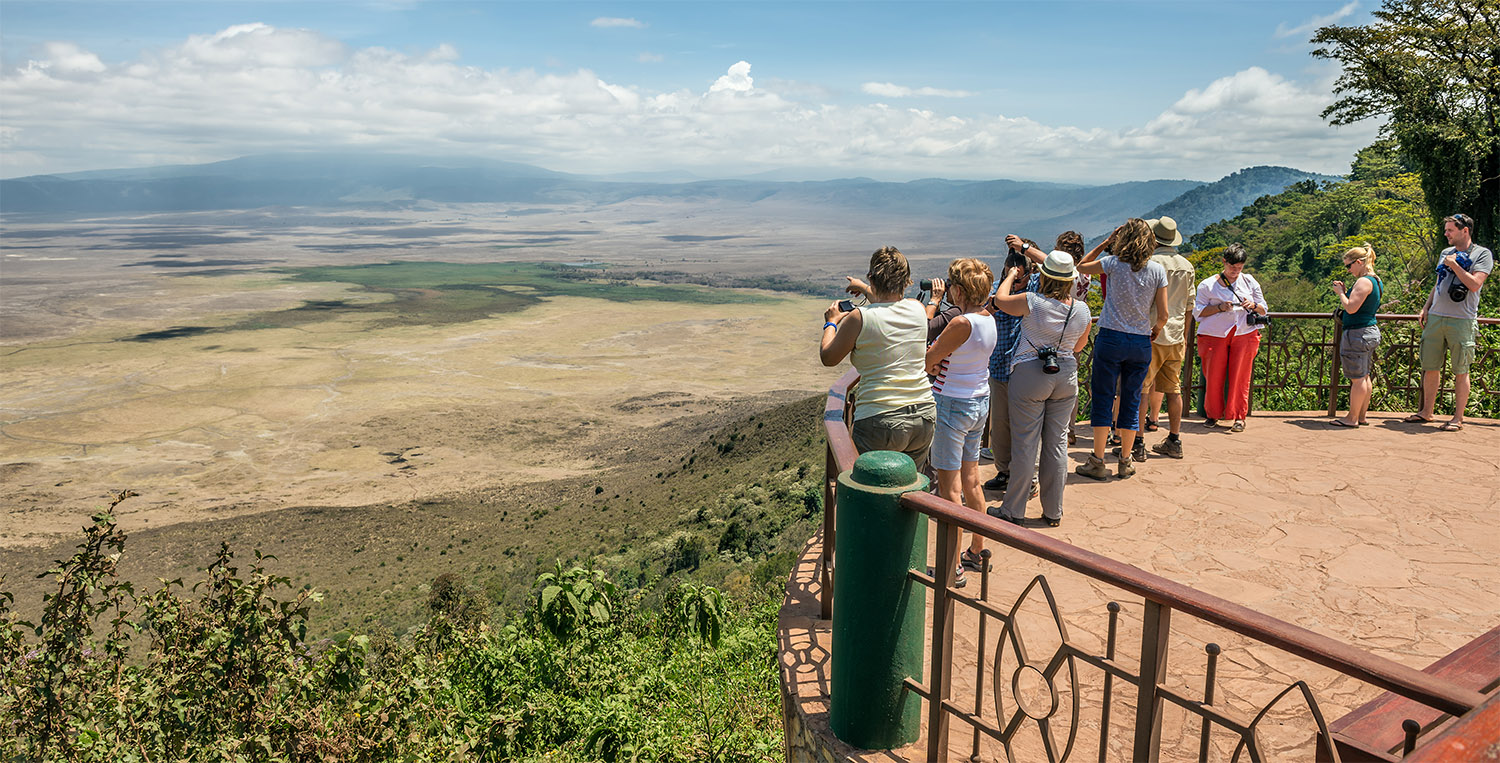
To avoid safari fatigue and maximize wildlife viewing, travelers should stay overnight near the crater. The most luxurious option is booking a lodge nestled directly on the crater rim, such as the Ngorongoro Serena Safari Lodge or the spectacular Meliá Collection. Staying on the rim offers breathtaking, panoramic views of the caldera below and allows guests to be among the very first to descend into the crater at sunrise.
For a more budget-friendly or mid-range alternative, the nearby town of Karatu—located just  outside the main gate—offers a fantastic selection of charming coffee-farm lodges and boutique hotels. Staying in Karatu provides a warm, relaxing atmosphere, often at a fraction of the cost of rim-side lodges. Breaking up the journey ensures your travelers are well-rested, refreshed, and perfectly positioned for a magical, crowd-free morning game drive.
What wildlife can travelers expect to see?
The Ngorongoro Crater is one of the premier wildlife destinations on earth, boasting a resident population of over  large mammals. Because of the natural volcanic barriers, most animals do not migrate, offering spectacular year-round game viewing. It is one of the absolute best places in Africa to check off the complete Big Five (lion, leopard, elephant, buffalo, and rhino) in a single, exciting afternoon.
The crater floor is particularly famous for its healthy population of black maned lions and its status as a critical sanctuary for the highly endangered East African black rhino. Beyond the Big Five, travelers will cruise past massive herds of wildebeest, zebras, elands, and gazelles roaming the open grasslands. The soda waters of Lake Magadi, located in the center of the crater floor, are also seasonally blanketed by thousands of bright pink flamingos, creating a stunning visual contrast against the deep green caldera walls.
When is the best time to visit?
The Ngorongoro Crater offers world-class, highly rewarding wildlife viewing all year round due to its dense, non-migratory resident animal population. However, the Dry Season (from late June to October) is widely considered the absolute peak time for a safari. During these months, the grasses are short, making it incredibly easy to spot predators, and animals naturally gather around the remaining permanent water sources on the crater floor.
Alternatively, the Green Season (from November to May) offers a uniquely beautiful experience. The landscape transforms into a lush, emerald-green paradise, wildflower blooms carpet the caldera floor, and dust levels are virtually non-existent. This period is also a dream for birdwatchers, as thousands of migratory bird species arrive in the caldera. While afternoon rain showers are common during the wet season, the crater is significantly less crowded, offering a peaceful, highly intimate safari experience.
What should travelers pack for this?
Packing for a Ngorongoro safari requires preparing for a wide range of microclimates. Although the crater floor can become quite hot and sunny during the day, the high-altitude rim rests at over  (
( ) above sea level. This high elevation means early mornings and evenings on the rim can be surprisingly cold, with temperatures regularly dropping to a chilly
  (
( ) or lower.
Travelers should pack plenty of lightweight layers, including a warm fleece jacket, a windbreaker, and long trousers for chilly morning game drives. Neutral, earth-toned clothing (such as khaki, beige, and olive green) is highly recommended to blend into the natural environment. Don't forget high-quality binoculars to spot distant rhinos on the caldera plains, a wide-brimmed sun hat, polarized sunglasses, high-SPF sunscreen, and a reliable camera with a good zoom lens to capture the magic.
How early should the safari start?
An early start is the golden rule for an unforgettable Ngorongoro Crater safari. The park gates open at 6:00 AM, and aiming to descend into the caldera by sunrise is highly recommended. Arriving early allows travelers to witness the dramatic morning mist slowly lifting off the crater floor, exposing the golden grasslands below. It is an incredibly peaceful, almost spiritual time of day.
More importantly, the early morning hours are when predators are at their most active. Lions and spotted hyenas are often seen returning from their nocturnal hunts, and the endangered black rhinos are more likely to be grazing in the open before the midday sun forces them into the dense Lerai Forest. Starting early also ensures you beat the large convoys of safari vehicles arriving from farther-out lodges, giving your guests a much more exclusive, intimate wilderness experience.
Is a guide required for the?
Yes, a professional licensed guide is highly recommended—and legally required if you are planning a self-drive safari. The Ngorongoro Conservation Area Authority enforces strict regulations to protect both the delicate volcanic ecosystem and the safety of its visitors. If you choose to drive your own rental vehicle, you must hire an official park ranger at the main gate to accompany you down onto the crater floor.
A professional guide brings invaluable expertise to the safari. They possess an intimate, deep understanding of animal behavior, know the specific territories of the resident lion prides, and are highly skilled at spotting camouflaged wildlife that an untrained eye would easily miss. Furthermore, guides are connected via long-range UHF radio networks, allowing them to instantly share coordinates when rare sightings—like a black rhino or a leopard—occur, ensuring your travelers don't miss a thing.
What cultural experiences are along the?
The journey from Arusha to the Ngorongoro Crater offers rich opportunities for meaningful cultural interactions. The conservation area is unique because it is a multi-use land reservation where wildlife and the indigenous Maasai people coexist side-by-side. As you drive along the crater rim, you will see Maasai warriors dressed in vibrant red shúkàs herding their cattle down the caldera walls to find water.
Many travelers enjoy stopping to visit a traditional Maasai boma (homestead) along the route. These organized visits allow guests to meet the village elders, watch traditional jumping dances, and learn about Maasai customs, beadwork, and mud-walled architecture. To ensure these interactions are respectful and authentic, it is highly recommended to arrange visits through your tour operator. This guarantees that entry fees go directly toward supporting local community projects, school funds, and clean water initiatives.
Booking Tanzania tour to Ngorongoro crater with us Roads of Adventure safaris
Booking your Tanzania safari with Roads of Adventure Safaris makes exploring the iconic Northern Circuit completely effortless. Whether you are looking for a quick, action-packed 3-day Ndutu and Ngorongoro trip or an immersive 6-day journey covering the Serengeti and Tarangire, we design every detail to fit your pace.
Our expert guides will lead you down onto the crater floor to spot the legendary Big Five, set up a memorable picnic lunch right by the hippo pool, and arrange authentic Maasai cultural visits. To beat the midday crowds, we always recommend a sunrise descent for the ultimate wildlife experience.
