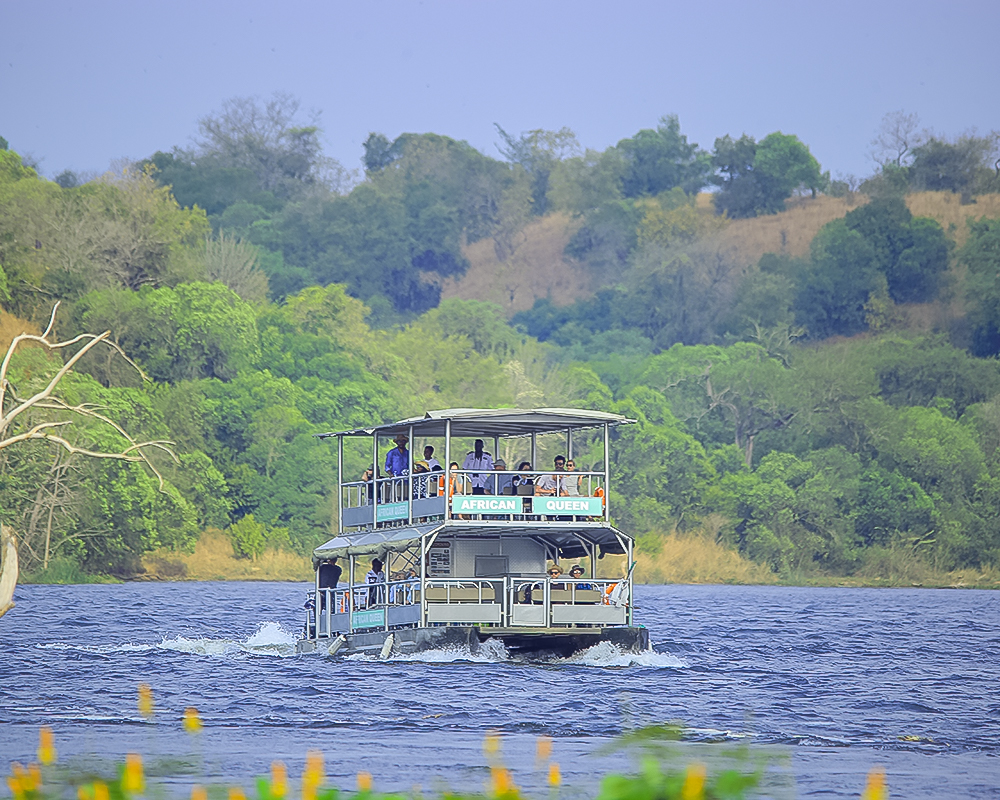
10 Days safari to Uganda is the ultimate way to experience the "Pearl of Africa," taking you from the roaring waters of Murchison Falls to the misty depths of Bwindi Impenetrable Forest. This classic circuit maximizes wildlife viewing, primate trekking, and stunning landscapes in a single, comprehensive journey.
Day 1: Entebbe Arrival
Touch down at Entebbe International Airport, situated on a lush peninsula on the shores of Lake Victoria. Your professional safari guide will warmly welcome you to Uganda and handle your luggage. You will then transfer to your hotel to unpack, rest after your long flight, and adjust to the tropical climate. Depending on your arrival time, you can visit the Entebbe Botanical Gardens, which date back to 1898. Here, you will walk beneath towering rainforest trees and spot indigenous birds like the Great Blue Turaco, alongside playful black-and-white colobus monkeys. Alternatively, enjoy a relaxing sunset cruise on Lake Victoria to see local fishermen casting their nets as the sun dips below the equator line. End your evening with a delicious dinner at your lodge, briefing with your guide about the exciting 10-day journey ahead, and settling in for a peaceful night's rest in preparation for the adventure tomorrow.
Day 2: Ziwa Rhinos & Murchison Falls
Depart early from your hotel and drive north out of the bustling city. Your route takes you through rural towns and vibrant fruit markets before arriving at Ziwa Rhino Sanctuary. This 7,000-hectare sanctuary is the only place in Uganda where you can see southern white rhinos in the wild. Accompanied by expert rangers, you will track these magnificent creatures on foot, getting incredibly close to take photos. After this thrilling experience, stop for a hearty lunch before continuing your journey to Murchison Falls National Park. As you enter the park, you will notice the landscape change into rolling savannah and acacia woodlands. Cross the river or head straight to the top of the spectacular falls. Watch the entire Nile River force its way through a narrow seven-meter canyon before tumbling forty-three meters down. Check into your lodge for dinner and a peaceful night.
Day 3: Game Drive & Victoria Nile Cruise
Wake up at dawn for a morning game drive across the northern delta tracks. The early hours offer the best chance to see predators like lions and leopards returning from their night hunts. You will also see herds of elephants, Rothschild giraffes, Cape buffaloes, and various antelopes roaming the golden savannah. Return to the lodge for a mid-morning rest and lunch. In the afternoon, board a launch cruise sailing upstream along the historic Victoria Nile. The riverbanks are alive with giant Nile crocodiles, hundreds of wallowing hippos, and birds like the rare Shoebill stork. The boat brings you right to the base of the thunderous waterfall, where the water churns violently. Disembark here for a guided hike up the steep trail to the top of the falls, enjoying panoramic views before your driver meets you to head back to the lodge.
Day 4: Albertine Rift & Kibale Forest
Leave the savannah behind and embark on a scenic drive southward toward Fort Portal. This full-day journey takes you through the stunning landscapes of the Albertine Rift Valley. You will pass traditional homesteads, bustling village markets, and sprawling green tea plantations that carpet the rolling hills like emerald blankets. Stop in the clean, vibrant town of Fort Portal for a local lunch beneath the shadow of the Rwenzori Mountains. Continue driving for another hour until you reach the dense, ancient rainforest of Kibale National Park. Kibale is globally renowned as the primate capital of the world, hosting thirteen distinct species. Check into your jungle lodge embedded deep within or on the edge of the forest canopy. Spend your evening relaxing on the veranda, listening to the unique calls of nocturnal primates and exotic forest birds as night falls.
Day 5: Chimpanzee Tracking & Bigodi Wetlands
Gather at the park headquarters for an essential morning briefing from the Uganda Wildlife Authority rangers. You will then enter the ancient canopy of Kibale Forest to track a habituated community of wild chimpanzees. Following their loud pant-hoots and rustling leaves, you will spend one unforgettable hour watching them groom, play, feed, and swing effortlessly through the branches. Return to the lodge for lunch before heading to the nearby Bigodi Wetlands Sanctuary. This community-run swamp boardwalk trail is a paradise for birdwatchers and primate enthusiasts. Guided by a local expert, you will search for the majestic Great Blue Turaco, various hornbills, and up to eight species of monkeys, including the red colobus and grey-cheeked mangabey. Your visit directly supports local community conservation and development projects, adding a meaningful touch to your rich primate safari experience.
Day 6: Queen Elizabeth Park & Kazinga Channel
Drive south out of Kibale, crossing the equator line where you can stop for photos. Navigate through the scenic crater lakes region before arriving at Queen Elizabeth National Park. This park boasts a rich variety of ecosystems, including open savannah, dense swamps, and crater lakes. After checking into your lodge and enjoying lunch, head out for a two-hour boat safari along the famous Kazinga Channel. This natural forty-kilometer channel connects Lake Edward and Lake George and features one of the world's highest concentrations of hippos. You will cruise safely past giant pools of wallowing hippos, massive Nile crocodiles basking on the muddy banks, and herds of elephants and buffaloes coming down to drink and cool off in the afternoon heat. It is an extraordinary opportunity for close-up wildlife photography before returning for dinner.
Day 7: Ishasha Tree-Climbing Lions & Bwindi
Check out of your lodge and drive through the southern sector of the park, known as Ishasha. This remote region is world-famous for its unique population of tree-climbing lions. You will search the sprawling branches of ancient fig trees, where these majestic predators rest during the heat of the day to escape biting insects and catch a cool breeze. Spotting a lion lounging high in a tree branch is a rare and spectacular safari sight. Keep an eye out for topis and forest elephants as well. After a picnic lunch in the wilderness, leave the open savannah behind and begin winding your way up into the steep, terraced Kigezi highlands. The air grows cooler as you approach the misty, dense boundaries of Bwindi Impenetrable National Park, a UNESCO World Heritage site. Settle into your lodge and prepare for tomorrow's trek.
Day 8: Mountain Gorilla Trekking Experience
This is the ultimate highlight of your African safari. Wake up early for breakfast and head to the park station. Rangers will brief you on forest etiquette before assigning you to a specific gorilla family based on fitness levels. Enter the dense, tangled jungle of Bwindi alongside armed rangers and trackers macheteing a path through the undergrowth. The trek can take anywhere from two to six hours, climbing steep, slippery ridges in search of the giants. When you finally encounter the mountain gorillas, all fatigue vanishes. You will spend one magical, profound hour standing just meters away from these gentle giants. Watch the silverback guard his family, mothers cradle infants, and juveniles play in the brush. Return to the park headquarters to receive your trekking certificate, then head back to your lodge to rest.
Day 9: Lake Bunyonyi Exploration & Culture
Take a short, scenic drive from the misty forest of Bwindi to Lake Bunyonyi, one of Africa's deepest and most beautiful lakes. Framed by steep, terraced hillsides, the lake features twenty-nine scattered islands and is completely free of bilharzia, hippos, and crocodiles, making it perfectly safe for swimming. Spend your day enjoying the serene atmosphere. Board a traditional wooden dugout canoe or a motorized boat for an island-hopping tour. Visit Punishment Island, where historical traditions left unwed pregnant girls, and learn about the local Bakiga culture. You can also hike to a panoramic viewpoint on the hills, go bird watching to spot some of the species that give the lake its name, or simply relax on the water's edge, reading a book and reflecting on your incredible mountain gorilla encounter.
Day 10: Equator Crossing & Flight Home
Enjoy your final breakfast looking out over the misty waters of Lake Bunyonyi. Bid farewell to the southwestern highlands and begin your drive back to Entebbe. The route takes you through Mbarara town and the sprawling pastures of Ankole, famous for its iconic long-horned cattle. Stop at the Equator crossing in Kayabwe for lunch, interactive water experiments demonstrating the Coriolis effect, and some final souvenir shopping at the local craft markets. Continue driving through Kampala to Entebbe International Airport, arriving in time for your check-in for your evening departure flight. This marks the conclusion of your epic 10-day Uganda safari, leaving you with incredible photographs, deep cultural connections, and lifelong memories of the wildlife, primates, and warm hospitality of the true Pearl of Africa.
1. What are the passport, visa, and entry requirements for a 10-day safari in Uganda?
Entering Uganda for a 10-day safari requires careful preparation of your travel documents well before your departure date. Your passport must be valid for at least six months from your date of arrival and must contain at least two blank pages for immigration stamps. Uganda has completely shifted to an electronic visa system, meaning you must apply and pay for your tourist visa online via the official Uganda Electronic Visa Portal prior to travel. Carrying a printed copy of your e-visa approval letter is highly recommended for airport check-in.
A critical health requirement for entry is a valid Yellow Fever vaccination certificate. Immigration officers at Entebbe International Airport routinely check this document, and failure to produce it can result in denied entry or a mandatory vaccination at the airport clinic. Given that your 10-day itinerary brings you close to international borders and deep into rural areas, ensuring your routine vaccinations—such as Hepatitis A, Hepatitis B, Tetanus, and Typhoid—are up to date is highly advisable.
Additionally, because many travelers choose to extend their safari or fly home out of neighboring Kigali, Rwanda, you should consider applying for the East Africa Tourist Visa. This joint visa costs $100 USD and allows multiple-entry travel between Uganda, Kenya, and Rwanda over a 90-day period. It is cheaper and more convenient than buying separate visas if you plan to combine your Ugandan gorilla trek with a Rwandan departure on Day 10. Finally, ensure your travel insurance explicitly covers medical evacuation, as you will be traveling through remote areas like Bwindi Impenetrable National Park, where advanced medical facilities are several hours away by road.
2. How much does a 10-day Uganda national park safari cost, and what affects the price?
The cost of a 10-day Uganda safari varies greatly depending on your choice of accommodation, transport, and travel season. On average, a mid-range safari ranges between $3,500 and $5,500 USD per person, while a luxury safari can easily exceed $7,000 to $10,000 USD per person. The single most significant fixed expense in your budget is the permits. A mountain gorilla trekking permit in Bwindi currently costs $800 USD for foreign non-residents, and a chimpanzee tracking permit in Kibale Forest costs $250 USD. These fees are set by the Uganda Wildlife Authority and remain constant regardless of your overall safari tier.
Accommodation is the primary variable driving the total price. Budget safaris utilize clean, basic tents or community rest camps. Mid-range packages offer comfortable permanent lodges or en-suite tented camps with hot showers and solar power. Luxury safaris feature high-end, eco-luxury lodges offering gourmet dining, private plunge pools, and breathtaking views over the forest canopy or savannah plains.
Transportation choices also impact the budget. A standard 10-day safari uses a customized 4x4 safari land cruiser with a pop-up roof for wildlife viewing, driven by a professional guide. This vehicle cost is shared among the passengers, making group travel more economical. If you prefer to skip long drive times—such as the 8-hour journey back from Lake Bunyonyi to Entebbe on Day 10—you can opt for domestic scheduled flights with local carriers like Aerolink. Adding domestic flights will increase your budget by $300 to $600 USD. Traveling during the low seasons (March to May and October to November) can yield significant discounts on lodging, though permit prices remain unchanged.
3. When is the best time of year to embark on this 10-day Ugandan itinerary?
Timing your 10-day safari correctly is crucial for maximizing wildlife sightings and ensuring comfortable trekking conditions across Uganda's diverse national parks. Uganda experiences a tropical climate with two distinct dry seasons and two wet seasons. The best time to visit is during the primary dry seasons: from June to September and from December to February. During these months, weather conditions are optimal for the premier highlights of your itinerary, such as mountain gorilla trekking in Bwindi and chimpanzee tracking in Kibale Forest.
In the dry season, forest trails are less muddy and slippery, making the steep hike to locate the primates physically less demanding. Additionally, the open savannah parks, including Murchison Falls and Queen Elizabeth National Park, offer spectacular wildlife viewing during dry periods. Because water sources dry up in the backcountry, animals congregate in massive numbers around permanent water bodies. On your Day 3 Victoria Nile cruise and Day 6 Kazinga Channel boat safari, you will witness dense concentrations of elephants, buffaloes, hippos, and predatory cats coming to drink. Vegetation is also shorter, making it significantly easier to spot elusive leopards or the famous tree-climbing lions of Ishasha.
Conversely, the wet seasons span from March to May and October to November. While heavy downpours can make forest trekking challenging and rural dirt roads muddy, traveling during these months has distinct advantages. The landscapes turn an incredibly vibrant, lush green, offering stunning backdrops for photography. Birdwatching is at its absolute peak as migratory birds arrive, and the parks are far less crowded, offering a private safari feel. Furthermore, many luxury lodges offer reduced rates during the rainy season.
4. What are the physical fitness requirements for gorilla and chimpanzee trekking?
The primate trekking segments of your 10-day safari require a reasonable level of physical fitness, agility, and mental stamina. Chimpanzee tracking in Kibale Forest on Day 5 takes place on relatively flat terrain, but it requires fast-paced walking. Chimpanzees are highly active, arboreal primates that move rapidly through the canopy or across the forest floor. To keep up with their loud vocalizations and sudden movements, you must be prepared to walk briskly through thick undergrowth, step over fallen logs, and navigate tangled roots for two to four hours.
Mountain gorilla trekking in Bwindi Impenetrable National Park on Day 8 is physically much more demanding. Bwindi’s terrain consists of steep, rugged ridges, deep valleys, and thick, tangled vegetation with no established paths. Altitudes range from 1,160 to 2,607 meters above sea level, meaning the thinner air can cause you to tire more quickly. The trek to locate a habituated gorilla family can take anywhere from one hour to over six hours, depending on where the primates nested the previous night. You will be hiking off-trail, stepping on slippery surfaces, and navigating steep inclines.
To prepare, you should engage in cardiovascular exercises, hiking, or walking on inclined surfaces weeks before your trip. If you have mobility challenges or physical limitations, notify your tour operator in advance. The Uganda Wildlife Authority can allocate you to a gorilla family closer to the park headquarters. On the morning of the trek, you can also hire a local porter for around $20 USD. Porters carry your heavy daypack and provide a steady hand to pull you up steep slopes or stabilize you on slippery descents, which supports the local economy.
5. What specific clothing and gear should I pack for this diverse 10-day itinerary?
Packing for a 10-day Ugandan safari requires preparing for both hot, dusty savannah game drives and cool, wet mountain rainforests. For your days in Murchison Falls and Queen Elizabeth National Park, lightweight, breathable clothing in neutral colors like khaki, beige, or olive green is ideal. Avoid bright colors that attract unwanted attention from wildlife, and strictly avoid dark blue or black clothing, as these colors actively attract tsetse flies, which have a painful bite. A wide-brimmed sun hat, polarized sunglasses, and high-SPF sunscreen are essential to protect against the intense equatorial sun.
For your trekking days in Kibale and Bwindi, you must pack specialized jungle gear. Sturdy, waterproof hiking boots with deep ankle support and excellent grip are non-negotiable for navigating slippery clay slopes. Pair these with long, thick hiking socks; it is customary to tuck your trousers into your socks to prevent safari ants from crawling up your legs. Wear lightweight, long-sleeved shirts and durable long trousers to protect your skin from stinging nettles, sharp thorns, and biting insects. Tough gardening gloves are incredibly useful for gripping thorny branches or vines when scrambling up steep, pathless banks.
A high-quality, lightweight rain jacket or poncho must remain in your daypack at all times, as downpours can happen instantly in the rainforest. Bring a durable, waterproof daypack to protect your lunchbox, water bottles, and camera equipment. For photography, pack a camera with a versatile telephoto lens (such as a 70-300mm) for savannah wildlife, alongside a fast prime lens for low-light conditions under the dense forest canopy. Bring extra camera batteries and memory cards, as charging facilities can sometimes be limited in remote forest lodges.
6. What types of food and accommodation can I expect throughout the safari?
Food and accommodation across Uganda’s primary safari circuit are designed to provide exceptional comfort, hospitality, and a taste of local and international flavors. Lodging options are broadly categorized into budget, mid-range, and luxury luxury eco-lodges. Most safari lodges are strategically located on the boundaries of the national parks, offering stunning wilderness views. For instance, your lodge near Murchison Falls might overlook the sweeping Nile, while your Bwindi accommodation will likely sit perched on a misty ridge facing the ancient forest canopy. These properties utilize solar power for lighting and eco-friendly gas or wood-boilers for hot running water.
The culinary experience on a Ugandan safari is an enjoyable blend of international continental cuisine and fresh local dishes. Most lodges operate on a full-board basis, covering breakfast, lunch, and dinner. Breakfasts are typically hearty, featuring fresh tropical fruits like pineapples and bananas, eggs cooked to order, sausages, and freshly brewed Ugandan coffee or tea. For days with long activities, such as your Day 3 game drive or Day 8 gorilla trek, lodges pack a substantial lunchbox containing sandwiches, chicken drumsticks, fruit, juice, and snacks to enjoy in the bush.
Dinners are usually three-course sit-down meals featuring soups, a choice of mains (beef, chicken, fish, or vegetarian options), and decadent desserts. Chefs are highly adept at catering to dietary restrictions, including vegetarian, vegan, gluten-free, and halal diets, provided you inform your operator in advance. You will also have opportunities to sample traditional Ugandan staples, such as matooke (steamed, mashed green bananas), posho (maize meal), fresh tilapia fish from the Great Lakes, and the famous "Rolex"—a tasty local street food made of an omelet rolled inside a hot chapati.
7. How do I purchase gorilla and chimpanzee permits, and what are the rules?
Securing gorilla and chimpanzee permits is the most critical administrative step of planning your 10-day Uganda safari. Because the number of permits is strictly capped to protect the primates, they frequently sell out 6 to 12 months in advance, particularly for travel during the peak dry seasons. Gorilla permits for Bwindi Impenetrable National Park cost $800 USD for foreign non-residents, while chimpanzee tracking permits for Kibale Forest cost $250 USD. The most reliable and efficient way to secure these is through a licensed tour operator registered with the Association of Uganda Tour Operators (AUTO), who will purchase them directly from the Uganda Wildlife Authority (UWA) on your behalf.
Strict conservation rules govern your time with these endangered primates to ensure their long-term survival and well-being. To minimize the risk of human-to-animal disease transmission—since humans share over 98% of their DNA with chimpanzees and 95% with gorillas—any traveler showing signs of a contagious illness, such as a cold, flu, or stomach bug, will not be permitted to trek. You will be required to wear a surgical face mask during your time with the gorillas to protect them from airborne pathogens.
When you encounter the primates, you must maintain a minimum distance of 10 meters (around 32 feet) at all times. Flash photography is strictly prohibited, as the sudden bright light can frighten the animals and provoke a defensive or aggressive charge. You must keep your voice at a low whisper, avoid making sudden movements, and never discard food wrappers or trash in the park. Your time directly interacting with a habituated family is strictly limited to exactly one hour, a boundary enforced by your accompanying rangers.
8. What are the key health and safety precautions to take before and during the safari?
Uganda is generally a safe and welcoming destination for international travelers, but a 10-day safari moving through diverse ecosystems requires proactive health and safety measures. Malaria is endemic to most regions of Uganda, including the savannah parks like Murchison Falls and Queen Elizabeth. You should consult a travel clinic or your doctor several weeks before departure to obtain the correct malaria prophylaxis, such as Malarone or Doxycycline. Complement this medical prevention by wearing long sleeves and trousers in the evenings, sleeping under the insect insecticide-treated mosquito nets provided by your lodges, and applying an insect repellent containing at least 30% DEET to exposed skin.
Dehydration and sun-related issues are common on long safari days. Always drink bottled, purified, or filtered water; avoid drinking tap water, and use bottled water even for brushing your teeth. Lodges and your safari vehicle will provide ample bottled water throughout the trip. When enjoying the sun on your Kazinga Channel boat cruise, apply high-factor sunscreen and stay hydrated to avoid heat exhaustion.
Regarding wildlife safety, always remember that national parks are unfenced, wild environments. The animals you encounter are wild and potentially dangerous. You must stay inside your custom safari vehicle during game drives unless your guide explicitly tells you it is safe to step out at designated picnic or viewing sites. When staying at wilderness lodges, animals like elephants, hippos, or baboons may roam freely through the grounds at night. Never walk alone around the lodge property after dark; always request a lodge escort or guard to walk you to and from your room. Avoid feeding any wild animals, particularly baboons, as this encourages aggressive behavior.
9. What is the typical road condition and travel time between destinations?
A 10-day Uganda safari involves substantial road travel, offering an intimate look at the country’s stunning rural landscapes but requiring a realistic understanding of travel times. Uganda’s primary highways connecting major towns are generally well-paved, but tarmac roads often transition into rough, unpaved dirt roads as you approach and enter national parks. These dirt roads can become deeply rutted and dusty during the dry season, or slippery and muddy during the wet season. For this reason, a sturdy, high-clearance 4x4 safari vehicle is absolute necessity for safety and comfort.
The journey on Day 2 from Entebbe to Murchison Falls National Park takes approximately 5 to 6 hours, including a rewarding 2-hour stopover for rhino tracking at Ziwa. On Day 4, traveling from Murchison Falls south to Kibale Forest is a scenic but long driving day, taking roughly 6 to 7 hours as you navigate the winding roads of the Albertine Rift Valley. Day 6 involves a short, comfortable 2-to-3-hour drive from Kibale to Queen Elizabeth National Park, crossing the equator line along the way.
Day 7 involves driving through the southern Ishasha sector of Queen Elizabeth Park to track tree-climbing lions before ascending into the Kigezi highlands toward Bwindi, totaling about 5 to 6 hours of travel. Day 10 is the longest single transit day, requiring an 8-to-9-hour drive from Lake Bunyonyi back to Entebbe International Airport. While these travel times sound long, they are a fundamental part of the safari experience. You will pass bustling local markets, sprawling tea estates, and undulating hills, turning transit days into dynamic cultural and sightseeing journeys.
10. Can I do this 10-day safari as a solo traveler, or is a group tour better?
Choosing whether to embark on this 10-day Uganda safari as a solo traveler or as part of a structured group tour depends on your personal budget, social preferences, and travel style. A solo safari offers unparalleled flexibility and customization. You can design the daily schedule to perfectly match your interests, choosing to spend more time tracking birds in Bigodi Wetlands or relaxing along the shores of Lake Bunyonyi. You have the private undivided attention of your expert safari guide, and you can move at your own pace without compromising with others. However, solo safaris are significantly more expensive because you bear the full cost of the 4x4 vehicle, fuel, and guide fees alone, along with single supplement fees at lodges.
Joining a small group safari is a fantastic way to drastically reduce costs, as vehicle and fuel expenses are split among the group members. Group safaris also offer a wonderful social dynamic, allowing you to share the thrill of seeing a tree-climbing lion or spending an hour with a mountain gorilla family with like-minded international travelers. Group tours operate on a strict, fixed itinerary with pre-selected lodges, meaning you have less personal flexibility regarding departure times and daily stops.
For solo travelers who value independent travel but want to avoid excessive costs, a hybrid option is highly popular. You can book a private safari but ask your tour operator to pair you with other solo travelers or small groups for the actual gorilla and chimpanzee trekking excursions. This allows you to enjoy private transport and lodging while sharing the group dynamic during the premier trekking highlights in Kibale and Bwindi.
11. What unique wildlife can I expect to see beyond gorillas and chimpanzees?
While mountain gorillas and chimpanzees are the iconic headliners of this 10-day itinerary, Uganda's national parks are bursting with an incredible diversity of other wildlife. In Murchison Falls National Park, the northern savannah tracks are home to large populations of endangered Rothschild giraffes, massive herds of Cape buffaloes, African bush elephants, and various antelopes like the elegant Jackson’s hartebeest and Uganda kob. Predators are also highly active here, and with the help of your guide, you stand an excellent chance of spotting lions and elusive leopards resting in acacia branches or hunting early in the morning.
In Queen Elizabeth National Park, the wildlife highlights shift toward unique ecosystems. The southern Ishasha sector is world-famous for its tree-climbing lions, which lounge in the branches of massive sycamore fig trees during the heat of the day. The park's Kazinga Channel is a haven for aquatic wildlife, boasting one of Africa's highest concentrations of hippos alongside enormous Nile crocodiles and herds of waterbucks.
Uganda is also a premier global birdwatching destination, boasting over 1,000 recorded bird species. During your boat cruises and your guided walk through the Bigodi Wetlands Sanctuary on Day 5, you can spot the spectacular Great Blue Turaco, various species of colorful kingfishers, hornbills, and the prehistoric-looking Shoebill stork, which is highly sought after by birding enthusiasts worldwide. Additionally, Kibale Forest holds an astonishing 13 primate species, meaning you will regularly spot black-and-white colobus monkeys, red-tailed monkeys, L'Hoest's monkeys, and olive baboons leaping through the canopy during your chimpanzee trek.
12. What cultural interactions are integrated into this 10-day safari itinerary?
A 10-day Ugandan safari is as much about rich cultural encounters and connecting with local communities as it is about viewing spectacular wildlife. Ugandan people are globally renowned for their genuine warmth and hospitality, and your itinerary includes multiple opportunities to interact meaningfully with local cultures. On Day 5, your guided tour of the Bigodi Wetlands Sanctuary is an entirely community-run initiative. The local guides are residents who share deep traditional knowledge of forest plants and folklore. The funds generated from your walk directly bankroll community projects, including the construction of local primary schools, clean water sanitation systems, and micro-loans for women's handicraft cooperatives.
When traveling to Bwindi Impenetrable National Park for your gorilla trek, you can choose to participate in a cultural walk to meet the Batwa Pygmy community. The Batwa are the original indigenous inhabitants of the ancient forest, having lived as hunter-gatherers in harmony with the wilderness for thousands of years before Bwindi was gazetted as a national park. During a cultural demonstration, Batwa elders share their ancient survival skills, demonstrating traditional fire-making techniques, identifying medicinal forest plants, and performing vibrant traditional songs and dances that keep their unique heritage alive.
On Day 9 at Lake Bunyonyi, your exploration includes visiting local islands to learn about the history of the Bakiga and Batwa people who cultivate the surrounding steep, terraced hillsides. You will see firsthand how rural communities practice sustainable terraced farming. At the equator crossing in Kayabwe on Day 10, you can browse local craft markets, interacting directly with local artisans and purchasing handmade woodcarvings, colorful woven baskets, and traditional batik paintings to take home.
13. What are the passport, tipping, and currency customs on a Ugandan safari?
Navigating the local currency, banking systems, and tipping customs is essential for a smooth and stress-free 10-day safari experience. The official currency is the Ugandan Shilling (UGX). While large establishments like luxury hotels and safari lodges accept major international credit cards (Visa and Mastercard), they often apply a surcharge of 3% to 5%. Rural craft markets, tipping, and small village shops operate strictly on cash. Therefore, it is highly recommended to exchange some foreign currency into Ugandan Shillings upon arrival at Entebbe Airport or in Kampala.
The US Dollar (USD) is widely accepted throughout the tourism industry for paying safari balances, park fees, and optional activities. However, a critical rule applies to all US Dollar cash notes: Ugandan banks and businesses do not accept US Dollar bills printed before the year 2021, nor will they accept bills that are torn, creased, stamped, or heavily worn. Ensure you pack crisp, unblemished, new-edition bills ranging from $10 to $100 denominations. ATMs are readily available in major towns like Fort Portal and Mbarara, but they dispense cash exclusively in Ugandan Shillings and can occasionally run out of cash or experience power outages.
Tipping on safari is a deeply appreciated gesture that directly supplements the income of the hardworking locals who make your trip unforgettable. While tipping is entirely voluntary, standard industry guidelines suggest tipping your professional safari guide-driver $10 to $15 USD per day from the group. For park rangers and trackers during your gorilla and chimpanzee treks, a tip of $10 to $20 USD per trekker is customary. General lodge staff can be tipped collectively using the central lodge tip box, usually found at reception, at a rate of $5 to $10 USD per day.
14. What sustainable and ethical travel practices should I follow on this trip?
Practicing sustainable and ethical tourism during your 10-day safari ensures that Uganda’s delicate ecosystems, endangered wildlife, and local communities are protected for generations to come. The national parks you will visit face ongoing conservation challenges, including poaching, human-wildlife conflict, and habitat encroachment. Your park entry fees and permit costs play a direct, vital role in funding anti-poaching ranger patrols, wildlife research, and community-benefit-sharing schemes where a percentage of park revenue is given directly to communities living along park borders.
When observing wildlife on game drives in Murchison Falls and Queen Elizabeth Park, always respect the animals' natural space. Insist that your safari guide stays strictly on designated game-drive tracks. Off-road driving destroys fragile savannah vegetation, causes soil erosion, and can crush ground-nesting birds or small mammals. Never make loud noises, shout, or bang on the sides of the safari vehicle to get an animal's attention. If an animal shows signs of distress or agitation—such as an elephant flapping its ears or a lion growling—instruct your guide to back away safely.
Support the local economy directly by purchasing authentic, locally made souvenirs from community craft markets rather than importing goods. Avoid buying any items made from wild animal parts, such as ivory, bones, skins, or feathers, as this fuels the illegal wildlife trade. When visiting local villages or schools, always ask for permission before taking photographs of residents or children. Rather than handing out candy, cash, or pens directly to children on the street—which can inadvertently encourage begging behavior and school truancy—channel your donations through reputable local community NGOs, schools, or conservation organizations.
15. What are the key differences between Uganda and Rwanda for a safari?
When planning a 10-day East African itinerary, travelers frequently compare Uganda and Rwanda, as both countries offer world-class mountain gorilla trekking. Understanding the distinct differences between these two destinations will clarify why a 10-day Uganda national park safari offers an exceptionally well-rounded and diverse travel experience. The most immediate difference lies in the cost of gorilla permits. Rwanda’s Volcanoes National Park gorilla permit costs $1,500 USD per person, whereas Uganda’s Bwindi Impenetrable National Park permit is significantly more affordable at $800 USD. This cost difference allows travelers to allocate more budget toward longer itineraries and premium lodging.
Beyond permit pricing, the core character of the safari experience differs dramatically. Rwanda is a compact country with excellent infrastructure, making it ideal for short, luxury-focused trips centered almost exclusively on gorilla trekking and cultural visits near Kigali. Uganda, by contrast, is much larger and geographically incredibly diverse, earning its title as the "Pearl of Africa."
A 10-day itinerary in Uganda allows you to seamlessly combine primate tracking with a classic big-game savannah safari. While Rwanda’s primate tracking is premium, Uganda offers a far greater variety of ecosystems within a single trip. In Uganda, you get the thunderous waters of Murchison Falls, chimpanzee tracking in the primate capital of Kibale Forest, classic game viewing for lions and giraffes, boat cruises along the hippo-dense Kazinga Channel, tree-climbing lions in Ishasha, and mountain gorilla trekking in Bwindi. Ultimately, while Rwanda excels in short-duration, high-end luxury primate trekking, Uganda delivers a more comprehensive, adventurous, and value-packed all-around African safari experience across multiple national parks.
