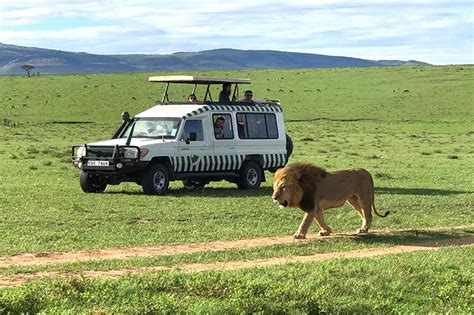
A 10-day Tanzania safari is the perfect timeframe to experience the country’s world-famous Northern Circuit without rushing. This itinerary explores Tarangire, Lake Manyara, the Serengeti, and the Ngorongoro Crater, offering incredible opportunities to spot the Big Five and witness the Great Migration.
Tour highlights
Giant baobab trees
Massive elephant herds
Tree-climbing lions lounge
Pink flamingo shores
Endless Serengeti plains
Fierce apex predators
Dramatic river crossings
Witness calving season
Stunning volcanic caldera
Unparalleled wildlife viewing
Rare black rhinos
Authentic Maasai villages
Scenic overland drives
Vibrant local crafts
White Zanzibar beaches
Turquoise Indian Ocean
Day 1: Arrival in Arusha
Welcome to East Africa! Your Africa safari begins the moment you touch down at Kilimanjaro International Airport. A private transfer sweeps you away to your charming lodge in Arusha, a bustling safari capital nestled under the watchful eye of Mount Meru. The air is crisp, filled with the scent of coffee plantations and tropical flora. Use this afternoon to unwind by the pool, shake off any jet lag, and shake hands with your expert guide during an in-depth Tanzania safari briefing. Together, you will review the thrilling route ahead, check over your camera gear, and discuss wildlife etiquette. As dusk falls, enjoy a welcoming dinner featuring fresh, locally sourced ingredients. Fall asleep to the gentle symphony of the African night, resting up for the epic landscapes, vast horizons, and unforgettable wildlife encounters that await you tomorrow morning.
Day 2: Tarangire National Park
Your Tanzania safari officially takes flight as you drive south into Tarangire National Park. The landscape changes dramatically, revealing a rugged terrain punctuated by ancient, giant baobab trees that look like they were planted upside down. Tarangire is legendary for hosting some of the largest elephant herds on any Africa safari, and you will likely encounter these magnificent family groups dust-bathing near the Tarangire River. This vital water source draws a dense concentration of wildlife during the dry season, including migratory wildebeest, zebras, gazelles, and elands. Predators like lions and leopards loiter in the shadows, waiting for an opportunity. After a thrilling afternoon game drive packed with close-up animal encounters, you will head to your tented lodge. Sip a refreshing sundowner around a roaring campfire, sharing stories of your first day in the bush under a canopy of stars.
Day 3: Lake Manyara National Park
Today, your Africa safari ventures into the lush, green wonderland of Lake Manyara National Park. Nestled at the base of the dramatic Great Rift Valley escarpment, this compact park offers an incredibly diverse ecosystem, ranging from dense groundwater forests to a vast, shimmering soda lake. As you enter, playful baboon troops and blue monkeys greet you from the canopy. Keep your eyes glued to the ancient mahogany trees; Manyara is world-famous for its unique, tree-climbing lions that lounge on sturdy branches to escape the heat. Scan the lake’s edges, where thousands of vibrant flamingos create a breathtaking pink ribbon across the water. You will also spot hippos wallowing in the shallows and elegant giraffes browsing the acacia woodlands. This action-packed day of your Tanzania safari wraps up at a beautiful lodge overlooking the rift valley, offering panoramic sunset views.
Day 4: Journey to the Serengeti
Bid farewell to the rift valley as you climb toward the highlands, passing through the mist-shrouded crater rim before descending onto the endless plains of the Serengeti. The name means "endless spaces" in the Maasai language, and the sheer scale of this iconic landscape will take your breath away. This is the spiritual heart of any Africa safari. As you enter the park, your Tanzania safari guide will track the shifting horizons for wildlife. You will quickly realize that the plains are alive; herds of gazelles, zebras, and impalas dot the landscape, constantly alert. Reach your central Serengeti camp in time for a spectacular golden hour game drive. As the sun dips below the horizon, painting the sky in fiery shades of amber and purple, you will settle into your luxury canvas camp, listening to the distant roar of lions.
Day 5: Exploring the Deep Serengeti
Wake up before dawn for a sunrise game drive, the absolute best time to catch apex predators active on your Africa safari. You might spot a pride of lions shaking off the morning dew, a solitary leopard dragging its kill up an acacia tree, or a cheetah scanning the grasslands from atop a termite mound. Depending on the exact time of year, your Tanzania safari will pivot to track the famed Great Migration. You might find yourself surrounded by a chaotic, thundering mega-herd of over a million wildebeest moving in unison across the plains. Your guide will navigate to prime viewing spots, perhaps near a rocky kopje where lions wait in ambush. Return to camp for a relaxed midday lunch and siesta, then head back out for a late-afternoon drive, capturing the raw, untamed drama of life and death on the savannah.
Day 6: Serengeti Plains & River Crossing Tracks
Spend another full, exhilarating day unlocking the secrets of the vast Serengeti. If your Tanzania safari falls during the dry months, you will head north toward the Mara River, hoping to witness the ultimate Africa safari spectacle: dramatic river crossings where wildebeest plunge into crocodile-infested waters. If you are traveling during the green season, you will explore the southern plains to witness the incredible calving season, where thousands of wobbly calves are born daily, drawing intense predator action. Regardless of the season, the Serengeti never fails to deliver. Look out for smaller treasures too, like brightly colored lilac-breasted rollers, secretary birds, and families of banded mongooses. Spend your final evening in this legendary wilderness enjoying a spectacular bush dinner, completely surrounded by the wild sounds of the African night, reflecting on the magic of the plains.
Day 7: Ngorongoro Conservation Area
Leave the endless plains behind as you game-drive out of the Serengeti and travel into the stunning Ngorongoro Conservation Area. This region is a pioneering experiment in multiple land-use, where traditional Maasai pastoralists co-exist alongside abundant wildlife. This afternoon of your Tanzania safari offers a wonderful chance to step away from the vehicle and immerse yourself in local culture. You can visit an authentic Maasai boma (village), where you will be welcomed with vibrant rhythmic singing, high-jumping dances, and a fascinating look into their ancient, pastoral lifestyle. Alternatively, arrange a side trip to the harsh, beautiful landscapes of Lake Eyasi to meet the Hadzabe, one of Africa’s last remaining hunter-gatherer tribes. Your Africa safari evening concludes at a lodge perched directly on the dramatic rim of the Ngorongoro Crater, offering cool mountain air and truly unparalleled views.
Day 8: Ngorongoro Crater Floor Safari
Prepare for an unforgettable day as you descend 2,000 feet down the steep walls of the Ngorongoro Crater. This massive, unbroken volcanic caldera acts as a self-sustaining natural zoo, sheltering over 30,000 animals. It is your best chance on this Tanzania safari to spot the complete Big Five in a single afternoon, including the highly endangered black rhino. You will explore a surreal landscape of open grasslands, fever tree forests, and the central soda lake, which is packed with hippos and waterbirds. Watch lions stalk prey in the open, while massive bull elephants with tusks reaching the ground glide past your vehicle. The density of wildlife here is unmatched by any other stop on your Africa safari. Enjoy a memorable picnic lunch on the crater floor before ascending back to the rim, thoroughly amazed by this breathtaking eighth wonder of the world.
Day 9: Return to Arusha
Your unforgettable Africa safari comes full circle today as you begin the scenic drive back to Arusha. Leaving the highlands behind, you will wind through vibrant rural villages and lush terraced hillsides, enjoying final overland game drives as you exit the conservation gates. Take advantage of the drive to stop at local curio shops and cultural heritage centers to pick up beautiful wood carvings, colorful Maasai beadwork, or rare tanzanite gemstones as reminders of your journey. Arriving back in Arusha by afternoon, you will check into a day-use room to freshen up and repack your bags. Enjoy a celebratory final dinner with your group, raising a glass to the incredible apex predators, stunning landscapes, and warm hospitality that defined your magical Tanzania safari. It is the perfect time to share photos, swap contact info, and wind down.
Day 10: Departure or Zanzibar Extension
Your grand Tanzania safari concludes today. Depending on your travel plans, a private transfer will take you directly to the airport for your international flight home, carrying a lifetime of memories from the bush. However, if you are not ready for the adventure to end, the ultimate Africa safari finale awaits. Catch a short, scenic flight out of Arusha to the exotic spice island of Zanzibar. Transition instantly from dusty safari tracks to powdery white-sand beaches, swaying palm trees, and the warm, turquoise waters of the Indian Ocean. Spend your extended days exploring the winding, historic alleys of Stone Town, snorkeling vibrant coral reefs, or simply relaxing at a luxury beachfront resort. Whether you head home or chase the coastal breeze, the wild, untamed spirit of East Africa will stay with you forever.
1. What is the best time of year to book this 10-day Tanzania safari?
The timing of your 10-day safari largely dictates the wildlife spectacles you will witness, though Tanzania offers phenomenal year-round game viewing. If your primary goal is to see the Great Wildebeest Migration, booking between July and October allows you to witness the dramatic Mara River crossings in the northern Serengeti. Alternatively, traveling between January and March places you in the southern Serengeti (Ndutu) for the calving season, where thousands of newborns attract high predator action.
For travelers seeking optimal weather, the long dry season from June to October is widely considered ideal. During these months, the weather is cooler, malaria risks are lower, and vegetation is sparse, making wildlife significantly easier to spot. Furthermore, water sources recede, forcing animals to congregate predictably around remaining rivers and waterholes.
If you prefer a more exclusive experience with fewer crowds and lush, emerald landscapes, the "Green Season" (November to May) is a fantastic alternative. While the "long rains" occur in April and May, traveling just before or after this window offers superb bird watching, as migratory species arrive in droves. Ultimately, a 10-day window is perfectly substantial; whether you choose the dry action or the green abundance, it gives you enough consecutive days in the field to ride out minor weather shifts and secure world-class sightings.
2. Which national parks and reserves are covered in this 10-day itinerary?
A well-balanced 10-day "Discovering Tanzania" itinerary focuses intensely on the legendary Northern Circuit, ensuring you experience a diverse range of ecosystems without spending your entire vacation driving. The journey typically kicks off in Arusha, moving quickly to Tarangire National Park, famous for its colossal baobab trees and massive elephant herds that dominate the Tarangire River landscape. From there, you visit Lake Manyara National Park, a compact jewel known for its shimmering soda lake, flocks of pink flamingos, and rare tree-climbing lions.
The undisputed centerpiece of the tour is the Serengeti National Park, where you will spend three to four days. This generous time block allows you to explore different regions of the endless savannah, following the movement of the Great Migration and tracking apex predators like lions, leopards, and cheetahs.
Finally, the itinerary culminates in a descent into the breathtaking Ngorongoro Crater, a self-contained volcanic caldera hosting over 25,000 large mammals, including the highly endangered black rhino. By limiting the route to these interconnected gems, the 10-day timeframe minimizes transit fatigue and maximizes your actual "wheels-down" game-viewing hours across radically different landscapes.
3. What kind of wildlife can I realistically expect to see over 10 days?
Over the course of 10 days in Tanzania's premier wild spaces, your chances of checking off the iconic "Big Five" (lion, leopard, African elephant, Cape buffalo, and rhinoceros) are exceptionally high. The massive elephant populations of Tarangire and the dense buffalo herds of Ngorongoro are almost guaranteed. Lions are highly visible throughout the Serengeti and Ngorongoro, often spotted resting in prides on rocky kopjes or lounging in the shade of acacia trees. Leopards, while elusive, are frequently found by expert guides in the branches of sausage trees along the Seronera River Valley.
Beyond the Big Five, you will immerse yourself in the sheer scale of the plains game. You will drive alongside hundreds of thousands of wildebeests, zebras, and gazelles, alongside towers of Masai giraffes, pods of hippos honking in muddy pools, and troops of olive baboons.
Predator dynamics are a major highlight of a 10-day trip. Because you have multiple days in the Serengeti, you stand an excellent chance of witnessing cheetahs using their speed on the open plains, spotted hyenas skulking near kills, and jackals darting through the grass. In the Ngorongoro Crater, the enclosed ecosystem creates a high concentration of wildlife, offering reliable, close-up viewing of specialized species like the golden jackal and serval cat.
4. How much driving is involved, and what are the road conditions?
A 10-day safari strikes an excellent balance between travel and exploration, but clients must expect a fair amount of time in the vehicle. The Northern Circuit features well-paved tarmac roads connecting Arusha to the entry gates of Tarangire and Lake Manyara. However, once you pass the Ngorongoro Conservation Area highlands and drop into the Serengeti, the terrain transitions completely to unpaved, corrugated gravel and dirt roads. These roads can be incredibly bumpy and dusty—a sensation locals affectionately call an "African massage."
A typical itinerary structure involves a 2-to-4-hour drive between parks on transit days. The longest stretch is usually from the Ngorongoro highlands to the central Serengeti, which can take 4 to 6 hours depending on wildlife stops along the way.
To mitigate driving fatigue, a 10-day safari is intentionally designed with "multi-night stays," particularly in the Serengeti. Spending three consecutive nights at a single camp removes the stress of daily packing and long highway transits, transforming travel days into leisurely, localized game drives. Our custom-designed $4 \times 4$ safari Land Cruisers feature heavy-duty suspension and pop-up roofs, ensuring that even when the roads are rough, your viewing comfort remains uncompromised.
5. What types of accommodation will we stay in during the tour?
Accommodations on a 10-day Tanzania safari are a highlight of the adventure, seamlessly blending raw wilderness with unexpected luxury. Depending on your chosen tier (comfort, luxury, or elite luxury), your stays will alternate between permanent wilderness lodges and authentic, mid-sized tented camps. Lodges are typically solid-structure boutique hotels built on dramatic ridges—such as the rim of the Ngorongoro Crater—offering swimming pools, stone fireplaces, and sweeping panoramic views.
Tented camps, on the other hand, provide the quintessential safari atmosphere. These are not standard camping tents; they are large, walk-in canvas structures erected on raised wooden platforms, featuring comfortable king-sized beds, premium linens, and private, en-suite bathrooms with hot showers and flush toilets.
Many of the tented properties in the Serengeti are "glamping" style or eco-friendly mobile camps that shift locations twice a year to track the migration. This puts you directly in the path of the herds. Staying in these camps means sleeping under a canopy of stars, listening to the distant roaring of lions and the nocturnal laughing of hyenas, all while protected by 24-hour security teams and Maasai ascari (guards) who escort you to and from your tent after dark.
6. What is the difference between a private safari and a group safari?
When planning your 10-day journey, choosing between a private or a group-joining safari is one of the most critical decisions affecting your overall experience. A private safari grants you exclusive use of a $4 \times 4$ Land Cruiser and the undivided attention of a dedicated professional guide. This option offers absolute flexibility; if you wish to spend two hours watching a single cheetah stalk its prey, or prefer to head back to camp early for a sundowner, the schedule is entirely yours to dictate. It is highly personalized, making it ideal for families, photographers, and honeymooners.
A group-joining safari, by contrast, pairs you with other travelers (typically up to six guests per vehicle to guarantee a window seat for everyone). This option significantly lowers the per-person cost, as shared expenses like fuel, vehicle fees, and guide allowances are split among the group.
While group safaris follow a rigid, pre-set itinerary and require compromise regarding daily schedules and wildlife stops, they offer a wonderful social dynamic for solo travelers or outgoing couples. For a 10-day duration, a private safari is often highly recommended if budget permits, as the extended time in the vehicle means having control over your personal space and daily pacing dramatically enhances your comfort.
7. What credentials and experience do the safari guides have?
The success of a 10-day safari rests squarely on the shoulders of your driver-guide. In Tanzania, professional safari guides undergo rigorous training at specialized institutions, such as the College of African Wildlife Management (Mweka). They hold comprehensive certifications in wildlife ecology, animal behavior, ornithology, botany, and wilderness first aid. The guides assigned to an extensive 10-day itinerary are seasoned professionals, fluent in English (and often other international languages), possessing years of field experience navigating the complex tracks of the Northern Circuit.
An expert guide is far more than a driver; they are master trackers and interpreters of the bush. They read subtle signs—a sudden alarm call from a guinea fowl, the nervous stance of an impala, or fresh paw prints in the dust—to locate elusive predators before anyone else arrives.
Furthermore, because 10 days allows you to move deep into the Serengeti, your guide’s deep familiarity with off-the-beaten-path tracks ensures you escape the crowds. They understand the intricate nuances of local cultures, the geology of the Great Rift Valley, and can identify hundreds of bird species on sight. Their passion, storytelling, and warm Tanzanian hospitality turn a standard vacation into a profoundly educational, life-changing journey.
8. What are the passport, visa, and entry requirements for Tanzania?
Entering Tanzania for your 10-day safari requires careful administrative preparation. First and foremost, your passport must be valid for at least six months beyond your intended departure date and must contain at least two consecutive blank pages for entry and exit stamps. Most international travelers, including citizens of the United States, United Kingdom, Canada, Australia, and the European Union, require a tourist visa to enter the country.
Visas can be obtained through two primary methods: an online E-visa application prior to departure, or as a Visa on Arrival at major entry ports like Kilimanjaro International Airport (JRO) or Julius Nyerere International Airport (DAR). The current cost for a standard single-entry tourist visa is $50 USD for most nationalities, while US citizens are required to purchase a multiple-entry visa for $100 USD due to bilateral agreements.
It is highly recommended to secure your E-visa at least two to three weeks before travel to avoid lengthy queues at the airport after a tiring international flight. Additionally, ensure your USD currency notes used for payments or tipping are printed from the year 2006 or later, as older notes are widely rejected across East Africa due to counterfeiting concerns.
9. What vaccinations and health precautions are required?
Prioritizing your health ensures your 10-day safari remains uninterrupted by illness. Professionally speaking, a Yellow Fever vaccination certificate is strictly required if you are arriving from, or have transited for more than 12 hours through, a country with a risk of Yellow Fever transmission (such as neighboring Kenya or Uganda). If you are flying directly from Europe or the US without a long transit in an endemic zone, the vaccine is technically not mandatory, though it is still widely recommended.
Malaria is prevalent throughout Tanzania, particularly in low-lying areas like Tarangire and Manyara. While the higher altitudes of Ngorongoro have fewer mosquitoes, taking a prescription malaria prophylactic (such as Malarone, Doxycycline, or Lariam) is highly advised. Consult a travel clinic or your physician at least four to six weeks prior to departure to start your regimen.
During the safari, simple preventative measures go a long way. Wear long-sleeved shirts and trousers during dawn and dusk when mosquitoes are most active, and apply a high-quality insect repellent containing DEET. Dehydration is another common risk under the African sun; always drink the complimentary bottled purified water provided in your safari vehicle, and use purified water even for brushing your teeth at the lodges.
10. Can I incorporate cultural experiences into this 10-day tour?
While wildlife is undeniably the primary draw, a 10-day "Discovering Tanzania" tour provides the perfect window to meaningfully engage with the vibrant local cultures. The Northern Circuit runs directly through the ancestral lands of several fascinating ethnic groups. The most iconic of these is the Maasai, a pastoralist community known for their distinctive red shúkàs (traditional cloaks), intricate beadwork, and energetic jumping dances. A planned visit to a traditional Maasai Boma (homestead) along the road to the Serengeti allows you to learn about their livestock-centric lifestyle and ancient customs.
For an even deeper, highly authentic cultural immersion, your itinerary can include a detour to the Lake Eyasi region, located near the Ngorongoro highlands. Here, you can spend a morning with the Hadzabe people, one of Africa’s last remaining hunter-gatherer tribes.
You can watch them speak in their unique click language and even join them on an early morning foraging trek. Nearby, the Datoga tribe—skilled blacksmiths and pastoralists—offer a glimpse into traditional metalworking techniques that have remained unchanged for centuries. Incorporating these cultural elements ensures your 10 days in Tanzania offer a holistic perspective, balancing magnificent wildlife with the human heritage of East Africa.
11. What luggage restrictions apply, and what should I pack?
Packing for a 10-day safari requires striking a balance between utility and strict weight limits. If your itinerary involves any internal domestic flights—such as flying out of the Serengeti back to Arusha to save driving time—strict luggage limits apply. Domestic bush planes restrict luggage to 15 kg (33 lbs) per person, including hand luggage. Furthermore, all baggage must be soft-sided (such as duffel bags without rigid frames or wheels) because aircraft luggage holds are compact and oddly shaped.
In terms of clothing, the golden rule is layers and neutral tones. Choose lightweight, breathable fabrics in khaki, green, or tan. Avoid bright colors like white, which stains instantly from safari dust, and dark blue or black, which actively attracts biting tsetse flies.
Early morning game drives in Tarangire or the Ngorongoro Crater rim can be surprisingly cold (dropping to 10°C or 50°F), requiring a fleece jacket, windbreaker, and scarf. By midday, temperatures rise significantly, making zip-off safari trousers and short-sleeved shirts ideal. Essential gear includes a wide-brimmed sun hat, polarized sunglasses, a high-quality pair of binoculars ($8\times42$ or $10\times42$ magnification is standard), a camera with a telephoto zoom lens, and a universal power adapter to keep your devices charged at night.
12. Are meals included, and can dietary restrictions be accommodated?
On a standard 10-day Tanzania safari, meals are almost universally booked on a Full Board (FB) basis. This means your breakfast, lunch, and dinner are entirely covered from the moment you leave Arusha until you return. Breakfasts at the lodges are typically hearty, buffet-style spreads featuring eggs made to order, fresh tropical fruits, pastries, and world-class Tanzanian coffee or tea.
For lunch, because you will often spend the entire day exploring deep fields, lodges provide packed "safari lunch boxes." These are enjoyed at designated picnic sites inside the parks, surrounded by nature, and typically contain grilled chicken, sandwiches, hard-boiled eggs, fresh fruit, and juice.
Dinners are a sit-down affair back at your camp or lodge, consisting of multi-course meals that blend international continental cuisine with local Tanzanian flavors, such as nyama choma (grilled meat) or ugali (maize porridge). Dietary restrictions are handled remarkably well by safari chefs, provided notice is given at the time of booking. Whether you are strictly vegetarian, vegan, gluten-free, lactose intolerant, or observe Halal/Kosher requirements, the kitchen staffs at our selected wilderness properties are highly adept at tailoring delicious, safe meals to your exact needs.
13. Is there internet access or cellular connectivity during the safari?
Unplugging is part of the magic of an African safari, but staying connected during your 10 days is entirely feasible. Most permanent lodges and luxury tented camps along the Northern Circuit offer complimentary Wi-Fi networks, usually concentrated around the central lounge, dining area, or reception bar. However, due to the remote wilderness locations, satellite internet speeds can be slower than what you are accustomed to at home, and connectivity can be intermittent during storms.
Once you are deep inside the game viewing tracks of the Serengeti or the floor of the Ngorongoro Crater, cellular signal drops significantly. Some open stretches have surprising 3G or 4G coverage near park ranger stations, but large dead zones are common.
If keeping a constant connection is vital for your peace of mind, you can purchase a local Tanzanian SIM card (from providers like Vodacom or Airtel) at Kilimanjaro Airport upon arrival, loading it with a data package. Additionally, our safari Land Cruisers are equipped with high-frequency two-way radios for guide communication, and many modern vehicles feature onboard Wi-Fi routers powered by cellular networks, allowing you to share your wildlife photos with friends and family straight from the bush.
14. What is the customary tipping etiquette for a Tanzania safari?
Tipping is an deeply ingrained aspect of the East African safari industry. While it remains entirely at your discretion and should reflect the quality of service received, tips form a significant portion of the livelihood for the hardworking staff who make your 10-day trip flawless. Tipping is typically handled at the very end of your safari or at the conclusion of your stay at each specific lodge.
For your dedicated professional driver-guide, the industry standard is to tip between $20 to $30 USD per vehicle, per day. If you are traveling as a couple or a small family, this amount is pooled together and presented to the guide on Day 10 as a personal thank-you.
For the general lodge and camp staff—including housekeepers, waiters, chefs, and security guards—most properties feature a communal "Staff Tip Box" located at the main reception desk. Tipping $10 to $15 USD per guest, per day into this box ensures that behind-the-scenes staff are compensated fairly and equally. When tipping, always use clean, un-torn US Dollar bills printed after 2006, or the equivalent value in Tanzanian Shillings (TZS), which is highly appreciated by locals.
15. How safe is a 10-day Tanzania safari, especially regarding wild animals?
Safety is our absolute priority, and a 10-day organized safari is exceptionally safe when standard protocols are followed. Tanzania’s national parks are unfenced, wild environments, and the animals you encounter are entirely wild. However, over decades of managed tourism, the wildlife in these parks has become habituated to the sight and sound of safari vehicles. They view the Land Cruiser as a single, non-threatening object rather than a source of food, provided you remain completely inside the vehicle and do not stand on seats or wave arms outside the windows.
While staying at tented camps in the Serengeti, you are sleeping directly inside the animals' territory. You are perfectly safe inside your zipped canvas tent, as large predators perceive the structure as a solid barrier.
Walking around the camp alone at night, however, is strictly forbidden. You will always be escorted to and from your tent after dark by an armed ranger or a Maasai warrior who understands animal behavior and monitors the camp perimeter. By listening carefully to your guide’s safety briefings, respecting boundaries, and maintaining a calm demeanor, your 10-day journey through Tanzania will be an exhilarating, entirely secure adventure.
Booking 10-day Tanzania safari with us Roads of Adventure safaris
Booking a 10-day Tanzania safari with Roads of Adventure Safaris offers a fully customized route through Africa's premier wildlife destinations. Though based in Kampala, Uganda, this verified tour operator specializes in seamless, multi-country East African expeditions covering Tanzania's famous Northern Circuit and beach extensions.
