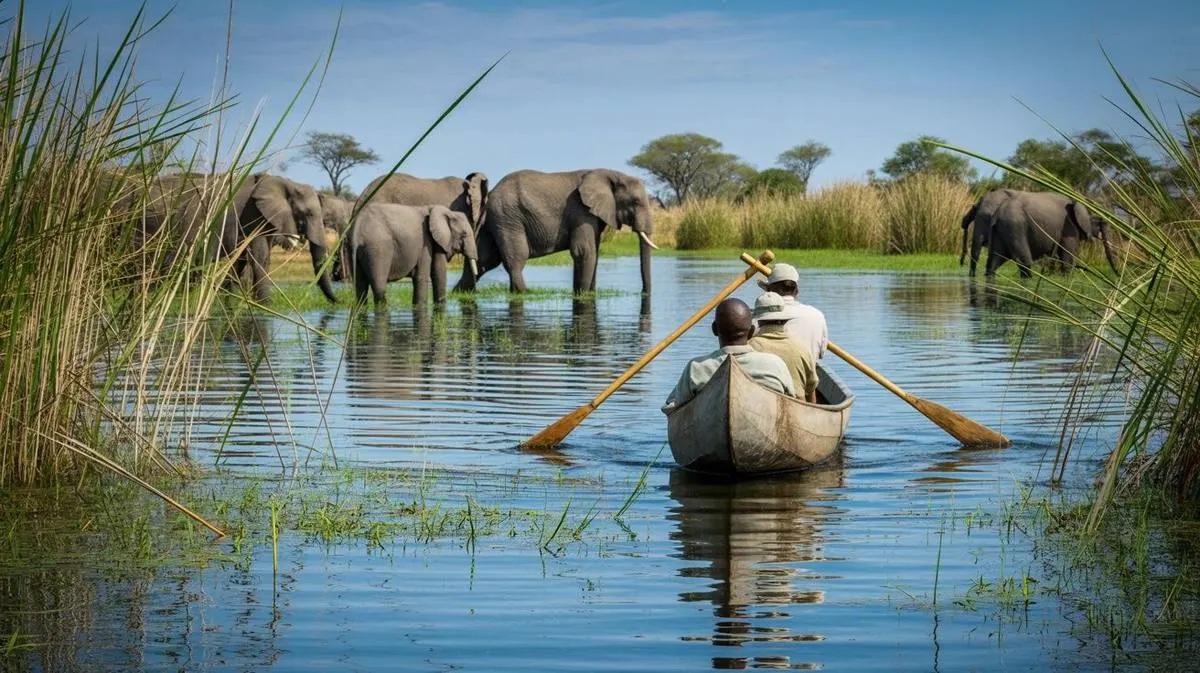
When you're dreaming up the perfect African safari, two legendary names almost always steal the spotlight: Botswana’s Okavango Delta and South Africa’s Kruger National Park. But while both promise unforgettable wildlife encounters, they couldn't feel more different.
If you are looking for a remote, water-centric escape where exclusivity is the name of the game, the Okavango Delta offers a pristine, crowd-free wilderness that feels entirely your own. On the flip side, if you want massive landscapes, unbeatable Big Five density, and the flexibility to accommodate any budget—especially for a first-time safari—Kruger is an absolute powerhouse. Choosing between them isn't about finding which is "better," but rather deciding which rhythm matches your travel style.
3-days-luxury-big-five-safari-in-kruger-national-park
8-days-best-of-south-africa-safari-and-okavango-trip-tour-package
14-days-luxury-south-africa-safaris-okavango-delta-and-victoria-falls-tour
3-days-luxury-okavango-delta-fly-in-botswana-safari-itinerary
Similarities between Okavango Delta & Kruger national park
Top-Tier Wildlife Viewing
When it comes to pure, unadulterated wildlife encounters, both the Okavango Delta and Kruger National Park are absolute heavyweights. You don't just visit these places to catch a fleeting glimpse of an animal in the distance; you go to immerse yourself in their world. Both ecosystems support staggering populations of Africa’s iconic megafauna. On any given day, you can find yourself sitting quietly in a vehicle while a breeding herd of elephants passes so close you can hear them breathing, or watching a pride of lions nap under a thorn bush.
While the landscapes they inhabit are wildly different, the cast of characters remains legendary. Massive cape buffalo move in formidable herds, elegant giraffes navigate the canopy, and elusive leopards utilize the dense cover to stalk their prey. For travelers who have "seeing the Big Five" or witnessing raw animal behavior at the top of their bucket list, neither destination compromises. The sheer biomass and density of wildlife in both regions guarantee that every single game drive or boat cruise yields a front-row seat to the daily dramas of the African bush.
Birdwatching Havens
For birders, stepping into either the Delta or Kruger feels like entering an avian paradise. Both regions are world-renowned hot spots that host a dazzling mix of resident species and colorful migratory visitors, making a pair of binoculars an absolute necessity. The Okavango Delta is a magnet for water-loving species, boasting over 400 recorded varieties. It is one of the best places on earth to check rare lifers off your list, like the elusive Pel’s fishing owl, the majestic African fish eagle, and a vibrant array of kingfishers darting across the channels.
Meanwhile, Kruger National Park steps up with an astonishing checklist of over 500 bird species. The park’s diverse eco-zones—ranging from riverine forests to dry savannas—attract everything from massive raptors like the martial eagle to the striking ground hornbill and the brilliantly colored lilac-breasted roller. Whether you are drifting silently down a papyrus-lined waterway in Botswana or cruising along a riverbed in South Africa, the air in both destinations is constantly alive with calls, songs, and flashes of brilliant plumage that captivate casual observers and hardcore twitchers alike.
Dedicated Conservation
Beyond the thrill of the safari, both of these iconic wildernesses share a deep, foundational commitment to protecting the natural world. These aren't just tourist attractions; they are highly protected, globally recognized sanctuaries where conservation takes center stage. The Okavango Delta is preserved as a pristine UNESCO World Heritage site, managed with a strict low-impact tourism model that keeps human footprints to an absolute minimum. This deliberate approach ensures that the delicate balance of its wetlands remains undisturbed for future generations.
Kruger National Park is equally vital to global conservation efforts, anchoring the massive Great Limpopo Transfrontier Park—a bold initiative that removes political borders to allow wildlife to migrate naturally across South Africa, Mozambique, and Zimbabwe. Both regions face serious, modern conservation challenges, particularly around anti-poaching initiatives and habitat preservation. By channeling tourism revenue directly into community engagement, advanced ranger patrols, and biodiversity monitoring, both destinations serve as critical strongholds for endangered species like the black rhino and the African wild dog, proving that sustainable travel can actively safeguard our planet's wild places.
Predator-Prey Dynamics
If you are drawn to the raw, visceral side of nature, both ecosystems deliver high-stakes predator-prey action on an epic scale. Because both environments support massive numbers of herbivores like impala, zebra, and wildebeest, they naturally play host to an incredible concentration of apex predators. This sets the stage for some of the most dramatic wildlife viewing in Africa, where you can witness the intricate strategies of survival unfold in real time.
In both the Delta and Kruger, lions rule the landscape, forming powerful prides that hunt everything from warthogs to buffalo. Solitary leopards utilize the excellent tree cover in both regions to hoist their kills out of reach of scavengers, while cheetahs use open spaces to unleash their legendary speed. Furthermore, both destinations are crucial strongholds for the highly endangered African wild dog. Watching a pack of these painted wolves coordinate a hunt through the bush is a masterclass in teamwork. Whether you are tracking a stealthy feline through the Botswana reeds or watching a pride scan the South African plains, the palpable tension between hunter and hunted is a thrilling common denominator.
Private Concessions
One of the best-kept secrets to elevating a safari in either region is the use of private concessions. While the public areas of Kruger and the main waterways of the Delta are spectacular, both destinations feature exclusive, privately managed tracts of land either within or directly bordering the main parks. These concessions operate under flexible rules designed to give travelers an intimate, unhurried, and highly immersive bush experience away from the constraints of standard park regulations.
In a private concession, the safari rules change entirely for the better. Guides are permitted to drive off-road to follow a leopard tracking through the brush, allowing you to get incredibly close to the action without disturbing the animal. Furthermore, the adventure doesn't stop when the sun goes down; both regions allow thrilling night game drives, using spotlights to seek out elusive nocturnal creatures like bushbabies, genets, and lions on the prowl. With strictly limited vehicle numbers allowed at wildlife sightings, choosing a private concession in either the Delta or the Kruger ecosystem ensures a peaceful, crowd-free encounter that feels profoundly personal.
Luxury Accommodations
For travelers who appreciate the finer things in life, both destinations host some of the most opulent, award-winning luxury lodges on the planet. These properties have completely redefined the concept of "roughing it," blending world-class hospitality with the raw beauty of the African wilderness. Here, a day on safari finishes with fine dining under a canopy of stars, premium wine pairings, and spectacular plunge pools overlooking active waterholes or tranquil river channels.
The architecture in both regions is designed to celebrate the surrounding environment, featuring open-air lounges, canvas-and-timber suites, and expansive viewing decks that bring the outdoors in. The level of service is legendary, with private butlers, expert trackers, and highly trained guides who anticipate your every need. Whether you are staying in a secluded, solar-powered water camp tucked away on a remote island in the Okavango Delta or a lavish, designer lodge perched along the Sabi Sand River in the Greater Kruger area, both destinations deliver an all-inclusive, five-star sanctuary where you can unwind in complete luxury after an exhilarating day in the bush.
Differences between Okavango Delta & Kruger national park
Landscape & Geography
The starkest contrast between these two legendary safaris lies in the very ground beneath your feet—or, in the case of Botswana, the water beneath your boat. The Okavango Delta is a geological marvel: a massive, shifting inland oasis where the Okavango River empties onto the sands of the Kalahari Desert. This creates a mesmerizing labyrinth of seasonal floodplains, glassy lagoons, hidden islands, and narrow papyrus channels that pulse with life according to the rhythm of the floods. It is a vibrant, green-and-blue liquid wilderness that feels deeply primeval.
In contrast, Kruger National Park is an expansive, sun-baked terrain dominated by land rather than water. Its landscape is a classic African mosaic of endless open savannas, rugged rocky outcrops (koppies), golden grasslands, and dense mopane woodlands. Instead of a shifting water maze, Kruger’s geography is shaped by a network of seasonal rivers and waterholes that draw animals inward during the dry winter months. Traveling through Kruger means watching the landscape transition from thick bushveld to sweeping plains, offering a classic, terrestrial African backdrop that stands in sharp contrast to the watery labyrinth of the Delta.
Main Activities
Because their terrains are polar opposites, how you experience the wildlife in each destination is completely different. The Okavango Delta is famous for its slow, intimate, water-level adventures. While land-based game drives are common during the dry season, the quintessential Delta experience happens on the water. Here, you can drift silently through lily-padded channels in a mokoro (a traditional dugout canoe), embark on motorized boating safaris, or join expert-led walking safaris on remote islands. It is a quiet, slow-paced approach to the bush that engages all your senses.
Kruger, on the other hand, is a masterclass in classic, fast-paced overland exploration. The vast majority of your time here is spent on land, buckled into a custom 4x4 open safari vehicle or driving your own vehicle on the park's extensive road network. Because you aren't restricted by deep water channels, vehicles can cover immense distances in a single day, maximizing your chances of tracking down specific sightings. While some private concessions offer guided walks, the true heartbeat of a Kruger safari is the thrilling, dust-kicking, wheel-based pursuit of tracking big game across the savanna.
Accessibility & Travel Style
Getting to your lodge highlights just how differently these two destinations approach travel. The Okavango Delta is the ultimate "fly-in" destination, defined by its extreme remoteness. There are no highways or public roads slicing through the heart of the wetlands; instead, your journey begins with a small bush plane charter out of Maun. Landing on a dusty airstrip in the middle of nowhere, with elephants occasionally clearing the runway, sets a tone of deep isolation and pure adventure. You are completely cut off from the outside world.
Kruger National Park is a model of seamless accessibility. It features a brilliantly maintained infrastructure, complete with paved main roads, bridges, and commercial airports right on its doorstep. This opens up a world of diverse travel styles. You can easily fly into a nearby airport, rent a standard sedan or a camper van, and drive yourself right through the park gates on a classic self-drive holiday. Whether you prefer a highly structured guided tour or a completely independent road trip, Kruger allows you to tailor the journey to your exact comfort level.
Cost & Exclusivity
The philosophical difference between Botswana and South Africa is perfectly captured by their tourism models. Botswana deliberately protects the Delta through a strict "low-volume, high-yield" policy. By limiting the number of beds and lodges permitted in the region, they keep crowds completely at bay, but this comes with a premium price tag. An Okavango safari is a bucket-list investment, where all-inclusive, luxury fly-in lodges dominate the market, offering travelers an incredibly exclusive, intimate wilderness that feels entirely private.
Kruger operates on a model of democratic diversity, welcoming every kind of traveler. Because of its massive scale and public accessibility, it caters to an incredibly broad spectrum of budgets. On the public side, you will find affordable national park rest camps, self-catering chalets, and budget-friendly campsites that make an authentic safari accessible to everyone. Simultaneously, the private reserves on Kruger’s western border host some of the most expensive, ultra-luxury lodges in the world. Kruger proves you don't need a fortune to see the Big Five, though the option to splurge is always there.
The Big Five
While both destinations are celebrated for hosting Africa's most famous wildlife, they differ significantly when it comes to checking off the full Big Five list—specifically regarding the rhino. The Okavango Delta boasts healthy populations of lion, leopard, elephant, and buffalo. However, due to past escalations in poaching across Southern Africa and subsequent high-profile relocation efforts to safer havens, wild rhino sightings within the main Delta wetlands are exceptionally rare today. It remains an elite wildlife zone, but completing the classic Big Five tally here can be a logistical challenge.
Kruger National Park, by contrast, remains one of the world's most critical strongholds for rhinos. Despite ongoing, heavy conservation battles, Kruger and its surrounding private reserves (like Sabi Sand) offer some of the best opportunities on earth to encounter both white and black rhinos in their natural habitat. Combined with its legendary density of lions, leopards, massive elephant herds, and thousands of Cape buffalo, Kruger makes checking off the entire Big Five list an achievable, everyday reality on a standard three- or four-day safari.
When is the best time to combine Okavango Delta & Kruger national park
The absolute sweet spot to combine these two iconic destinations is during the dry winter months, from July to October. During this window, Kruger’s bush thins out and animals gather around predictable waterholes, giving you unparalleled Big Five tracking. Simultaneously, this coincides with the peak floodwaters in the Okavango Delta, opening up those legendary, crystal-clear water channels for premium mokoro and boating excursions. The weather is dry, clear, and virtually mosquito-free across both regions. It is the golden window where both ecosystems peak at the exact same time, offering the ultimate Southern African safari.
How to travel from Kruger national park to Okavango delta
The most efficient way to connect these two distinct wildernesses is by taking to the skies. Since there are no direct commercial flights between the two, you will board a short regional flight out of one of Kruger’s gateways—such as Skukuza (SZK) or Kruger Mpumalanga International Airport (MQP)—and fly to Johannesburg’s O.R. Tambo International Airport (JNB). From Johannesburg, you will catch a direct flight straight into Maun, Botswana (MUB). Once you touch down in Maun, your remote bush adventure begins as you hop onto a scenic light aircraft charter flying directly into your Delta camp's private airstrip.
Booking Okavango Delta & Kruger national park with us Roads of Adventure safaris
At Roads of Adventure Safaris, we specialize in weaving complex, multi-destination African circuits into seamless, stress-free journeys. Designing a trip that balances the terrestrial power of Kruger with the watery exclusivity of the Okavango Delta requires precision planning—from aligning regional flight connections to securing coveted private concession permits. Our team handles every single detail, including local bush charters, expert private guides, and hand-selected luxury lodge bookings. We customize the pace to perfectly match your travel style, ensuring that your transition from the South African bushveld to the pristine Botswana wetlands is flawless, magical, and entirely unforgettable.
