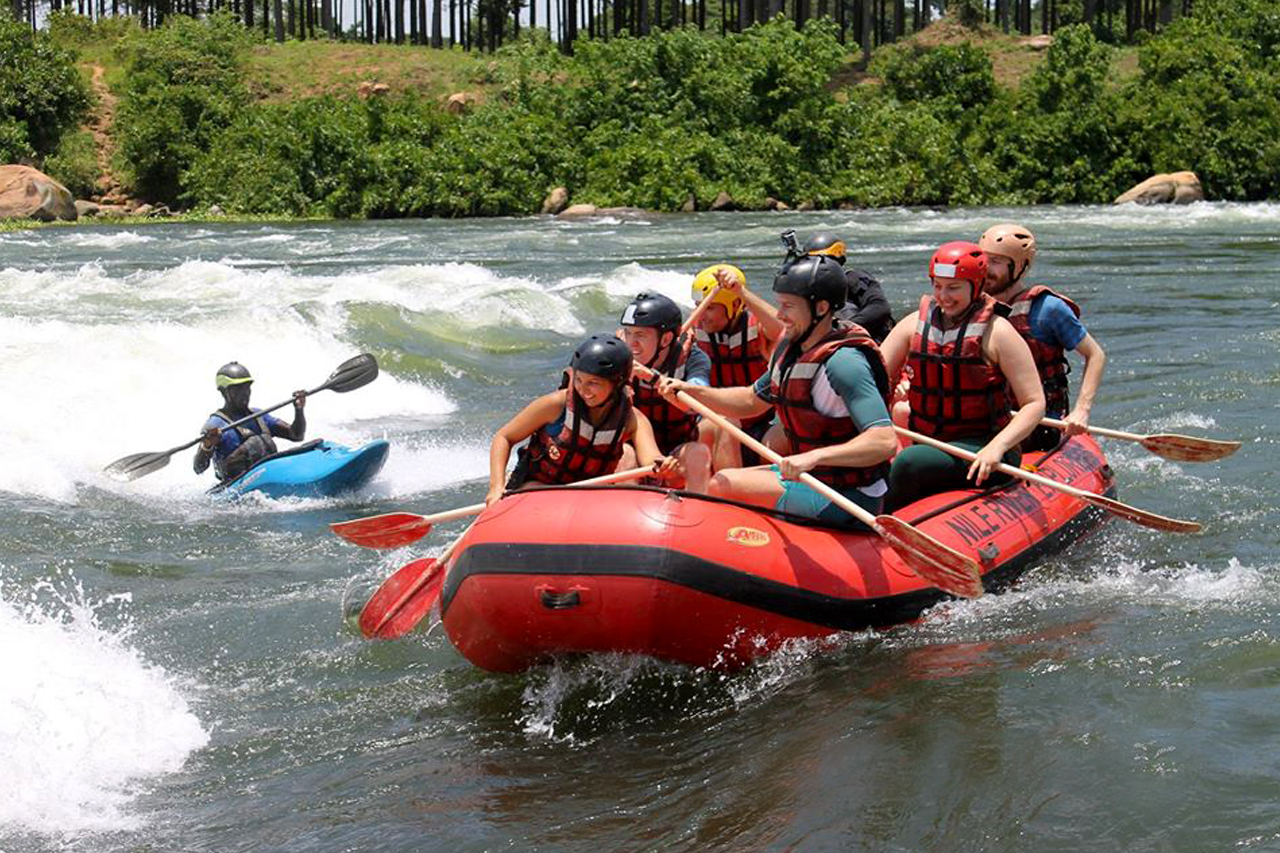
Uganda birding safari at Mabamba Wetland with the adrenaline-pumping white-water rafting in Jinja. This 2-to-3-day itinerary offers the perfect balance, taking you roughly 50 km west of Kampala for a rare Shoebill sighting, followed by a 2 -hour drive east to Jinja to tackle grade 3 or 5 rapids on the Nile.
Uganda birding safari in Mabamba & Jinja white water rafting
Get ready for an action-packed two-day Ugandan getaway that blends world-class birding with thrilling outdoor adventure. Starting near Kampala, you will journey to the serene papyrus wetlands of Lake Victoria, a world-renowned haven for rare avian species and wetland wildlife. Next, head east toward Jinja—East Africa’s indisputable adventure capital—where the iconic River Nile powers legendary rapids. From gliding through tranquil channels in search of pre-historic giants to tackling white-water waves and trekking through lush ancient rainforests, this concise itinerary delivers the absolute best of Uganda's natural diversity. It is the perfect short escape for nature lovers, bird watchers, and adrenaline seekers alike.
Day 1: Mabamba Swamp Birding
Your journey begins early as you head southwest from Kampala to the Mabamba Wetland, a famous RAMSAR site on Lake Victoria. A scenic 1.5-hour drive brings you to the landing site, where you will board a motorized canoe to navigate lush, papyrus-lined channels. The main event here is tracking the legendary, pre-historic-looking Shoebill Stork, which frequents the shallow marshlands to hunt for lungfish. Beyond this bucket-list sighting, Mabamba is a paradise for birders, offering vibrant views of the elusive Papyrus Gonolek, the rare Blue Swallow, and numerous colorful herons and kingfishers. As your canoe glides silently through the reeds, your expert guide will help you spot and photograph these extraordinary species in their untouched native environment, making for an unforgettable, tranquil morning on the water.
Day 2: Jinja White Water Rafting & Mabira Forest Birding
Set off early along the Kampala-Jinja Highway toward Jinja, the historic source of the River Nile and East Africa's adventure capital. Prepare for an exhilarating morning on the water tackling the famous grade 3 or grade 5 rapids with trusted local outfitters like Adrift or Nalubale Rafting. After conquering the roaring waves of the Nile, begin your return journey with a captivating stop at Mabira Forest. As East Africa’s largest central rain forest reserve, Mabira is a biodiversity hotspot boasting over 300 bird species. Enjoy a peaceful canopy walk under ancient trees, keeping a sharp eye out for striking locals like the Great Blue Turaco, the African Pied Hornbill, and playful primates before completing your return drive to Kampala.
Here are 10 key questions and detailed responses to help you plan this action-packed Ugandan getaway.
What is the best time for this safari?
Timing your trip well ensures you get the absolute best of both quiet birding channels and booming river currents. Uganda is brilliant year-round, but the dry seasons—running from December to February and June to September—are widely considered the sweet spot for this specific itinerary. During these drier months, water levels in Mabamba Wetland drop slightly, which forces fish like lungfish into shallow channels, making it much easier to spot the elusive Shoebill Stork standing motionless as it hunts. The sunny weather also makes navigating the swamp by motorized canoe far more comfortable. On the rafting front, the White Nile in Jinja delivers thrilling, world-class rapids regardless of the month, but drier weather means clear blue skies, warmer water temperatures, and ideal outdoor conditions for hitting the river. Mabira Forest trails are also far less muddy and much easier to trek during these periods, allowing for smooth birdwatching walks under the dense rainforest canopy. If you happen to visit during the wetter months, don't worry—the birds are still abundant and the Nile's waves are as legendary as ever, but bringing sturdy rain gear and waterproof bags for your photography kit becomes absolutely essential.
Is Mabamba Swamp guaranteed for seeing Shoebills?
While no wildlife sighting in the wild can ever be 100% guaranteed, Mabamba Wetland offers one of the highest success rates in all of Africa for spotting the prehistoric Shoebill Stork—often hovering around 85% to 90% on early morning excursions. The local boat captains and specialized birding guides live right on the edge of the swamp and know the resident birds' favorite feeding territory like the back of their hand. They coordinate constantly with one another across the papyrus channels to track where individual storks were last seen nesting or fishing. To maximize your chances, starting early in the morning around 6:30 AM or 7:00 AM is crucial. Shoebills are most active during these cooler hours when they stand completely still in the shallow waters, patiently waiting to strike at lungfish before the intense midday heat sets in. As the sun gets high, these massive birds tend to take flight or retreat deeper into the dense, impenetrable papyrus thickets where canoes cannot follow. Even on the off chance a Shoebill stays hidden, the wetland is teeming with vibrant bird species, making the serene boat ride through the quiet marsh channels exceptionally rewarding on its own.
Do I need rafting experience for Jinja rapids?
You do not need any prior white-water rafting experience to take on the Nile in Jinja! Professional outfitting companies like Adrift and Nalubale Rafting cater to complete beginners every single day with an outstanding safety record. Before you even set foot near a rapid, every trip begins with a comprehensive safety briefing on land, followed by hands-on practice in calm, flat water. You will learn essential paddle commands, safety protocols, and what to do if the raft flips over or if you find yourself swimming in the current. What makes the White Nile unique and surprisingly beginner-friendly is that it is a "pool-drop" river. This means every intense, heart-pounding set of rapids is immediately followed by a long, calm stretch of deep, warm water, giving your boat plenty of time to collect everyone and reset safely. If you want maximum adrenaline, you can opt for the full Grade 5 run. However, if you prefer a gentler experience or are traveling with family, you can choose a Grade 3 option or even a safety boat that bypasses the biggest monster waves altogether.
What essential gear should I pack for trip?
Packing smart for this trip comes down to preparing for two completely different environments: a calm, sun-exposed wetland and a wet, high-energy river adventure. For Day 1 at Mabamba Swamp, wear lightweight, breathable clothing in neutral tones like khaki, olive, or beige. Bright colors can startle skittish bird species, while dark blue and black naturally attract biting insects like tsetse flies. Bring a wide-brimmed sun hat, high-SPF sunscreen, polarized sunglasses to cut water glare, bug spray, and a reliable pair of binoculars. If you are a photographer, bring a telephoto lens (at least 300mm) and a waterproof dry bag to safeguard your expensive cameras against water splashes on the canoe. For Day 2 in Jinja, leave all electronics behind unless you have a secured GoPro mounted to your helmet. Wear quick-drying swim attire or athletic boardshorts, along with a secure long-sleeve rash guard to protect your skin from sun exposure and friction against the raft. Secure water shoes or old sneakers with strap backs are mandatory—flip-flops will get swept away instantly in the river current.
How physical is this two-day Ugandan itinerary?
This itinerary strikes a wonderful balance between relaxed sightseeing and intense physical activity, making it accessible to anyone with a moderate level of basic fitness. Day 1 at Mabamba Wetland is very gentle physically. You will be seated comfortably inside a motorized wooden canoe for roughly two to three hours while your local guide handles all the navigation through the papyrus channels, requiring zero strenuous effort on your part beyond stepping carefully into the boat. Day 2, however, dials up the physical demands significantly. White-water rafting on the River Nile is a full-body workout that requires solid core strength, active paddling power, and the energy to hold on tight when hitting massive, churning waves. Swimming in strong river currents after a flip can also take your breath away, though your high-flotation life jacket does most of the heavy lifting. Later that afternoon, the birdwatching stop at Mabira Forest involves a light to moderate walking pace along established rainforest trails, which is easy on the legs but requires steady footing on uneven terrain and damp tree roots.
Are the Mabira Forest birding walks difficult?
The birding walks in Mabira Forest are quite manageable and can easily be tailored to fit your energy levels after a busy morning on the Nile. The forest features a well-maintained network of designated trails that wind beneath an ancient, towering tree canopy. Most standard birdwatching circuits last anywhere from one to two hours and cover relatively flat or gently rolling terrain. You will not be tackling steep mountain climbs or intense jungle bushwhackings; instead, the pace is intentionally slow and quiet so your guide can listen for bird calls and scan the high canopy for species like the stunning Great Blue Turaco or the African Pied Hornbill. The main challenge you might encounter is navigating damp, muddy patches or exposed tree roots on the forest floor, especially if it has rained recently. Wearing comfortable, sturdy walking shoes or light hiking boots with good traction will keep you stable. Overall, as long as you are comfortable walking at a leisurely pace for a couple of kilometers, you will find the Mabira Forest trail experience relaxing, atmospheric, and incredibly rewarding.
How do I get around between locations?
Navigating the route between Kampala, Mabamba, and Jinja is straightforward, but traffic conditions require smart planning. Mabamba Wetland lies roughly 50 kilometers west of Kampala near Entebbe. Reaching the landing site takes about 1.5 to 2 hours by road, though you can also take a scenic boat ferry across Lake Victoria directly from Entebbe to shorten the drive. Reaching Jinja requires traveling east from Kampala along the busy Kampala-Jinja Highway, a distance of about 80 kilometers that typically takes 2 to 3 hours depending heavily on notorious city traffic jams around the capital. Private 4x4 safari vehicles or hired tour vans with experienced local drivers are strongly recommended over public transport for this specific trip. Private transport ensures you hit the road early enough to beat heavy morning commuter traffic, guarantees you arrive on time for morning rafting launch schedules, and provides a safe place to store your luggage, dry clothes, and camera gear while you are out on the water or walking through the forest trails.
Is white water rafting on Nile safe?
It is completely normal to feel a surge of nerves before tackling famous Class 5 rapids, but white-water rafting on the Nile in Jinja is remarkably safe when booked through licensed, reputable operators. Industry leaders like Adrift and Nalubale operate under strict international safety standards, utilizing high-grade equipment including heavy-duty inflatable rafts, high-flotation life jackets, and impact-resistant helmets. Every single raft is captained by a highly trained, river-certified guide who knows every eddy, rock, and wave pattern on the Nile. Furthermore, rafting trips are accompanied by a dedicated team of "safety kayakers"—agile, expert paddlers who zip ahead of the main rafts. If a raft flips and passengers spill into the water, these safety kayakers are on the scene within seconds to pull swimmers out of the current and bring them safely back to a raft or support boat. The deep water of the Victoria Nile also means there are virtually no shallow, dangerous rocks to hit if you fall out, making it one of the safest places on earth to experience high-grade rapid thrills.
What other wildlife can I expect seeing?
While the majestic Shoebill Stork and the thrill of the Nile rapids grab the main headlines, this two-day combination exposes you to a surprisingly rich variety of African wildlife across diverse ecosystems. In the papyrus channels of Mabamba Swamp, keep an eye out for sleek spotted-neck otters playing in the water, marsh-dwelling sitatunga antelopes hiding in the reeds, giant monitor lizards sunning on mudbanks, and vibrant amphibians. Birdwatchers can spot over 190 species here, including the Papyrus Gonolek, African Fish Eagle, Malachite Kingfisher, and Purple Heron. When you head east to Jinja and Mabira Forest, the wildlife scenery transitions from wetlands to lush tropical forest. Along the riverbanks of the Nile, you will spot large monitor lizards and fruit bat colonies hanging from riverfront trees. Inside the dense canopy of Mabira Forest, you are likely to encounter playful troops of red-tailed monkeys, grey-cheeked mangabeys, and forest squirrels, alongside colorful butterflies and over 300 forest bird species, including hornbills, turacos, and sunbirds flitting through the branches.
Booking Uganda birding safari and white-water rafting with us Roads of Adventure safaris
You can book your tailored Uganda Birding Safari and White-Water Rafting package directly through Roads of Adventure Safaris. They specialize in combining adrenaline-filled excursions with immersive birding itineraries across Uganda's prime conservation areas.
