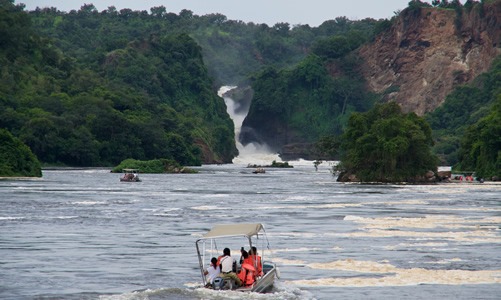
Choosing between Murchison Falls and Queen Elizabeth national parks depends on your specific travel goals. Murchison Falls is famous for its dramatic waterfall and large savannah herds, while Queen Elizabeth National Park offers diverse terrain, tree-climbing lions, and chimpanzee tracking.
5-days-murchison-falls-and-queen-elizabeth-safari-itinerary
3-days-fly-luxury-uganda-safari-to-queen-elizabeth-national-park
3-days-best-honeymoon-uganda-safari-escape-to-murchison-falls-national-park
3-days-uganda-safari-itinerary-to-queen-elizabeth-national-park
Murchison Falls National Park
Murchison Falls National Park stands as Uganda's largest and oldest protected area, straddling the northern end of the Albertine Rift Valley. The undisputed crown jewel of this park is the explosive Murchison Falls itself, a breathtaking hydrological marvel where the entire Victoria Nile narrows sharply to force its way through a tiny, 7-meter rock fissure before plunging 43 meters into the "Devil’s Cauldron" below. This immense pressure causes the surrounding ground to literally tremble, sending up a permanent cloud of mist that creates vibrant rainbows against the dark gorge cliffs.
Beyond the spectacular topography of the falls, the park's northern sector transitions into an expanse of classic African savanna, dotted with Borassus palm trees, acacia woodlands, and rolling grasslands. This diverse landscape provides a sanctuary for a high concentration of wildlife, making it Uganda’s premier game drive destination. Travelers navigating the tracks of the Buligi Peninsula frequently encounter four of Africa's iconic "Big Five"—lion, leopard, elephant, and Cape buffalo. The park is also nicknamed a "giraffe paradise," hosting three-quarters of the global population of the rare Nubian (Rothschild’s) giraffe. To complete the full Big Five list, a classic safari itinerary typically stops at the nearby Ziwa Rhino Sanctuary en route to the park, where visitors can track southern white rhinos on foot.
The activities at Murchison Falls are deeply centered around the water and the savanna. A multi-hour boat launch cruise journeys upriver from the Paraa hub directly to the base of the crashing falls, offering an unmatched water-safari perspective. From the boat, travelers can spot hundreds of massive Nile crocodiles sunning themselves on the sandbanks alongside snorting pods of hippos and elephants cooling off in the shallows. For those seeking an aerial perspective, hot-air balloon safaris drift over the plains at dawn. Downriver, specialized boat cruises head toward the Nile Delta where the river flows into Lake Albert. This swampy delta maze is an absolute haven for birders, offering the highest chances in East Africa of spotting the legendary, prehistoric-looking shoebill stork. Murchison Falls is ultimately best suited for travelers seeking raw, expansive wilderness photography and a classic, old-world safari feel.
Queen Elizabeth National Park
Queen Elizabeth National Park presents a striking contrast to the northern plains, offering a mosaic of ecosystems that makes it Uganda’s most biodiverse and visited safari destination. Situated on the floor of the Western Rift Valley and backdropped by the jagged, snow-capped Rwenzori Mountains, the park straddles the equator, marked by two iconic concrete hoops on the main highway. Its extraordinary geographical variety spans open savanna plains, dense tropical rainforests, papyrus-filled wetlands, and dozens of extinct volcanic explosion craters that pockmark the landscape, some filled with salt crusts or emerald-green waters.
This incredible habitat diversity directly supports a massive wealth of wildlife, including over 95 mammal species—the highest count of any park in the country. On the central Kasenyi Plains, vast breeding grounds of Uganda kob draw steady populations of apex predators like lions and leopards. However, the park's most famous wildlife phenomenon occurs in the remote southern Ishasha sector, where unique populations of tree-climbing lions spend their days lounging high up in the sturdy branches of sycamore fig trees to escape the ground heat and insects while surveying the plains for prey. Additionally, the park's waterways host one of the densest concentrations of hippos found anywhere in East Africa.
The signature activity here is a boat safari along the 40-kilometer Kazinga Channel, a natural waterway connecting Lake Edward and Lake George. This cruise operates as a live wildlife spectacle; continuous lines of elephants, buffaloes, and waterbucks crowd the banks to drink, while scores of aquatic birds flank the shores. For a dramatic shift from savanna to jungle, travelers can descend 100 meters into the Kyambura Gorge—a sunken, subterranean tropical rainforest cut into the rift valley floor known as the "Valley of the Apes"—to track a habituated community of wild chimpanzees. This unique blend makes the park a paradise for bird watching, ranking as the 6th most bird-diverse location on Earth with over 600 recorded species. Queen Elizabeth National Park is the ultimate choice for travelers who want a multi-faceted safari that packs big game viewing, crater lake exploration, and chimpanzee trekking into a single, highly varied itinerary.
1. Which Park offers the better classic savannah game drive experience?
When comparing the traditional African savannah experience, Murchison Falls National Park generally holds the upper hand over Queen Elizabeth National Park. The northern sector of Murchison Falls, specifically the rolling grasslands of the Buligi Peninsula, features an open, classic landscape punctuated by stunning Borassus palm trees. This flat, sweeping topography makes wildlife spotting exceptionally clear. Large herds of herbivores graze across wide horizons, and predators like lions and leopards are frequently spotted using the open plains or the fringes of the woodland to stalk their prey.
Queen Elizabeth National Park’s main game drive area, the Kasenyi Plains, is also a beautiful savanna environment dominated by low bushes and open grasslands. It serves as the primary breeding ground for thousands of Uganda kob, which naturally attracts healthy prides of lions. However, the vegetation in Queen Elizabeth can sometimes be thicker and more fragmented by euphorbia cacti and shrubs, requiring a bit more patience and sharp eyes from your safari guide to spot cats hiding in the brush.
Furthermore, Murchison Falls boasts a higher concentration of massive herds of elephants and Cape buffaloes moving across its northern tracks. If your ultimate goal for a Uganda safari is the nostalgic imagery of endless African plains teeming with iconic big game right outside your window, Murchison Falls delivers that specific cinematic scale flawlessly. Queen Elizabeth’s game drives are excellent, but they are shorter and more compact due to the park’s fractured geography, making Murchison the top choice for pure, dedicated savanna driving.
2. Where should I go if seeing the "Big Five" is my top priority?
If your primary safari goal is ticking off Africa's legendary "Big Five"—lion, leopard, elephant, buffalo, and rhino—neither park can achieve this completely on its own, but their logistical setups differ significantly. Murchison Falls National Park is home to four of the five: lions, leopards, elephants, and buffaloes are resident in high numbers. What makes Murchison the strategic winner for Big Five enthusiasts is its geographic proximity to the Ziwa Rhino Sanctuary. Located directly along the main highway from Kampala to Murchison, Ziwa is the only place in Uganda where you can track wild southern white rhinos on foot. By pairing a morning stop at Ziwa with a safari inside Murchison, you can realistically check off all five species in a single, seamless northern loop.
Queen Elizabeth National Park also hosts four of the Big Five: elephants, buffaloes, lions, and leopards roam its diverse sectors. However, there are absolutely no rhinos in or anywhere near Queen Elizabeth National Park. To see rhinos when visiting Queen Elizabeth, you would have to plan an entirely separate, multi-hour detour to central Uganda, which disrupts a southern safari routing.
It is also worth noting that elephant and buffalo populations are incredibly robust in both parks, but Murchison’s elephants are famously massive and visible in giant family herds on the plains. If your heart is set on completing the full Big Five sequence efficiently within a standard 3-day or 4-day safari itinerary, choosing Murchison Falls paired with a Ziwa stopover is the most practical and rewarding route available in Uganda.
3. How do the boat safari experiences compare between the two parks?
Boat safaris are a signature highlight of a Uganda safari, but the water excursions in Murchison Falls and Queen Elizabeth National Park offer entirely different atmospheres, landscapes, and wildlife perspectives. In Murchison Falls, the boat launch journeys along the historic Victoria Nile. The classic three-hour trip takes you upstream to the base of Murchison Falls, allowing you to witness the river explode through the narrow gorge from below. Along the way, you sail past massive Nile crocodiles, pods of hippos, and elephants drinking at the water's edge. Alternatively, a downriver boat trip takes you toward the peaceful Nile Delta at Lake Albert.
Queen Elizabeth National Park features the famous boat cruise along the Kazinga Channel, a natural 40-kilometer waterway connecting Lake Edward and Lake George. The Kazinga Channel experience is less about dramatic scenery and entirely about an overwhelming density of wildlife. Because the channel is narrow, the boat glides incredibly close to the banks. It feels like a continuous, living wall of animals: hundreds of hippos crowd the water, enormous water monitors sun themselves on rocks, and giant herds of buffaloes wallow in the mud right beside elephants.
While Murchison offers majestic river scenery, the sheer volume and diversity of animals visible simultaneously at close range along the Kazinga Channel is virtually unmatched anywhere in East Africa. If you want dramatic river landscapes and the thrill of the Nile, choose Murchison. If you want to sit back and watch an intense, crowded parade of birds, hippos, and big game congregating feet away from your bow, Queen Elizabeth is the superior choice.
4. Which Park is best for a traveler who wants to see tree-climbing lions?
If seeing lions lounging high up in trees is a bucket-list item for your Ugandan safari, Queen Elizabeth National Park is the definitive and clear choice. The park's remote southern sector, known as Ishasha, is globally famous for its unique population of tree-climbing lions. Unlike typical lions that stay firmly on the ground, the prides in Ishasha spend the heat of the day resting on the sprawling branches of low-hanging sycamore fig trees and acacia trees. Scientists believe they do this to escape the intense heat of the ground, avoid the biting tsetse flies, and gain a better vantage point for spotting prey across the savanna.
Murchison Falls National Park has a very healthy and growing lion population, and sightings on the northern delta tracks are highly reliable. However, the lions in Murchison are strictly ground-dwellers. While you might occasionally see a cub climb a fallen log out of playfulness, they do not exhibit the habitual, systematic tree-climbing behavior seen in the south.
It is important to remember that the Ishasha sector requires an extra drive day or a deliberate routing between the central part of Queen Elizabeth and Bwindi Impenetrable National Park. Tracking them requires patience, as they move from tree to tree based on weather and prey movements. But because this phenomenon is so rare worldwide, choosing Queen Elizabeth National Park is the only way to reliably build this extraordinary wildlife spectacle into your Uganda itinerary.
5. What are the major landscape and scenery differences between them?
The visual aesthetics of these two parks are completely distinct, heavily influencing the overall mood of your safari. Murchison Falls National Park is a landscape of raw, cinematic scale. It is bisected by the wide, powerful Victoria Nile, creating a stark contrast between the dry, palm-dotted savanna of the northern bank and the dense, green mahogany forests of Rabongo and Budongo on the southern bank. The terrain feels vast, open, and untouched, dominated by the roaring presence of the world's most powerful waterfall slicing through ancient rock.
Queen Elizabeth National Park, on the other hand, is a geographical mosaic of dramatic volcanic activity. Set against the jagged, snow-capped backdrop of the Rwenzori Mountains, the park is pockmarked with dozens of spectacular explosion craters, rolling green hills, and vast salt lakes like Lake Katwe. It transitions rapidly from open savanna plains to thick papyrus swamps, and then drops suddenly into deep, sunken forested gorges like Kyambura.
If you prefer vast, untamed horizons, big river systems, and the raw energy of a massive waterfall, Murchison Falls provides that classic, epic wilderness backdrop. If you are captivated by dramatic mountain backdrops, beautiful volcanic crater topography, peaceful lakes, and a rapidly changing landscape every few miles, Queen Elizabeth National Park offers the more visually diverse and breathtaking geography.
6. How do chimpanzee trekking opportunities compare in Murchison and Queen Elizabeth?
Both parks offer excellent opportunities to add chimpanzee tracking to your wildlife viewing itinerary, allowing you to combine a savanna safari with primate viewing without driving all the way to Kibale Forest. In Murchison Falls, chimpanzee trekking takes place in the Budongo Forest Reserve, located on the park's southern boundary. Budongo is a massive, pristine mahogany forest that hosts a large population of chimpanzees. The terrain here is relatively flat, making the walk through the towering, shaded jungle floor highly accessible and comfortable, with excellent habituated groups that are reliably located by researchers.
In Queen Elizabeth National Park, the chimpanzee experience happens in the extraordinary Kyambura Gorge, often called the "Valley of the Apes." This is a totally different structural experience. The gorge is a deep, hidden tropical rainforest canyon sliced right into the middle of the flat savanna floor. To track the chimps, you must hike down a steep cliff into a sunken, misty jungle world bisected by a rushing river.
While the chimpanzee find-rate in Budongo is statistically slightly higher and the walking is physically easier, Kyambura Gorge offers an incredibly dramatic, atmospheric setting that feels like stepping into a lost world. Tracking chimps in Kyambura is as much about the breathtaking trek into the canyon as it is about the primates themselves. If you prefer an easier, highly reliable forest walk, choose Murchison's Budongo Forest. If you want an adventurous, visually stunning trek down a dramatic hidden gorge, Queen Elizabeth’s Kyambura is unbeatable.
7. Which Park is better suited for an avid bird watcher?
While Uganda is an international birding paradise, choosing between these two parks depends on whether you are chasing specific rare species or aiming for sheer volume and diversity. Queen Elizabeth National Park is statistically one of the most bird-diverse regions on the planet, boasting an incredible checklist of over 600 recorded avian species. This massive variety is due to its melting pot of habitats—savanna, forest, crater lakes, and wetlands. Birders here can easily spot the Lesser Flamingo clustered in salt craters, the African Skimmer along the Kazinga Channel, and a dizzying array of raptors, kingfishers, and papyrus endemics.
Murchison Falls National Park hosts a slightly lower but still spectacular 450 bird species. However, Murchison holds a legendary status among birders for one specific reason: it is the absolute best and most reliable place in East Africa to see the elusive, prehistoric Shoebill Stork. Specialized boat trips into the marshy Nile Delta swamp where the river meets Lake Albert offer highly successful sightings of this rare bird nesting in the papyrus. Murchison is also famous for giant colonies of Red-throated Bee-eaters nesting in river cliffs.
Ultimately, if your primary ornithological dream is to photograph the iconic Shoebill Stork and see massive waterbird colonies along the Nile, Murchison Falls is non-negotiable. If you are a general birder who wants to maximize your overall life list across a dizzying variety of species, forest birds, and migratory waterfowl, Queen Elizabeth National Park offers the ultimate global hotspot.
8. How does the giraffe population compare between the two parks?
For many travelers, an African safari is incomplete without watching elegant towers of giraffes moving across the horizon. If seeing giraffes is a priority for your trip, Murchison Falls National Park is the absolute winner. Murchison Falls is home to the largest population of the endangered Nubian giraffe (formerly known as Rothschild’s giraffe) in the world. It is impossible to go on a single game drive in the northern sector of Murchison without encountering dozens of these majestic animals grazing on the abundant Borassus palm trees and acacia bushes. Seeing them silhouetted against the unique palm-studded landscape is a signature image of the park.
In stark contrast, Queen Elizabeth National Park historically had zero wild giraffes living within its boundaries. Due to geographic barriers like rivers and mountains, giraffes never naturally populated the park. However, in recent years, the Uganda Wildlife Authority undertook a major conservation translocation project, moving a small group of giraffes from Murchison Falls across the Nile and down into Queen Elizabeth National Park to help manage the acacia vegetation and diversify the ecosystem.
While these translocated giraffes are doing well, their numbers in Queen Elizabeth remain incredibly small, and sightings are rare and unpredictable across the vast park. Therefore, if you want guaranteed, spectacular encounters with massive herds of giraffes at every turn, Murchison Falls is your definitive destination.
9. Which Park is more crowded and touristy?
As Uganda’s tourism sector continues to grow, managing crowd dynamics is an important consideration for an authentic wilderness experience. Queen Elizabeth National Park is Uganda’s most popular and heavily visited savanna park. Because of its central geographic location—acting as a natural bridge between Kibale Forest (chimpanzees) and Bwindi Forest (gorillas)—almost every standard tour itinerary routes through it. The central Kasenyi game tracks and the afternoon Kazinga Channel boat cruises can get quite busy during the peak dry seasons, with multiple safari vehicles frequently congregating around high-profile predator sightings.
Murchison Falls National Park, located in the north-western region, feels significantly more sprawling, remote, and exclusive. Because it requires a dedicated drive northward, away from the standard western primate circuit, it tends to receive fewer casual overland travelers. The sheer vastness of Murchison's northern tracks means that safari vehicles spread out easily; you can often drive for an hour without passing another vehicle, providing a raw, off-the-beaten-path wilderness feel.
While the boat trip to the bottom of Murchison Falls is a popular activity that fills up daily, the overall game drive experience feels far more private and untamed compared to the central sectors of Queen Elizabeth. If you value a quiet, unhurried atmosphere where you can enjoy wildlife sightings in relative isolation, Murchison Falls offers a much stronger sense of exclusive, untouched African wilderness.
10. How do the driving distances and travel logistics from Kampala compare?
Logistics and travel times are critical when designing a comfortable Uganda safari itinerary, especially if you want to avoid spending excessive hours on bumpy roads. Murchison Falls National Park is located in northwestern Uganda and is the closer of the two parks to the capital city of Kampala. A direct drive from Kampala to the southern gates of Murchison takes roughly 4 to 5 hours along a well-paved tarmac road via Luwero and Masindi, making it highly accessible. This straightforward route allows travelers to easily execute a short 3-day safari without feeling completely exhausted by transit.
Queen Elizabeth National Park is located in southwestern Uganda and requires a significantly longer journey. A direct drive from Kampala via Mbarara and Kasese takes roughly 6 to 7 hours of continuous travel. While the roads are generally good, the longer distance makes a quick weekend trip impractical.
However, Queen Elizabeth holds a massive advantage when it comes to circuit logistics. It sits perfectly positioned right in the middle of Uganda's primary tourism highway. It is only a 2-hour drive south of Kibale Forest National Park and a 3-to-4-hour drive north of Bwindi Impenetrable National Park. This means that if you are planning a comprehensive western circuit that includes both chimpanzee and gorilla trekking, Queen Elizabeth integrates into the driving route seamlessly with zero backtracking. Murchison, by contrast, sits isolated in the north, requiring a long full-day drive to connect downward to the southern primate parks.
11. Which Park is better for a family safari with children?
When traveling with family, safety, comfort, varied activity options, and driving times are the key factors to weigh. Murchison Falls National Park is highly advantageous for families due to its shorter, direct driving distance from Kampala. Kids typically struggle with 7-hour road journeys, so Murchison's manageable 4-to-5-hour drive makes the initial transit much easier. The wide, open tracks of the Buligi Peninsula offer immediate, high-impact wildlife sightings like elephants, giraffes, and baboons right from the start of a game drive, which keeps young children instantly engaged and entertained.
However, Queen Elizabeth National Park offers an exceptionally diverse menu of activities that can be great for older children and teenagers who might get bored of sitting in a safari vehicle all day. The Kazinga Channel boat ride is smooth, perfectly safe, and packed with constant animal action at close quarters, eliminating the long waiting periods that can test a child's patience during standard game drives. The park also offers fascinating community experiences, like visiting the Lake Katwe salt works to see how local families harvest salt using traditional methods.
If you have younger children and want to minimize long transit days while securing fast, easy views of massive animals like giraffes and elephants, Murchison Falls is the practical choice. If your children are slightly older and would enjoy a diverse mix of smooth boat cruises, volcanic crater views, and cultural interactions, Queen Elizabeth provides a more engaging, multi-layered family experience.
12. How does the availability and style of accommodation compare?
Both Murchison Falls and Queen Elizabeth National Parks boast an excellent array of safari lodges ranging from rustic community campsites to ultra-luxury bush properties, but the layout of these accommodations differs. In Murchison Falls, lodges are primarily clustered in two main zones: along the southern bank near the Budongo forest and Paraa, or just outside the northern Tangi gate. The luxury properties along the Nile, like Chobe Safari Lodge and Baker's Lodge, offer magnificent, tranquil views of the river currents. Because Murchison is so expansive, staying on the wrong side of the river used to require strict ferry timings at Paraa, though new bridges have made crossing much easier.
Queen Elizabeth National Park’s accommodations are highly decentralized across its various sectors. You can choose to stay in luxury lodges perched dramatically on the rims of crater lakes overlooking the Rwenzori mountains, safari camps tucked directly along the bustling Kazinga Channel where hippos graze on the lawns at night, or remote wilderness eco-lodges down in the Ishasha sector.
Because Queen Elizabeth is interwoven with local communities and fishing villages, the accommodation experience often feels a bit more integrated with local life. Murchison’s lodges feel more like classic, isolated wilderness enclaves surrounded by raw nature. If your dream is a high-end luxury lodge sitting directly on the banks of the historic Nile River, Murchison is spectacular. If you prefer boutique lodging with dramatic volcanic crater vistas and mountain backdrops, Queen Elizabeth offers the more visually stunning variety.
13. Which Park should I choose if I am on a tight budget?
For budget-conscious travelers, maximizing wildlife value while minimizing operational costs is essential. Murchison Falls National Park is generally more cost-effective for short, standalone safaris. Because it is closer to Kampala, you spend significantly less on fuel and vehicle rental fees for a standard 3-day itinerary. Additionally, the proximity of the Ziwa Rhino Sanctuary allows you to get a comprehensive Big Five experience without paying for multiple park entries across different corners of the country. The park gate at Purongo and the area around Pakwach offer great budget guesthouses and community campsites that are highly affordable.
Queen Elizabeth National Park can become slightly more expensive due to the increased fuel costs associated with the longer driving distance from Kampala. However, if you are already planning to do gorilla tracking in Bwindi or chimp tracking in Kibale, Queen Elizabeth becomes the budget-friendly choice because it eliminates the massive transportation costs of driving all the way north to Murchison and back down south.
Furthermore, because Queen Elizabeth is bordered by several large community towns like Kasese and Katwe, there is a wider abundance of cheap, local guesthouses and community-run camps right outside the park boundaries than in the remote stretches of Murchison. If you want a quick, inexpensive 3-day savanna trip from Kampala, choose Murchison. If you are already traveling to the south for primates, adding Queen Elizabeth is the most economical way to include a savanna safari on your route.
14. What are the unique cultural experiences available around each park?
Integrating cultural encounters into a Uganda safari provides vital context to the wildlife conservation efforts in the region. Around Murchison Falls National Park, cultural tourism is centered on communities like the Boomu Women’s Group near the southern park gate. This community initiative allows travelers to tour traditional African farmlands, participate in craft-making workshops, cook local dishes, and stay in traditional mud-walled bandas. It offers an intimate look at the agricultural lifestyle of the local Banyoro and Acholi peoples and directly supports community development and conservation education.
Queen Elizabeth National Park offers a completely different, water-and-geology-focused cultural experience. At the Lake Katwe explosion crater, visitors can take a guided walk to see traditional salt mining, a practice that has sustained local families since the 16th century. You can watch miners stand in brackish waters to harvest salt crystals using centuries-old methods. Additionally, the Kikorongo Equator Cultural Performers offer high-energy traditional dances, music, and fire-making demonstrations.
There are also community-led boat tours to the isolated fishing villages on Lake George, like Kasenyi, providing insight into the delicate balance between wild carnivores and local fishing communities sharing the same ecosystem. While Murchison offers wonderful, peaceful agricultural community insights, Queen Elizabeth National Park provides unique, historically rich cultural experiences tied directly to its volcanic lakes and ancient trade routes, making its cultural portfolio highly distinct and educational.
15. How do I choose between them if I can only pick one for my itinerary?
If your Uganda safari forces an absolute choice between Murchison Falls and Queen Elizabeth National Park, your decision should ultimately hinge on your broader trip routing and your personal wildlife priorities. Murchison Falls is the definitive choice if you want to experience the classic, untamed essence of an African savanna safari. It is the park to pick if you demand epic, panoramic landscapes, guaranteed views of massive towers of giraffes, huge elephant herds, the raw power of the Nile River, and an easy logistical option to see the full Big Five by stopping at Ziwa Rhino Sanctuary. It functions beautifully as a powerful standalone destination.
Queen Elizabeth National Park is the choice to make if you prioritize variety, dramatic geography, and a seamless travel flow. It is the perfect park if you are already heading south to track mountain gorillas in Bwindi or chimpanzees in Kibale, as it sits perfectly between them. Choose Queen Elizabeth if you are captivated by the idea of seeing rare tree-climbing lions in Ishasha, cruising inches away from thousands of hippos on the Kazinga Channel, trekking chimps inside a sunken volcanic gorge, and photographing dramatic crater lakes against a backdrop of mountain peaks.
Murchison is a park of grand, raw scale and classic savanna grandeur; Queen Elizabeth is a park of intense biodiversity, unique ecological phenomena, and logistical convenience. Assessing whether you prefer the sheer majesty of the Nile and open plains, or a multi-varied, primate-and-savanna hybrid circuit will instantly clarify the perfect choice for your Ugandan journey.
Booking Murchison falls or Queen Elizabeth national park on Uganda safari with us Roads of Adventure safaris
To book a safari to Murchison Falls or Queen Elizabeth National Park with Roads of Adventure Safaris, you can easily customize an itinerary by reaching out via email at info@roadsofadventuresafaris.com. They offer tailored, child-friendly, and budget packages that include 4x4 transport, expert guides, and park logistics
