Flying is the best option especially for sort safaris to Kidepo and if you value comfort, time-saving, and convenience, taking only about 2 hours from Entebbe International Airport or Kajjansi to the park's Lomej airstrip. Driving is better if you are traveling on a budget, have a large group to share costs, or want the freedom to explore multiple towns on a road trip.
Popular Uganda safari tour packages to Kidepo valley national park
3-days-uganda-safari-itinerary-to-kidepo-valley-national-park
5-day-best-safaris-to-uganda-kidepo-and-murchison-falls-national-parks
5-days-kidepo-valley-uganda-safari-via-ziwa-rhino-sanctuary
6-days-best-of-murchison-and-kidepo-uganda-safari-via-ziwa
7-days-murchison-falls-uganda-safari-trip-via-ziwa-rhinos-kidepo-valley-and-jinja
Flying to Kidepo Valley National Park
Flying to Kidepo Valley National Park is the ultimate choice for travelers prioritizing comfort, speed, and efficiency. Situated in the remote northeastern corner of Uganda, Kidepo is geographically isolated, making a flight the most practical way to maximize actual safari time. Domestic flight operators like Aerolink Uganda and Fly Uganda run scheduled and charter flights from Entebbe International Airport or Kajjansi Airfield directly to Lomej Airstrip, which sits conveniently within the park’s Apoka tourism zone. Instead of enduring an exhausting dawn-to-dusk road journey, a flight gets you to the park in just 1.5 to 2 hours.
The primary advantage of flying is the elimination of physical fatigue. You arrive fresh, energized, and ready for an afternoon game drive immediately upon landing. Furthermore, the flight itself doubles as a scenic aerial tour. As you head north, the landscape transforms dramatically from the lush, green shores of Lake Victoria into rugged mountains and the expansive, golden savannahs of the Karamoja region
However, flying comes with distinct trade-offs, primarily financial. Domestic flights in Uganda are expensive, often costing hundreds of dollars per person for a return ticket. This can heavily inflate a safari budget, especially for families or large groups. Additionally, scheduled flights typically operate only on specific days of the week—such as Wednesdays, Fridays, and Sundays—which forces you to align your itinerary with rigid airline calendars. These flights also enforce strict baggage weight limits, usually restricted to 15 kilograms in soft-sided bags, because the aircraft used are small bush planes. Finally, once you land at Lomej, you will still need to arrange for a local safari vehicle and guide through your lodge or a tour operator to conduct your actual game drives.
Driving to Kidepo Valley National Park
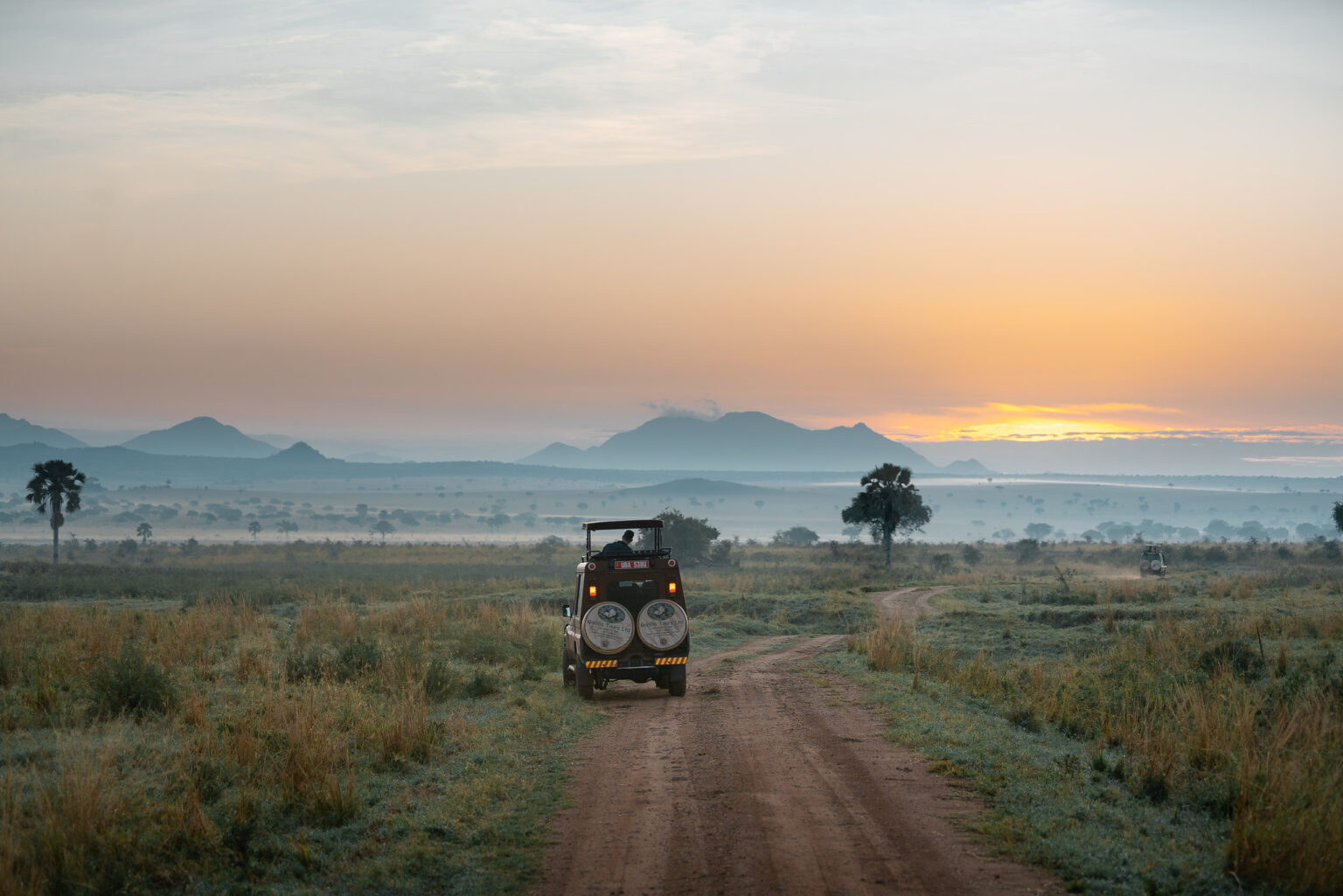
Driving to Kidepo Valley National Park is an authentic African road trip adventure tailored for budget-conscious travelers, groups, and those who believe the journey is just as important as the destination. The drive covers a distance of 570 to nearly 800 kilometers from Kampala, depending on your chosen path. The most popular route goes through Gulu and Kitgum, taking roughly 10 to 12 hours of steady driving. An alternative, highly scenic route winds through eastern Uganda via Mbale, Soroti, and Moroto, revealing the dramatic Pian Upe Wildlife Reserve and the unique culture of the Karamoja region, though it usually requires an overnight stop.
The biggest benefit of driving is cost-efficiency. When traveling with friends or family, splitting the cost of a 4x4 rental vehicle, fuel, and a driver-guide is significantly cheaper than buying multiple individual plane tickets. Driving also offers unparalleled flexibility. You can stop whenever you spot something interesting, visit local markets, interact with the Karamojong people, or take photos of the stunning Ik footprint rocks. Furthermore, you have your own safari vehicle ready for game drives the moment you enter the gates, without paying extra for lodge transfers.
The main disadvantage is the sheer physical toll of the journey. The roads leading into the Karamoja region can be bumpy, unpaved, and heavily corrugated, especially during the rainy season when flash floods can temporarily wash out bridges or turn tracks into thick mud. Spending up to 14 hours in a vehicle is exhausting and swallows two full days of your vacation just for transit. Driving requires a sturdy, well-maintained 4x4 vehicle, excellent navigation skills, a patience for long distances, and a flexible schedule to accommodate potential mechanical delays or road obstructions.
How much time will I save by flying compared to driving?
Flying to Kidepo Valley National Park saves you an enormous amount of time, turning a punishing 10 to 12-hour overland grueling marathon into a swift, smooth 1.5 to 2-hour domestic flight. The time saved is roughly 8 to 10 hours each way, which translates to nearly two full days of your itinerary rescued from transit when calculating the round trip.
When you choose to drive from Kampala, the clock starts early. You must factor in navigating Kampala’s notorious traffic bottlenecks before even hitting the open highway. The road trip covers between 570 to 700 kilometers depending on your exact route. Even on the paved sections, speed limits, police checkpoints, and slow-moving trucks drop your average speed significantly. The final unpaved segments leading into the Karamoja sub-region require slow, careful driving to navigate corrugated dirt roads.
By contrast, a domestic flight departs from Entebbe International Airport or Kajjansi Airfield and flies directly over the changing landscapes of Uganda, landing right inside the park at the Apoka Airstrip. Flying eliminates the exhaustion of a full day spent on bumpy roads. This time efficiency allows you to land, check into your lodge, and be out on an afternoon game drive in the Narus Valley by 3:00 PM on your very first day. If you have less than five days in Uganda, driving consumes almost half your vacation time in transit, making flying the only logical choice to maximize actual wildlife viewing.
How does the cost of a domestic flight compare to hiring a 4WD vehicle and a driver for the road trip?
Financially, the choice depends entirely on your group size. For a solo traveler or a couple, driving is usually cheaper, but for larger groups, hiring a vehicle becomes far more cost-effective than buying multiple plane tickets.
A return domestic flight from Entebbe to Kidepo with operators like AeroLink Uganda typically costs between $600 and $900 per person [A-1]. If you are traveling as a couple, you will spend roughly $1,200 to $1,800 just on flights before factoring in the cost of hiring an open safari vehicle for game drives once you land at the lodge.
On the flip side, hiring a robust 4x4 Toyota Land Cruiser Prado cost around $80 to $100 per day. A professional safari driver-guide costs an additional $30 to $40 per day. You must also cover the driver’s field allowance for meals and accommodation, which adds roughly $40 per night. Fuel is a major variable; a round trip from Kampala to Kidepo, including game drives, easily consumes $300 to $400 in diesel.
For a 5-day road trip, the total vehicle cost hovers around $950 to $1,250. Splitting this vehicle expense among three or four passengers drops the cost per person dramatically compared to individual flight tickets, making driving the better financial option for small groups or families.
Which driving route from Kampala offers the best balance of safety and scenic stops?
The Kampala–Gulu–Kitgum–Kidepo route is the safest, most reliable, and most popular option for travelers. This route covers roughly 571 kilometers and is fully paved with smooth asphalt all the way to Kitgum. This means you only face around 115 kilometers of unpaved, gravel roads on the final stretch from Kitgum to the park gates.
Safety along this northern highway is excellent, with reliable infrastructure, frequent fueling stations, and towns equipped with basic medical facilities. It bypasses the more rugged, historically isolated sections of the eastern Karamoja wilderness.
The route proceeds sequentially from Kampala through Luweero, Nakasongola where you find the Ziwa Rhinos, past Karuma Falls, and straight up through Gulu and Kitgum before entering Kidepo. Scenically, this route provides a wonderful introduction to the changing faces of northern Uganda. Leaving Kampala, you pass through the historic Luweero Triangle before entering the flat savanna grasslands of Nakasongola. You will cross the iconic Karuma Bridge, where you can see the roaring rapids of the Nile River.
The journey takes you directly through Gulu, the vibrant hub of the Acholi sub-region, offering excellent opportunities to experience local markets and traditional homesteads. It perfectly balances driving comfort on tarmac with genuine cultural transitions, ensuring you are never too far from safety while enjoying a great sense of travel.
Do I need to split the drive to Kidepo into two days with an overnight stopover?
While it is physically possible for an experienced local driver to complete the journey from Kampala to Kidepo in a single day, it is highly recommended to split the drive into two days. Attempting to cover the entire 10 to 12-hour distance in one go causes intense driver fatigue and forces you to travel during the dark, which is a major safety risk. Potholes, wandering livestock, and unlit vehicles make driving at night dangerous on Ugandan highways.
Breaking the journey makes your safari much more comfortable. The most logical place to stop on the popular northern route is Gulu or Kitgum. Gulu, located about six to seven hours from Kampala, has great hotels, supermarkets, and reliable internet access.
The ideal breakdown is to spend Day 1 driving from Kampala to Gulu or Kitgum, incorporating sightseeing along the way. Then, use Day 2 to complete the final 4 to 5-hour drive from Gulu or Kitgum to Kidepo Valley through more remote landscapes. By stopping overnight, you complete the first leg easily, enjoy a relaxed dinner, and sleep well. This schedule ensures you arrive at the park entrance during the day, giving you plenty of time to clear park security, check into your accommodation, and catch the golden hour wildlife activity without feeling exhausted.
Are domestic flights to Kidepo available daily, or only on specific days of the week?
Domestic scheduled flights to Kidepo Valley National Park do not operate daily. The primary domestic carrier, AeroLink Uganda, runs scheduled flights to Apoka Airstrip only on specific days—typically Wednesdays, Fridays, and Sundays [A-1]. These flights are carefully scheduled to match standard safari packages, usually departing Entebbe International Airport around midday at approximately 12:30 PM and arriving in Kidepo roughly two hours later at around 2:45 PM [A-1].
Because these planes are small Caravans, flights need a minimum passenger load—often 4 to 7 travelers—to take off. If a scheduled flight does not get enough bookings, the airline may cancel it or request a price supplement from the passengers to keep it running.
If your schedule does not line up with Wednesday, Friday, or Sunday, your only flying alternative is to book a private charter flight. Private charters can fly out any day of the week from Entebbe or Kajjansi Airfield, providing complete flexibility. However, charters are expensive and best suited for luxury travelers or large groups where the total cost can be shared. Always check the latest schedules directly with the airline before organizing your lodge bookings.
Will my travel insurance cover me for a remote self-drive safari in a 4x4?
Most standard travel insurance policies will not automatically cover you for a self-drive safari in a remote area like Kidepo unless you buy a specific rider. Kidepo Valley sits in the far northeastern corner of Uganda, right along the borders of South Sudan and Kenya. Because it is so isolated, insurance companies view it as a high-risk area, and standard policies often exclude off-road driving or traveling in remote areas far from modern medical facilities.
To make sure you are covered, look closely at two parts of your policy. First, look at Rental Vehicle Excess Insurance. Standard credit card car rental insurance rarely covers rugged 4x4 safari vehicles or driving on unpaved roads. You need explicit confirmation that your policy covers unsealed, gravel roads.
Second, look closely at Emergency Medical Evacuation. This is absolutely vital. Kidepo has no major hospitals. If you have a serious medical issue or car accident, you will need to be flown out via an emergency air ambulance to Kampala or Nairobi. Before you leave, tell your insurance provider your exact itinerary and confirm that emergency medical air evacuation is included. To protect yourself further, it is much safer to hire a vehicle that comes with a local driver from a registered tour company. This shifts all responsibility for vehicle damage, mechanical breakdowns, and navigation to the rental company, keeping your insurance claims straightforward.
What are the road conditions like, particularly during the rainy season?
Road conditions on the way to Kidepo change drastically depending on the weather. The main highway from Kampala to Kitgum is excellent tarmac, but the final 115-kilometer dirt road from Kitgum into the park is highly unpredictable. During the dry months from September to March, these unpaved roads are dusty and corrugated. While bumpy, they are easily drivable, allowing you to maintain a steady speed.
During the rainy seasons—which peak from April to May and October to November—the dirt roads can quickly become a real challenge. The soil turns into thick, slick mud that easily traps standard vehicles. Seasonal rivers, known as luggas, can swell instantly after heavy rains, flooding bridges and cutting off sections of the road for hours until the water level drops.
Inside the park, driving on the clay soils requires a heavy-duty 4x4 vehicle with excellent ground clearance and low-range gears. If you choose to drive during the rainy months, traveling with a winch, tow straps, and a driver who knows how to navigate deep mud is essential. If you want to avoid the stress of getting stuck in remote areas, the rainy season is the best time to consider flying instead.
Can I break up a road trip to Kidepo by visiting other attractions like Ziwa Rhino Sanctuary or Murchison Falls along the way?
Breaking up the long drive by visiting other major wildlife areas along the northern route is one of the best reasons to choose a road trip over flying. It turns a long, tiring transit day into a fun multi-day safari itinerary. The standard route passes right by several of Uganda’s top conservation destinations.
A brilliant path forward is to start from Kampala, stop at Ziwa Rhino Sanctuary to track rhinos on foot, continue into Murchison Falls National Park to hunt for the remaining members of the Big Four, and finally push north to Kidepo. About three hours north of Kampala lies the Ziwa Rhino Sanctuary. This is the only place in Uganda where you can track southern white rhinos on foot. Stopping here for a two-hour walking safari is a perfect way to break up the drive, stretch your legs, and tick off the first of the Big Five.
Further north, you can take a slight detour to Murchison Falls National Park, Uganda's largest protected area. You can spend a night or two here, take a boat cruise to the bottom of the world's most powerful waterfall, and enjoy game drives to spot lions, leopards, and giraffes. From Murchison Falls, you can drive through Gulu to reach Kidepo. This turns your transit into a classic safari circuit, allowing you to experience different ecosystems and maximize your wildlife viewings along the way.
What are the luggage weight restrictions and baggage limits on domestic flights?
Because domestic flights to Kidepo use small light aircraft, like the Cessna Grand Caravan, baggage space is very limited. Airlines like AeroLink enforce a strict maximum baggage allowance of 15 kilograms (33 pounds) per passenger [A-1]. This weight limit includes both your checked bag and your small carry-on personal item, such as a camera bag or daypack [A-1].
The style of your luggage matters just as much as its weight. You must use soft-sided duffel bags [A-1]. Rigid, hard-shell suitcases with wheels or metal frames cannot squeeze into the narrow, uniquely shaped under-fuselage baggage pods of light aircraft and will be rejected at check-in.
If you are carrying heavy professional camera gear or cannot travel light, you can buy an extra freight seat in advance. This extra seat allows you to bring up to 75 kilograms (165 pounds) of additional luggage. Alternatively, if you are flying to Kidepo but returning to Entebbe, you can arrange to leave your large suitcases with your tour operator or store them for a small daily fee at Entebbe Airport's luggage storage facilities, taking only what you need for the safari.
Which option, flying or driving, will provide a better overall wildlife and cultural experience?
Both options offer completely different advantages for your trip. Flying gives you a superior wildlife experience, while driving provides an unmatched cultural journey.
By flying, you save almost two full days of travel time, which you can spend out on game drives in Kidepo. This extra time in the park increases your chances of spotting rare predators like cheetahs, leopards, and black-backed jackals, as well as the park's massive buffalo herds. You get to focus your energy entirely on the destination, enjoying relaxed, high-quality wildlife viewing without the fatigue of a long road journey.
Driving, however, connects you deeply with the authentic heart of northern Uganda and the Karamoja region. As you drive across the country, you watch the landscape transform from the lush hills of central Uganda into the dramatic, semi-arid plains of the north. You travel through remote villages and lively trading centers, offering a real look at daily Ugandan life that you miss from the air. A road trip makes it easy to stop and visit the Manyattas—the traditional, fortified homesteads of the Karamojong people. Driving lets you experience the true vastness and isolation of the country, making Kidepo feel like a hidden reward at the end of a grand journey.
Booking Uganda safari to Kidepo valley with us Roads of Adventure safaris
Book your Kidepo Valley safari with Roads of Adventure Safaris to explore this remote wilderness. Popular options include the 7-Day Safari via Jinja and Sipi Falls or a 4-Day Kidepo Wildlife Tour featuring the Narus Valley and Karamojong cultural experiences.
