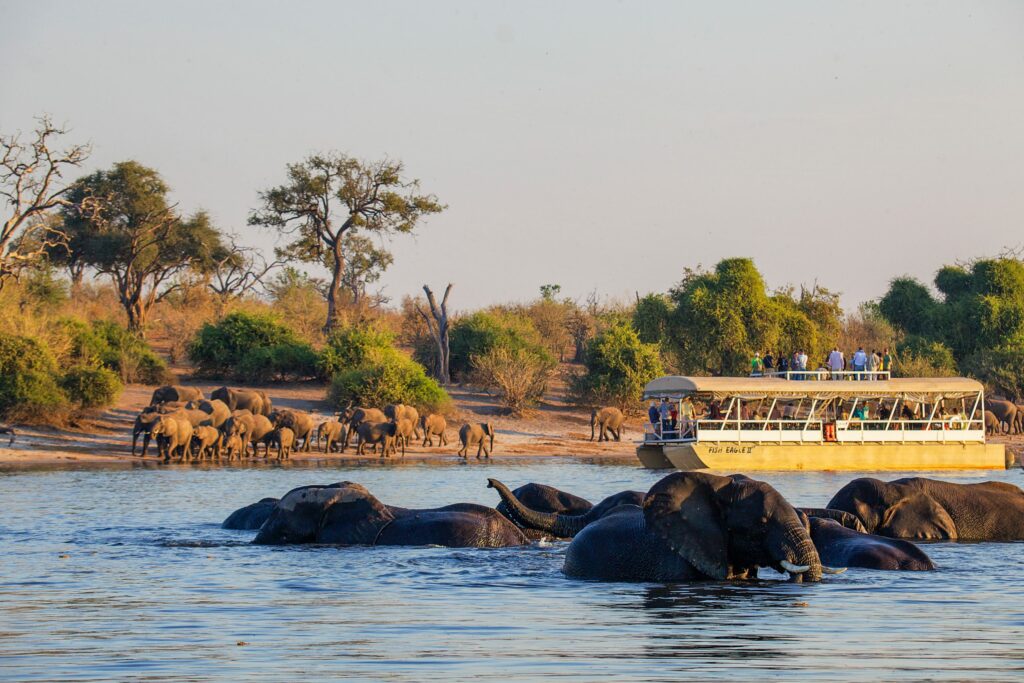
The Chobe Riverfront—located in the northern boundary of Botswana's Chobe National Park—is globally famous for its massive elephant population, epic riverboat safaris, and lush floodplains. Thousands of animals converge here to drink, especially during the dry season (May to October).
3-days-chobe-national-park-botswana-safari-tour-package-from-victoria-falls-town
6-day-best-victoria-falls-tour-chobe-and-hwange-zambia-wildlife-safari-holiday
8-days-best-zimbabwe-botswana-safari-all-inclusive-tour-package-from-victoria-falls
9-days-okavango-delta-moremi-game-reserve-chobe-river-front-and-victoria-falls-tour-package
11-days-un-comparable-best-botswana-safari-itinerary-and-optional-victoria-falls-tour
Key Highlights
The Elephants
Savuti is renowned for its elephant encounters, with an estimated population of around 100,000 elephants in the broader region. In practice, this means elephants are not just “possible”—they’re often a daily highlight. One of the most memorable experiences is watching these great herds move along the waterways and cross areas of water in long, orderly lines. Depending on seasonal water patterns, you may see individuals and family groups gathering near riverfronts, creating moments that feel both dramatic and surprisingly peaceful.
Elephants swimming in single file is especially striking. It’s not just a spectacle of strength and scale; it’s also a reflection of how elephants travel together—carefully, instinctively, and with a strong social bond. From the deck or viewing point, you’ll typically notice them entering the water in stages, with calmer individuals first and the rest following as they find their footing. Families often stay close, and calves—though smaller—are part of the procession and remain under watchful protection from older members.
When you plan your safari, ask your guide about the best times of day to observe elephant movement. Often, the early morning and late afternoon provide the best combination of wildlife activity and beautiful light for photography. Also keep in mind that sightings may vary by water availability and animal behavior on any given day, so your guide’s local knowledge and patience are key. Overall, if elephants are your top priority, Savuti delivers with frequency, intensity, and unforgettable moments.
Wildlife Abundance
Savuti offers truly impressive wildlife abundance, where riverbanks and open areas act like natural meeting points for many species. The landscape supports vast herds of animals such as Cape buffalo, zebra, and impala, and you can expect regular activity along the most productive viewing zones. On any good safari day, you may find yourself watching entire groups settle, graze, or move slowly across the grasslands and shoreline—sometimes in large clusters, sometimes in scattered lines that show how the ecosystem funnels animals toward water and forage.
Cape buffalo are a major feature here. They often travel in significant numbers and can be seen feeding along riverfronts or forming dense groups where they feel safe. Zebra herds also provide constant movement—striped bodies appearing and disappearing across the plains as they browse, drink, and react to nearby predators. Impalas frequently appear in smaller clusters or mixed groups near edges of habitat, offering great chances for close-up observation and photography.
Predators are another reason Savuti is so highly sought after. You can look out for lions, which may patrol territory near prey concentrations, especially during cooler hours or when conditions favor hunting. Savuti can also be an excellent place to spot rarer species, including antelope like Puku (where seasonal conditions and habitat match their preferences). Even if a specific rare antelope sighting isn’t guaranteed, the overall biodiversity—and the way prey species cluster—often increases the likelihood of predator encounters.
For the best overall results, plan for multiple game-drive sessions and ask your guide to focus on both riverfront activity and surrounding grasslands. Savuti’s strength is that it doesn’t just hold wildlife—it brings animals together in ways that produce regular, rewarding viewing.
Accessibility
One of Savuti’s biggest advantages is how accessible it is—especially compared to many remote safari destinations. Savuti’s riverfront is conveniently positioned near the town of Kasane and close to Kasane International Airport. This makes it one of the most approachable wildlife areas in the region, whether you’re starting a short safari or building a multi-day itinerary with other locations.
Travel is typically straightforward: you can arrive via Kasane International Airport, then connect quickly to your safari lodge, camp, or activity starting point. Because the area is relatively easy to reach, you spend less time on long transfer days and more time actually on game drives and wildlife viewing. This is particularly valuable for travelers with limited holiday time who still want a “big wildlife” safari experience.
Accessibility also improves flexibility. If you’re traveling as a couple, a family, or a group, the logistics tend to be simpler to coordinate, and your itinerary can often include early morning and late afternoon departures without complicated scheduling. Additionally, having a nearby town means you can usually arrange essential pre-safari needs—such as last-minute supplies, comfortable rest stops during transfers, and smoother support if anything unexpected comes up during travel.
From a practical perspective, the proximity to Kasane also helps with timing. For example, you may be able to schedule sunrise drives for better predator chances and sunset viewing for excellent photo lighting. You can also reduce travel fatigue, which means you’re more comfortable during early starts and extended scanning sessions.
Top Ways to Explore
Top Ways to Explore: Afternoon Boat Cruises
Afternoon boat cruises are one of the most memorable ways to experience the wildlife along the waterways near Savuti and the broader Zambezi region. This activity is widely celebrated because it places you on the river, at animal level, where behavior becomes more visible and the action feels immediate. As the light softens in the afternoon, you’ll often see hippos moving to and from feeding areas, sometimes surfacing right beside the boat. Crocodiles may lounge along the edges, then slide into the water with minimal disturbance as the boat glides past—making for dramatic, up-close moments.
A key highlight of these cruises is the chance to witness drinking animals. Elephants are frequently drawn to water, and late-day riverfront activity can be especially rewarding. Depending on current conditions and the animals’ movement patterns, you may watch elephants approach in groups, pause, and begin drinking—while smaller animals keep watch from nearby banks. Because you’re positioned on the water, you get a perspective that traditional drives can’t offer.
Boat cruises also tend to deliver excellent photographic opportunities. Wide angles capture the river setting, while telephoto shots can isolate details like ripples, eye reflections, and the texture of crocodile scales. Birdlife often adds to the experience too—watch for raptors and water-associated species that become more active as the day cools.
To get the best value from the cruise, follow your guide’s safety guidance and allow time to settle at prime viewing spots. Bring a light jacket (it can be cooler on the water), and keep your camera ready—because the best moments can happen quickly. Overall, an afternoon cruise is ideal for travelers who want immersive wildlife viewing with a relaxed pace.
Top Ways to Explore: 4WD Game Drives
4WD game drives are a classic and highly effective way to explore the Serondela area and surrounding habitats linked to Savuti’s wildlife zones. Using a 4WD vehicle matters here because much of the terrain can be challenging—think compacted clay soils, sandy patches, and sections of riverine forest where the ground can become soft or uneven after rain. A skilled driver can navigate these conditions confidently, helping you reach productive sighting areas without wasting daylight.
On a game drive, your guide focuses on reading the landscape like a living map. Riverine forests provide cover and browsing opportunities for herbivores, while open stretches allow you to spot herds moving toward water or forage. As animals come in and out of view, you’ll often see the ecosystem “working”—buffalo and zebra gathering near riverbanks, impalas feeding at the edge of thicker vegetation, and predators positioning themselves where prey is most likely to pass.
The Serondela region is especially valued for its mixture of micro-habitats. That diversity means wildlife encounters may happen in multiple ways: you might find lions resting near a suitable lookout, watch a herd pause as they detect danger, or track smaller antelope movements through the brush. Even when sightings aren’t constant, the drive itself can be exciting—scanning, stopping to observe spoor, and learning how seasonal water influences animal behavior.
For the best experience, plan your drives around the animals’ daily rhythm. Early morning and late afternoon are often ideal for activity and better visibility, while midday drives can still be rewarding if predators or water-dependent animals are active. Always bring plenty of water, sun protection, and a camera with appropriate settings. With 4WD driving and expert guiding, you get the ideal blend of access, comfort, and wildlife immersion.
Top Ways to Explore: Houseboats
Houseboats offer a quieter, more secluded way to explore the river environment—perfect for travelers who want to combine wildlife viewing with a slower, more relaxed holiday pace. Instead of being on the move constantly, you “live” on the water. This creates a unique rhythm: you wake up to birds and river sounds, enjoy time watching wildlife from a comfortable deck, and take in the changing atmosphere as the day transitions from bright afternoon light to evening calm.
Because houseboats can be chartered for a more private experience, they’re ideal for couples, families, or small groups seeking extra comfort and privacy. You can spend long periods observing animals without the intensity of frequent game drive stops. Hippos may surface nearby, crocodiles can be seen along the waterline, and elephants—when conditions draw them to water—can become the unexpected centerpiece of the day. The best part is that sightings often happen gradually: first movement at the bank, then a slow approach, then activity that unfolds slowly enough for you to fully appreciate it.
Houseboats also allow for flexible timing. If wildlife appears at a certain hour, your crew can often adjust your schedule to maximize viewing opportunities. Some itineraries include gentle cruising sessions at set times, while other parts of the experience focus on stillness—watching, photographing, and listening. This makes it easier to capture behavior rather than just quick sightings.
When planning a houseboat stay, consider your comfort priorities: cabin layout, meal arrangements, and whether you want a more active schedule or a purely restful one. The river environment can also bring changing weather and water conditions, so it’s smart to pack light layers and prepare for mild humidity. Overall, houseboats deliver a peaceful, immersive river safari experience that complements—rather than replaces—traditional game drives and cruises.
Accommodation Options
Chobe Safari Lodge
Chobe Safari Lodge is one of the region’s most famous and well-established accommodation choices, loved for its warm hospitality, strong safari atmosphere, and convenient location. One of its biggest advantages is proximity to the national park entrance—about 10 minutes away—which makes it ideal for travelers who want to maximize time on game drives and activities without long transfers. That ease of access is especially useful when you’re planning multiple daily departures, such as early morning wildlife drives and afternoon cruising sessions.
The lodge is also closely associated with Chobe’s signature sunset experiences. Many guests choose Chobe Safari Lodge specifically for its reputation around sunset boat cruises, where the river landscape comes alive as the day cools. This means you can settle into the rhythm of the safari day: viewing wildlife during daylight hours, then relaxing into an evening cruise that delivers dramatic lighting and memorable animal behavior near the water.
Accommodation at Chobe Safari Lodge is generally designed to suit a range of travelers—from couples to families—offering comfort after active days. The lodge environment provides a relaxing base between excursions, and its “classic lodge” feel appeals to guests who want a blend of tradition, convenience, and scenic surroundings.
If you’re booking, ask about room types and viewing options, as well as cruise scheduling, to align your stay with the wildlife moments you care about most. Overall, Chobe Safari Lodge is a strong choice for travelers who want an accessible, high-performing lodge with a historic reputation and easy integration into some of the area’s best wildlife experiences.
Chobe Elephant Camp
Chobe Elephant Camp stands out as an eco-friendly accommodation option that offers a more nature-focused and intimate safari experience. While it is located a bit farther from the main tourist hubs, that separation is often exactly what travelers want—it helps create a quieter atmosphere, with guests feeling closer to the African bush and less removed from the everyday rhythm of wildlife. The camp’s positioning can also make it attractive for people who want to reduce crowds and spend more time observing nature at their own pace between activities.
Chobe Elephant Camp is particularly known for excellent opportunities to get close to large herds of elephants. That doesn’t mean elephants will appear on demand every day, but the camp’s environment and the wildlife patterns of the area make it a strong candidate for repeat sightings—especially when local conditions and water availability draw elephants into the vicinity. Watching elephants in real life is one of the most powerful safari experiences, and an accommodation that supports frequent, high-quality viewing can significantly enhance your trip.
As an eco-friendly property, the camp emphasizes sustainability and mindful interaction with the environment, which appeals to travelers who want their stay to align with conservation principles. This often translates into an experience that feels purposeful rather than purely commercial—more “bush immersion” and less “resort bubble.”
For the best stay, consider asking your booking team about your ideal viewing setup (for example, proximity to decks or viewing areas), meal timing, and activity schedules so you can align the camp experience with peak wildlife movement. Chobe Elephant Camp is a great option for guests who prioritize wildlife immersion, elephant viewing potential, and an eco-conscious lodge atmosphere in a calmer setting.
Sanctuary Chobe Chilwero
Sanctuary Chobe Chilwero is a luxury, family-friendly lodge designed to combine premium comfort with a genuine safari experience. What many guests love most is the balance it strikes: it feels high-end and relaxing, yet it remains deeply connected to the surrounding wildlife environment. The lodge is especially suited for families because it offers a welcoming atmosphere and thoughtful services that make traveling with children easier—without compromising the quality of game viewing activities.
A key highlight is the accommodation style. Sanctuary Chobe Chilwero features private cottages, which provide guests with extra privacy, space, and a comfortable “home base” during the safari day. After morning and afternoon excursions, returning to a private cottage can feel like a true sanctuary—quiet, restful, and ideal for recharging before the next outing. This is particularly beneficial for families, as it allows everyone to unwind between drives at their own pace.
Another major attraction is the spa, which adds a layer of well-being to the itinerary. Safari days can be exciting but also tiring, especially when you spend long hours outdoors with sun and wind. A spa session helps guests relax and recover, turning the safari experience into a more holistic holiday—part adventure, part luxury relaxation.
From an experience standpoint, Sanctuary Chobe Chilwero is also known for delivering a curated blend of wildlife activities, whether you’re focusing on riverfront viewing, predator-prey dynamics, or elephant sightings. Because it’s a luxury property, the lodge is well positioned to offer attentive guidance, convenient scheduling, and high-quality standards throughout your stay.
Booking Chobe River front with us Roads of Adventure safaris
Booking your Chobe Riverfront safari with Roads of Adventure Safaris makes planning simple, smooth, and tailored to your wildlife goals. We help you choose the right lodge or camp along the riverfront, considering factors like comfort level, viewing access, and proximity to activities. Once you arrive, you’ll enjoy a well-structured itinerary built around the best times for elephants, hippos, and crocodiles, as well as scenic sunset cruise opportunities. Our team also coordinates transfers from Kasane and helps you time game drives and boat excursions for maximum sightings and great photography light. Whether you’re traveling as a couple, family, or group, we’ll match you with suitable accommodation and expertly guided experiences—so you can focus on the river and the wildlife. Share your dates and preferences to get started.
